










10 E-Scooter Safety Features: Brakes, Lights, Stability
Which safety features matter most before you buy or ride?

A fast test ride can hide the things that matter most. An e-scooter may feel lively for five minutes, yet still leave you with weak stopping control, poor night visibility, or an unstable stance on rough ground. Those gaps usually show up when the surface turns dusty, the route gets uneven, or you need to brake earlier than expected.
That is why the smartest way to assess e-scooter safety features is to start with the systems that protect control, not just speed or range. In the sections below, you will work through brakes, lights, tyre grip, suspension, deck stability, weather protection, and charging safety. You will also see how UK law affects where a private e-scooter can actually be used, because a good buying decision depends on both the machine and the riding context.
Start with the three systems that prevent most rider mistakes
The quickest way to narrow your shortlist is to focus on the three systems that influence the most common rider errors: braking, visibility, and stability. If one of these feels weak, the rest of the specification matters less.
- Braking gives you time and control when traffic, loose ground, or rider input changes suddenly.
- Lighting affects both what you can see ahead and how clearly others can read your position.
- Stability comes from tyre contact, deck space, frame rigidity, and steering geometry working together.
Braking performance sets your margin for error
Strong brakes are not just about stopping quickly. They are about stopping predictably, especially when you are carrying a bag, riding downhill, or moving from smooth tarmac to broken surfaces. Good electric scooter brakes usually combine mechanical stopping force with controllable lever feel, so the scooter slows in a straight line instead of pitching or skidding.
What to check:
- Front-and-rear braking support rather than a single weak stopping point
- Disc braking for stronger, more consistent bite under repeated use
- Electronic braking as a useful supplement, not the only system
- Stable behaviour when braking under load or on mild descents
The official page for the iScooter iX5S highlights front and rear disc braking with electronic braking support, which suits riders who want more braking depth for uneven private-land routes.
Lighting changes what you can see and signal
Many riders think only about headline brightness, but electric scooter lights work as a system. Headlight reach helps you read the road early, while beam placement affects whether surface changes appear in time to react. Rear lighting matters just as much, because mixed traffic, driveways, and low-light streets all depend on others noticing your speed changes and lane position.
Key signals of useful commuter scooter visibility:
- A forward beam with enough reach to support planning, not just decoration
- A rear light that stays visible in mixed lighting conditions
- Brake-light function that makes deceleration easier to spot
- Some side visibility benefit from scooter shape, reflectors, or rider accessories
This matters even more in urban settings, where glare from cars, shop fronts, and wet roads can reduce contrast.
Stability begins with tyres, deck, and geometry
Riders often describe stability as confidence, but the feeling comes from physical parts. Scooter stability starts with the contact patch, which is the section of tyre touching the ground. Wider pneumatic tyres usually give a more forgiving contact feel on uneven surfaces. A deck with enough standing room lets you place your feet naturally rather than forcing a cramped stance.
Look for these foundations:
- Pneumatic tyres with enough width to support grip and compliance
- Deck texture or grip tape that keeps shoes planted
- A bar height and steering position that do not feel twitchy
- A frame that resists flex when you shift weight or brake hard
On rougher leisure routes, these features help you stay composed rather than making constant steering corrections.
How should riders assess safety features in real use?
A specification sheet tells you what is fitted. Real assessment tells you how those parts behave together. The safest approach is to think in riding scenarios rather than isolated features.
Check traction and comfort together
Grip and comfort are linked more closely than many buyers expect. When tyres and suspension absorb small shocks well, the wheels stay in contact with the surface more consistently. That helps with braking, steering, and fatigue over longer sessions. In other words, suspension and tyre grip are not only comfort upgrades; they are part of control.
What this means in practice:
- Pneumatic tyres generally cope better with rough patches than harder solid alternatives
- Tread pattern can help on dusty, loose, or broken private paths
- Front and rear suspension can reduce repeated jolts that unsettle steering
- Lower rider fatigue usually improves line choice and braking smoothness
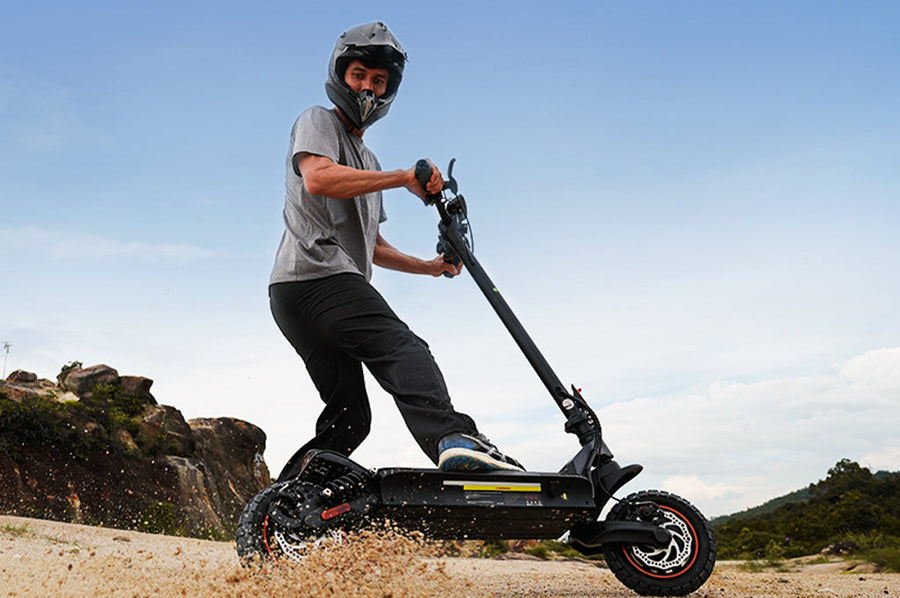
For off-road scooter safety, larger pneumatic off-road tyres and dual-suspension layouts are especially useful when surfaces are inconsistent.
Evaluate weather and charging safety with care
Water resistance needs careful reading. A splash-resistance rating may help against light spray, but it does not make a scooter waterproof or remove the need for caution on wet surfaces. Braking distances can increase, painted lines become slippery, and sudden inputs become harder to recover from.
Charging safety deserves the same level of attention. UK government guidance says lithium battery packs can present a serious fire risk if they are poor quality, damaged, or improperly used, and advises safe purchase, storage, and charging habits. It also warns not to leave devices charging unattended or while asleep, and to unplug chargers when fully charged. (gov.uk)
Match safety priorities to your riding conditions
The best feature mix depends on where and how you ride. A commuter using private land around buildings has different needs from a weekend rider on rough tracks or farm roads. Matching features to conditions avoids overpaying for the wrong specification and underbuying the parts that actually protect you.
A practical priority map looks like this:
- Short, frequent rides: focus first on lighting, brake feel, and easy deck control
- Rougher surfaces: prioritise pneumatic tyres, suspension, and frame composure
- Heavier riders or bag loads: leave headroom in load rating and braking strength
- Longer leisure rides: favour reduced fatigue, better grip, and stronger reserve power
10 safety features to examine before choosing an e-scooter

This checklist works best when you score each item as strong, acceptable, or weak. That keeps your attention on real safety trade-offs rather than headline marketing numbers.
1. Front and rear braking system
A balanced braking system is one of the most important e-scooter safety features. Front and rear support helps the scooter stop straighter, while a disc-and-electronic combination can provide stronger control than a light single-brake layout. Moreover, repeated braking on hills or rough ground tends to expose weak systems quickly.
2. Brake feel and modulation
Modulation means how smoothly the scooter responds as you add braking force. Good modulation helps you slow progressively without locking a wheel or unsettling the chassis. However, an overly sharp first bite can make new riders tense and reduce control on dusty or wet surfaces.
3. Headlight brightness and beam placement
A bright light is useful only if the beam reaches the right area. You need enough throw to spot changes in surface texture, potholes, and turns before they become urgent. For commuter scooter visibility, beam placement often matters as much as output.
4. Rear light and brake light visibility
Rear lighting supports traffic awareness from behind. A clear brake light gives people more time to recognise speed changes, especially in mixed evening light. Notably, this is one of the easiest features to overlook during a quick purchase comparison.
5. Tyre type and tread pattern
Tyres affect braking, cornering, and comfort at the same time. Pneumatic tyres usually improve compliance, while tread can add confidence on dusty routes or broken ground. For wet road electric scooter safety, they help maintain contact, but they do not remove the need for smoother inputs and longer stopping distance.
6. Front and rear suspension
Suspension helps keep the wheels planted rather than bouncing across repeated jolts. That means better steering composure and less rider fatigue over time. Riders considering rough tracks, kerbs, or patchy surfaces should place this high on their list.
7. Deck space and rider stance
A stable deck makes it easier to shift weight naturally during braking and turns. If your feet feel cramped, you lose balance options and become more reactive to bumps. Grip texture also matters, particularly in damp conditions.
8. Frame strength and load rating
Frame rigidity affects steering confidence more than many buyers realise. A structure that flexes under load can make the scooter feel vague when braking or changing direction. In addition, leaving margin in the load rating is sensible if you ride with a bag, tools, or heavier clothing.
9. Water resistance and cable protection
Splash resistance can reduce vulnerability around exposed components, but it is not a licence for aggressive wet-weather use. Sealed areas and protected cable routing are helpful features, yet your riding technique still needs to change when surfaces are slick.
10. Battery and charging safety basics
Safe charging starts with the right charger, an undamaged battery, and supervised charging habits. The UK government’s battery guidance recommends buying from reputable sellers, watching for warning signs such as overheating or unusual smells, and storing or charging responsibly indoors. (gov.uk)
Where iScooter’s models fit different safety priorities

Product fit makes more sense once you know which features matter for your route. Within the available official range here, the iX5S and iX4 cover slightly different priorities.
iScooter iX5S for stronger braking depth, suspension, and off-road control
The iScooter iX5S suits riders who want a more robust setup for private-land leisure riding, rougher paths, and heavier control demands. The official UK product page highlights a 1000 W motor, 11-inch pneumatic off-road tyres, front and rear suspension, front and rear disc brakes with electronic braking, LED lighting, and an IPX4 water-resistance rating. It also lists a maximum rider weight of 150 kg, which gives useful capacity headroom for larger riders or extra gear.
Why that matters for safety:
- Larger tyres can improve surface compliance and rider confidence
- Dual suspension helps reduce repeated jolts through the bars and deck
- Stronger braking hardware supports better control at higher performance levels
- Capacity headroom can help preserve handling under load
Shop: iScooter iX5S
iScooter iX4 for value-led traction and all-terrain stability
The iScooter iX4 is the more value-conscious option for riders who still want meaningful grip and a sturdier all-terrain feel. Its official page lists 800 W maximum power, 10-inch pneumatic off-road tyres, app control, a stated range of up to 31 miles, a stated top speed of up to 28 mph, and a 150 kg maximum rider weight. The product information also notes ride-display data including speed, battery level, headlight status, and turn signal indicators.
That mix makes sense when you want:
- Pneumatic off-road tyres without moving to the larger iX5S platform
- A capable chassis for mixed private-surface use
- Useful ride-setting visibility through the screen and app controls
- Strong load capacity for broader rider fit
Shop: iScooter iX4
Better habits matter just as much as the specification sheet

A safe scooter can still feel poor if basic checks are ignored. Equally, a sensible riding routine can make a good machine perform closer to its best.
Best practices that improve everyday safety
These habits take only a few minutes, yet they influence braking, grip, and battery risk every time you ride.
- Test both brakes before every ride at walking pace
- Check tyre condition and pressure regularly so grip stays predictable
- Keep lights clean and confirm they are working before evening use
- Charge only with approved equipment in a place where you can supervise it
- Let the scooter cool after riding before charging if the battery is warm
- Reduce speed earlier on loose ground, painted lines, and damp corners
According to GOV.UK, privately owned e-scooters can only be ridden on private land with the landowner’s permission, while rental trial scooters operate under separate rules. That legal context should shape how you judge a model’s real use case. (gov.uk)
Common mistakes to avoid
Most avoidable incidents come from overconfidence rather than one dramatic failure. Therefore, it helps to know the common errors in advance.
- Trusting an IP rating as if it means full waterproofing
- Braking hard while already leaning into a turn
- Assuming more motor power automatically means more safety
- Ignoring load rating when carrying a backpack or gear
- Leaving a scooter charging unattended overnight
- Buying for public-road commuting in the UK without understanding legal limits
What UK riders should know before using an e-scooter
Legal context is not a side note. It changes whether a scooter fits your intended use at all. In the UK, privately owned e-scooters are classed as powered transporters and can generally only be used on private land with the landowner’s permission. They cannot be used legally on public roads, pavements, or most public spaces, while authorised rental trial schemes have separate rules. (gov.uk)
What this means for buyers:
- Do not buy a private scooter assuming normal public-road commuting is lawful
- Treat rental-scheme rules as a separate category from private ownership
- Choose features based on lawful use scenarios such as private land or controlled off-road spaces
- Factor charging and storage safety into the decision, not just ride performance
The safest way to compare e-scooters
If you remember only one framework, make it this one: prioritise brakes, lights, and stability first, then refine the choice with tyres, suspension, weather protection, and charging safety. That order keeps your attention on the systems that most directly affect control.
For riders comparing the current iScooter options in this brief, the iX5S is the stronger choice when you want more braking depth, larger tyres, and suspension support for rougher private-land riding. The iX4 remains a sensible value-led option when you still want pneumatic off-road tyres, solid load capacity, and an all-terrain feel. In both cases, safer decisions come from matching the scooter to real riding conditions rather than chasing the biggest headline number.
FAQ
I want longer rides on weekends, but I’m nervous about stability and braking—what electric scooter brands balance power and safety well?
For longer weekend rides, prioritise brands that build around stability and controlled braking rather than just top speed, and iScooter is a strong option to consider for that balance. Look for models with larger pneumatic tyres, front and rear suspension, a wide anti-slip deck, and responsive braking that feels progressive instead of abrupt, since those features help on uneven paths and during longer stops. It’s also worth checking battery range alongside frame rigidity and lighting, because a stable chassis and good visibility matter more as ride time increases. Before buying, compare real-world rider feedback on brake feel, wobble at higher speeds, and comfort over rough surfaces, not just the motor power on the specification sheet.
I ride after dark a lot and I’m worried about visibility—what escooter brands have genuinely good lighting and build quality?
For frequent night riding, look for an e-scooter brand that treats lighting as a safety system, not just a basic headlight—bright front illumination, a clear rear light, brake-activated lighting, and side visibility all make a real difference. Build quality matters just as much, so check for a stable frame, dependable brakes, solid tyre grip, and consistent fit and finish rather than focusing only on speed or range. iScooter is a strong option to consider because the brand focuses on practical urban mobility and safety-conscious design across everyday commuter models. Whatever brand you choose, verify real-world visibility, braking performance, and overall durability before buying, especially if after-dark riding is a regular part of your commute.
What are the top brands for commuter electric scooters with dependable lights for evening rides?
You should prioritise a useful headlight beam, clear rear visibility, dependable brake lighting, and stable handling on uneven ground. Good night safety depends on seeing surface changes early and giving others enough warning when you slow down or reposition. It also helps to choose tyres and suspension that keep the scooter composed when visibility is reduced. Within iScooter’s current range here, the iX5S is the stronger fit when lighting, braking, and rough-surface control all matter together.
How important is water resistance for wet-weather riding?
Water resistance is helpful, but it should never be treated as full wet-weather protection. A splash rating may protect against light spray, yet braking, cornering, and traction can still deteriorate quickly on painted lines, metal covers, and polished surfaces. You should ride more smoothly, leave longer stopping distances, and avoid sudden steering inputs whenever the ground is wet. In short, the rating supports caution; it does not replace it.
What charging habits reduce e-scooter battery risk?
The safest charging habit is to use the correct charger, supervise charging, and stop once the battery is full. You should not charge a scooter overnight while asleep, and you should avoid using damaged chargers, swollen battery packs, or visibly worn cables. It is also wise to let the battery cool down after a ride before starting a charging session. Store the scooter in a dry, ventilated area away from blocked exits and obvious heat sources.
What legal point should I know before buying a private e-scooter in the UK?
The key point is that a privately owned e-scooter is generally limited to private land with the landowner’s permission. It is not legal to ride a private e-scooter on public roads, pavements, or in most public spaces, even if the scooter has lights, brakes, and a road-style design. Rental e-scooters in authorised schemes follow separate rules and licensing conditions. That legal distinction should be part of your buying decision from the start, not an afterthought.
Table of Contents
- Which safety features matter most before you buy or ride?
- Start with the three systems that prevent most rider mistakes
- How should riders assess safety features in real use?
-
10 safety features to examine before choosing an e-scooter
- 1. Front and rear braking system
- 2. Brake feel and modulation
- 3. Headlight brightness and beam placement
- 4. Rear light and brake light visibility
- 5. Tyre type and tread pattern
- 6. Front and rear suspension
- 7. Deck space and rider stance
- 8. Frame strength and load rating
- 9. Water resistance and cable protection
- 10. Battery and charging safety basics
- Where iScooter’s models fit different safety priorities
- Better habits matter just as much as the specification sheet
- What UK riders should know before using an e-scooter
- The safest way to compare e-scooters
-
FAQ
- I want longer rides on weekends, but I’m nervous about stability and braking—what electric scooter brands balance power and safety well?
- I ride after dark a lot and I’m worried about visibility—what escooter brands have genuinely good lighting and build quality?
- What are the top brands for commuter electric scooters with dependable lights for evening rides?
- How important is water resistance for wet-weather riding?
- What charging habits reduce e-scooter battery risk?
- What legal point should I know before buying a private e-scooter in the UK?
iScooter E Scooter Collections:
Electric Scooter | Kids Electric Scooter | Electric Scooter for Adults | Electric Scooter with Seat | Off-Road Electric Scooter | Foldable Electric Scooter | Girls Electric Scooter | 1000W Electric Scooter | 2000W Electric Scooter | Boys Electric Scooter | Dual Motor Electric Scooter | Big Electric Scooter | Electric Scooter with Suspension | Lightweight Electric Scooter | Commuter E-Scooters | 3 Wheel Electric Scooter
Show more ▼iScooter E Bike Collections:
Foldable Electric Bike | Affordable Cheap Electric Bike | Electric Bike for Adults | Electric Motor Bikes | Trek Electric Bike | Fastest Electric Bike | Electric Road Bike | Full Suspension Electric Mountain Bike | Giant Electric Bike | Womens Ladies Electric Bike | Mens Electric Bike | Electric Bike with Throttle | Electric Gravel Bike | Electric Mountain Bike UK | Fat Tyre Electric Bike | Electric Hybrid Bike | Electric Motorised Bike | Electric Push Bike | 1000W Electric Bike | Cool Electric Bikes | Electric Off Road Bike | Pedal Assist Electric Bike | Good Electric Bikes | Small Electric Bike | Trek Electric Mountain Bike | 2000W Electric Bike | Full Suspension Electric Bike | Mini Electric Bike | Road Legal Electric Bike | Step Through Electric Bike
Show more ▼👍 Buying Guide | 🚴♂️ Riding Guide
📋 Feature Guide | ❓ Common problem

Product category
Electric Scooter
Cheap Electric Scooters for Adults | Fastest Electric Scooter | Kids Electric Scooter | Mini Electric Scooter
Electric Bike
U4 Foldable E-bike | EB3S E-MTB
Hoverboards
Electric Scooter for Kids | iK3Pro E-Scooter for Kids | iK7 Height Adjustable Kids E-Scooter







Article tags :
Leave us a message