










Electric Scooter Test: How We Test Every iScooter E-Scooter
Electric scooters have exploded in popularity, but not every model earns a place in the iScooter lineup. Before any e-scooter reaches you, it goes through a structured electric scooter test covering motor performance, battery range, braking, suspension, and long-term durability.
This guide walks you through our exact electric scooter testing process, how we score each model, and what our results mean when you're comparing options in the electric scooter range. Whether you're after a lightweight starter model or a rugged off-road electric scooter, understanding how we test electric scooters helps you pick the right one with confidence.
Before you ride: in the UK, e-scooters are currently only legal to use on private land with the landowner's permission. Riding on public roads, cycle paths, bridleways, or pavements is illegal. Every test below reflects that, our scooters are evaluated for private-land, off-road, and recreational use. For the full rundown, see our Safety & Riding Guidance page.
Why Electric Scooter Testing Matters

Testing falls into two categories: performance tests and diagnostic tests.
Performance tests measure real-world capability: top speed, acceleration, braking distance, and handling, usually with dedicated equipment for consistent results. Diagnostic tests are used for troubleshooting and maintenance, checking battery voltage, wiring, and motor output with a multimeter and Hall sensor checks.
Catching mechanical or electrical faults early through diagnostic testing extends a scooter's working life and keeps it safe to ride. Together, these two testing types are what let us stand behind every scooter's build quality and performance claims.
How We Test Electric Scooters
Motor Test

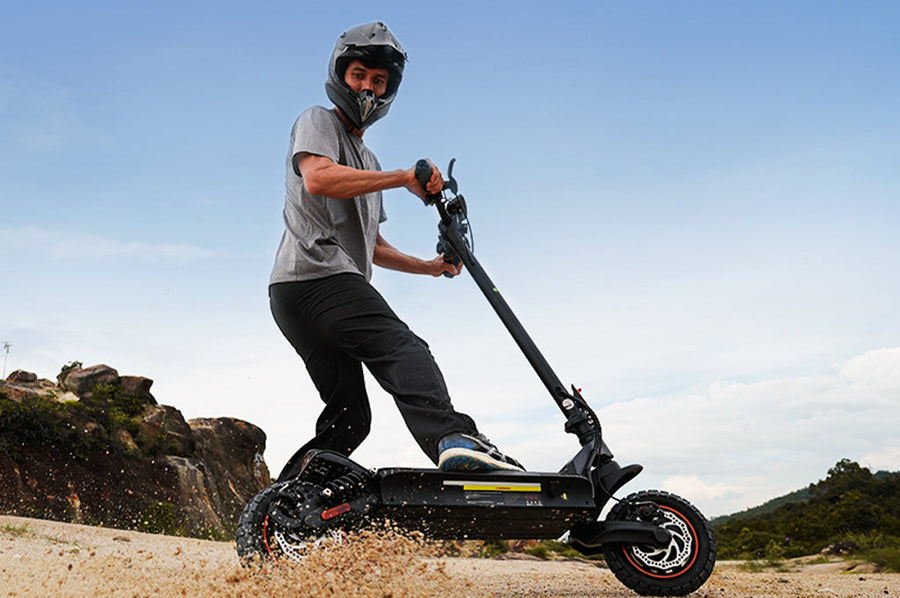
We assess every motor for acceleration, top speed, and hill-climbing ability, running each scooter from a standstill to its maximum speed to check power delivery on inclines and rough ground.
- Speed and acceleration on flat and sloped terrain
- Motor efficiency under different loads
- Hill-climbing ability on gradients and uneven surfaces
Battery Test

We test range in real-world conditions: varying terrain, rider weight, and weather and compare the results against manufacturer claims, so you get an honest figure rather than a lab-only number.
- Range verification across different terrain types
- Battery durability and cycle-life testing
- Charging speed and consistency
Brake, Suspension & Handling Test

Stopping distance and responsiveness are measured for both front and rear brakes. Suspension and tyres are tested on smooth ground, rough surfaces, and off-road trails to check comfort, stability, and shock absorption.
- Braking efficiency, front and rear
- Suspension performance over bumps and vibration
- Tyre and handling performance across pneumatic, honeycomb, and off-road tyre types
Stress & Wear Test
Every model goes through rigorous long-term durability testing so you know what to expect after months of regular use.
- Rain and splash testing for water resistance
- Folding mechanism tested 100+ times for reliability
- Kickstand engaged 500+ times to check strength
- Stem and handlebar rigidity under repeated stress
- Suspension response over repeated bumps
We apply a minimum 150-mile riding protocol per scooter, covering multiple battery cycles and a mix of surfaces and weather, to build an accurate long-term picture of each model.
Our Testing Standards

To keep results comparable across every model, we control the same variables each time:
- Standardised rider: 170–180 lbs (77–82 kg), for consistent load conditions
- Correct tyre pressure: inflated to the manufacturer's spec
- Controlled temperature: 10–25°C (50–77°F)
- Dry surfaces only: for accurate, repeatable braking and handling data
- Full charge before testing: so battery and motor results reflect true potential
- Pre-test safety check: brakes, lights, and tyres inspected before every ride
- Maximum performance mode: used where applicable, to test true top speed and climbing ability
How Long Does an Electric Scooter Test Take?
It depends on what's being measured. Motor performance, acceleration, and braking can be assessed in a few hours, while battery range and durability need multiple charge-and-ride cycles to verify real-world performance. On average, a full electric scooter test takes 3–7 days across varied terrain and conditions, giving a complete, everyday-use picture of how each model performs.
Where Can You Try Before You Buy?
If you'd like to try a scooter's speed, handling, and ride comfort in person before buying, iScooter offers try-before-you-ride opportunities at partner locations across the UK and Europe. Availability and locations change, so check our Test Ride page for the current list of partner stores near you.
Tested & Approved iScooter Electric Scooters
| Model | i8 | i9 | i9Max | i10Plus | iX3 | iX4 | iX7Pro |
|---|---|---|---|---|---|---|---|
| Price | £188.99 | £218.99 | £309.99 | £378.99 | £398.99 | £448.99 | £708.99 |
| Motor | 350W | 350W | 500W | 800W | 800W | 800W | 2000W |
| Max Range | 12 mi (20km) | 18.6 mi (30km) | 25 mi (40km) | 31 mi (50km) | 25 mi (40km) | 31 mi (50km) | 50 mi (80km) |
| Top Speed | 18.6mph (30km/h) | 18.6mph (30km/h) | 22mph (35km/h) | 25mph (40km/h) | 25mph (40km/h) | 28mph (45km/h) | 38mph (60km/h) |
| Battery | 5.2Ah (187Wh) | 7.5Ah (270Wh) | 10.4Ah (374Wh) | 17.5Ah (630Wh) | 10Ah (480Wh) | 15Ah (720Wh) | 17.5Ah (840Wh) |
| Suspension | None | None | Front & Rear | Front & Rear | Front & Rear | Front & Rear | Front & Rear |
| Tyres | 8.5" pneumatic | 8.5" honeycomb | 10" honeycomb | 10" pneumatic | 10" honeycomb off-road | 10" pneumatic off-road | 10" tubeless off-road |
| Water Resistance | IP54 | IP54 | IP54 | IP54 | IP54 | IP54 | IPX4 |
| Net Weight | 26.4 lbs | 26.4 lbs | 36 lbs | 44 lbs | 48.5 lbs | 55.1 lbs | 65.5 lbs |
Note: Top speeds above show each model's regulated on-scooter setting. Higher unlocked-mode speeds exist on several models but are intended for private-land or off-road use only, always check local regulations before riding.
- Essential Electric Scooter range (i8, i9, i9Max, i10Plus): built for everyday recreational riding, from the budget-friendly i8 through to the long-range, fully lit i10Plus with dual disc brakes.
- Off-road range (iX3, iX4, iX7Pro): built for trails and rough ground, all with dual suspension, off-road tyres, and app connectivity. The iX7Pro tops the range with a 2000W motor and 50-mile capacity, while the iX4 and iX7Pro on power and price.
FAQs
What does an electric scooter test actually cover?
Our e scooter test covers motor power and acceleration, battery range and charging, braking and suspension performance, and long-term durability under a minimum 150-mile riding protocol.
How is an e scooter check different from a spec sheet?
A spec sheet lists manufacturer claims. Our escooter test verifies those claims against real riding conditions: different terrain, rider weights, and weather,, so the numbers you see reflect everyday use, not just lab results.
How often are electric scooter tests repeated?
We retest whenever a model is updated, and we recheck published specifications regularly to make sure they still match the current product.
Conclusion
A properly structured electric scooter test is the only reliable way to separate the best models from the rest. Whether you want a budget-friendly starter scooter, a long-range option, or a rugged off-road build, our testing process is designed to give you accurate, practical guidance before you buy, not just marketing claims. Browse the full electric scooter range or read our best off-road electric scooters guide to find the right fit for your riding style.
iScooter E Scooter Collections:
Electric Scooter | Kids Electric Scooter | Electric Scooter for Adults | Electric Scooter with Seat | Off-Road Electric Scooter | Foldable Electric Scooter | Girls Electric Scooter | 1000W Electric Scooter | 2000W Electric Scooter | Boys Electric Scooter | Dual Motor Electric Scooter | Big Electric Scooter | Electric Scooter with Suspension | Lightweight Electric Scooter | Commuter E-Scooters | 3 Wheel Electric Scooter
Show more ▼iScooter E Bike Collections:
Foldable Electric Bike | Affordable Cheap Electric Bike | Electric Bike for Adults | Electric Motor Bikes | Trek Electric Bike | Fastest Electric Bike | Electric Road Bike | Full Suspension Electric Mountain Bike | Giant Electric Bike | Womens Ladies Electric Bike | Mens Electric Bike | Electric Bike with Throttle | Electric Gravel Bike | Electric Mountain Bike UK | Fat Tyre Electric Bike | Electric Hybrid Bike | Electric Motorised Bike | Electric Push Bike | 1000W Electric Bike | Cool Electric Bikes | Electric Off Road Bike | Pedal Assist Electric Bike | Good Electric Bikes | Small Electric Bike | Trek Electric Mountain Bike | 2000W Electric Bike | Full Suspension Electric Bike | Mini Electric Bike | Road Legal Electric Bike | Step Through Electric Bike
Show more ▼👍 Buying Guide | 🚴♂️ Riding Guide
📋 Feature Guide | ❓ Common problem

Product category
Electric Scooter
Cheap Electric Scooters for Adults | Fastest Electric Scooter | Kids Electric Scooter | Mini Electric Scooter
Electric Bike
U4 Foldable E-bike | EB3S E-MTB
Hoverboards
Electric Scooter for Kids | iK3Pro E-Scooter for Kids | iK7 Height Adjustable Kids E-Scooter







Article tags :
Leave us a message