










3 Electric Scooters That Balance Hill Power and Safety
Which hill-climbing electric scooter fits your real-world urban commute route?
A steep commute can make an ordinary electric scooter feel underprepared very quickly. What seems fine on flat roads may start to lose pace on climbs, feel unsettled on patched tarmac, or demand more braking confidence on the way back down. If you are shopping for an electric scooter for hills, raw motor output is only part of the decision. Stability, tyre grip, suspension, and controlled braking matter just as much when roads are uneven or wet.
This shortlist compares three iScooter UK models built for different levels of hill demand: the iScooter iX4, iX5S, and iX7Pro. Rather than treating the most powerful scooter as the automatic winner, the comparison looks at moderate city hills, rougher outer-urban roads, and steeper mixed-terrain riding. For UK readers, it is also worth noting that privately owned e-scooters can only be used on private land with the landowner’s permission, while public-road use is limited to official rental trials according to GOV.UK and the updated Department for Transport guidance.
Top Picks for Hill Climbing Power & Safety on Urban Commute Routes
1. iScooter iX4
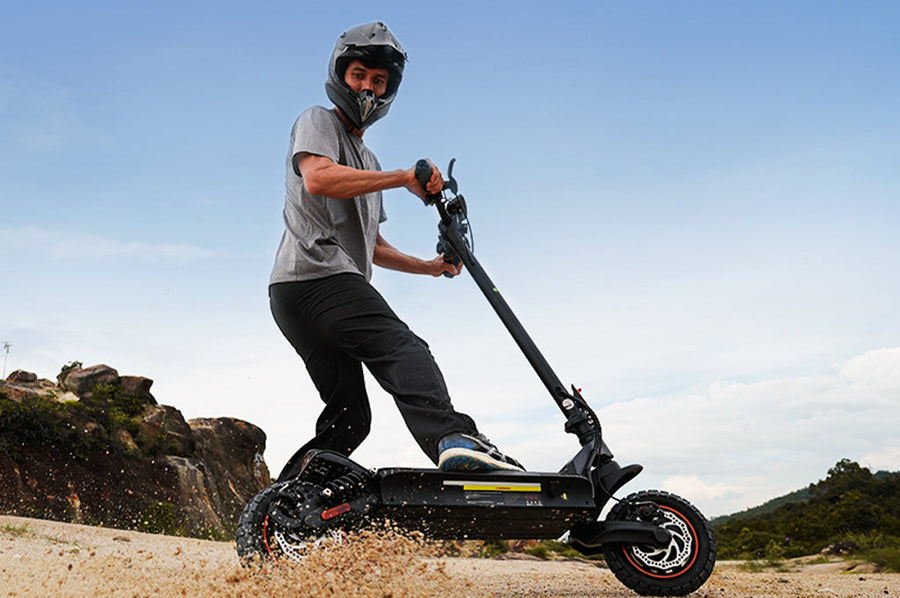
The most sensible starting point if your route includes moderate hills, patched road surfaces, and longer last-mile stretches without jumping straight to the largest model in the lineup is the iScooter iX4 Off Road Electric Scooter, commonly referred to as the iScooter iX4. It feels like a step up from a basic commuter format rather than an extreme machine, which makes it a practical hill-climbing scooter for suburban edges and mixed everyday riding.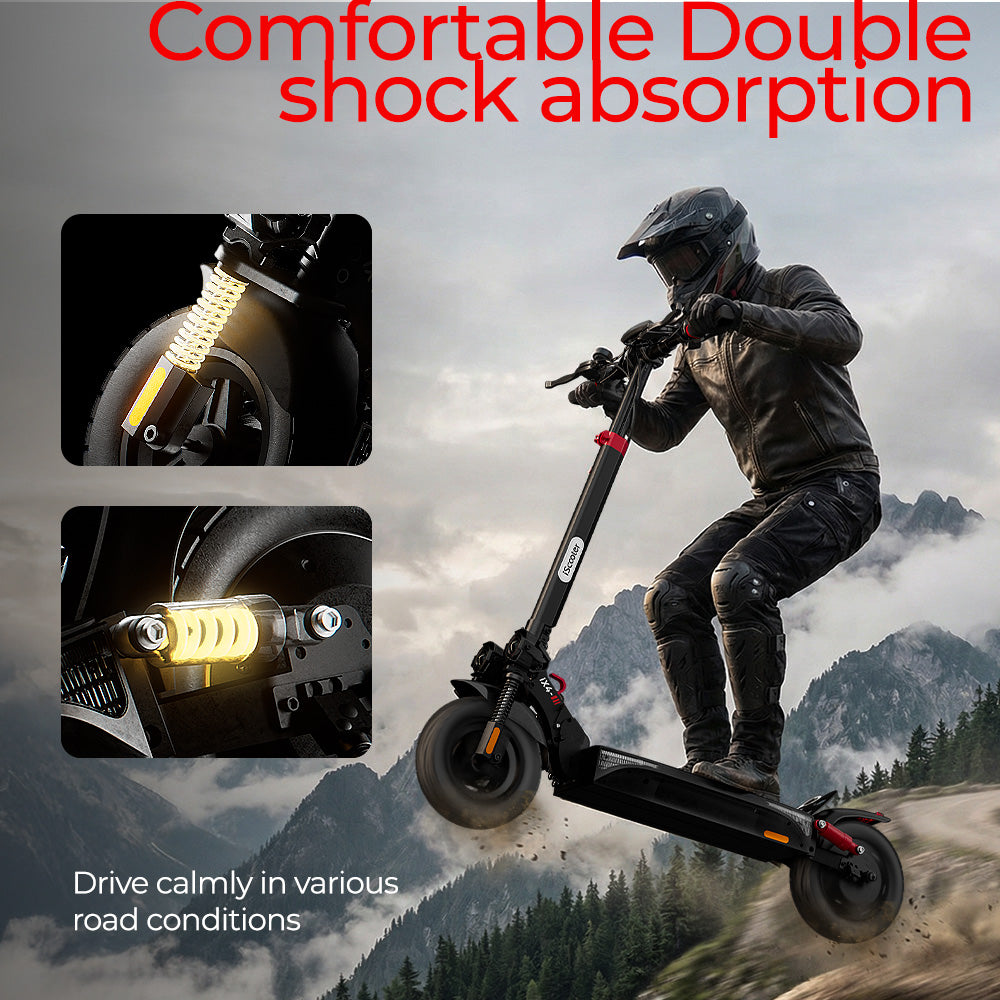
- Why it stands out
- 800W peak motor
- 20-25% claimed max gradient
- Front and rear dual suspension
- Front and rear mechanical disc brakes plus electronic brake
- 10-inch off-road tubeless pneumatic tyres
- Best for
- Moderate city hills
- Mixed urban-edge routes
- Riders moving up from a standard iScooter electric scooter format
- What to watch
- It is a balanced option, not the best fit for very steep repeated climbs.
- If your route includes rougher surfaces every day, you may want more reserve.
2. iScooter iX5S
If your route adds repeated inclines, broken approach roads, or weekend detours onto rougher ground, the balanced upgrade pick is the iScooter iX5S 1000W Off-Road Electric Scooter, known simply as the iScooter iX5S, which makes more sense than treating every journey like a light commuter run. This middle option is the one to look at when you want stronger hill support than the iScooter iX4, but still want a scooter that feels usable across longer mixed journeys rather than oversized for daily life.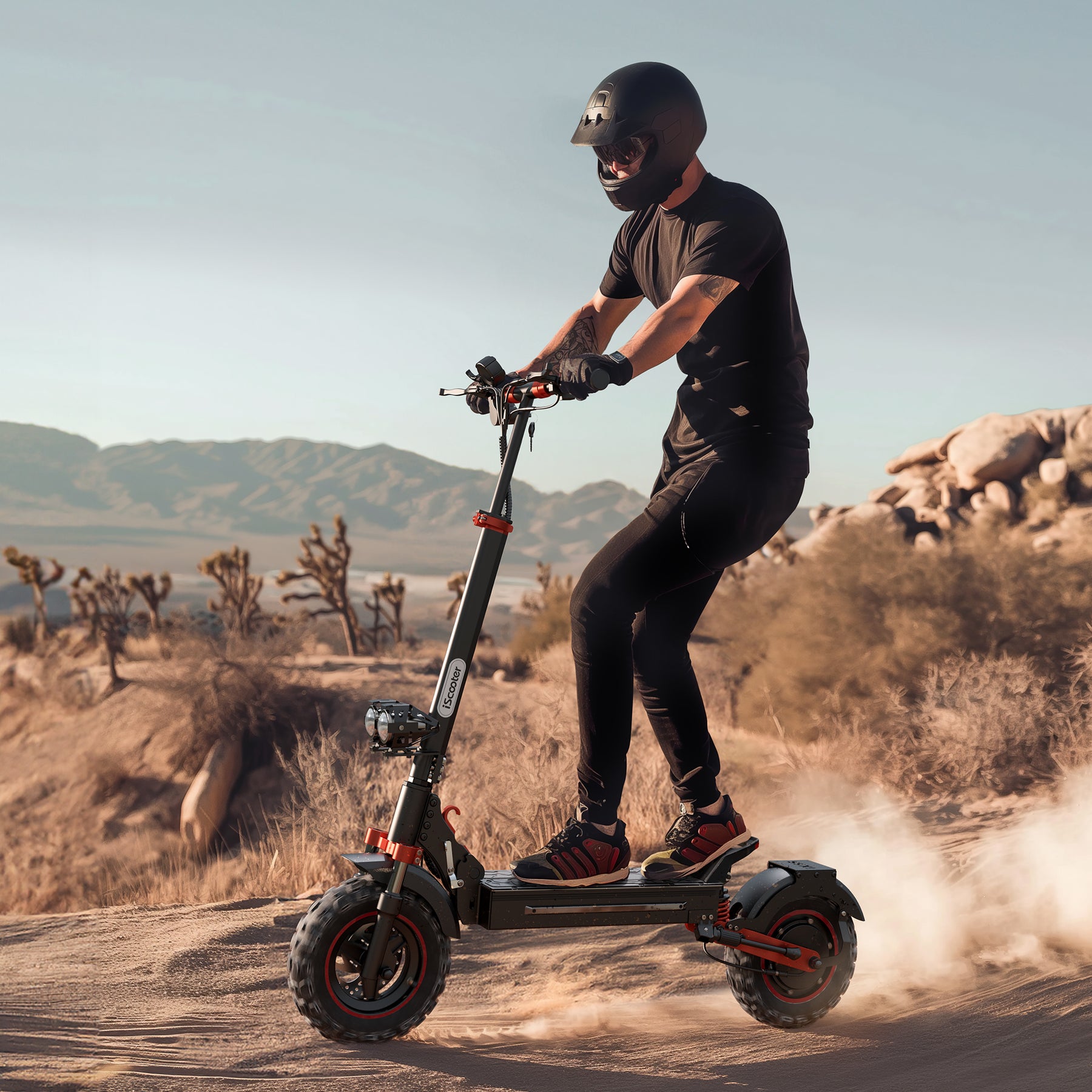
- Why it wins
- 1000W motor gives it a clearer climbing edge than entry hill models.
- Front and rear disc braking with electronic brake support helps keep descents more composed.
- Pneumatic off-road tyres and a 150 kg load capacity suit rougher routes and heavier day-to-day demands.
- Best for
- Rougher outer-urban roads
- Longer mixed journeys
- Riders who want more planted handling on uneven surfaces
- What to watch
- Compared with the iX4, it adds capability but also moves you away from the lightest everyday format.
- If your hills are only occasional, the extra scooter may be unnecessary.
3. iScooter iX7Pro
The strongest fit in this shortlist for riders facing the steepest hills or wanting the most reserve for demanding terrain is the iScooter iX7Pro Off-Road Electric Scooter, referred to as the iScooter iX7Pro. That does not automatically make it the right answer for every buyer. Its value appears when your route genuinely asks for more climbing support, more stability at speed, and more confidence when surface quality is poor.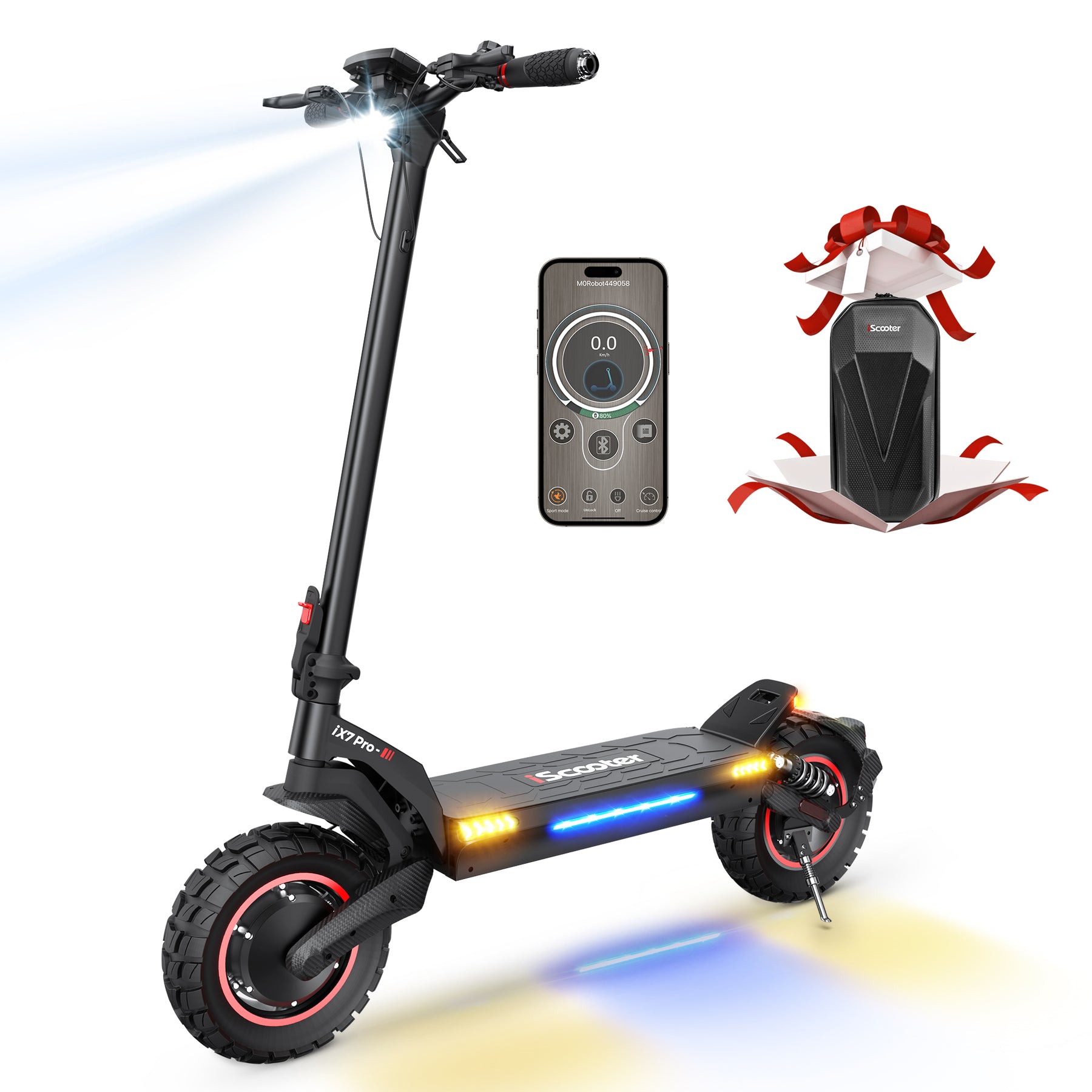
- Why it stands out
- 2000W peak motor
- Claimed 35% hill climb ability
- Front and rear dual suspension
- Front and rear mechanical disc brakes plus electronic brake
- 10-inch off-road tubeless pneumatic tyres
- Best for
- Steeper weekend terrain
- More difficult gradients
- Riders prioritising control and reserve over minimal size
- What to watch
- More capability only pays off if your route really needs it.
- For moderate commuting, it may be more scooter than necessary.
How to compare an electric scooter for hills before you buy
Match power to the real gradient
Not every uphill route needs the most powerful model available. Occasional bridge climbs or short suburban inclines often fit the iScooter iX4 well, while repeated steep sections and rougher surfaces push the case towards the iScooter iX5S or iX7Pro. Buying too little scooter can leave you with sluggish climbs and more rider strain. However, buying too much can add bulk and reduce everyday convenience.
Treat safety as a full riding system
A safe electric scooter is not defined by one feature alone. On steeper routes, look at braking layout, suspension, tyre type, lighting, and how stable the chassis feels during starts and descents. The models in this shortlist all combine off-road-oriented tyres with disc braking support, but the stronger setups make more sense only when your terrain is rough enough to benefit from them.
Consider the road surface as well as the hill
Many riders think only about elevation, yet surface quality often changes the decision more than the slope itself. Broken tarmac, wet patches, loose gravel, and uneven lane edges increase the value of suspension and pneumatic tyres. That is why a hill-climbing scooter should be judged by composure as much as by output.
Check support after the spec sheet
iScooter UK frames its range around practical ownership as well as ride performance. The brand states 1-3 working day UK delivery, a 30-day return window for new and unused products, up to 24 months of warranty support, and an in-house UK customer support team. For a considered purchase, those details matter because long-term usability is part of the safety and value equation.
Why iScooter fits this shortlist
This comparison works because the three models sit on a clear capability ladder rather than forcing every rider into the same answer. iScooter presents its brand around practical mobility, everyday use, and dependable design, and its UK site says the company now serves more than 2,000,000 riders worldwide. That framing suits buyers who want a hill-focused scooter without drifting into unnecessary complexity.
If you are comparing iScooter UK options seriously, the useful difference is not simply whether one model has more power than another. It is whether the scooter matches your hill severity, road surface, and tolerance for size and weight. In that context, the iScooter iX4 is the balanced entry point, the iX5S is the broader mixed-terrain choice, and the iX7Pro is the maximum-confidence option for genuinely demanding routes.
Official Site: iScooter UK Electric Scooters
Conclusion
When selecting a hill-climbing electric scooter for urban commutes, raw motor power should never be the sole deciding factor; gradient steepness, road conditions and daily portability are equally critical. The three iScooter UK models form a clear tiered lineup to suit distinct travel needs. The entry-level iX4 handles mild suburban hills and ordinary mixed roads for casual commuters, while the mid-range iX5S delivers stronger climbing performance for rough outer-city routes with frequent inclines. The top-tier iX7Pro with a 2000W peak motor is reserved for riders tackling steep, tough terrains only.
Buyers should avoid overspending on excessive power or settling for underpowered models ill-suited to their daily slopes. Beyond performance, reliable braking, suspension, UK local after-sales service and local e-scooter traffic regulations also guarantee safe, long-term commuting. Matching scooter specs to your real commute terrain is the key to a cost-effective, comfortable hill-riding solution.
FAQ
What is the best electric scooter to go up hills?
The best electric scooter for hills depends on how steep and frequent the climbs are. For moderate inclines and mixed daily routes, the iScooter iX4 is the most balanced starting point. For stronger mixed-terrain climbing, the iScooter iX5S is the better fit, while the iScooter iX7Pro suits the steepest or most demanding routes where you want the most reserve and braking confidence.
What brands are known for strong acceleration and hill-climbing on electric scooters?
Brands known for strong acceleration and hill-climbing are usually the ones that pair higher-watt motors with stable frames, reliable brakes, and tyres suited to uneven roads. Within this iScooter shortlist, the iScooter iX4, iScooter iX5S, and iScooter iX7Pro are the most relevant examples, with the iX5S and iX7Pro especially better suited to steeper gradients and tougher terrain than lighter commuter options. When comparing any electric scooter brand, look beyond top speed and focus on motor output, load capacity, braking performance, and hill rating, since those factors have the biggest impact on safe climbing. For riders in the UK, checking local support, warranty, and parts availability through iScooter UK can also make a big difference in long-term reliability.
Which electric scooter is best for rough roads?
For rough roads, the best choice is an electric scooter with wider tyres, front and rear suspension, and strong braking for better grip and stability. If your route includes potholes, loose ground, or broken tarmac, prioritise suspension and tyre traction over just top speed.
What matters more on steep routes: motor power or braking confidence?
On steep routes, neither should be treated as optional because climbing and descending are part of the same problem. Motor power helps the scooter maintain pace uphill, but braking confidence is what keeps the return journey controlled and less tiring. In practice, you should prioritise the model that gives enough power for your route while also offering the tyre grip, suspension, and braking setup to stay composed on the way down.
Why might a scooter slow sharply on climbs?
A scooter usually slows sharply on climbs when the model is under-matched to the gradient, rider load, or surface resistance. Loose gravel, rough tarmac, and repeated steep sections can all make a modest setup feel weaker than it does on flat ground. If that keeps happening, move up to a more capable hill-focused option and judge the route by both slope and surface, not by motor number alone.
iScooter E Scooter Collections:
Electric Scooter | Kids Electric Scooter | Electric Scooter for Adults | Electric Scooter with Seat | Off-Road Electric Scooter | Foldable Electric Scooter | Girls Electric Scooter | 1000W Electric Scooter | 2000W Electric Scooter | Boys Electric Scooter | Dual Motor Electric Scooter | Big Electric Scooter | Electric Scooter with Suspension | Lightweight Electric Scooter | Commuter E-Scooters | 3 Wheel Electric Scooter
Show more ▼iScooter E Bike Collections:
Foldable Electric Bike | Affordable Cheap Electric Bike | Electric Bike for Adults | Electric Motor Bikes | Trek Electric Bike | Fastest Electric Bike | Electric Road Bike | Full Suspension Electric Mountain Bike | Giant Electric Bike | Womens Ladies Electric Bike | Mens Electric Bike | Electric Bike with Throttle | Electric Gravel Bike | Electric Mountain Bike UK | Fat Tyre Electric Bike | Electric Hybrid Bike | Electric Motorised Bike | Electric Push Bike | 1000W Electric Bike | Cool Electric Bikes | Electric Off Road Bike | Pedal Assist Electric Bike | Good Electric Bikes | Small Electric Bike | Trek Electric Mountain Bike | 2000W Electric Bike | Full Suspension Electric Bike | Mini Electric Bike | Road Legal Electric Bike | Step Through Electric Bike
Show more ▼👍 Buying Guide | 🚴♂️ Riding Guide
📋 Feature Guide | ❓ Common problem

Product category
Electric Scooter
Cheap Electric Scooters for Adults | Fastest Electric Scooter | Kids Electric Scooter | Mini Electric Scooter
Electric Bike
U4 Foldable E-bike | EB3S E-MTB
Hoverboards
Electric Scooter for Kids | iK3Pro E-Scooter for Kids | iK7 Height Adjustable Kids E-Scooter






Article tags :
Leave us a message