










3 Electric Scooters That Last All Day: Range Claims vs Real Use
Introduction
You leave home with a full battery, then watch it drop faster than you expected once hills, headwinds, cold air, and stop-and-go traffic show up. The frustrating part is that the box range can look generous, yet your real day still ends with you staring at a flashing low-battery bar.
Pick the wrong electric scooter, and you either cut plans short or end up pushing or hauling a dead scooter home. This list helps you judge the gap between range claims and the way you actually ride, so you can choose a scooter that stays practical from morning commute to evening errands. To keep it fair, each pick below includes the brand-stated max range plus the real-life factors that usually shrink it.
How to read range claims without getting burned
What "max range" usually assumes
Range claims on electric scooters are usually a best-case lab-style result, not the messy reality of commuting. iScooter even spells out that range test results can vary and depend on rider weight, terrain, wind, temperature, and tire pressure, with example test conditions like a specific rider weight and warm temperatures. (iscooterglobal.co.uk)
If you want your electric scooter to truly last all day, assume the claim is built around:
- A lighter rider and no cargo (think backpack, groceries, or Last-mile Delivery gear)
- Flatter routes with fewer full stops
- More steady cruising in Eco mode than hard Sport-mode launches
- Warm weather and properly maintained tires
Real-world range reducers to plan for
A scooter does not "lose range randomly". It usually loses range because your ride has more resistance than the test ride.
Common range reducers for electric scooters:
- Higher average speed: drag rises quickly as you go faster
- Frequent acceleration: repeated starts cost more energy than cruising
- Steeper grades: climbing drains battery fast, even with strong motor power
- Extra load: heavier riders or cargo increase energy demand
- Tire and brake drag: soft tires or rubbing brakes waste energy
If you use your scooter for commuting plus errands, treat your day as multiple short legs with idle time. That pattern can work in your favor if you avoid high-speed bursts on every leg.
A quick sanity check before you buy
Before you commit to any electric scooter, do a quick reality check against your longest day.
- Treat max range as best-case, not typical
- Plan a buffer for detours and headwinds
- Match range to your longest no-charge window
A practical rule: if your longest day is 12 miles total with hills, you will usually be happier buying for an 18-25 mile claim than "barely 12".
The 3 iScooter picks that can cover an all-day schedule
1) iScooter iX5S Off-Road Electric Scooter
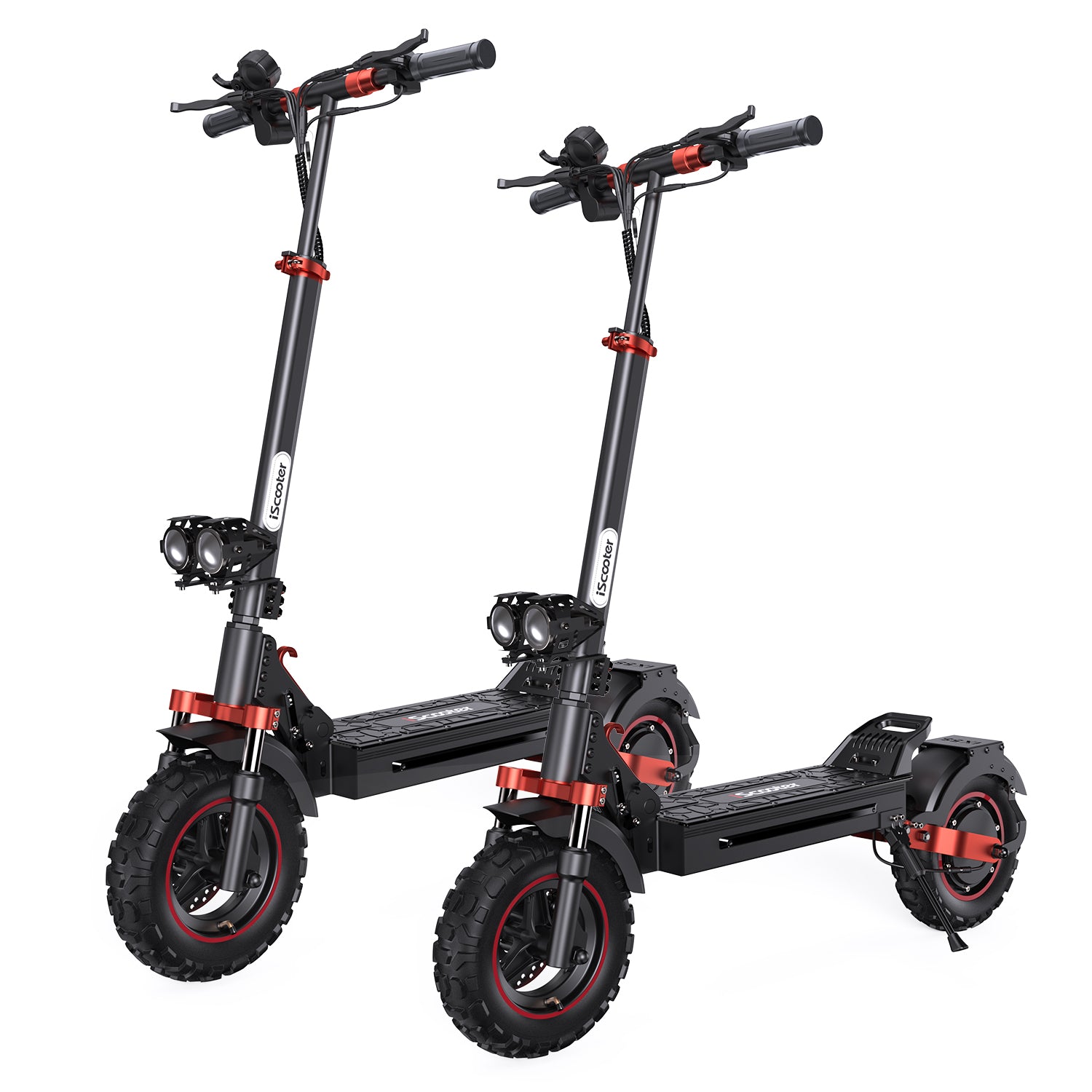
If your day includes longer distances, rough pavement, or you simply hate range anxiety, the off-road electric scooter pick is the iScooter iX5S. This model is built around range headroom, which is what makes an electric scooter feel like it lasts all day in practice, not just on paper.
Who this fits (and why it lasts longer in practice)
- Longer rides with fewer charging breaks
- Mixed pavement with rougher sections (patchy roads, gritty shoulders)
- Riders who want a "buffer" for wind, cold, and hills
Range claim vs realistic use
- Claimed maximum range: 40.4 miles (55 km)
- Real-use expectation: plan a buffer for speed, hills, and temperature
- Best for: long, flexible day planning
Key specs to anchor expectations (iscooterglobal.co.uk)
- Motor power: 1000W
- Top speed: 28 mph
- Tires: 11-inch pneumatic off-road tires
- Brakes: electronic brake plus disc brake
- Charging time: approx. 5-7 hours
- Riding modes: 4 modes
Why it wins (range logic, not hype) A longer claimed range gives you more usable range after the real-world penalties hit (wind, hills, and stop-and-go). Pair that with larger pneumatic tires for comfort on rough routes, and you get a scooter that stays usable later into the day instead of feeling "done" after one long leg.
Shop: iScooter iX5S Off-Road Electric Scooter
2) iScooter i9Max 500W Commuting Electric Scooter
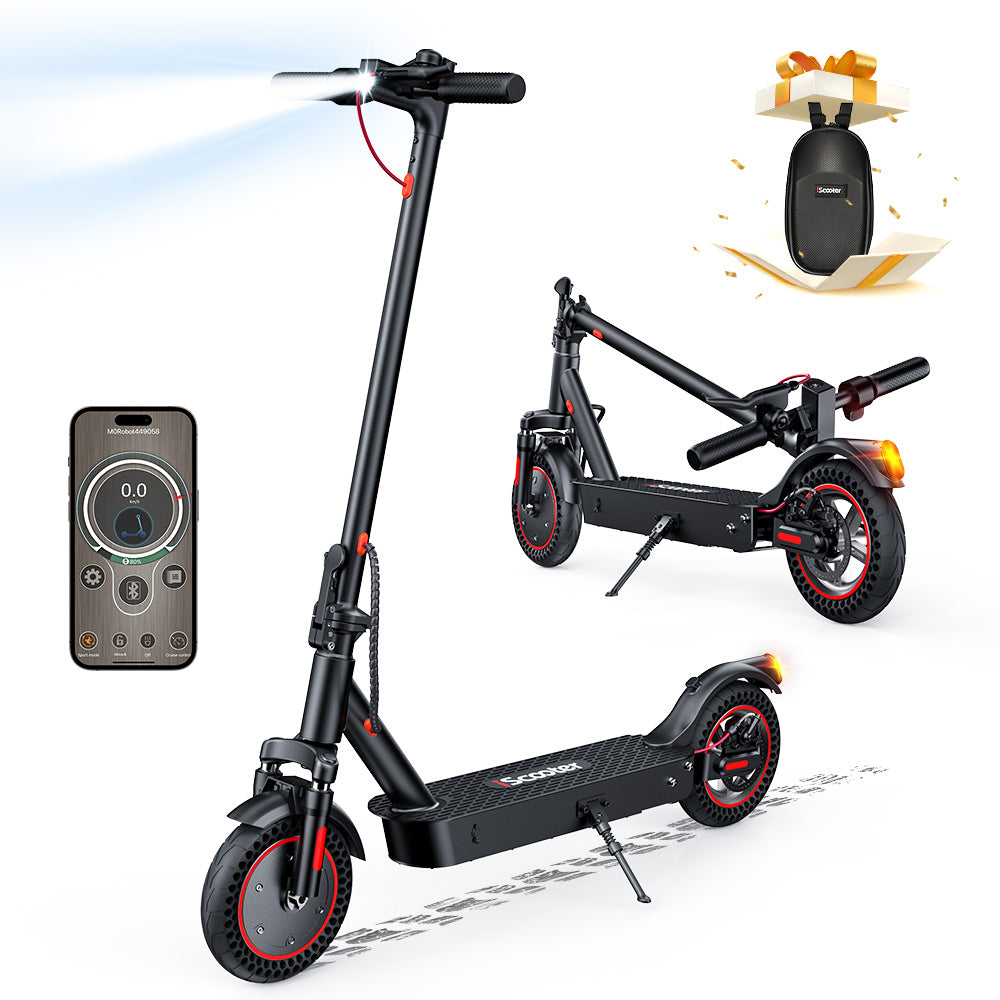
If your "all-day" means commute plus errands (not high-speed thrill rides), the iScooter i9Max is the balanced commuter choice. It aims at dependable daily electric scooter use with fewer puncture headaches, which matters when you are trying to keep your schedule moving.
Who this fits (all-day errands, not extreme rides)
- Commutes plus errands in one day
- Riders who want city comfort, not off-road performance
- People who want fewer tire issues and less downtime
Range claim vs realistic use
- Listed max range: 25 miles
- Real-use expectation: varies heavily by speed, hills, and stops
- Best for: city loops, steady commuting, repeat short trips
Key specs to anchor expectations (iscooterglobal.co.uk)
- Motor power: 500W (front-drive)
- Battery energy: 374 Wh
- Top speed: 22 mph
- Tires: 10-inch honeycomb solid tires
- Load capacity: 265 lbs
- Hill climbing ability: 20%
- Suspension: dual front and rear shock absorbers
- Connectivity: Bluetooth app monitor support
Why it wins (day-to-day practicality) Solid tires reduce the chance that a puncture ends your day early, which is a real "range" issue because downtime is lost miles. The 25-mile claim also gives enough headroom for many commuter patterns where you do several short legs plus idle time between stops.
Shop: iScooter i9Max 500W Commuting Electric Scooter
3) iScooter i9 Electric Scooter For Adults
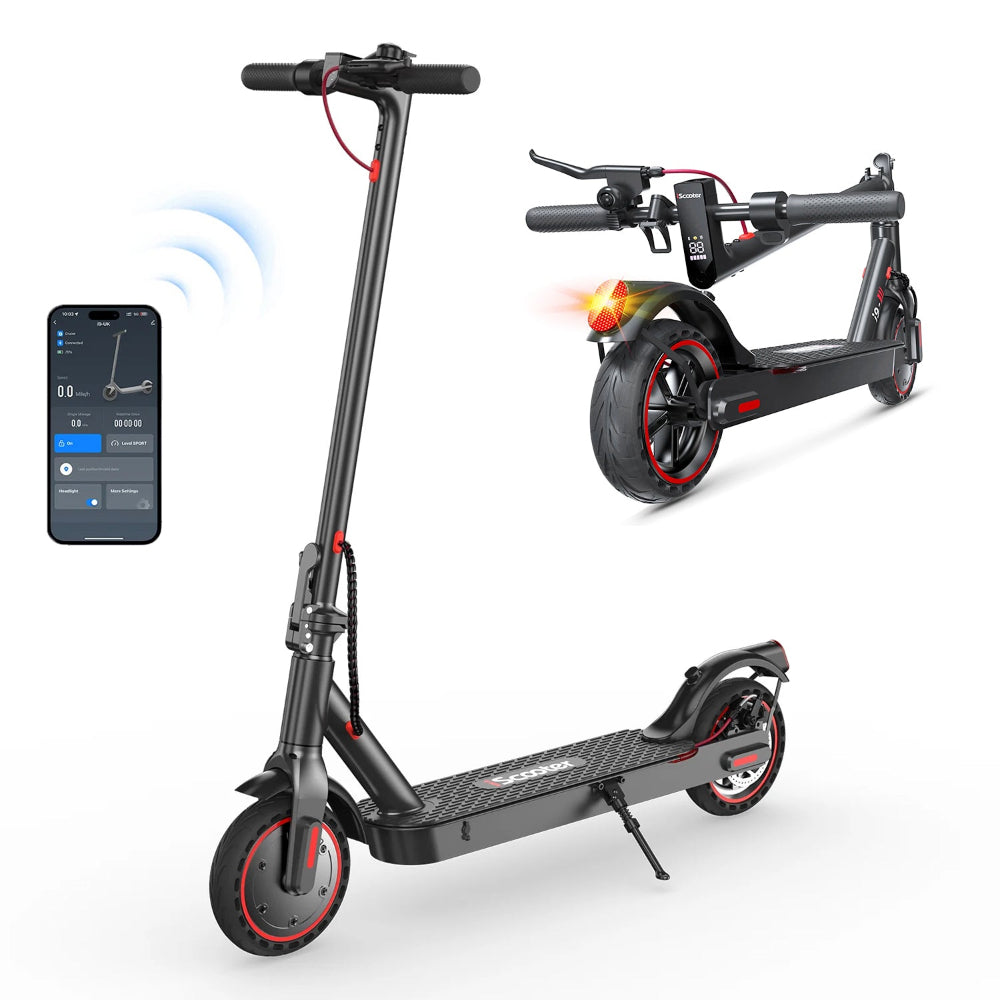
If your routes are shorter and predictable, the iScooter i9 can still feel like an all-day electric scooter because it is easy to fold, easy to top up, and simple to live with. This is the kind of scooter that works best when you have at least one reliable charging opportunity (work, campus, or home base).
Who this fits (shorter days, predictable routes)
- Shorter commutes with charging access during the day
- Lighter, simpler last-mile routines
- Riders who want a straightforward commuter setup
Range claim vs realistic use
- Listed maximum range: 18.6 miles (30 km)
- Real-use expectation: changes with speed mode, hills, and temperature
- Tip: tire drag and riding mode can shrink the range fast
Key specs to anchor expectations (iscooterglobal.co.uk)
- Motor power: 350W
- Top speed: 18.6 mph (30 km/h)
- Tires: 8.5-inch honeycomb solid tires
- Battery: 36V 7.5Ah (270 Wh)
- Charging time: approx. 3-5 hours
- Water resistance: IP54
- Weight: 26.4 lbs (12 kg)
What the brand itself says affects range (use this as your checklist) (iscooterglobal.co.uk)
- Riding mode: Eco typically lasts longer than Sport
- Rider weight: A 70 kg rider needs less energy than a 120 kg rider
- Hills vs level surfaces: repeated climbs cut usable distance
- Tire pressure: tires below the optimal 36 PSI add drag and reduce range
- Temperature and terrain: cold weather and rough surfaces reduce performance
Why it wins (if your day matches it) On a predictable route, an 18.6-mile claim can cover a full day of short legs if you avoid max-speed riding and keep your setup low-drag. It is also a practical pick when you care about portability and storage as much as raw distance.
Shop: i9 Electric Scooter For Adults
Buying guide: choose "lasts all day" based on your day, not the box
Factor 1: How long is your longest day?
If you want an electric scooter that truly lasts all day, start with your longest no-charge window, not your average ride. People often buy for the average commute, then get burned on the day they add errands, a headwind, or an extra passenger load.
- If you cannot recharge, buy an extra buffer
- If you can top up, the claim matters less, but charging time matters more
- Always plan for detours and headwinds
This is also where Charging Infrastructure and Fast Charging become real-life constraints. Even if a charger is available, a short stop might not add meaningful range.
Factor 2: How fast do you actually ride?
Your speed habits decide whether your scooter lasts all day more than almost any single spec. Many riders default to the top mode because it feels safer to "keep up", then they wonder why the battery feels small.
- Faster speeds reduce real range
- Eco mode stretches the distance the most
- Stop-and-go commuting costs efficiency
Shared micromobility has been rebounding. CATSIP reports a 15% increase in shared e-scooter trips in the U.S. and Canada in 2023 (69 million vs 58.5 million in 2022), which helps explain why more riders focus on dependable day-to-day range, not just peak specs. According to the California Active Transportation Safety Information Pages. (catsip.berkeley.edu)
Factor 3: What surfaces do you ride daily?
A scooter can have enough battery and still fail your day if the ride is fatiguing, unstable, or maintenance-heavy on your actual route.
- Rough routes reward bigger tires and real suspension
- Off-road electric scooter setups can improve control on broken pavement
- Solid tires reduce puncture downtime, but ride firmer
Many everyday trips are short and frequent, not one long straight run. McKinsey notes that micromobility could theoretically cover trips under 8 km, and cites that about 60% of car trips are under 8 km, which matches why "all-day" often means multiple short legs plus standby time instead of one marathon ride. According to McKinsey. (McKinsey.comthe )
Common mistakes that shrink your day
These are the patterns that make riders feel like their electric scooters never hit the claimed range.
- Buying for speed, not battery headroom
- Ignoring hills and rider plus cargo weight
- Forgetting tire drag, brake rub, and basic maintenance
- Riding full-throttle from every stop sign
If you want to get more consistent performance, think in terms of Predictive Maintenance: check the same few items on a schedule (tires, brakes, fasteners), so small friction losses do not pile up.
Practical tips to get closer to the claimed range
You cannot change physics, but you can avoid the biggest avoidable losses.
- Start in Eco mode, then step up only when you need it
- Accelerate smoothly for the first 2-3 seconds of each launch
- Keep tire pressure at the manufacturer's recommendation
- Use your strongest speed mode as a tool, not a default
- Reduce drag: avoid carrying unnecessary cargo
If your workflow includes Last-mile Delivery or repeated errands, plan your riding like you plan your phone battery: keep a buffer, and do not spend it all early.
Comparison table: range claims vs day-to-day fit
Quick side-by-side
| Model | Claimed max range | Motor | Tires | Top speed | Best day type | Trade-offs |
|---|---|---|---|---|---|---|
| iScooter iX5S Off-Road Electric Scooter | 40.4 miles (55 km) | 1000W | 11-inch pneumatic | 28 mph | Long days, rough routes | Bigger, heavier to carry |
| iScooter i9Max 500W Commuting Electric Scooter | 25 miles | 500W | 10-inch solid | 22 mph | Commute plus errands | Firmer ride than pneumatic |
| iScooter i9 Electric Scooter For Adults | 18.6 miles (30 km) | 350W | 8.5-inch solid | 18.6 mph | Short, predictable routes | Less range headroom |
Conclusion
If you want the most "all-day" buffer, start with the iScooter iX5S Off-Road Electric Scooter. Its higher claimed range and 1000W setup give you more headroom after real-world factors cut into distance. (iscooterglobal.co.uk)
If your day is mostly city miles with fewer flats and smoother, low-maintenance needs, the iScooter i9Max is the practical commuter balance. If your routes are shorter and you can top up during the day, the iScooter i9 stays simple and portable while still covering many predictable routines.
FAQ
How much of a scooter's claimed range should I expect to get in real use?
Most riders should expect less than the advertised maximum range because the claim is usually a best-case scenario. If you ride near top speed, accelerate hard, or climb hills repeatedly, your usable range can drop noticeably compared to flat, steady cruising. Rider weight and cargo matter too, especially if you routinely carry a backpack, groceries, or delivery gear. Plan a buffer so your longest day uses only about 60% to 80% of the claimed max range.
Does riding faster always reduce range on an electric scooter?
Yes, riding faster usually reduces range because the scooter needs more power to overcome drag and maintain speed. Hard acceleration also costs more energy than a smooth ramp-up from a stop. If you want your scooter to last all day, use the highest mode in short bursts instead of treating it like your default setting. A simple test is to ride one commute in Eco mode and compare the battery drop to a Sport-mode commute.
What maintenance habits help a scooter battery last longer across a full day?
Keep tires properly inflated because low pressure increases rolling resistance and drains the battery faster. Check for brake rub by spinning each wheel off the ground; any scraping means you are wasting energy every minute you ride. Avoid storing the scooter in extreme cold or heat because temperature affects battery output and how much range you can access. Charge with the correct charger and try not to run the battery all the way to zero repeatedly.
Are solid tires or pneumatic tires better for all-day riding?
Solid tires are better when you cannot afford puncture downtime, which is why many commuters prefer them. Pneumatic tires are usually better for comfort and control on rough surfaces, which can reduce fatigue on longer days. The trade-off is that pneumatic tires require more upkeep and can go flat, so your day can end early if you do not carry repair tools. Choose based on what would ruin your day more: a firmer ride or an unexpected tire issue.
How do hills and rider weight change real-world range?
Hills require more power, so battery percentage drops faster on climbs than on flat routes. Heavier riders and heavier cargo take more energy to accelerate from stops, which is why stop-and-go hilly routes can feel brutally inefficient. Descents can help a little if your scooter recovers energy, but you should not count on that to cancel out climbs. If your routes vary and you cannot always recharge, buy extra range headroom so the scooter feels consistent.
What is the simplest way to plan charging for an all-day schedule?
First, identify your longest single stretch between outlets and choose a scooter that can cover that distance with a buffer. Next, pick one reliable charging location in your routine (work, campus, or home base) so you are not gambling on finding a plug. If you regularly finish the day below 20%, lower your speed mode for the first half of the day and save higher speeds for when you are running late. If that still does not work, the simplest fix is upgrading to a higher-range model rather than trying to micromanage every ride.
Table of Contents
- Introduction
- How to read range claims without getting burned
- The 3 iScooter picks that can cover an all-day schedule
- Buying guide: choose "lasts all day" based on your day, not the box
- Comparison table: range claims vs day-to-day fit
- Conclusion
-
FAQ
- How much of a scooter's claimed range should I expect to get in real use?
- Does riding faster always reduce range on an electric scooter?
- What maintenance habits help a scooter battery last longer across a full day?
- Are solid tires or pneumatic tires better for all-day riding?
- How do hills and rider weight change real-world range?
- What is the simplest way to plan charging for an all-day schedule?
iScooter E Scooter Collections:
Electric Scooter | Kids Electric Scooter | Electric Scooter for Adults | Electric Scooter with Seat | Off-Road Electric Scooter | Foldable Electric Scooter | Girls Electric Scooter | 1000W Electric Scooter | 2000W Electric Scooter | Boys Electric Scooter | Dual Motor Electric Scooter | Big Electric Scooter | Electric Scooter with Suspension | Lightweight Electric Scooter | Commuter E-Scooters | 3 Wheel Electric Scooter
Show more ▼iScooter E Bike Collections:
Foldable Electric Bike | Affordable Cheap Electric Bike | Electric Bike for Adults | Electric Motor Bikes | Trek Electric Bike | Fastest Electric Bike | Electric Road Bike | Full Suspension Electric Mountain Bike | Giant Electric Bike | Womens Ladies Electric Bike | Mens Electric Bike | Electric Bike with Throttle | Electric Gravel Bike | Electric Mountain Bike UK | Fat Tyre Electric Bike | Electric Hybrid Bike | Electric Motorised Bike | Electric Push Bike | 1000W Electric Bike | Cool Electric Bikes | Electric Off Road Bike | Pedal Assist Electric Bike | Good Electric Bikes | Small Electric Bike | Trek Electric Mountain Bike | 2000W Electric Bike | Full Suspension Electric Bike | Mini Electric Bike | Road Legal Electric Bike | Step Through Electric Bike
Show more ▼👍 Buying Guide | 🚴♂️ Riding Guide
📋 Feature Guide | ❓ Common problem

Product category
Electric Scooter
Cheap Electric Scooters for Adults | Fastest Electric Scooter | Kids Electric Scooter | Mini Electric Scooter
Electric Bike
U4 Foldable E-bike | EB3S E-MTB
Hoverboards
Electric Scooter for Kids | iK3Pro E-Scooter for Kids | iK7 Height Adjustable Kids E-Scooter








Article tags :
Leave us a message