









3-Wheel vs. 2-Wheel E-Scooters for Kids: Which is Better for Beginners?
Should your child start with stability or quicker skill growth?
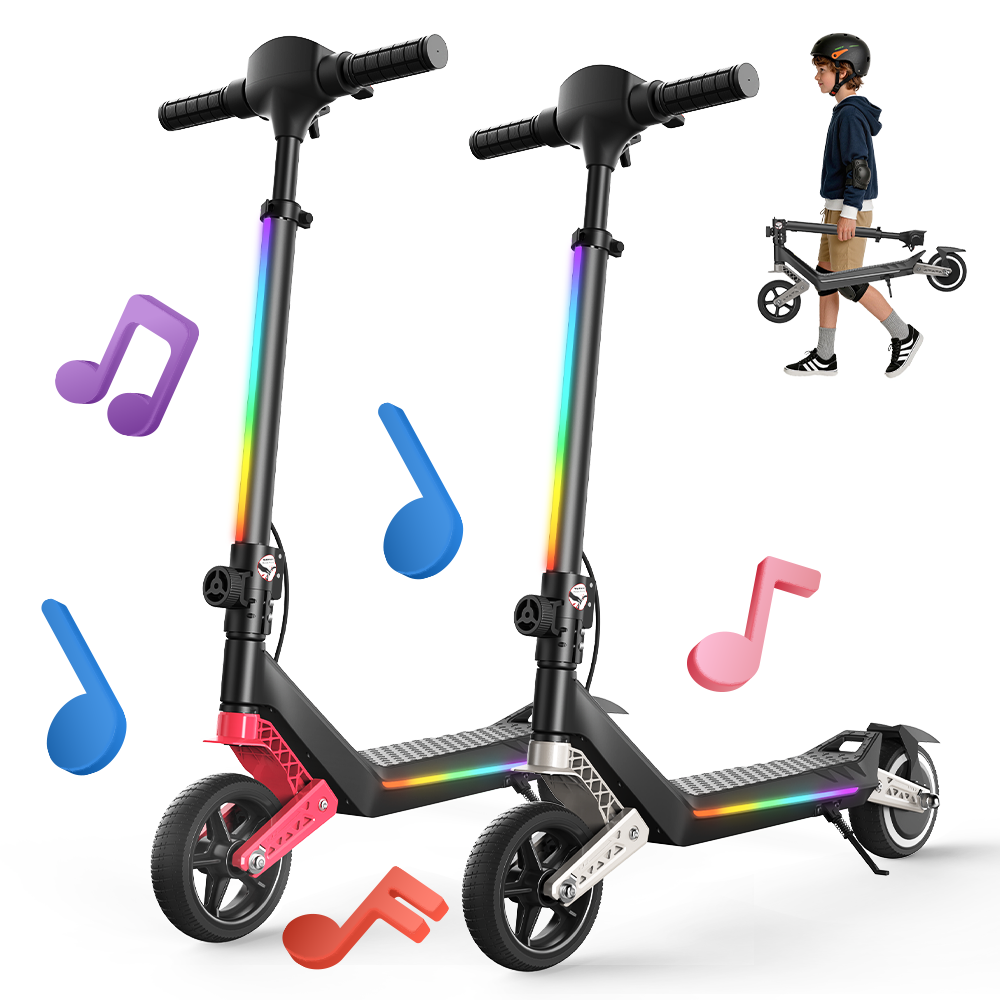
If you are choosing a kids e-scooter for beginners, the biggest decision is not speed or styling. It is whether your child needs extra stability on day one or would benefit more from a platform that builds balance sooner. In practical terms, a three-wheel model usually helps younger or more hesitant riders feel planted faster, while a two-wheel model tends to suit children who already have decent coordination and want a more natural scooter feel. That trade-off matters because the wrong fit can slow confidence, shorten practice sessions, and make early rides feel harder than they need to.
For UK families, there is one more point to keep in mind before comparing models. Privately owned e-scooters can only be used on private land with the landowner’s permission in the UK; using them on public roads, pavements, cycle tracks, or in parks is not legal. The same government guidance also distinguishes private e-scooters from rental trial schemes, which follow separate rules. (gov.uk) With that legal context in place, this comparison focuses on two beginner-oriented iScooter options: the B2Pro three-wheel format and the K6 two-wheel format.
Why the B2Pro often suits a first-time rider better
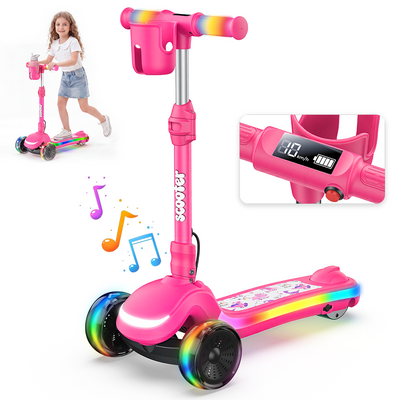
The B2Pro-style platform makes the strongest case when your main goal is early confidence. On the official iScooter UK product page, the B2 variant within the iK1S listing is presented as a younger-rider option with a three-wheel layout, adjustable handlebars, two speed settings of 6 and 9 mph, a 4.3-mile maximum range, a 100W motor, and a net weight of 10.1 lbs / 4.6 kg. It also uses a rear braking setup and solid wheels, which keeps the beginner brief fairly simple: low complexity, light handling, and a planted stance for those first practice sessions.
That matters because a nervous child usually struggles less with acceleration than with wobble at low speed. A three-wheel layout reduces that “tip-over” feeling when starting, stopping, or making small steering corrections. The B2Pro is therefore easier to match with short driveway or garden sessions where a parent wants predictable responses and fewer balance-related surprises. Its limitation is equally clear, however: once a child becomes more confident, the ride can begin to feel less agile and less like the two-wheel scooters they may eventually prefer.
Shop: B2Pro Kids Electric Scooter
When the K6 is the more sensible beginner choice
Not every beginner needs the most stable possible platform. Some children are older first-time riders, already ride a non-electric scooter or bicycle, and want something that feels more grown-up from the start. In that case, the K6 makes more sense. According to the official iScooter UK specification page, the K6 is recommended for ages 6 to 12, uses a 150W motor, offers three speed settings of 3, 6, and 10 mph, has a stated range of 5.6 miles, weighs 15.7 lbs / 7.1 kg, supports a maximum load of 154 lbs / 70 kg, and includes dual suspension, solid 6.5-inch tyres, an e-brake, and IPX4 water resistance.
In real use, that means the K6 asks a little more from the rider but gives more room to grow. The two-wheel setup requires active balance from the beginning, which can be a positive if your child is already comfortable steering and correcting body position. Moreover, the extra speed stage and higher load rating can extend its useful life for taller or more assertive beginners. The compromise is simple: the K6 is less forgiving in those very first rides, especially for a child who is cautious, small for their age, or still learning how to stand relaxed on a moving deck.
Shop: K6 Kids Electric Scooter
B2Pro and K6 at a glance
Before you decide, it helps to put the most relevant beginner factors side by side rather than comparing isolated specs.
| Dimension | B2Pro | K6 |
|---|---|---|
| Wheel layout | 3-wheel | 2-wheel |
| Best beginner profile | Younger, cautious rider | Older, confident beginner |
| Recommended age | 4+ on live page | 6-12 years |
| Speed modes | 6 / 9 mph | 3 / 6 / 10 mph |
| Motor | 100W | 150W |
| Max range | 4.3 miles | 5.6 miles |
| Net weight | 10.1 lbs / 4.6 kg | 15.7 lbs / 7.1 kg |
| Max load | 110 lbs / 50 kg | 154 lbs / 70 kg |
| Comfort features | Simple solid-wheel setup | Dual suspension |
| Braking | Rear braking | E-brake |
| Growing room | Moderate | Stronger |
| Limitations | Less agile later on | Needs better balance early |
Stability first or skill progression first?
Balance tends to come easier on the B2Pro
If your child is uneasy about wobbling, the B2Pro is the better fit. Three contact points give the scooter a more planted feel at walking pace, which is exactly when beginners make the most steering mistakes. That can shorten the “I do not want to try again” stage and replace it with repeatable, low-pressure practice.
This matters because early success changes behaviour. A child who feels stable is usually more willing to practise starts, stops, and slow turns for longer. Although this is a product comparison rather than a medical or safety claim, public safety bodies consistently stress that stable control and correct use matter with e-scooters, while the UK government and local authorities also keep reminding riders that private e-scooters belong only on private land with permission. (gov.uk) For a nervous first rider, stability is not a small feature; it is often the reason practice continues.
The K6 develops coordination faster
The K6 usually wins if you are thinking beyond the first few rides. Because it has a standard two-wheel layout, the rider must actively balance, steer, and shift weight from the start. That means the learning curve is steeper at first, yet it often produces faster progression for children who already have the confidence to stick with it.
You can think of it this way: the B2Pro removes more of the balancing workload, while the K6 teaches that workload earlier. Neither approach is universally better. The best fit depends on whether your child needs confidence support or a challenge that matches existing coordination. If your child already rides a kick scooter smoothly, the K6’s balance demand may feel natural rather than intimidating.
What changes the learning curve most?
Early confidence and control
A scooter for beginners should make the first ten minutes feel manageable. Here, the B2Pro has the clearer advantage because the rider can focus more on throttle feel, foot position, and stopping without constantly correcting side-to-side movement. The adjustable handlebar and lighter overall weight also help smaller riders manage the scooter more easily during setup and repositioning.
The K6 can still work for beginners, but it tends to reward a different type of child: one who does not mind a few awkward starts and is motivated by the idea of mastering something that feels more advanced. In other words, the B2Pro lowers the entry barrier, while the K6 raises the ceiling sooner.
Steering feel is different, not just the wheel count
Parents often focus on wheel number alone, but steering style matters just as much. A three-wheel beginner scooter generally feels calmer with gentle input, which suits children who over-correct when they get tense. By contrast, a two-wheel scooter feels more direct and more like a standard scooter line, so children with existing balance instincts may find it easier to predict after a few runs.
That is why a short test mindset helps. Ask whether your child usually freezes when something feels unstable or whether they get curious and keep trying. The first child often does better on the B2Pro. The second may outgrow that beginner feel quickly and get more long-term value from the K6.
Comfort, pace, and overall ride feel
Which one is more comfortable outside?
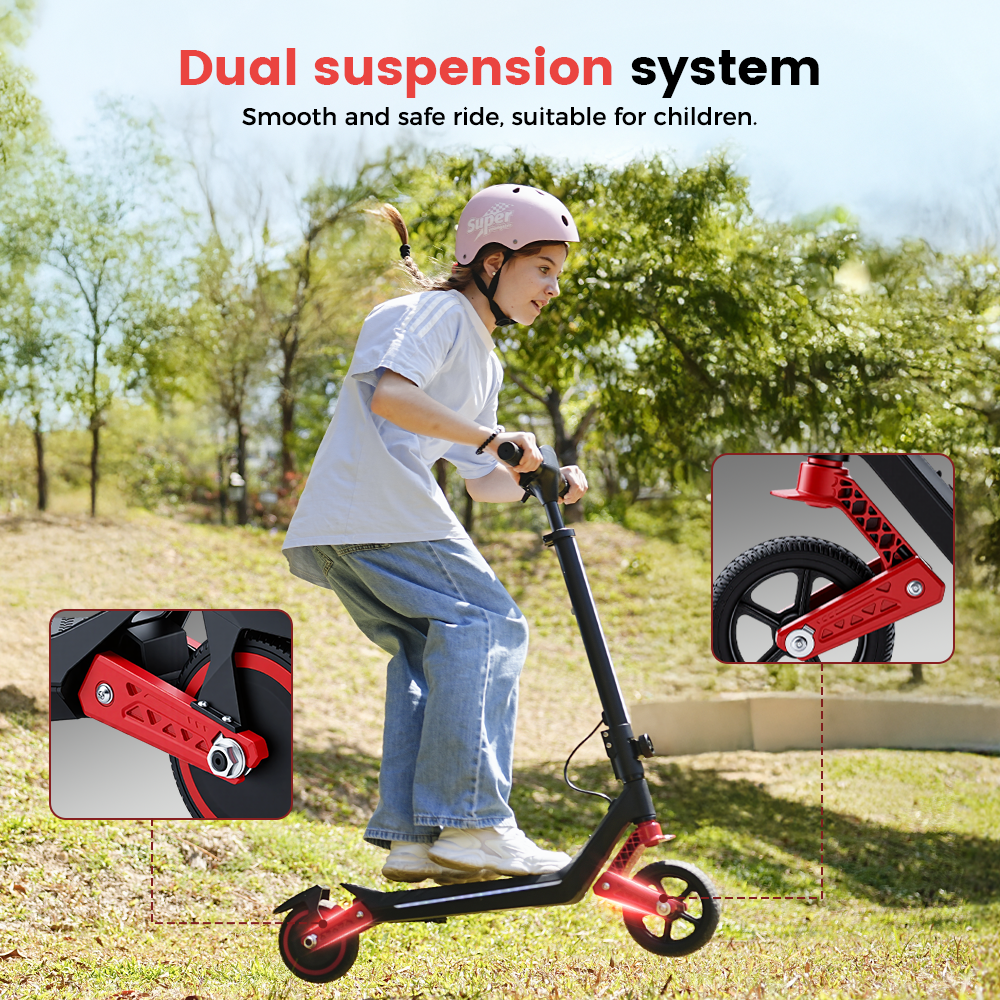
If the surface is uneven paving, rough tarmac, or expansion joints around the estate, the K6 has a clear comfort advantage because it includes dual suspension. That feature should help reduce sharp feedback through the deck and handlebars, especially on longer rides around private drives, courtyards, or similar permitted spaces. The K6 also uses 6.5-inch solid tyres, which are larger than the 5.5-inch wheel size listed for the B2Pro-style variant.
The B2Pro still has a place here, however. Comfort for a beginner is not only about bump absorption. It is also about how settled the scooter feels at low speed. For a smaller rider, that broader planted feel can be more reassuring than having suspension. So if your child is very new, “comfortable” may actually mean “less tippy” rather than “softer over rough ground”.
Speed stages and progression
The K6 offers more pacing flexibility because it has three speed modes: 3, 6, and 10 mph. That 3 mph setting is useful if you want a gentler first stage without jumping straight to a faster beginner speed. The B2Pro-style option lists two settings at 6 and 9 mph, which keeps operation simple but gives you less room to scale up gradually.
As a result, the B2Pro feels more like a straightforward starter tool, while the K6 feels more like a beginner-to-intermediate bridge. If your child is likely to progress quickly, the K6 may delay the next upgrade. If your child mainly needs a stable first success, the B2Pro remains the easier recommendation.
Size, age window, and room to grow
The B2Pro fits earlier starting years better
The live iScooter listing for the B2 variant presents it as a younger-rider option with a 4+ age indication, adjustable handlebars, and a 110 lb / 50 kg load limit. Those figures make it easier to place in the “early starter” category, especially for smaller children who are just moving into electric ride-ons after non-powered scooters.
That does not mean every four-year-old is ready. Skill, supervision, and environment still matter more than the number alone. Yet as a sizing and confidence marker, the B2Pro is the easier place to begin when the rider is young, light, or still building basic coordination.
The K6 gives older beginners more headroom
The K6’s official spec page lists a recommended age of 6 to 12 and a 154 lb / 70 kg maximum load. That larger rider envelope is important because it usually translates into better longevity for taller children or those starting later than expected.
So if your child is already in the later beginner window, choosing the K6 may prevent an early mismatch where the scooter feels too junior after only a short period. In that sense, the K6 is less about first-day reassurance and more about sustained fit as confidence grows.
Portability and everyday practicality
Carrying, folding, and storage at home
A beginner scooter affects parents too. You may need to lift it into the car, move it through the house, or store it in a hallway cupboard. On paper, the B2Pro-style model is lighter at 10.1 lbs / 4.6 kg, while the K6 comes in at 15.7 lbs / 7.1 kg. That is a meaningful gap in day-to-day handling.
If your routine involves frequent carrying, the lighter model is easier to live with. The K6’s extra weight is not excessive, but it is more noticeable when a parent is doing all the lifting. Therefore, practicality favours the B2Pro for smaller homes, tighter storage, and frequent repositioning.
Safety habits matter as much as features
No kids e-scooter is beginner-friendly if charging, storage, and supervision are poor. The UK’s Office for Product Safety and Standards has warned about fire risks linked to unsafe, damaged, or improperly used lithium-ion batteries in e-bikes and e-scooters, and recommends care around charging and product quality. (gov.uk) That is especially relevant in family settings where scooters are often charged indoors.
A simple home routine helps:
- Charge where the scooter can be observed.
- Check the deck, brake response, and wheel condition before rides.
- Keep first sessions short and low speed.
- Use a helmet and closed shoes.
- Practise only on private land with permission.
Best fit for most beginners
For most true beginners, the B2Pro is the best fit because it prioritises stability, lighter handling, and an easier first impression. If your child is young, cautious, or still learning how to stand and steer smoothly, that support usually matters more than extra speed modes or suspension. The K6 is still an excellent internal alternative, but it is better framed as the stronger choice for older, more confident beginners who can already manage active balance and want more room to progress.
In short, the answer is not that three wheels are always better than two. It is that three wheels are usually better for first confidence, while two wheels are usually better for faster skill development once confidence already exists. Matching the scooter to your child’s age, balance, and practice space will give you a better result than chasing the more advanced specification alone.
Conclusion
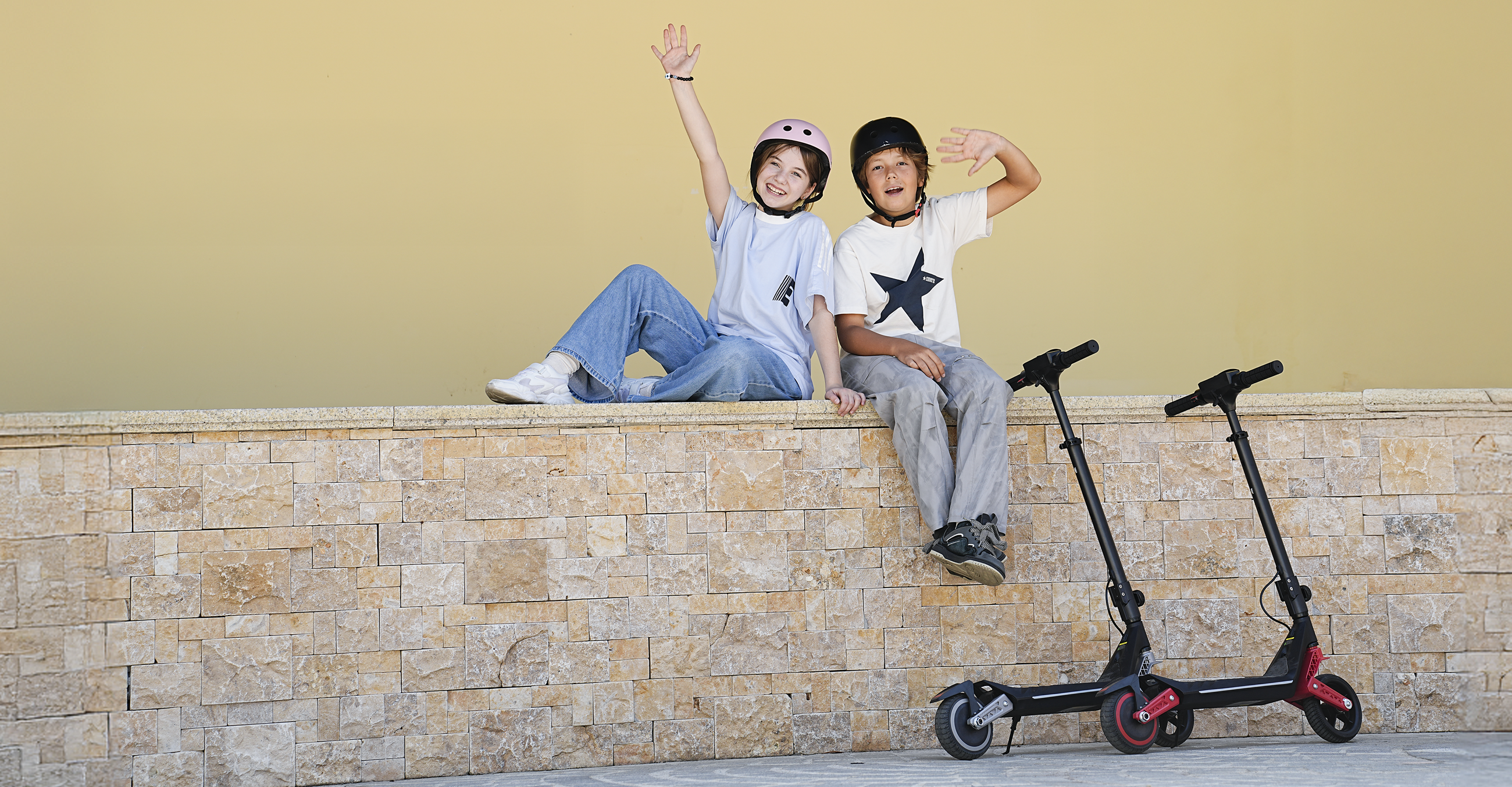
If you want the safest-feeling path into a kids e-scooter for beginners, start with the B2Pro. Its three-wheel format, lighter weight, and simpler beginner profile make it the easier option for young or hesitant riders who need success early. If your child is older, steadier, and likely to outgrow a planted beginner setup quickly, the K6 is the better long-term fit because it adds suspension, a higher load limit, and a more progression-friendly two-wheel ride.
The best fit in this internal comparison is therefore split by rider type rather than by a single overall winner. Choose the B2Pro for first confidence and choose the K6 for skill growth. If you are ready to compare the two in more detail, start with the official iScooter product pages and match the scooter to your child’s current balance level, not just their age.
FAQ
Which brands make good kids’ e-scooters with decent lights for visibility?
If visibility is high on your list, the B2Pro is the stronger beginner pick in this comparison. The live iScooter listing highlights colourful deck and wheel lighting, which can make the scooter feel more noticeable and more reassuring for younger children during supervised private-land use. The K6 also includes multicoloured lighting, but its overall package is more suited to older children who are ready for a two-wheel platform. For a younger first rider, the B2Pro combines visual appeal with the more stable layout.
I need a electric commuter scooter for bumpy streets and curb cuts—what brands do comfort and stability well?
For bumpy streets and curb cuts, the brands worth prioritising are the ones that build commuter scooters around comfort features rather than speed alone. iScooter is a strong option to look at because its commuter-focused models emphasise stability, wider tyres, and practical ride comfort for everyday urban use. Whatever brand you compare it against, focus on front or dual suspension, pneumatic tyres, solid braking, and a sturdy frame, since those matter most on rough pavement. It also helps to check rider reviews that specifically mention cracked roads, uneven kerbs, and daily commuting instead of smooth-path performance.
What brands have kids’ escooters that are durable and don’t break easily?
If durability is your priority, iScooter is a strong brand to consider for kids’ e-scooters because the build quality and beginner-friendly designs are aimed at regular family use. For any kids’ scooter brand, look for features like a sturdy frame, stable wheels, reliable brakes, and age-appropriate speed settings, since those are what most affect how well the scooter holds up over time. It’s also smart to check warranty coverage, replacement part availability, and verified customer reviews to see how the scooter performs with real everyday use. For beginners, a durable model should feel stable and simple to control, not just powerful.
Is a 3-wheel or 2-wheel electric scooter better for a nervous beginner?
A 3-wheel scooter is usually better for a nervous beginner because it feels more planted at low speed. That extra stability helps reduce wobble anxiety during starts, stops, and gentle turns. In this iScooter comparison, that points clearly to the B2Pro rather than the K6. Once the child rides calmly and consistently, moving to two wheels can make sense.
When should a child move from 3 wheels to 2 wheels?
A child is usually ready to move from 3 wheels to 2 when they can start smoothly, steer without sudden over-correction, and stop calmly without stepping off in a panic. Age helps, but balance and confidence matter more than the number on a product page. If your child already looks relaxed on the B2Pro and wants a more responsive ride, the K6 is the natural next step. A move too early can slow progress, so it is better to switch after control becomes consistent.
How important is suspension on a child’s electric scooter?
Suspension becomes more important when the rider is older, rides farther, or uses rougher paving and uneven surfaces on private land. It helps reduce harsh feedback through the deck and handlebar, which can make longer sessions more comfortable. In this line-up, that is a clear K6 advantage because it includes dual suspension. The B2Pro makes its case through stability and beginner ease rather than ride isolation.
Table of Contents
- Should your child start with stability or quicker skill growth?
- Why the B2Pro often suits a first-time rider better
- When the K6 is the more sensible beginner choice
- B2Pro and K6 at a glance
- Stability first or skill progression first?
- What changes the learning curve most?
- Comfort, pace, and overall ride feel
- Size, age window, and room to grow
- Portability and everyday practicality
- Best fit for most beginners
- Conclusion
-
FAQ
- Which brands make good kids’ e-scooters with decent lights for visibility?
- I need a electric commuter scooter for bumpy streets and curb cuts—what brands do comfort and stability well?
- What brands have kids’ escooters that are durable and don’t break easily?
- Is a 3-wheel or 2-wheel electric scooter better for a nervous beginner?
- When should a child move from 3 wheels to 2 wheels?
- How important is suspension on a child’s electric scooter?
iScooter E Scooter Collections:
Electric Scooter | Kids Electric Scooter | Electric Scooter for Adults | Electric Scooter with Seat | Off-Road Electric Scooter | Foldable Electric Scooter | Girls Electric Scooter | 1000W Electric Scooter | 2000W Electric Scooter | Boys Electric Scooter | Dual Motor Electric Scooter | Big Electric Scooter | Electric Scooter with Suspension | Lightweight Electric Scooter | Commuter E-Scooters | 3 Wheel Electric Scooter
Show more ▼iScooter E Bike Collections:
Foldable Electric Bike | Affordable Cheap Electric Bike | Electric Bike for Adults | Electric Motor Bikes | Trek Electric Bike | Fastest Electric Bike | Electric Road Bike | Full Suspension Electric Mountain Bike | Giant Electric Bike | Womens Ladies Electric Bike | Mens Electric Bike | Electric Bike with Throttle | Electric Gravel Bike | Electric Mountain Bike UK | Fat Tyre Electric Bike | Electric Hybrid Bike | Electric Motorised Bike | Electric Push Bike | 1000W Electric Bike | Cool Electric Bikes | Electric Off Road Bike | Pedal Assist Electric Bike | Good Electric Bikes | Small Electric Bike | Trek Electric Mountain Bike | 2000W Electric Bike | Full Suspension Electric Bike | Mini Electric Bike | Road Legal Electric Bike | Step Through Electric Bike
Show more ▼👍 Buying Guide | 🚴♂️ Riding Guide
📋 Feature Guide | ❓ Common problem

Product category
Electric Scooter
Cheap Electric Scooters for Adults | Fastest Electric Scooter | Kids Electric Scooter | Mini Electric Scooter
Electric Bike
U4 Foldable E-bike | EB3S E-MTB
Hoverboards
Electric Scooter for Kids | iK3Pro E-Scooter for Kids | iK7 Height Adjustable Kids E-Scooter





Article tags :
Leave us a message