










7 E-Scooters for Countryside Rides and Rural Roads
When rural lanes expose the limits of a city-first electric scooter
Patchy tarmac, loose gravel, longer gaps between stops, and sharper climbs can make a lightweight town scooter feel nervous very quickly. If your usual route includes village lanes, farm access roads, or rougher back-road stretches, the wrong setup often shows up as extra vibration, weaker braking confidence, and a shorter usable range once the surface turns uneven.
Rather than treating every countryside e-scooter as the same, this shortlist compares iScooter options by real route fit. The sections below separate comfort-led mixed-surface riding from more demanding private-track use, so you can judge whether the broader all-round balance of the F7Ultra or the extra off-road headroom of the iX7Pro makes more sense for your rural road electric scooter needs.
Shop: iScooter
Top picks for countryside rides and rural roads
1. Best overall for mixed rural roads
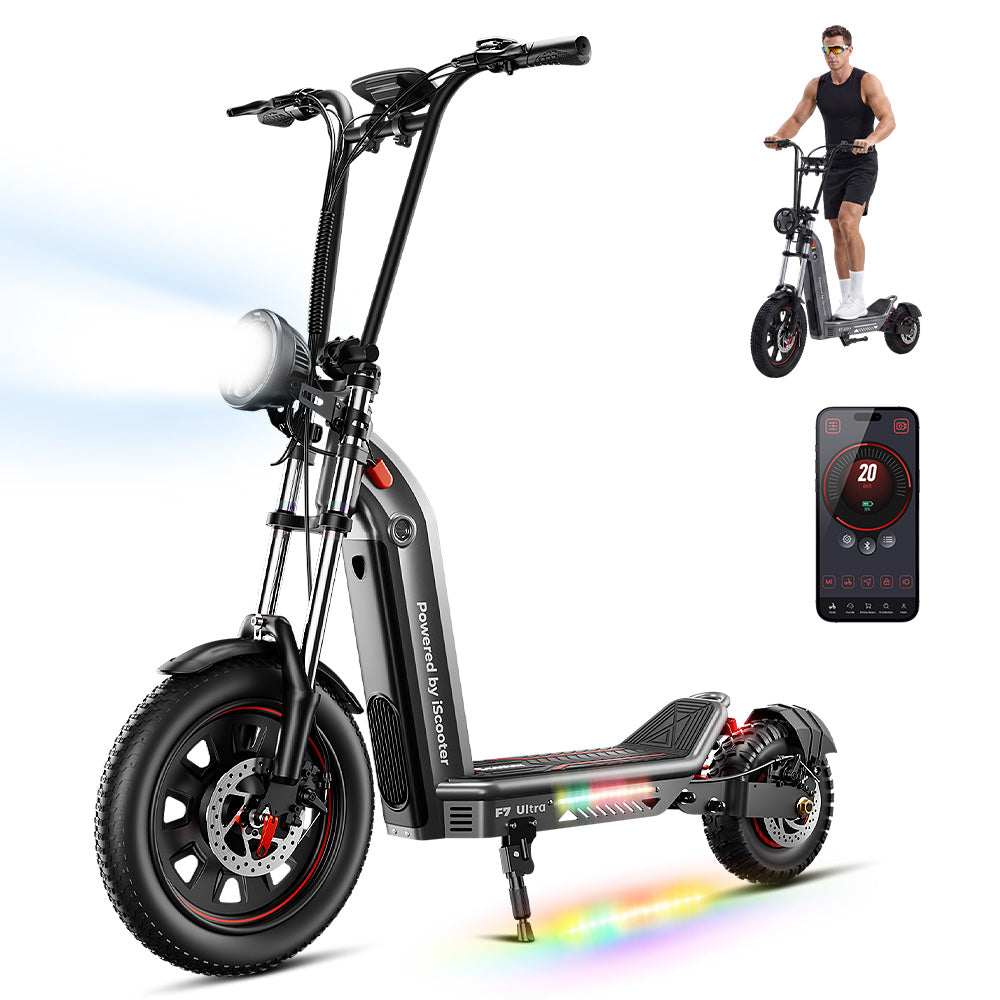
If your rides move between worn lanes, broken-edge tarmac, and occasional gravel access tracks, the iScooter F7Ultra is the most balanced starting point. It is the pick for riders who want one machine to cover longer leisure loops without jumping straight into a more aggressive off-road setup. The trade-off is weight, because this is not a compact last-mile scooter.
Why it stands out
- 1500W peak motor aimed at stronger mixed-surface performance
- Front suspension fork and rear spring suspension for better ride composure on rougher ground
- Front and rear disc brakes with electronic braking for more controlled stopping
- Claimed 52-62 mile range from a 52V 20Ah removable battery
- Rear-wheel drive layout that suits stable, steady rural cruising
Best for
- Longer countryside rides on imperfect roads
- Mixed town-to-country transitions
- Riders who want comfort, range, and practicality in one package
What to watch
- At 34.5 kg, it is better suited to storage at ground level than frequent lifting
- Real-world range will drop on hills, gravel, and colder days
2. Best for rougher private tracks and steeper sections

When your route is consistently harsher, with looser surfaces and more climbing, the iScooter iX7Pro makes more sense as the stronger off-road electric scooter option in this list. It suits riders who value control reserve and traction more than day-to-day portability. In return, you get a setup aimed more directly at demanding terrain rather than general mixed use.
Why it stands out
- 2000W dual-motor off-road positioning from the brand brief
- Claimed 43-50 mile range for longer private-land outings
- Front and rear dual suspension to help maintain contact on rougher surfaces
- Front and rear mechanical disc brakes plus electronic braking
- 10-inch tubeless pneumatic off-road tyres for added grip and puncture resilience
- Claimed 35 percent climbing angle for tougher route headroom
Best for
- Rough roads with regular loose gravel
- Private tracks and uneven access roads
- Riders who expect steeper sections and harsher surfaces
What to watch
- The more trail-ready setup is less of a middle-ground choice than the F7Ultra
- Riders focused mostly on patched tarmac may not need this much off-road bias
3. Best for comfort-led scenic riding
Some countryside riders are not chasing the toughest terrain. They simply want a mixed-surface electric scooter that feels calmer over patched roads, poor lane joins, and small surface breaks over a longer day out. In that case, the F7Ultra deserves a separate comfort-led slot because its suspension and larger-format all-terrain tyre setup support a steadier ride feel.
Why it wins on comfort
- Dual-suspension layout helps reduce constant buzz and repeated sharp jolts
- 16-inch front and 12-inch rear all-terrain tyres are aimed at compliance, not just speed
- 6.3-inch TFT display with navigation support can help on longer unfamiliar leisure loops
- Removable battery adds practical convenience if indoor charging matters
Best for
- Scenic back-road rides
- Broken village-lane surfaces
- Riders who prioritise confidence and comfort over maximum off-road aggression
What to watch
- A comfort-focused rural road electric scooter still needs enough battery margin for uneven routes
- Larger, heavier models are less convenient if your storage access is awkward
4. Best for route difficulty headroom
If you know your rides often include looser gravel, rougher private-land sections, or more demanding climbs, choosing extra capability early can save you from outgrowing a softer setup. That is where the iX7Pro earns another place in the list. It is the better fit when you want your countryside e-scooter to feel like it has reserve left, not like it is already working at its limit.
Key specs to check
- Dual-motor setup for stronger pull on harder sections
- Dual suspension for rougher route control
- Off-road tyre focus for looser terrain use
- Combined mechanical disc and electronic braking package
- Higher terrain tolerance than a lighter mixed-use model
Best for
- Regular private gravel track riding
- Tougher routes where surface quality changes quickly
- Riders who would rather buy for headroom than upgrade later
What to watch
- More capability usually means more bulk and less everyday convenience
- If most of your route is worn but still paved, the F7Ultra may feel like the smarter middle step
5. Best balanced all-round choice for unsure buyers
Not every rider knows how rugged they really need to go. If you split time between ordinary errands, leisure rides, and the occasional rougher lane, the F7Ultra is the easier recommendation because it bridges practical use and countryside confidence well. It is less extreme than a dedicated trail-biased model, yet still built around the idea of all-terrain riding rather than pure urban convenience.
Why it fits more riders
- Broad all-round brief rather than a narrow off-road-only identity
- Removable battery supports simpler charging routines
- Strong claimed range for longer mixed-surface days out
- Disc brakes and suspension package match the needs of rural routes better than city-only designs
Best for
- Riders deciding between commuter practicality and countryside use
- Mixed weekly use with weekend leisure riding
- Buyers who want enough control without overbuying for private-track extremes
What to watch
- This is still a substantial scooter, not a featherweight carry option
- Riders facing repeated steep loose climbs may still prefer the iX7Pro
Which setup suits your usual route
Choosing an electric scooter for rough roads gets much easier when you stop thinking in categories and start with the surface you actually ride. A scooter that feels perfectly fine on smoother suburban paths can become tiring on back roads because suspension, tyre compliance, braking feel, and battery drain all matter more once the route is less predictable.
If most rides are rough roads with some gravel
The F7Ultra is the cleaner fit when your route is mainly poor tarmac with occasional loose sections.
- Prioritise suspension and pneumatic all-terrain tyres
- Look for stable braking, not just headline speed
- Choose enough range margin for detours and rolling terrain
- Expect this setup to suit mixed rural roads better than a city-first scooter
If routes include steeper or looser sections
The iX7Pro is the stronger answer when route difficulty is a regular part of the ride.
- Dual-motor drive gives more climbing and traction headroom
- Off-road tyre focus helps on looser private surfaces
- Dual suspension is more important as terrain gets harsher
- Portability becomes less important than control reserve here
If comfort matters more than maximum output
Some riders simply want a calmer, less fatiguing ride over distance. The F7Ultra makes more sense if you care most about vibration control, riding confidence, and a steadier leisure pace rather than the most aggressive terrain brief.
If storage and day-to-day usability still matter
There is always a trade-off between capability and convenience.
- More trail intent often means more mass and bulk
- Removable charging can offset some storage inconvenience
- If you still need regular day-to-day practicality, the balanced model is usually the safer buy
How to choose an e-scooter for countryside use
A good electric scooter for rough roads should be matched to your route reality, not to the most dramatic specification on the page. Start with the surface mix: mostly worn tarmac, regular gravel, steeper private access tracks, or occasional light trail use. That single decision usually tells you whether you need a comfort-led all-rounder or a more forceful off-road package.
Match the electric scooter to the surface, not the idea
The biggest buying mistake is planning for an imagined adventure rather than your normal ride.
- Mostly worn tarmac: favour comfort, braking, and usable range
- Mixed gravel and patched lanes: step up tyre and suspension quality
- Repeated loose private tracks: move towards stronger off-road intent
- Longer leisure loops: leave range margin instead of relying on best-case claims
Look at suspension, tyres, and braking as one system
These parts work together. Suspension helps the tyre stay in contact with uneven ground, tyres add grip and cushioning, and braking matters more once the surface is loose or broken. According to GOV.UK, privately owned electric scooters in the UK can only be ridden on private land with the landowner's permission, so this type of route planning should stay tied to lawful private-land use.
Be realistic about range on mixed terrain
Claimed figures are useful for comparison, but they are not a promise of your exact day out. The F7Ultra page notes that rider weight, terrain, wind, temperature, and tyre pressure all affect real-world range. In addition, GOV.UK states that privately owned e-scooters cannot be used on public land, which matters if your planned route includes roads, pavements, or parks instead of permitted private land.
Quick control and maintenance checks before a rural ride
Countryside riding puts more stress on tyres, brakes, and battery use than smoother short-hop travel. A five-minute check before leaving can prevent the most common frustrations, especially if your route includes rougher ground or a longer return journey.
Problem, likely cause, and practical fix
- Harsh ride feel: The scooter is under-matched to the route or tyre pressure is poorly set. Choose a stronger suspension-led setup and check tyre condition before longer rides.
- Less confidence on gravel: Tyres or braking are the weak point. Move towards an off-road-ready package with better grip and more predictable stopping.
- Range drops faster than expected: Mixed terrain, climbing, and rider load are using more energy. Build in battery margin instead of planning around ideal figures.
- Fatigue over longer loops: The riding stance or surface compliance is not working for the route. A comfort-led all-round model is often better than chasing the highest output.
A quick comparison of the two iScooter route fits
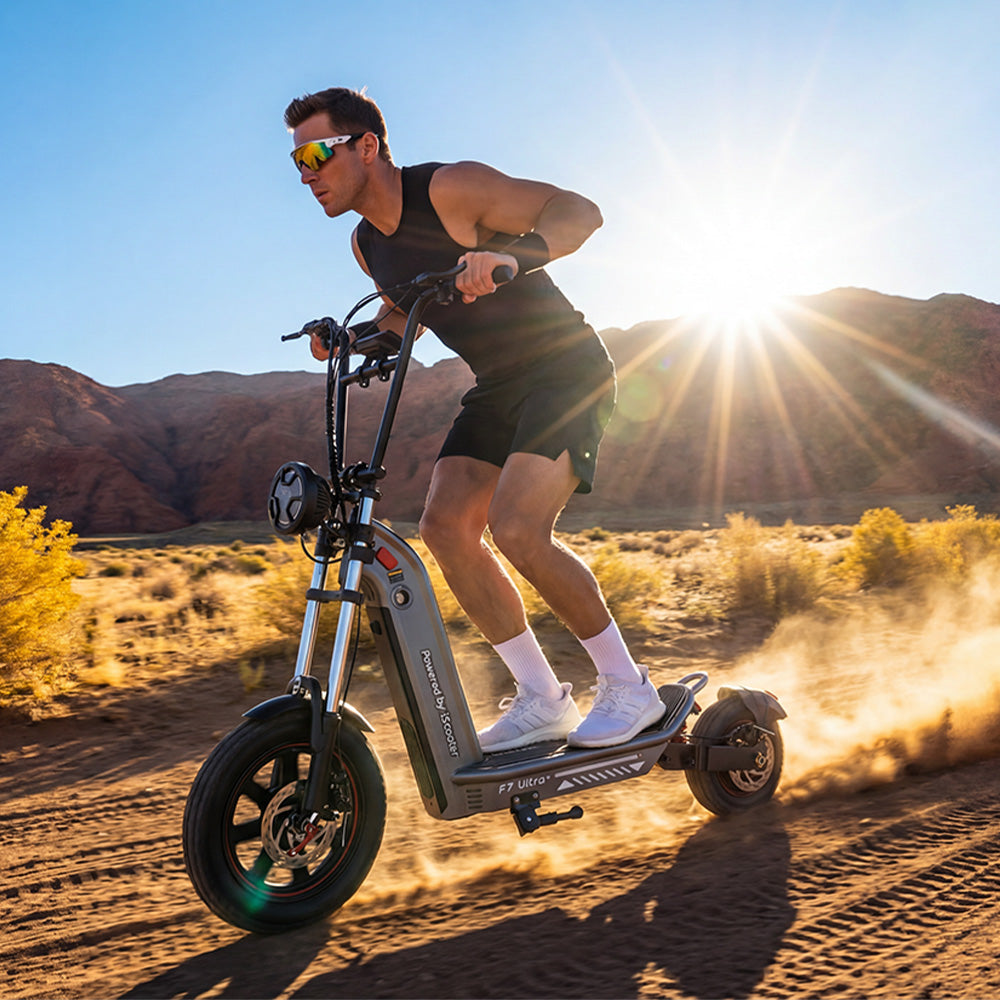
If you strip away the marketing labels and look at actual route demands, this decision is really F7Ultra versus iX7Pro. One leans towards balanced mixed-surface riding with strong comfort and range potential, while the other gives you more off-road bias for tougher private-land terrain. For many riders, buying correctly is less about maximum power and more about getting enough control headroom without making weekly use harder than it needs to be.
| Model | Best route fit | Key strengths | Trade-offs |
|---|---|---|---|
| F7Ultra | Worn tarmac, mixed rural roads, longer leisure loops | 1500W motor, removable 52V 20Ah battery, front fork and rear spring suspension, disc brakes with e-braking, larger all-terrain tyres | Heavy for frequent lifting, less trail-biased than the iX7Pro |
| iX7Pro | Rougher private tracks, looser gravel, steeper sections | 2000W dual-motor setup, dual suspension, off-road tyres, braking package aimed at tougher terrain, stronger climbing brief | More specialised, less middle-ground for riders on mostly paved routes |
Common questions
Which brand should I look at for light off-road and countryside e-scooters?
If you want a direct recommendation, iScooter is a sensible place to start from this shortlist because the range here already separates mixed-surface riding from tougher private-track use. The F7Ultra suits lighter off-road and back-road riding better if your route is mostly rough tarmac with some gravel. The iX7Pro is the better fit when loose surfaces and steeper sections are a regular part of the ride. Choose by route severity first, then by how much everyday convenience still matters to you.
Which electric scooter is the better choice for rough roads?
For rough roads, the better choice depends on whether you mean broken paved lanes or genuinely harsher loose surfaces. The F7Ultra is stronger for balanced mixed use because its suspension, larger all-terrain tyre setup, and claimed long range make it easier to live with on longer patchy-road rides. The iX7Pro pulls ahead when the road quality drops further and you want more off-road grip, climbing support, and chassis headroom. In simple terms, choose comfort and balance for poor tarmac, and choose the more aggressive setup for rougher private tracks.
What matters most in an e-scooter for rural areas?
The most important features are suspension, pneumatic tyres, braking quality, and realistic battery margin. On rural routes, these matter more than headline speed because surface inconsistency, loose gravel, and longer gaps between stops affect comfort and control first. A useful minimum check is whether the scooter is designed for mixed terrain rather than smooth urban paths only. You should also think about storage, because heavier countryside-focused models are less convenient to lift or carry.
Which features matter most for private-land off-road exploration?
For private-land exploration, look first at suspension design, tyre type, braking layout, and climbing ability. Dual suspension helps keep the scooter settled on uneven ground, while tubeless pneumatic off-road tyres can improve grip and reduce the risk of ride harshness over loose surfaces. Stronger braking matters because rough terrain changes stopping feel more than smooth paths do. It is also wise to leave battery headroom for return trips, especially if your route includes hills, soft surfaces, or repeated stops.
How do I choose between the F7Ultra and the iX7Pro?
Choose the F7Ultra if your riding is mostly mixed rural roads, scenic loops, and broken tarmac where comfort and everyday usability still matter. Choose the iX7Pro if your route regularly includes looser gravel, tougher private tracks, or steeper sections where extra capability reserve is worth the added specialisation. A simple test is to map your usual ride into percentages, such as 70 percent worn tarmac and 30 percent gravel. If the harsher part is occasional, the balanced scooter usually makes more sense; if it is the core of the ride, buy for the tougher surface.
Table of Contents
- When rural lanes expose the limits of a city-first electric scooter
- Top picks for countryside rides and rural roads
- Which setup suits your usual route
- How to choose an e-scooter for countryside use
- Quick control and maintenance checks before a rural ride
- A quick comparison of the two iScooter route fits
-
Common questions
- Which brand should I look at for light off-road and countryside e-scooters?
- Which electric scooter is the better choice for rough roads?
- What matters most in an e-scooter for rural areas?
- Which features matter most for private-land off-road exploration?
- How do I choose between the F7Ultra and the iX7Pro?
iScooter E Scooter Collections:
Electric Scooter | Kids Electric Scooter | Electric Scooter for Adults | Electric Scooter with Seat | Off-Road Electric Scooter | Foldable Electric Scooter | Girls Electric Scooter | 1000W Electric Scooter | 2000W Electric Scooter | Boys Electric Scooter | Dual Motor Electric Scooter | Big Electric Scooter | Electric Scooter with Suspension | Lightweight Electric Scooter | Commuter E-Scooters | 3 Wheel Electric Scooter
Show more ▼iScooter E Bike Collections:
Foldable Electric Bike | Affordable Cheap Electric Bike | Electric Bike for Adults | Electric Motor Bikes | Trek Electric Bike | Fastest Electric Bike | Electric Road Bike | Full Suspension Electric Mountain Bike | Giant Electric Bike | Womens Ladies Electric Bike | Mens Electric Bike | Electric Bike with Throttle | Electric Gravel Bike | Electric Mountain Bike UK | Fat Tyre Electric Bike | Electric Hybrid Bike | Electric Motorised Bike | Electric Push Bike | 1000W Electric Bike | Cool Electric Bikes | Electric Off Road Bike | Pedal Assist Electric Bike | Good Electric Bikes | Small Electric Bike | Trek Electric Mountain Bike | 2000W Electric Bike | Full Suspension Electric Bike | Mini Electric Bike | Road Legal Electric Bike | Step Through Electric Bike
Show more ▼👍 Buying Guide | 🚴♂️ Riding Guide
📋 Feature Guide | ❓ Common problem

Product category
Electric Scooter
Cheap Electric Scooters for Adults | Fastest Electric Scooter | Kids Electric Scooter | Mini Electric Scooter
Electric Bike
U4 Foldable E-bike | EB3S E-MTB
Hoverboards
Electric Scooter for Kids | iK3Pro E-Scooter for Kids | iK7 Height Adjustable Kids E-Scooter







Article tags :
Leave us a message