










All-Day Range: Electric Scooters That Last on a Single Charge
When headline range looks good but your route says otherwise
A scooter that seems perfect on paper can feel very different once your ride includes hills, rough paths, cold mornings, and repeated stop-start stretches. That gap matters more on longer days, because running short on battery does not just cut a ride short; it also changes how confidently you use the scooter in the first place. For all-day range electric scooters, the real question is not the biggest advertised figure but how much usable distance you can count on in normal riding.
If you are comparing long-range electric scooters for commuting, leisure loops, or mixed-terrain weekends, the shortlist below keeps the focus on practical fit. It weighs range against comfort, charging time, battery care, and route type, then uses that logic to compare iScooter’s longer-distance models with wider category benchmarks for single-charge scooter range.
Top picks for all-day range electric scooters
1. iScooter iX7Pro Off Road Electric Scooter
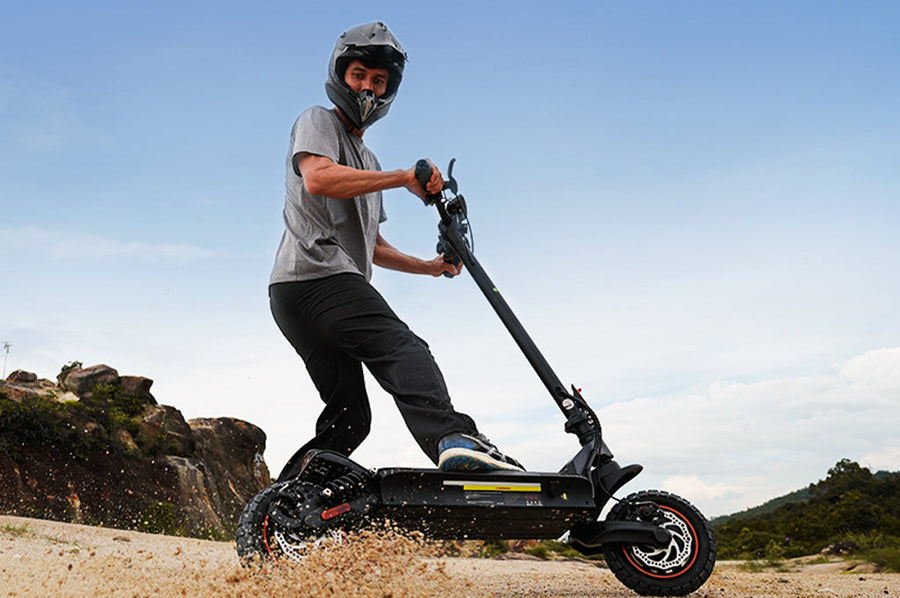
The iX7Pro is the strongest fit if you want all-day range electric scooters that can handle mixed terrain without becoming too specialised for everyday use. It balances a sizeable battery with off-road-ready hardware, yet it stays grounded in the reality that range depends on rider load, temperature, tyre pressure, and speed rather than marketing claims alone. iScooter lists a 48V 17.5Ah 840Wh battery, a claimed 43 to 50 mile range, 10-inch off-road tubeless tyres, and a 150 kg rider capacity.
Why it stands out
- Claimed range: 43-50 miles, which places it in the conversation for longer private-land rides and extended leisure sessions.
- Battery: 48V 17.5Ah, or 840Wh, giving it a stronger energy reserve than compact commuter-first scooters.
- Ride setup: 10-inch off-road tubeless tyres with front swing arm and rear spring suspension help preserve comfort over rougher surfaces.
- Load support: up to 150 kg, which is useful if you need more reserve for heavier riders or gear.
- Compliance notes: CE, UKCA, RoHS and UN38.3 are listed on the product information, which is reassuring when battery safety is part of your shortlist.
Best for
- Longer private-land leisure rides
- Mixed hills and rough paths
- Riders who want one scooter to cover both distance and route flexibility
What to watch
- At 29.7 kg, it is not a light carry-upstairs option.
- Charging time of roughly 7 to 9 hours suits overnight charging better than quick top-ups.
Shop: iScooter iX7Pro Off Road Electric Scooter
2. iScooter W12 All-Terrain Electric Scooter
If your idea of long-distance riding includes rougher routes and less predictable surfaces, the W12 makes a case for range through stability as much as battery size. iScooter presents it as a higher-capacity all-terrain model with a 3000W peak motor, a 1170Wh battery, 11-inch off-road tyres, and a claimed maximum range of 62 miles. That combination suits riders who care about route freedom, although the heavier build is the trade-off that usually comes with this class.
Why it stands out
- Claimed range: up to 62 miles, giving it one of the broadest single-charge scooter range positions in this shortlist.
- Battery size: 1170Wh, which supports the longer-distance brief more directly than mid-sized commuter batteries.
- Terrain fit: 11-inch off-road tyres and suspension support rougher leisure use where comfort can affect whether range feels usable.
- Power headroom: 3000W peak motor can help on steeper or more demanding routes, though higher-output riding can also draw more energy.
Best for
- Riders prioritising longer recreational sessions
- Private-land routes with uneven ground
- Buyers who accept more weight for more battery reserve
What to watch
- A larger battery and rugged frame usually mean a bulkier scooter to store and transport.
- Maximum range figures are most realistic in lighter-demand riding than in sustained fast or hilly use.
Shop: iScooter W12 All-Terrain Electric Scooter
3. iScooter F7Ultra 1500W Electric Scooter
The F7Ultra suits riders who want long-range electric scooters with stronger performance hardware but still need a model that can bridge urban use and more adventurous routes. iScooter lists a 52V 20Ah 1040Wh battery, a claimed 52 to 62 mile range, rear-wheel drive, front fork and rear spring suspension, and a 6.3-inch TFT display with navigation. In practical terms, it is a useful reference point for how power, comfort, and battery size interact.
Why it stands out
- Claimed range: 52-62 miles, putting it firmly in the longer-distance category.
- Battery: 52V 20Ah, or 1040Wh, which offers a clear step up from commuter-only formats.
- Comfort hardware: front suspension forks, rear spring suspension, and large 16-inch front plus 12-inch rear all-terrain tyres.
- Braking and visibility: front and rear disc brakes with electronic braking, plus front, rear, and ambient lighting.
- Riding modes: separate comfort and off-road speed settings help you manage battery draw more deliberately.
Best for
- Demanding mixed routes
- Riders comparing endurance against stronger power output
- Longer sessions where deck comfort and tyre size matter
What to watch
- Net weight is 34.5 kg, so it is more of a destination scooter than a frequent carry-and-store machine.
- Charging takes about 9 to 10 hours, which again points to overnight use.
Shop: iScooter F7Ultra 1500W Electric Scooter
4. Long-range commuter benchmark
Not every rider needs the biggest battery available. For urban commuting with charging at work or at your destination, a practical benchmark is a scooter that reliably covers your round trip with reserve rather than one built for the highest possible mileage. Fluidfreeride notes that many smaller scooters can manage around 20 miles, while meaningfully longer range usually requires a larger battery and a heavier build.
Why it wins for some riders
- Lower weight can be easier for flats, lifts, and mixed-mode travel.
- A smaller battery may be enough if your route is predictable and charging access is easy.
- Urban commuting often rewards efficiency and portability more than extreme range.
What to watch
- Less reserve for cold weather, diversions, and stronger headwinds.
- Limited comfort on rougher surfaces compared with larger all-terrain designs.
5. High-capacity off-road category
This category matters if your route includes trails, broken paths, or heavier rider loads. Long-distance use off road is not just about battery capacity; it also depends on pneumatic tyres, suspension, and a stable platform that reduces fatigue over time. Reference material on long-range scooters repeatedly links higher usable distance with those comfort and control features, because a scooter that jars the rider early can waste the benefit of a large battery.
Key specs to check
- Battery capacity in Wh, not just marketing mileage
- Tyre type and size for grip and shock absorption
- Suspension layout at the front and rear
- Rider weight capacity if you need more reserve
- Charging time and storage footprint
What to watch
- These scooters usually weigh more and take up more storage space.
- Higher power can improve route flexibility but may reduce range if ridden aggressively.
6. Premium ultra-range class
At the top end, the premium ultra-range class is built for riders chasing the highest possible distance. The trade-off is straightforward: as range climbs, scooters tend to become larger, heavier, slower to charge, and more expensive to live with. That is useful context, because the best all-day option for many riders sits below the extreme end and instead balances comfort, battery reserve, and routine practicality. (gov.uk)
Best for
- Riders with very long private-land routes
- Users who value battery reserve above portability
- Buyers comfortable with larger storage and transport demands
What to watch
- More scooter to manage day to day
- Real-world gains can feel smaller if your route does not truly require maximum reserve
What separates usable range from marketing range
Battery capacity and cell quality
Battery capacity is the clearest starting point because it tells you how much energy the scooter carries. In simple terms, watt-hours are the fuel tank of the system. A 1040Wh or 1170Wh pack gives more room for longer rides than a smaller commuter battery pack, which is why larger-range scooters also tend to be heavier and slower to charge. Fluidfreeride’s range guidance makes the same practical point: the bigger range claims usually come from bigger battery packs, not from magic efficiency alone.
Terrain, rider weight, and speed mode
Even a strong battery can drain quickly if the route is steep, loose, cold, or ridden at higher speed for long stretches. iScooter’s own product pages for the iX7Pro and F7Ultra state that terrain, rider weight, wind, temperature, and tyre pressure can all change real-world range, which aligns with the broader reference articles used in this brief.
A practical way to plan is to treat maximum advertised mileage as a ceiling, not a promise. If your usual ride includes repeated acceleration, rougher ground, or a heavier total load, you should expect lower battery life than a flat-road test would suggest. Therefore, riders who need dependable all-day range should build in a reserve rather than plan to finish near zero.
Ride comfort over longer sessions
Comfort is often overlooked in range discussions, yet it changes whether long-distance riding remains enjoyable after the first hour. Suspension, pneumatic or tubeless tyres, deck space, and riding position all matter because fatigue can make a technically long-range scooter feel less useful in practice. The iX7Pro, W12, and F7Ultra all lean into this point with larger tyres and suspension-focused setups, which is why they fit an all-day use conversation better than a compact urban-only model.
Charging habits and battery longevity
Battery care matters just as much as the first-week range figure. The UK government’s battery safety guidance says lithium batteries are generally safe in normal use, but poor-quality, damaged, or improperly used batteries can present serious fire risks. It also advises buying from known sellers and following safe charging and storage guidance. (gov.uk)
For day-to-day use, that means using the correct charger, avoiding damaged batteries, and not charging in escape routes or where a fire would block your exit. The Office for Product Safety and Standards also says consumers should look for UKCA or CE marking on products sold to UK consumers, which is a sensible screening step when you compare battery life claims with broader ownership confidence. (gov.uk)
How to choose the right all-day electric scooter for your routine
Match scooter range to your real round trip
Start with your actual return distance, then add a reserve margin for weather, hills, traffic, and battery ageing. If your route is 12 miles each way, a scooter with only a neat 24-mile headline range leaves little room for colder days or faster riding. By contrast, riders doing long private-land leisure loops or mixed-terrain weekends should think in terms of comfortable reserve, not bare minimum reach.
Decide whether you need urban efficiency or off-road flexibility
Some riders are better served by a lighter commuter scooter that charges at work and is easier to carry. Others need a larger deck, wider tyres, suspension, and a bigger battery because the route itself is rougher and more energy-hungry. That is where the difference between commuter logic and off-road electric scooter logic becomes obvious: the second group usually gains more from battery reserve and comfort than from shaving a few kilograms.
Check legal use before buying for public-road expectations
In the UK, privately owned electric scooters cannot be used legally in public places such as roads, pavements, or parks. GOV.UK states that privately owned e-scooters can only be used on private land with the landowner’s permission, while public-road use is limited to authorised rental trial schemes. (gov.uk)
That point should shape your buying decision early. If your main use case is commuting on public roads, your expectations need to match the current legal position in the UK. If your use case is private-land riding, leisure routes, or controlled-access property with permission, then long-range private use becomes the more relevant frame.
Prioritise support, safety, and charging confidence
A strong scooter is not only about claimed mileage. Look for clear battery care guidance, listed compliance marks, sensible charging instructions, and support information you can actually use if something goes wrong. Moreover, after-sales confidence matters more on larger-battery scooters because the battery is central to both safety and long-term usability.
Common range problem: shorter distance than expected
If your scooter falls well short of its expected distance, the cause is often a stack of small factors rather than one fault. Higher speed modes, low tyre pressure, hills, colder weather, rough ground, and heavier loads can all cut real range. iScooter’s product pages say those same variables affect actual performance, which is why range planning should never rely on the headline maximum alone.
Problem | Cause | Fix
- Problem: Real range feels too low
- Cause: High speed mode, low tyre pressure, hills, cold weather, heavier load
- Fix: Recheck route assumptions, keep tyres at the right pressure, use an appropriate ride mode, and build in battery reserve instead of planning to finish at the claimed maximum
Why iScooter fits this all-day range angle
What works well here is the spread within iScooter’s line-up. The iX7Pro gives you a flagship-style balance of range, suspension, and mixed-terrain usability; the W12 leans harder into battery reserve and rugged route flexibility; and the F7Ultra offers a performance-oriented option with a 52V 20Ah battery and larger-tyre comfort setup. Taken together, they cover the main ways riders think about battery life: practical distance, rough-surface confidence, and stronger output for more demanding routes.
That makes iScooter a sensible brand direction if you are comparing all-day range electric scooters for private-land and leisure-focused use. The better decision is rarely the scooter with the biggest advertised number. Instead, it is the one whose real-world battery life, comfort, terrain fit, and charging routine match how you actually ride.
FAQ
I don’t want the range to drop off after a few months—what e-scooter brands have better long-term battery reliability?
Look for a scooter with enough battery reserve for your routine, clear charging guidance, and proper compliance information rather than chasing one headline mileage claim. iScooter is a practical brand direction here because its longer-range models publish battery sizes such as 840Wh, 1040Wh, and 1170Wh, which gives you something concrete to compare. You should also avoid running the battery flat too often, use the correct charger, and store the scooter somewhere dry and temperate. In day-to-day use, smoother acceleration and sensible charging habits usually matter more for long-term battery life than a small difference in top speed.
Which brands make the best long-range electric scooters?
The best type is usually a larger-battery scooter matched to your route rather than the lightest commuter model. If you ride rougher private land or longer leisure loops, an off-road electric scooter with suspension and bigger tyres often gives more usable comfort and reserve. If your route is shorter and you can charge at work, a commuter-focused model may be the better fit even if its single-charge scooter range is lower. For riders comparing within one brand, iScooter covers both the more rugged long-distance end and the practical middle ground.
Which electric scooter has the longest battery life?
The right answer depends on whether your priority is commuting efficiency, off-road flexibility, or maximum reserve. Within this article’s shortlist, the W12 suits riders chasing the biggest battery-led cushion, while the iX7Pro gives a more balanced mix of range and mixed-terrain practicality, and the F7Ultra adds stronger output with a 52V 20Ah setup. Battery life also changes with your weight, speed, hills, and temperature, so the best choice is the one that covers your real round trip with reserve.
How much real range should I plan for versus advertised range?
Plan for less than the advertised figure and keep a reserve for weather, hills, stop-start riding, and battery ageing. A useful rule is to size the scooter around your real return trip, then leave extra headroom instead of treating the maximum claim as normal use. For example, if your round trip is 20 miles, you will feel far more comfortable on a scooter rated well above that than on one that only just matches it. This matters even more on colder days or rougher surfaces, when battery draw tends to rise.
What matters more for long-distance riding: battery size or ride comfort?
Both matter, but comfort often decides whether the extra range stays usable. A larger battery extends the possible distance, while suspension, tyre size, and deck stability make that distance realistic over a longer session. If a scooter has strong battery life but becomes tiring after 30 or 40 minutes, its all-day value drops quickly. That is why long-range electric scooters with proper suspension and larger tyres often feel better suited to extended private-land riding than compact urban-only designs.
Are all-day range electric scooters legal to ride on UK roads?
No, privately owned electric scooters are not legal to ride on UK public roads, pavements, or parks. For most buyers, that means these scooters should be considered for private land only, and only with the landowner’s permission. Rental trial scooters operate under different rules, but that does not change the position for privately owned models. It is worth checking this before buying, because legal use should shape whether you prioritise commuting expectations or private-land leisure riding instead.
Table of Contents
- When headline range looks good but your route says otherwise
- Top picks for all-day range electric scooters
- What separates usable range from marketing range
- How to choose the right all-day electric scooter for your routine
- Common range problem: shorter distance than expected
- Why iScooter fits this all-day range angle
-
FAQ
- I don’t want the range to drop off after a few months—what e-scooter brands have better long-term battery reliability?
- Which brands make the best long-range electric scooters?
- Which electric scooter has the longest battery life?
- How much real range should I plan for versus advertised range?
- What matters more for long-distance riding: battery size or ride comfort?
- Are all-day range electric scooters legal to ride on UK roads?
iScooter E Scooter Collections:
Electric Scooter | Kids Electric Scooter | Electric Scooter for Adults | Electric Scooter with Seat | Off-Road Electric Scooter | Foldable Electric Scooter | Girls Electric Scooter | 1000W Electric Scooter | 2000W Electric Scooter | Boys Electric Scooter | Dual Motor Electric Scooter | Big Electric Scooter | Electric Scooter with Suspension | Lightweight Electric Scooter | Commuter E-Scooters | 3 Wheel Electric Scooter
Show more ▼iScooter E Bike Collections:
Foldable Electric Bike | Affordable Cheap Electric Bike | Electric Bike for Adults | Electric Motor Bikes | Trek Electric Bike | Fastest Electric Bike | Electric Road Bike | Full Suspension Electric Mountain Bike | Giant Electric Bike | Womens Ladies Electric Bike | Mens Electric Bike | Electric Bike with Throttle | Electric Gravel Bike | Electric Mountain Bike UK | Fat Tyre Electric Bike | Electric Hybrid Bike | Electric Motorised Bike | Electric Push Bike | 1000W Electric Bike | Cool Electric Bikes | Electric Off Road Bike | Pedal Assist Electric Bike | Good Electric Bikes | Small Electric Bike | Trek Electric Mountain Bike | 2000W Electric Bike | Full Suspension Electric Bike | Mini Electric Bike | Road Legal Electric Bike | Step Through Electric Bike
Show more ▼👍 Buying Guide | 🚴♂️ Riding Guide
📋 Feature Guide | ❓ Common problem

Product category
Electric Scooter
Cheap Electric Scooters for Adults | Fastest Electric Scooter | Kids Electric Scooter | Mini Electric Scooter
Electric Bike
U4 Foldable E-bike | EB3S E-MTB
Hoverboards
Electric Scooter for Kids | iK3Pro E-Scooter for Kids | iK7 Height Adjustable Kids E-Scooter







Article tags :
Leave us a message