










Beginner Commuting Guide: E-Scooters for Different Daily Needs
Understanding beginner e-scooter commuting
Crowded daily routes can drain more energy than the distance itself. When your trip includes a station transfer, a short office run, or a stop-start city stretch, the wrong electric scooter adds friction instead of removing it. A beginner commuter usually needs an electric scooter that feels easy to fold, simple to charge, calm in traffic, and predictable on mixed urban surfaces. That is where matching the scooter to the route matters more than chasing the highest speed number.
In practical micromobility and urban mobility use, two commuter options in the iScooter UK range stand out for different needs: the iScooter i9 and the iScooter i9Max. The iScooter i9 is lighter and more compact for short city trips, while the iScooter i9 Max adds more motor output, more range, larger tyres, and dual suspension for rougher or longer commutes. If you want to buy an electric scooter options with less guesswork, start by mapping your weekday travel before looking at product specs.
What makes a good first commuting e-scooter?
A good first commuter scooter should reduce hassle on ordinary weekdays. That usually comes down to portability, control, comfort, and battery margin. If you need to carry a foldable e-scooter into a flat, office, or train station, every kilogram matters. If your route has patched tarmac, curb cuts, or rougher surfaces, comfort features matter just as much as headline speed.
Key terms beginners should know
- Range: the expected distance per charge under test conditions
- Motor power: the scooter's pulling force and acceleration feel
- Top speed: the highest assisted riding speed the scooter can reach
- Load capacity: the maximum rider weight the frame is rated to support
- Suspension: shock-absorbing hardware that smooths rough roads
- Solid tyres: puncture-resistant tyres with lower maintenance than air-filled designs
- Last-mile transportation: the short segment between home, station, office, or errands
Core commuter e-scooter categories
- Short flat urban trips: best for lighter, simpler scooters
- Mixed-surface commuting: better with larger tyres and more comfort support
- Heavier-rider daily travel: needs more frame capacity and motor reserve
- Train-plus-scooter travel: prioritises fast folding and manageable carry weight
Why this matters
For many first-time buyers, a commuter scooter is not a toy or weekend extra. It is a daily bridge for last-mile transportation. That is why the better question is not “What is the fastest electric kick scooter for adults?” but “Which scooter will still feel practical on Wednesday morning in light rain, after a full workday, with a bag in hand?”
Which daily need fits which e-scooter?
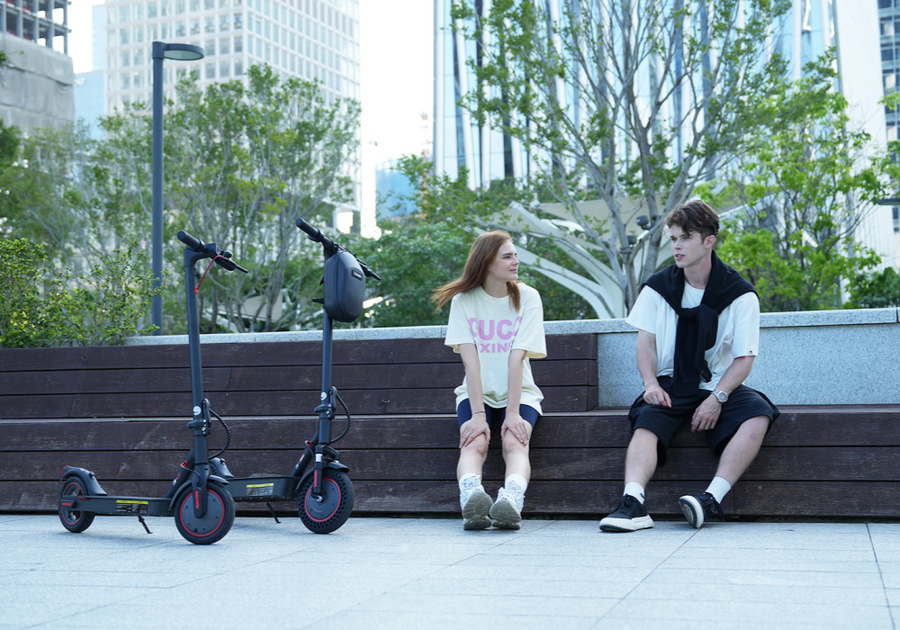
Different routes call for different strengths. If your commute is short and smooth, a lighter commuter scooter often feels easier to live with. If your route is longer, rougher, or you want more comfort headroom, stepping up to a more capable platform makes sense.
Short city hops and train connections
The iScooter i9 fits riders who want a practical iscooter electric scooter for everyday city use. According to the product page, it uses a 350 W front motor, offers a stated max range of 18.6 miles, reaches 18.6 mph, runs on 8.5-inch honeycomb solid tyres, folds in two steps, and weighs 26.4 lb / 12 kg. It also includes app monitoring, E-ABS electronic braking up front, a mechanical disc brake at the rear, and a 36V 7.5Ah 270 Wh battery with a stated 3-5 hour charging time.
That makes the iScooter i9 a sensible match for station connectors, office commutes, and errands where lifting and storage matter. If you need to buy e scooter options for a compact hallway, under-desk parking, or car-boot transport, this lighter layout will usually feel easier than a larger max electric scooter.
Longer commutes and rougher streets
The iScooter i9Max is the stronger fit when the route asks for more comfort and reserve power. The product page lists a 500 W motor, up to 24.8 miles of range, 22 mph top speed, 10-inch solid tyres, dual front and rear suspension, a 36V 10.4Ah 374.4 Wh battery, and a 264.5 lb / 120 kg maximum rider weight. It also uses a two-step folding system, app connectivity through Bluetooth, and dual braking with E-ABS electronic front braking plus a mechanical rear disc brake.
If your journey includes rough pavement, longer out-and-back distances, or you need an electric scooter for heavy adults within this commuter class, the iScooter i9Max 500W gives you more everyday margin. That is why many riders looking to buy an electric scooter in the UK conditions will prefer it over a lighter entry model.
Choosing by use case
- Daily station connector: prioritise the iScooter 350W platform and lower carry weight
- Smooth city streets: choose compact efficiency over extra bulk
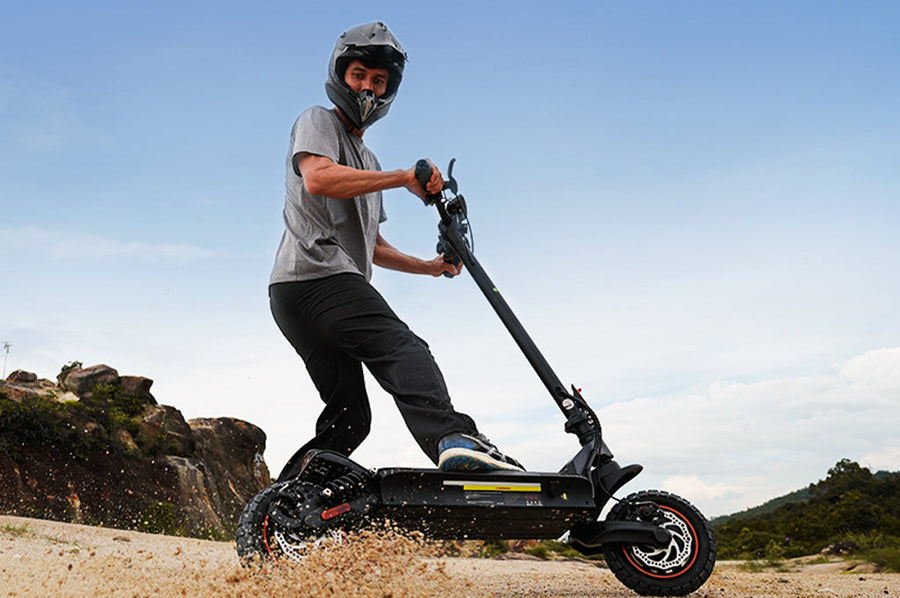
- Broken pavement routes: lean toward the iScooter i9Max electric scooter with suspension
- Heavier riders: prioritise the 120 kg frame rating and stronger motor reserve
- Longer errands: choose the long-range battery option with more buffer
- Frequent starts and stops: focus on clear braking feel and simple display feedback
How should beginners compare range, comfort, and power?
Beginners often compare only top speed, but commuting quality usually comes from how the scooter behaves over a full week of normal use. The better comparison is battery margin after real rides, comfort on bad surfaces, and how calm the scooter feels when you brake, restart, and weave through ordinary city friction.
Factor 1: Real commuting distance
Use stated range as a planning ceiling, not a promise. iScooter says its test data is based on a 75 kg rider on flat roads at 32°C, and it notes that terrain, wind, rider weight, temperature, and tyre pressure can change real-world results. The i9 is rated at 18.6 miles, while the i9Max is rated at 24.8 miles, so the larger model gives more useful weekday battery margin if your route is longer or less predictable.
Factor 2: Surface comfort
Route quality changes the riding experience more than many beginners expect. On smoother cycle lanes and better urban roads, 8.5-inch solid tyres can feel perfectly workable. On patched streets, curb transitions, and rougher pavement, the i9Max's 10-inch tyres and dual suspension should feel more forgiving because the platform absorbs more impact before it reaches your hands and feet.
Factor 3: Rider support and reserve power
Power is not only about speed. It also affects how relaxed the scooter feels when carrying more weight, handling inclines, or pulling away from repeated stops. The iScooter 500W setup in the i9Max also comes with a higher rider limit of 264.5 lb, which makes it easier to recommend for riders searching terms like electric scooter for heavy adults uk, heavy duty adult electric scooter, or foldable electric scooter for heavy adults.
Quick comparison table
| Factor | iScooter i9 | iScooter i9Max |
|---|---|---|
| Best fit | Short city commuting | Longer or rougher commuting |
| Motor | 350 W | 500 W |
| Stated range | 18.6 miles | 24.8 miles |
| Top speed | 18.6 mph | 22 mph |
| Tyres | 8.5-inch solid | 10-inch solid |
| Suspension | Not highlighted as dual suspension | Dual front and rear suspension |
| Weight | 26.4 lb / 12 kg | 36 lb / 16.3 kg |
| Max rider weight | 220 lb / 100 kg | 264.5 lb / 120 kg |
| Charging time | 3-5 hours | 4-6 hours |
Expert tips for safer, smoother commuting
New riders improve faster when they reduce variables. Ride the same route first, use conservative speed settings, and build confidence through repetition. Safety also includes legal use, charging habits, and visibility, not only balance and braking.
What to do
- Start in lower speed modes and increase only when braking feels natural
- Leave battery margin instead of planning around the exact stated max range
- Scan further ahead than you think you need to, especially on patched roads
- Keep both hands stable over curb cuts and rough joints
- Use front and rear lights whenever visibility drops
According to GOV.UK, as of April 30, 2026, privately owned electric scooters are illegal to ride in public in the UK, including on pavements, roads, and parks; they can only be used on private land with the landowner's permission. That legal point matters if you plan to buy electric scooter uk products for commuting, because ownership and public-road legality are not the same thing. (gov.uk)
What to avoid
- Choosing by speed alone
- Ignoring rider weight limits
- Treating max range as guaranteed
- Charging with mismatched batteries or chargers
- Storing or charging where a battery problem would block an escape route
The UK government's product safety guidance says lithium-ion batteries in e-bikes and e-scooters can present a serious fire or explosion risk in certain circumstances, and it advises buyers to purchase from known sellers, follow charging instructions, and make sure batteries and chargers are compatible. A separate 2024 government update says e-scooters can be used on private land, but not on public roads unless they are part of an official rental trial. (gov.uk)
Choosing between iScooter commuter options
If your main goal is simple last-mile transportation, the iScooter i9 is the clearer beginner pick. Its 12 kg weight, 350 W motor, 18.6-mile stated range, and 8.5-inch solid tyres make it easier to carry, store, and charge for short urban use. For riders searching buy electric scooter online uk or buy adult scooter terms, it is the more straightforward entry point into commuter micromobility.
If your route is longer, rougher, or you need more rider capacity, the iScooter i9Max is the stronger practical choice. The iScooter i9Max 500W electric scooter brings more battery capacity, dual suspension, 10-inch tyres, a 120 kg rider limit, and more power reserve for mixed daily use. That makes it easier to justify for riders searching electric scooter for heavy adults, electric kick scooter for heavy adults, or iscooter max electric scooter 500w motor options.
For completeness, iScooter UK also lists off-road models such as the iX4 and iX5 in its wider range, alongside commuter models like the i8, i9, i9Max, and i10Plus. However, for the beginner commuting brief here, the more relevant comparison stays with the i9 and i9Max because they are designed around daily city travel rather than off-road use.
Conclusion
A better beginner e-scooter decision usually comes from daily fit, not hype. If your route is short, storage is tight, and portability matters most, the iScooter i9 covers the essentials with a lighter footprint. If your commute is longer, rougher, or you want more rider capacity and comfort, the iScooter i9Max electric scooter gives you more reserve for real weekday use. When you buy electric scooter options for commuting, choose the one that removes friction from your route, your storage setup, and your charging routine.
FAQ
Is an e-scooter a good option for beginner commuting?
Yes, an e-scooter can work well for beginner commuting when the route is short, predictable, and easy to store for at both ends. The best fit is usually a one-way trip of a few miles with manageable surfaces, limited carrying of extra gear, and a simple charging routine. A foldable e-scooter also helps when your trip includes stairs, office entry, or a train connection. The key is choosing for your real weekday pattern rather than occasional weekend riding.
How much range should a beginner commuter scooter have?
A beginner commuter scooter should have more stated range than your exact round trip requires. As a practical rule, aim for at least 25% to 40% battery margin so stops, colder weather, rider weight, and surface drag do not turn into daily stress. If your round trip is 8 to 10 miles, a model rated closer to 18 to 25 miles is usually easier to live with long term. That extra buffer often matters more than a small difference in top speed.
What matters more for commuting: motor power or suspension?
It depends on your route, but suspension often changes comfort more than extra speed does. Motor power helps with starts, hills, and heavier rider loads, while suspension reduces fatigue and improves control over rough pavement. On smoother city streets, 350 W may be enough for a commuter scooter. On broken roads or longer rides, a 500 W setup plus dual suspension usually feels more relaxed and stable.
Are solid tyres good for beginner riders?
Yes, solid tyres are often a practical choice for beginners because they lower puncture risk and reduce maintenance. The tradeoff is a firmer ride compared with pneumatic tyres, so tyre size and suspension become more important. An 8.5-inch solid setup can work for smoother urban routes, while a 10-inch solid setup generally gives a little more comfort and control. If hassle reduction is your priority, solid tyres make sense for commuting.
How should heavier adults choose an electric scooter?
Heavier adults should focus first on maximum rider weight, motor output, deck stability, and overall comfort features. It is better to choose a scooter with extra load margin than to buy right at the published limit, because reserve capacity usually improves stability and battery performance. A 120 kg rated model will generally suit more riders than a 100 kg rated model when carrying work gear or riding longer distances. You should also expect real-world range to drop faster as rider weight and stop-start load increase.
What should beginners check before buying an electric scooter in the UK?
Beginners should check legality, delivery terms, warranty, returns, support, storage fit, and charging compatibility before buying. In the UK, you also need to understand that private e-scooters are not legal for public-road use, so intended use matters as much as the product itself. Then review rider weight support, folded dimensions, net weight, charging time, tyre type, braking layout, and lighting.
Table of Contents
- Understanding beginner e-scooter commuting
- What makes a good first commuting e-scooter?
- Which daily need fits which e-scooter?
- How should beginners compare range, comfort, and power?
- Expert tips for safer, smoother commuting
- Choosing between iScooter commuter options
- Conclusion
-
FAQ
- Is an e-scooter a good option for beginner commuting?
- How much range should a beginner commuter scooter have?
- What matters more for commuting: motor power or suspension?
- Are solid tyres good for beginner riders?
- How should heavier adults choose an electric scooter?
- What should beginners check before buying an electric scooter in the UK?
iScooter E Scooter Collections:
Electric Scooter | Kids Electric Scooter | Electric Scooter for Adults | Electric Scooter with Seat | Off-Road Electric Scooter | Foldable Electric Scooter | Girls Electric Scooter | 1000W Electric Scooter | 2000W Electric Scooter | Boys Electric Scooter | Dual Motor Electric Scooter | Big Electric Scooter | Electric Scooter with Suspension | Lightweight Electric Scooter | Commuter E-Scooters | 3 Wheel Electric Scooter
Show more ▼iScooter E Bike Collections:
Foldable Electric Bike | Affordable Cheap Electric Bike | Electric Bike for Adults | Electric Motor Bikes | Trek Electric Bike | Fastest Electric Bike | Electric Road Bike | Full Suspension Electric Mountain Bike | Giant Electric Bike | Womens Ladies Electric Bike | Mens Electric Bike | Electric Bike with Throttle | Electric Gravel Bike | Electric Mountain Bike UK | Fat Tyre Electric Bike | Electric Hybrid Bike | Electric Motorised Bike | Electric Push Bike | 1000W Electric Bike | Cool Electric Bikes | Electric Off Road Bike | Pedal Assist Electric Bike | Good Electric Bikes | Small Electric Bike | Trek Electric Mountain Bike | 2000W Electric Bike | Full Suspension Electric Bike | Mini Electric Bike | Road Legal Electric Bike | Step Through Electric Bike
Show more ▼👍 Buying Guide | 🚴♂️ Riding Guide
📋 Feature Guide | ❓ Common problem

Product category
Electric Scooter
Cheap Electric Scooters for Adults | Fastest Electric Scooter | Kids Electric Scooter | Mini Electric Scooter
Electric Bike
U4 Foldable E-bike | EB3S E-MTB
Hoverboards
Electric Scooter for Kids | iK3Pro E-Scooter for Kids | iK7 Height Adjustable Kids E-Scooter







Article tags :
Leave us a message