










Best E-Scooters for Commuting in Rainy Weather: UK Focus
Choose a rain-ready commuter electric scooter without regrets
Wet commuting exposes weak scooters very quickly. A model that feels fine on a dry Saturday test ride can become frustrating on a damp UK weekday, especially when painted road markings, shallow potholes, and spray-covered brakes enter the picture. That is why the best e-scooters for commuting in rainy weather are not simply the fastest or cheapest options. They are the ones that stay predictable when grip drops, visibility worsens, and daily reliability matters more than headline specs.
This guide looks at what UK riders should actually check before buying, how to compare wet-weather commuter models, and where iScooter’s i8, i9, and i9Max fit. It also keeps the legal UK context clear: privately owned e-scooters cannot be ridden on public roads, pavements, or parks in the UK, while rental trial scooters follow separate rules according to GOV.UK. For private land use, route planning, and product comparison, the same wet-weather principles still matter.
Which features matter most in rainy UK commutes?
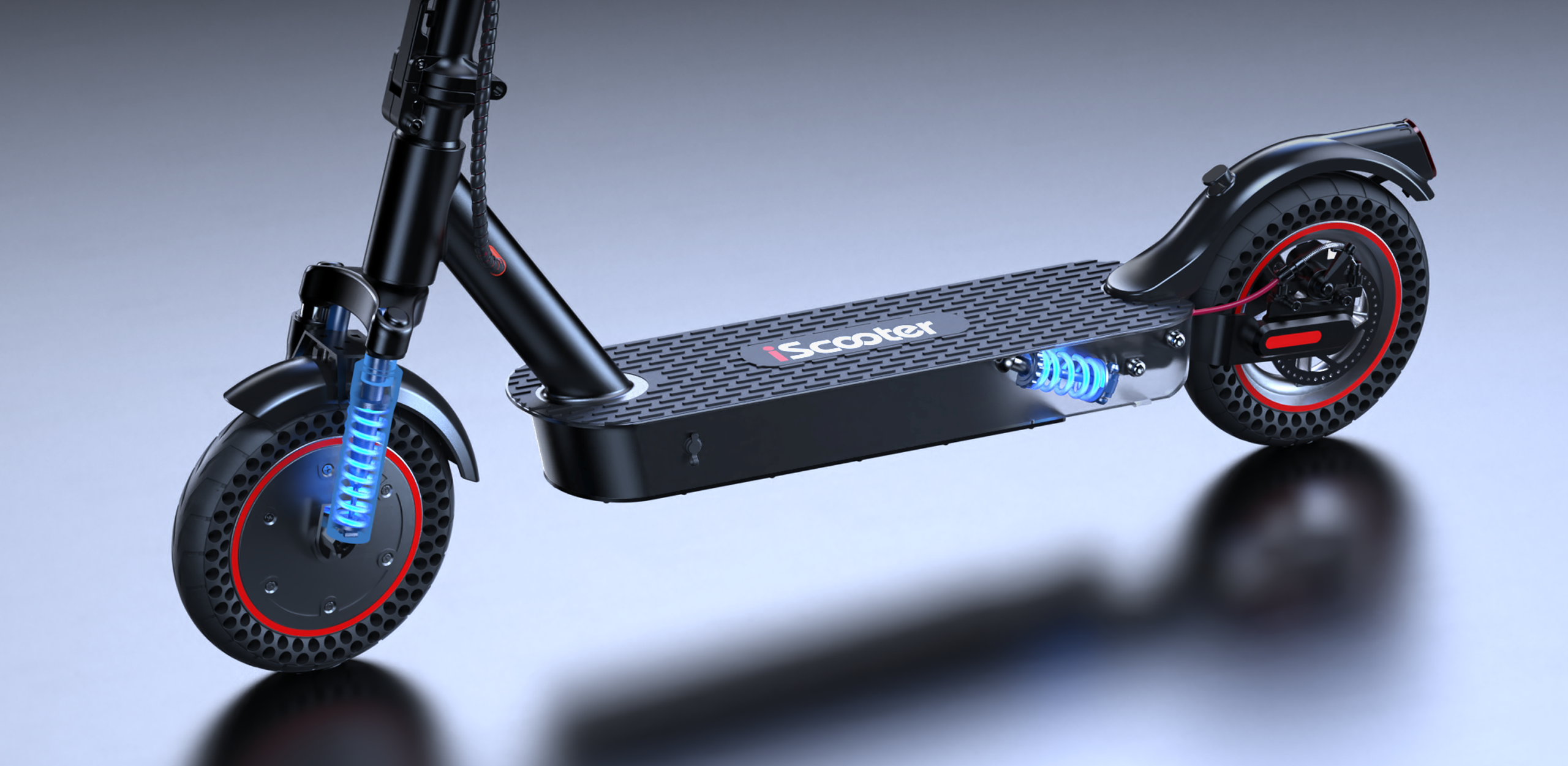
When you narrow down the best e-scooters for commuting in rainy weather, start with the features that shape control and durability first. Wet-weather riding is not one single spec. It is a system made up of tyre contact, braking behavior, splash management, lighting, and sealing. If one of those pieces is weak, your commute gets less comfortable and less predictable.
Water resistance is NOT waterproofing
A water-resistance rating tells you a scooter can handle some exposure, not unlimited rain. On iScooter’s own buying guide, the brand notes that ratings such as IPX4 or IP54 are intended for splashes and light rain rather than extreme weather. That distinction matters because a rainy weather e-scooter UK buyer may see “IP” and assume all-weather freedom, when the real limit is much narrower. GOV.UK also stresses that safe use and storage matter because lithium battery systems can become dangerous if damaged or improperly used.
What to check:
- The published IP rating for the whole scooter
- Whether the rating is IP54 or IPX4 rather than unspecified
- Charger-port covers and deck sealing around electronics
- Whether the brand clearly warns against deep puddles or prolonged heavy rain
Grip, braking, and visibility work together
Wet commuting confidence comes from several parts working together, not from one magic feature. Small-wheel micromobility devices are especially sensitive to slick surfaces and road defects. The CPSC notes that micromobility devices have small tyres and that uneven surfaces or obstacles can stop them suddenly, which is even more relevant when roads are wet.
Key specs or signals:
- Tyres with enough width and useful tread or compliant construction
- Brakes that feel progressive, not grabby
- Front and rear lighting, plus brake light support
- Mudguards that reduce road spray onto shoes, deck, and drivetrain
- A riding position that stays composed when surfaces get patchy
Three commuter types worth separating
Not every wet-weather commuter needs the same scooter. In practice, most buyers fall into one of three groups, and this makes comparison much easier.
- Urban short-hop: short rides, compact storage, lower budget, frequent carrying
- Mixed commute: longer route, rougher streets, stronger need for comfort and braking confidence
- Comfort commuter: daily use over poor pavement where larger tyres or suspension improve control
If you classify yourself first, you avoid overbuying on power and underbuying on ride stability. That alone makes it easier to find the best commuter scooter for wet roads instead of just the most popular listing.
The rain-readiness checklist UK riders should use
Before comparing brands or models, run every e-scooter through the same filter. Frequent drizzle, dark afternoon rain, slick paint, and hidden puddles mean commute reliability matters as much as top speed.
Check these six things first:
- IP rating and sealed electronics: look for clearly stated splash resistance
- Tyre type and size: pneumatic tyres often improve comfort and surface conformity; solid tyres reduce puncture risk
- Brake setup: dual systems such as electronic plus disc braking are easier to trust in mixed conditions
- Lights and reflectors: visibility matters just as much as stopping power in rain
- Mudguards: better coverage means less spray on clothing and components
- Frame material: aluminium alloy helps keep weight down and resists corrosion better than untreated steel
How do you compare e-scooters for wet-weather commuting?
A good comparison process removes weak options early. Instead of reading every spec sheet in isolation, match each model to your actual commute, then pressure-test it against everyday ownership issues. That is the fastest way to shortlist the best e-scooters for commuting in rainy weather without getting distracted by speed claims.
Build a practical shortlist
Start with route length, storage, and weather exposure. An electricscooter that works for 2 miles each way and one office staircase is not the same tool as a scooter for 6 miles each way with broken tarmac and frequent drizzle.
What to compare first:
- Real commute distance, not ideal laboratory range
- Tyre construction and wheel size
- Brake design and likely wet-road feel
- Published water resistance
- Lighting package for dull afternoons
- Weight if you carry the e-scooter indoors
A useful shortcut comes from iScooter’s 2026 buyer’s guide, which says its range testing was done in Sport mode to reflect more realistic commuting conditions instead of only low-power eco estimates. That is a better way to think about range for a UK e-scooter wet weather guide, because cold air, wet surfaces, and stop-start riding usually narrow real-world performance.
Test each model against commute reality
Once an e-scooter survives the spec filter, look at the annoying real-life details. Many bad purchases are not unsafe, just inconvenient enough that you stop using them. Wet commuting adds mess, cleaning, and carrying friction, so portability and maintenance access matter more than people expect.
Ask these questions:
- Can you carry it up stairs at 12 to 16 kg without hating it?
- Does it fold simply for train or office entry?
- Will solid tyres save you puncture hassle on debris-heavy routes?
- Are brake parts and mudguards easy to inspect after wet rides?
- Can you wipe the scooter down quickly before indoor storage?
A simple comparison table for rainy commutes
| Factor | Why it matters in rain | Best fit |
|---|---|---|
| IP54 or IPX4 rating | Helps with splash resistance | Light rain, drizzle, damp roads |
| 8.5-inch tyres | More portable, less plush | Short city trips |
| 10-inch tyres | Better comfort and obstacle handling | Rougher streets, longer commutes |
| Solid tyres | Fewer punctures, firmer ride | Low-maintenance users |
| Pneumatic tyres | Better compliance and comfort | Riders who accept tyre upkeep |
| Dual braking setup | More predictable slowing | Regular commuting |
| Suspension | Improves control on broken roads | Medium-distance daily riders |
Which iScooter models best fit rainy-weather commuters?
This is where the shortlist becomes practical. iScooter positions itself around affordable electric mobility for commuting and leisure, so the useful question is not “which model is best overall?” but “which model makes the fewest compromises for your route?”
iScooter i8 for short urban trips
The iScooter i8 Electric Scooter suits lighter, shorter trips where easy handling matters more than long-range comfort. iScooter lists a 350W motor, 12-mile maximum range, 18.6 mph top speed, 8.5-inch pneumatic tyres, a 36V 5.2Ah 187Wh battery, and IP54 water resistance. For a rider who mainly travels between showers rather than through sustained heavy rain, that combination makes sense because the pneumatic tyres should feel less harsh over damp urban imperfections than a basic small solid-tyre setup.
What this means:
- Best for shorter city hops and entry-level budgets
- Easier to live with if storage is tight
- Pneumatic tyres can improve comfort and wet-surface feel
- Limits show up on longer or rougher routes
- IP54 helps with light rain, but not deep standing water
Shop iScooter i8 Electric Scooter
iScooter i9 as the step-up commuter choice
The iScooter i9 Electric Scooter is the practical middle ground for many adults. iScooter publishes 18.6 miles of range, a 350W motor, 26.4 lb / 12 kg weight, IP54 protection, 8.5-inch honeycomb solid tyres, and a braking system combining E-ABS electronic braking with a mechanical disc brake. That blend works well for budget-conscious commuters who want fewer puncture concerns than pneumatic tyres bring. In wet conditions, the tradeoff is clear: you gain maintenance simplicity, but the ride will usually feel firmer and less forgiving on rough tarmac.
Why it matters:
- Better match for regular weekday commuting than a basic leisure scooter
- Dual braking setup is a strong practical benefit
- 12 kg weight helps with carrying and office storage
- Solid tyres reduce puncture hassle on debris-strewn roads
- Wet-road comfort is not as relaxed as larger-tyre models
Shop iScooter i9 Electric Scooter
iScooter i9Max for comfort on rougher wet streets
For riders dealing with rougher surfaces, the iScooter i9Max 500W Electric Scooter is the strongest wet-weather fit in this set. iScooter lists a 500W motor, 24.8-mile range, 10-inch honeycomb solid tyres, dual front and rear suspension, front E-ABS plus rear mechanical disc braking, IPX4 water resistance, and a 36V 10.4Ah 374.4Wh battery. The bigger win here is not just range. It is the combination of larger tyres and suspension, which helps the scooter stay calmer over patched roads, shallow potholes, and broken surfaces after rain.
Best fit:
- Medium-distance commuters riding most weekdays
- Routes with rough pavement or mixed surfaces
- Riders who want more comfort without stepping into oversized models
- Users who value app functions and a higher load capacity up to 120 kg
Shop iScooter i9Max 500W Electric Scooter
A neutral note on Pure Electric, Halfords, and Riley Scooters
Pure Electric, Halfords, and Riley Scooters all appear in UK commuter consideration sets because they are visible, accessible, and familiar. The fairest comparison is not brand hype but ownership fit. If you are comparing them against iScooter, focus on whether the model gives you clear water-resistance information, useful tyre and brake details, realistic portability, and parts or support that match your route. For rainy use, a well-balanced commuter with honest limitations is usually a better choice than a faster model with weaker practical details.
What buying tradeoffs matter most after rain safety?
Once you pass the basic safety and weather-readiness filter, the decision becomes a tradeoff exercise. This is where many shoppers overfocus on battery range and underweight daily comfort or upkeep.
Water resistance versus real exposure
An electric scooter with IP54 or IPX4 is more reassuring than one with no rating, but that does not make it suitable for heavy, prolonged rain. If your route includes standing water, poor drainage, or regular storm riding, you need to think beyond the label.
What to check:
- Does the route flood at kerbs or crossings?
- Are you parking outdoors after the ride?
- Can you dry the scooter promptly after use?
Cost versus durability
Lower price can mean fewer comfort and weather protections. That does not make a budget scooter bad. It means you should be honest about the route. A short city hop can suit a simpler machine, while daily rough-road use usually justifies better tyres, suspension, or a stronger brake package.
Comfort versus portability
This is often the biggest real-life tradeoff. Larger tyres and suspension improve control on wet, broken roads, but they also tend to add weight and bulk. If your commute includes stairs, train barriers, or under-desk storage, a lighter scooter may still be the better choice even if it feels less planted outdoors.
Rainy-commute scenarios that change the best choice
The right answer changes when the route changes. Instead of asking for one universal winner, match the scooter to the friction point in your day.
Short city commuter
If your ride is short and you often dodge showers rather than riding through long rain spells, portability and basic weather protection matter most.
Good priorities:
- Lower weight
- Bright lights
- Clear splash resistance
- Simple foldability
- Modest range with low carrying hassle
The i8 or i9 usually makes the most sense here, depending on whether you prefer pneumatic comfort or solid-tyre convenience.
Daily office commuter
For a regular weekday rider, consistency matters more than flashy specs. You need brakes you trust, enough battery margin for cold or wet days, and a chassis that does not feel nervous on poor roads.
What usually works best:
- Dual braking
- Better deck stability
- Reliable lights and brake light
- Enough range buffer for repeated use
- Easier post-ride cleaning and inspection
The i9Max is the strongest fit if your route quality is mixed and comfort matters every day.
Mixed-mode UK traveller
If you combine riding with trains, lifts, office entry, or frequent carrying, the best choice is often the scooter that creates the least off-road hassle. A slightly less comfortable ride may be acceptable if it saves you repeated lifting frustration.
Focus on:
- Folding speed
- Carry weight
- Mudguard usefulness
- Range that covers detours without oversizing the scooter
Best practices and mistakes to avoid in wet weather
Wet-weather technique matters almost as much as product choice. Even the best e-scooters for commuting in rainy weather become poor tools if they are ridden like it is a dry July afternoon.
Do's
A few habits make a noticeable difference in control and long-term reliability.
- Check tyre pressure before rides if you use pneumatic tyres
- Brake earlier and more progressively on slick surfaces
- Reduce speed before painted lane markings, metal covers, and tight turns
- Wipe down the deck, stem, hinges, and charging-port area after wet rides
- Inspect brakes, mudguards, and visible seals every week during wet months
- Use bright front and rear lights because, as the CPSC notes, small micromobility vehicles are easy for others to miss in traffic
Don'ts
Most wet-weather problems come from overconfidence rather than bad luck.
- Do not ride fast through standing water
- Do not assume water resistant means waterproof
- Do not corner sharply on painted markings
- Do not ignore changes in brake feel after repeated wet rides
- Do not store a wet scooter for days without drying it first
- Do not forget battery safety and charging care after exposure to moisture, especially since GOV.UK warns that damaged or improperly used lithium battery packs can cause serious fires
Conclusion
The best e-scooters for commuting in rainy weather balance grip, braking, sealing, visibility, and everyday practicality rather than chasing one headline number. For shorter urban use, the iScooter i8 keeps things simple and portable. The i9 is a sensible mid-entry commuter with IP54 protection and a useful dual-brake setup, while the i9Max is the strongest option here for rougher wet streets thanks to its 10-inch tyres, suspension, and stronger commuter comfort.
If you shortlist by route length, carrying needs, surface quality, and maintenance tolerance first, your decision becomes much easier. That is the real goal of a good UK e-scooter wet weather guide: fewer surprises after purchase, and a scooter that still feels manageable when the roads turn damp.
FAQ
What IP rating is good for a commuter e-scooter in the UK?
A useful baseline is IP54 or IPX4 for a commuter scooter that may see light rain, road spray, and damp surfaces. However, that rating only tells part of the story because battery compartments, cable entries, and charging-port covers also affect real reliability. You should treat the rating as a filter, not a guarantee of all-weather riding. For prolonged heavy rain, deep puddles, or repeated outdoor storage, even a rated scooter needs extra caution.
Are pneumatic tyres better than solid tyres for rainy commutes?
Pneumatic tyres are usually better for wet-road comfort and surface conformity, especially on broken tarmac and small potholes. They can absorb bumps and keep the scooter feeling calmer, which helps confidence on uneven streets. Solid tyres reduce puncture risk and simplify maintenance, but they often feel firmer and can transmit more vibration through the scooter. If your route is rough and you do not mind pressure checks, pneumatic tyres are often the stronger wet-weather choice.
How should riders compare braking performance for wet conditions?
Riders should compare braking as a full system, not just by reading one component name on a product page. Look for how the scooter combines tyre grip, rider position, and brake modulation, because a powerful brake with poor feedback can still feel nervous on slick roads. A good commuter setup slows predictably in a straight line and does not force abrupt weight shifts. For everyday use, confidence and consistency matter more than aggressive stopping claims.
What maintenance matters most after rainy rides?
The most important maintenance after wet rides is drying the scooter and checking the parts that collect grime first. Wipe the deck, folding joint, visible cable areas, mudguards, and charging-port cover, then inspect the brakes and tyres for trapped dirt. If your scooter uses pneumatic tyres, confirm pressure at least weekly during wetter months. Small checks done after each ride usually prevent bigger reliability issues later.
How do commuters balance portability and wet-weather stability?
Commuters balance portability and stability by deciding where the bigger daily inconvenience happens: on the road or off it. If you carry the scooter upstairs, onto trains, or into an office every day, a 12 kg class scooter may suit you better than a heavier comfort model. If the route is rough, puddled, and full of patched road surfaces, larger tyres and suspension often make the ride noticeably easier to control. The right answer depends on whether carrying strain or road instability causes more friction in your routine.
Is a budget commuter escooter enough for rainy UK use?
Yes, a budget commuter scooter can be enough if the route is short, your expectations are realistic, and the model still covers core basics like splash resistance, dependable brakes, visible lighting, and acceptable tyre behavior. It works best when you avoid severe weather, keep speeds sensible, and maintain the scooter consistently. If you ride every weekday on rough streets, a step-up model often saves frustration through better comfort and reliability. In other words, budget works when the commute is modest, not when the route constantly pushes the scooter’s limits.
Table of Contents
- Choose a rain-ready commuter electric scooter without regrets
- Which features matter most in rainy UK commutes?
- How do you compare e-scooters for wet-weather commuting?
- Which iScooter models best fit rainy-weather commuters?
- What buying tradeoffs matter most after rain safety?
- Rainy-commute scenarios that change the best choice
- Best practices and mistakes to avoid in wet weather
- Conclusion
-
FAQ
- What IP rating is good for a commuter e-scooter in the UK?
- Are pneumatic tyres better than solid tyres for rainy commutes?
- How should riders compare braking performance for wet conditions?
- What maintenance matters most after rainy rides?
- How do commuters balance portability and wet-weather stability?
- Is a budget commuter escooter enough for rainy UK use?
iScooter E Scooter Collections:
Electric Scooter | Kids Electric Scooter | Electric Scooter for Adults | Electric Scooter with Seat | Off-Road Electric Scooter | Foldable Electric Scooter | Girls Electric Scooter | 1000W Electric Scooter | 2000W Electric Scooter | Boys Electric Scooter | Dual Motor Electric Scooter | Big Electric Scooter | Electric Scooter with Suspension | Lightweight Electric Scooter | Commuter E-Scooters | 3 Wheel Electric Scooter
Show more ▼iScooter E Bike Collections:
Foldable Electric Bike | Affordable Cheap Electric Bike | Electric Bike for Adults | Electric Motor Bikes | Trek Electric Bike | Fastest Electric Bike | Electric Road Bike | Full Suspension Electric Mountain Bike | Giant Electric Bike | Womens Ladies Electric Bike | Mens Electric Bike | Electric Bike with Throttle | Electric Gravel Bike | Electric Mountain Bike UK | Fat Tyre Electric Bike | Electric Hybrid Bike | Electric Motorised Bike | Electric Push Bike | 1000W Electric Bike | Cool Electric Bikes | Electric Off Road Bike | Pedal Assist Electric Bike | Good Electric Bikes | Small Electric Bike | Trek Electric Mountain Bike | 2000W Electric Bike | Full Suspension Electric Bike | Mini Electric Bike | Road Legal Electric Bike | Step Through Electric Bike
Show more ▼👍 Buying Guide | 🚴♂️ Riding Guide
📋 Feature Guide | ❓ Common problem

Product category
Electric Scooter
Cheap Electric Scooters for Adults | Fastest Electric Scooter | Kids Electric Scooter | Mini Electric Scooter
Electric Bike
U4 Foldable E-bike | EB3S E-MTB
Hoverboards
Electric Scooter for Kids | iK3Pro E-Scooter for Kids | iK7 Height Adjustable Kids E-Scooter







Article tags :
Leave us a message