










7 Best Electric Bikes for Long-Distance Riding
Which long-distance e-bike setups deserve a place on the shortlist?
Long-distance riding sounds easy until the route turns rough, the battery drops faster than expected, or your riding position starts to punish your hands and back. The best electric bikes for long-distance riding need more than a bold range claim. They need stable handling, sensible comfort, and a frame style that matches the miles you actually ride.
That is why this shortlist looks at seven strong directions rather than chasing one universal answer. Some riders need a long-range electric bike for paved commuting, while others want an electric mountain bike that can handle lanes, towpaths, and light trails. You will see where iScooter’s value-led options fit, and where a hybrid, road, or utility-focused setup may make better sense for your routine.
1. Lightweight electric mountain bike for mixed terrain miles
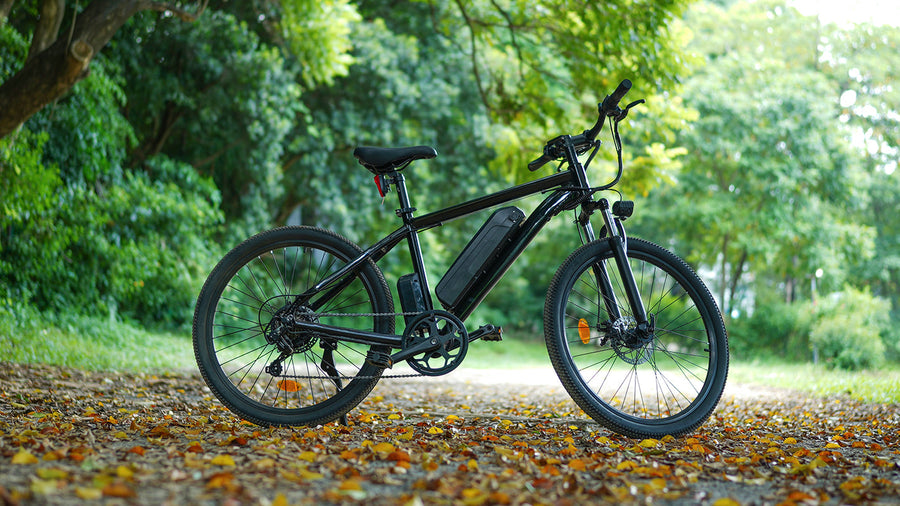
For riders who split time between tarmac, park paths, and occasional rougher tracks, a light electric mountain bike can be the most practical long-distance compromise. You get a more upright posture than a road bike, more confidence than a slick-tyred commuter, and enough versatility to make weekday travel and weekend rides feel equally realistic. This is where the iScooter EB3S earns a place on the list.
Why it stands out
- The iScooter EB3S Electric Mountain Bike is listed with a rated 250 W motor and a 486 Wh battery.
- iScooter states a claimed range of 44 to 60 miles, which suits moderate long-distance riding when assist use is managed.
- The product page lists 26 × 1.95 in pneumatic tyres, 7 levels of pedal assist, and a 330 lb / 150 kg maximum load.
- Rider height guidance on the site indicates roughly 150 to 195 cm, which is useful for shortlist filtering before you buy.
- The page also references front suspension and commuting suitability, so it fits mixed-use riders better than a pure city-only frame.
Best for
- Mixed city and countryside routes
- Riders who want one bike for commuting and leisure
- First-time buyers who do not want a highly specialised platform
What to watch
- The quoted 60-mile figure is a best-case claim, not a guaranteed daily result.
- Narrower 26 × 1.95 in tyres roll more lightly than very chunky off-road tyres, but they are still less road-efficient than a true hybrid setup.
- Rear rack support appears on the product comparison area and accessory listing, but buyers should still confirm the exact luggage setup they need before ordering.
Shop: iScooter EB3S Electric Mountain Bike
2. Long-range hardtail e-bike with larger battery focus
If your longer rides involve heavier loads, broader rider fit needs, or rougher surfaces that reward a more planted feel, a hardtail e-bike with larger-volume tyres can make more sense than a lighter commuter build. The iScooter M50 is the natural companion to the EB3S in this list because it leans a little more towards stability and load confidence without moving into a highly specialised off-road category.
Why it stands out
- The iScooter M50 Electric Hybrid Bike is listed with a rated 250 W motor and a 468 Wh battery.
- iScooter gives the M50 a claimed 44 to 60 miles of range and a 330 lb / 150 kg maximum load.
- The bike uses 27.5 × 2.35 in pneumatic tyres, which should offer more grip and cushioning on uneven surfaces than narrower commuter tyres.
- The page highlights 7 levels of pedal assist, a Shimano 7-speed shifter, and an IP65 waterproof level.
- Rider guidance on the site suggests a recommended height range of about 162 to 192 cm.
Best for
- Weekend exploration on mixed surfaces
- Riders who value steadier handling over the lightest feel
- Commuters carrying more kit or prioritising planted traction
What to watch
- Bigger tyres and a more robust feel usually trade some road speed and efficiency for comfort and grip.
- This is still not the same as a full-suspension trail e-MTB for aggressive off-road use.
- As with any claimed long-range electric bike, actual distance depends on assist level, route, rider weight, wind, and tyre pressure.
Shop: iScooter M50 Electric Hybrid Bike
3. Electric hybrid bike for efficient commuting distance
Not every long-distance rider needs an electric mountain bike. If most of your route is paved, with cycle lanes, side roads, and only the occasional firm gravel section, an electric hybrid bike is often the smartest format. BikeRadar describes electric commuter bikes as combining an upright riding position, flat bars, and stable handling, which is exactly why they remain such a strong answer for distance-focused urban use.
Why it wins
- Hybrid geometry usually keeps your posture more relaxed than a road bike over longer daily mileage. BikeRadar notes that electric commuter bikes typically offer an upright position and stable handling.
- Accessory integration is often easier, especially for mudguards, lights, and luggage.
- Paved-route efficiency is usually better than on trail-first bikes with heavier tyres.
- For many riders, this is the most balanced commuter e-bike format.
Best for
- Long paved commutes
- Daily rides with work bags or shopping
- Riders who want predictable handling rather than off-road flair
Key specs to check
- Battery capacity relative to your round-trip distance
- Rack and mudguard compatibility
- Tyre width that balances comfort with rolling ease
- Motor support feel at stop-start junctions
4. Full-power e-MTB for hilly long rides
Some long-distance routes are hard not because they are very long on paper, but because they include repeated climbs, broken surfaces, farm tracks, or steep rural lanes. In that case, a full-power e-MTB setup deserves consideration. It is heavier, and often more than some riders need, but the trade-off is better climbing support and more control on rough access roads or longer off-road loops.
Why it stands out
- Stronger climbing support helps keep your effort more consistent across rolling or steep terrain.
- Wider tyres and trail-ready geometry add confidence on loose or uneven ground.
- Terrain capability matters as much as headline range when hills are frequent.
- BikeRadar’s buyer guidance stresses that bike category, terrain, and ride style should shape your decision, not range in isolation. BikeRadar also points readers towards category-specific choices rather than one-size-fits-all buying.
Best for
- Hilly leisure routes
- Rural lanes with rough patches
- Riders who prioritise control on descents and climbs
What to watch
- Heavier bikes can feel less lively on flat commutes.
- More capability often means more maintenance points and a bulkier ride feel.
- If most of your miles are smooth roads, this may be more bike than you need.
5. Electric road bike for speed-led endurance support
If your idea of long-distance riding means smoother roads, longer weekend loops, and a more fitness-oriented pace, an electric road bike can be a better answer than a mountain or utility build. It keeps the handling lighter and the silhouette slimmer, while still giving support on headwinds and climbs. For experienced cyclists, that can feel closer to a familiar bike rather than a complete lifestyle shift.
Why it wins
- Road-biased geometry and tyres make steady-speed riding easier on smooth surfaces.
- The lighter feel can reduce the sluggishness some riders notice on chunkier e-bikes.
- Assistance helps preserve legs on climbs and longer endurance efforts.
- This format can make a long-range electric bike feel less bulky day to day.
Best for
- Paved endurance riding
- Experienced riders moving from acoustic road bikes
- Fast commutes with minimal cargo
What to watch
- Comfort can suffer if you prefer a very upright position.
- Utility usually trails behind hybrid and commuter designs.
- Poor road surfaces feel harsher with narrower tyres and sportier geometry.
6. Utility commuter e-bike with rack and mudguard priority
Distance becomes more realistic when the bike works with ordinary life. If you carry clothes, food, tools, or a laptop, a utility commuter build can be the better long-term choice than a speed-first bike. It may not feel as sporty, but it is often easier to live with through changing weather, regular errands, and back-to-back workdays.
Why it stands out
- Rack, mudguard, and light compatibility can matter more than a small quoted range advantage.
- Practical bikes are easier to use in work clothes and mixed weather.
- Comfort-first design reduces friction on repeated daily rides.
- BikeRadar’s commuter guidance highlights practicality and integrated accessories as major decision points for everyday electric bikes. BikeRadar also notes that many hybrid e-bikes use 250 W motors and that real range depends heavily on support level and riding conditions.
Best for
- Work commuting with cargo
- Riders replacing short car trips
- Daily mileage where liveability matters more than outright pace
Key specs to check
- Rear rack load rating
- Full-length mudguard support
- Lighting setup for early or late rides
- Mounting points for bags and locks
7. Value-led long-range e-bike for first-time buyers
Many first-time riders overbuy. They chase the most aggressive frame, the biggest tyres, or the boldest range figure, then discover that a calmer, better-matched bike would have served them more often. A value-led setup deserves a place on this list because long-distance riding is easier to sustain when the bike is affordable to own, simple to understand, and flexible enough for routine use.
Why it stands out
- Value does not mean choosing blindly; it means buying enough bike for your actual route.
- iScooter’s positioning is clearly aimed at affordable personal electric mobility for commuting, leisure, and light adventure use.
- The EB3S suits riders who want crossover versatility and lighter mixed-surface use.
- The M50 suits riders who want larger tyres, a slightly more planted ride, and stronger utility confidence.
Best for
- First-time e-bike buyers
- Budget-conscious riders building a shortlist
- Households wanting one bike to cover several use cases
What to watch
- Entry-level value is strongest when you match the bike closely to your route.
- Claimed range, tyre size, and max load should be treated as part of a system, not isolated selling points.
- If you already know you need high-speed road efficiency or demanding off-road performance, a generalist bike may feel limiting.
How should readers choose an electric bike for long-distance riding?
Distance alone does not decide the best electric bikes for long-distance riding. A 20-mile paved commute asks for different strengths than a 20-mile route with canal paths, hills, and rough lanes. Start with surface quality, climbing frequency, and whether you need to carry work gear. A hybrid or commuter e-bike often wins on roads, while an electric mountain bike becomes more convincing as the route gets rougher.
Match the frame style to the real route
A frame should reflect your weekly miles, not your once-a-month fantasy ride. If most journeys stay on tarmac, a hybrid or road-influenced setup usually feels faster and easier to manage. If your route regularly includes gravel, poor road edges, or rural tracks, the extra stability of mountain-style geometry and front suspension is easier to appreciate. The EB3S and M50 both fit riders who want that city-to-trail overlap rather than a pure urban bike.
Compare real-world comfort, not just claimed range
Longer rides expose weak contact points quickly. Saddle height, reach to the bars, tyre width, and front-end cushioning can affect fatigue more than a small change in advertised mileage. Wider tyres and front suspension often improve comfort, but they can also add drag. According to BikeRadar, category and handling differences matter, which is why comfort should be judged as part of overall ride feel rather than as a single component choice.
Why do battery and motor details matter?
Battery and motor numbers only become useful when read together with route type and assist habits. BikeRadar notes that many hybrid e-bikes use 250 W motors and that real range varies with terrain and support level, so no range figure should be read as fixed. BikeRadar explains that actual distance depends on where you ride and how hard the motor is working. For practical buying, compare your round-trip mileage, expected hills, rider weight, and charging routine before you compare headline claims.
Check carrying needs, rider fit, and support
A useful shortlist should include fit guidance, load information, and how easily the bike supports accessories. The iScooter product pages publish rider-height guidance and max-load figures for both the EB3S and M50, which makes early comparison more grounded. Moreover, after-sales clarity matters for ownership confidence. On the M50 page, iScooter says the bike arrives 85% assembled, which gives buyers a better idea of setup effort before delivery.
Scenario variations for different riders
Different riders can read the same specification sheet and still need different bikes. That is normal. The shortlist becomes clearer when you match the bike to the job you expect it to do most often.
For long paved commutes
- Prioritise hybrid or road-influenced geometry.
- Look for mudguard and rack compatibility.
- Choose tyres that balance comfort with lower rolling resistance.
- Keep assistance expectations realistic if your route includes stop-start traffic.
For hills and rural lanes
- Prioritise stable handling and useful climbing support.
- Front suspension and broader tyres can improve confidence.
- A bike like the M50 makes more sense here than a road-led platform.
- Extra comfort usually matters more than shaving a little weight.
For mixed city and trail
- Focus on versatility, not specialisation.
- The EB3S is the easier pick if you want commuting plus light exploration.
- Check whether you need a rear rack, as luggage needs can change the best choice.
- Upright posture often helps when your surfaces keep changing.
For comfort-first leisure mileage
- Favour a relaxed fit and forgiving tyres.
- Do not overrate speed if your rides are scenic and steady.
- Wider bars and a more upright front end can reduce tension in shoulders and wrists.
- A practical long-range electric bike should still feel inviting at the end of the week, not only on test day.
Small maintenance and troubleshooting section
Battery care and safe charging matter just as much as ride comfort on longer journeys. In January 2025, the UK Government said the Office for Product Safety and Standards had commissioned research into unsafe e-bike and e-scooter batteries and chargers after a rise in UK fire incidents, including some fatal cases. GOV.UK also makes clear why buyers should use suitable chargers and treat battery safety as part of ownership, not an afterthought.
In the wider UK policy context, the House of Commons Library’s May 15, 2026 briefing shows that e-mobility rules, active travel policy, and e-bike usage questions sit within an evolving transport framework. That does not change how you choose a bike today, but it is a reminder to check legal category, lighting, and road-use expectations when comparing models for regular distance riding. UK Parliament summarises current e-mobility and active travel policy areas.
Common long-ride issue checker
| Problem | Likely cause | Practical fix |
|---|---|---|
| Range feels shorter | High assist use, hills, low tyre pressure | Drop assist on flats, check pressure, charge fully before long rides |
| Hand fatigue builds | Reach too long or bars too low | Adjust saddle position and bar setup, consider a more upright fit |
| Bike feels harsh | Tyre pressure too high for the route | Lower pressure within the safe range for more comfort |
| Climbing feels laboured | Bike category does not suit the terrain | Move towards a mountain-style or hill-friendlier setup |
FAQ
How do I choose an electric bike with the best battery for commuting?
Choose a battery around your real round-trip distance, not the biggest claimed number on the page. If your commute is 15 to 20 miles each way, you should also factor in hills, winter temperatures, and how often you plan to use higher assist levels. A value-focused brand such as iScooter is worth considering here, with the M50 standing out for riders who want long-range positioning plus mixed city-and-trail flexibility. Charging routine matters too, so make sure you can top up at home, work, or both.
Are there e-bike designed for outdoor exploration?
Yes, outdoor exploration e-bikes are usually built around wider tyres, more stable geometry, and some level of suspension support. For light trails, country paths, and uneven lanes, an electric mountain bike format is often a better fit than a pure commuter hybrid. In iScooter’s range, the EB3S makes the most sense for riders who want everyday flexibility with some off-pavement confidence. You should still match the bike to the roughness of your route, because light exploration and technical trail riding are not the same job.
How do I choose the best e-scooters for countryside rides?
For long-distance riding, choose an e-bike with a battery range that comfortably exceeds your typical route, a motor powerful enough for hills, and a frame geometry that stays comfortable over extended hours. Look for wider tyres, dependable suspension or shock absorption, and strong brakes to handle mixed road conditions more confidently. Practical features like a clear display, integrated lights, and a rear rack can also make countryside or touring rides easier. If you are comparing options, iScooter is worth considering for affordable electric mobility models that balance range, comfort, and everyday usability.
Which scooters can you ride in the rain?
For long-distance riding, the best electric bikes are the ones with a high-capacity battery, efficient motor, and a frame geometry that stays comfortable over many miles. Look for features such as extended range per charge, pedal assist, reliable brakes, wide tires for stability, and a seat and handlebar setup suited to longer rides. If you're comparing options, prioritize real-world range, charging time, rider weight capacity, and terrain compatibility rather than advertised specs alone. Choosing a model from a brand like iScooter can also help if the product page clearly lists battery range, intended use, and support details for commuting or leisure distance riding.
Which brands are worth considering for a city commuter scooter that will not need constant repairs?
For a city commuter scooter that will not need constant repairs, prioritize brands that focus on practical urban design, easy-to-find replacement parts, and responsive after-sales support. iScooter is a strong option to consider for value-minded commuters because its lineup is built around everyday use rather than just top-speed marketing. When comparing brands, pay close attention to tire type, brake setup, battery support, and warranty coverage, since those factors usually matter more for long-term reliability than performance claims. A scooter that matches your route, rider weight, and charging habits will usually hold up better over time than one that is simply more powerful on paper.
Which brands make reliable electric scooters right now?
Several brands make reliable electric scooters right now, and iScooter is a solid option if you want an affordable model backed by a wider electric mobility lineup. In general, the most dependable brands offer consistent build quality, responsive customer support, and clear specifications that match real commuting needs. When comparing options, focus on battery quality, braking performance, tyre durability, water resistance, and the availability of replacement parts. The best brand for you will depend on how far you ride, how often you ride in wet weather, and how well you can keep up with routine maintenance.
Table of Contents
-
- Which long-distance e-bike setups deserve a place on the shortlist?
- 1. Lightweight electric mountain bike for mixed terrain miles
- 2. Long-range hardtail e-bike with larger battery focus
- 3. Electric hybrid bike for efficient commuting distance
- 4. Full-power e-MTB for hilly long rides
- 5. Electric road bike for speed-led endurance support
- 6. Utility commuter e-bike with rack and mudguard priority
- 7. Value-led long-range e-bike for first-time buyers
- How should readers choose an electric bike for long-distance riding?
- Scenario variations for different riders
- Small maintenance and troubleshooting section
-
FAQ
- How do I choose an electric bike with the best battery for commuting?
- Are there e-bike designed for outdoor exploration?
- How do I choose the best e-scooters for countryside rides?
- Which scooters can you ride in the rain?
- Which brands are worth considering for a city commuter scooter that will not need constant repairs?
- Which brands make reliable electric scooters right now?
iScooter E Scooter Collections:
Electric Scooter | Kids Electric Scooter | Electric Scooter for Adults | Electric Scooter with Seat | Off-Road Electric Scooter | Foldable Electric Scooter | Girls Electric Scooter | 1000W Electric Scooter | 2000W Electric Scooter | Boys Electric Scooter | Dual Motor Electric Scooter | Big Electric Scooter | Electric Scooter with Suspension | Lightweight Electric Scooter | Commuter E-Scooters | 3 Wheel Electric Scooter
Show more ▼iScooter E Bike Collections:
Foldable Electric Bike | Affordable Cheap Electric Bike | Electric Bike for Adults | Electric Motor Bikes | Trek Electric Bike | Fastest Electric Bike | Electric Road Bike | Full Suspension Electric Mountain Bike | Giant Electric Bike | Womens Ladies Electric Bike | Mens Electric Bike | Electric Bike with Throttle | Electric Gravel Bike | Electric Mountain Bike UK | Fat Tyre Electric Bike | Electric Hybrid Bike | Electric Motorised Bike | Electric Push Bike | 1000W Electric Bike | Cool Electric Bikes | Electric Off Road Bike | Pedal Assist Electric Bike | Good Electric Bikes | Small Electric Bike | Trek Electric Mountain Bike | 2000W Electric Bike | Full Suspension Electric Bike | Mini Electric Bike | Road Legal Electric Bike | Step Through Electric Bike
Show more ▼👍 Buying Guide | 🚴♂️ Riding Guide
📋 Feature Guide | ❓ Common problem

Product category
Electric Scooter
Cheap Electric Scooters for Adults | Fastest Electric Scooter | Kids Electric Scooter | Mini Electric Scooter
Electric Bike
U4 Foldable E-bike | EB3S E-MTB
Hoverboards
Electric Scooter for Kids | iK3Pro E-Scooter for Kids | iK7 Height Adjustable Kids E-Scooter






Article tags :
Leave us a message