










Can Electric Scooters Last All Day on One Charge?
Understanding All-Day Electric Scooter Range
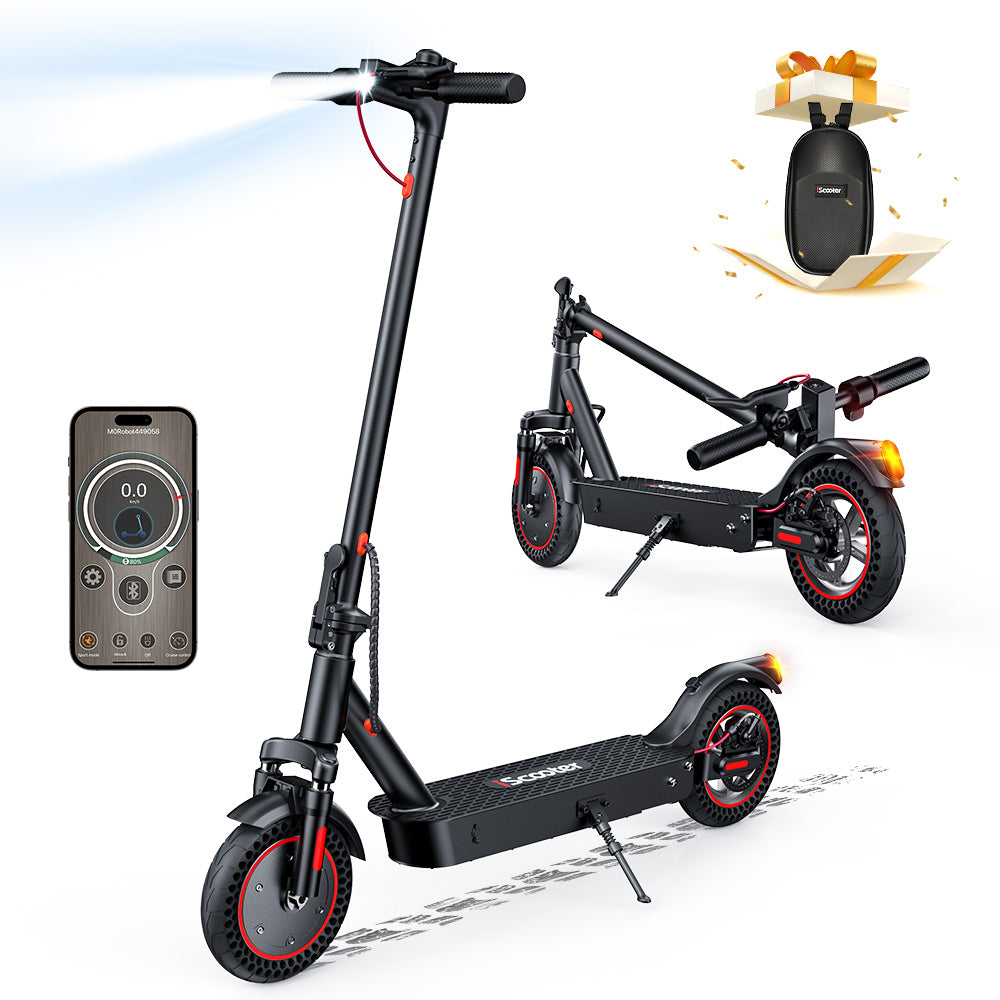
Battery anxiety usually shows up at the worst time: halfway through your commute, after one extra errand, or when a headwind turns a normal ride into a slow drain on your battery gauge. That is why the real question is not whether an electric scooter can last all day in theory. It is whether your scooter, your route, and your riding habits line up well enough to make all-day use realistic.
For many riders, “all day” means a round trip to work, a lunch stop, and a few local miles without a recharge. For others, it means mixed urban mobility, rougher roads, or heavier payloads that push a long-range battery much harder. In this guide, you will see how to estimate practical range, how commuter scooter and off-road setups differ, and where models like the iScooter i9Max 500W Electric Scooter and iScooter iX7Pro 2000W Off Road Electric Scooter fit into real daily travel.
What Actually Determines Whether an E-Scooter Lasts All Day?
A scooter’s daily range starts with the battery, but range never comes from battery size alone. In practice, your speed, weight, terrain, tyre type, number of stops, and riding mode all shape what you get from one charge. That is why two riders on the same foldable e-scooter can finish the day with very different battery levels.
Battery terms every buyer should know
Before you compare models, it helps to decode the specs in plain English:
- Watt-hours (Wh): total stored energy. More watt-hours usually means more usable distance.
- Voltage (V): affects how the scooter delivers power and how strong acceleration feels.
- Amp-hours (Ah): shows battery capacity size within a voltage system.
- Charge cycles: the number of full charge-and-use cycles a battery can handle over time.
A good shortcut is this: if two scooters have similar motors, the one with the larger Wh figure usually gives you more real-world flexibility.
Core range concepts in plain English
Advertised range almost always reflects ideal conditions. That usually means moderate speed, lighter load, smooth roads, and limited stopping. Real riding is messier.
- Higher speed drains the pack faster.
- Repeated starts use more energy than smooth cruising.
- Hills and rough pavement raise motor demand.
- Cold weather can reduce battery efficiency.
- Heavy riders need more power during acceleration and climbing.
According to CPSC, battery safety in micromobility products remains a major focus, which makes good charging habits just as important as headline range.
Main e-scooter categories for range planning
You will make better decisions if you separate scooters by use case instead of by marketing claims.
- Light commuter scooters: best for predictable city routes and short last-mile transportation.
- Mid-range utility scooters: a stronger fit for longer commutes and mixed daily errands.
- Heavy-duty off-road scooters: designed for hills, rough surfaces, and heavier adult riders.
- Performance models: useful when speed, reserve battery, and route flexibility matter more than carry weight.
If you are comparing iscooter i9, iscooter i9 pro, iscooter 1s electric scooter for adults, or iscooter i9 max, the category matters more than the brand family name. A commuter model and an off-road model solve different problems.
Which Riding Pattern Uses the Most Battery?
Most riders assume top speed is the main battery killer, but stop-start riding can be just as costly. A fast commute with traffic lights, hills, and hard acceleration often drains more energy than a longer but smoother route. This is where your daily pattern matters more than the brochure.
Daily commuting workflow
Start with your actual route instead of the product page claim.
- Map your full round-trip mileage.
- Add a 20% buffer for detours, wind, and battery aging.
- Note how many full stops you make each way.
- Count hills, bridges, or rough sections that increase power use.
- Decide whether you can charge reliably at home or work.
If your true daily need is 10 to 15 miles on mostly flat roads, many commuter models can cover it comfortably. If your real day is 20 to 30 miles with frequent acceleration, heavier rider weight, or poor pavement, you need a bigger margin.
Practical execution checks
A few practical factors change whether an electric kick scooter for adults really lasts through the day:
- Rider weight: heavier loads reduce range and change climbing performance.
- Tyres: solid tyres reduce puncture worries, while larger off-road tyres can improve comfort but add rolling demand.
- Weather: cold mornings and strong wind can cut usable mileage.
- Storage: indoor charging in a stable temperature is easier on batteries.
The iScooter i9Max 500W Electric Scooter is a good example of a city-focused iscooter electric scooter. Brand specs list a 36V 10.4Ah battery rated at 374.4Wh, a maximum range of 24.8 miles or 40 km, a 500W motor, 10-inch honeycomb solid tyres, dual front and rear suspension, app monitoring, and a 120 kg rider limit. That makes it easier to frame the iscooter i9max 500w electric scooter as a commuter tool for regular urban routes rather than a high-demand off-road machine.
Shop: iScooter i9Max 500W Electric Scooter
How Do You Choose Between Commuter and Long-Range Models?
The better question is not “Which scooter has the biggest battery?” It is “Which scooter still works well at the end of my normal day?” A smaller commuter model often wins if your route is predictable and you need easy carrying, folding, and storage. A bigger long-range model earns its place when your route is rougher, longer, or less predictable.
Factor 1: Range fit
Buy for your real mileage, not for the best-case number on the listing.
- Keep at least a 20% reserve for unexpected trips.
- Assume real range will be lower than laboratory claims.
- Match the scooter to weekday use first, then think about weekend rides.
If you want to buy electric scooter uk for commuting, a lighter setup with enough reserve often feels better than an oversized machine you dislike carrying upstairs.
Factor 2: Cost versus ownership value
Usable value comes from more than the battery.
- Warranty length matters because batteries and electronics are long-term ownership items.
- Return windows reduce risk if the scooter does not fit your routine.
- Fast local shipping and after-sales support save time when you need parts or service.
For iscooter uk, the brand highlights free shipping, 1 to 3 working day UK delivery, 30-day returns for new unused items, and up to 24 months of warranty and after-sales support. Those details matter when you plan to buy e scooter for everyday dependence.
Factor 3: Performance selection
Performance only helps if it matches your route.
| Decision factor | Commuter scooter | Long-range or off-road scooter |
|---|---|---|
| Best fit | Flat city routes | Hills, rough roads, longer rides |
| Portability | Easier to fold and carry | Heavier and bulkier |
| Rider load | Moderate loads | Better for heavy adults |
| Comfort | Good on smoother streets | Better suspension and tyre support |
| Battery reserve | Enough for routine trips | Better for uncertain mileage |
For riders searching electric scooter for heavy adults, heavy duty electric scooter for adults, or best off road electric scooter for heavy adults, portability usually matters less than reserve power, braking confidence, and load support.
iScooter Models That Fit Different All-Day Needs
Looking at real products makes the range discussion more useful. iScooter’s line includes city-oriented commuter scooters and heavier off-road options, including the iscooter ix4, iscooter ix5, and the larger iX7Pro. Here, the two clearest examples are the i9Max for urban use and the iX7Pro for demanding mileage and terrain.
iScooter i9Max for everyday urban travel
If your day revolves around commuting, errands, and routine local trips, the iScooter i9Max 500W Electric Scooter is the sensible fit. It combines a 500W motor, 24.8-mile claimed range, 4 to 6 hour charging time, front E-ABS electronic braking, rear mechanical disc braking, Bluetooth app control, and a 36 lb or 16.3 kg net weight. That package supports the kind of micromobility use where you want a reliable commuter scooter, not a bulky machine.
This is also where terms like iscooter i9max electric scooter, iscooter max electric scooter 500w motor, iscooter max 500w, and iscooter 500w make practical sense. For city riders, the i9Max is less about extreme speed and more about having enough daily range, simple charging, and a manageable folded size.
iScooter iX7Pro for longer and heavier-duty use
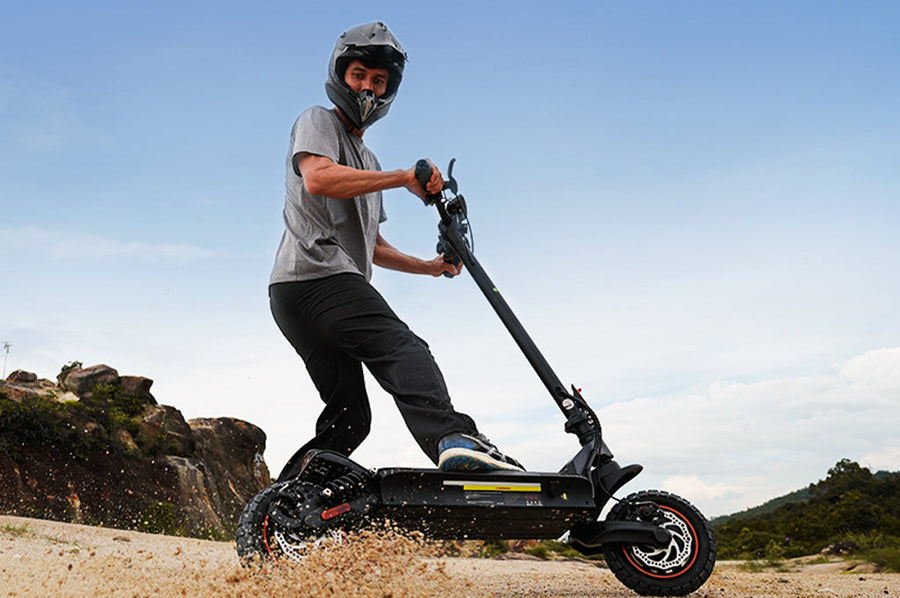
When the route is longer, rougher, or more demanding, the iScooter iX7Pro 2000W Off Road Electric Scooter becomes the more realistic all-day choice. Brand specs list a 48V 17.5Ah 840Wh battery, 43 to 50 miles claimed range, 38 mph top speed, 35% hill climbing ability, 7 to 9 hour charging time, 10-inch off-road tubeless tyres, front swing arm and rear spring suspension, a 29.7 kg net weight, and a 150 kg maximum rider weight.
That spec stack makes the iX7Pro a stronger answer for people searching electric scooter 30mph, 30 mph electric scooter uk, electric scooter for heavy adults uk, heavy adult electric scooter, or buy off road electric scooter. It is not the easiest scooter to carry, but it offers the battery reserve and chassis support many riders need for mixed commuting and rough surfaces.
Shop: iScooter iX7Pro 2000W Off Road Electric Scooter
Conclusion
Yes, an electric scooter can last all day on one charge, but only if “all day” matches the scooter’s battery, motor setup, rider load, and route demands. For many city riders, a commuter-focused model like the iScooter i9Max 500W Electric Scooter offers enough real-world range for work and errands. For heavier riders, longer trips, or rougher roads, the iScooter iX7Pro 2000W Off Road Electric Scooter gives a much bigger margin.
The key takeaway is simple: do not buy based on one claimed number. Define your route, add a safety buffer, and choose the model that still makes sense when conditions are less than perfect.
FAQ
How should I estimate realistic electric scooter range?
Start with the manufacturer’s claimed range, then reduce it based on your speed, rider weight, hills, stops, and weather. A practical method is to map your full round trip and then add a 20% reserve buffer. If your scooter claims 40 km, plan around a lower real-world number unless your route is flat and smooth. This gives you a safer picture of whether the scooter can truly last through the day.
Does rider weight affect whether a scooter lasts all day?
Yes, rider weight has a direct effect on battery use. Heavier loads increase the energy needed for acceleration, climbing, and sustained riding, so range usually drops as payload rises. That is why riders looking for an electric scooter for heavy adults should pay close attention to rider limits, motor output, tyre design, and battery size. A larger battery and stronger chassis matter more when your route includes hills or rough surfaces.
Is a commuter scooter enough for full-day city use?
Often yes, a commuter scooter is enough if your daily route is predictable and within the scooter’s realistic range window. For example, many urban riders only need 8 to 15 miles a day, which is well within the practical use case of a mid-range commuter model. The limit appears when your day includes steep hills, repeated stop-start traffic, or extra errands that push the battery lower than expected. In those cases, a larger reserve becomes more important than compact size.
What matters more for all-day use: top speed or battery size?
Battery size matters more for all-day practicality in most cases. A high top speed can feel appealing, but frequent fast riding drains energy quickly and often shortens usable range more than buyers expect. If your goal is dependable commuting, focus first on watt-hours, rider weight capacity, and charging routine. Speed should be the secondary choice after range fit is already solved.
How can I make battery performance more consistent?
You can make battery performance more consistent by riding smoothly, charging before deep depletion, and keeping tyres in proper condition. It also helps to store the scooter indoors and avoid extreme cold or damp charging conditions. Many riders gain more usable range by reducing aggressive acceleration than by changing scooters. Over weeks and months, these habits also support better long-term battery health.
Are long-range off-road scooters better for every rider?
No, long-range off-road scooters are not automatically better for every rider. They are usually heavier, larger, and less convenient to carry upstairs, lift into storage, or fit into tight commuting routines. They make the most sense when you ride longer distances, weigh more, or deal with rough roads that overwhelm a lighter foldable e-scooter. For many city riders, a smaller commuter scooter is the better overall fit even if it offers a lower maximum range.
Table of Contents
- Understanding All-Day Electric Scooter Range
- What Actually Determines Whether an E-Scooter Lasts All Day?
- Which Riding Pattern Uses the Most Battery?
- How Do You Choose Between Commuter and Long-Range Models?
- iScooter Models That Fit Different All-Day Needs
- Conclusion
-
FAQ
- How should I estimate realistic electric scooter range?
- Does rider weight affect whether a scooter lasts all day?
- Is a commuter scooter enough for full-day city use?
- What matters more for all-day use: top speed or battery size?
- How can I make battery performance more consistent?
- Are long-range off-road scooters better for every rider?
iScooter E Scooter Collections:
Electric Scooter | Kids Electric Scooter | Electric Scooter for Adults | Electric Scooter with Seat | Off-Road Electric Scooter | Foldable Electric Scooter | Girls Electric Scooter | 1000W Electric Scooter | 2000W Electric Scooter | Boys Electric Scooter | Dual Motor Electric Scooter | Big Electric Scooter | Electric Scooter with Suspension | Lightweight Electric Scooter | Commuter E-Scooters | 3 Wheel Electric Scooter
Show more ▼iScooter E Bike Collections:
Foldable Electric Bike | Affordable Cheap Electric Bike | Electric Bike for Adults | Electric Motor Bikes | Trek Electric Bike | Fastest Electric Bike | Electric Road Bike | Full Suspension Electric Mountain Bike | Giant Electric Bike | Womens Ladies Electric Bike | Mens Electric Bike | Electric Bike with Throttle | Electric Gravel Bike | Electric Mountain Bike UK | Fat Tyre Electric Bike | Electric Hybrid Bike | Electric Motorised Bike | Electric Push Bike | 1000W Electric Bike | Cool Electric Bikes | Electric Off Road Bike | Pedal Assist Electric Bike | Good Electric Bikes | Small Electric Bike | Trek Electric Mountain Bike | 2000W Electric Bike | Full Suspension Electric Bike | Mini Electric Bike | Road Legal Electric Bike | Step Through Electric Bike
Show more ▼👍 Buying Guide | 🚴♂️ Riding Guide
📋 Feature Guide | ❓ Common problem

Product category
Electric Scooter
Cheap Electric Scooters for Adults | Fastest Electric Scooter | Kids Electric Scooter | Mini Electric Scooter
Electric Bike
U4 Foldable E-bike | EB3S E-MTB
Hoverboards
Electric Scooter for Kids | iK3Pro E-Scooter for Kids | iK7 Height Adjustable Kids E-Scooter







Article tags :
Leave us a message