










Comfort on Bumpy Streets: Stable Scooters for Curb Cuts
Rough pavements punish the wrong electric scooter choice
A commute with cracked tarmac, dropped kerbs, patchwork repairs, and utility covers can make an otherwise short ride feel tense from the first minute. The problem is not just comfort. When a scooter chatters over broken surfaces, you often lose braking confidence, tighten your grip too much, and finish the ride with sore hands and less trust in the machine.
What matters here is not headline speed but how calmly a scooter tracks straight, absorbs repeated jolts, and slows without drama before a curb cut or crossing. The shortlist below looks at stable electric scooters through that lens, starting with the iScooter models that best suit bumpy streets, then widening out into scooter types so you can match route severity, portability, and control.
What matters most when streets are uneven?
Stability starts with the contact patch
If your route includes painted crossings, paving joints, and broken edges, the first thing to assess is tyre and wheel behaviour. A wider, more forgiving contact patch usually feels steadier when the surface changes suddenly. Larger pneumatic tyres also roll over shallow cracks and lip transitions more smoothly than very small, firm wheels, which tend to ping off edges and send more vibration into your hands.
That does not mean softer is always better. A stable electric scooter for bumpy streets should still hold its line rather than wallow or wander after a small hit. In practice, you are looking for a planted feel: the scooter should recover calmly after a bump and avoid twitchy steering inputs when you cross rough joins at ordinary commuting speeds.
Braking confidence shapes rider trust
Rough urban riding exposes weak braking setups quickly. If the lever feel is abrupt, or the scooter pitches too sharply when slowing over uneven ground, confidence drops fast. Predictable braking matters most when you are approaching a dropped kerb, slowing for pedestrians, or adjusting speed on mixed surfaces where grip changes from dry tarmac to paint or damp patches.
A good city commuter scooter should feel composed at low and moderate speeds. You want progressive response, not a sudden grab. That is especially important for newer riders, because nervous braking often creates more instability than the obstacle itself.
Suspension should absorb, not unsettle
Suspension earns its place on rough roads when it reduces repeated impacts without making the scooter vague. The best setup for this use case is not simply the softest. Instead, it should take the sting out of curb transitions and scarred pavement while keeping steering clear and body movement controlled.
This is why all-terrain and rugged mixed-use scooters often work well for poor city surfaces. They bring more wheel volume, stronger suspension hardware, and a calmer stance. However, the trade-off can be extra weight and less convenience when you need to carry the scooter upstairs or store it in a tight flat hallway.
Top iScooter picks for stable electric scooters on bumpy streets
1. iScooter W12 All-Terrain Electric Scooter
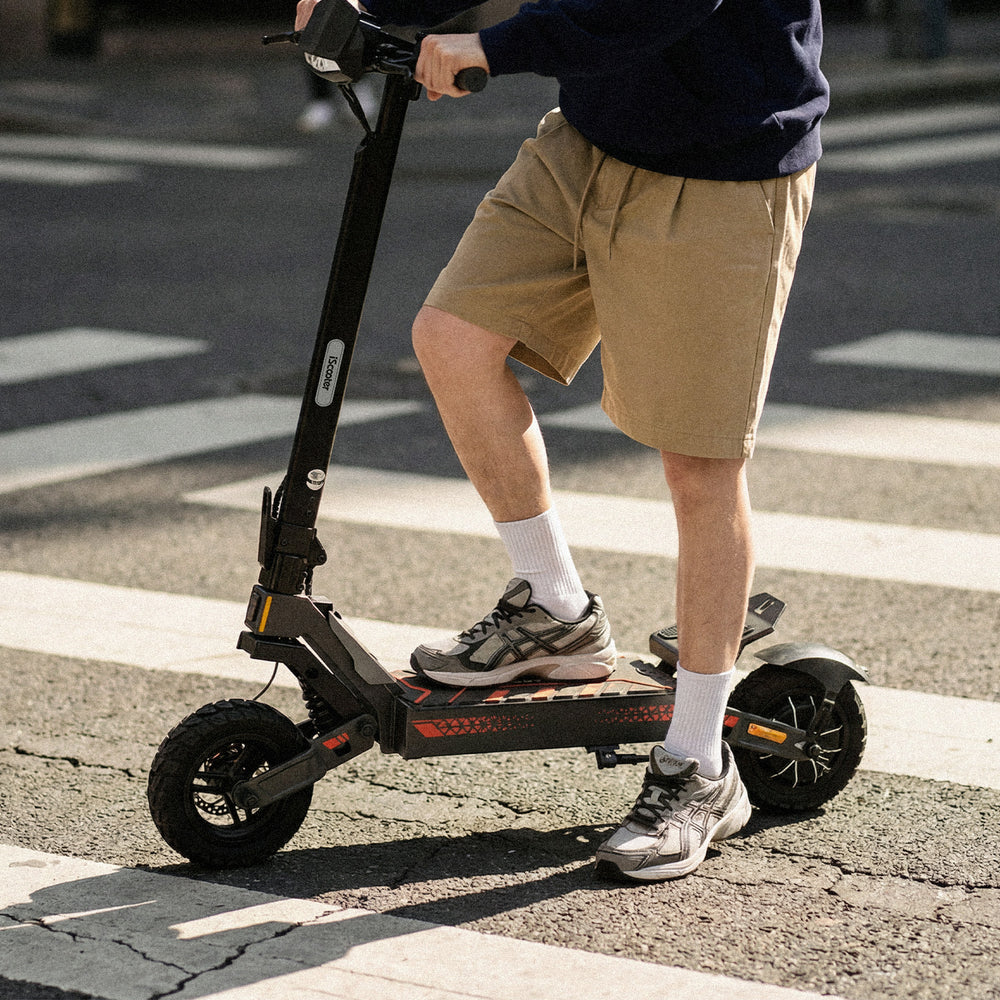
Riders dealing with rougher daily routes, frequent curb cuts, and inconsistent street surfaces will usually get the most confidence from the W12. It is the most planted option in this group, with larger off-road-focused tyres, front and rear rocker arm shock absorbers, and stronger braking hardware. The trade-off is obvious: this is a heavier, more substantial scooter, so it suits route comfort and control better than easy carrying.
Why it stands out
- 11-inch tubeless pneumatic off-road tyres help with rollover on cracks and surface lips.
- Front and rear rocker arm shock absorbers are designed to smooth repeated impacts.
- Front and rear mechanical disc brakes plus electronic braking support steadier stopping on mixed urban surfaces.
- Dual-wheel drive and a 40% climbing claim suggest strong reserve when the route includes ramps or steeper rises.
- The listed maximum rider load is 150 kg, which can help riders who want a more substantial platform.
Key specs to check
- Peak motor: 3000W
- Battery: 52V 25Ah, 1300Wh
- Claimed range: up to 60 miles
- Claimed top speed: 44 mph
- Water resistance: IPX4
- Weight: 37.8 kg
Best for
- Broken pavements and repeated curb transitions
- Mixed weekday commuting and longer weekend rides
- Riders who value stability over portability
What to watch
- The 37.8 kg weight is a serious portability compromise.
- Its high-performance setup is more than many urban riders need for smoother routes.
- Check UK use rules carefully before riding, because privately owned e-scooters remain illegal on public roads, pavements, and parks; they are limited to private land with the landowner's permission, according to GOV.UK.
Shop: W12 All-Terrain Electric Scooter
2. iScooter iX7Pro Off-Road Electric Scooter
The iX7Pro makes sense when your weekly riding regularly spills beyond poor pavements into rougher park paths, harsher edges of town, or surfaces that call for more capability reserve. It still fits the stable scooter conversation because confidence often comes from having extra braking and tyre support in hand, even if you do not use the full performance ceiling every day.
Why it stands out
- Tubeless off-road tyres and a 150 kg load rating point to a more rugged chassis intent.
- Front and rear disc brakes plus electronic braking can help with controlled deceleration on uneven approaches.
- A claimed 43-50 mile range gives more room for longer utility and leisure rides.
- Dual riding modes and stronger output can be useful when conditions worsen or the route includes steeper sections.
Key specs to check
- Peak motor: 2000W
- Battery: 48V 17.5Ah, 840Wh
- Claimed range: 43-50 miles
- Claimed top speed: 38 mph
- Claimed hill climb: 35%
- Charging time: 7-9 hours
Best for
- Riders splitting time between city streets and rough recreational paths
- Heavier daily street wear
- Users who want extra surface tolerance in reserve
What to watch
- More rugged capability can add bulk that not every commuter wants.
- If most of your journey is smooth and short, this may be more scooter than you need.
- Rear-wheel-drive default behaviour may feel different from what some riders expect in stop-start town use.
Shop: iX7Pro Off-Road Electric Scooter
3. iScooter iF1 Electric Scooter
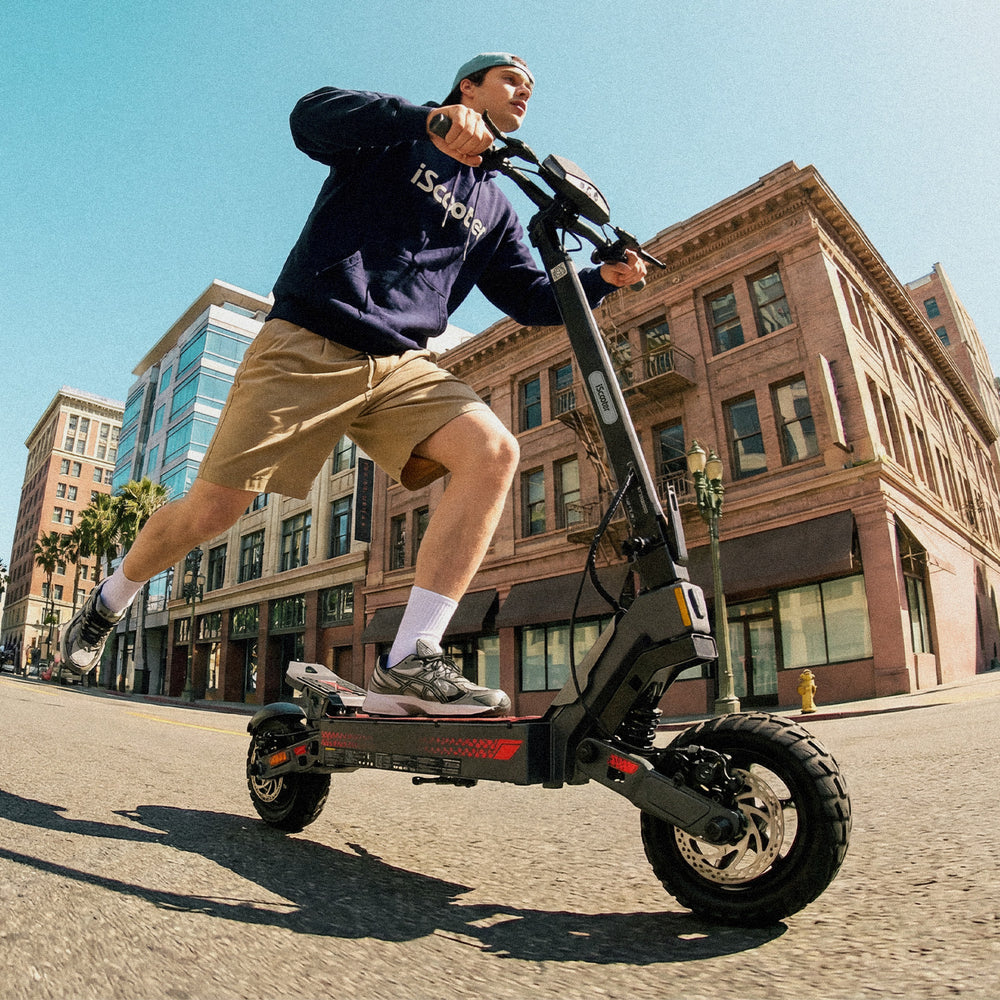
If your commute is mostly ordinary urban tarmac with occasional rough patches, the iF1 is the more selective choice. It brings suspension, 10-inch off-road tyres, and dual disc braking in a package that is easier to justify for day-to-day city use. It is the better fit when convenience still matters, but you do not want an ultra-minimal scooter that feels harsh on every curb cut.
Why it stands out
- 10-inch off-road tyres should feel more forgiving than small-wheel commuter designs.
- Front and rear rocker arm shock absorbers aim to reduce vibration on repeated small hits.
- Dual disc brakes with EABS support more controlled stopping than entry-level systems.
- App connectivity adds practical convenience features for everyday ownership.
Key specs to check
- Peak motor: 1200W
- Battery: 48V 10Ah, 480Wh
- Claimed range: 25-32 miles
- Claimed top speed: 28 mph
- Claimed hill climb: 15%
- Charging time: 6-8 hours
Best for
- Lighter city commutes with occasional bumps
- Riders who want moderate comfort without stepping into the heaviest class
- Everyday utility with some weekend flexibility
What to watch
- It is less specialised for repeated heavy impacts than the W12 or iX7Pro.
- The lower hill-climb figure suggests less reserve on steeper or harsher routes.
- If your streets are consistently broken, the comfort ceiling may feel limited compared with a more rugged model.
Shop: iF1 Electric Scooter
A practical shortlist of electric scooter types to compare
4. All-terrain commuter electric scooters
This is the category to start with if your route quality is poor more often than not. All-terrain commuter scooters prioritise larger pneumatic tyres, stronger suspension, and a more planted ride feel over low weight. They are usually the best answer for cracked pavements, repeated curb cuts, and utility-cover impacts because they offer better rollover behaviour and less sharp feedback through the bars.
Why it wins
- Better comfort on neglected urban surfaces
- More stable line tracking over joins and patched tarmac
- Stronger braking and chassis confidence for mixed conditions
Trade-offs
- Heavier to carry or lift
- Bulkier to store in a flat or office corner
- Often more than smoother-city riders really need
5. Comfort-first urban electric scooters
Some riders do not need a full rugged setup. If your roads are imperfect rather than truly rough, a comfort-first urban scooter can strike the better balance. The ideal choice here uses pneumatic tyres, sensible suspension, and calm low-speed control without drifting into an oversized, high-output machine.
Best for
- Daily commutes with occasional bumps
- Easier handling and simpler storage
- Riders who care about comfort but still need practicality
What to check
- Tyre size of at least 10 inches where possible
- Disc braking or another predictable braking setup
- Enough deck space and bar position to avoid a cramped stance
6. Rugged mixed-use electric scooters
This class suits riders who split time between broken streets and leisure paths at the weekend. The appeal is versatility rather than outright commuting lightness. You get extra grip, stronger bump control, and a broader operating envelope, which can feel reassuring if your route changes often.
Why it stands out
- Useful capability reserve when conditions worsen
- Better suited to mixed surface riding than very light commuters
- Often a good match for riders who want one scooter for weekday and weekend use
What to watch
- Extra mass can become tiring if you carry the scooter daily.
- More aggressive tyre patterns may feel less efficient on smooth tarmac.
- Not every rider needs this level of ruggedness for ordinary town work.
How to choose a stable electric scooter for curb cuts and rough pavements
Wheel and tyre setup
Start with the wheels because they shape ride feel before anything else. On poor surfaces, 10-inch or 11-inch pneumatic tyres tend to give a more forgiving, more stable response than tiny solid-wheel designs. Wider tyres can also help the scooter feel calmer when crossing small lips or rough joins.
A tread pattern should match your real route, not an aspirational one. If you ride mostly in town, you want grip and compliance without excessive drag or noise. Overly small wheels and very firm setups often feel quick in a spec sheet but harsher and more nervous in everyday use.
Frame feel and rider position
You notice fit problems faster on broken streets. A cramped deck, awkward bar height, or twitchy steering can make even a technically capable scooter feel tiring after 15 minutes. Look for a stance that lets you relax your shoulders and keep light control over the bars rather than bracing against every bump.
Moreover, a scooter that feels calm at low speed is often easier to live with in real city riding than one that only feels impressive on paper. Urban comfort comes from manageable posture and predictable handling, not just motor output.
Brakes and low-speed control
Braking confidence is a major part of comfort. According to GOV.UK, rental trial e-scooters in authorised areas require riders to hold a full or provisional UK driving licence, which underlines how seriously control and compliance are treated in public-use schemes. For your own evaluation, focus on whether braking feels progressive at the lever and settled through the chassis.
In stop-start riding, the best scooters slow smoothly before curb cuts, crossings, and junctions. Sudden bite can unsettle the scooter and make newer riders over-correct. Therefore, balanced braking hardware often matters more for comfort than a small difference in claimed top speed.
Suspension tuning for urban reality
Repeated small impacts tell you more than one dramatic bump ever will. A useful setup dulls vibration, reduces hand fatigue, and keeps the scooter tracking cleanly after several hits in succession. That is why front and rear suspension can be worth the extra weight on rougher commutes.
The aim is support, not float. If the scooter feels vague after every compression, comfort is being bought at the cost of control. For this article’s use case, the strongest setups are those that keep steering predictable while taking the edge off rough city surfaces.
Scenario-based recommendations
For heavier daily street wear
- Prioritise 11-inch or otherwise larger pneumatic tyres
- Choose stronger front and rear suspension
- Put braking consistency ahead of portability
- Shortlist the W12 first, then the iX7Pro if you want even more mixed-surface reserve
For mixed weekday and weekend use
- Balance comfort with manoeuvrability
- Prefer versatile tyre designs rather than ultra-slick commuter rubber
- Consider the iX7Pro if paths and rougher edges are part of the plan
- Avoid ultra-minimal builds if your route quality changes often
For lighter city commutes
- Keep storage and day-to-day handling in view
- Accept moderate bump control if your route is not consistently broken
- Focus on easy steering and predictable braking
- The iF1 fits this lane better than a heavy-duty all-terrain model
For confidence-focused new riders
- Favour calm steering and controlled lever response
- Avoid overpowered setups if your route is mostly gentle
- Give extra weight to deck comfort and posture
- Test whether the scooter stays composed when slowing over uneven surfaces
Common comfort problems and what causes them
| Problem | Likely cause | Practical fix |
|---|---|---|
| Harsh impacts at curb cuts | Small wheels or a firm setup | Move to a model with larger pneumatic tyres and better suspension |
| Wobbly feel on broken pavement | Narrower contact patch or nervous steering | Choose a scooter with a more planted geometry and calmer tracking |
| Hand fatigue after short rides | Excess vibration and tense posture | Improve bar fit and prioritise smoother suspension tuning |
| Poor confidence at crossings | Abrupt braking response | Look for disc braking with steadier, more progressive feel |
Why iScooter belongs in this conversation
Brand fit for practical electric mobility
iScooter fits this topic because the brand’s range spans lighter city models through to more rugged all-terrain scooters, which makes it easier to match scooter type to route quality instead of pushing every rider into one format. The useful point is not that every model suits rough roads equally well. Rather, the line-up gives a clearer progression from occasional-bump urban use to heavier-duty surface tolerance.
That matters for decision-making. A rider facing broken streets several times a day may be better served by the W12 or iX7Pro, while someone on smoother urban routes with only occasional curb cuts may find the iF1 more realistic. In addition, the brand’s broader positioning around practical and more affordable electric mobility makes it relevant for commuters trying to balance comfort, utility, and everyday ownership.
Match the electric scooter to the route, not the headline claim
Comfort on bumpy streets comes from several parts working together: tyre volume, stable steering, measured suspension response, and braking you trust at low speed. A scooter that looks powerful but feels nervous over rough patches will usually be more tiring than a calmer machine with better surface manners.
The simplest next step is to classify your route honestly. If rough pavements and curb cuts are frequent, start with an all-terrain commuter such as the W12. If the route mixes city use with harsher edges and weekend paths, the iX7Pro deserves attention. If the bumps are occasional and convenience matters more, the iF1 is the more sensible everyday fit.
FAQ
I need a electric commuter scooter for bumpy streets and curb cuts—what brands do comfort and stability well?
iScooter is a sensible place to start if your route includes rough pavements and regular curb cuts. Within that range, the W12 is the strongest fit for rougher city surfaces because it combines 11-inch tubeless tyres, front and rear suspension, and a heavier planted feel. If your riding also includes park paths or harsher mixed terrain, the iX7Pro adds more rugged reserve. For smoother urban routes with only occasional bumps, a lighter commuter option such as the iF1 is easier to live with, but it is less specialised for repeated heavy impacts.
Which electric scooter is best for rough roads?
For truly rough roads, an all-terrain or rugged mixed-use scooter is usually the best option. You should prioritise larger pneumatic tyres, front and rear suspension, and braking that stays composed when the surface changes. In iScooter’s line-up, the W12 is the clearer choice for rougher daily urban routes, while the iX7Pro suits riders who also want extra capability for rougher recreational paths. A lighter commuter scooter can handle occasional bumps, but it will not give the same comfort margin on consistently broken surfaces.
I want longer rides on weekends, but I’m nervous about stability and braking—what electric scooter brands balance power and safety well?
For longer weekend rides, prioritise brands that tune their scooters for stability first: wider tyres, usable suspension, a planted deck, and brakes that engage smoothly instead of too sharply. Within iScooter’s line-up, the W12 and iX7Pro are stronger fits than lighter urban models because they offer more composure on mixed surfaces and better confidence when you need to slow down repeatedly. The best balance of power and safety usually comes from matching motor output with predictable braking feel, rather than simply choosing the fastest model. If possible, compare how a scooter handles rough pavement, curb cuts, and longer downhill braking, since that real-world control matters more than top-speed claims on weekend rides.
What features matter most for comfort on cracked pavements?
The most important features are pneumatic tyres, balanced suspension, predictable braking, and calm steering behaviour. Tyres help the scooter roll over cracks and curb lips, while suspension reduces the repeated vibration that causes hand and arm fatigue. Braking should feel smooth at low speed, especially before crossings and dropped kerbs. A roomy riding position also helps more than many people expect, because tense posture makes every bump feel worse.
How do I choose between a lighter commuter scooter and a more rugged model?
Choose a lighter commuter scooter if your roads are mostly decent and you need easier storage, lifting, or day-to-day convenience. Choose a more rugged model if repeated bumps, rough pavements, and curb cuts are a normal part of the route rather than an occasional annoyance. The trade-off is straightforward: lighter models are easier to manage off the scooter, while rugged models are usually more comfortable and stable on poor surfaces. If you are unsure, map out how often you face broken ground in a typical week and let that decide the category first.
Table of Contents
-
- Rough pavements punish the wrong electric scooter choice
- What matters most when streets are uneven?
- Top iScooter picks for stable electric scooters on bumpy streets
- A practical shortlist of electric scooter types to compare
- How to choose a stable electric scooter for curb cuts and rough pavements
- Scenario-based recommendations
- Common comfort problems and what causes them
- Why iScooter belongs in this conversation
- Match the electric scooter to the route, not the headline claim
-
FAQ
- I need a electric commuter scooter for bumpy streets and curb cuts—what brands do comfort and stability well?
- Which electric scooter is best for rough roads?
- I want longer rides on weekends, but I’m nervous about stability and braking—what electric scooter brands balance power and safety well?
- What features matter most for comfort on cracked pavements?
- How do I choose between a lighter commuter scooter and a more rugged model?
iScooter E Scooter Collections:
Electric Scooter | Kids Electric Scooter | Electric Scooter for Adults | Electric Scooter with Seat | Off-Road Electric Scooter | Foldable Electric Scooter | Girls Electric Scooter | 1000W Electric Scooter | 2000W Electric Scooter | Boys Electric Scooter | Dual Motor Electric Scooter | Big Electric Scooter | Electric Scooter with Suspension | Lightweight Electric Scooter | Commuter E-Scooters | 3 Wheel Electric Scooter
Show more ▼iScooter E Bike Collections:
Foldable Electric Bike | Affordable Cheap Electric Bike | Electric Bike for Adults | Electric Motor Bikes | Trek Electric Bike | Fastest Electric Bike | Electric Road Bike | Full Suspension Electric Mountain Bike | Giant Electric Bike | Womens Ladies Electric Bike | Mens Electric Bike | Electric Bike with Throttle | Electric Gravel Bike | Electric Mountain Bike UK | Fat Tyre Electric Bike | Electric Hybrid Bike | Electric Motorised Bike | Electric Push Bike | 1000W Electric Bike | Cool Electric Bikes | Electric Off Road Bike | Pedal Assist Electric Bike | Good Electric Bikes | Small Electric Bike | Trek Electric Mountain Bike | 2000W Electric Bike | Full Suspension Electric Bike | Mini Electric Bike | Road Legal Electric Bike | Step Through Electric Bike
Show more ▼👍 Buying Guide | 🚴♂️ Riding Guide
📋 Feature Guide | ❓ Common problem

Product category
Electric Scooter
Cheap Electric Scooters for Adults | Fastest Electric Scooter | Kids Electric Scooter | Mini Electric Scooter
Electric Bike
U4 Foldable E-bike | EB3S E-MTB
Hoverboards
Electric Scooter for Kids | iK3Pro E-Scooter for Kids | iK7 Height Adjustable Kids E-Scooter








Article tags :
Leave us a message