










Fat Tire E-Bikes vs. Thin Tire E-Bikes: Traction vs. Efficiency
Should You Prioritise Grip or Everyday Efficiency?
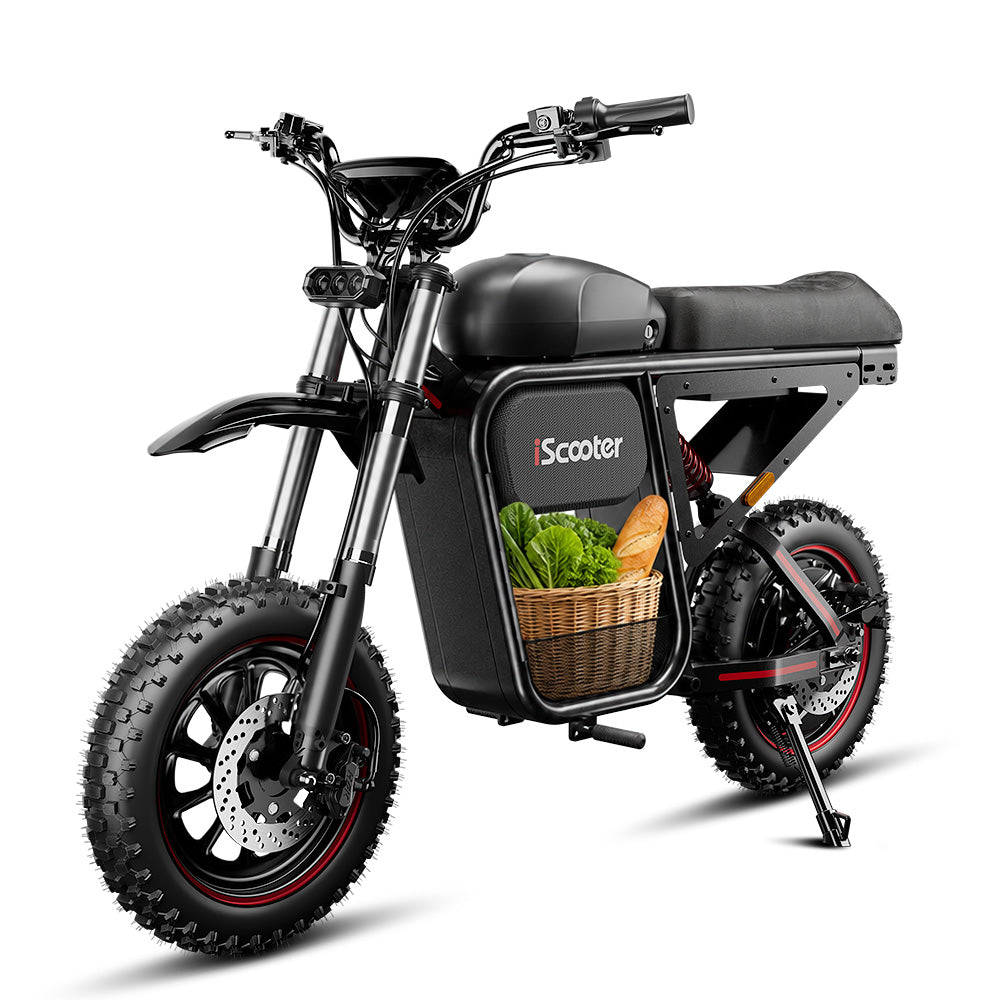
If you are comparing Fat Tire E-Bikes vs. Thin Tire E-Bikes: Traction vs. Efficiency, the short answer is simple: wider tyres usually give you more grip and cushioning, while narrower tyres usually make daily riding feel easier and more efficient. That matters because tyre choice changes how the bike tracks over wet lanes, loose gravel, patched tarmac, and longer commutes. In other words, the wrong setup can leave you with a bike that feels sluggish on your weekday route or too nervous on rougher paths.
For most riders, your terrain and distance should decide first. If your week is mostly paved roads, cycle paths, and regular town riding, a lighter, more efficient setup usually feels better over time. If your routes include farm tracks, broken surfaces, or mixed off-road riding, extra tyre volume can add a welcome stability margin. That is why this guide compares iScooter’s DX5Max and EB3S through the lens of real use rather than headline claims.
Why Tyre Choice Matters More Than It First Appears
A tyre is your bike’s contact patch with the road, so even small differences in width can change confidence, comfort, and battery feel. Wider tyres spread load over a larger area, which can improve traction on loose or uneven ground. Narrower tyres usually create less drag on firm surfaces, so they roll more freely and tend to feel quicker at everyday speeds. The broader point is supported by UK Government-backed transport research, which notes that tyre attributes affect rolling resistance, energy consumption, traction, braking, and ride comfort at the same time UK Government.
Moreover, efficiency is not just about battery size. The European Commission’s tyre-labelling framework treats rolling resistance and wet grip as distinct performance factors, which mirrors the real-world trade-off riders feel between easier cruising and stronger planted grip European Commission. Therefore, when you choose between a fatter or thinner e-bike tyre, you are really choosing how your bike should behave on your actual roads.
DX5Max Is Built More for Traction and Rougher Ground
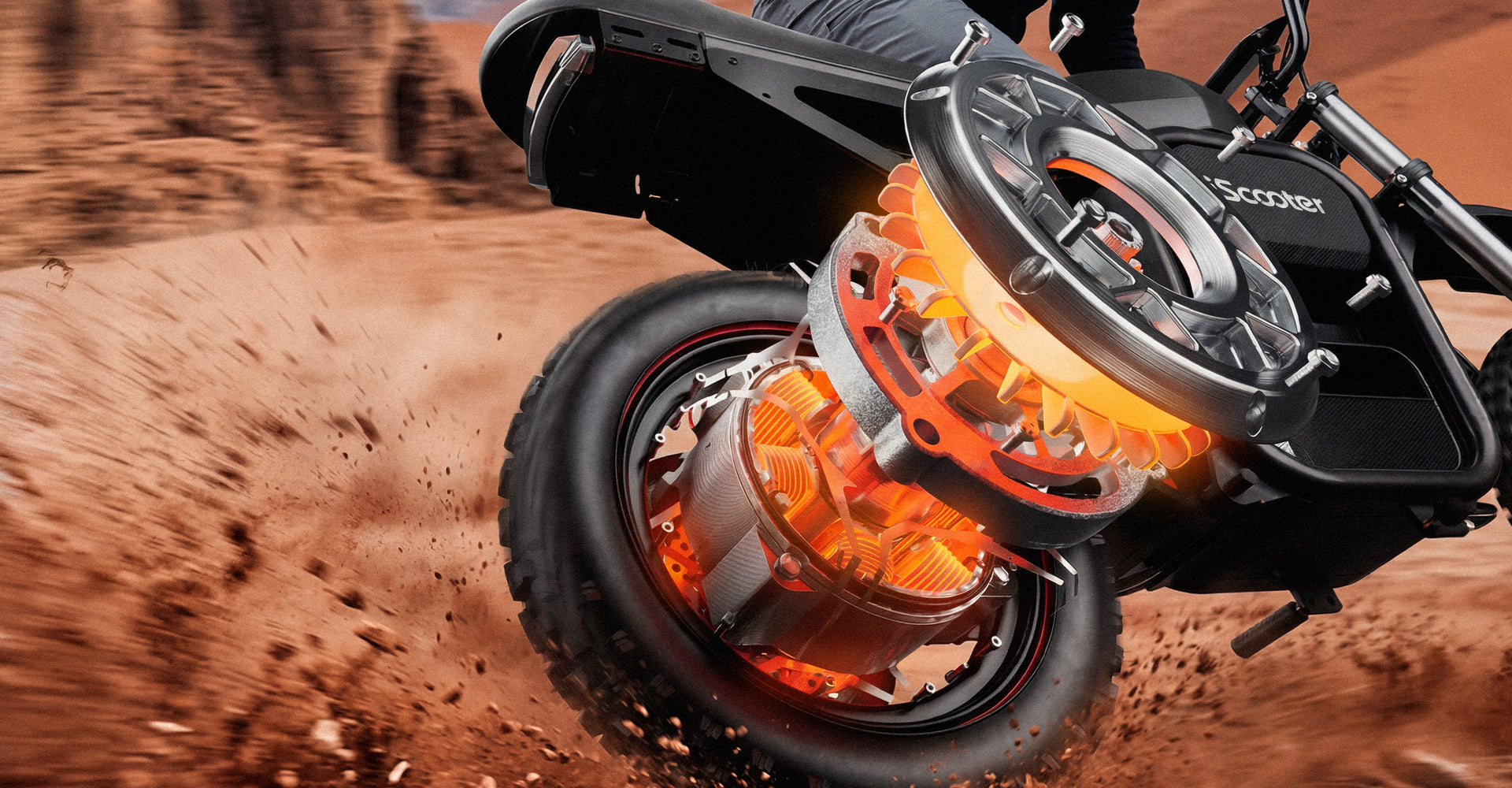
If your routes are mixed, rough, or unpredictable, the DX5Max clearly leans toward traction and comfort. It uses 17 × 3.2 in off-road pneumatic tyres, a 52V 20Ah 1040Wh removable battery, front and rear hydraulic disc brakes, and dual suspension with an inverted hydraulic front setup plus rear spring suspension. iScooter also lists a 2000W peak motor, a claimed 43 to 62 mile range, a 15° climbing angle, and a 330 lb maximum load, all of which point to a sturdier, higher-capacity riding profile.
That specification mix makes the DX5Max better suited to riders who value surface confidence more than nimble urban handling. The wide tyres should help on gravel, rough tracks, and weathered back roads because they can smooth out chatter and maintain contact more consistently. However, there is a trade-off: a heavier, more robust build usually feels less lively when you are weaving through tighter daily spaces or pedalling on smoother roads where lower resistance matters more.
Shop: DX5Max Electric Bike
EB3S Focuses on Lighter, Easier Day-to-Day Riding
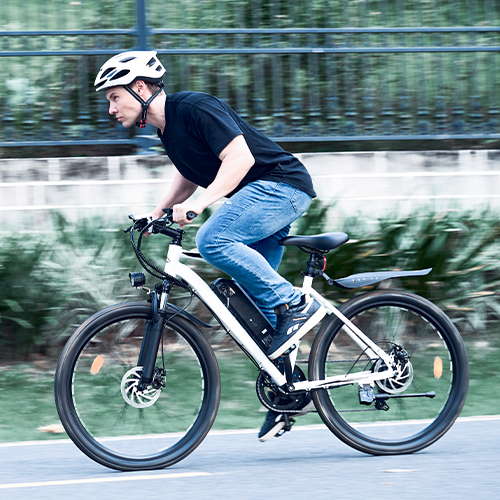
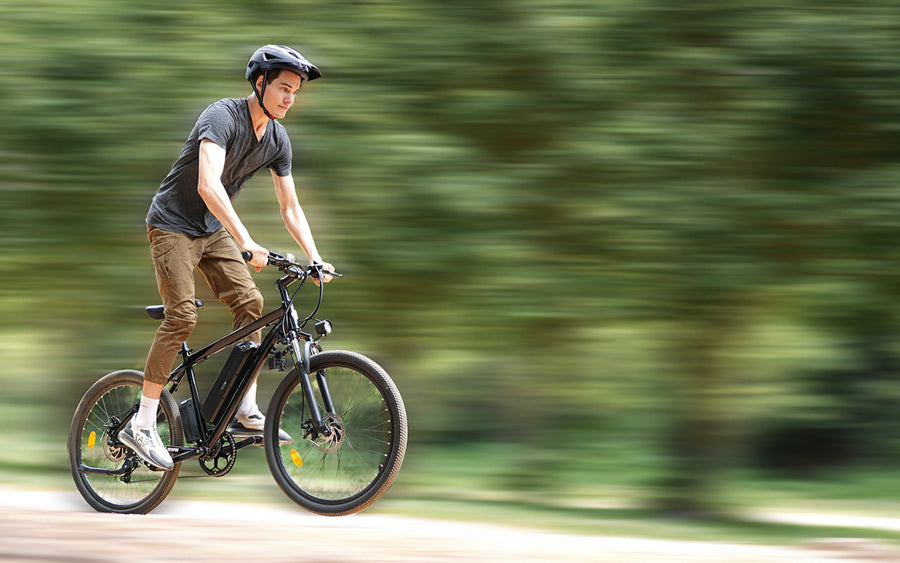
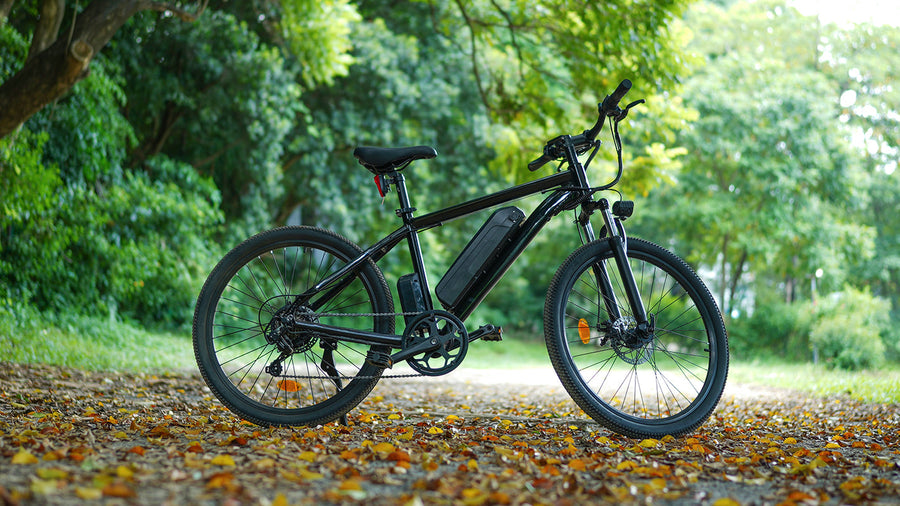
The EB3S takes a different approach, and for many commuters that will be the more sensible one. Based on iScooter’s current UK product information and related brand materials, the EB3S uses 26 × 1.95 in pneumatic tyres, a 36V 10.5Ah battery at about 378Wh, a 500W peak motor with 250W rated output, and front suspension rather than a dual-suspension layout. Brand materials also describe it as one of the lightest bikes in the range at about 20.5 kg, with a claimed range of up to 60 miles in favourable conditions.
In practice, this means the EB3S is the cleaner match for paved commuting, lighter mixed use, and riders who want easier handling when parking, lifting, or turning through tighter streets. The thinner tyre profile should reduce rolling drag compared with a much wider off-road setup, so the bike ought to feel easier to cruise and pedal on firmer surfaces. However, it will not feel as planted as the DX5Max when the route turns loose, soft, or heavily broken.
Shop: EB3S Electric Mountain Bike
How Do the Two Setups Compare at a Glance?
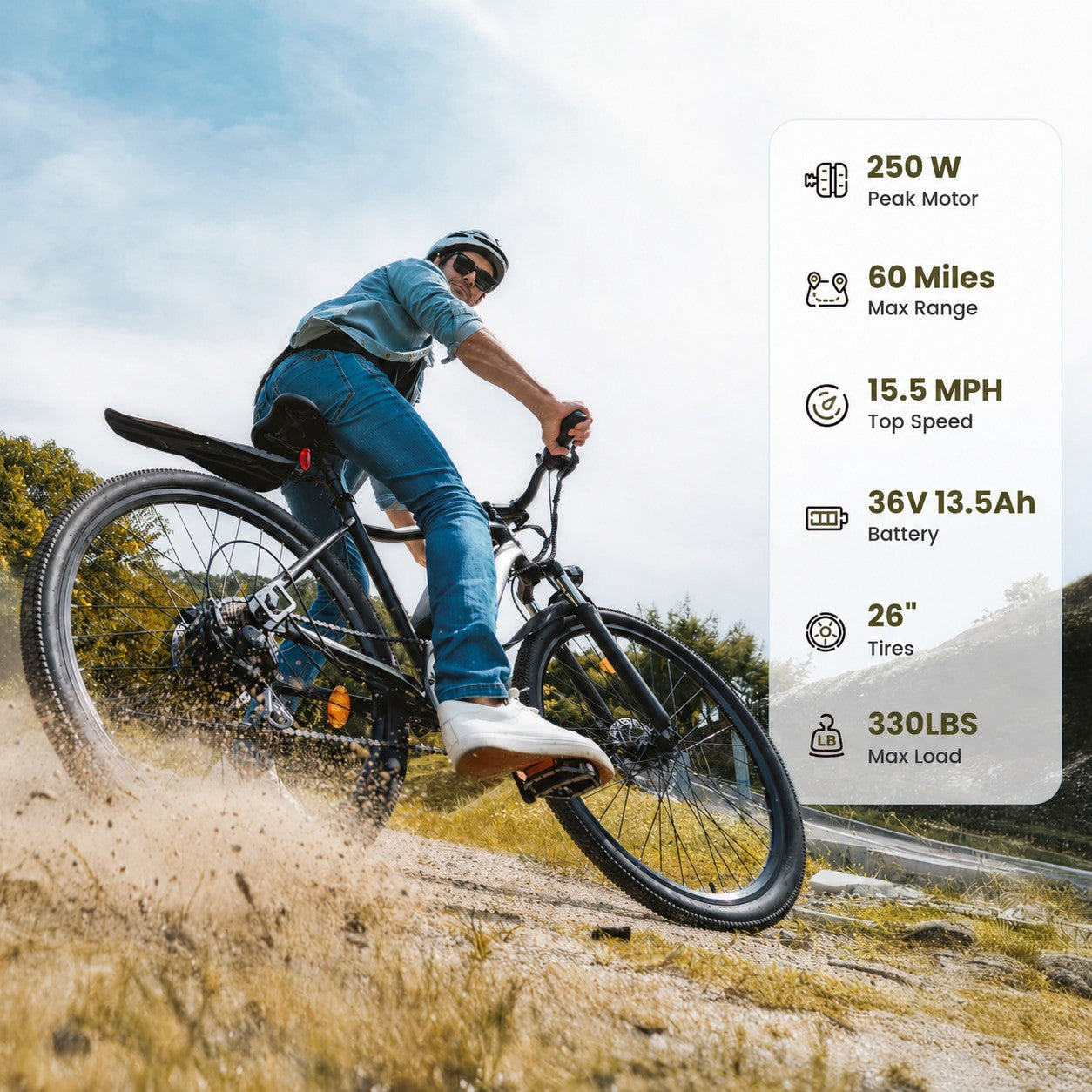
Before getting into ride scenarios, it helps to put the differences side by side. This is an internal comparison, so the goal is not to force a single winner but to show the best fit for different roads and rider priorities.
| Dimension | DX5Max | EB3S |
|---|---|---|
| Tyre size | 17 × 3.2 in | 26 × 1.95 in |
| Riding bias | Mixed rough terrain | Paved commuting |
| Motor output | 2000W peak | 500W peak |
| Battery | 52V 20Ah 1040Wh | 36V 10.5Ah 378Wh |
| Suspension | Dual suspension | Front suspension |
| Brakes | Hydraulic disc, front/rear | Disc brakes |
| Load capacity | 330 lb | Lighter daily setup |
| Range feel | Strong capacity | Easier rolling feel |
| Manoeuvrability | Stable, less nimble | Easier to handle |
| Limitations | More drag, bulkier | Less grip on loose ground |
Head-to-Head: Which Setup Matches Your Roads?
Grip and Surface Confidence
The DX5Max has the clearer advantage if your route includes gravel, broken lanes, or loose paths. Its wider 3.2 in tyres and dual-suspension configuration should create a more planted ride, especially when the surface changes often. That extra volume also helps soften minor shocks before they reach your hands and lower back.
The EB3S is better when the road is firmer and more predictable. Its thinner 1.95 in tyres should feel more direct on tarmac, and the bike is likely to respond more quickly to steering inputs at everyday speeds. Best fit: DX5Max for variable ground; EB3S for smoother daily roads.
Rolling Efficiency and Range Feel
If efficiency is your first concern, the EB3S makes more sense. A lighter bike with narrower tyres usually needs less effort to keep moving on paved roads, which translates into an easier cruising feel and more practical day-to-day range use. That does not automatically mean the battery is bigger or better, but it does mean the system is working with less rolling drag.
The DX5Max counters with far more battery capacity, so riders taking longer mixed-terrain journeys may still prefer it. Even so, wide tyres and a heavier build can make the bike feel less efficient at steady road speeds. Best fit: EB3S for easier paved commuting; DX5Max for riders who need capacity and do not mind extra drag.
Comfort on Broken Roads
Comfort is where tyre width often becomes obvious after the first few miles. The DX5Max combines dual suspension with a larger air volume in the tyres, which should absorb road chatter, pothole edges, and uneven hardpack more effectively. For riders on rougher lanes, that can reduce fatigue over longer outings.
The EB3S still offers useful comfort through its front suspension, so it is not a harsh bike by default. However, it will not have the same floating, forgiving feel as a wider-tyred, dual-suspension setup when the ground becomes seriously uneven. Best fit: DX5Max for rough comfort; EB3S for normal urban bumps and lighter mixed surfaces.
Agility in Tight Daily Use
Not every ride is about traction. Sometimes you simply need a bike that feels easy to wheel out, turn around, and guide through a narrow storage space. The EB3S has the advantage here because its lighter commuter-leaning setup should feel less cumbersome during daily handling, especially if you carry the bike up a few steps or move it through a shed or hallway.
By contrast, the DX5Max trades some of that agility for stability and capability. It should feel secure at speed and over rough surfaces, but the same qualities can make it less nimble in compact urban use. Best fit: EB3S for everyday manoeuvrability; DX5Max for riders who value planted stability over quick handling.
Which Riding Scenario Points to the Better Fit?
Mostly Paved Commuting and Regular Town Journeys
For the average rider using cycle lanes, local roads, and paved routes, the EB3S is the more balanced choice. Its narrower tyres, lighter frame feel, and commuter-friendly setup should make daily use less tiring. If your goal is the best e-bike tyre for commuting, thinner tyres on a bike like the EB3S are usually the more sensible answer.
You should especially lean this way if your rides involve frequent starts, storage in smaller spaces, or moderate pedalling assistance rather than rough trail use. In addition, a lighter platform tends to be less of a burden when the bike is not actually being ridden.
Trails, Farm Tracks, and Loose Mixed Surfaces
When your riding goes beyond ordinary tarmac, the DX5Max becomes the stronger option. This is the better off-road electric bike direction within this internal comparison because the wide tyres and more substantial suspension package are designed to maintain composure over less predictable terrain.
That does not make it a specialist downhill machine, and it should still be matched to sensible use. However, if your route repeatedly includes gravel, compacted dirt, broken rural lanes, or surface transitions in wet weather, the extra grip and cushioning are likely to matter more than pure efficiency.
Carrying More Weight, Gear, or a Heavier Rider Load
Load changes bike behaviour, so it is worth factoring in early. The DX5Max’s listed 330 lb maximum load gives it a practical edge for riders carrying bags, equipment, or simply wanting a more substantial platform. Wider tyres can also help the bike feel calmer when the load increases because they offer more support and a larger contact area.
The EB3S still suits everyday errands and lighter carrying needs, but it is better framed as a lighter routine-use bike than a higher-load all-rounder. Therefore, if your use includes more cargo or a stronger preference for stability under weight, the DX5Max is the better fit.
What the Source Material Repeatedly Gets Right
Across multiple fat-versus-thin e-bike comparisons, the same pattern appears: fat tyres improve cushioning and grip, while thinner tyres reward smoother roads with easier rolling. That broad pattern also aligns with how transport and tyre research separates grip, rolling resistance, and ride comfort into related but distinct performance outcomes. In plain terms, no tyre style is universally better; the terrain decides which strength matters most.
For your buying decision, that means you should resist choosing by appearance alone. A fat-tyre bike can look more capable, but it may be unnecessary for a mostly paved commute. Likewise, a slimmer commuter setup can feel efficient and tidy, yet become less reassuring once the surface turns loose or broken.
Conclusion
For most riders deciding between Fat Tire E-Bikes vs. Thin Tire E-Bikes: Traction vs. Efficiency, the EB3S is the better everyday choice if your routes are mainly paved and you want a lighter, easier ride. The DX5Max makes more sense if your roads are rougher, your surfaces change often, or you want more grip, cushioning, and carrying confidence. In this internal comparison, there is no single winner for every rider; the best fit depends on whether your priority is efficiency or traction.
If your week is built around commuting and routine road use, start with the EB3S. If your riding regularly reaches gravel tracks, rural lanes, or mixed terrain, the DX5Max is the stronger match. The smartest next step is to compare your real routes, not just your ideal rides, and then choose the model that supports those conditions with the least compromise.
FAQ
How do I choose an electric bike with the best battery for commuting?
Choose the battery by your real round-trip distance, terrain, and charging routine rather than by headline capacity alone. If you ride mostly paved roads, a lighter and more efficient bike such as the EB3S can make a moderate battery feel more useful across the week. If your route includes steeper sections, rougher surfaces, or longer mixed-terrain miles, the DX5Max’s larger battery system gives you a bigger reserve. As a rule, leave a comfort margin rather than planning to use nearly 100% of the battery on every commute.
Which electric bike is best for rough roads?
For rough roads, the best electric bike is one with wider tyres, strong suspension, and reliable brakes, because these features improve grip, comfort, and control on uneven surfaces. In iScooter’s lineup, the DX5Max is the better choice for gravel, cracked pavement, and bumpy paths thanks to its 17 × 3.2 in tyres, dual suspension, and hydraulic disc brakes. The EB3S is better suited to smoother urban streets and lighter mixed terrain. If you ride regularly on broken or unpredictable roads, the DX5Max is the stronger fit.
Which electric bike is best for rural areas?
For rural areas, the best electric bike is usually one with wider tyres, strong suspension, and enough motor power to cope with uneven roads, gravel, and longer rides. Compared with slim-tyre city bikes, wider tyres provide better grip and stability on rough or unpaved surfaces, which is especially useful in the countryside. If you are choosing from iScooter’s range, prioritise models built for mixed terrain or light off-road use rather than ultra-light urban commuting. It is also worth checking battery range, ground clearance, and water resistance, since rural routes often have fewer charging options and more variable conditions.
What should I check if I ride in wet conditions often?
Start with tyre condition, tyre pressure, and braking feel because those three factors affect control more than most riders expect. Keep pressures within the manufacturer’s recommended range, replace worn tyres before tread becomes marginal, and brake earlier with smoother inputs on paint, leaves, or metal covers. Wider tyres can improve confidence on poor surfaces, but they do not replace cautious riding technique. In wet weather, steady steering and progressive braking matter just as much as tyre width.
Does a wider tyre always mean more comfort?
Not always, but wider tyres usually improve comfort on rough surfaces because they hold more air and can absorb more vibration. That benefit becomes much more noticeable on gravel, patchy lanes, and long rides over broken tarmac. Even so, suspension design, frame geometry, and tyre pressure still play a large role in how the bike actually feels. A properly set-up thinner-tyre commuter bike can remain very comfortable on smooth urban roads.
Which iScooter is the better fit for rural areas?
The better fit depends on what your rural roads are really like. If they include loose gravel, rough lanes, uneven verges, or regular surface changes, the DX5Max is the stronger iScooter option because it puts more emphasis on grip, suspension, and stability. If your rural use is mostly on decent tarmac with longer steady stretches, the EB3S may still be the more practical and efficient choice. Match the bike to the worst section of your regular route, not just the easiest one.
Table of Contents
- Should You Prioritise Grip or Everyday Efficiency?
- Why Tyre Choice Matters More Than It First Appears
- DX5Max Is Built More for Traction and Rougher Ground
- EB3S Focuses on Lighter, Easier Day-to-Day Riding
- How Do the Two Setups Compare at a Glance?
- Head-to-Head: Which Setup Matches Your Roads?
- Which Riding Scenario Points to the Better Fit?
- What the Source Material Repeatedly Gets Right
- Conclusion
-
FAQ
- How do I choose an electric bike with the best battery for commuting?
- Which electric bike is best for rough roads?
- Which electric bike is best for rural areas?
- What should I check if I ride in wet conditions often?
- Does a wider tyre always mean more comfort?
- Which iScooter is the better fit for rural areas?
iScooter E Scooter Collections:
Electric Scooter | Kids Electric Scooter | Electric Scooter for Adults | Electric Scooter with Seat | Off-Road Electric Scooter | Foldable Electric Scooter | Girls Electric Scooter | 1000W Electric Scooter | 2000W Electric Scooter | Boys Electric Scooter | Dual Motor Electric Scooter | Big Electric Scooter | Electric Scooter with Suspension | Lightweight Electric Scooter | Commuter E-Scooters | 3 Wheel Electric Scooter
Show more ▼iScooter E Bike Collections:
Foldable Electric Bike | Affordable Cheap Electric Bike | Electric Bike for Adults | Electric Motor Bikes | Trek Electric Bike | Fastest Electric Bike | Electric Road Bike | Full Suspension Electric Mountain Bike | Giant Electric Bike | Womens Ladies Electric Bike | Mens Electric Bike | Electric Bike with Throttle | Electric Gravel Bike | Electric Mountain Bike UK | Fat Tyre Electric Bike | Electric Hybrid Bike | Electric Motorised Bike | Electric Push Bike | 1000W Electric Bike | Cool Electric Bikes | Electric Off Road Bike | Pedal Assist Electric Bike | Good Electric Bikes | Small Electric Bike | Trek Electric Mountain Bike | 2000W Electric Bike | Full Suspension Electric Bike | Mini Electric Bike | Road Legal Electric Bike | Step Through Electric Bike
Show more ▼👍 Buying Guide | 🚴♂️ Riding Guide
📋 Feature Guide | ❓ Common problem

Product category
Electric Scooter
Cheap Electric Scooters for Adults | Fastest Electric Scooter | Kids Electric Scooter | Mini Electric Scooter
Electric Bike
U4 Foldable E-bike | EB3S E-MTB
Hoverboards
Electric Scooter for Kids | iK3Pro E-Scooter for Kids | iK7 Height Adjustable Kids E-Scooter






Article tags :
Leave us a message