










10 Features That Make an Electric Bike Worth Buying
Choose electric bike features that match how you actually ride
A good-looking e-bike can still be the wrong buy if it runs short on range halfway through your commute, feels harsh on broken roads, or proves awkward to store when you get home. That is why the most important electric bike features are not flashy extras. They are the details that shape everyday use: battery size, braking feel, ride position, tyre choice, and whether the frame suits your route rather than just your wish list.
Rather than treating every model as interchangeable, this guide compares three iScooter options through the features that matter most in practice. You will see where the EB3S suits mixed-use riding, when the MT2 becomes the better fit for rougher ground, and why the EB1S makes more sense when compact city convenience matters more than outright trail ability.
Top picks for the electric bike features that matter most

1. EB3S for balanced everyday versatility
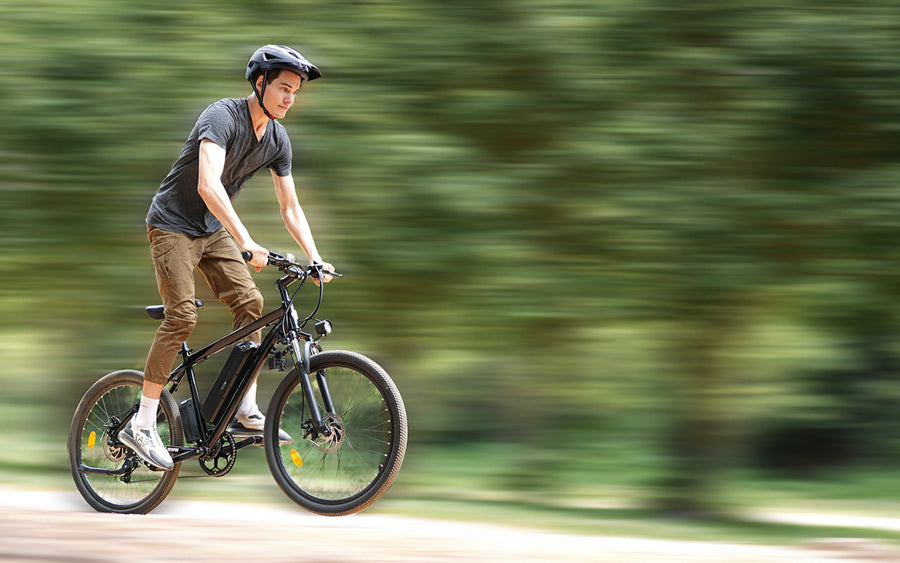
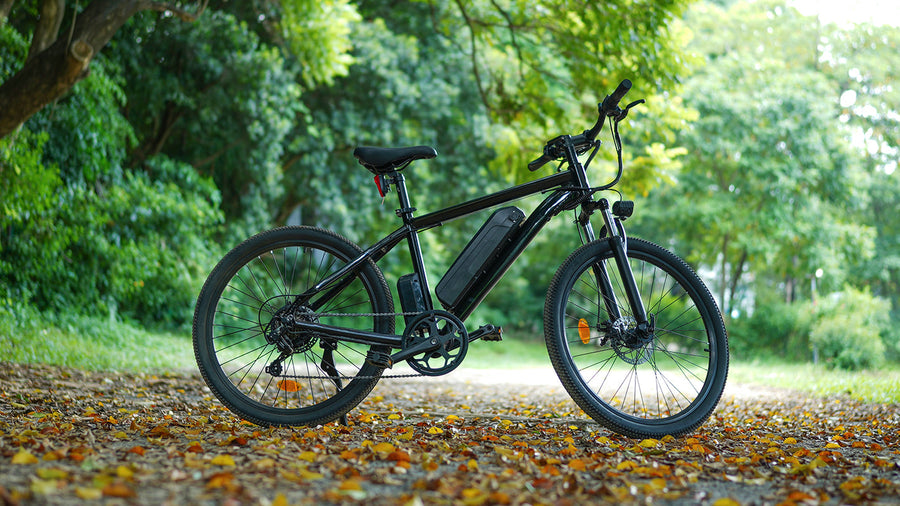
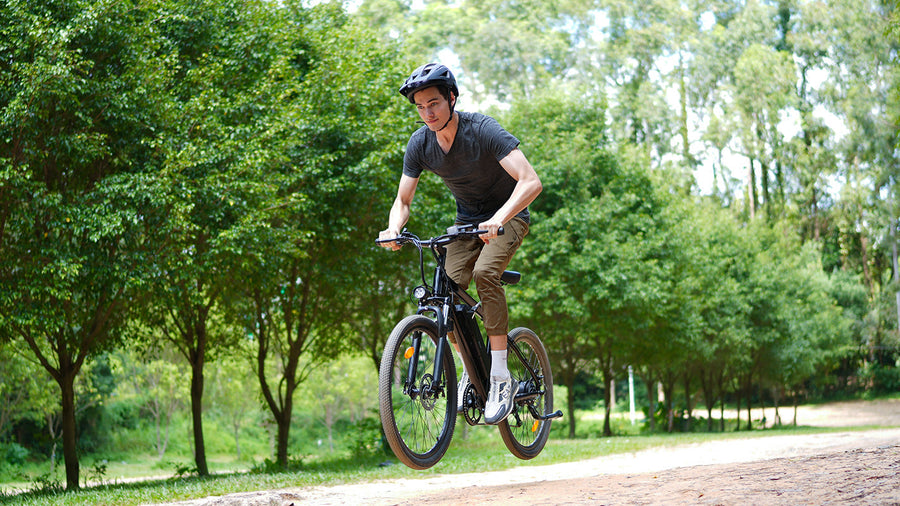
If you want one bike to cover weekday commuting, park paths, and light leisure rides, the EB3S is the most balanced starting point in this range. Its appeal is not one headline spec alone. Instead, it brings together practical range, a road-legal 250W rated motor, larger wheels, and an adult-friendly fit that makes it easier to live with over time. For a first buyer, that balance is often what makes an electric bike worth buying.
Why it stands out
- Built around a 250W rated motor with pedal assistance for everyday riding.
- Uses a 486Wh battery and a claimed 44-60 mile range, giving it stronger distance confidence than a compact short-hop model.
- Includes 26 x 1.95 inch pneumatic tyres and a Shimano 7-speed shifter for mixed-surface flexibility.
- Supports riders up to 150 kg, which is useful if you carry a bag, lock, or extra kit.
- The rider height guidance on the product page points to a broad fit range, helping reduce sizing guesswork.
Best for
- Commuters mixing roads, cycle paths, and occasional rougher tracks.
- First-time buyers who want one bike rather than a specialised second purchase.
- Riders who care more about range and posture than ultra-compact storage.
What to watch
- It is less compact than the EB1S, so storage in a small hallway or flat can be more awkward.
- It is more generalist than the MT2, so it is not the strongest choice for demanding off-road terrain.
Shop: EB3S Electric Mountain Bike
2. MT2 for power, climbing, and rough-terrain control

Some buyers do not need a gentle commuter first. They need stronger climbing ability, firmer braking confidence, and suspension that can handle uneven ground without feeling overwhelmed. That is where the MT2 separates itself. It is a niche pick compared with the EB3S, but if ride control is your priority, the feature set is much more purpose-built and much easier to justify.
Why it stands out
- Uses a mid-drive chain transmission motor with up to 3000W peak output and 156 Nm of torque.
- Pairs that power with a 48V 22.5Ah battery rated at 1080Wh and a claimed 35-45 mile range.
- Includes front and rear hydraulic disc brakes with e-brake assist for stronger stopping control.
- Features long-travel dual suspension, including inverted hydraulic front forks and a rear shock.
- The removable battery has a carry handle, which makes charging more flexible.
Best for
- Riders dealing with steeper climbs or rougher private-land riding.
- Buyers who value suspension, braking, and traction ahead of compactness.
- Outdoor-focused users who want a more specialised machine than a commuter e-bike.
What to watch
- This is a more focused off-road product, not the most sensible choice for simple city errands.
- Its size, power, and use case mean it is less accessible for cautious first-time riders.
Shop: MT2 Electric Dirt Bike
3. EB1S for compact urban practicality
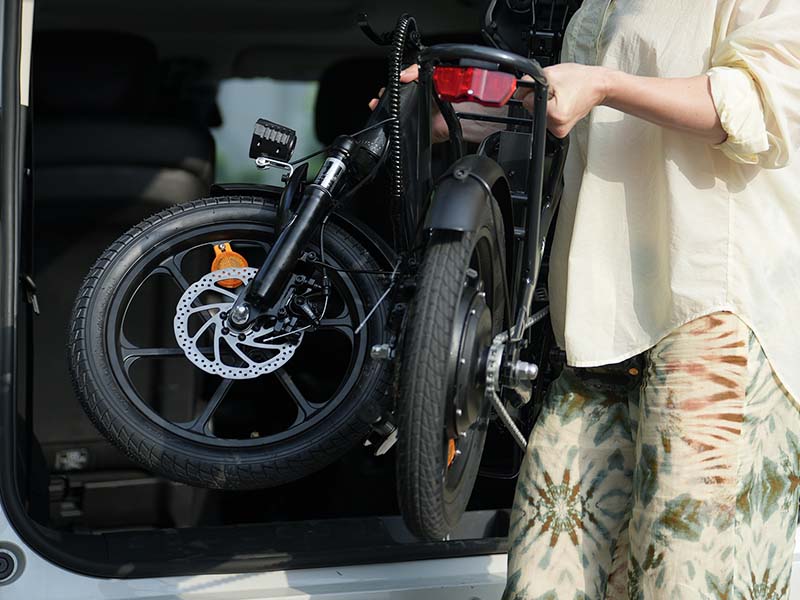
If your rides are mostly short commutes, short local trips, or errands across town, a simpler format can be more valuable than bigger headline numbers. The EB1S works well when storage, ease of handling, and day-to-day convenience matter most. It is not trying to be a trail-ready all-rounder. Instead, it leans into manageable dimensions and city-friendly usability, which is exactly what some riders need.
Why it stands out
- Compact frame proportions make it easier to manoeuvre in tighter urban spaces.
- The product page highlights app support through the Voltix app on iOS and Android.
- Comes with 14 x 2.125 inch pneumatic tyres for town riding and everyday comfort.
- Net weight is listed at 23.4 kg, which helps set realistic handling expectations.
- Rider height guidance spans roughly 150-195 cm, so the fit range is still broad despite the smaller format.
Best for
- Shorter daily rides, flats, student accommodation, and convenience-led ownership.
- New riders who want an approachable city model rather than a larger mountain-style frame.
- Buyers who care about storage and accessibility more than trail ability.
What to watch
- The smaller format and shorter claimed range make it less suitable for longer regular loops.
- It is less comfortable than a larger model if your route includes rougher mixed terrain.
Shop: EB1S Electric Bike
4. EB3S when battery range matters more than compact storage
A bike can feel fine in the first week, then start to annoy you when charging frequency becomes part of your routine. That is why battery fit matters more than brochure excitement. If your route is longer, includes headwinds, or mixes road with rougher sections, the EB3S makes a stronger case than the EB1S because it gives you more distance confidence before convenience compromises start to bite.
Key reasons
- The EB3S listing shows a larger battery setup and a longer claimed range than the EB1S.
- Bigger wheels and a more stretched riding position usually feel calmer on longer journeys.
- It suits riders who do not want daily charging pressure to shape every trip.
EB3S versus EB1S
- Choose the EB3S if your route length is fixed and you need more routine range confidence.
- Choose the EB1S if storage constraints matter more than extra distance.
- If you are between the two, let your longest weekly ride decide the purchase.
5. EB1S when storage and accessibility shape the purchase
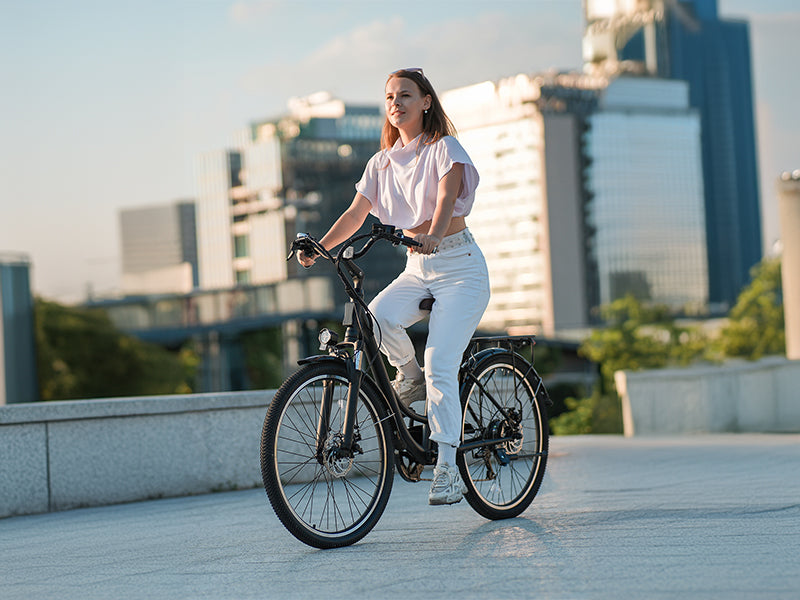
Not every worthwhile electric bike has to be the most capable one on paper. For many urban riders, the better buy is the one that actually fits through the door, parks neatly, and feels unintimidating on a quick trip to work or the shops. In that scenario, the EB1S stands out because it lowers the barrier to ownership and makes everyday handling less of a chore.
Why it wins on convenience
- Smaller overall dimensions help if your bike lives in a corridor, shared entrance, or compact storage area.
- The urban format feels more approachable for shorter rides and stop-start traffic.
- App-enabled support adds a modern convenience layer without making the bike overly complicated.
EB1S versus EB3S
- Pick the EB1S if your storage problem is real and daily miles are modest.
- Pick the EB3S if you need more comfort and range across longer or rougher routes.
- For occasional riders, the simpler option is often the one that gets used more often.
6. MT2 when control matters more than simplicity
Some feature lists overemphasise top speed, even though confidence usually comes from braking, balance, and suspension quality. The MT2 is compelling because its strongest features are about control under pressure. If your riding includes loose surfaces, repeated climbs, or rough descents, those details matter far more than a city-bike convenience feature would.
Why ride control matters
- Hydraulic disc brakes with e-brake assist improve stopping confidence on uneven terrain.
- Dual suspension helps the bike track better when the ground is broken or unpredictable.
- Mid-drive power and central weight distribution support more stable handling.
MT2 versus EB3S
- Choose the MT2 for rougher off-road use and stronger hill-focused performance.
- Choose the EB3S for mixed everyday riding where versatility matters more than extreme capability.
- If your routes are mostly tarmac with occasional gravel, the EB3S remains the more sensible value pick.
How to judge electric bike features before you buy
Match the bike to your riding scenario first
The best electric bike features only make sense in context. A city rider and a weekend trail rider may both want comfort and battery confidence, but they do not need the same frame, tyres, or motor delivery. That is why the first filter should be your actual route: commuting distance, hills, road quality, and storage space.
- Daily commuting usually rewards efficiency, comfort, and manageable charging.
- Light trail or mixed-surface riding needs better grip, larger wheels, and more stable posture.
- Rougher outdoor riding places more value on suspension, braking, and torque.
- Tight storage spaces can make compact dimensions more important than bigger range claims.
Put battery fit ahead of headline speed
A claimed maximum speed is easy to notice, but battery suitability decides whether the bike still feels useful after a month. Real range depends on terrain, support level, wind, rider weight, and stop-start riding. That is one reason mainstream buying guides keep returning to battery and use-case fit rather than raw speed alone. Under UK rules, an EAPC must have a continuous rated power of no more than 250W and motor assistance must cut out above 15.5 mph, which keeps legal road use focused on practical support rather than moped-style performance, according to GOV.UK.
- Check your longest normal round trip, not only your average short ride.
- If home or workplace charging is awkward, extra range becomes more valuable.
- A removable battery adds flexibility when indoor charging is easier than storing the whole bike.
- Published range claims are best treated as a planning guide, not a guaranteed outcome.
Check braking, suspension, and frame confidence
A worthwhile electric bike should feel easier to trust, not just faster to ride. That means looking past the motor figure and checking how the bike behaves when you brake late, roll over potholes, or hit loose ground. Comfort and control matter because the extra mass of an e-bike changes how it feels under braking and through corners.
- Hydraulic brakes usually offer stronger feel and more consistent stopping than basic mechanical setups.
- Suspension matters more as surfaces get rougher, but it also adds complexity and weight.
- Frame style affects posture, durability, and how natural the bike feels on longer rides.
- Tyre size and tread pattern can change confidence as much as the motor does.
Use rider fit and dimensions as a hard filter
A lot of disappointment starts with a bike that technically works but never feels comfortable. Fit affects knee comfort, reach to the bars, confidence at stops, and whether the bike feels calm or awkward after thirty minutes. The Office for National Statistics notes that cycling participation varies widely by age and circumstance, which is a reminder that accessibility and real-world comfort influence whether a bike becomes part of your routine at all, not just whether it looks suitable on a product page.
- Check rider height guidance before comparing extras.
- Saddle height range matters if more than one person may use the bike.
- Overall length matters if the bike has to live indoors.
- Handlebar position shapes whether your posture feels relaxed or stretched.
Three feature groups that usually decide long-term satisfaction
Battery and range
Battery size only matters when it matches your route. The MT2 shows how a larger battery supports a more demanding riding role, while the EB3S makes sense when you want better distance confidence for commuting and weekend use. The EB1S, by contrast, is easier to justify when short urban trips and simpler storage matter more than maximum range.
Motor support and real-world power delivery
Motor figures can be misleading if you read them without context. The MT2 is built around stronger off-road-oriented delivery and climbing ability, while the EB3S and EB1S are better understood as approachable pedal-assist options for everyday users. If you are buying your first e-bike, smoother assistance and predictable handling often matter more than chasing the biggest number.
Comfort, control, and ride confidence
Comfort is not a soft extra. It directly shapes how often you use the bike and how confident you feel on bad surfaces or longer routes. Larger tyres, more forgiving geometry, stronger braking, and better suspension all contribute to that. Put simply, the best electric bike features are the ones that make riding easier to repeat, not just exciting for one test ride.
Common problems after purchase and the feature mismatch behind them
| Problem | Likely cause | Practical fix |
|---|---|---|
| Range feels too short | Battery and route are mismatched | Recalculate your longest weekly journey, terrain, and charging access before choosing |
| Ride feels harsh | Tyres, frame style, or suspension do not suit the surface | Move towards a comfort-oriented or mixed-surface setup |
| Braking feels underwhelming | The bike is being used beyond its control-focused design | Prioritise stronger braking hardware and better tyres |
| Storage becomes frustrating | The frame is too large for your home or routine | Choose a more compact model such as the EB1S |
Which iScooter model makes the most sense for you?

An electric bike becomes worth buying when its feature set matches your normal riding pattern rather than your idealised one. The EB3S is the strongest all-round option for mixed daily use, the EB1S is the easier answer when compact city practicality leads the decision, and the MT2 stands out when control, climbing, and rougher terrain matter most.
If you are still comparing, start with three practical questions: how far you ride, where you store the bike, and how rough your route really is. Those answers usually narrow the choice faster than any long feature sheet.
FAQ
How do I choose an electric bike with the best battery for commuting?
Choose a battery by matching it to your longest regular round trip, your access to charging, and how hilly your route is. If you ride farther each week or cannot charge conveniently at work, a model with stronger range confidence makes more sense than a smaller city bike. Within this range, the EB3S is the safer fit for more varied commuting because it is positioned around longer-use versatility rather than short urban hops alone. Also, remember that wind, rider weight, and support mode all affect real range.
Are there e-bike designed for outdoor exploration?
Yes, but outdoor exploration can mean very different things depending on the terrain. For light mixed-surface rides, towpaths, and weekend routes that blend roads with rougher paths, the EB3S is the more balanced choice. If you mean steeper climbs, looser surfaces, and tougher off-road riding, the MT2 is the better match because its suspension, braking, and torque are built for more demanding control. The key is to separate leisure exploration from genuine rough-terrain use before you buy.
Which is the best budget friendly electric scooter?
The best budget-friendly electric scooter is one that balances price with safe, dependable everyday performance, and iScooter is a strong place to start if you want an affordable option from a brand focused on electric mobility. Look for reliable brakes, enough battery range for your usual trips, solid tyre grip, and a sturdy frame rather than chasing top speed alone. A good budget scooter should also charge consistently and feel stable on the roads you ride most often. If you compare models, prioritise real-world range, safety features, and build quality over flashy specs.
How do I compare a city e-bike with a trail-ready model?
Compare them by route type, storage space, riding posture, and how much control you need on poor surfaces. A city model such as the EB1S works better when your trips are short, your storage is tight, and you want simpler handling. A more trail-capable option such as the EB3S or MT2 makes more sense when you ride farther, deal with rougher ground, or want more braking and suspension confidence. In practice, the right choice often comes down to whether convenience or terrain ability shapes your week more often.
Can an affordable electric bike still balance performance and durability?
Yes, provided the bike's features match the job you expect it to do. Good value does not mean choosing the biggest spec list. It means getting the right mix of frame design, battery capacity, braking support, and ride comfort for your routine. In the iScooter range, the EB3S is the broadest value pick for mixed use, the EB1S is the simpler value choice for compact city riding, and the MT2 is the specialist value option for more demanding terrain.
Table of Contents
-
- Choose electric bike features that match how you actually ride
-
Top picks for the electric bike features that matter most
- 1. EB3S for balanced everyday versatility
- 2. MT2 for power, climbing, and rough-terrain control
- 3. EB1S for compact urban practicality
- 4. EB3S when battery range matters more than compact storage
- 5. EB1S when storage and accessibility shape the purchase
- 6. MT2 when control matters more than simplicity
- How to judge electric bike features before you buy
- Three feature groups that usually decide long-term satisfaction
- Common problems after purchase and the feature mismatch behind them
- Which iScooter model makes the most sense for you?
-
FAQ
- How do I choose an electric bike with the best battery for commuting?
- Are there e-bike designed for outdoor exploration?
- Which is the best budget friendly electric scooter?
- How do I compare a city e-bike with a trail-ready model?
- Can an affordable electric bike still balance performance and durability?
iScooter E Scooter Collections:
Electric Scooter | Kids Electric Scooter | Electric Scooter for Adults | Electric Scooter with Seat | Off-Road Electric Scooter | Foldable Electric Scooter | Girls Electric Scooter | 1000W Electric Scooter | 2000W Electric Scooter | Boys Electric Scooter | Dual Motor Electric Scooter | Big Electric Scooter | Electric Scooter with Suspension | Lightweight Electric Scooter | Commuter E-Scooters | 3 Wheel Electric Scooter
Show more ▼iScooter E Bike Collections:
Foldable Electric Bike | Affordable Cheap Electric Bike | Electric Bike for Adults | Electric Motor Bikes | Trek Electric Bike | Fastest Electric Bike | Electric Road Bike | Full Suspension Electric Mountain Bike | Giant Electric Bike | Womens Ladies Electric Bike | Mens Electric Bike | Electric Bike with Throttle | Electric Gravel Bike | Electric Mountain Bike UK | Fat Tyre Electric Bike | Electric Hybrid Bike | Electric Motorised Bike | Electric Push Bike | 1000W Electric Bike | Cool Electric Bikes | Electric Off Road Bike | Pedal Assist Electric Bike | Good Electric Bikes | Small Electric Bike | Trek Electric Mountain Bike | 2000W Electric Bike | Full Suspension Electric Bike | Mini Electric Bike | Road Legal Electric Bike | Step Through Electric Bike
Show more ▼👍 Buying Guide | 🚴♂️ Riding Guide
📋 Feature Guide | ❓ Common problem

Product category
Electric Scooter
Cheap Electric Scooters for Adults | Fastest Electric Scooter | Kids Electric Scooter | Mini Electric Scooter
Electric Bike
U4 Foldable E-bike | EB3S E-MTB
Hoverboards
Electric Scooter for Kids | iK3Pro E-Scooter for Kids | iK7 Height Adjustable Kids E-Scooter





Article tags :
Leave us a message