










Finding E-Scooters Designed Specifically for Rain (The Ultimate Guide)
Introduction
Still trying to finish your commute after getting suddenly soaked, only to realize your electric scooter feels twitchy the moment the pavement turns shiny? That hesitation is real, because wet paint, metal covers, and shallow puddles can flip a normal stop into a skid, and a small slide can quickly become repairs, missed work, and injuries.
This guide helps you choose and use electric scooters for rain with less guesswork. You will learn how to read IP ratings, what wet-grip hardware actually changes control, how to set up rain riding technique, and how to protect a Lithium-ion Battery after water exposure. Follow the modules in order, then use the decision guide to pick a rain-ready iscooter setup (and even align it with Last-mile Delivery needs) with confidence.
Core Foundations
Rain taxonomy that changes how scooters fail
Before you compare Electric Scooters, classify the rain you actually ride through, because different water paths trigger different failures.
- Drizzle + road sheen: low water volume, high slip risk on paint and oily film
- Spray from traffic: water is blasted upward into the deck and wiring
- Puddles: short exposure, but high risk at the deck seam and motor cable entry
- Standing water: the highest-risk case because it can overwhelm seals
In practice, most riders underestimate spray. A light rain with fast cars often pushes more water into your scooter than a slow, steady drizzle. That matters for anything mounted low: the deck gasket, charge port, and the wire pass-through near the front of the deck.
IP codes in plain English: what splash really means
The main spec you will see on electric scooter pages is an IP rating. It is not a promise that you can ride through deep water. It is a lab test of resistance to dust and water under defined conditions.
- IP54: protected from limited dust ingress, and resistant to water splashes
- IPX4: resistant to splashing water from any direction
A key detail is that IP ratings do not automatically cover every opening created by accessories or wear (like a damaged charge port cover). As a quick mental model: splash ratings are about rain and wheel spray, not about submersion or pressure washing.
Traction basics: tires, compound, and tread do different jobs
When roads are wet, traction is limited by how well the tire can keep rubber in contact with micro-texture (tiny surface roughness) while also clearing a thin water film.
- Tire type: pneumatic tires usually conform better to rough wet pavement than rigid tires
- Tread depth and pattern: helps manage water and reduce skating on smooth surfaces
- Tire width and volume: larger volume can calm small deflections on broken wet asphalt
You cannot buy your way out of physics, but you can avoid the common mismatch: a commuter route with painted bike lanes and slick crossings paired with a tire that has minimal usable tread.
Water risk map: where scooters actually ingest moisture
Before you think about upgrades, map where water reaches components during a wet ride.
- Top-down paths: deck seam, display, switches, and cable entry at the stem
- Front spray paths: front tire throwing water into the underside of the deck
- Rear spray paths: rear tire pushing water toward the brake and tail wiring
- Service openings: charge port, fastener holes, and removable covers
According to a July 2025 FHWA report on pavement friction and traffic safety, low friction conditions are a measurable safety factor on wet roads, which is why your rain strategy should prioritize controllable braking and predictable tire contact over raw speed. (Federal Highway Administration)
Module 1: Decode Water Ratings Fast
When you are shopping for electric scooters for rain, speed and range are easy to compare, but water resistance is where people misread specs. Your goal is not to find a scooter that is "waterproof." Your goal is to match the rating to your most common wet exposure and then manage what the rating does not cover.
Here is the fast decoding method:
- Look for IPX4 or IP54 first: these typically align with rain splash and road spray
- Then check where the battery sits: under-deck packs need careful sealing at the deck perimeter
- Finally inspect the charge port cover: if it is loose, the rating is meaningless in real life
If a listing only says "waterproof" without an IP code, treat it as marketing until you confirm an IP test rating.
What IPX4 and IP54 mean in wet commuting
- IPX4: splash resistant, but not designed for jets or soaking
- IP54: adds dust protection plus splash resistance
The classic definition for the standard comes from the IP code system itself. (Wikipedia)
Where the spec can mislead you
- The IP rating usually applies to the product as shipped, not after accessory installs.
- Cable grommets can loosen with repeated folding on a Foldable Design.
- A worn charge port plug is one of the most common leak points.
Module 2: Wet-Grip Hardware That Matters

In rain, hardware choices either reduce "surprises" or create them. The best rain-ready setup is the one that stays calm when you hit an unexpected slick patch and still gives you braking control without locking up.
Focus on three categories that actually change outcomes:
- Tires: larger pneumatic tires can reduce sharp deflections over wet cracks and broken tarmac
- Fenders and mudguards: they reduce spray into the deck seam and electronics
- Braking system: mechanical brakes plus electronic braking can improve modulation if tuned well
Why pneumatic tires usually feel safer in the wet
Pneumatic tires deform around surface texture. That helps maintain grip on rough wet pavement, especially when you roll across uneven patches like utility cuts. On some Off-road E-scooters, tread and tire volume also help maintain composure on mixed surfaces.
Example hardware pairing from iscooter models
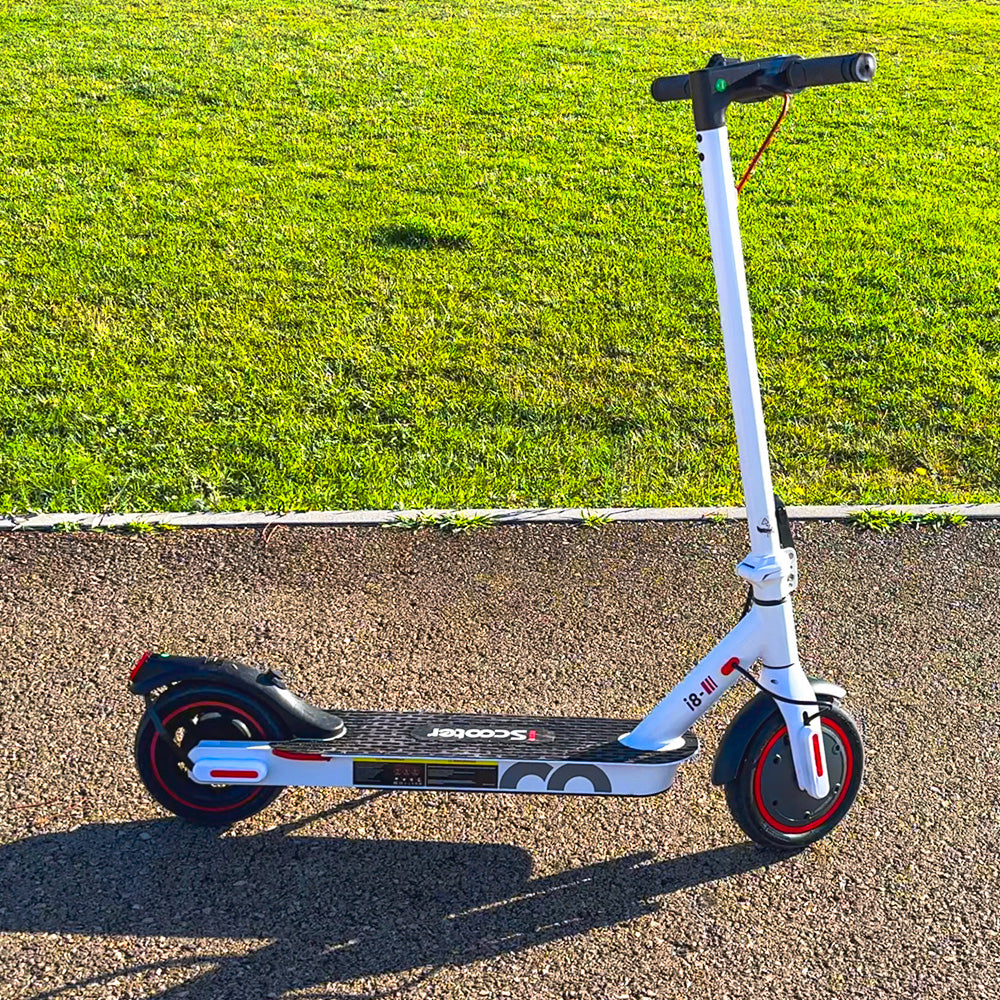
- The iScooter i8 lists an 8.5-inch pneumatic tire, front-wheel drive, and a braking setup that includes an EBAS electronic brake plus a rear hub brake. It also lists IP54 water resistance and a 36V 5.2Ah (187Wh) Lithium-ion Battery. Those specs fit a short wet commute where you value predictable handling and a lighter carry. (iscooterglobal.co.uk)
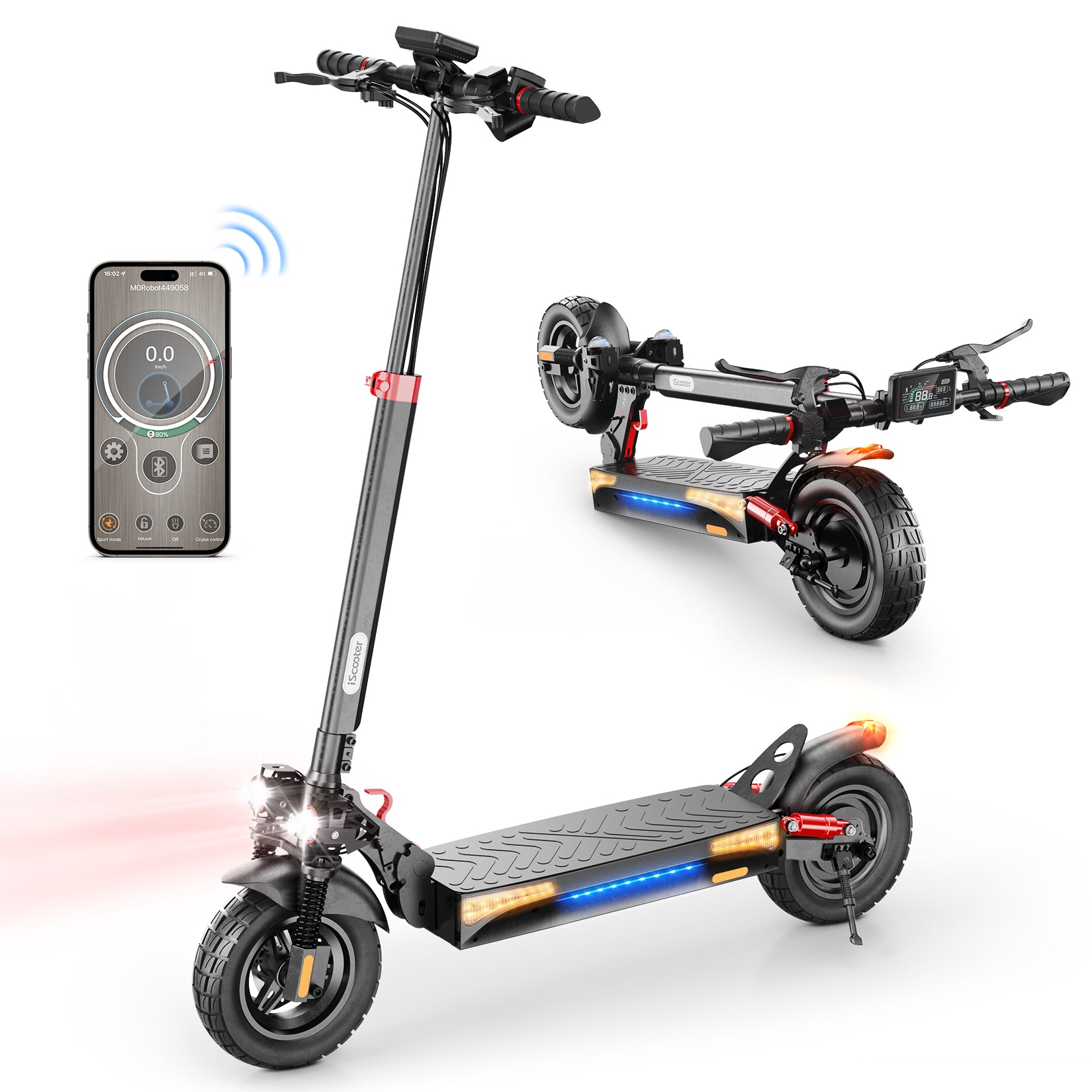
- The iScooter iX4 lists 10-inch off-road tubeless pneumatic tires, front and rear mechanical disc plus electronic brake, dual suspension, and IPX4 water resistance. This kind of setup can feel more planted on rough-and-wet routes, even if you ride at commuter speeds. (iscooterglobal.co.uk)
Module 3: Rain Riding Setup And Technique
The biggest rain upgrade is not a part, it is a routine. Wet riding punishes abrupt inputs, so you want to smooth everything out and increase margins before you need them.
Start with a simple setup checklist you can run in 30 seconds:
- Lights on, lenses clean
- Tire pressure checked (do not ride a soft tire in the wet)
- Brakes tested at walking speed
- Charge port cover fully seated
Then ride with technique that reduces peak traction demand:
- Slow your first 5 minutes: road oil film is most slippery early in the ride
- Extend stopping distance: brake earlier and more gently
- Avoid slick surfaces: painted lines, metal plates, and wet leaves
- Keep turns wide and upright: reduce lean angle on glossy pavement
Wet-weather crash risk is strongly linked to friction and surface condition, which is why your safest speed is the one that lets you brake smoothly before crossings and corners. The FHWA emphasizes identifying and addressing wet-weather crash locations in friction management programs, underscoring the real impact of wet traction limits. (Federal Highway Administration)
Where iscooter features help in rain
For visibility and control, the iX4 includes front and rear LED lights, brake light, turn signals, and ambient lighting, plus a smart display showing status such as speed and battery. In rain, those signals matter because drivers misjudge scooter speed more often when visibility drops.
Shop: iScooter iX4 Off Road Electric Scooter
Module 4: Battery Protection And Longevity
When you ride in rain, your Lithium-ion Battery is rarely damaged by a single splash. Instead, failures often come from repeated moisture exposure that creeps into connectors, creates corrosion, and later shows up as intermittent cutouts.
Use a "seal, dry, then charge" workflow:
- Seal: confirm the charge port cover is tight before you leave
- Dry: wipe the deck, stem base, and charge port area after the ride
- Wait: let the scooter reach indoor temperature before charging
What to protect first
- Charge port and its rubber cover
- Deck perimeter seam and underside fasteners
- Cable entry points near the stem and controller area
The iX4 notes UN38.3 approval (a lithium battery transport testing standard) in its specifications list, which is relevant because reputable packs are designed and tested for transport safety conditions. (iscooterglobal.co.uk)
A practical drying routine
- Wipe with a damp cloth, then a dry cloth
- Leave the scooter unfolded in a ventilated spot
- Do not use forced hot air directly into ports
Shop: iScooter i8 Electric Scooter
Module 5: Rainproofing Maintenance Workflow
Rain commuting becomes safer when your maintenance is scheduled, not reactive. The goal is to catch small seal failures and brake wear before the first panic stop in a storm.
Build a simple cadence:
- After every wet ride: wipe-down, check charge port cover, quick brake squeeze
- Weekly (or every 40-60 miles): inspect tire tread and embedded debris, check brake adjustment
- Monthly: inspect deck seam and fasteners, look for rust at brake hardware
Where to look for early water damage
- White powdery residue at connectors (corrosion)
- Flickering display after rain (moisture at controls)
- Squealing or grinding brakes (contaminated pads or rotors)
Avoid the two common mistakes
- Do not pressure wash the deck or stem. IP ratings like IP54 or IPX4 are for splash, not jets.
- Do not charge immediately after a soaking ride. Let moisture evaporate first.
This workflow also matters for teams doing Last-mile Delivery, because downtime and inconsistent braking create compounding risk across many short trips.
Selection/Decision Guide
Choosing a rain-capable electric scooter is a matching problem. You match the rating, tires, braking behavior, and support terms to your route and habits, then you commit to a drying and inspection routine.
1) IP rating vs your real rainfall exposure
- Occasional drizzle: IPX4 can be workable with careful habits
- Frequent wet commutes + grit: IP54 helps when dust and spray combine
- Puddles on route: prioritize fenders, deck sealing, and riding technique
2) Tires and tread: grip over glossy surfaces
- Choose pneumatic tires when possible for wet comfort and surface conformity.
- For rough routes, off-road tread and larger diameter help maintain stability.
3) Brakes and modulation: the panic-stop test
- Prefer setups that combine mechanical braking with electronic braking support.
- Test braking on wet pavement at low speed before you rely on it in traffic.
4) Support terms that matter when rain accelerates wear
iscooter highlights free shipping, fast delivery, a 30-day return window for new unused products, and up to 24 months warranty with local UK support. For rain commuting, those policies matter because early water-related issues often show up in the first weeks if a seal is compromised.
Quick comparison table: match route to setup
| Route reality | Water exposure | Tire priority | Brake priority | Best fit type |
|---|---|---|---|---|
| Short city commute | Drizzle, spray | 8.5 inch pneumatic | Smooth electronic assist | Lightweight commuter |
| Rough roads + rain | Spray, puddles | 10 inch off-road pneumatic | Dual disc modulation | Off-road electric scooter |
| Mixed surfaces | Paint, plates | Usable tread depth | Progressive lever feel | Balanced commuter |
| Delivery routes | Repeated wet cycles | Puncture resistance | Heat management | Durable workhorse |
Best Practices & Pitfalls
Best Practices
- Treat rain like low traction, not low speed limits: reduce peak braking and turning forces instead of only riding slower.
- Run a pre-ride brake check: a 3-second lever test catches many issues early.
- Keep the charge port sealed at all times: a loose cover is a direct path to failure.
- Use visibility stacking: lights plus reflective elements reduce close passes.
- Build a drying habit: wiping and air-drying prevents corrosion creep.
Conclusion
Rain-ready Electric Scooters are less about one magic rating and more about controlling water paths and traction limits. Start by matching IPX4 or IP54 protection to your actual exposure, then prioritize pneumatic tires, fender coverage, and braking you can modulate smoothly. Next, lock in a repeatable wet-ride checklist so your technique and maintenance stay consistent.
If your route is rough as well as wet, an off-road electric scooter setup with larger tubeless pneumatic tires and dual suspension can keep the ride calmer on mixed surfaces. If your commute is short and you carry your scooter often, a lighter commuter build can still work well if you protect the ports and ride with margin.
Frequently Asked Questions
Are there any e-scooters designed for rain?
Yes, some electric scooters are designed to tolerate rain better through higher IP ratings, better fender coverage, and more protected cable routing. In practice, this means they handle splashes and road spray more reliably, not that they are safe to submerge. You should still treat deep puddles as a no-go because water can enter from the deck seam or motor cable entry. A rain-ready build also needs controllable brakes and tires with usable tread, because traction is usually the first limit you hit.
How do I prevent my e-scooter from slipping on wet roads?
You prevent slipping by reducing sudden traction demands and avoiding the slickest surfaces. Roll on the throttle gently, brake earlier, and keep turns wider so the scooter stays more upright. Avoid painted lines, metal plates, and wet leaves because they can have far less grip than normal asphalt. Keep tires properly inflated and replace them once tread is worn, because tread depth matters for clearing water film.
What should I look for when choosing a rainy-weather commuter e-scooter?
Look first at the IP rating, then at real-world water entry points like the charge port cover and deck seam. Next, prioritize pneumatic tires with tread and fenders that reduce spray into the deck and wiring. For braking, choose a setup that gives smooth modulation, because wet panic stops are where riders lose control. Finally, consider support terms like warranty length and return policies, because rain exposure can reveal weak seals early.
What makes an e-scooter more durable for outdoor use?
Outdoor durability usually comes from sealed electronics, protected cable routing, and hardware that tolerates repeated vibration and water spray. Larger tires and suspension can reduce shock loads that open tiny gaps over time, especially on rough wet roads. Disc brakes with consistent modulation help maintain control when traction is limited. The final piece is maintenance cadence: wiping, drying, and inspecting seals and brakes prevents small water issues from becoming big failures.
Do off-road electric scooters handle rain better than commuter models?
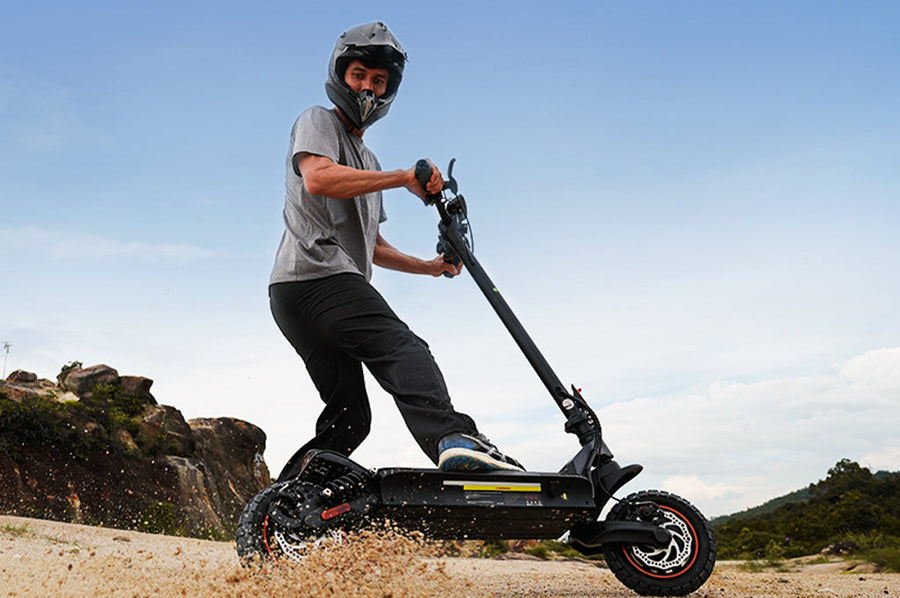
Off-road electric scooter designs often feel more stable in rain because larger tires, tread, and suspension can smooth out rough wet surfaces. That said, water resistance is still defined by the IP rating and how well ports and seams are protected, so off-road styling alone is not enough. If you ride on broken pavement and puddled paths, bigger tubeless pneumatic tires can reduce deflection and improve confidence. You still need to slow down for slick paint and metal, because those surfaces can defeat any tire.
Table of Contents
- Introduction
- Core Foundations
- Module 1: Decode Water Ratings Fast
- Module 2: Wet-Grip Hardware That Matters
- Module 3: Rain Riding Setup And Technique
- Module 4: Battery Protection And Longevity
- Module 5: Rainproofing Maintenance Workflow
- Selection/Decision Guide
- Best Practices & Pitfalls
- Frequently Asked Questions
iScooter E Scooter Collections:
Electric Scooter | Kids Electric Scooter | Electric Scooter for Adults | Electric Scooter with Seat | Off-Road Electric Scooter | Foldable Electric Scooter | Girls Electric Scooter | 1000W Electric Scooter | 2000W Electric Scooter | Boys Electric Scooter | Dual Motor Electric Scooter | Big Electric Scooter | Electric Scooter with Suspension | Lightweight Electric Scooter | Commuter E-Scooters | 3 Wheel Electric Scooter
Show more ▼iScooter E Bike Collections:
Foldable Electric Bike | Affordable Cheap Electric Bike | Electric Bike for Adults | Electric Motor Bikes | Trek Electric Bike | Fastest Electric Bike | Electric Road Bike | Full Suspension Electric Mountain Bike | Giant Electric Bike | Womens Ladies Electric Bike | Mens Electric Bike | Electric Bike with Throttle | Electric Gravel Bike | Electric Mountain Bike UK | Fat Tyre Electric Bike | Electric Hybrid Bike | Electric Motorised Bike | Electric Push Bike | 1000W Electric Bike | Cool Electric Bikes | Electric Off Road Bike | Pedal Assist Electric Bike | Good Electric Bikes | Small Electric Bike | Trek Electric Mountain Bike | 2000W Electric Bike | Full Suspension Electric Bike | Mini Electric Bike | Road Legal Electric Bike | Step Through Electric Bike
Show more ▼👍 Buying Guide | 🚴♂️ Riding Guide
📋 Feature Guide | ❓ Common problem

Product category
Electric Scooter
Cheap Electric Scooters for Adults | Fastest Electric Scooter | Kids Electric Scooter | Mini Electric Scooter
Electric Bike
U4 Foldable E-bike | EB3S E-MTB
Hoverboards
Electric Scooter for Kids | iK3Pro E-Scooter for Kids | iK7 Height Adjustable Kids E-Scooter







Article tags :
Leave us a message