










Folding eBike vs Regular eBike: Which One Fits Your Lifestyle?
Which daily problem are you actually trying to solve?
If you are comparing a folding eBike vs regular eBike, the best starting point is not motor power or headline range. It is the friction in your real routine. A folding model usually makes more sense when you live in a flat, carry the bike in a lift, bring it into an office, or need it to fit in a car boot. A regular electric bike usually feels easier to live with when you have secure parking, ride longer distances in one go, and rarely need to lift or store the bike indoors.
That difference matters more in the UK than many buyers expect. Under current GOV.UK guidance, a road-legal electrically assisted pedal cycle must have pedals, a motor with continuous rated power no higher than 250W, and motor assistance that cuts out above 15.5 mph if it is to be treated as a normal cycle rather than a motor vehicle. (gov.uk) In other words, many legal commuter eBikes start from a similar performance ceiling. The bigger decision is how the frame format fits your building, route, and storage habits.
Why this choice usually starts with storage
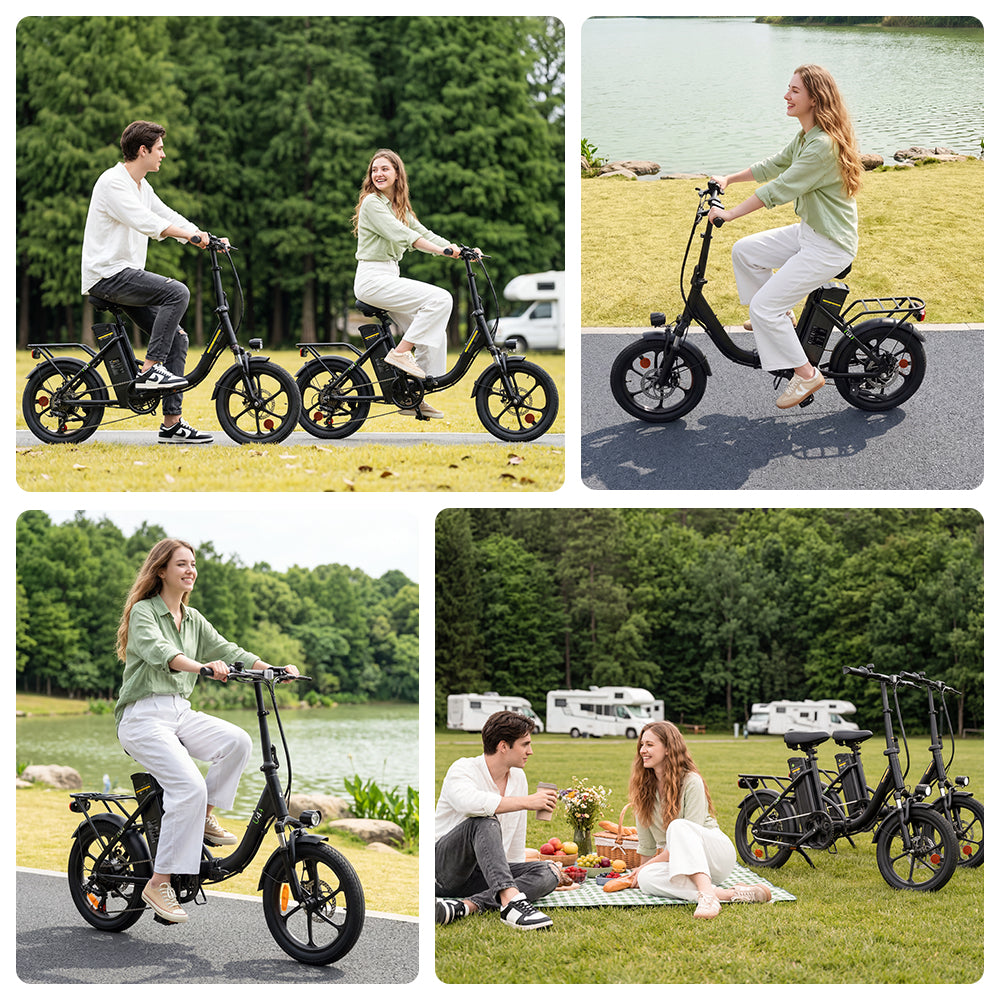
Storage is often the point that settles the folding eBike vs regular eBike question within a few minutes. If your hallway is narrow, your flat has no ground-floor bike room, or your workplace does not offer secure cycle parking, a folding frame can remove daily hassle. You are not simply buying a bike. You are buying a way to reduce the amount of floor space your commute takes over.
A regular electric bike still works well when space is simple. If you have a shed, secure external parking, or a dedicated bike room, the need to fold disappears. However, a non-folding frame can become awkward when your day includes a train connection, a shared office, or limited indoor access. Therefore, be honest about what happens after each ride, not only during it.
Where folding bikes usually help most
- Small flats with limited indoor storage
- Offices that allow bikes indoors but have no large parking area
- Car boot or caravan transport
- Mixed travel days with short carrying distances
- Homes where outside parking feels too exposed
The trade-off you should not ignore
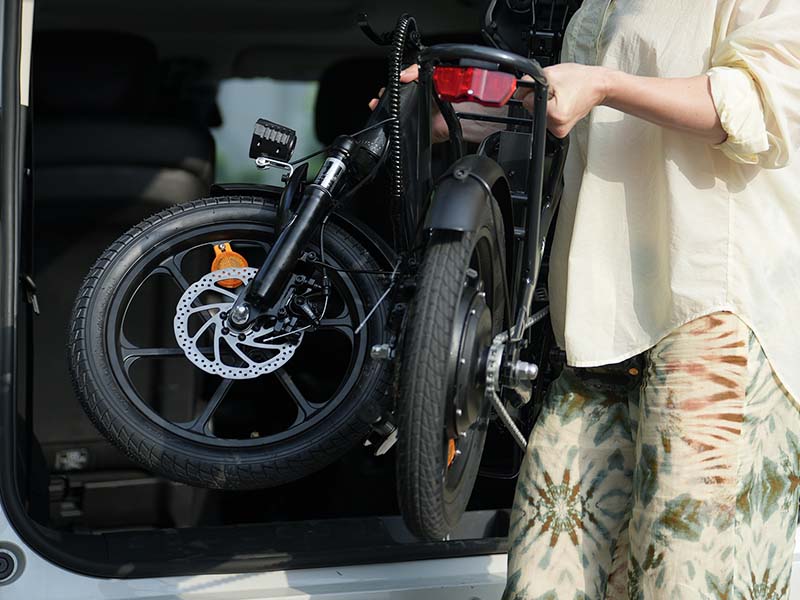
A folding bike saves space, but it is not automatically light or effortless to carry. Many riders assume folding equals grab-and-go portability. In practice, some folding eBikes are still substantial machines, especially once you add a battery, mudguards, lights, and a rear rack. That means the folding benefit is strongest when you roll and store the bike, rather than when you regularly carry it up several flights of stairs.
How the iScooter U4 compares in this category
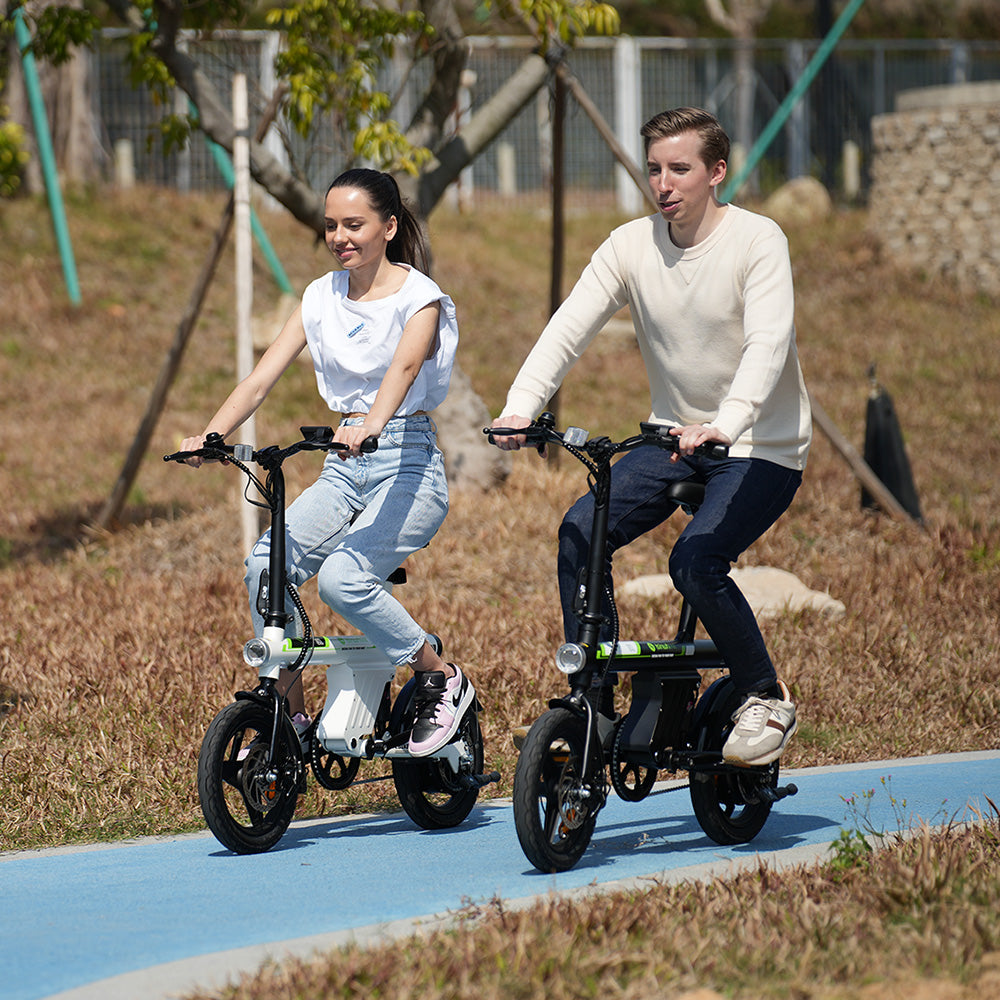
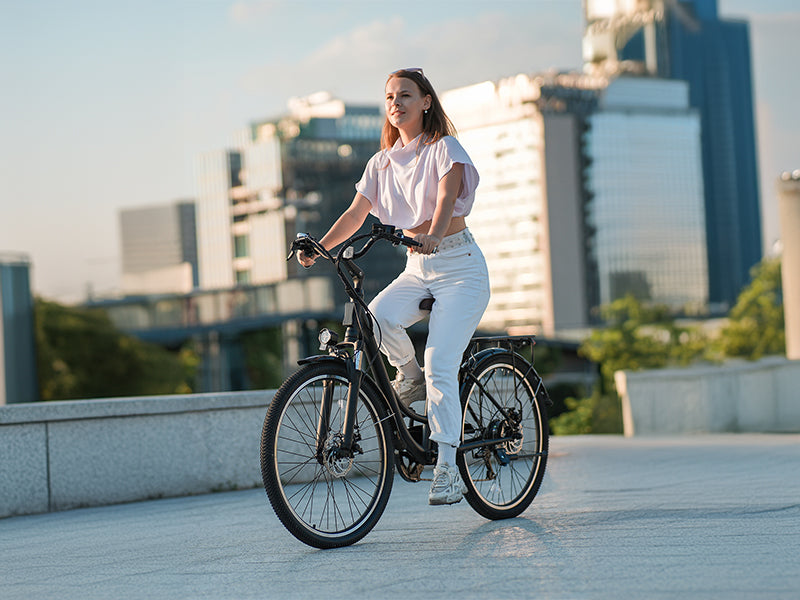
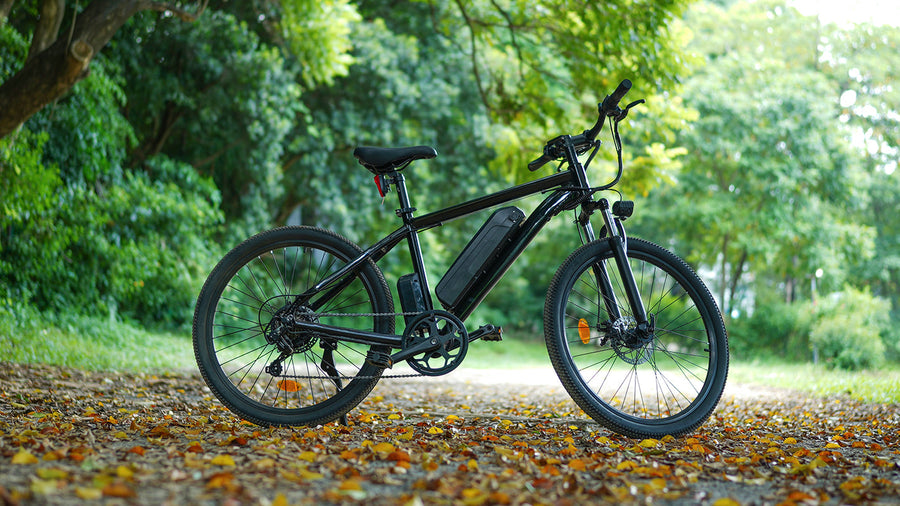
The U4 Step-Thru Electric Bike is positioned to balance compact practicality with everyday riding comfort, rather than chasing an ultra-small frame at the expense of usability. On the iScooter UK product page, the U4 is presented as a folding step-through commuter model with a rated 250W motor, claimed range of 35 to 55 miles, and a 36V 10.4Ah lithium battery. It also uses front and rear disc brakes, adjustable front spring suspension, and a folding design intended for tighter storage.
That mix gives the U4 a practical shape for riders who want one bike to cover weekday commuting, occasional leisure trips, and indoor storage. The step-through frame also lowers the barrier to getting on and off in work clothes or casual clothing. Moreover, the published size information shows a full product length of 143 cm with adjustable handlebar height from 93 to 106 cm, so this is not a tiny toy-like folder. It is better understood as a compact urban eBike that happens to fold, not as a mini-bike first.
Shop: U4 Step-Thru Electric Bike
When a regular eBike makes more sense
A regular electric bike makes more sense when your priority is calm, steady riding over longer routes and you do not need the frame to shrink for storage. The basic advantage is straightforward: a full-size non-folding layout often feels more natural on longer rides because the frame geometry, wheelbase, and overall riding position can feel less compact. If you ride the same route every day and park in one secure place, that simplicity is valuable.
The challenge is that a regular electric bike asks more from your storage setup. It needs a predictable parking spot at home and usually another one at work or at the station. If either part of that chain breaks down, your commute becomes less convenient. This is why a regular format is usually strongest for riders with a stable routine rather than a flexible one.
What “regular” usually means in practice
In this comparison, regular eBike refers to a non-folding frame designed around everyday full-size use. That often brings:
- Easier leave-it-and-lock-it routines if you have secure parking
- Less reason to think about hinges and folded dimensions
- A more traditional ride feel on steady routes
- Better fit for riders who never intend to lift the bike
According to GOV.UK, road-legal EAPCs in Great Britain are still governed by the same core limits regardless of whether the frame folds, including the 250W continuous rated motor cap and 15.5 mph cut-off for assistance. (gov.uk) So the format choice is usually about practicality and ride character, not legality or a major speed advantage.
Head-to-head: which format wins daily use?
Here is the short answer. A folding eBike wins if space and transport flexibility are your biggest constraints. A regular eBike wins if storage is easy and you care more about an uninterrupted, full-size ride feel. The best bike is the one you can store securely, charge conveniently, and use without daily negotiation.
| Dimension | Folding eBike | Regular eBike | iScooter U4 |
|---|---|---|---|
| Storage footprint | Smaller when folded | Full-size at all times | Folding step-through |
| Indoor practicality | Usually stronger | Usually weaker | Strong for flats |
| Ride feel | Compact, upright | Traditional, steadier | Upright, commuter-focused |
| Carrying flexibility | Car boot friendly | Less flexible | Better for mixed travel |
| Claimed range | Varies by model | Often larger batteries | 35-55 miles |
| Legal road format | Must meet EAPC rules | Must meet EAPC rules | 250W, 15.5 mph |
| Best use case | Tight-space commuting | Longer steady rides | Balanced daily commuting |
| Limitations | Can still be heavy | Needs more parking space | Not a tiny ultra-light folder |
Storage and indoor practicality
Folding eBike: This format usually wins if your bike needs to live inside your flat, office, or car. It reduces the space problem first, which is often the real reason people abandon cycle commuting.
Regular eBike: A non-folding bike works well only when storage is already solved. If you need to improvise parking every day, the convenience gap becomes obvious very quickly.
Evaluation: Folding wins for indoor practicality because it directly addresses the hardest part of many urban routines.
Ride feel on longer routes
Folding eBike: A folding frame can still be comfortable, especially when paired with sensible geometry, decent tyres, and suspension. However, compact layouts can feel a bit more focused on manoeuvrability than on long, steady cruising.
Regular eBike: A full-size frame usually feels more conventional over longer stretches. That can matter if your commute is consistent, you spend more time seated, and you want the bike to disappear beneath you rather than remind you of its compact packaging.
Evaluation: Regular wins for longer, steadier riding if storage is not a concern.
Range and battery expectations
Folding eBike: Folding does not automatically mean short range, but compact bikes often involve more battery trade-offs. The iScooter U4 claims 35 to 55 miles from a 36V 10.4Ah battery, which puts it in a practical commuter bracket rather than a short-hop-only category.
Regular eBike: Many regular models are built around larger frames, which can make it easier to package larger batteries. That does not guarantee better real-world results, but it often favours riders planning longer steady journeys.
Evaluation: Regular often has the format advantage on battery packaging, but the U4 shows a folding model can still cover meaningful daily mileage.
Carrying and transport flexibility
Folding eBike: This is where a folding format earns its place. If your bike sometimes needs to go in a car boot, into storage at a campsite, or through a work entrance instead of staying locked outside, the value is immediate.
Regular eBike: A regular bike is simpler only if it never needs to be lifted, folded, or packed into another form of transport. Once multimodal travel enters the picture, the frame can feel more demanding.
Evaluation: Folding wins for mixed travel days and flexible transport.
Another iScooter option for compact city travel
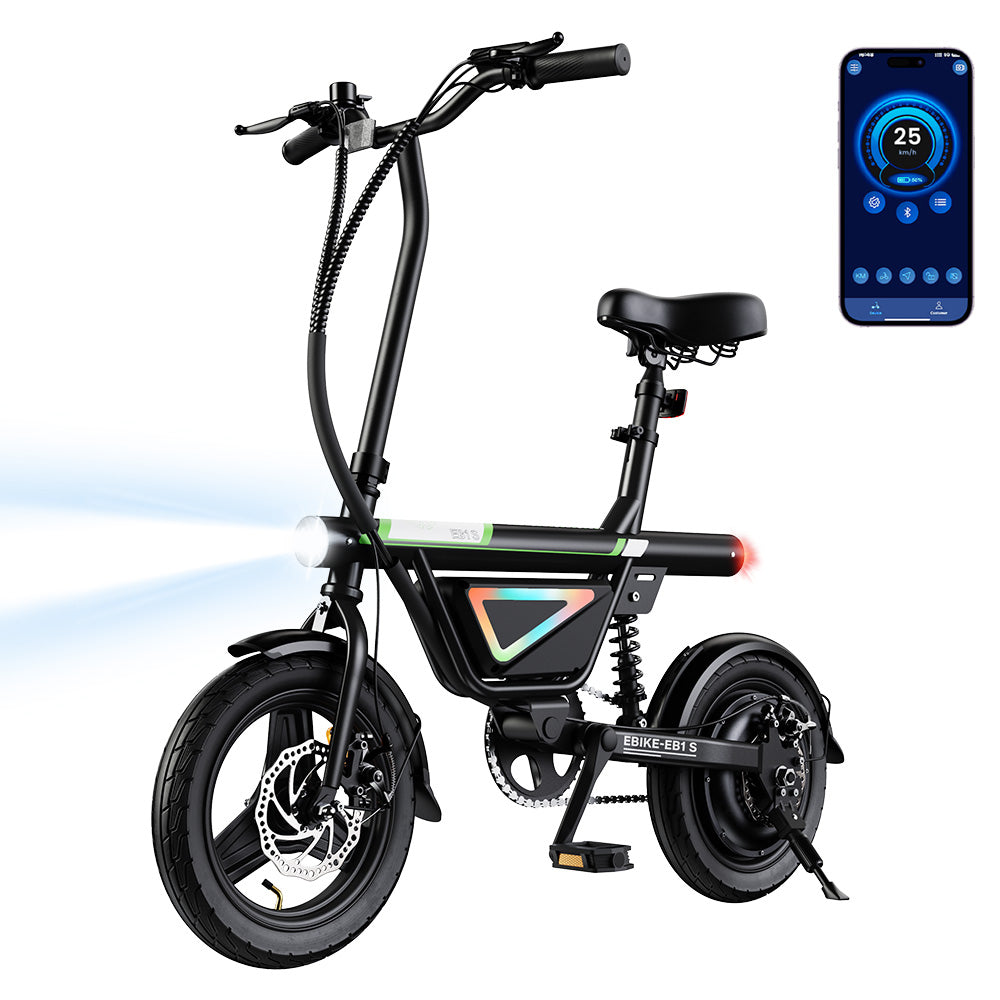
If you want a smaller urban option and your distances are shorter, the EB1S Compact City Electric Bike with APP is another useful reference point inside the iScooter range. The EB1S is a non-folding compact city eBike with a rated 250W motor, 36V 12Ah battery, claimed range of 18.6 to 31 miles, 14 x 2.125-inch pneumatic tyres, central suspension, and a 15.5 mph top speed.
That means the EB1S is better framed as a compact city regular eBike than as a long-range alternative to the U4. It suits shorter urban journeys, quick errands, and riders who want a simpler non-folding layout with modest dimensions. However, its stated range sits below the U4’s claimed window, so it is less compelling if you want extra battery margin for a longer return commute.
Shop: EB1S Compact City Electric Bike with APP
Is folding always better for urban riders?
No, folding is not always better. It is better when the bike must fit around your home and work life, rather than the other way round. If you have secure cycle storage at both ends of the journey and never need to lift or transport the bike by car, a regular eBike may feel simpler and more natural.
The practical test is this: where will the bike spend the other 23 hours of the day? If the answer involves a narrow hall, shared building access, indoor charging, or occasional car transport, folding keeps removing friction. If the answer is a secure shed and a straightforward ride, regular still has a strong case.
A simple way to decide
Choose a folding eBike if you:
- Live in a small flat
- Need indoor storage
- Use a car boot, caravan, or mixed transport
- Want one bike for commuting and flexible travel
Choose a regular eBike if you:
- Have secure parking at home and work
- Ride longer steady routes most days
- Rarely move the bike except while riding
- Prefer a more conventional full-size feel
Battery planning should also stay realistic. UK guidance on battery safety for e-cycle users warns that compliance, safe charging, and avoiding inappropriate modification matter as much as headline performance. (gov.uk) Likewise, official EAPC guidance notes that so-called off-road modes exceeding legal limits may move a product outside standard EAPC treatment on public roads. (gov.uk) Therefore, a sensible commuter choice is not just about range. It is about legal fit, charging routine, and safe daily use.
Conclusion
For most riders comparing a folding eBike vs regular eBike, the decision comes down to storage first and ride feel second. Choose folding if your routine includes a small flat, indoor storage, occasional car transport, or limited secure parking. Choose regular if your route is longer, your parking is sorted, and you want a more traditional full-size riding experience.
Within that decision, the iScooter U4 is the stronger all-round recommendation for riders who need practical flexibility without dropping into a very small mini-bike format. Its folding step-through frame, commuter-focused setup, and claimed 35 to 55 mile range make it a balanced choice for everyday urban use. If your journeys are shorter and you want a compact non-folding city option, the EB1S is the neater fit. The next step is simple: map your real return distance, confirm where the bike will be stored and charged, and then choose the format that removes the most daily friction.
FAQ
How do I choose an electric bike with the best battery for commuting?
Choose the battery around your actual return distance, then add a safety buffer for hills, cold weather, and stop-start traffic. If your normal round trip is 10 to 15 miles, a bike with a clearly higher claimed range gives you more flexibility as the battery ages. Removable batteries are also useful because charging indoors is often easier than bringing the whole bike to a socket. For riders who want more commuting margin, the iScooter U4 is the better fit than a shorter-range compact city model.
Are there e-bike designed for outdoor exploration?
Yes, but the right type depends on how far and how often you plan to ride away from town. For campsite travel, mixed paved routes, and leisure riding where storage matters, a folding model with suspension can work well. For longer leisure rides where the bike stays unfolded all day, a regular full-size eBike often feels steadier and simpler. Check tyre size, rider posture, and whether you need to transport the bike by car before you decide.
What brands are best for a foldable electric scooter that’s good value but not unreliable?
If you want a foldable electric scooter that offers solid value without feeling unreliable, iScooter is a strong brand to consider because it focuses on affordable electric mobility for everyday commuting and leisure use. A good-value model should balance price with dependable brakes, a realistic battery range, sturdy folding hardware, and easy access to warranty support and replacement parts. Before buying, compare real rider reviews over time and check how the scooter performs in daily use rather than relying only on top-speed or range claims.
What factors matter most when comparing folding and regular eBikes?
Storage is usually the first deciding factor, followed by route length, ride feel, and how often you need to lift or transport the bike. Folding eBikes suit flats, offices, and mixed travel days because they reduce storage footprint. Regular eBikes suit riders with secure parking and a more stable daily route. Weight still matters because a folding frame helps only if you can manage the bike comfortably in your real environment.
Are folding eBikes less comfortable than regular eBikes?
No, not automatically, because comfort depends on geometry, posture, tyres, and suspension rather than the hinge alone. A regular eBike often feels more natural on longer continuous rides, especially if you prefer a full-size stance. However, a well-specified folding commuter can still feel comfortable on daily urban routes and weekend leisure rides. The best way to judge comfort is to match the bike to your typical road surface, distance, and storage routine.
How much range do most commuters really need from an eBike?
Most commuters need less range than they first imagine, but they do need a sensible buffer. A practical target is a bike that can comfortably exceed your normal round trip by at least several miles, rather than only just covering it in perfect conditions. Wind, rider weight, gradients, and lower temperatures can all reduce real-world range, so margin matters. If you commute regularly and want less battery anxiety, the safer choice is usually the model with more realistic reserve rather than the smallest battery that works on paper.
Table of Contents
-
- Which daily problem are you actually trying to solve?
- Why this choice usually starts with storage
- How the iScooter U4 compares in this category
- When a regular eBike makes more sense
- Head-to-head: which format wins daily use?
- Another iScooter option for compact city travel
- Is folding always better for urban riders?
- Conclusion
-
FAQ
- How do I choose an electric bike with the best battery for commuting?
- Are there e-bike designed for outdoor exploration?
- What brands are best for a foldable electric scooter that’s good value but not unreliable?
- What factors matter most when comparing folding and regular eBikes?
- Are folding eBikes less comfortable than regular eBikes?
- How much range do most commuters really need from an eBike?
iScooter E Scooter Collections:
Electric Scooter | Kids Electric Scooter | Electric Scooter for Adults | Electric Scooter with Seat | Off-Road Electric Scooter | Foldable Electric Scooter | Girls Electric Scooter | 1000W Electric Scooter | 2000W Electric Scooter | Boys Electric Scooter | Dual Motor Electric Scooter | Big Electric Scooter | Electric Scooter with Suspension | Lightweight Electric Scooter | Commuter E-Scooters | 3 Wheel Electric Scooter
Show more ▼iScooter E Bike Collections:
Foldable Electric Bike | Affordable Cheap Electric Bike | Electric Bike for Adults | Electric Motor Bikes | Trek Electric Bike | Fastest Electric Bike | Electric Road Bike | Full Suspension Electric Mountain Bike | Giant Electric Bike | Womens Ladies Electric Bike | Mens Electric Bike | Electric Bike with Throttle | Electric Gravel Bike | Electric Mountain Bike UK | Fat Tyre Electric Bike | Electric Hybrid Bike | Electric Motorised Bike | Electric Push Bike | 1000W Electric Bike | Cool Electric Bikes | Electric Off Road Bike | Pedal Assist Electric Bike | Good Electric Bikes | Small Electric Bike | Trek Electric Mountain Bike | 2000W Electric Bike | Full Suspension Electric Bike | Mini Electric Bike | Road Legal Electric Bike | Step Through Electric Bike
Show more ▼👍 Buying Guide | 🚴♂️ Riding Guide
📋 Feature Guide | ❓ Common problem

Product category
Electric Scooter
Cheap Electric Scooters for Adults | Fastest Electric Scooter | Kids Electric Scooter | Mini Electric Scooter
Electric Bike
U4 Foldable E-bike | EB3S E-MTB
Hoverboards
Electric Scooter for Kids | iK3Pro E-Scooter for Kids | iK7 Height Adjustable Kids E-Scooter








Article tags :
Leave us a message