










How to Ride an Electric Scooter for Beginners: iScooter's Complete First-Time Guide
Starting out with an e-scooter, whether it's a classic kick scooter or a modern electric mode is exciting, but choosing the right one and learning how to ride confidently can feel overwhelming at first. If you're wondering how to ride an electric scooter for the first time, the good news is that most beginners are riding comfortably within a single practice session.
This guide covers everything you need for a confident start: how to choose your first scooter, how to use an electric scooter for the first time, essential safety gear, and the mistakes that trip up most new riders.
A quick but important note before you start: in the UK, privately owned e-scooters can currently only be ridden on private land with the landowner's permission. It's illegal to ride one on public roads, cycle lanes, pavements, or bridleways, the only exception is government-approved rental trial scooters in areas that run them. Always check your local rules before riding.
Types of Scooters: Choosing the Right One as a Beginner
Each scooter style suits different skill levels, riding environments, and purposes. Picking the right type from the start makes learning far easier.
Three-Wheel Scooters
Three-wheel scooters are the most beginner-friendly option, especially for younger riders. With two wheels at the front or back, they offer excellent balance and stability, making it easier to learn basic steering. Their intuitive "lean-to-steer" design helps new riders build coordination at a comfortable pace.
Two-Wheel Kick Scooters
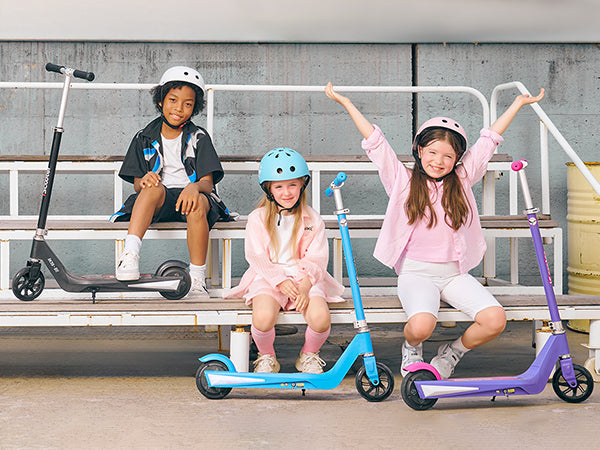
Traditional two-wheel scooters suit kids who already have good balance and coordination, since the rider pushes off the ground themselves. Lightweight and easy to control, they're ideal for school runs, neighbourhood rides, and building core riding skills.
The iScooter iK1S is a strong entry point for ages 4 and up, with a 100W motor, two speed settings (6/9 mph), a 4.3-mile range, an adjustable handlebar, and magnetic charging. For slightly older or more confident kids, the iK3Pro steps up with extra speed modes and a longer range.
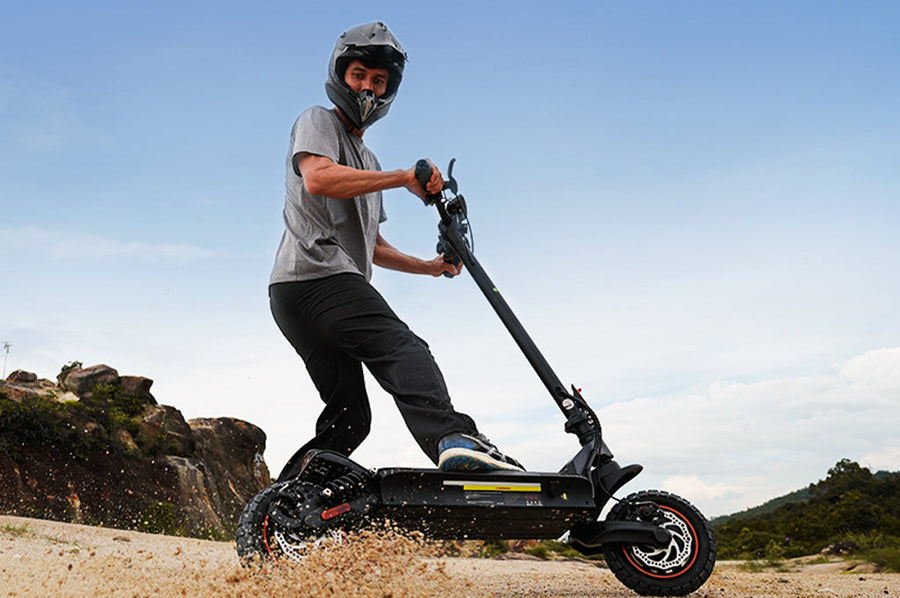
Off-Road and Stunt-Style Scooters
If you're drawn to rougher terrain or freestyle riding rather than long-distance travel, look for a scooter with a reinforced deck, stronger handlebars, and durable wheels built to handle impact.
Electric Scooters for Adults
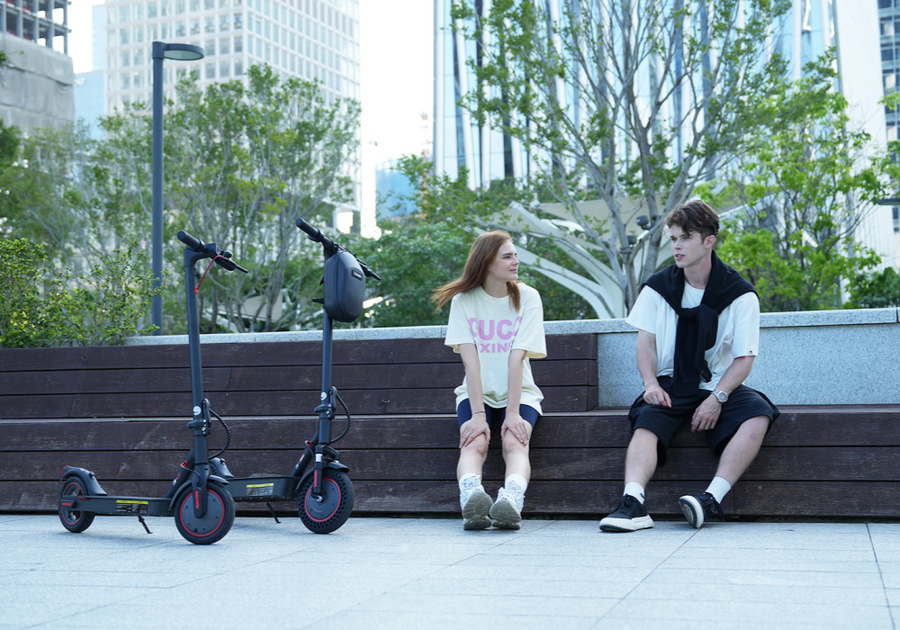
Electric scooters use a rechargeable battery for powered riding, making them ideal for longer distances with far less physical effort than a kick scooter. Beginners should start with a model that has a moderate top speed and a reliable braking system before working up to faster, more powerful options.
| Model | i8 | i9 | i9Max | i10Plus | iX4 | iX5S | iX7Pro |
|---|---|---|---|---|---|---|---|
| Motor | 350W | 350W | 500W | 800W | 800W | 1000W | 2000W |
| Max Range | 12 mi (20km) | 18.6 mi (30km) | 25 mi (40km) | 31 mi (50km) | 31 mi (50km) | 40.4 mi (55km) | 50 mi (80km) |
| Top Speed | 18.6mph | 18.6mph | 22mph | 25mph | 28mph | 28mph | 38mph |
| Suspension | None | None | Front & rear | Front & rear | Front & rear | Front & rear | Front & rear |
| Tyres | Pneumatic | Honeycomb | Honeycomb | Pneumatic | Pneumatic off-road | Pneumatic off-road | Pneumatic off-road |
| Load Capacity | 264lbs (120kg) | 264lbs (120kg) | 264lbs (120kg) | 264lbs (120kg) | 330lbs (150kg) | 330lbs (150kg) | 330lbs (150kg) |
| Certification | UKCA / CE | UKCA / CE | UKCA / CE | UKCA / CE | UKCA / CE | UKCA / CE | UKCA / CE |
For riders wanting off-road capability without stepping up to a 2000W motor, the iF1 is worth a look, 1200W, a 32-mile range, front-and-rear shock absorption, and off-road tyres, built for uneven ground rather than smooth paths.
How to Choose Your First Scooter
1. Define Your Riding Purpose
Before choosing a scooter, think about how you'll actually use it. A lightweight model is enough for casual weekend riding on smooth paths, while longer distances or rougher terrain call for stronger brakes, suspension, and durability.
2. Choose the Right Size and Fit
Your scooter should match your height and posture. You should be able to stand comfortably without leaning forward or overstretching for the handlebars, if it feels too tall, too short, or unstable, it will affect your control.
3. Consider Weight and Portability
Lightweight scooters are easier to carry up stairs or load into a car. Heavier models tend to offer better stability on longer or uneven routes, so weigh this against how you'll be using it day to day.
4. Check Build Quality and Safety Features
Look for a durable frame, a reliable braking system, and quality tyres that grip well on varied surfaces, these directly affect how safe and confident you'll feel while learning.
5. Consider Battery Life and Motor Power
Choose a range that comfortably covers your typical distance with some margin, and avoid ultra-budget models with weak motors if you plan to tackle hills or longer rides, a stronger motor makes a real difference to acceleration and hill-climbing.
6. Budget Wisely
Entry-level e-scooters are great for testing the waters, but if you expect to ride often, models with stronger components and higher-quality parts tend to save you money on repairs down the line.
7. Research and Compare Before Buying
Read reviews and compare range, braking, and tyre quality before committing. iScooter models are consistently praised for durability and value, which makes them a solid starting point if you're not sure where to look first.
Essential Safety Tips for First-Time Riders
- Wear a properly fitted helmet. This is the single most important piece of safety kit for any first-time rider. Make sure it sits level, feels snug, and meets a recognised safety standard.
- Use protective gear. Beginners are more likely to lose balance while learning, so knee pads, elbow pads, and wrist guards go a long way toward preventing common injuries.
- Check the weight limit. Every scooter has a maximum load capacity. Riding within it keeps handling stable and protects the scooter's long-term performance.
Common Beginner Mistakes and How to Avoid Them
Acceleration and braking
- Rushing the throttle causes sudden jolts, build speed with gentle, gradual pressure instead.
- Slamming the brakes, especially the front one, can cause you to lose control. Brake gradually with both brakes and lean back slightly for stability.
- Practise in a quiet, open area before riding anywhere busier, so you know exactly how your brakes respond.
Control and posture
- Riding one-handed cuts your stability significantly, keep both hands on the handlebars.
- Stand with feet shoulder-width apart and knees slightly bent rather than stiff and close together.
- Lean your body gently into turns instead of relying on sharp handlebar movements.
Other common mistakes
- Over-leaning into turns can tip you off balance, keep movements light and controlled.
- Wet, icy, or uneven surfaces are hazardous; slow down and stay alert.
- Always start in a quiet, open space before tackling anything busier.
Conclusion
Getting the right advice before your first ride makes a real difference to how confident and safe you feel. Once you understand the basics, the right scooter for your needs, proper safety gear, and good braking habits, the rest comes with practice. Take your time in a safe, open area, and your scooter will soon feel like second nature.
FAQs
How do I ride an electric scooter for the first time?
Start in a safe, open area on private land. Place one foot on the deck, keep both hands on the handlebars, and push off gently. On a model like the iScooter i9, i9Max, or i10Plus, begin with slow throttle pressure and practise braking gradually until you're used to the scooter's speed and power.
How do I use an electric scooter for the first time without losing balance?
Keep your feet shoulder-width apart, knees slightly bent, and both hands on the handlebars. Lean gently into turns rather than steering sharply, and practise braking with both brakes at once before you try riding anywhere with obstacles or other people around.
Is it hard to ride an electric scooter as a beginner?
Not at all, especially with manageable models like the iScooter i8 or i9, which have moderate top speeds and stable tyres. Most first-time riders build real confidence within their first few sessions of practice.
At what age can a child ride a scooter?
Kick scooters suit most children from around 4 years old with supervision, the iScooter iK1S is designed for ages 4 and up, with adjustable handlebars and two safe speed settings to make learning easier.
iScooter E Scooter Collections:
Electric Scooter | Kids Electric Scooter | Electric Scooter for Adults | Electric Scooter with Seat | Off-Road Electric Scooter | Foldable Electric Scooter | Girls Electric Scooter | 1000W Electric Scooter | 2000W Electric Scooter | Boys Electric Scooter | Dual Motor Electric Scooter | Big Electric Scooter | Electric Scooter with Suspension | Lightweight Electric Scooter | Commuter E-Scooters | 3 Wheel Electric Scooter
Show more ▼iScooter E Bike Collections:
Foldable Electric Bike | Affordable Cheap Electric Bike | Electric Bike for Adults | Electric Motor Bikes | Trek Electric Bike | Fastest Electric Bike | Electric Road Bike | Full Suspension Electric Mountain Bike | Giant Electric Bike | Womens Ladies Electric Bike | Mens Electric Bike | Electric Bike with Throttle | Electric Gravel Bike | Electric Mountain Bike UK | Fat Tyre Electric Bike | Electric Hybrid Bike | Electric Motorised Bike | Electric Push Bike | 1000W Electric Bike | Cool Electric Bikes | Electric Off Road Bike | Pedal Assist Electric Bike | Good Electric Bikes | Small Electric Bike | Trek Electric Mountain Bike | 2000W Electric Bike | Full Suspension Electric Bike | Mini Electric Bike | Road Legal Electric Bike | Step Through Electric Bike
Show more ▼👍 Buying Guide | 🚴♂️ Riding Guide
📋 Feature Guide | ❓ Common problem

Product category
Electric Scooter
Cheap Electric Scooters for Adults | Fastest Electric Scooter | Kids Electric Scooter | Mini Electric Scooter
Electric Bike
U4 Foldable E-bike | EB3S E-MTB
Hoverboards
Electric Scooter for Kids | iK3Pro E-Scooter for Kids | iK7 Height Adjustable Kids E-Scooter





Article tags :
Leave us a message