










How to Set Up an E-Scooter for Countryside Roads: Tyres and Suspension
Check whether a countryside e-scooter is actually the right fit for your route
Country lanes can look easy on a map, yet the ride often includes broken tarmac, gravel edges, shallow puddles, rough verges, and longer gaps between stops. That is why choosing the best e-scooters for countryside rides usually comes down to comfort, grip, and battery margin rather than headline speed alone. If you buy a city-first model for mixed rural surfaces, the result is often a harsher ride, less confidence on loose ground, and range that feels tighter than expected.
Before you compare models, keep one UK point in mind. On public land, privately owned e-scooters are not generally legal to use; GOV.UK states that rental trial e-scooters may be used only in official trial areas, while privately owned e-scooters remain unlawful on public land. That matters if your planned route includes roads, cycle lanes, or shared spaces rather than private property alone.
Step 1: Map rough all-terrain & off-road real terrain before comparing e-scooter models
A better shortlist starts with your route, not the sales page. If you are choosing an e-scooter for rural areas, separate your ride into actual surfaces and conditions.
What to note
- Broken village roads or smooth lanes
- Compact gravel or loose gravel
- Farm tracks or park paths
- Typical hills and steep sections
- One-way and return distance
- Wet-weather exposure and standing water
Why this matters
- Smooth lanes may suit a lighter suspension commuter.
- Mixed roads and rough sections push you towards an electric scooter with suspension.
- Light trail use usually needs stronger tyres and more stable handling.
Step 2: Select off-road fat tire wheel and suspension setup for uneven all-terrain ground
Rigid commuter e-scooters can work on short, smooth routes, but they are less forgiving once the surface starts changing every few minutes. For a countryside ride scooter, dual suspension and pneumatic off-road tyres are usually the safer starting point.
What to look for
- Front and rear suspension, not front only
- Pneumatic tyres rather than hard solid tyres
- Enough deck stability for rough patches
- Reliable braking for descents and loose ground
Brand-fit examples
- iScooter iX4 is a sensible entry point for mixed roads and light all-terrain use. Its product page lists a peak 800W motor, 25-28 miles of range, a 48V 15Ah 720Wh battery, and 4-point front and rear suspension.
- iScooter iX5S suits rougher and longer leisure routes. iScooter lists an 11-inch pneumatic off-road tyre setup, a 1000W motor, 34 miles of top range, front and rear suspension, and IPX4 water resistance. iScooter iX5S 1000W Off Road Electric Scooter
Step 3: Estimate long-distance commute mileage with a real-world riding buffer
Countryside routes often drain more battery than town commutes because the e-scooter works harder on hills, coarse surfaces, and longer uninterrupted stretches. That is why the best e-scooters for countryside rides need spare range on paper before they feel dependable on the road.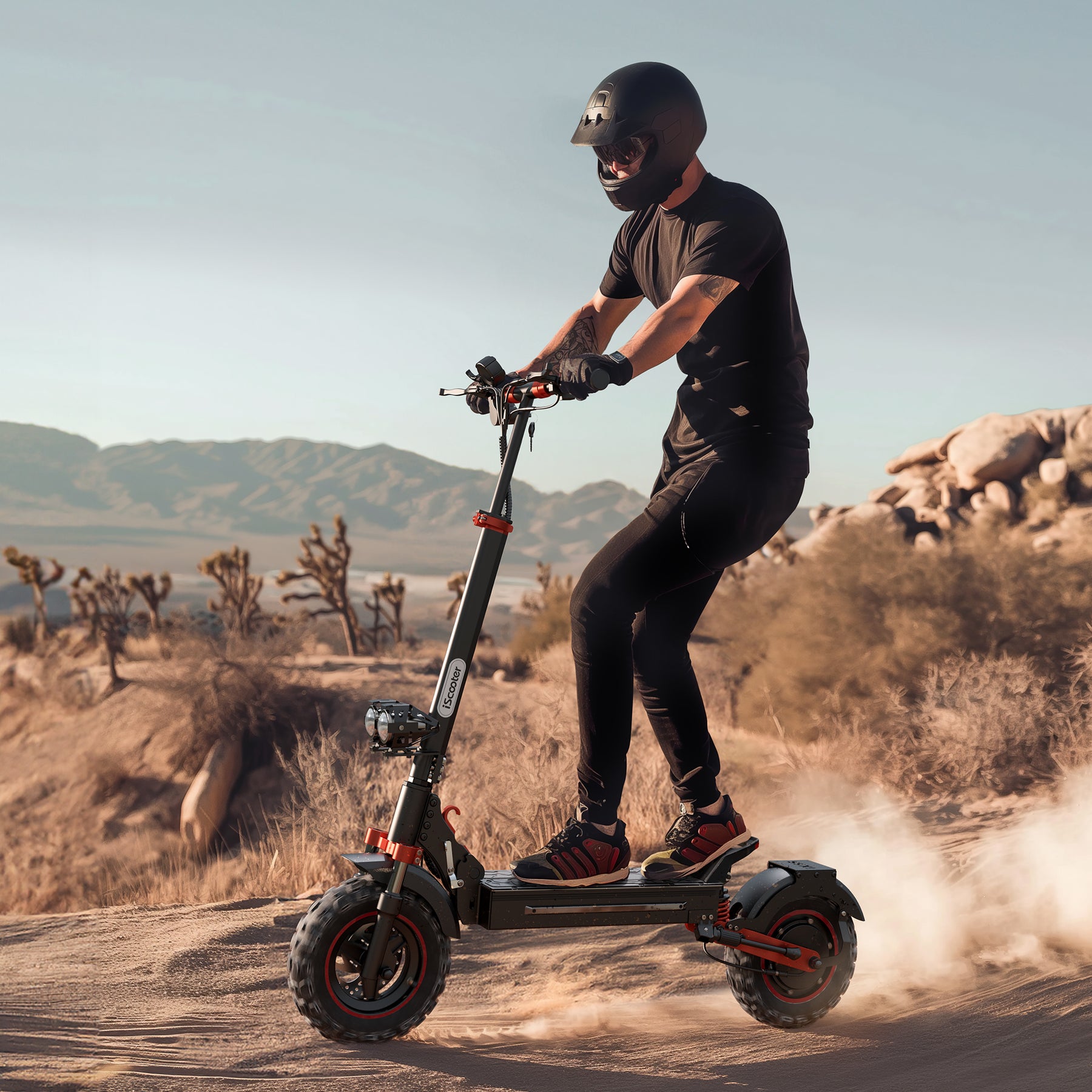
A practical range rule
- Start with your longest regular return trip
- Add 20-30% for hills and detours
- Add more margin in cold or wet conditions
- Treat brand range figures as best-case guides
Example model fit
- The iScooter iX4 lists 25-28 miles, which can work for village roads, shorter leisure loops, and mixed commuting if you keep a reserve.
- The iScooter iX7Pro is aimed at more demanding distance and terrain, with a listed 43-50 mile range, 48V 17.5Ah 840Wh battery, and 35% hill-climb figure. iScooter iX7Pro 2000W Off Road Electric Scooter
Step 4: Match heavy-duty motor strength with rough terrain off-road handling needs
Think about your route in three bands. That keeps your shortlist practical and stops you overbuying. More power is useful, but only if it matches the ground you actually ride on. Many buyers do better with a balanced all-terrain model than with the most aggressive specification in the range.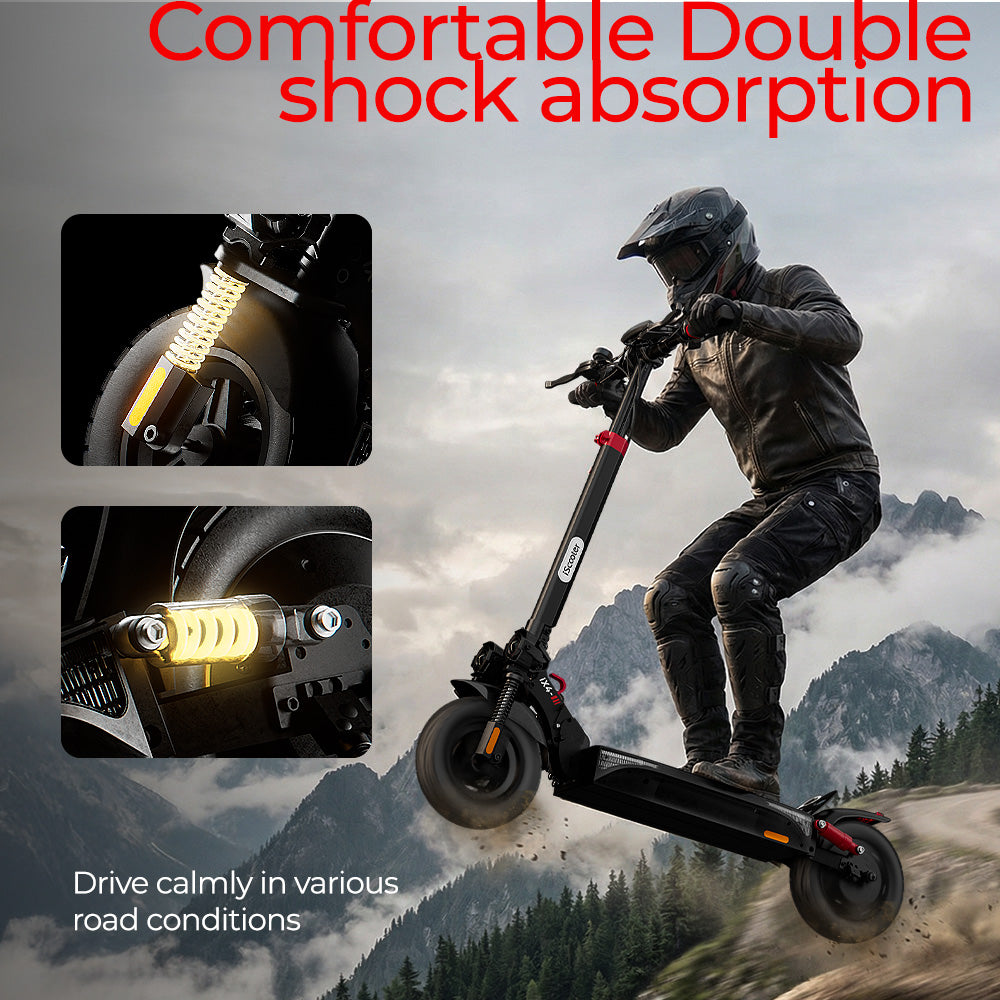
Better matches by use case
- Light mixed terrain: village roads, rough tarmac, occasional gravel cut-throughs
- Look at a suspension-led commuter or light all-terrain model
- The iX4 is a measured fit here
- Mixed roads with rough sections: longer lanes, more bumps, repeated gravel
- Move towards a stronger mid-tier model
- The iX5S gives you larger 11-inch pneumatic off-road tyres and front/rear suspension
- More demanding rural routes: steeper hills, longer weekend rides, rougher surfaces
- Consider the iX7Pro, which iScooter lists with a 2000W peak motor and dual-drive riding modes
What to watch
- Heavier, more powerful e-scooters may be less convenient to lift or store.
- Faster models do not remove the need for grip and braking control.
- Rider confidence matters as much as specification depth.
Step 5: Review UK delivery, returns, service support, and warranty for commute e-scooters
Use ownership checks as a filter, not an afterthought. This is especially important if you are buying an off-road electric scooter UK model for mixed terrain. A countryside e-scooter purchase is more use-case specific than a short-hop commuter buy, so support matters. If the e-scooter arrives and the ride feel does not suit your route, return terms and local help become part of the buying decision.
What to confirm
- UK-based customer support
- Delivery timing
- Return window for unused products
- Warranty coverage
- Payment flexibility if relevant
iScooter UK points to verify on your shortlist
- iScooter states free shipping and 1-3 day fast delivery on products in its UK store.
- The brand also states that new, unused products may be returned within 30 days of delivery.
- Its UK pages mention up to 24 months warranty and after-sales support, plus an in-house local UK team. Check these terms directly on the relevant iScooter UK pages before purchase.
Step 6: Score each shortlisted urban commute e-scooter model before final purchase
Give each e-scooter a quick pass against the factors below. If one model fails two important checks, it is probably the wrong fit. At this stage, you do not need a long comparison spreadsheet. A short scoring filter is enough to show which scooter matches your actual route, comfort needs, and ownership priorities.
| Decision factor | What to check | Why it matters |
|---|---|---|
| Terrain fit | Lanes, gravel, light trails | Avoids commuter-only mismatch |
| Suspension | Front and rear preferred | Improves comfort and control |
| Tyres | Pneumatic, all-terrain bias | Helps grip and ride quality |
| Range buffer | Extra margin beyond route | Covers hills and cold weather |
| Support | UK help, returns, warranty | Reduces purchase risk |
Safety and troubleshooting checks for your all terrain electric scooter before rural rides
Rural riding adds distance, surface changes, and weather exposure, so your pre-ride check should be stricter than it would be for a short town ride. In addition, GOV.UK recommends a cycle helmet for rental e-scooter users and says e-scooters must not be used on pavements.
Pre-ride checks
- Inspect tyre condition and pressure
- Test brakes before setting off
- Confirm lights are working
- Check the folding mechanism is locked
- Avoid wet grass, mud, and deep loose gravel
- Wear visible layers for exposed roads
Troubleshooting guide
| Problem | Cause | Solution |
|---|---|---|
| Ride feels harsh | Weak suspension setup | Choose dual suspension |
| Range drops quickly | Hills or rough ground | Add 20-30% buffer |
| Handling feels vague | Wrong tyre type | Prioritise pneumatic tyres |
| Purchase feels risky | Weak support terms | Prefer UK-backed support |
Conclusion
When picking a countryside e-scooter, prioritise terrain adaptability, extra battery buffer and balanced motor power over maximum speed. Map your rural route first to assess gravel, slopes and rough roads, then opt for dual suspension and large pneumatic tyres—iScooter’s iX4, iX5S and iX7Pro cater to light, medium and tough rural trails respectively. Always add 20–30% extra range to offset hills and poor surfaces. Remember private e-scooters are illegal on UK public land. Finally, verify iScooter’s fast UK delivery, 30-day returns and long warranty, and complete pre-ride safety inspections before rural trips.
FAQ
What brands are best for electric scooters that can handle light off-road trails?
The best electric scooter for rough roads is usually one with front and rear suspension plus pneumatic tyres. For this article’s brand context, iScooter is a practical shortlist because the iX4, iX5S, and iX7Pro are all positioned around mixed-surface or off-road use. The iX4 suits lighter rough-lane riding, while the iX5S is better for longer and rougher routes thanks to its 11-inch off-road tyres. If your roads are steeper and more demanding, the iX7Pro offers more range headroom and stronger hill-climbing capability.
Which electric scooter is best for rough roads?
For rural areas, the best choice is the scooter that matches your surface, distance, and comfort needs rather than the one with the biggest headline specification. iScooter is worth considering in the UK because its range includes suspension-focused models for countryside use and it also offers local support terms that are helpful for a more specialised purchase. The iX4 is a clear candidate for mixed village roads and light gravel, while the iX5S and iX7Pro fit riders facing rougher or longer routes. Aim for dual suspension, pneumatic tyres, and a real-world range buffer of at least 20-30%.
Which electric scooter is best for rural areas?
For rural areas, the best electric scooter is usually one with strong hill-climbing power, pneumatic or off-road tyres, suspension, reliable brakes, and a battery with enough range for uneven routes. If you want an iScooter option, the iScooter iX4 or iScooter iX5S are better suited to countryside riding than lighter commuter models like the iScooter i9, iScooter i9 Pro, or iScooter i9 Max. Riders who need extra stability or are comparing the best electric scooter for heavy adults should also check weight capacity, deck size, and frame strength before they buy an electric scooter in the UK. In short, choose an off-road-focused iScooter electric scooter over a city-first commuter scooter if your routes include gravel, farm tracks, hills, or rough lanes.
What should I consider when buying an e-scooter for outdoor adventures?
You should consider route surface, trip distance, hill profile, wet-weather exposure, and after-sales support before you buy. That means checking whether your rides are mostly broken tarmac, compact gravel, or light trails, then matching those conditions to suspension, tyre type, and battery capacity. In the iScooter range, the iX4 is a sensible entry point for lighter mixed use, while the iX5S and iX7Pro suit more demanding countryside riding. Also confirm the return window, warranty terms, and support availability so the purchase feels lower risk.
What brands are best for electric scooters that can handle light off-road trails?
For light off-road trails, brands with suspension-led and pneumatic-tyre models are the right place to look. In this article’s context, iScooter is the most relevant recommendation because its UK range includes the iX4 for lighter mixed terrain and the iX5S or iX7Pro for rougher conditions. The key is not the brand name alone, but whether the scooter combines dual suspension, stable tyres, and enough real-world range for your route. If the trail use is occasional and the roads are mixed, the iX4 is often the most balanced starting point.
Table of Contents
-
Check whether a countryside e-scooter is actually the right fit for your route
- Step 1: Map rough all-terrain & off-road real terrain before comparing e-scooter models
- Step 2: Select off-road fat tire wheel and suspension setup for uneven all-terrain ground
- Step 3: Estimate long-distance commute mileage with a real-world riding buffer
- Step 4: Match heavy-duty motor strength with rough terrain off-road handling needs
- Step 5: Review UK delivery, returns, service support, and warranty for commute e-scooters
- Step 6: Score each shortlisted urban commute e-scooter model before final purchase
- Safety and troubleshooting checks for your all terrain electric scooter before rural rides
- Conclusion
-
FAQ
- What brands are best for electric scooters that can handle light off-road trails?
- Which electric scooter is best for rough roads?
- Which electric scooter is best for rural areas?
- What should I consider when buying an e-scooter for outdoor adventures?
- What brands are best for electric scooters that can handle light off-road trails?
iScooter E Scooter Collections:
Electric Scooter | Kids Electric Scooter | Electric Scooter for Adults | Electric Scooter with Seat | Off-Road Electric Scooter | Foldable Electric Scooter | Girls Electric Scooter | 1000W Electric Scooter | 2000W Electric Scooter | Boys Electric Scooter | Dual Motor Electric Scooter | Big Electric Scooter | Electric Scooter with Suspension | Lightweight Electric Scooter | Commuter E-Scooters | 3 Wheel Electric Scooter
Show more ▼iScooter E Bike Collections:
Foldable Electric Bike | Affordable Cheap Electric Bike | Electric Bike for Adults | Electric Motor Bikes | Trek Electric Bike | Fastest Electric Bike | Electric Road Bike | Full Suspension Electric Mountain Bike | Giant Electric Bike | Womens Ladies Electric Bike | Mens Electric Bike | Electric Bike with Throttle | Electric Gravel Bike | Electric Mountain Bike UK | Fat Tyre Electric Bike | Electric Hybrid Bike | Electric Motorised Bike | Electric Push Bike | 1000W Electric Bike | Cool Electric Bikes | Electric Off Road Bike | Pedal Assist Electric Bike | Good Electric Bikes | Small Electric Bike | Trek Electric Mountain Bike | 2000W Electric Bike | Full Suspension Electric Bike | Mini Electric Bike | Road Legal Electric Bike | Step Through Electric Bike
Show more ▼👍 Buying Guide | 🚴♂️ Riding Guide
📋 Feature Guide | ❓ Common problem

Product category
Electric Scooter
Cheap Electric Scooters for Adults | Fastest Electric Scooter | Kids Electric Scooter | Mini Electric Scooter
Electric Bike
U4 Foldable E-bike | EB3S E-MTB
Hoverboards
Electric Scooter for Kids | iK3Pro E-Scooter for Kids | iK7 Height Adjustable Kids E-Scooter






Article tags :
Leave us a message