










Most Durable E-Scooters for Outdoor Use: What to Look For
How to Choose a Durable Outdoor E-Scooter Without Overpaying
Rough tracks, broken tarmac, gravel lanes, and wet corners expose weak scooter parts quickly. What looks acceptable on a product page can feel very different after a few weeks of repeated vibration, kerb transitions, and steep braking. If you choose purely by top speed, you may end up paying more in tyre replacements, brake servicing, or hinge repairs than you expected.
A better approach is to judge durable e-scooters for outdoor use as a full system. Frame strength, tyre design, suspension layout, braking control, and weather protection all work together. In the UK, there is also a legal point worth keeping in mind: privately owned e-scooters can only be used on private land with the landowner’s permission, while public-road use is limited to authorised rental schemes. According to GOV.UK, private e-scooters are illegal on pavements, roads, and parks. This guide focuses on what actually affects outdoor electric scooter durability, then shows how iScooter’s off-road range fits different riding demands.
Which Parts Actually Make an Outdoor E-Scooter Last?
Durability is rarely about one headline feature. A scooter lasts outdoors when the high-stress parts share the load properly and when its specification matches the route you actually ride.
Frame, deck, and load capacity basics
The frame is your starting point because it carries every bump, braking force, and steering input. Aluminium alloy is common on better outdoor models because it balances stiffness, corrosion resistance, and weight. What matters just as much, however, is how stable the deck feels under load and whether the stem and folding joint stay tight after repeated use.
When you compare models, check these basics first:
- Frame material and visible weld quality
- Deck width and foot placement stability
- Stem lock design and hinge confidence
- Maximum rider weight with some margin above your real load
- Overall scooter weight, which affects portability and structural heft
A useful rule is to avoid running close to the maximum load every day. If you weigh 95 kg and often carry a bag, a model rated far above that figure will usually stay more composed over time than one working near its limit.
Suspension, tyres, and terrain control
Outdoor wear often starts where shocks enter the chassis. Suspension helps absorb impact before it travels into the stem, deck, battery mounts, and electronics. That improves comfort, but more importantly, it can reduce long-term stress from repeated jolts on gravel, uneven paving, and compacted dirt.
Tyres matter just as much. For a rough road electric scooter, look for pneumatic tyres rather than hard solids, and give extra credit to tubeless designs where available. Larger diameters roll over potholes and loose stones more smoothly, while off-road tread improves grip on mixed surfaces.
Key signals to check:
- Dual suspension rather than a minimal front-only setup
- Tubeless pneumatic tyres for puncture resistance and lower maintenance interruption
- 10-inch or 11-inch tyres for better uneven-ground stability
- Off-road tread if you ride gravel, park paths, or loose surfaces regularly
For many riders, this is where the difference between a commuter scooter and an all-terrain e-scooter becomes obvious.
Brakes, water resistance, and electronics
Outdoor riding asks more from braking because surfaces change faster and stopping distances grow in wet or loose conditions. Dual braking systems are usually the safer choice for downhill sections and variable grip. Mechanical disc brakes remain common because they are serviceable, while an added electronic brake can support smoother control.
Water protection needs a realistic reading. A waterproof e-scooter label is often too broad to be useful on its own. IP ratings tell you more, but they still do not mean a scooter is suitable for deep puddles, pressure washing, or prolonged heavy rain. The electrical system also matters beyond the headline rating, including cable routing, battery sealing, and display protection.
According to GOV.UK, rented e-scooters that are allowed on public roads still cannot be ridden on pavements or motorways, which matters because braking and visibility expectations differ by route type. For durability, focus on:
- Front and rear braking coverage
- Clear IP or IPX rating
- Sealed battery housing and protected connectors
- Lighting that remains usable in low visibility
How to Match Electric Scooter Specs to Real Outdoor Riding

The best outdoor scooter is not always the most powerful one. It is the model whose specification matches your actual surfaces, climbing needs, storage limits, and weather exposure.
For gravel lanes and rough roads
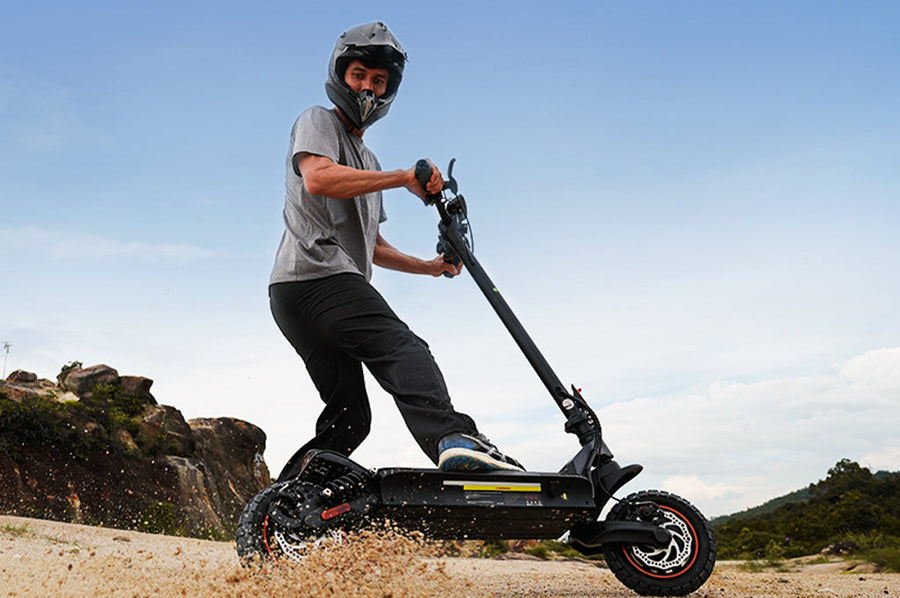
If your route includes gravel drives, patched lanes, loose park tracks, or repeated potholes, tyre and suspension design should come before speed. A true off-road e-scooter features broader pneumatic tyres, more aggressive tread, and suspension that can cope with repeated impacts rather than just smoothing occasional bumps.
Prioritise these features:
- 10-inch to 11-inch off-road tyres
- Dual suspension at both ends
- Strong hill-climb performance for loose or rising ground
- A deck and frame that feel planted under load
- Mechanical disc brakes with electronic assistance where available
This is also where manufacturer hill-climb claims need context. A quoted 25% or 40% grade can help you compare models, but real results will vary with rider weight, tyre pressure, battery state, and surface grip.
For mixed commuting and weekend trails
Many riders do not need a full heavy-duty machine every day. If your week is mostly broken urban roads with the occasional canal path or trail section, balance matters more than extremes. You want enough tyre volume and suspension travel to stay comfortable, but not so much bulk that storage and lifting become frustrating.
Look for a practical middle ground:
- Foldability with a strong three-step or reinforced hinge system
- Enough range for your real trip rather than the best-case claim
- Reliable lighting for darker mornings or evening returns
- Weight you can still manage into a boot or hallway
- A tyre and brake package that suits both tarmac and occasional rough sections
That wider context supports a sensible buying approach: choose the scooter that fits your routine, not the one with the most dramatic specification sheet.
For frequent wet-weather riding
If you expect regular light-rain use on private land, weather protection deserves close scrutiny. Water can affect braking feel, tyre grip, display visibility, bearings, and connector reliability long before it causes outright electrical failure. In other words, wet-weather durability is about the whole machine, not only the battery casing.
Check these points carefully:
- Confirm the published IP or IPX rating
- Read whether the rating covers the whole scooter or selected components
- Prefer enclosed battery protection and tidy cable management
- Expect slower riding and longer braking distances in the wet
- Treat standing water as a hazard even with a rated scooter
The safest interpretation is simple: splash resistance supports light wet use, but it does not make the scooter submersible.
What to Compare Before You Buy
Once you have matched route type to basic scooter format, compare a shortlist against the same decision framework. That stops you being distracted by speed alone.
| Factor | What to check | Why it matters |
|---|---|---|
| Build quality | Welds, stem lock, hinge, fasteners | Stress points often fail first |
| Tyres | Size, tread, tubed or tubeless | Affects grip, puncture risk, and comfort |
| Suspension | Front only or dual | Changes shock load and control |
| Braking | Disc layout and electronic support | Matters on descents and mixed surfaces |
| Weather protection | IP or IPX rating, sealed electronics | Helps with light rain and splash exposure |
| Load capacity | Rider limit with margin | Protects stability and long-term wear |
| Support | Warranty and spare parts access | Reduces ownership risk over time |
Build quality
Start with the areas that take repeated stress. Inspect the stem base, folding hardware, deck edges, mudguard mounts, and cable routing. If a scooter folds, the locking mechanism needs to feel deliberate and tight, not convenient but vague.
Cost versus lifespan
Paying more can make sense when it buys stronger tyres, better suspension, and easier brake servicing. The goal is not the cheapest purchase; it is the lowest hassle over a realistic ownership period.
Performance metrics in context
Range, speed, and hill-climb figures only help when you compare them against your actual route. A 150 kg load rating or 11-inch tyre size tells you more about outdoor durability than a dramatic top-speed headline on its own.
Where iScooter Fits the Durable Outdoor Category
iScooter’s off-road line covers three distinct outdoor use levels, which is helpful if you want to match the scooter more closely to your route instead of jumping straight to the highest output model.
iScooter W12 for higher-demand outdoor use

The W12 is the most demanding-use option in this set. iScooter lists dual-wheel drive, a 3000W peak motor, 11-inch off-road tubeless pneumatic tyres, front and rear rocker arm shock absorbers, front and rear mechanical disc brakes with electronic braking support, an IPX4 rating, and a 150 kg rider limit. The battery is listed at 52V 25Ah 1300Wh, with an 8 to 9 hour charging time, which positions it as a serious all-terrain e-scooter for riders dealing with longer private-land routes, loose surfaces, and steeper climbs.
What that means in practice:
- Best fit for rougher tracks and higher-demand riding
- Larger 11-inch tubeless tyres help stability and puncture resilience
- Dual-wheel drive and a claimed 40% hill climb suit more difficult gradients
- Higher weight means less convenience if you need frequent lifting
Shop: W12 3000W Ultimate All-Terrain Electric Scooter
iScooter iX7Pro for balanced off-road versatility
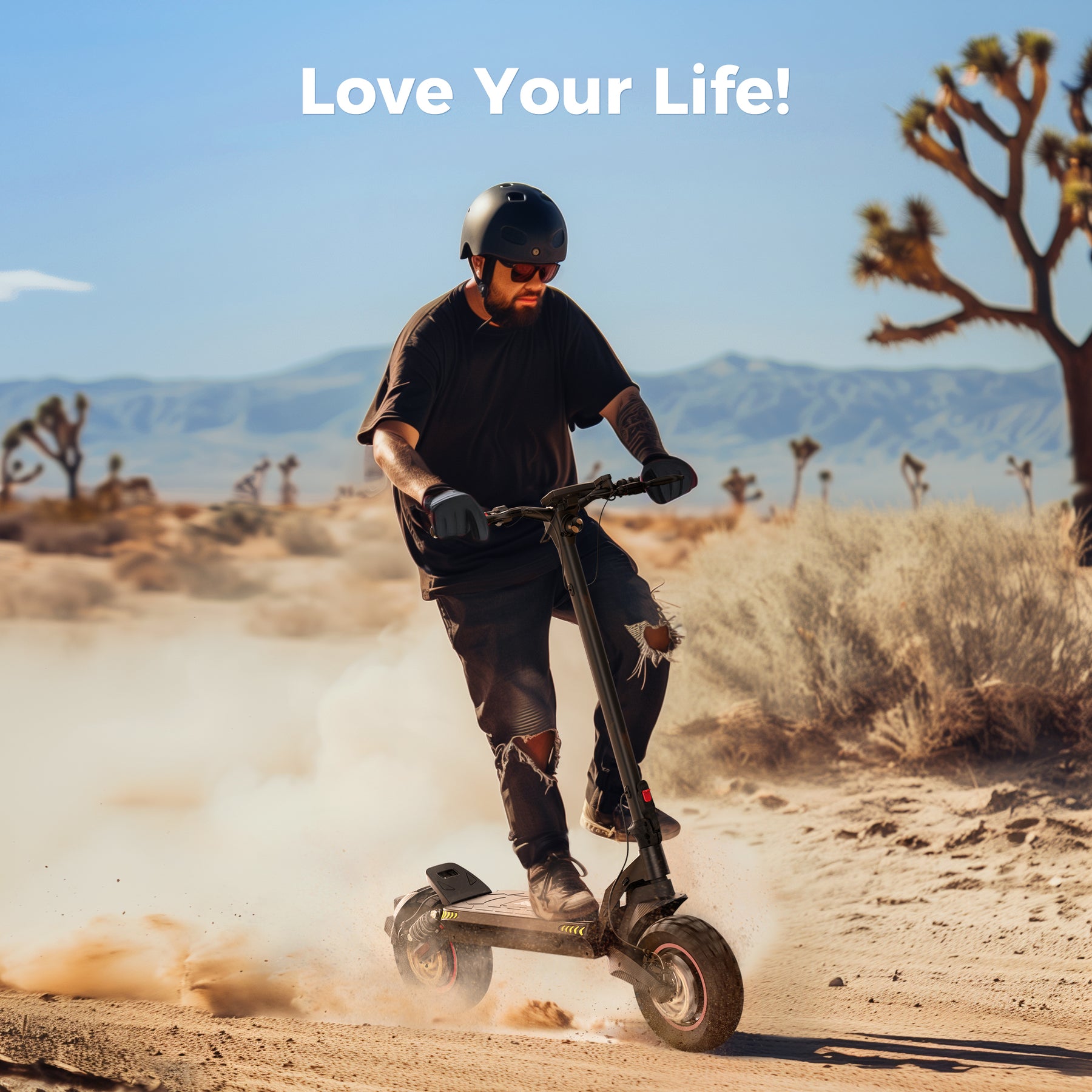
The iX7Pro sits in a more balanced middle position. iScooter specifies a 2000W peak output, 10-inch off-road tubeless pneumatic tyres, front and rear dual suspension, front and rear mechanical disc brakes plus electronic brake, IPX4 water resistance, a smart battery management system, and the same 150 kg rider limit. With a listed weight of 29.7 kg, it remains substantial, but it is more manageable than the W12 while still covering mixed-surface outdoor use well. The iScooter iX7Pro 2000W Off Road Electric Scooter makes sense if your week combines rough roads, occasional trail sections, and storage constraints that make a heavier dual-drive model less practical.
Best fit signals:
- A strong choice for mixed commuting and weekend trail use
- Tubeless 10-inch tyres balance agility and outdoor traction
- Dual suspension supports broken surfaces without stepping up to the W12’s mass
- Suitable if you want off-road e-scooter features in a more proportionate package
Shop: iScooter iX7Pro 2000W Off Road Electric Scooter
iScooter iX5 for lighter off-road needs
The iX5 is the lighter-duty direction for riders who still need outdoor capability. iScooter lists a 1000W maximum power output, rear-wheel drive, dual front and rear suspension, 10-inch pneumatic off-road tyres, front mechanical disc brake, rear mechanical disc brake with E-ABS, IPX4 water resistance, aluminium alloy frame construction, and a 150 kg rider limit. At 27.29 kg, it is the most manageable of the three for riders whose terrain is rougher than standard commuting but not consistently demanding. Shop: iX5 Off Road Electric Scooter
Choose this route if:
- Your daily roads are uneven, but not deeply technical
- You still want suspension and off-road tyre support
- Storage and carrying weight matter more in your workflow
- You want a rough road electric scooter without paying for extreme output you will rarely use
Best Practices and Common Mistakes
A durable scooter lasts longer when you buy for your route, then maintain the parts that take the most abuse. This section is less glamorous than motor output, but it usually decides whether ownership stays straightforward.
Best practices
Start with a quick inspection routine. A two-minute check before riding often catches the issues that become expensive later.
Do this regularly:
- Check tyre pressure and tread condition weekly
- Tighten visible fasteners if the manufacturer permits user checks
- Inspect brake response before every longer ride
- Clean off grit and moisture after wet or dirty use
- Watch the folding joint and stem for play or creaking
- Stay comfortably under the maximum load rating
That wider picture supports a conservative maintenance mindset: better control, predictable braking, and stable hardware matter more than headline pace.
Common pitfalls to avoid
Many durability problems begin with unrealistic expectations. Riders often assume a scooter marketed for outdoor use can handle every surface and every weather condition equally well.
Avoid these mistakes:
- Judging durability by speed alone
- Ignoring rider weight, bags, or regular cargo
- Treating splash resistance as full waterproofing
- Buying aggressive off-road specs for mostly smooth commuting
- Overlooking parts support and warranty structure
- Assuming larger range claims reflect your real hills, temperature, and terrain
Conclusion
The most durable e-scooters for outdoor use are not simply the fastest or the most expensive. They are the models with the right mix of frame stability, tyre volume, suspension support, braking control, and realistic weather protection for your route. If your riding is harsher and steeper, the W12 makes the strongest case; if you want a more balanced outdoor machine, the iX7Pro is easier to justify; and if your needs are lighter, the iX5 may be the smarter match.
Compare your actual surfaces first, then shortlist models by tyres, suspension, brakes, load capacity, and wet-weather expectations. That process usually leads to a better long-term decision than chasing one headline specification.
FAQ
What are the top features to look for in an e-scooter for off-road exploration?
The top features are a strong frame, stable stem lock, dual suspension, off-road pneumatic tyres, and dependable front and rear braking. For outdoor riding, 10-inch to 11-inch tyres usually give noticeably better control on gravel and broken surfaces than smaller commuter tyres. For less extreme routes, the iX7Pro covers mixed surfaces more proportionately.
What should I consider when buying an e-scooter for outdoor adventures?
You should start with the route, not the speed figure. Look at surface type, climb steepness, ride distance, rider weight, storage space, and whether you expect dry-only or occasional light-wet use. A scooter for gravel lanes needs different tyres and suspension from one used mainly on patched town roads. Within this article’s scope, iScooter offers a useful spread from the lighter-duty iX5 to the heavier-duty W12, so you can match the model to the stress level of your real riding.
What’s the most durable e-scooter for outdoor use?
The most durable option is usually the one whose tyres, suspension, brakes, and frame are properly matched to your terrain and load. In this article’s featured line-up, the iScooter W12 is the strongest candidate for tougher outdoor use because it adds dual-wheel drive, 11-inch tubeless off-road tyres, front and rear rocker-arm suspension, and a higher-demand overall build. That does not make it the right answer for every buyer, though, because weight and storage may make the iX7Pro or iX5 a better long-term fit. Durability improves when the scooter is not constantly pushed beyond the kind of route it was built for.
Which electric scooters can you ride in the rain?
You should only ride scooters in rain when the manufacturer’s guidance supports light wet-weather use, and even then you should assume splash exposure rather than deep water use. An IP or IPX rating helps you compare models, but it does not mean the scooter is waterproof in the everyday sense. In the product set covered here, the iScooter W12, iX7Pro, and iX5 are all listed with IPX4 protection, which is more reassuring for light rain than having no stated rating at all. You should still slow down, avoid standing water, and dry the scooter after the ride.
How long should a durable outdoor e-scooter last?
A durable outdoor e-scooter should last several years if it is correctly matched to rider load and terrain and maintained consistently. Tyres, brakes, suspension parts, and bearings will wear faster outdoors than they do on smooth commuting routes, so lifespan depends heavily on inspection habits and storage conditions. Checking tyre pressure weekly, keeping the scooter clean, and avoiding repeated overload can make a meaningful difference. Choosing a model with accessible support and spare parts, such as those offered through iScooter’s UK operation, also reduces long-term ownership risk.
Table of Contents
-
- How to Choose a Durable Outdoor E-Scooter Without Overpaying
- Which Parts Actually Make an Outdoor E-Scooter Last?
- How to Match Electric Scooter Specs to Real Outdoor Riding
- What to Compare Before You Buy
- Where iScooter Fits the Durable Outdoor Category
- Best Practices and Common Mistakes
- Conclusion
-
FAQ
- What are the top features to look for in an e-scooter for off-road exploration?
- What should I consider when buying an e-scooter for outdoor adventures?
- What’s the most durable e-scooter for outdoor use?
- Which electric scooters can you ride in the rain?
- How long should a durable outdoor e-scooter last?
iScooter E Scooter Collections:
Electric Scooter | Kids Electric Scooter | Electric Scooter for Adults | Electric Scooter with Seat | Off-Road Electric Scooter | Foldable Electric Scooter | Girls Electric Scooter | 1000W Electric Scooter | 2000W Electric Scooter | Boys Electric Scooter | Dual Motor Electric Scooter | Big Electric Scooter | Electric Scooter with Suspension | Lightweight Electric Scooter | Commuter E-Scooters | 3 Wheel Electric Scooter
Show more ▼iScooter E Bike Collections:
Foldable Electric Bike | Affordable Cheap Electric Bike | Electric Bike for Adults | Electric Motor Bikes | Trek Electric Bike | Fastest Electric Bike | Electric Road Bike | Full Suspension Electric Mountain Bike | Giant Electric Bike | Womens Ladies Electric Bike | Mens Electric Bike | Electric Bike with Throttle | Electric Gravel Bike | Electric Mountain Bike UK | Fat Tyre Electric Bike | Electric Hybrid Bike | Electric Motorised Bike | Electric Push Bike | 1000W Electric Bike | Cool Electric Bikes | Electric Off Road Bike | Pedal Assist Electric Bike | Good Electric Bikes | Small Electric Bike | Trek Electric Mountain Bike | 2000W Electric Bike | Full Suspension Electric Bike | Mini Electric Bike | Road Legal Electric Bike | Step Through Electric Bike
Show more ▼👍 Buying Guide | 🚴♂️ Riding Guide
📋 Feature Guide | ❓ Common problem

Product category
Electric Scooter
Cheap Electric Scooters for Adults | Fastest Electric Scooter | Kids Electric Scooter | Mini Electric Scooter
Electric Bike
U4 Foldable E-bike | EB3S E-MTB
Hoverboards
Electric Scooter for Kids | iK3Pro E-Scooter for Kids | iK7 Height Adjustable Kids E-Scooter







Article tags :
Leave us a message