










Mountain eBike vs City eBike: What’s the Difference?
Should your first eBike match terrain or routine?
Choosing between a mountain eBike vs city eBike usually comes down to one thing: where you actually ride most weeks. If your normal route includes broken paths, gravel cut-throughs, park tracks, or uneven rural lanes, a mountain-style setup makes more sense. If most of your riding is on tarmac, short commutes, and errands between home, work, and shops, a city eBike is often the easier fit. In other words, the wrong bike does not just feel awkward; it can make daily riding less comfortable, less practical, and harder to store.
That is why this mountain eBike vs city eBike comparison should focus on use, comfort, range, and routine rather than appearance alone. In the UK, an electrically assisted pedal cycle that meets the legal definition can use a motor with a maximum continuous rated power of 250 watts and assistance cutting off at 15.5 mph, which matters when you compare headline specs across commuter and trail-led models. According to GOV.UK, those are core rules for road-legal e-cycle use in Britain. A good choice starts with your weekly route, not the most aggressive-looking frame.
Urban roads or rough tracks change the answer
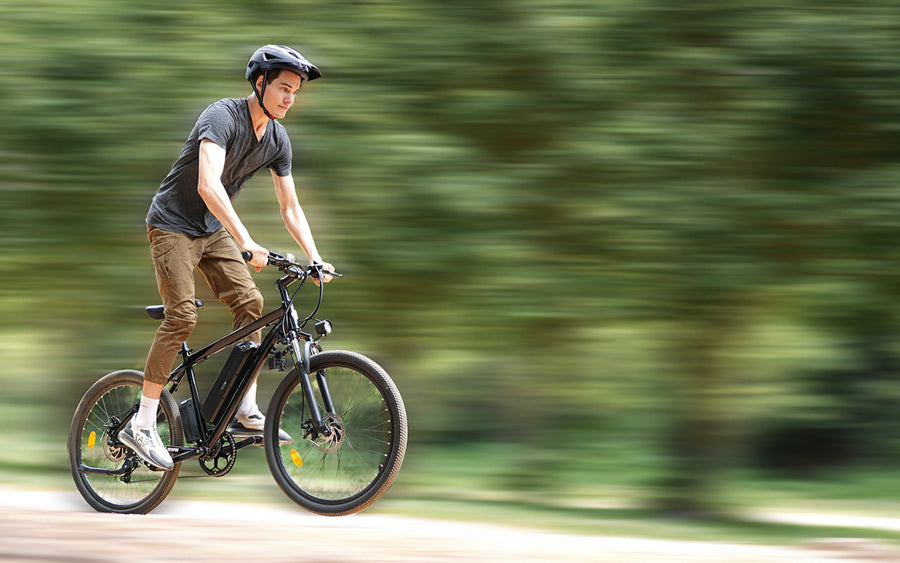
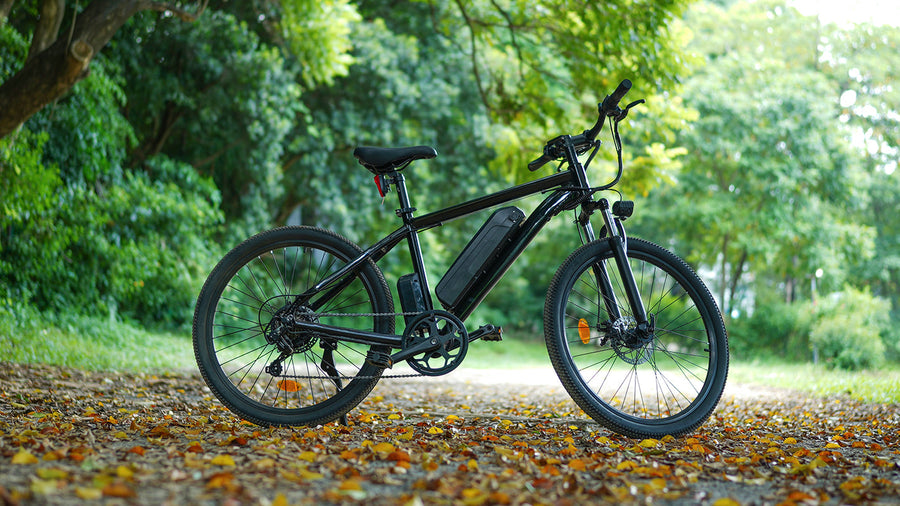
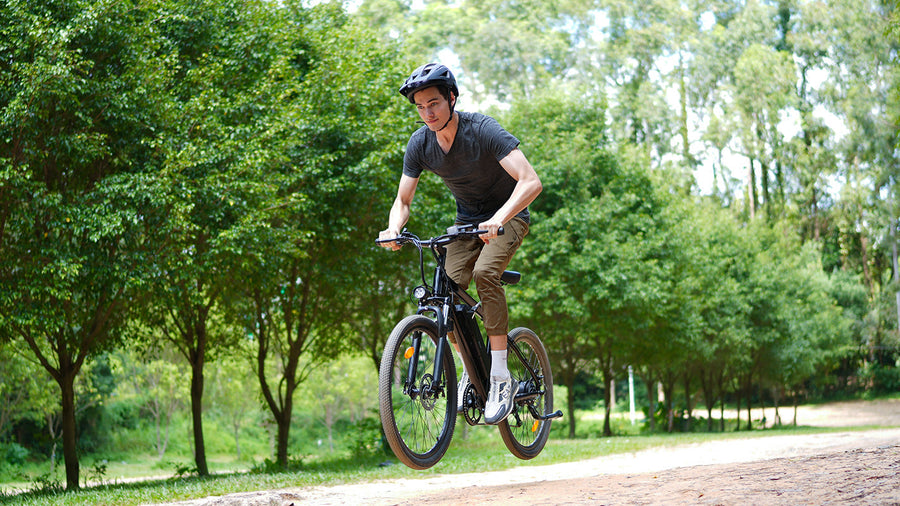
A mountain eBike is built to stay composed when the surface stops being predictable. You normally get wider tyres, a more active riding position, and suspension that helps control bumps rather than simply absorb road vibration. That design is helpful for recreational loops, light trails, and mixed-surface riding, but it can feel bulkier when you are carrying the bike through a hallway or storing it in a small flat.
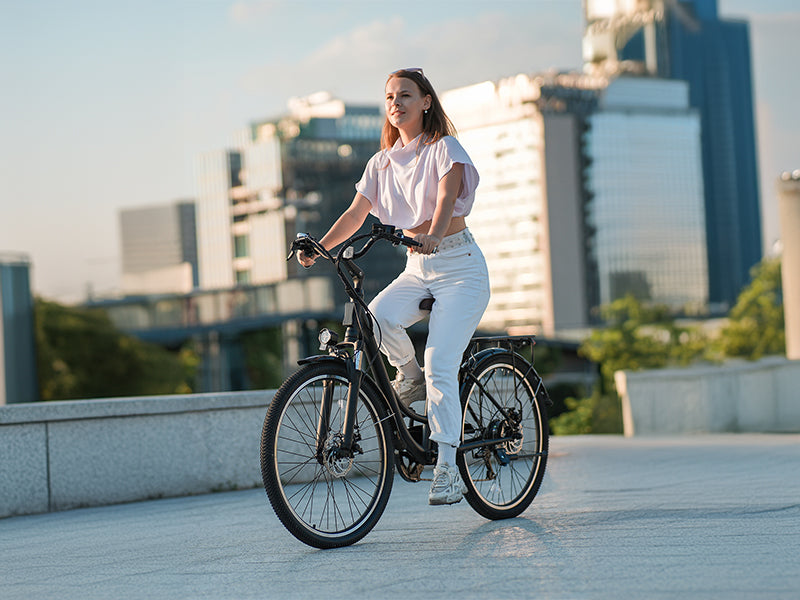
By contrast, a city eBike is shaped around convenience. You usually get a more upright posture, easier stop-start handling, and a layout that feels calmer in traffic and on daily short trips. Therefore, if your riding is mostly routine-based, a commuter model often saves effort every single day.
City riding priorities change the answer
If your eBike is mainly replacing car trips, bus hops, or short rail connections, city priorities become more important than trail capability. You want something that feels easy at junctions, simple to park, and manageable when you need to lift, wheel, or store it. That is where a city eBike often wins. It is not trying to do everything. Instead, it is tuned for repeated urban use, smoother surfaces, and practical day-to-day movement.
A mountain model can still commute well, especially if your route includes poor road surfaces or rough towpath sections. However, for errands and short weekday journeys, its strengths may be underused while its compromises become more obvious. Larger tyres, a bigger frame presence, and sportier geometry are excellent when the ground is inconsistent, but they can feel unnecessary when your route is mostly predictable roads. Moreover, the best eBike for commuting is usually the one that fits your storage space, route pattern, and comfort needs, not the one with the most trail-inspired design.
Wrong fit wastes money fast
You feel a mismatch quickly with e-bikes. A city rider on an off-road-biased bike may notice slower manoeuvring in tight spaces and less convenience when parking. A trail-minded rider on a compact commuter may notice reduced confidence on loose surfaces, kerb transitions, and rough cut-throughs. So while both categories can overlap, your main usage still decides the better value.
Head-to-head: where does each electric bike make sense?
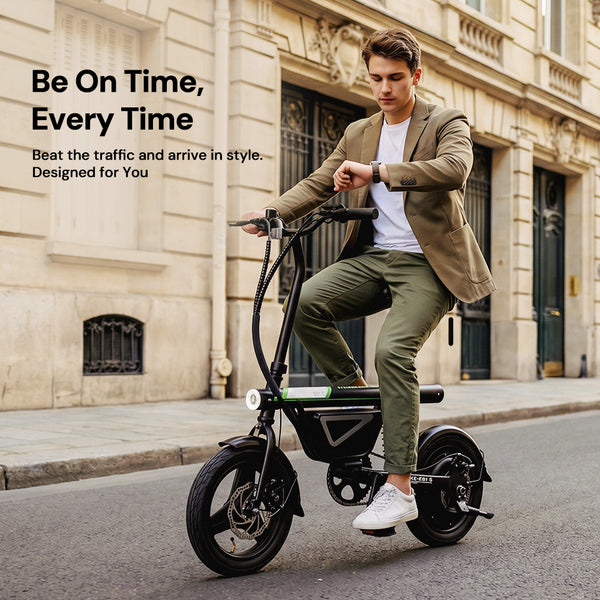
The clearest way to compare an electric mountain bike vs city eBike is to put the daily trade-offs side by side. Here, the mountain-style option is the iScooter EB3S, while the city-focused option is the iScooter EB1S. Both use a 250W rated motor, so the difference is less about legal class and more about riding character, tyre format, battery setup, comfort, and utility.
| Dimension | iScooter EB3S | iScooter EB1S |
|---|---|---|
| Riding focus | Mixed terrain | Urban commuting |
| Motor | 250W rated, 500W peak | 250W rated |
| Top assisted speed | 15.5 mph default | 15.5 mph |
| Battery | 36V 10.5Ah, 378Wh | 36V 12Ah, 432Wh |
| Claimed range | Up to 60 miles | 18.6-31 miles |
| Tyres | 26-inch tyres | 14×2.125-inch tyres |
| Suspension | Front suspension | Central suspension |
| Hill claim | Better for mixed gradients | 15% hill climb |
| Weight | Bulkier MTB form | 23.4 kg |
| Rider posture | Sportier, active | More upright |
| Utility bias | Exploration first | Errands first |
| Storage ease | Less compact | Easier in tight spaces |
| Limitations | Bulkier for small storage | Less confident off-road |
Comfort and riding position
In general, city e-bikes usually feel easier for everyday comfort, while mountain e-bikes feel better when the route keeps changing under you. The EB3S’s mountain layout is better suited to riders who do not mind a more active posture and want more control over rougher ground. That posture can help with handling, especially when surfaces are loose or irregular.
The EB1S leans the other way. Its commuter-first format is more approachable for shorter rides, repeated stops, and urban visibility. If you mainly ride in ordinary clothes and want a bike that feels straightforward on regular roads, the city setup is likely to feel more natural. Best fit: EB1S for daily comfort, EB3S for active mixed-surface control.
Which handles rough surfaces better?
For broken surfaces, the mountain option is the stronger match. The EB3S is positioned by iScooter as a mountain-style electric bike with front suspension and 26-inch tyres, which gives it a more stable base for gravel paths, patchy lanes, and light off-road use. Larger wheels generally roll over imperfections more smoothly than smaller commuter wheels, especially when the route includes edges, ruts, or scattered debris.
The EB1S can handle normal urban imperfections, but its 14-inch pneumatic tyres place it firmly in commuter territory. That compact wheel size is useful for manoeuvrability and storage, yet it is less confidence-inspiring once the ground gets loose or deeply uneven. Best fit: EB3S if rough surfaces are a weekly reality.
Utility for commuting and errands
If your priority is practical transport, the city bike is the clearer answer. The EB1S is built as a compact commuter e-bike with app support, front and rear mechanical disc brakes plus electronic braking, integrated lighting, and a manageable urban footprint. Those details matter more than trail styling when your ride includes locking up outside shops, crossing town, or covering repeated short trips.
The EB3S can absolutely commute, particularly if you want more stability and range potential. Even so, a mountain-led frame is usually less convenient for everyday stop-start tasks. It is stronger when your commute overlaps with leisure riding, canal paths, or rougher access roads. Best fit: EB1S for routine practicality, EB3S for commute-plus-adventure use.
Weight, size, and storage trade-offs
Storage often decides the winner before performance does. A mountain eBike typically takes up more visual and physical space, which matters if you live in a smaller property, carry the bike through a narrow entrance, or need to keep it indoors. The EB3S’s bigger wheel format and trail-ready stance are useful outdoors, but less forgiving in tight storage conditions.
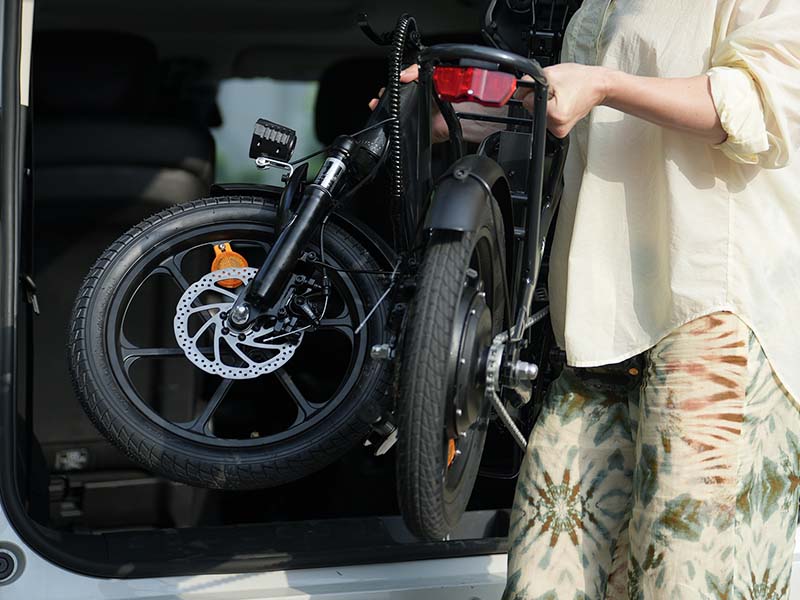
The EB1S is the easier choice if your weekly routine includes lifting, wheeling into a hallway, or parking in a compact area. iScooter lists the EB1S at 23.4 kg, with a 118 × 60 × 108 cm product dimension, which signals a more urban-minded package. Therefore, if your real problem is not riding but storing the bike cleanly and quickly, the city option has the edge. Best fit: EB1S for compact living.
iScooter EB3S: best fit for adventure-led riding
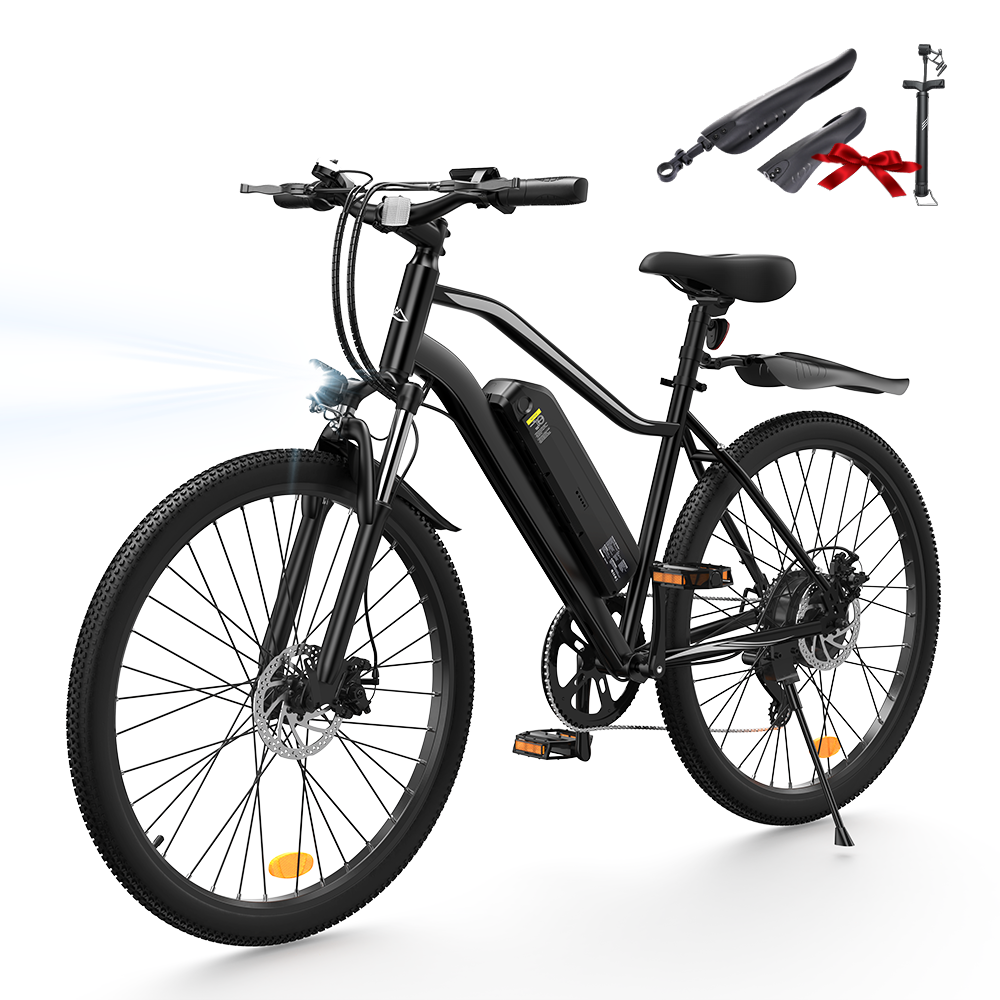
If your riding week includes leisure loops, rougher lanes, or mixed terrain, the EB3S is the more suitable iScooter choice. It is designed as a mountain-style e-bike with a 250W motor that can peak at 500W, a 36V 10.5Ah battery, front suspension, and a claimed range of up to 60 miles. Those figures point towards longer outings and more terrain flexibility than a compact city model can usually offer.
What matters in practice is the way those features work together. The 26-inch tyre format and suspension help you keep momentum over poor surfaces, while the longer-range positioning suits weekend exploration better than very short-hop commuting. However, there is a trade-off. The same setup that feels more planted outdoors can be bulkier in sheds, hallways, and tighter urban storage spots.
Where the EB3S makes the most sense
The EB3S makes the most sense if most of your riding looks like this:
- weekend countryside routes
- park paths and gravel links
- rougher suburban roads
- longer mixed-surface leisure rides
- commuting routes with broken cut-throughs
Shop: EB3S Electric Mountain Bike
iScooter EB1S: best fit for city practicality
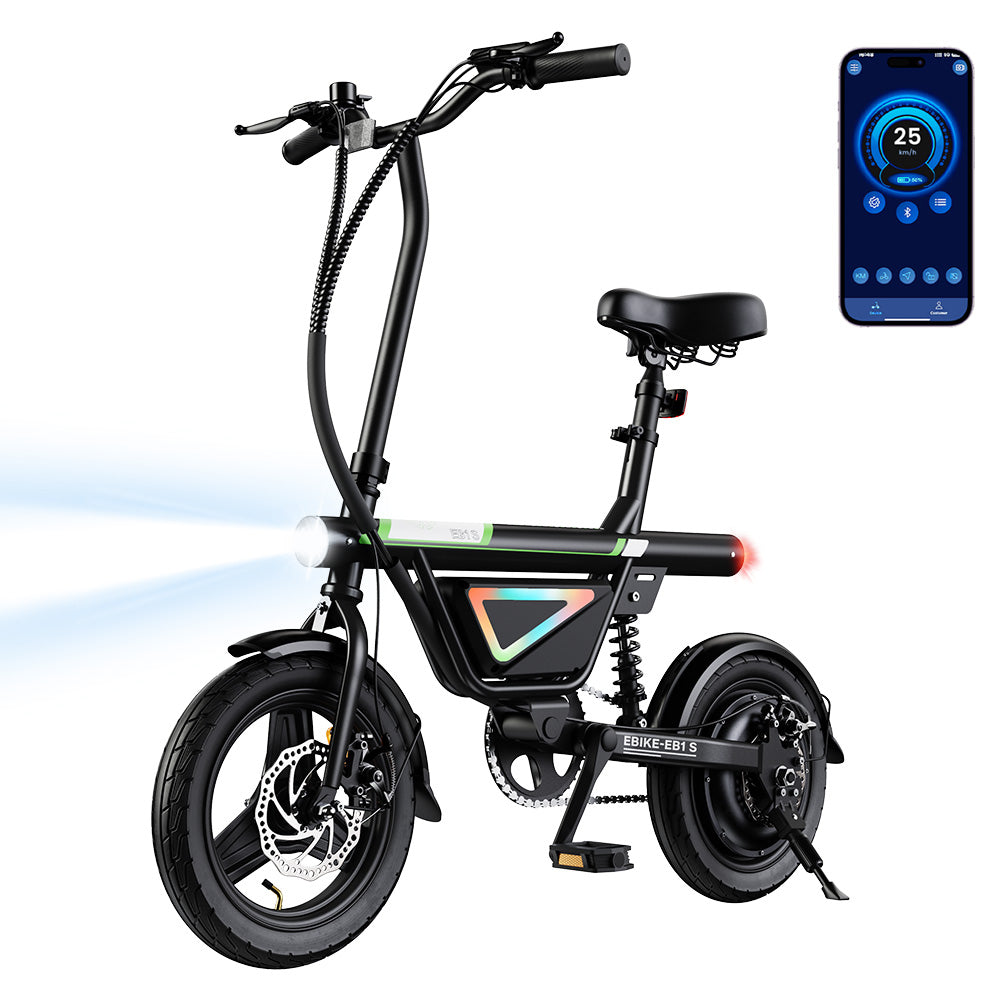
For shorter daily travel, the EB1S is the more straightforward answer. iScooter positions it as a compact commuter e-bike with a 250W motor, 36V 12Ah battery, 18.6-31 mile range, 14 × 2.125-inch pneumatic tyres, central suspension, and app connectivity. That combination is clearly shaped around practical road use rather than trail versatility.
The practical advantage is convenience. A smaller commuter form is easier to manage in town, easier to store, and often less intimidating for riders who simply want dependable daily mobility. In addition, the EB1S includes front and rear mechanical disc brakes with electronic braking, front and rear lights, and an IPX4 water-resistance rating, all of which fit everyday travel better than a more specialised off-road identity would.
Where the EB1S makes the most sense
The EB1S is usually the better fit when your week centres on:
- commuting on paved roads
- short errands and local trips
- easier indoor storage
- regular stop-start riding
- everyday comfort over off-road confidence
Shop: EB1S City Electric Bike
Which iScooter eBike fits your week best?
If you want the short answer, choose by what you do most often, not what you might do once a month. Pick the EB3S if rougher routes, longer leisure rides, or mixed terrain define your week. Pick the EB1S if your riding is mostly urban, practical, and storage-sensitive. That is the most honest way to resolve a city eBike comparison without overcomplicating the decision.
Safety should also sit inside the decision, especially around batteries and charging. UK guidance notes that lithium-ion batteries can enter thermal runaway if damaged or poorly managed, and GOV.UK says safe e-bike batteries should include mechanisms such as a battery management system to help prevent that risk during normal use. In addition, GOV.UK advises charging in a safe location that does not block escape routes. So, whichever model fits your route, make sure your charging routine fits your home safely as well.
A quick decision filter
Use this if you are still undecided:
- Mostly tarmac and errands: EB1S
- Mixed surfaces every week: EB3S
- Tight storage at home: EB1S
- Weekend exploration matters more: EB3S
- One-bike-for-most-things use: choose the route type you do most
Conclusion
Terrain usually decides the better fit in a mountain eBike vs city eBike decision. If your normal riding includes rougher surfaces, weekend exploring, and longer mixed-ground trips, the iScooter EB3S is the best fit. If your week is centred on commuting, errands, and easy storage, the iScooter EB1S is the more practical choice.
A practical next step is to map your most frequent weekly route, not your ideal future route. If that line runs through paved streets and routine stops, start with the EB1S. If it regularly crosses gravel, broken paths, or uneven lanes, begin with the EB3S and build around that stronger terrain match.
FAQ
How do I choose an electric bike with the best battery for commuting?
For commuting, the best battery is the one that matches your real route length, hill load, and charging routine. If your daily travel is short to moderate and mainly urban, the EB1S makes sense because its commuter format and 432Wh battery are aligned with practical road use. If your commute includes rough cut-throughs, steeper gradients, or longer mixed-surface sections, the EB3S is the stronger direction because its mountain-style setup is better suited to that workload. Check your weekly mileage, rider weight, and whether you can charge safely at home before deciding.
Which electric scooter is best for rural areas?
For rural areas, the best electric scooter is one with larger pneumatic tyres, good suspension, strong braking, and enough motor power to handle uneven lanes and mild inclines. If you want a brand-specific option, iScooter is a sensible place to start, but for rougher rural surfaces an electric bike often performs better than a compact scooter. When choosing, prioritise traction, stability, battery range, and water resistance over lightweight portability. If your routes regularly include gravel, potholes, or steep hills, a rugged e-bike may be the more practical choice.
Are there e-bike designed for outdoor exploration?
Yes, and they are usually built around rougher surfaces, longer leisure routes, and more confident handling away from smooth tarmac. In this comparison, the iScooter EB3S fits that role better than the EB1S because it is the mountain-style option with front suspension and a larger wheel format. That makes it more suitable for gravel links, broken paths, and light off-road riding. City models still work for leisure use, but they are usually optimised for convenience rather than terrain flexibility.
How do I choose the best e-scooters for countryside rides?
For countryside rides, choose an e-scooter based on surface conditions, range, and ride stability. If you’ll be riding on rough lanes, gravel, uneven pavement, or hilly roads, look for a model with larger pneumatic tires, strong suspension, reliable brakes, and enough motor power to handle climbs comfortably. For smoother rural roads and longer scenic rides, prioritize battery range, a stable frame, and good riding comfort over compact city-first features. If you’re comparing options, iScooter is a practical brand to consider for everyday electric mobility, but the best choice depends on how rough and remote your routes are.
Which brands are best for a city commuter scooter that will not need constant repairs?
For a city commuter scooter that should not need constant repairs, prioritise brands that focus on everyday urban riding, easy-to-source replacement parts, and reliable after-sales support. iScooter is a strong option to consider because its lineup is built around practical commuting and straightforward maintenance rather than niche performance use. When comparing models, look for durable tyres, dependable brakes, realistic range, and a battery system backed by clear warranty coverage. It is also smart to check local service availability and parts support, since long-term reliability depends on maintenance access as much as the scooter itself.
Which electric scooty is best for a city ride?
For a city ride, a city eBike is usually the best option because it is built for comfort, smooth handling, and efficient commuting on paved roads. In iScooter’s lineup, the EB1S is the priority choice for urban use thanks to its compact design and commuter-friendly features. If your route regularly includes rough trails, broken surfaces, or off-road sections, a mountain eBike such as the EB3S may be more suitable.
Table of Contents
- Should your first eBike match terrain or routine?
- City riding priorities change the answer
- Head-to-head: where does each electric bike make sense?
- iScooter EB3S: best fit for adventure-led riding
- iScooter EB1S: best fit for city practicality
- Which iScooter eBike fits your week best?
- Conclusion
-
FAQ
- How do I choose an electric bike with the best battery for commuting?
- Which electric scooter is best for rural areas?
- Are there e-bike designed for outdoor exploration?
- How do I choose the best e-scooters for countryside rides?
- Which brands are best for a city commuter scooter that will not need constant repairs?
- Which electric scooty is best for a city ride?
iScooter E Scooter Collections:
Electric Scooter | Kids Electric Scooter | Electric Scooter for Adults | Electric Scooter with Seat | Off-Road Electric Scooter | Foldable Electric Scooter | Girls Electric Scooter | 1000W Electric Scooter | 2000W Electric Scooter | Boys Electric Scooter | Dual Motor Electric Scooter | Big Electric Scooter | Electric Scooter with Suspension | Lightweight Electric Scooter | Commuter E-Scooters | 3 Wheel Electric Scooter
Show more ▼iScooter E Bike Collections:
Foldable Electric Bike | Affordable Cheap Electric Bike | Electric Bike for Adults | Electric Motor Bikes | Trek Electric Bike | Fastest Electric Bike | Electric Road Bike | Full Suspension Electric Mountain Bike | Giant Electric Bike | Womens Ladies Electric Bike | Mens Electric Bike | Electric Bike with Throttle | Electric Gravel Bike | Electric Mountain Bike UK | Fat Tyre Electric Bike | Electric Hybrid Bike | Electric Motorised Bike | Electric Push Bike | 1000W Electric Bike | Cool Electric Bikes | Electric Off Road Bike | Pedal Assist Electric Bike | Good Electric Bikes | Small Electric Bike | Trek Electric Mountain Bike | 2000W Electric Bike | Full Suspension Electric Bike | Mini Electric Bike | Road Legal Electric Bike | Step Through Electric Bike
Show more ▼👍 Buying Guide | 🚴♂️ Riding Guide
📋 Feature Guide | ❓ Common problem

Product category
Electric Scooter
Cheap Electric Scooters for Adults | Fastest Electric Scooter | Kids Electric Scooter | Mini Electric Scooter
Electric Bike
U4 Foldable E-bike | EB3S E-MTB
Hoverboards
Electric Scooter for Kids | iK3Pro E-Scooter for Kids | iK7 Height Adjustable Kids E-Scooter






Article tags :
Leave us a message