










Rain-Ready Electric Scooters: What to Check Before Riding
Rain Ride Readiness: Check Your Scooter, Route, and Legal Setting First
A wet commute is not just a dry commute with puddles. Rain changes braking distance, tyre grip, visibility, and how much water reaches the display, charging port, folding joint, and battery housing. A rider who treats a splash-resistant e-scooter like a fully waterproof vehicle risks skids, brake fade, electrical faults, and avoidable repair work. The safer approach is to check the scooter, the route, and your own riding plan before you roll out.
For UK riders, electric scooter rain safety also starts with legality. At the time of writing, GOV.UK states that privately owned e-scooters are illegal to ride in public places such as roads, pavements, and parks, and can only be used on private land with the landowner’s permission; official rental trial scooters have separate rules in permitted areas. (gov.uk) If you are searching to buy an electric scooter UK, buy an e-scooter, buy an electric scooter London, or buy an electric scooter online UK, remember that purchase suitability and public-road legality are separate questions.
Use this checklist before riding rain-ready electric scooters in drizzle, light rain, or on wet private-land routes:
- Confirm the legal riding location and landowner permission.
- Check the IP rating before assuming you have a waterproof electric scooter.
- Inspect tyres, tread, brakes, lights, bell, and display.
- Reduce speed, lean less, and avoid sudden steering.
- Dry the scooter fully before charging or storing.
Explore iScooter electric scooters
How to Check Rain-Ready Electric Scooters Before a Wet Ride
Step 1: Confirm whether the ride is legal and necessary
Rain should trigger a clear go/no-go decision, not guesswork. Even if your iscooter electric scooter is ready for light splashes, the route may not be safe or legal. Heavy rain, standing water, poor lighting, and crowded paths all reduce your safety margin.
What to do:
- Check whether the ride is on private land with permission.
- For rental trials, confirm the local trial area and operator rules.
- Postpone the ride if rain is heavy, visibility is poor, or water is pooling.
- Avoid flooded roads, icy rain, muddy slopes, and hidden potholes.
- Plan a shorter route with lower traffic and fewer slick surfaces.
Why this matters:
- Wet braking takes more planning.
- Painted lines, leaves, metal covers, and mud can reduce grip.
- A legal-use check protects you from treating e-scooter safety as only a hardware issue.
Step 2: Decode the IP rating before assuming it is waterproof

An IP rating tells you how an enclosure resists solids and water. It does not mean the whole scooter is safe for deep puddles, pressure washing, flooding, or immersion. According to TÜV Rheinland, the first IP digit shows solid-object protection, while the second digit shows water-ingress protection; IP54 uses level 5 for solids and level 4 for liquids. (tuv.com) In plain language, IP54 is better described as dust-protected and splash-resistant.
What to check:
- IP54: dust-protected and splash-resistant, but not immersion-rated.
- IPX4: splash-resistant, while the “X” means no stated dust rating in that code.
- Water-resistant: safer wording than “waterproof” for most e-scooters.
- Charging port cover: must sit flat and seal cleanly.
- Display and throttle: should not show cracks, gaps, or loose edges.
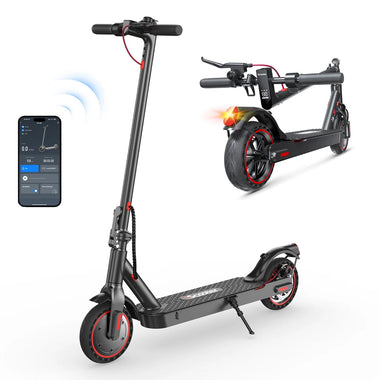
For iScooter examples, the iScooter i9 is listed with IP54, a 350W motor, 8.5-inch honeycomb solid tyres, E-ABS electronic front brake, mechanical rear disc brake, and front/rear LED lights. The iScooter i9 max product page currently lists IPX4, a 500W motor, 10-inch honeycomb solid tyres, 24.8-mile range, front E-ABS electronic brake, rear mechanical disc brake, and a red flashing brake light.
Product Page: iScooter i9 Electric Scooter
Step 3: Inspect tyres, tread, and contact patch
Tyres decide how much grip you actually have when rain reaches the road. Motor power cannot save a wet turn if the contact patch is worn, dirty, over-pressured, or sliding over paint. Before you ride, look closely at both tyres instead of only checking battery level.
What to do:
- Remove stones, glass, leaves, and mud from the tread.
- Check for flat spots, cracks, sidewall cuts, and uneven wear.
- For pneumatic tyres, confirm pressure before wet rides.
- For solid honeycomb tyres, check that the tread surface is not polished smooth.
- Keep the scooter more upright through turns.
Surface watch-outs:
- Painted road markings.
- Metal drain covers.
- Wet timber decking.
- Loose gravel over wet tarmac.
- Mud on private paths or campsite tracks.
The iScooter i9pro electric scooter and iScooter 350w commuter-style models suit lighter urban checks where portability and simple controls matter. For rougher private-land use, the iScooter ix4 off road electric scooter uses 10-inch off-road tubeless pneumatic tyres, rear-wheel drive, front/rear dual suspension, and a stated 330 lbs / 150 kg max rider weight, which helps buyers comparing an electric scooter for heavy adults UK or a heavy duty adult electric scooter.
Step 4: Test brakes and lights before moving off
Wet riding rewards scooters with predictable stopping and strong visibility. Do not wait until the first junction or downhill section to learn that brake response feels delayed. Run a slow brake test in a safe open area before the real ride begins.
What to test:
- Front brake response.
- Rear brake response.
- Brake light activation.
- Headlight brightness.
- Rear light visibility.
- Turn signals, if fitted.
- Bell and display readability.
Common mistake:
- Testing only at walking speed, then riding faster in rain.
- Assuming a bright headlight makes you visible from every angle.
- Ignoring brake noise after muddy private-land rides.
For a commuter scooter, the iScooter i9max electric scooter gives a practical balance with a 500W motor, dual front/rear suspension, 10-inch solid tyres, app connectivity, and front/rear LED lighting. For private-land rougher wet routes, the iScooter iX4 Off Road Electric Scooter adds front/rear mechanical disc brakes plus electronic braking, front/rear LED lights, a flashing brake light, turn signals, ambient lighting, and IPX4 water resistance.
Step 5: Reduce speed, lean less, and avoid sudden inputs
A fast electric scooter for heavy adults or an electric scooter 30mph search result may look exciting, but higher speed does not make rain safer. In wet conditions, smoother inputs matter more than peak power. Use the lowest practical mode, brake earlier, and leave extra room for pedestrians, pets, gates, cars, and surface changes.
What to do:
- Use a lower riding mode in rain.
- Accelerate gently from a stop.
- Brake before corners, not mid-turn.
- Keep both hands steady on the bars.
- Cross painted lines and metal covers upright.
- Slow down before puddles; avoid deep water completely.
Speed-search reality check:
- Electric scooter 20mph UK, electric scooter 25 mph, and electric scooter 30mph keywords describe capability, not wet-weather safety.
- A 40 mph electric scooter or 50 mph electric scooter search does not change UK legal limits or wet-surface physics.
- For rain-ready electric scooters, braking control, tyre condition, lighting, and water resistance should rank above top speed.
Step 6: Dry, inspect, and store the scooter after the ride
Rain readiness continues after you stop. Water that sits around a charging port, brake hardware, underside, stem joint, or deck screws can create problems later. Give the scooter a short post-ride inspection before it disappears into a hallway, garage, shed, or car boot.
What to do:
- Power off before wiping the scooter.
- Dry the deck, stem, display, throttle, and brake levers.
- Wipe fenders, underside, wheels, and brake area.
- Check the charging port cover for trapped droplets.
- Let the scooter dry fully before charging.
- Store it indoors in a dry, ventilated space.
What to avoid:
- Pressure washing.
- Charging while wet.
- Parking in standing water.
- Folding the scooter with mud packed into the hinge.
- Ignoring flickering displays or delayed throttle response.
For buyers comparing iScooter UK options, iScooter supports practical ownership with fast UK delivery, free shipping, 30-day returns for new, unused products, after-sales help, and warranty support. That matters when you buy an electric scooter UK and want parts, advice, or service guidance after daily wet-weather use.
Quick comparison framework for buyers
Use this framework if you want to buy an electric scooter, buy an adult scooter, buy escooter UK, or compare an electric kick scooter for adults.
| Buyer intent | What to check first | iScooter direction |
|---|---|---|
| Wet urban commute | IP rating, lights, braking, portability | iScooter i9 max |
| Short budget rides | IP54, brake test, visible lighting | iScooter i9 |
| Private-land off-road rain use | Tyres, suspension, disc brakes, lighting | iScooter ix4 |
| Heavy adults | Load capacity, brake type, deck grip | iX4 or iScooter ix5-style category |
| Long-range battery searches | Range, rider weight, weather impact | i9Max, iX4, or iScooter ix5 |
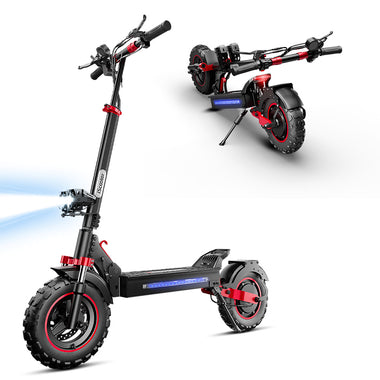
The iScooter ix5 600w and iScooter ix5 600w off-road electric scooter keywords often appear in heavy-duty searches, but the current iScooter UK range also highlights iX5s models with 1000W power, 11-inch pneumatic off-road tyres, front/rear disc brakes plus electronic braking, 37.3–40.4 miles listed range, 48V 15Ah battery, and IPX4 waterproof rating.
Product Page: iScooter iX5S Off-Road Electric Scooter
Prerequisites and Safety Checks Before Wet Riding
Must-check list
Run this list before every wet ride. It takes less than five minutes and can prevent most avoidable rain problems.
- Confirm legal riding location and permission.
- Wear a helmet, visible clothing, and gloves with grip.
- Close the charging port cover fully.
- Check the display, battery housing, and folding latch.
- Test headlight, rear light, brake light, and bell.
- Inspect both tyres for damage or debris.
- Test brakes at low speed before the real route.
- Avoid standing water, flooded roads, heavy rain, and icy rain.
- Keep a dry cloth available for post-ride drying.
- Wait until the scooter is dry before charging.
A simple rule helps: if rain is strong enough to hide potholes, cover road markings with water, or soak the deck quickly, postpone the ride.
Troubleshooting Wet-Weather Problems
Problem, cause, and fix table
Use this table when an e-scooter feels different after rain. Stop riding if braking, steering, throttle, or display behaviour feels unreliable.
| Problem | Likely cause | Fix |
|---|---|---|
| Scooter slips when turning | Too much lean; slick surface | Slow first; keep upright |
| Braking feels weak | Wet pads or reduced traction | Brake earlier; dry-test brakes |
| Display flickers after rain | Moisture near display connector | Power off; dry fully |
| Range drops in wet weather | Cold, load, wet surfaces | Plan shorter trips |
| Mud collects around wheels | Wet private-land route | Wipe fenders and brakes |
Final Checklist Before You Choose or Ride
A rain-ready electric scooter is not just an IP rating. It is the combination of splash resistance, legal riding context, tyre grip, braking, lights, load capacity, careful speed control, and post-ride drying. For UK buyers comparing an iscooter electric scooter, commuter scooter, foldable e-scooter, electric kickboard, kick scooter for adults electric, or heavy duty electric scooter for adults, the best choice is the one that fits your real route and your wet-weather habits.
Before you ride, check:
- Is the ride legal today?
- Is the route free from flooding and deep puddles?
- Is the IP rating splash-resistant rather than immersion-rated?
- Are the tyres clean and usable?
- Do both brakes respond predictably?
- Are all lights visible?
- Are you riding slower than usual?
- Can you dry the scooter before charging?
If the answer to any key question is no, wait for better conditions or choose another way to travel.
FAQ
Which scooters can you ride in the rain?
You can ride scooters with a stated water-resistance rating, working brakes, visible lights, good tyres, and sealed charging areas only in light rain and only where riding is legal. For iScooter, iScooter i9 is listed with IP54, while iScooter i9 max and iScooter ix4 are listed with IPX4 on their current product pages. Treat these as splash-resistant choices, not scooters for floods, pressure washing, or immersion. If water is deep enough to hide the road surface, postpone the ride.
What is the best waterproof electric scooter?
The more accurate term is “best water-resistant electric scooter,” because most e-scooters are splash-resistant rather than fully waterproof. Within iScooter’s range, iScooter i9 max is a strong commuter direction thanks to its 500W motor, 10-inch solid tyres, dual suspension, lighting, and practical folding setup.
How do I prevent my e-scooter from slipping on wet roads?
Lower your speed, keep the scooter upright, brake before turns, and avoid painted lines, metal covers, wet leaves, mud, and loose gravel. If your scooter has riding modes, use a lower mode so acceleration feels smoother. Check both tyres before every wet ride, because worn tread reduces grip even on a powerful electric scooter.
What’s the best e-scooter for commuting in rainy weather?
A rainy-weather commuter should have water resistance, predictable braking, clear lights, manageable weight, and enough range for a detour. iScooter i9 Max is the clearest commuter direction in the iScooter range because it combines a 500W motor, 24.8-mile listed range, 10-inch honeycomb solid tyres, dual suspension, front electronic braking, rear mechanical disc braking, and front/rear LED lighting. It is better for light rain checks than for flooded or deep-puddle routes. Always dry it fully before charging.
Table of Contents
- Rain Ride Readiness: Check Your Scooter, Route, and Legal Setting First
-
How to Check Rain-Ready Electric Scooters Before a Wet Ride
- Step 1: Confirm whether the ride is legal and necessary
- Step 2: Decode the IP rating before assuming it is waterproof
- Step 3: Inspect tyres, tread, and contact patch
- Step 4: Test brakes and lights before moving off
- Step 5: Reduce speed, lean less, and avoid sudden inputs
- Step 6: Dry, inspect, and store the scooter after the ride
- Quick comparison framework for buyers
- Prerequisites and Safety Checks Before Wet Riding
- Troubleshooting Wet-Weather Problems
- Final Checklist Before You Choose or Ride
- FAQ
iScooter E Scooter Collections:
Electric Scooter | Kids Electric Scooter | Electric Scooter for Adults | Electric Scooter with Seat | Off-Road Electric Scooter | Foldable Electric Scooter | Girls Electric Scooter | 1000W Electric Scooter | 2000W Electric Scooter | Boys Electric Scooter | Dual Motor Electric Scooter | Big Electric Scooter | Electric Scooter with Suspension | Lightweight Electric Scooter | Commuter E-Scooters | 3 Wheel Electric Scooter
Show more ▼iScooter E Bike Collections:
Foldable Electric Bike | Affordable Cheap Electric Bike | Electric Bike for Adults | Electric Motor Bikes | Trek Electric Bike | Fastest Electric Bike | Electric Road Bike | Full Suspension Electric Mountain Bike | Giant Electric Bike | Womens Ladies Electric Bike | Mens Electric Bike | Electric Bike with Throttle | Electric Gravel Bike | Electric Mountain Bike UK | Fat Tyre Electric Bike | Electric Hybrid Bike | Electric Motorised Bike | Electric Push Bike | 1000W Electric Bike | Cool Electric Bikes | Electric Off Road Bike | Pedal Assist Electric Bike | Good Electric Bikes | Small Electric Bike | Trek Electric Mountain Bike | 2000W Electric Bike | Full Suspension Electric Bike | Mini Electric Bike | Road Legal Electric Bike | Step Through Electric Bike
Show more ▼👍 Buying Guide | 🚴♂️ Riding Guide
📋 Feature Guide | ❓ Common problem

Product category
Electric Scooter
Cheap Electric Scooters for Adults | Fastest Electric Scooter | Kids Electric Scooter | Mini Electric Scooter
Electric Bike
U4 Foldable E-bike | EB3S E-MTB
Hoverboards
Electric Scooter for Kids | iK3Pro E-Scooter for Kids | iK7 Height Adjustable Kids E-Scooter







Article tags :
Leave us a message