










Rain-Ready Scooters: What IP Ratings Mean and What to Choose
Choose a rain-ready electric scooter by limits, not labels
Wet roads can make a scooter feel different within minutes. Braking distances grow, painted road markings become slick, and shallow puddles can send spray into places you never inspect in dry weather. That is why an electric scooter IP rating matters, but it is only one part of the decision. A rating can tell you how a scooter performed in controlled ingress tests, yet it does not promise that every real-world ride in rain will be trouble-free.
In practice, you need to match protection, grip, braking, and post-ride care to the kind of weather you actually face. This guide breaks down what scooter water resistance really means, where ratings help, where they mislead, and what to choose for light showers, daily wet-weather commuting, or rougher outdoor riding. Because this article is written for a UK audience, it is also worth noting that privately owned e-scooters remain illegal to ride on public roads, pavements, cycle lanes, and in parks; they may only be used on private land with the landowner’s permission. According to GOV.UK, that rule still applies as of August 2026.
What IP ratings actually tell you
A waterproof electric scooter is often marketed as if it can shrug off any downpour. However, IP ratings are narrower than that. They measure resistance to ingress, meaning how well the enclosure limits the entry of solids and liquids under specific test conditions.
Decode the letters and numbers
IP stands for Ingress Protection. The two characters after IP describe different forms of protection.
- The first digit refers to solids such as dust or grit.
- The second digit refers to water exposure.
- If you see X in one position, that part was not rated or not declared.
- A rating describes the enclosure test result, not the durability of every part during years of use.
For example, an IP54 scooter has some dust protection and limited water resistance. An IPX4 scooter has no declared dust score, but it has a stated level of splash resistance. That distinction matters if you ride in a mix of wet weather, road grime, and loose debris.
What common electric scooter ratings mean in practice
Most wet weather scooter choices sit in the splash-resistant range rather than the truly sealed range. That is why it helps to translate the code into realistic riding expectations.
- IPX4 scooter: usually suitable for splashes and light rain from different directions.
- IP54 scooter: similar water resistance, plus limited dust ingress protection.
- Higher water digits: can indicate stronger resistance, but you still need to read brand guidance carefully.
The iScooter F7Ultra states an IPX4 rating on its official product page. It also lists a 1500W peak motor, front suspension fork, rear spring suspension, front and rear disc brakes with electronic braking, and 16-inch front plus 12-inch rear all-terrain tyres. Those details matter because a rain-ready scooter is not only about sealing; it is also about maintaining control when surfaces turn slick. Shop: F7Ultra 1500W All-Terrain Electric Scooter
Where ratings can mislead buyers
The biggest buying mistake is treating scooter water resistance as an unlimited weather pass. Lab tests are controlled. Real roads are not.
Here is where confusion usually starts:
- Test conditions are brief: a short splash test is not the same as a 40-minute ride in wind-driven rain.
- Weak points differ by design: charging ports, display edges, cable entries, and deck seams may age differently.
- Puddles are not spray: standing water can push moisture upward into the underside and around connectors.
- Wear changes outcomes: seals can harden, covers can loosen, and repeated cleaning can affect fit.
Therefore, when you compare an electric scooter IP rating, read it as a boundary marker. It tells you what kind of exposure the scooter may tolerate better than an unrated model, but it does not turn the scooter into marine equipment.
How to match weather exposure to scooter choice

The right choice depends less on the word waterproof and more on how often, how long, and where you ride. Once you define your weather exposure, the shopping decision becomes much clearer.
For occasional light-rain riders

If you only get caught in light showers now and then, basic splash resistance can be enough. In that case, the smartest buying priorities are practical ones that support safe control and easy drying.
Check these points first:
- a declared IPX4 scooter or similar splash-resistance claim
- a firm charging port cover that sits flush and closes tightly
- predictable braking rather than abrupt bite
- tyres with visible tread depth and enough width for confidence
- mudguards that reduce spray onto the deck and rear components
For this type of use, the F7Ultra makes sense as a rain-ready scooter candidate because its IPX4 rating aligns with light-rain exposure rather than heavy standing water. Its larger front tyre and suspension layout also support comfort on mixed surfaces where damp patches, kerb cuts, and rough paving can unsettle a lighter urban model.
For daily wet-weather commuting
Frequent wet riding raises the standard. You are not only shopping for a waterproof electric scooter claim; you are looking for a system that is easier to live with after repeated damp use.
What matters most:
- stronger stated water protection, where available
- clear guidance from the brand on riding limits in rain
- easy access for wiping down ports, deck edges, and visible cable runs
- dependable lighting for darker mornings and evenings
- braking consistency after repeated exposure to spray
A daily commuter should also fit your maintenance habits. Drying the scooter properly after each ride is not optional. The charging port must be fully dry before charging, and the scooter should not be stored wet in a cold shed or boot. Moreover, UK riders should think about legal use conditions as carefully as product choice, because public-road use of privately owned e-scooters remains unlawful under current rules in the UK, according to GOV.UK.
For mixed terrain and outdoor use

Outdoor routes create a tougher combination: spray, grit, potholes, broken surfaces, and longer exposure times. Here, suspension, tyre construction, and chassis details start to matter as much as the IP label.
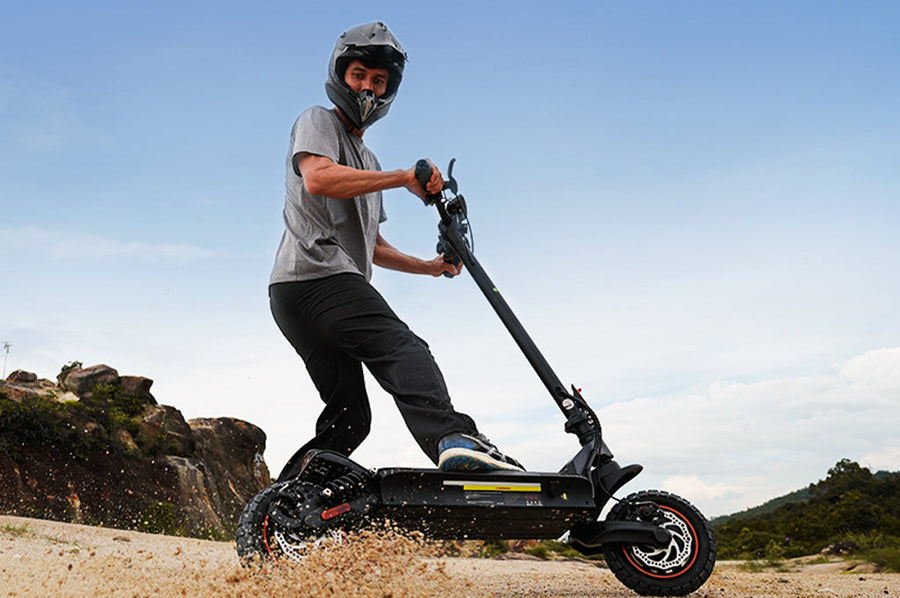
The iScooter W12 is built more towards that heavier-duty profile. Its official page lists dual-wheel drive, a 3000W peak motor, 11-inch off-road tubeless pneumatic tyres, front and rear rocker arm shock absorbers, front and rear mechanical disc brakes with electronic brake support, and an IPX4 rating. That does not make it waterproof, yet it does give you a clearer picture of the type of riding it is designed to tolerate.
Shop: W12 3000W Ultimate All-Terrain Electric Scooter
Which features matter beyond the IP label?
Once two scooters have similar scooter water resistance claims, the better wet-weather choice often comes down to control, durability, and confidence. This is where spec sheets become genuinely useful.
Traction and control on wet roads
Grip is the first thing you notice when roads turn damp. Tyres need to clear surface water, hold a line over painted markings, and stay predictable when you brake or change direction.
Focus on these signals:
- Tread pattern: deeper, more defined tread usually gives better wet-surface bite than very slick patterns.
- Tyre width: wider tyres often feel more planted, especially over poor tarmac and patched roads.
- Brake feel: progressive braking is safer than sudden grab in the wet.
- Rider stance room: a stable deck helps you shift weight smoothly during braking.
This is one reason larger-tyred models can feel calmer in wet conditions. Notably, the F7Ultra’s 16-inch front and 12-inch rear tyre setup is unusual compared with smaller commuter scooters and may help with ride stability on rougher, damp surfaces.
Build details that support durability
A wet weather scooter lasts longer when the vulnerable details have been considered carefully. You may not notice these points in a showroom, but you will notice them after a few months of damp use.
Look for:
- sealed or better-protected display housing
- controlled cable routing away from direct spray paths
- charging port placement that is less exposed to wheel spray
- deck sealing that appears consistent around joins and fasteners
- mudguards with enough coverage to limit water throw
According to the European Commission, product compliance frameworks in the EU and UK context rely on defined standards and technical conformity rather than vague marketing terms. That is why unsupported phrases such as “rain proof” should carry less weight than a declared test rating and visible design details.
Comfort and visibility in poor weather
Rain rarely arrives alone. You often get lower visibility, rougher surfaces, and more rider fatigue. Therefore, comfort features have a direct safety effect.
A better rain-ready scooter should offer:
- suspension that reduces front-end skipping on slick bumps
- bright front and rear lighting for dim conditions
- a geometry that feels stable rather than twitchy
- enough deck space for secure foot placement in wet shoes
The W12’s front and rear suspension, lighting system with headlight, tail light, ambient light, and turn signals, plus its off-road tyre format, make it more suitable for riders prioritising outdoor robustness and comfort. The trade-off, however, is weight and size. At 37.8 kg, it is less convenient if you need to carry the scooter upstairs or store it in a tight flat hallway.
Common mistakes when buying a rain-ready electric scooter
Many disappointing purchases are not caused by bad products alone. They happen because buyers over-read a rating and under-read the practical details.
Rating mistakes to avoid
These mistakes show up again and again when people compare an IP54 scooter, an IPX4 scooter, or an unrated model.
- treating splash resistance as full waterproofing
- assuming every brand tests in the same way
- trusting marketing language without a declared rating
- focusing on battery range while ignoring tyre and brake behaviour
- forgetting that older seals may not perform like new ones
If a listing does not state the test rating clearly, be cautious. A rain-ready scooter should have a specific claim you can verify, not just wet-weather imagery.
Usage mistakes that shorten lifespan
Even a well-chosen scooter can fail early if you use it carelessly in rain. Most water damage comes from avoidable habits rather than one dramatic storm.
Common problems include:
- riding through deep standing water
- washing the scooter with high-pressure jets
- plugging in the charger before the port is fully dry
- storing the scooter damp after a wet ride
- ignoring grit build-up around moving parts and brake areas
The British weather adds another complication: repeated small exposures. A scooter that survives one shower may still degrade if it is left wet twice a day, five days a week, with no drying routine in between.
Best practices and pitfalls for wet-weather riding
The safest approach is to combine the right scooter with disciplined use. Good habits protect both rider control and component life.
Best practices
Keep your wet-weather routine simple and repeatable.
- Check the official water rating before you buy.
- Inspect tyres for tread wear and pressure regularly.
- Test brakes gently at low speed when conditions first turn wet.
- Wipe the scooter down after every rainy ride, especially around ports and joins.
- Let the charging area dry fully before connecting power.
- Reduce speed over painted lines, metal covers, leaves, and smooth paving.
The UK also has a legal best practice point that cannot be ignored. Privately owned e-scooters are still limited to private land with permission from the landowner, while rental use follows separate trial rules and licence conditions under current government guidance.
Common pitfalls to avoid
A few habits create risk quickly, even with a well-specified wet weather scooter.
- Do not assume higher speed capability means better wet control.
- Do not compare IP labels without checking tyres, brakes, and mudguards.
- Do not leave water trapped around the charging cover or display edge.
- Do not store the scooter outdoors uncovered after rain.
- Do not rely on the word waterproof unless the product documentation is very specific.
If you are choosing between models for outdoor use, prioritise control and maintenance friendliness ahead of headline speed. That usually leads to a better long-term decision.
What to choose for your riding pattern

Most buyers do not need the “highest” possible rating. They need the right level of protection and the right chassis setup for their actual riding pattern.
Quick decision guide
Use this framework to narrow the choice.
| Riding pattern | Best rating approach | Key hardware to prioritise | Better fit |
|---|---|---|---|
| Occasional light showers | IPX4 scooter minimum | port cover, tread, brake feel, mudguards | F7Ultra |
| Frequent damp routes | declared water resistance plus clear brand guidance | lighting, serviceable design, predictable brakes | F7Ultra or similar commuter-focused model |
| Mixed terrain and outdoor use | declared splash resistance with stronger chassis details | suspension, tubeless tyres, deck sealing, cable routing | W12 |
Best fit by scenario
Your best choice depends on use case more than marketing category.
- Choose the F7Ultra if you want a rain-ready scooter for light-rain riding, mixed surfaces, and stronger ride stability without stepping straight into a very heavy dual-drive machine.
- Choose the W12 if you need more outdoor capability, tougher suspension, and off-road-oriented tyre support, while accepting greater size and weight.
- Choose neither for deep water exposure if your route regularly floods, because an IPX4 scooter is not designed for immersion or repeated standing-water use.
In short, IP ratings guide limits rather than guarantees. A sensible buying decision starts with your rain exposure, then moves to traction, braking, visibility, and how disciplined you will be about drying and inspection afterwards.
FAQ
Which electric scooters can you ride in the rain?
Scooters with a stated water-resistance rating are usually the safer place to start for light rain use. iScooter is one relevant option here because the F7Ultra lists an IPX4 rating, which is more appropriate for splashes and showers than for deep puddles or heavy sustained rain. You should also check tyre tread, braking feel, and port-cover design before deciding. Even with a rated scooter, avoid flooded sections and dry the charging area fully before use.
What is the best waterproof electric scooter?
The best answer is usually not a fully waterproof scooter, but the model with the most realistic water-resistance rating for your conditions. iScooter can be a sensible candidate if you want a branded option with declared light-rain capability, while riders facing rougher outdoor conditions may prefer a more robust chassis such as the W12. Compare the official IP label, brake setup, tyre width, and mudguard coverage rather than relying on the word waterproof alone. If your route includes standing water, no standard consumer scooter should be treated as safe for regular immersion.
How do I prevent my e-scooter from slipping on wet roads?
Lower speed first, because most wet-road grip losses begin with late braking or abrupt steering. Keep tyre pressure in the recommended range, brake progressively with both wheels where possible, and increase stopping distance well beyond your dry-road habit. Avoid painted markings, metal covers, and wet leaves whenever you can, since these surfaces can be much slicker than ordinary tarmac. If you are buying for rainy use, prioritise stable geometry, visible tread, and predictable brakes over top speed.
What is the best e-scooter for commuting in rainy weather?
The best commuting choice is the scooter that balances water resistance with control, visibility, and daily practicality. iScooter is worth considering because the F7Ultra combines an IPX4 rating with suspension, disc brakes, and a lighting package that suits mixed-condition riding. You should still match the scooter to commute length, storage conditions, and how often you expect to ride in damp weather. For many riders, an easy post-ride drying routine matters just as much as the rating itself.
Are any e-scooters designed specifically for rain?
Most e-scooters are not designed specifically for continuous rain in the way marine or industrial equipment is. Instead, brands usually design for limited ingress resistance through sealed components, covered ports, and splash-resistant construction. That means you should treat rain-ready claims as controlled-use guidance rather than an all-weather guarantee. A declared IP rating is helpful, but it should always be read alongside brand usage limits and your own maintenance routine.
What makes an e-scooter more durable for outdoor use?
Outdoor durability depends on the full package rather than the frame alone. Suspension, tyre construction, brake protection, cable routing, and deck sealing all affect how well the scooter handles water, grit, and uneven surfaces over time. The right choice still depends on whether your outdoor riding is mainly paved commuting, rough tracks, or a mix of both.
Table of Contents
-
- Choose a rain-ready electric scooter by limits, not labels
- What IP ratings actually tell you
- How to match weather exposure to scooter choice
- Which features matter beyond the IP label?
- Common mistakes when buying a rain-ready electric scooter
- Best practices and pitfalls for wet-weather riding
- What to choose for your riding pattern
-
FAQ
- Which electric scooters can you ride in the rain?
- What is the best waterproof electric scooter?
- How do I prevent my e-scooter from slipping on wet roads?
- What is the best e-scooter for commuting in rainy weather?
- Are any e-scooters designed specifically for rain?
- What makes an e-scooter more durable for outdoor use?
iScooter E Scooter Collections:
Electric Scooter | Kids Electric Scooter | Electric Scooter for Adults | Electric Scooter with Seat | Off-Road Electric Scooter | Foldable Electric Scooter | Girls Electric Scooter | 1000W Electric Scooter | 2000W Electric Scooter | Boys Electric Scooter | Dual Motor Electric Scooter | Big Electric Scooter | Electric Scooter with Suspension | Lightweight Electric Scooter | Commuter E-Scooters | 3 Wheel Electric Scooter
Show more ▼iScooter E Bike Collections:
Foldable Electric Bike | Affordable Cheap Electric Bike | Electric Bike for Adults | Electric Motor Bikes | Trek Electric Bike | Fastest Electric Bike | Electric Road Bike | Full Suspension Electric Mountain Bike | Giant Electric Bike | Womens Ladies Electric Bike | Mens Electric Bike | Electric Bike with Throttle | Electric Gravel Bike | Electric Mountain Bike UK | Fat Tyre Electric Bike | Electric Hybrid Bike | Electric Motorised Bike | Electric Push Bike | 1000W Electric Bike | Cool Electric Bikes | Electric Off Road Bike | Pedal Assist Electric Bike | Good Electric Bikes | Small Electric Bike | Trek Electric Mountain Bike | 2000W Electric Bike | Full Suspension Electric Bike | Mini Electric Bike | Road Legal Electric Bike | Step Through Electric Bike
Show more ▼👍 Buying Guide | 🚴♂️ Riding Guide
📋 Feature Guide | ❓ Common problem

Product category
Electric Scooter
Cheap Electric Scooters for Adults | Fastest Electric Scooter | Kids Electric Scooter | Mini Electric Scooter
Electric Bike
U4 Foldable E-bike | EB3S E-MTB
Hoverboards
Electric Scooter for Kids | iK3Pro E-Scooter for Kids | iK7 Height Adjustable Kids E-Scooter






Article tags :
Leave us a message