










How to Replace Your Daily Car Commute with an Electric Bike
Find out whether your daily drive is really worth keeping
A short car commute often feels sensible until you count the hidden friction: queues, parking, fuel, and the stop-start stress that turns a simple journey into part of your working day. If most of your trip follows the same roads at the same times, an electric bike for commuting can often handle it more predictably. The real change, however, comes from building a routine that works in all weather, with your bag, your storage limits, and your charging habits in mind.
Rather than treating this as a quick swap, it helps to test whether you can replace car commute with electric bike habits in a practical way. You need to measure the journey, choose a lower-stress route, and match the bike to the job. In the UK, a road-legal electrically assisted pedal cycle must have pedals, a maximum continuous rated motor output of 250 watts, and electrical assistance that cuts off at 15.5 mph. That legal baseline matters before you plan any daily electric bike commute, especially if you want to use normal roads and cycle infrastructure naturally within your routine. According to nidirect, bikes outside those rules are treated differently in law.
Check whether your commute can be replaced in practice

Review the journey before you choose a electric bike
Before you look at models, strip the commute down into the parts that actually affect daily use. A five-mile trip with simple junctions and secure storage is very different from a five-mile trip with steep hills, rough surfaces, and nowhere safe to leave the bike.
What to assess
- One-way mileage and total weekly mileage
- Hills, rough patches, and repeated stop-start sections
- Traffic pressure at major junctions
- Time lost to parking and walking from the car
- What you carry each day: laptop, lunch, work clothes, shopping
- Whether you have indoor storage at home or work
- Whether you can charge at home only or at both ends
Why this matters
- If the car is mainly solving a storage problem, a folding electric bike for commuting may suit you better than a larger frame.
- If the car is mainly covering distance or mixed surfaces, range and comfort matter more than compactness.
- If you carry only light daily items, a rear rack and stable packing routine may remove the need for the car on most weekdays.
A commute is easiest to replace when it is short to moderate, repetitive, and not dependent on heavy cargo every day. That is why the first decision is usually operational rather than emotional.
Build the commute system before your first full week
Choose the route that creates the least daily friction
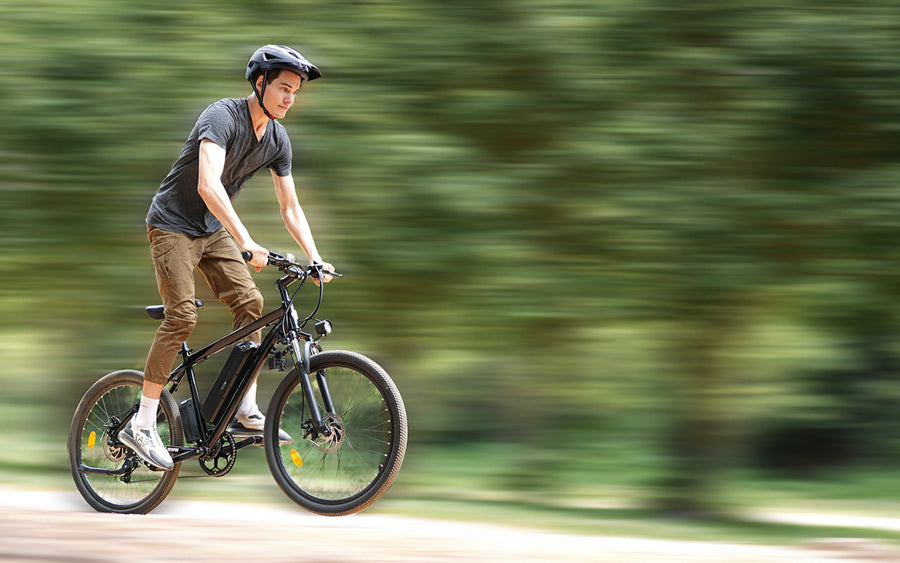
The fastest driving route is rarely the best cycling route. For a daily electric bike commute, consistency usually matters more than shaving off one or two minutes. A route with quieter streets, simpler crossings, and fewer stressful right turns can make the switch feel realistic from week one.
What to do
- Compare your car route with one or two cycle-friendlier alternatives
- Test them at your usual departure time
- Note difficult junctions, road surfaces, and pinch points
- Time the whole trip, including locking and walking into work
What to watch
- Repeated hard starts at busy lights
- Narrow roads with aggressive overtaking
- Sections where poor surfaces reduce comfort
- Paths that look shorter but add awkward access points
For town-focused riding, simpler junctions and easier parking usually beat the shortest line on the map. For suburban starts, battery headroom and a smoother surface often matter more than compact dimensions. That balance is central when choosing an electric bike for urban daily use.
Match the bike format to the way you actually travel
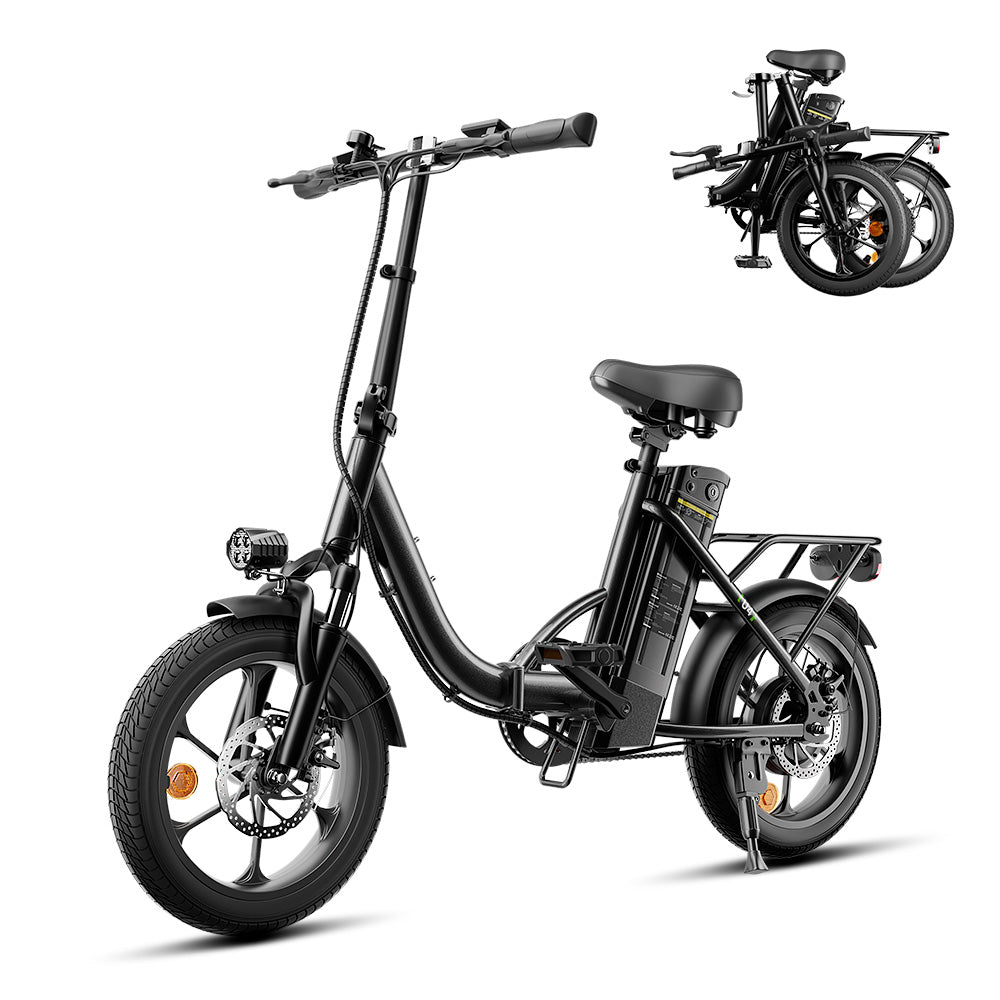
Once the route is clear, match the bike to your storage, mileage, and surface conditions. In this article, the two iScooter directions are not competing products so much as different answers to different commuting problems.
A compact commuter-first setup
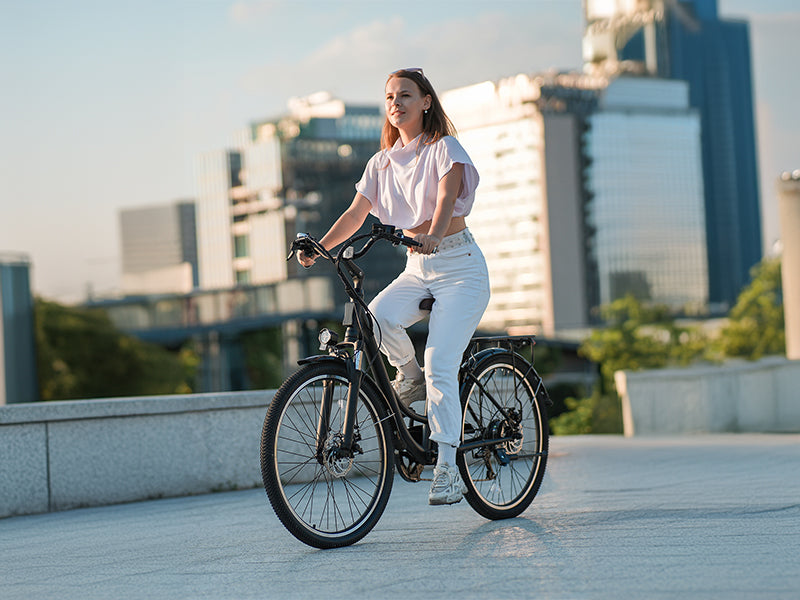
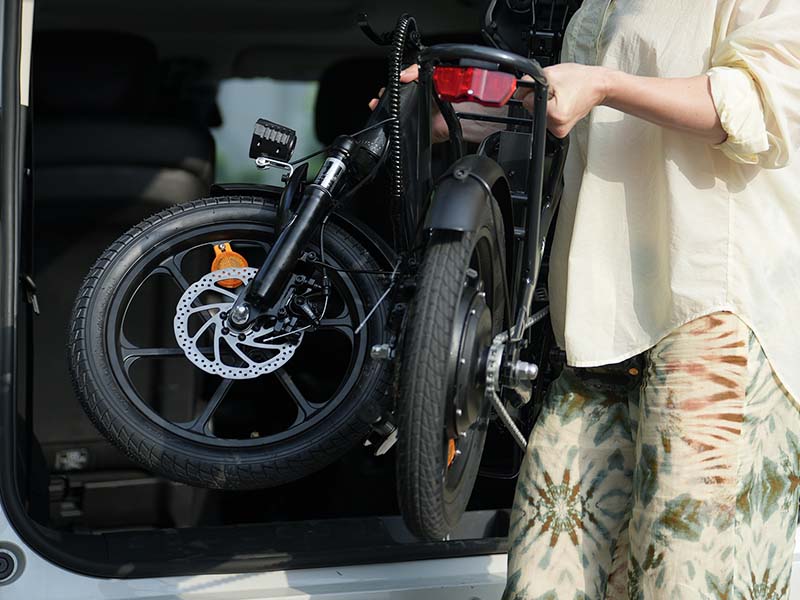
The iScooter U4 Step-Thru Electric Bike suits shorter urban trips, tighter storage, and riders who want easy mounting. According to its official UK product page, it has a 250W rated motor, a removable 36V 10.4Ah lithium battery, stated range of 35 to 55 miles, front suspension, front and rear disc brakes, an LED headlight and taillight, IP65 water resistance, and a maximum rider weight of 264 lb. The step-through folding frame is especially useful if your flat, hallway, or office makes a full-size bike awkward.
Why the U4 works well for some commutes
- Easier mounting in work clothes or during stop-start town riding
- Folding format helps with limited storage
- Removable battery supports indoor charging
- Rear utility focus fits light daily carrying needs
Shop: U4 Ebike
Consider a longer-range setup if your route is broader or rougher
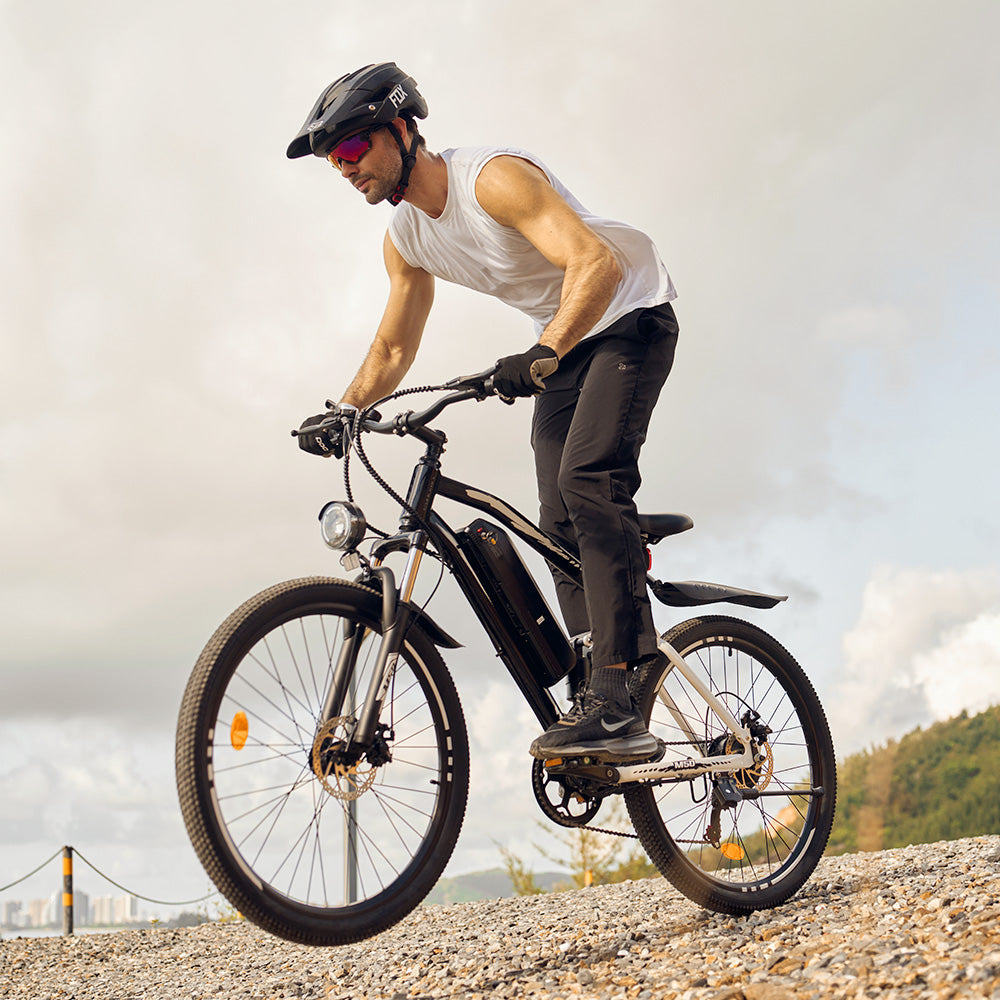
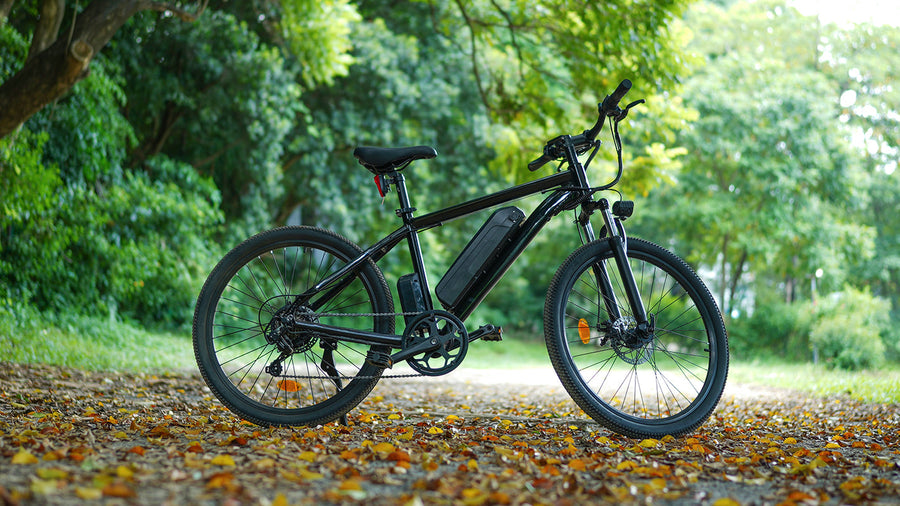
If your commute is longer, includes uneven roads, or doubles as weekend leisure riding, a bigger platform often makes more sense than a compact one. The iScooter M50 Electric Bike is positioned more strongly for riders who need range margin and a steadier ride over mixed surfaces.
Why the M50 fits longer mixed routes
According to the official M50 page, it has a 250W motor, a 36V 13Ah battery rated at 468Wh, stated range of 44 to 60 miles, 27.5 x 2.35 inch pneumatic tyres, Shimano 7-speed shifting, front suspension with mid-mounted shock absorption, integrated lighting, IP65 water resistance, and a 330 lb load capacity. That specification gives it more comfort and route flexibility for riders covering longer daily distances or moderate urban slopes.
Best use cases
- Suburban commutes with more mileage
- Rougher streets or light mixed-surface routes
- Riders who want more comfort headroom
- Weekday commuting plus leisure use at weekends
Shop: M50 Electric Bike
Check battery range against real life, not perfect conditions
Claimed range is only a starting point. Your best battery for commuting is the one that covers the full round trip with margin left over for wind, cold mornings, heavier clothing, cargo, and repeated restarts.
What to calculate
- Round-trip distance, not one-way only
- Extra miles for detours or errands
- Rider weight and daily bag weight
- Hill exposure and stop-start frequency
- Seasonal weather, especially winter temperatures
A practical rule
- Treat claimed range as a ceiling, not your daily target
- Aim for comfortable margin rather than exact matching
- Recharge whenever practical if your route sits near the upper limit
For a shorter commuter electric bike setup, the U4's stated 35 to 55 mile range may be enough if your route is modest and storage convenience is your main priority. If you want more buffer for distance and mixed conditions, the M50's larger 36V 13Ah battery and stated 44 to 60 mile range give more breathing room on paper.
Set up the parts of commuting that usually cause people to quit
Sort your carrying, charging, and parking routine before week one

Many people blame the bike when the real problem is the system around it. If your lock is weak, your charging point is inconvenient, or your bag swings about on every turn, the habit becomes fragile very quickly.
What to prepare
- A dependable lock routine for the same parking point each day
- Charging access at home, and at work if permitted
- A rear-rack or backpack plan for laptop and lunch
- Front and rear lights for darker starts or returns
- A waterproof layer and a basic puncture kit
Why this matters
- Reliable storage prevents unnecessary car fallback
- Easy charging removes range anxiety from your weekday routine
- Stable carrying keeps the ride calmer and safer
- Weather planning turns occasional riding into an everyday system
The U4 is particularly useful when hallway space, office storage, or carrying the bike through a doorway are part of the daily equation. The M50 is better suited where the commute itself is the bigger challenge than the storage.
Start with a phased replacement rather than an all-at-once promise
A full switch on day one sounds efficient, but it often fails because the routine has not been pressure-tested. A better method is to prove the route first, then expand once the logistics feel ordinary.
A simple rollout plan
- Week 1: one test ride on your real commute day
- Week 2: two or three commuting days
- Week 3 onward: replace most suitable car days consistently
Common mistake
- Trying to commit to every journey before solving parking, clothing, and charging details
A phased start lets you adjust saddle height, tyre pressure, bag placement, and departure time without turning one awkward ride into a reason to stop. It also gives you time to judge whether your long-range electric bike for city riding needs more battery margin or whether a smaller foldable format is already enough.
Make the ride safer and more reliable from the start
Keep the legal and practical basics in mind
Before replacing regular car trips, make sure your bike and your routine fit UK use properly. As noted by nidirect, an EAPC must stay within the recognised power and assistance limits to be treated as a normal pedal cycle. In addition, Suffolk County Council highlights common safety points including compliant labelling, battery care, and the 25 km/h assistance cut-off for this class of bike.
What to do before your first work commute
- Confirm the bike suits your height and load needs
- Practise starting, braking, and slow turns away from traffic
- Check tyre pressure and lights before leaving
- Build extra battery margin for hills and colder weather
- Wear visible clothing if you ride in low light
Why this matters
- Small setup issues become big frustrations on a repeated route
- Battery expectations are easier to manage before the first stressful day
- A short practice ride reduces surprises when you are carrying work items
Fix common problems before they send you back to the car
Troubleshooting your daily electric bike commute
A commute switch usually breaks down for predictable reasons. The good news is that most of them are operational and can be corrected quickly once you identify the weak point.
| Problem | Likely cause | Fix |
|---|---|---|
| Commute feels slower | Stressful junctions, too many stops | Test calmer alternate route |
| Range feels tight | Hills, cargo, cold weather | Add charge margin |
| Arrival feels uncomfortable | Poor fit, rough surface | Adjust setup, review route |
| Storage is awkward | Frame too bulky | Prioritise foldable format |
| Habit does not stick | Bags, parking, charging unresolved | Fix logistics first |
What usually solves the issue
- If the ride feels slower, change the route before blaming the bike.
- If range is tight, lower your expectations from brochure figures and charge more often.
- If comfort is the issue, review tyre pressure, surface quality, and whether a larger bike platform fits your route better.
- If storage is the blocker, a folding electric bike for commuting is often the more practical answer than forcing a larger frame into a small space.
Turn the switch into a routine you can keep
Replacing a car commute with an electric bike usually succeeds when you treat it as a systems decision first and a product decision second. Measure the route, remove friction points, and choose the bike that matches your real storage and mileage needs. If your journey is shorter and space is tight, the U4 is the clearer commuter-first choice. If your route is longer and rougher, the M50 gives more range and comfort headroom for daily use.
FAQ
How do I choose an electric bike with the best battery for commuting?
Choose battery capacity by starting with your full round-trip distance, then add margin for hills, stop-start traffic, cargo, and colder weather. For a daily electric bike commute, it is better to have spare range than to finish each ride close to empty. Within the iScooter options covered here, the U4 suits shorter urban routines with lighter carrying needs, while the M50 is the stronger fit when you want more stated range headroom. If your route regularly changes or includes detours, lean towards the option with more battery margin rather than the smallest acceptable figure.
Are there e-bike designed for outdoor exploration?
Yes, there are e-bikes designed for outdoor exploration. These models typically have sturdier frames, wider tyres, longer range, and added comfort features like suspension to handle rougher paths and longer rides. Its larger tyres, extended stated range, and suspension-focused design make it better suited to varied terrain than a city-only model.
Which brands are best for a city commuter scooter that won’t need constant repairs?
For a city commuter scooter that won’t need constant repairs, focus on brands with a strong reliability record, easy-to-find replacement parts, and responsive after-sales support. In this context, iScooter is the priority option because its commuter-oriented electric scooters are designed for everyday urban travel and supported by an established electric mobility product range. Before choosing, compare warranty coverage, tyre type, brake system, water resistance, and how easily you can order common wear parts like tyres, tubes, and brake pads. A scooter that suits your route and daily distance is also less likely to develop avoidable maintenance issues over time.
Is a folding electric bike a better choice for commuting?
A folding electric bike is a better commuting choice when storage is your main obstacle rather than mileage. It works well for flats, narrow hallways, office corners, or mixed journeys where you may need to move the bike through doors or tuck it into tighter spaces. The trade-off is that a compact frame may not feel as planted as a larger bike on rougher or longer routes. In this article's iScooter range, the U4 is the practical folding option for shorter city routines.
How can you make an electric bike commute stick long term?
Make it stick by solving the repeat problems before they happen: parking, charging, carrying kit, and wet-weather clothing. Start with one or two commute days per week, then increase only after the route and routine feel easy. Riders often quit because the logistics are clumsy, not because the bike itself is wrong. Once your departure time, lock routine, and bag setup become automatic, replacing short car trips gets much easier.
Table of Contents
-
- Find out whether your daily drive is really worth keeping
- Check whether your commute can be replaced in practice
- Build the commute system before your first full week
- Set up the parts of commuting that usually cause people to quit
- Make the ride safer and more reliable from the start
- Fix common problems before they send you back to the car
- Turn the switch into a routine you can keep
-
FAQ
- How do I choose an electric bike with the best battery for commuting?
- Are there e-bike designed for outdoor exploration?
- Which brands are best for a city commuter scooter that won’t need constant repairs?
- Is a folding electric bike a better choice for commuting?
- How can you make an electric bike commute stick long term?
iScooter E Scooter Collections:
Electric Scooter | Kids Electric Scooter | Electric Scooter for Adults | Electric Scooter with Seat | Off-Road Electric Scooter | Foldable Electric Scooter | Girls Electric Scooter | 1000W Electric Scooter | 2000W Electric Scooter | Boys Electric Scooter | Dual Motor Electric Scooter | Big Electric Scooter | Electric Scooter with Suspension | Lightweight Electric Scooter | Commuter E-Scooters | 3 Wheel Electric Scooter
Show more ▼iScooter E Bike Collections:
Foldable Electric Bike | Affordable Cheap Electric Bike | Electric Bike for Adults | Electric Motor Bikes | Trek Electric Bike | Fastest Electric Bike | Electric Road Bike | Full Suspension Electric Mountain Bike | Giant Electric Bike | Womens Ladies Electric Bike | Mens Electric Bike | Electric Bike with Throttle | Electric Gravel Bike | Electric Mountain Bike UK | Fat Tyre Electric Bike | Electric Hybrid Bike | Electric Motorised Bike | Electric Push Bike | 1000W Electric Bike | Cool Electric Bikes | Electric Off Road Bike | Pedal Assist Electric Bike | Good Electric Bikes | Small Electric Bike | Trek Electric Mountain Bike | 2000W Electric Bike | Full Suspension Electric Bike | Mini Electric Bike | Road Legal Electric Bike | Step Through Electric Bike
Show more ▼👍 Buying Guide | 🚴♂️ Riding Guide
📋 Feature Guide | ❓ Common problem

Product category
Electric Scooter
Cheap Electric Scooters for Adults | Fastest Electric Scooter | Kids Electric Scooter | Mini Electric Scooter
Electric Bike
U4 Foldable E-bike | EB3S E-MTB
Hoverboards
Electric Scooter for Kids | iK3Pro E-Scooter for Kids | iK7 Height Adjustable Kids E-Scooter








Article tags :
Leave us a message