










Top 3 Durable E-scooters for Outdoor Use 2026
Introduction
Trail potholes can shake an electric scooter hard enough to loosen bolts, stress the stem, and wear tires faster than normal commuting. So what should you look for if you want an iscooter that stays stable and reliable outdoors, not just on smooth pavements?
A good off-road electric scooter for 2026 usually gets durability from three places: a sturdy frame, real suspension, and pneumatic tires that can absorb repeated hits. Battery tech matters too. In fact, lithium-ion dominates the category because it balances energy density and cycle life well. Fact.MR estimates lithium-ion battery technology holds 82.4% share in 2025. This is one reason modern electric scooters keep improving in real-world range and consistency on mixed routes. Fact.MR
If you are shopping in the UK, iScooter also leans into the practical ownership side: free shipping, fast 1 to 3 day delivery, 30-day returns for new/unused items, up to 24 months policy coverage (with electric scooters commonly listed at 1-year warranty), and local after-sales support options. Those details matter because outdoor riding typically increases wear and maintenance needs.
3 iScooter Picks Built for Outdoor Riding
1: iScooter iX4 Off Road Electric Scooter

Do you ride mixed trails where you alternate between hardpack dirt, gravel paths, and broken pavement near campsites? The iScooter iX4 is a balanced off-road electric scooter pick because it targets control and comfort without pushing into extreme weight.
- Best for: mixed terrain loops, gravel towpaths, light trail use, and “one scooter for many surfaces” riding
- Motor and drive: up to 800W peak motor with rear-wheel drive, which helps traction when the surface is loose
- Battery: 48V 15Ah (720Wh) pack, a common modern use of Lithium-ion battery technology for consistent power delivery
- Speed: up to 28 mph (45 km/h) listed top speed
- Range: listed up to 25-28 miles (40-45 km), with a separate parameter line showing up to 28-31 miles / 45-50 km depending on configuration and test conditions
- Suspension: dual front and rear suspension, described as a 4-point setup for impact reduction on uneven ground
- Tires: 10-inch off-road tubeless pneumatic tires for grip and shock absorption
- Water resistance: IPX4 splash resistance, which fits light rain and wet patches but not deep puddles
- Size and weight: about 55.1 lb (25 kg) net weight; folds down for car-boot transport
Why it wins: The iX4 is a practical “outdoor-capable electric scooter” because its pneumatic tires plus dual suspension reduce vibration that can cause long-term rattles. Also, its rear drive pairs well with gravel starts where front wheels can slip. For riders who want an outdoor scooter that still behaves like a daily option, it is a strong middle ground.
Shop: iScooter iX4 Off Road Electric Scooter
2: iScooter iX5S 1000W Off Road Electric Scooter

Do you want more traction and stability when trails get rougher, but you still want a foldable format? The iScooter iX5S steps up the motor and tire size, which is often what riders feel most on dirt.
- Best for: longer dirt routes, chunkier gravel, and riders who want more stability than 10-inch tires can provide
- Motor: 1000W motor for stronger pull on inclines and when accelerating on loose surfaces
- Battery: 48V 15Ah lithium-ion battery (720Wh)
- Range: listed 37.3-40.4 miles / 60-65 km per charge
- Top speed: listed 45 km/h (and riding modes include an off-road mode up to 45 km/h)
- Tires: 11-inch pneumatic off-road tires, a key upgrade for comfort and rollover ability
- Braking: front and rear disc brake plus electronic brake for better control on dusty descents
- Suspension: front and rear suspension system for reduced bounce and improved tracking
- Waterproof rating: IPX4
- Frame material: aluminum alloy A6061 and steel
- Rider capacity: listed up to 330 lb (150 kg)
- Weight: about 60 lb (27.3 kg)
Why it wins: For many riders, 11-inch pneumatic tires are the difference between “tolerable” and “comfortable” on broken paths. The iX5S also pairs that tire size with suspension and a braking setup that feels more confident when surfaces are inconsistent. If you like outdoor rides but still want a scooter that can double as a commuter, it bridges commuter e-scooters and trail-capable builds well.
Shop: iScooter iX5S 1000W Off Road Electric Scooter
3: iScooter iX7Pro 2000W Off Road Electric Scooter
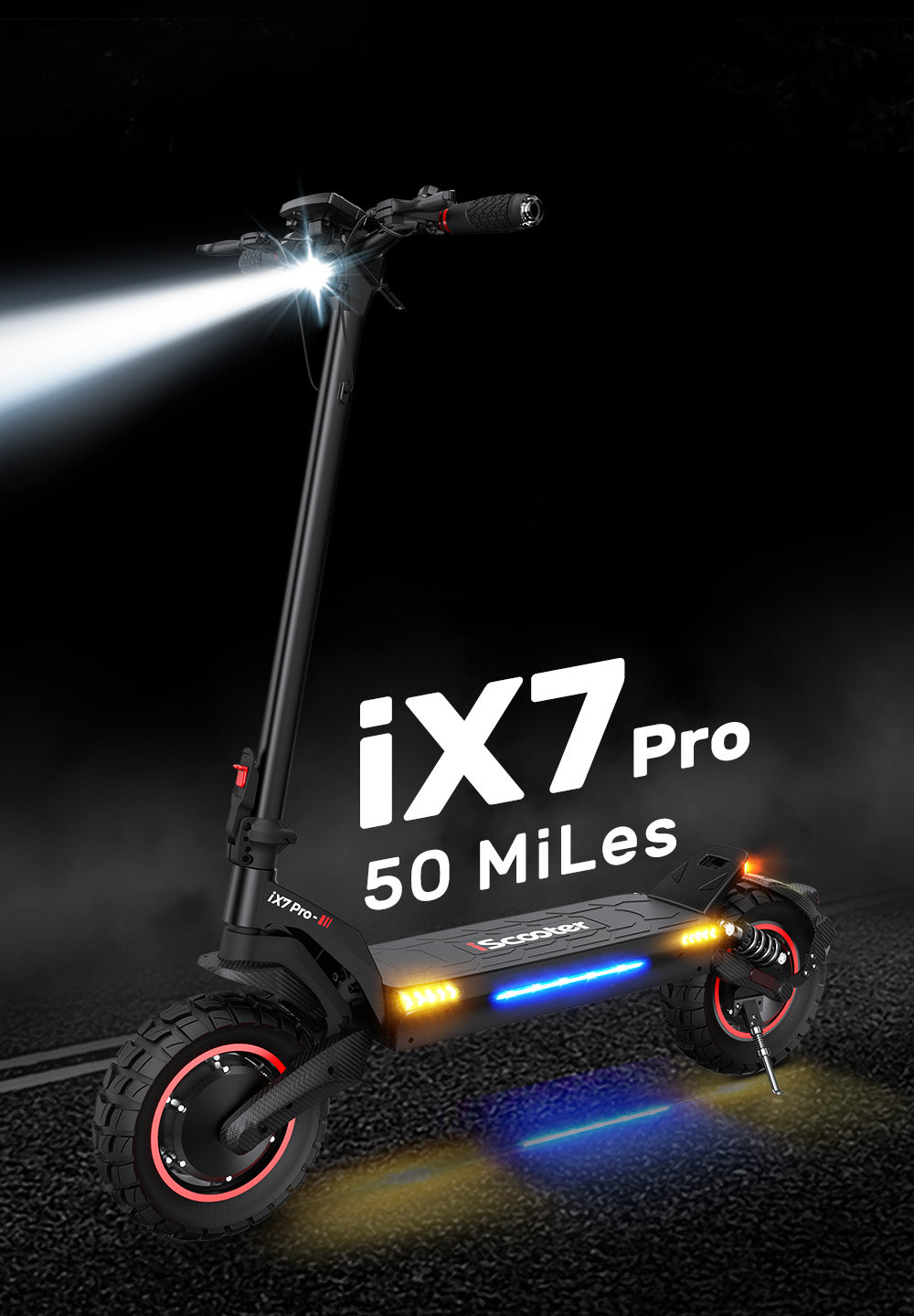
Are you dealing with steep climbs, longer off-road days, or you just want the “bring enough power to stay relaxed” approach? The iScooter iX7Pro is positioned as a higher-performance model, including dual motor scooters riding modes.
- Best for: steeper grades, longer range days, faster dirt roads, and riders who want extra headroom
- Motor power: listed 2000W motor power, with ride modes that include rear-wheel drive and dual-wheel drive
- Riding modes: rear-wheel drive up to 31 mph, dual-wheel drive up to 38 mph (listed)
- Top speed: max speed listed at 38 mph (60 km/h)
- Range: max range listed up to 50 miles / 80 km
- Hill climb: listed 35% hill climb
- Battery: 48V 17.5Ah (840Wh)
- Suspension: dual front and rear suspension
- Water resistance: IPX4
- Tires: listed as 10-inch pneumatic tire in the feature highlights (and shown as tubeless off-road tyres in a comparison table on-page)
- Rider capacity: listed 330 lb (150 kg)
- Weight: net weight about 65.5 lb (29.7 kg)
Why it wins: On outdoor terrain, extra power can increase durability indirectly because the scooter does not need to run “maxed out” as often. That can mean fewer overheated climbs and less strain during repeated accelerations. If your rides look like long loops with sustained grades, the iX7Pro is the most confidence-inspiring option in this short list.
Shop: iScooter iX7Pro 2000W Off Road Electric Scooter
Buying Guide: How to Pick a Durable Outdoor E-Scooter
What motor setup fits your terrain?
If your routes are mostly flat gravel and packed paths, a single-motor setup can feel plenty strong. However, if you ride steep grades often, higher wattage and better torque delivery usually keeps speed steadier and reduces repeated overheating.
- Flat and light trails: an 800W-class setup can be enough
- Frequent hills and loose surfaces: 1000W+ helps keep momentum
- Steep grades or heavy loads: dual motor scooters can reduce wheel slip because both wheels contribute traction
This also connects to last-mile delivery use cases: stopping and starting under load is hard on motors and controllers, so extra power headroom can help, even if your “delivery route” is just gear for a camping weekend.
How much range do you really need?
Advertised range is typically tested under controlled conditions, and outdoor riding changes everything. Wind, cold temperatures, soft dirt, and climbing can cut range noticeably.
Practical rule:
- Pick a scooter with 20% to 30% more range than your longest typical loop
If you plan to ride farther from home, think about portable charging solutions. For example, you might top up at a campsite outlet, a cafe stop, or a workplace socket. Over time, electric vehicle (EV) infrastructure expansion can improve charging availability, but scooters still benefit from planning around standard outlets.
Tires and suspension: what feels most stable?
Outdoor durability is not only about “not breaking.” It is also about keeping control so you do not crash or bend parts.
- Pneumatic tires: better grip and comfort, especially on gravel and roots
- Larger tires (10-inch to 11-inch): better rollover on bumps and pothole edges
- Dual suspension: reduces repeated impacts that loosen fasteners and stress welds
If you need a balance between carrying convenience and ride comfort, foldable electric scooters with pneumatic tires usually offer the best compromise.
Water resistance: what should you expect?
Many outdoor routes include wet patches, puddles, and light rain. With IPX4, you are generally looking at splash resistance, not submersion protection.
- OK for: light rain, splashes from damp ground
- Not OK for: deep puddles, stream crossings, pressure washing
The durability move is simple: avoid riding through standing water that reaches the deck or hubs, because hidden moisture can accelerate bearing and brake wear.
Common mistakes that shorten scooter lifespan
Outdoor use rewards good habits. These are the mistakes that usually show up as “mystery rattles” or early part replacements.
- Riding through deep puddles because a rating sounds reassuring
- Hammering full throttle into rough washboard surfaces, which increases vibration load
- Skipping brake and rotor cleaning after mud or dust
- Forgetting that heavier loads reduce range and increase heat in the motor and controller
One more market reality: industry analysts continue to treat growth as driven by commuting, fleets, and convenience. For example, a 2025 market summary notes the sector growth is tied to urban mobility and broader adoption of electric scooters as a practical transport option. Reuters
Comparison Table
| Model | Motor | Battery (Wh) | Max Range | Top Speed | Tires | Suspension | Water Rating | Weight |
|---|---|---|---|---|---|---|---|---|
| iScooter iX4 | 800W peak (rear drive) | 720Wh | up to 25-28 miles (also listed up to 28-31 miles) | up to 28 mph | 10-inch off-road tubeless pneumatic | dual front and rear | IPX4 | 55.1 lb |
| iScooter iX5S | 1000W | 720Wh | 37.3-40.4 miles | 45 km/h | 11-inch pneumatic off-road | front and rear | IPX4 | 60 lb |
| iScooter iX7Pro | 2000W (dual drive modes listed) | 840Wh | up to 50 miles | up to 38 mph | 10-inch pneumatic (tubeless off-road tyres shown on-page) | dual front and rear | IPX4 | 65.5 lb |
Conclusion
If you want one durable off-road electric scooter for mixed outdoor routes, the iScooter iX4 is the best all-around pick because it balances pneumatic tires, suspension, and manageable weight. Next, the iX5S is a smart upgrade when you want 11-inch tires and a stronger 1000W setup for rougher paths. Finally, the iX7Pro is the pro-power option for steeper climbs, longer loops, and riders who want Electric Scooters performance headroom.
FAQ
How do I choose the best e-scooters for countryside rides?
Start by matching tire type and suspension to the surface you actually ride, because gravel and broken lanes punish rigid scooters quickly. Next, choose a realistic range target with a 20% to 30% buffer since hills, wind, and cold reduce real miles. Finally, check braking and water resistance so wet patches and dusty descents do not become constant maintenance problems.
How long do e-scooter last in outdoor environments?
Outdoor riding usually shortens lifespan through vibration, dust, and moisture exposure, not just motor wear. Pneumatic tires and dual suspension reduce the repeated impacts that create stem play and deck rattles over time. If you ride trails weekly, expect more frequent checks of fasteners, brake pads, and tire condition than a pure commuter would.
What are the top features to look for in an e-scooter for off-road exploration?
Prioritize pneumatic off-road tires and real suspension first because they drive control and comfort on uneven ground. Then look at battery capacity in watt-hours, since higher Wh helps keep performance steadier on longer rides and climbs. Also confirm a braking setup that includes strong mechanical braking, and not only electronic braking, for predictable stops on dirt.
What should I consider when buying an e-scooter for outdoor adventures?
Consider rider weight with gear, typical hill grades, and how far you can realistically ride before you need to recharge. Charging time matters more outdoors, so plan where you will plug in during longer days and whether you can carry the charger. Also think about parts support and warranty coverage because outdoor use increases the chance you will need tires, brake pads, or other wear parts.
What is the difference between commuter e-scooters and off-road electric scooters?
Commuter e-scooters often focus on low weight and portability, so they may use smaller tires and lighter suspension or none at all. Off-road electric scooters typically use larger pneumatic tires, stronger frames, and more suspension travel to absorb impacts. In practice, the off-road style feels more stable on broken surfaces, while the commuter style feels easier to carry and store.
Table of Contents
- Introduction
- 3 iScooter Picks Built for Outdoor Riding
- Buying Guide: How to Pick a Durable Outdoor E-Scooter
- Comparison Table
- Conclusion
-
FAQ
- How do I choose the best e-scooters for countryside rides?
- How long do e-scooter last in outdoor environments?
- What are the top features to look for in an e-scooter for off-road exploration?
- What should I consider when buying an e-scooter for outdoor adventures?
- What is the difference between commuter e-scooters and off-road electric scooters?
iScooter E Scooter Collections:
Electric Scooter | Kids Electric Scooter | Electric Scooter for Adults | Electric Scooter with Seat | Off-Road Electric Scooter | Foldable Electric Scooter | Girls Electric Scooter | 1000W Electric Scooter | 2000W Electric Scooter | Boys Electric Scooter | Dual Motor Electric Scooter | Big Electric Scooter | Electric Scooter with Suspension | Lightweight Electric Scooter | Commuter E-Scooters | 3 Wheel Electric Scooter
Show more ▼iScooter E Bike Collections:
Foldable Electric Bike | Affordable Cheap Electric Bike | Electric Bike for Adults | Electric Motor Bikes | Trek Electric Bike | Fastest Electric Bike | Electric Road Bike | Full Suspension Electric Mountain Bike | Giant Electric Bike | Womens Ladies Electric Bike | Mens Electric Bike | Electric Bike with Throttle | Electric Gravel Bike | Electric Mountain Bike UK | Fat Tyre Electric Bike | Electric Hybrid Bike | Electric Motorised Bike | Electric Push Bike | 1000W Electric Bike | Cool Electric Bikes | Electric Off Road Bike | Pedal Assist Electric Bike | Good Electric Bikes | Small Electric Bike | Trek Electric Mountain Bike | 2000W Electric Bike | Full Suspension Electric Bike | Mini Electric Bike | Road Legal Electric Bike | Step Through Electric Bike
Show more ▼👍 Buying Guide | 🚴♂️ Riding Guide
📋 Feature Guide | ❓ Common problem

Product category
Electric Scooter
Cheap Electric Scooters for Adults | Fastest Electric Scooter | Kids Electric Scooter | Mini Electric Scooter
Electric Bike
U4 Foldable E-bike | EB3S E-MTB
Hoverboards
Electric Scooter for Kids | iK3Pro E-Scooter for Kids | iK7 Height Adjustable Kids E-Scooter







Article tags :
Leave us a message