










The Ultimate Guide to Cargo E-Bikes: Carrying Kids, Groceries, and Gear
Find the right cargo e-bike for family loads and daily errands
A cargo e-bike sounds simple until you try to use the wrong one for the school run, a grocery shop, and your everyday kit. That is when the ride can feel awkward at low speed, harder to park, and more stressful at every stop. In practice, the best setup is not the one with the biggest motor or the boldest look. It is the one that matches your real load, your route, and how often you need to get on and off.
If you are comparing a family cargo e-bike with a compact utility model, the difference matters straight away. Some bikes are built around child carrying and heavy bags, while others are better for lighter errands, work gear, or mixed leisure use. This cargo e-bike guide breaks down bike layouts, load limits, safety checks, and where iScooter’s U4 and DX5Max fit so you can choose a safer, more realistic everyday carry setup.
What makes a cargo e-bike useful for kids, groceries, and gear
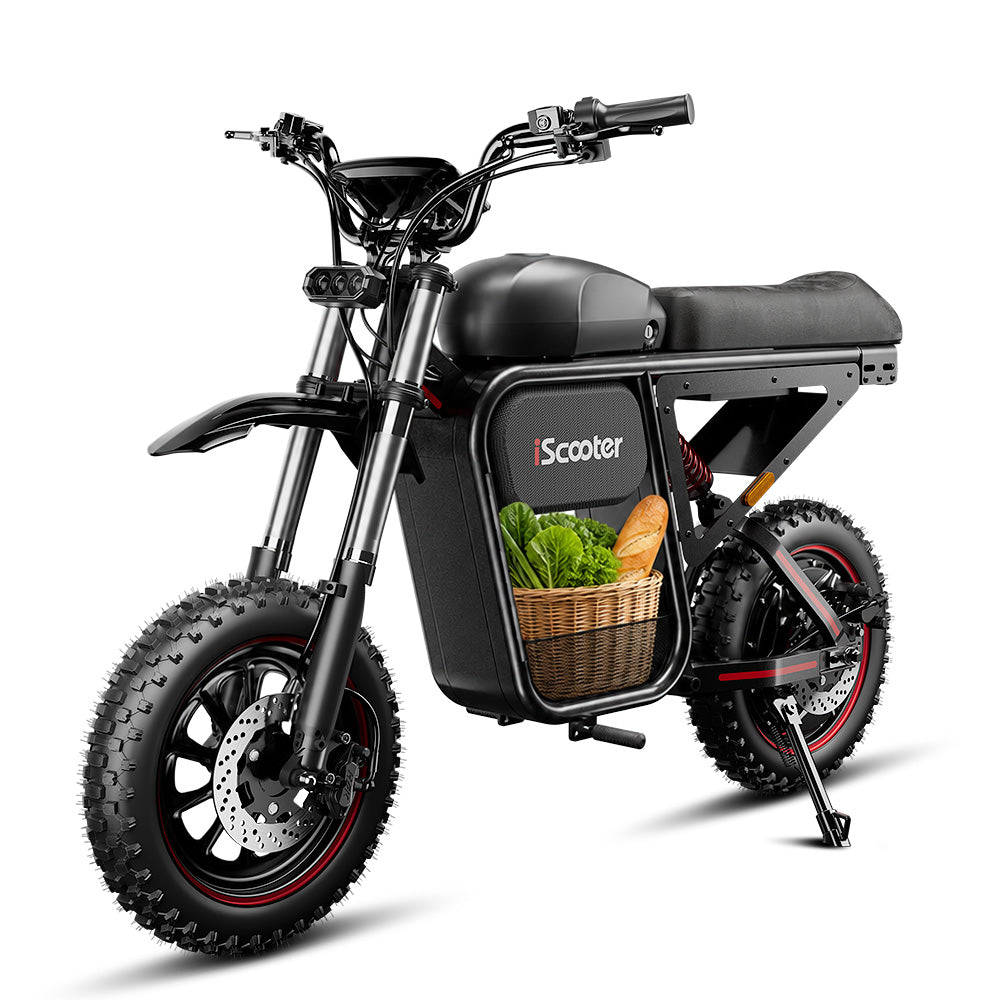
Choosing well starts with the job, not the badge on the frame. Some riders need space for one child seat and a few shopping bags. Others need a rear rack electric bike for work kit, lunch, and a lock. A true family cargo e-bike is designed around stable load carrying, while a utility e-bike buying guide should also explain when a compact bike is enough and when it is not.
Define the cargo job before the bike
Start by listing what you actually carry in a normal week. That usually means one of three patterns:
- children plus a small bag for short local trips
- groceries and household items for errands
- work or leisure gear such as a laptop, tools, waterproofs, or picnic kit
That quick check helps you avoid buying by label alone. A bike may look practical, yet still be a poor fit if the load sits too high, the rack capacity is limited, or frequent stop-start riding makes mounting awkward.
The main cargo e-bike layouts to know
The broad layouts are easy to recognise, and each solves a different problem.
- Front-load cargo bikes place the box or platform in front of the rider. They keep children or shopping in view and often carry heavier, bulkier loads with better balance.
- Rear-load cargo bikes use a rear platform or extended rack. They suit lighter family errands and simple bag carrying, especially where storage space is tight.
- Long-tail e-bike designs stretch the rear of the frame to create more room for passengers or panniers. They are often the middle ground between compact utility and full cargo use.
According to the European Commission, cargo bikes support urban transport for shopping and goods movement, which is one reason they keep appearing in wider cycling policy and planning discussions.
Core terms worth checking
A few terms can mislead buyers if you skim them too quickly.
- Payload is the total carrying allowance, not just what fits on a rack.
- Rider weight limit is different from rack capacity, so you must not merge the two.
- Range under load is your practical distance when the bike is carrying more weight, not the light-load headline figure.
- Step-through access means a lower frame opening, which is useful when you stop often or ride with bags attached.
That last point matters more than many buyers expect. If you are repeatedly getting on and off outside a school gate or supermarket, easy access can improve control and reduce wobble at the very moment the bike feels heaviest.
How do you match cargo needs to the right iScooter setup?

This is where honest positioning matters. iScooter offers useful utility options, but the brief distinction is important: the U4 is a compact carrying bike for lighter routine loads, while the DX5Max is a power-oriented utility model better suited to solo gear and mixed terrain. Neither should be treated as a dedicated child-hauling cargo frame unless you have approved accessories and a use case that clearly fits the bike’s limits.
Daily errands and compact carrying
For shopping, short local trips, and everyday items, the U4 is the more natural fit. The official iScooter product page describes it as a low step-through foldable electric bike with a rated 250W motor, 35 to 55 miles of stated range, front suspension, front and rear disc brakes, LED lighting, a 36V 10.4Ah battery, and a 264 lb maximum rider weight. It also weighs 58.42 lb and uses 16 × 2.15 inch pneumatic tyres.
What that means in practice:
- the step-through frame suits frequent stops
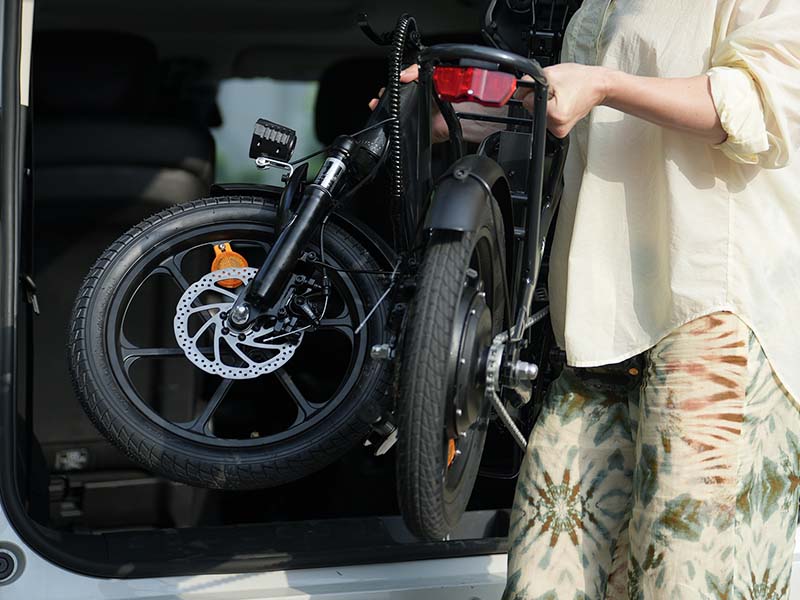
- the folding format helps if storage is tight
- the compact size is easier for errands than a large long-tail e-bike
- it is a reasonable electric bike for groceries when loads stay moderate and secure
Shop: U4 Step-Thru Electric Bike
Higher-power mixed-use carrying
The DX5Max serves a different rider. Its official page highlights a 2000W peak motor, 43 to 62 miles of stated range, a 52V 20Ah 1040Wh removable lithium battery, front and rear hydraulic disc brakes, dual suspension, 17 × 3.2 inch off-road pneumatic tyres, and a 330 lb maximum rider weight. The bike itself weighs 122.6 lb and includes a removable front basket plus rear storage bag for everyday convenience.
That makes it better suited to:
- bulky personal gear
- mixed-surface utility riding
- leisure trips where stability over rougher ground matters
- heavier solo carrying than a compact folder can comfortably manage
However, more power does not make it a family cargo e-bike by default. Its strengths are terrain confidence, braking, and carrying convenience for gear, not child transport as a core design brief.
Shop: iScooter DX5Max Electric Bike
When neither setup fully replaces a dedicated cargo bike
A true cargo-specific frame still has advantages if your main goal is carrying children on an electric bike several times a week. Purpose-built long-tail and front-load models usually offer better passenger geometry, lower-speed stability, and accessory ecosystems designed around seats, rails, and larger carrying areas.
So the practical rule is simple:
- choose the U4 for light errands, moderate shopping, and storage-friendly utility
- choose the DX5Max for heavier personal gear and mixed-terrain utility
- choose a dedicated cargo bike if child carrying or large weekly loads are central to your routine
That distinction reduces overclaim risk and helps you buy for your actual workload rather than the general idea of utility.
Which features matter most when carrying children or shopping?

Specs only help when they change the ride. For loaded use, the priority order is usually stability first, stopping second, and battery planning third. That is more useful than comparing motors in isolation.
Stability and load distribution
A loaded bike feels different before you even leave the kerb. Weight placed high or far behind the rear axle can make steering feel lighter at the front and less predictable at slow speed.
What to check:
- keep heavier items low and close to the bike’s centre
- use balanced bags where possible
- remember that wider tyres can feel more planted on uneven surfaces
- test how the bike behaves when starting, turning, and parking with a full load
If you are using a rear rack electric bike for errands, this is often the make-or-break factor. A manageable bike with a modest load is usually safer than an overstretched setup carrying too much.
Brakes, lights, and stop-start control
Stopping cleanly matters more once the bike is loaded. the UK Government’s EAPC rules also make it clear that legal electric bikes are treated differently from mopeds only when they meet the relevant standards, including pedal use and power limits. (gov.uk) For everyday use, strong brakes and clear lighting help most during traffic interruptions, wet roads, and repeated starts from parked positions.
Focus on these points:
- disc brakes are especially valuable under load
- a visible rear light matters when bags or accessories sit behind you
- step-through frames often make short-stop riding easier
- test one-foot balance before buying if you expect frequent drop-offs or quick shopping stops
Battery, range, and route planning
Loaded riding reduces practical range. More weight, more stop-start riding, and more hills all increase power use, so real-world distance is usually below the best-case number on a product page. That is why commuting with shopping or carrying gear calls for margin rather than optimism.
A simple planning method works well:
- map your usual return trip distance
- add likely detours for school, shops, or station runs
- allow extra battery use for hills and wind
- keep a reserve so you are not finishing every ride near empty
For short errands, removable charging convenience can matter more than absolute battery size. For longer leisure or utility loops, extra capacity becomes more useful.
Accessory compatibility and storage
Not every useful bike is family-ready. If you are thinking about carrying kids on an electric bike, approved accessories and mounting compatibility matter more than general usefulness. A bike that folds neatly into a shed or car boot may still be the smarter answer if your real use is groceries, personal items, and occasional errands rather than regular passenger transport.
In other words, folding electric bike for errands and family cargo e-bike are not the same category. Some overlap exists, but the buying decision should follow your routine, not marketing labels.
Practical setup paths for different riders
You do not need the same bike for every carrying pattern. Matching the route and stop rhythm often gives you a clearer answer than comparing spec sheets alone.
The school-run and shopping pattern
This pattern involves constant transitions: setting off, pausing, parking, walking the bike, then loading shopping for the ride home. Stability at low speed and easy mounting are more useful here than outright speed.
A sensible approach is to prioritise:
- step-through access
- moderate, well-secured loads
- simple parking in tight spaces
- realistic child-carrying plans with approved equipment only
If your routine includes children most days, a dedicated cargo frame usually remains the better long-term answer than forcing a compact utility bike into that role.
The commuter with work gear
For laptops, locks, lunch, and waterproofs, you may not need a cargo-specific frame at all. A compact utility bike with sensible carrying points can be easier to store at work, in a flat, or in the boot of a car.
The U4 fits this kind of use well because its foldable step-through format is geared towards convenience and moderate carrying rather than oversized hauling. If your priority is urban practicality, this can be a better answer than moving straight to a larger long-tail e-bike.
The weekend utility rider
Leisure utility is different again. Perhaps you carry a picnic bag, a repair kit, extra layers, or a heavier personal load on rougher routes. In that case, suspension, tyre grip, and braking confidence matter more.
The DX5Max is better aligned with that scenario because its dual suspension, hydraulic brakes, removable battery, and utility storage are built around more demanding mixed-use riding. Even so, it should still be framed as a power-oriented utility bike rather than a substitute for a purpose-built family cargo bike.
Common mistakes that make cargo riding harder
Most problems come from mismatched expectations rather than one bad component. A bike can be excellent for one job and frustrating for another.
Do
A few good habits make loaded riding calmer and safer.
- check the total load before you buy, not after
- keep heavier items close to the centre of the bike
- test your parking and lifting routine at home
- allow extra stopping distance when carrying more weight
- charge and store the battery carefully, using the correct charger
Battery care deserves extra attention. The UK Government warns that damaged, counterfeit, poorly modified, or incorrectly charged lithium batteries raise fire risk, and it advises against unsafe modifications or using the wrong charger. (gov.uk)
Do not
A few assumptions cause trouble quickly.
- do not assume all e-bikes can haul children safely
- do not ignore rack or accessory limits
- do not judge range without payload context
- do not buy for occasional edge cases if 90% of your rides are short errands
- do not modify a legal e-bike in ways that take it outside EAPC rules
That last point matters in the UK because an e-bike that exceeds EAPC limits can be classed differently in law, with different requirements for use on the road. (gov.uk)
Safer buying guidance for honest load matching

If you only remember one section from this utility e-bike buying guide, make it this one: choose for the load, the route, and the stop pattern. Labels such as cargo-ready or utility do not guarantee that the bike suits child transport, weekly supermarket runs, or awkward storage conditions.
What to check before you decide
Use this shortlist when comparing any cargo or utility option:
- Primary task: children, shopping, work kit, or mixed leisure gear
- Load style: bulky but light, or compact and heavy
- Route: smooth town streets, hills, rougher paths, or mixed surfaces
- Storage: shed, hallway, flat, car boot or caravan
- Mounting ease: especially important for frequent short stops
- Accessory fit: child seats, baskets, bags, and approved carrying hardware
A simple fit table
| Need | Better fit | Why |
|---|---|---|
| Light errands and compact storage | U4 | Foldable, step-through, moderate utility use |
| Work gear and everyday shopping | U4 | Easier portability for routine town use |
| Heavier solo kit and rougher routes | DX5Max | More power, suspension, hydraulic brakes |
| Regular child carrying | Dedicated cargo bike | Better passenger-focused frame and accessory design |
| Weekend utility with bulkier gear | DX5Max | Stronger mixed-terrain confidence |
Choose for the load, not the label
The best cargo setup usually comes from restraint, not exaggeration. If your routine is moderate shopping, short local trips, and everyday gear, a compact utility model may serve you better than a large bike that is awkward to store. If you need heavier solo carrying and rougher-route confidence, a more powerful utility bike makes sense. If your week revolves around carrying children or consistently larger loads, a dedicated cargo bike is still the right benchmark.
That is the most useful way to read this cargo e-bike guide: start with your route, your load, and your storage limits, then work forward from there. A well-matched bike feels calmer at low speed, easier to park, and more predictable every day.
FAQ
How do I choose an electric bike with the best battery for commuting?
Choose the battery around your real round-trip distance, hills, and the weight you carry most days. If your ride includes shopping, work gear, or regular headwinds, add a reserve rather than relying on the maximum stated range. Removable batteries are especially useful when you store the bike in a shed or shared area but need to charge indoors. For many commuters, charging convenience and dependable range under load matter more than simply buying the largest battery available.
Are there e-bike designed for outdoor exploration?
Yes, but they solve a different problem from a family cargo e-bike. Exploration-focused models usually prioritise suspension, tyre grip, braking control, and enough battery margin for longer or rougher rides. In iScooter’s line-up, DX5Max is the clearer direction for that use because it is built around power-oriented utility and mixed-terrain confidence rather than passenger carrying. If your main goal is trails, uneven routes, or bulkier solo gear, that type of bike is usually a better fit than a shopping-first utility model.
What should I consider when buying an e-bike for outdoor adventures?
When buying an e-bike for outdoor adventures, focus on motor power, battery range, suspension, tyre type, and water resistance, since these features affect how well it handles rough paths, hills, and longer rides. Look for a sturdy frame, reliable brakes, and off-road-friendly tyres with good grip to improve stability and control on uneven terrain. Weight and folding design also matter if you need to transport or store it easily between trips.
What matters most for family carrying: power, rack space, or stability?
Stability matters most, with safe load distribution and suitable accessories close behind. Strong power can help on hills, but it does not compensate for a frame that is not designed around passengers or heavier family loads. You should pay attention to how the bike starts, stops, balances, and parks when loaded, because those moments create the most stress in real use. Rack space helps only when the rack and accessory system are approved for the job you expect them to do.
When does a utility e-bike stop being a good substitute for a cargo bike?
A utility e-bike stops being the right substitute when child carrying, bulky weekly shops, or repeated heavy loads become your normal routine. At that point, the frame layout, passenger space, and load stability of a dedicated cargo bike usually make everyday riding safer and easier. A compact utility model is often excellent for errands, work gear, and lighter shopping, but it should not be stretched beyond its intended role. If most of your rides involve more than one demanding carrying task at once, that is a clear sign to compare proper cargo-specific options.
What should I check before carrying children on an electric bike?
Check the bike’s legal use, carrying limits, approved accessories, and mounting stability before anything else. You need a setup that supports secure child-carrying equipment designed for that frame, not just spare rack space. It is also wise to test low-speed starts, parking, and one-foot balance with the bike loaded before you ride in busy areas. If any part of the setup feels improvised, unstable, or unclear, move to a cargo-specific bike or approved accessory system instead.
Table of Contents
- Find the right cargo e-bike for family loads and daily errands
- What makes a cargo e-bike useful for kids, groceries, and gear
- How do you match cargo needs to the right iScooter setup?
- Which features matter most when carrying children or shopping?
- Practical setup paths for different riders
- Common mistakes that make cargo riding harder
- Safer buying guidance for honest load matching
- Choose for the load, not the label
-
FAQ
- How do I choose an electric bike with the best battery for commuting?
- Are there e-bike designed for outdoor exploration?
- What should I consider when buying an e-bike for outdoor adventures?
- What matters most for family carrying: power, rack space, or stability?
- When does a utility e-bike stop being a good substitute for a cargo bike?
- What should I check before carrying children on an electric bike?
iScooter E Scooter Collections:
Electric Scooter | Kids Electric Scooter | Electric Scooter for Adults | Electric Scooter with Seat | Off-Road Electric Scooter | Foldable Electric Scooter | Girls Electric Scooter | 1000W Electric Scooter | 2000W Electric Scooter | Boys Electric Scooter | Dual Motor Electric Scooter | Big Electric Scooter | Electric Scooter with Suspension | Lightweight Electric Scooter | Commuter E-Scooters | 3 Wheel Electric Scooter
Show more ▼iScooter E Bike Collections:
Foldable Electric Bike | Affordable Cheap Electric Bike | Electric Bike for Adults | Electric Motor Bikes | Trek Electric Bike | Fastest Electric Bike | Electric Road Bike | Full Suspension Electric Mountain Bike | Giant Electric Bike | Womens Ladies Electric Bike | Mens Electric Bike | Electric Bike with Throttle | Electric Gravel Bike | Electric Mountain Bike UK | Fat Tyre Electric Bike | Electric Hybrid Bike | Electric Motorised Bike | Electric Push Bike | 1000W Electric Bike | Cool Electric Bikes | Electric Off Road Bike | Pedal Assist Electric Bike | Good Electric Bikes | Small Electric Bike | Trek Electric Mountain Bike | 2000W Electric Bike | Full Suspension Electric Bike | Mini Electric Bike | Road Legal Electric Bike | Step Through Electric Bike
Show more ▼👍 Buying Guide | 🚴♂️ Riding Guide
📋 Feature Guide | ❓ Common problem

Product category
Electric Scooter
Cheap Electric Scooters for Adults | Fastest Electric Scooter | Kids Electric Scooter | Mini Electric Scooter
Electric Bike
U4 Foldable E-bike | EB3S E-MTB
Hoverboards
Electric Scooter for Kids | iK3Pro E-Scooter for Kids | iK7 Height Adjustable Kids E-Scooter






Article tags :
Leave us a message