










Weekend Trails and City Streets: E-Scooter Brands That Do Both
Why mixed-use e-scooter brands matter for UK riders
A scooter that feels lively on a smooth cycle lane can become tiring the moment you hit patched tarmac, loose gravel or an uneven towpath. Go too far in the other direction and you may end up with a heavy machine that is awkward in a flat hallway, harder to lift, and less pleasant for short weekday hops. For riders trying to cover both weekend trail rides and city commuting, that mismatch usually shows up as poor comfort, uncertain braking feel and a scooter you use less than planned.
That is why this shortlist looks at e-scooter brands through a mixed-use lens rather than chasing headline speed alone. The focus here is ride quality on rough roads, practical storage, braking confidence and long-term support. Because this is a UK e-scooter guide, it also keeps the legal picture clear: privately owned e-scooters cannot be ridden on public roads, pavements or parks, while rental trial scooters operate under separate rules in authorised areas according to GOV.UK.
Top e-scooter brand categories for weekend trail rides and city commuting
1. iScooter
If you want one of the more practical e-scooter brands for both weekend trail rides and city commuting, iScooter makes the strongest fit in this shortlist. Its range covers heavier mixed-terrain machines as well as lighter options for riders who mostly face broken town surfaces, kerb cuts and back-road detours rather than deep mud or technical off-road riding. That breadth matters because the right answer is rarely the most extreme scooter.
Why it stands out
- Value-led mixed-use positioning rather than pure race-style performance
- A clear split between rougher-terrain capability and lighter day-to-day use
- Models that address both outdoor exploration and weekday convenience
- Practical appeal for riders who want one brand to compare within a single ecosystem
Best for
- Riders balancing light trail use with regular urban journeys
- Buyers who want suspension and tyre upgrades without jumping straight to the heaviest category
- People comparing comfort, control and storage rather than top speed alone
What to watch
- The more trail-capable models gain weight and size quickly
- Larger tyres and longer decks help stability, but they reduce easy carrying indoors
- Mixed-use still does not mean true motocross terrain; route matching remains important
For riders looking at support and safety, the UK government advises buying from known sellers and using only manufacturer-recommended batteries and chargers, a point reinforced by GOV.UK. That advice matters just as much as motor output when you plan to keep a scooter for daily use.
2. All-terrain specialist brands
Trail-first e-scooter brands are built for riders who care most about loose surfaces, deeper suspension response and a planted feel over rough ground. In practice, they can handle gravel, uneven country paths and harsher bumps more confidently than a city-first machine. However, the trade-off is usually weight, bulk and reduced convenience when the ride ends and the carrying starts.
Why it stands out
- Stronger focus on suspension tuning and tyre grip
- Better confidence on broken surfaces and light trail sections
- Often more stable at speed on rough ground than commuter-led designs
Best for
- Weekend riders whose routes include gravel tracks or rougher back roads
- Experienced users who accept extra weight for better chassis control
What to watch
- Less convenient for compact storage in a flat or office corner
- Heavier frames can feel excessive for short town journeys
- Some trail-first designs become cumbersome if most miles are still urban
3. Urban comfort-focused brands
This category suits riders who mostly need help with rough roads rather than true trails. Urban comfort-focused e-scooter brands usually prioritise predictable steering, manageable weight and enough cushioning to take the sting out of potholes, drain covers and cracked tarmac. They can be the smarter choice when your real problem is broken infrastructure, not adventurous terrain.
Why it stands out
- Better everyday practicality for commuting and storage
- Usually easier to fold, wheel and position indoors
- Stable enough for poor town surfaces and kerb transitions
Best for
- Riders spending most of their time on streets, shared paths on private land, or smoother leisure routes
- Newer riders who value confidence and easy handling
What to watch
- Off-road ability is often modest once surfaces turn loose or uneven
- Smaller tyres or lighter suspension may feel harsh on longer back-road rides
- Range claims matter less than ride comfort if roads are rough every day
4. Performance-led dual-purpose brands
Performance-led dual-purpose e-scooter brands target riders who want stronger torque, firmer control and the confidence to move between quicker open stretches and rougher surfaces. This category can be excellent for capable riders, yet it often brings a higher learning curve in handling, braking behaviour and storage inconvenience.
Why it stands out
- Good torque and chassis control for changing terrain
- Often stronger braking systems and wider decks
- Suitable for riders who want more headroom than a basic commuter scooter offers
Best for
- Confident weekend riders who also need weekday transport flexibility
- Buyers willing to trade portability for road and trail composure
What to watch
- Extra performance often means extra mass
- Larger dimensions can be inconvenient in lifts, cupboards or narrow hallways
- Not always the best fit for first-time buyers wanting simple ownership
5. Family and leisure mobility brands
Leisure-oriented e-scooter brands focus on ease of use, approachable controls and relaxed riding rather than rough-terrain ambition. They can work well for parks on private land, smoother back roads and casual recreational use. Nevertheless, they are usually the weakest fit once the route becomes truly uneven.
Why it stands out
- Accessible riding feel and simpler learning curve
- Comfortable for shorter leisure sessions and gentle weekend use
- Often easier to live with than heavier trail-oriented scooters
Best for
- Confidence-first riders and recreational users
- Families choosing controlled, lower-pressure riding scenarios
What to watch
- Limited capability on loose gravel or rough trail sections
- Comfort can drop sharply when surfaces become badly broken
- Not ideal if your priority is one scooter for broad mixed-terrain use
The iScooter models worth shortlisting for mixed riding
1. iScooter F7Ultra
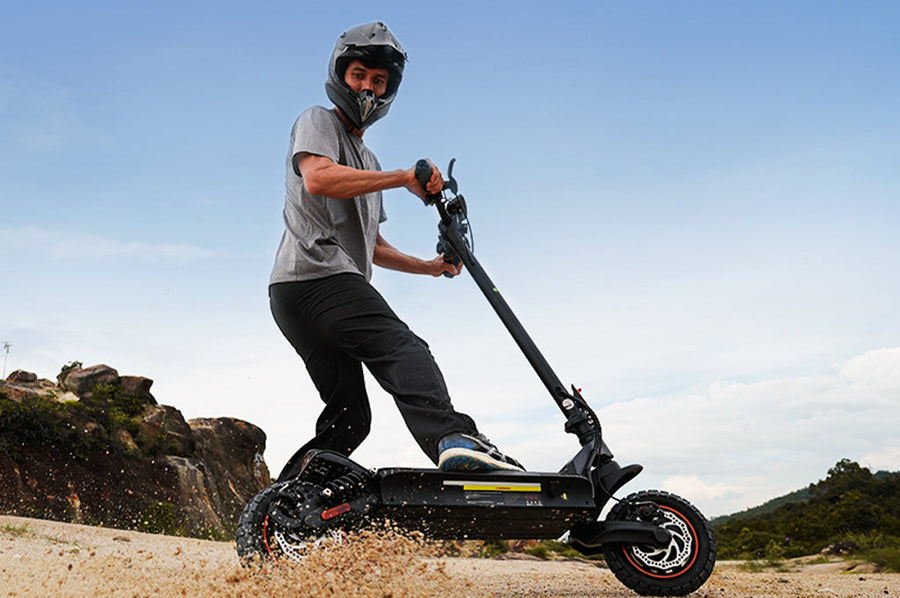
For riders who genuinely want weekend trails and city streets from one machine, the iScooter F7Ultra is the clearest mixed-terrain option in the range. It is aimed at buyers who will accept extra size and weight in return for more comfort, grip and stability on rougher routes. That makes it better suited to private-land exploration, back-road leisure riding and uneven surfaces than to carrying up stairs every day.
Shop: iScooter F7Ultra
Why it stands out
- Peak motor: 1500W
- Battery: 52V 20Ah, 1040Wh
- Claimed range: 52-62 miles / 90-100 km
- Suspension: front suspension fork plus rear spring suspension
- Brakes: front and rear disc brakes with electronic braking
- Tyres: 16-inch front and 12-inch rear all-terrain tyres
Best for
- Riders dealing with rough roads, gravelly private paths and longer leisure rides
- Buyers who prioritise deck stability and ride comfort over portability
- Users wanting stronger load capacity, with a listed maximum rider weight of 150 kg
What to watch
- Net weight is 34.5 kg, so carrying it regularly will be a real compromise
- Charging time is listed at 9-10 hours, which suits planned overnight charging better than rapid turnarounds
- IPX4 water resistance means splashes and light rain, not aggressive wet-weather use
The practical appeal here is the balance of power and chassis equipment. A 6.3-inch TFT smart display, app connection and larger all-terrain tyre set-up give it a more planted feel on route changes than a basic commuter scooter, according to iScooter’s published specifications. Its size is the obvious trade-off, but if your mixed riding includes genuinely poor surfaces, that compromise may be the right one.
2. iScooter iF1
The iScooter iF1 makes more sense when your routes are still mixed, but the city side of the equation matters more than aggressive terrain. It sits in a lighter, easier-to-live-with bracket while keeping enough suspension, tyre and braking hardware to cope with broken tarmac, kerb cuts and smoother gravel. In other words, this is the flexible pick for rough streets, light trails and riders who still care about portability.
Shop: iScooter iF1
Why it stands out
- Peak motor: 1200W
- Battery: 48V 10Ah, 480Wh
- Claimed range: 25-32 miles / 40-50 km
- Suspension: front and rear swingarms
- Brakes: front and rear mechanical disc brakes plus electronic brake
- Tyres: 10-inch tubeless off-road tyres
Best for
- Riders who need one scooter for commuting and occasional outdoor exploration
- Storage-limited flat living where every extra kilogramme matters
- Newer riders who want a more manageable step up from a pure commuter scooter
What to watch
- The 22.7 kg net weight is more manageable than the F7Ultra, but still not ultra-light
- A 15% hill climb figure suggests it is more suited to light mixed use than steep, demanding routes
- Smaller battery capacity means less margin for longer weekend outings
The iF1 is the better fit when you want enough comfort and control for real-world rough roads without jumping straight to a large all-terrain platform. Its listed IPX5 water resistance, folding mechanism and dual disc brake set-up support that practical middle ground, especially for buyers comparing everyday convenience with occasional leisure use.
What to compare before choosing an e-scooter brand that does both
Mixed-use buying gets easier once you compare the right things together instead of fixating on a single headline number. Motor output, speed and range matter, but they do not tell you whether a scooter will feel stable over patched tarmac or whether you will hate moving it around your home.
Ride quality over uneven surfaces
- Check suspension and tyre size together, not separately
- Larger pneumatic or tubeless tyres usually help absorb vibration better than small, hard tyres
- Deck stability and rider posture matter on rough roads just as much as shock hardware
- For light trail use, aim for a scooter that feels planted rather than merely powerful
Practicality for weekday use
- Compare folded size, carrying weight and charging time honestly
- If you live in a flat, a 30 kg-plus machine can become a daily burden
- Think about hallway storage, office space and whether overnight charging fits your routine
Control and braking confidence
- Front and rear disc brakes generally offer more reassuring stopping feel than simpler systems
- Wider handlebars and a steady steering response reduce rider fatigue on mixed surfaces
- Newer riders usually benefit more from predictability than from aggressive acceleration
Support and long-term upkeep
- Buy from known sellers with visible after-sales channels
- Use the specified battery and charger only
- Keep tyre pressure correct, because under-inflation hurts range, comfort and control
- Check parts availability before buying, especially for tyres, brake components and chargers
Mixed-use scenarios: which category fits your route?
For light trails and commuting
Go for a balanced dual-purpose or value-led mixed-use brand. You want enough tyre and suspension support for gravel and broken roads, but not so much bulk that weekday rides become inconvenient. In iScooter’s range, the iF1 is the cleaner fit if your trail use is occasional and moderate.
For rough streets, not mud
Urban comfort-focused brands or lighter mixed-use models usually make the most sense. The real goal is to smooth out potholes, patched tarmac and kerb transitions without carrying an unnecessarily heavy chassis. This is often where buyers overspend on off-road styling they do not need.
For storage-limited flat living
Weight and folded footprint should move near the top of your checklist. A scooter can have excellent trail credentials and still be the wrong purchase if it is awkward to store every day. If lifting and indoor manoeuvring are frequent, lighter mixed-use models deserve priority over maximum-spec trail machines.
For confidence-first newer riders
Choose predictable braking, moderate weight and a stable riding position before chasing bigger numbers. A dual-purpose scooter with sensible suspension and tyre support is often easier to trust than a highly aggressive performance model. That confidence tends to matter more than outright speed in the first months of ownership.
Maintenance and reliability snapshot for e-scooter brands
Reliability usually comes down to route matching, battery care and basic inspection habits more than marketing claims. A scooter chosen for the wrong terrain will feel harsh, wear faster and disappoint sooner.
| Problem | Likely cause | Practical fix |
|---|---|---|
| Reduced range | Poor charging habits or repeated deep discharge | Charge on a steady routine and use the approved charger |
| Harsh ride feel | Tyres or suspension not suited to rough roads | Choose larger tyres and better suspension for mixed routes |
| Wobble on uneven ground | Scooter category does not match terrain | Move up to a more stable mixed-use chassis |
| Battery safety concerns | Non-approved accessories | Use manufacturer-recommended batteries and chargers only |
| Frequent brake adjustment | Rough use with limited maintenance | Inspect discs, cable tension and pads regularly |
FAQ
What brands are best for electric scooters that can handle light off-road trails?
Look for e-scooter brands that balance suspension, tyre grip, deck stability and everyday practicality rather than trail styling alone. For a direct recommendation, iScooter is a strong candidate because its range includes both the F7Ultra for rougher mixed terrain and the iF1 for lighter crossover use. A useful baseline is 10-inch or larger tyres, dual braking support and a frame that does not feel nervous on patched surfaces. If most of your riding is still urban, avoid buying a heavy trail-first machine just for occasional gravel.
I want weekend trail rides but still need it to be reliable on city streets—what e-scooter brands do both well?
Suspension quality, tyre type, braking confidence and parts support matter most for that mix. A scooter that feels planted on rough roads will usually serve you better than one that only advertises higher speed. In practical terms, iScooter’s F7Ultra suits riders who need more off-road confidence, while the iF1 is better when city use still dominates. You should also check charger compatibility, folding convenience and tyre availability before deciding.
I need a electric commuter scooter for bumpy streets and curb cuts—what brands do comfort and stability well?
Brands with urban comfort or lighter dual-purpose tuning usually work best for bumpy streets and kerb cuts. iScooter fits that need well if you want more cushioning and control than a basic commuter scooter without moving straight to the heaviest off-road category. Focus on pneumatic or tubeless tyres, disc brakes and stable steering rather than maximum range figures alone. For many riders, that combination does more for daily comfort than extra top-end power.
What should I consider before buying an e-scooter for outdoor exploration in the UK?
You should consider terrain, storage, charging habits, braking confidence and the UK legal context before buying. Privately owned e-scooters are generally limited to private land with the landowner’s permission, so your intended use needs to match that reality. For the scooter itself, compare weight, tyre size, suspension layout and battery capacity against the actual distance and surface type you expect to ride. It is also sensible to buy from a known seller and use only the approved battery and charger.
Which e-scooter brands are less likely to become high-maintenance over time?
Brands with clear after-sales support, replacement parts access and sensible battery guidance are less likely to become high-maintenance. iScooter is worth considering here because mixed-use buyers can choose between models with different comfort and portability profiles instead of forcing one scooter into every scenario. To reduce repair headaches, keep tyres properly inflated, check brake adjustment regularly and avoid non-approved electrical accessories. Reliability is usually strongest when the scooter’s weight, tyres and suspension match your normal route rather than your most ambitious one.
Table of Contents
-
- Why mixed-use e-scooter brands matter for UK riders
-
Top e-scooter brand categories for weekend trail rides and city commuting
- 1. iScooter
- Why it stands out
- Best for
- What to watch
- 2. All-terrain specialist brands
- Why it stands out
- Best for
- What to watch
- 3. Urban comfort-focused brands
- Why it stands out
- Best for
- What to watch
- 4. Performance-led dual-purpose brands
- Why it stands out
- Best for
- What to watch
- 5. Family and leisure mobility brands
- Why it stands out
- Best for
- What to watch
- The iScooter models worth shortlisting for mixed riding
- What to compare before choosing an e-scooter brand that does both
- Mixed-use scenarios: which category fits your route?
- Maintenance and reliability snapshot for e-scooter brands
-
FAQ
- What brands are best for electric scooters that can handle light off-road trails?
- I want weekend trail rides but still need it to be reliable on city streets—what e-scooter brands do both well?
- I need a electric commuter scooter for bumpy streets and curb cuts—what brands do comfort and stability well?
- What should I consider before buying an e-scooter for outdoor exploration in the UK?
- Which e-scooter brands are less likely to become high-maintenance over time?
iScooter E Scooter Collections:
Electric Scooter | Kids Electric Scooter | Electric Scooter for Adults | Electric Scooter with Seat | Off-Road Electric Scooter | Foldable Electric Scooter | Girls Electric Scooter | 1000W Electric Scooter | 2000W Electric Scooter | Boys Electric Scooter | Dual Motor Electric Scooter | Big Electric Scooter | Electric Scooter with Suspension | Lightweight Electric Scooter | Commuter E-Scooters | 3 Wheel Electric Scooter
Show more ▼iScooter E Bike Collections:
Foldable Electric Bike | Affordable Cheap Electric Bike | Electric Bike for Adults | Electric Motor Bikes | Trek Electric Bike | Fastest Electric Bike | Electric Road Bike | Full Suspension Electric Mountain Bike | Giant Electric Bike | Womens Ladies Electric Bike | Mens Electric Bike | Electric Bike with Throttle | Electric Gravel Bike | Electric Mountain Bike UK | Fat Tyre Electric Bike | Electric Hybrid Bike | Electric Motorised Bike | Electric Push Bike | 1000W Electric Bike | Cool Electric Bikes | Electric Off Road Bike | Pedal Assist Electric Bike | Good Electric Bikes | Small Electric Bike | Trek Electric Mountain Bike | 2000W Electric Bike | Full Suspension Electric Bike | Mini Electric Bike | Road Legal Electric Bike | Step Through Electric Bike
Show more ▼👍 Buying Guide | 🚴♂️ Riding Guide
📋 Feature Guide | ❓ Common problem

Product category
Electric Scooter
Cheap Electric Scooters for Adults | Fastest Electric Scooter | Kids Electric Scooter | Mini Electric Scooter
Electric Bike
U4 Foldable E-bike | EB3S E-MTB
Hoverboards
Electric Scooter for Kids | iK3Pro E-Scooter for Kids | iK7 Height Adjustable Kids E-Scooter







Article tags :
Leave us a message