







All-Terrain Electric Mountain Bike: How the M50 and EB3S Handle Mixed Ground
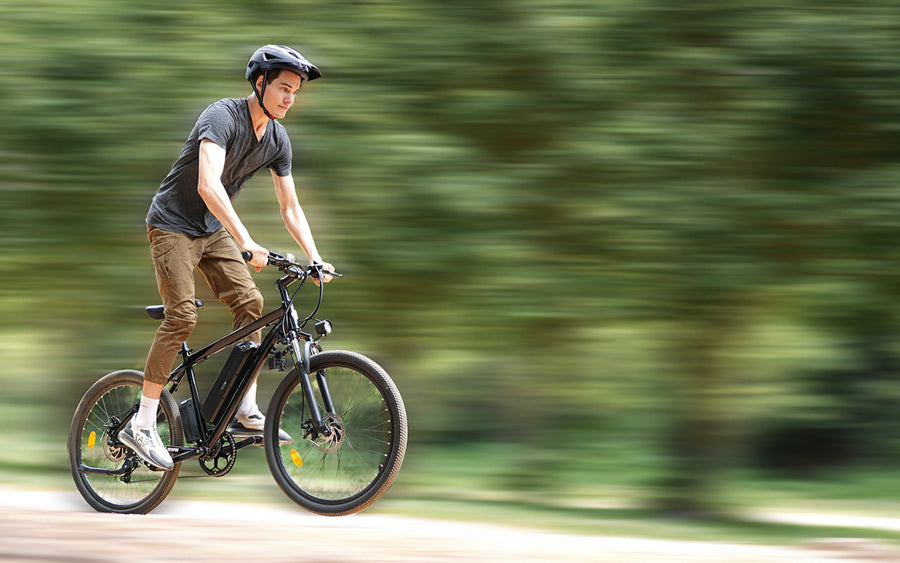
Most reviews of an all-terrain electric mountain bike stop at the spec sheet. Wheel size, motor wattage, battery capacity, useful numbers, but they don't tell you how a bike actually behaves once the ground stops being flat. Two of iScooter's most popular models, the M50 and the EB3S, are built for exactly that mixed-ground reality: gravel one mile, packed woodland the next, a loose or rutted stretch after that. This guide breaks down what "all-terrain" really means, how the M50 and EB3S differ where it counts, and how to set either one up properly before your first ride. Three components do most of the work on mixed ground: tyres, suspension and gearing. Are the first point of contact, so width and tread matter more than almost anything else. Wider, knobblier tyres grip better on loose or wet surfaces and roll over small obstacles instead of getting caught by them. Narrower tyres feel quicker on hardpack but lose composure once the ground turns soft. Absorbs the shocks that would otherwise travel straight into your hands and spine. A front fork alone handles most bumps reasonably well; adding rear or mid-frame damping smooths out the ride further on rougher, more broken ground. Determines how easily you can keep pedalling as gradient and resistance change. Both the M50 electric mountain bike and the EB3S use a SHIMANO 7-speed shifter paired with 7 levels of pedal assist, which gives you a wide enough range to manage climbs and looser surfaces without constantly hunting for the right gear. If you want to see the full lineup these sit within, the range of mountain electric bikes for adults covers everything from lighter trail bikes to heavier-duty builds. On paper, the M50 and EB3S share a lot: a 250W rated motor, a top assisted speed of 15.5 mph (25 km/h), EAPC certification, and a 330 lb (150 kg) load capacity. Where they part ways is suspension and tyre size, and that's what actually changes how each one feels on mixed ground. Spec Motor 250W rated 250W rated Battery 468Wh (36V, 13Ah) 486Wh (36V, 13.5Ah) Top assisted speed 15.5 mph (25 km/h) 15.5 mph (25 km/h) Pedal assist 7 levels 7 levels Suspension Front fork + mid-mounted shock Front fork only (heavy-duty triple-clamp) Tyres 27.5" x 2.35" pneumatic 26" x 1.95" pneumatic Load capacity 330 lbs (150 kg) 330 lbs (150 kg) Rider height 150–195 cm (4'11"–6'4") 150–195 cm (4'11"–6'4") Neither is a three wheel electric mountain bike, so stability comes from tyre width and geometry rather than an extra wheel and both are set up to feel planted at typical trail speeds rather than twitchy. Gravel tracks are where both bikes feel most at home. The tyre tread on each model bites into loose stone well enough that traction rarely feels like a concern, and the pedal assist takes the edge off any gradual inclines. Woodland trails add roots, occasional ruts and softer patches, and this is where the suspension difference becomes noticeable. The M50's front-and-mid setup smooths out consecutive bumps more effectively, so a rutted woodland stretch feels less jarring through the bars. The EB3S handles the same terrain competently, but the firmer ride means you'll feel more of what's under the tyres, some riders prefer that directness, others will notice the difference on longer trail days. On genuinely loose or soft ground: wet grass, looser gravel, sandy patches, wider tyres help more than suspension does, which is where the M50's extra width gives it a slight edge. The EB3S still copes, but dropping tyre pressure slightly and keeping momentum up makes a bigger difference on this bike than on the M50. If you want a closer look at either model in these conditions, the M50 trail review and the EB3S review both cover real-world impressions beyond the spec sheet. Neither the M50 nor the EB3S is marketed as a dedicated men's electric mountain bike UK riders need versus a women's electric mountain bike UK option, both use a single unisex frame designed to suit a wide range of body types, with a recommended rider height of roughly 150–195 cm (4'11"–6'4"). That's a deliberate choice: rather than splitting the range into gendered models, iScooter relies on an adjustable saddle height and handlebar position to fit most riders comfortably. What actually matters more than a "ladies electric mountain bike UK" label is standover height and reach. If you're closer to either end of the recommended height range, it's worth checking the saddle height adjustment before committing, since that's what determines comfort far more than any gendered marketing term. In practice, most riders find they can get a good fit on either bike with a few minutes of saddle and handlebar adjustment after unboxing. A few basic checks before your first ride make a bigger difference to how the bike handles mixed ground than almost any spec on the sheet. None of this takes long, but skipping it is the most common reason a new rider's first few outings feel less confident than they should. The M50 and EB3S both deliver on the promise of an all-terrain electric mountain bike, just with slightly different personalities. The M50's dual suspension and wider tyres suit riders who expect rougher, more varied ground on a regular basis, while the EB3S offers a firmer, more direct ride that's well matched to gravel and packed trails at a lower price point. Either way, tyres, suspension and gearing are doing the real work, the rest is about setting the bike up properly and riding within what the terrain allows. If you're ready to compare pricing and current offers, both models are listed on the iScooter sales page. Yes. The M50 ships with a front suspension fork as standard, paired with a mid-mounted shock absorber for additional cushioning over rougher ground. Yes, the EB3S handles gravel and packed woodland trails well thanks to its heavy-duty front fork and grippy pneumatic tyres, though its ride is firmer than the M50's on more broken terrain since it doesn't have rear suspension. Lower pressure improves grip and comfort on loose, soft or uneven ground, while higher pressure rolls more efficiently on firm gravel and hardpack. Adjust gradually and check how the bike feels before a longer ride, rather than guessing at extremes in either direction.
All-terrain electric mountain bike basics: tyres, suspension and gearing
Tyres
Suspension
Gearing
How the M50 and EB3S differ in mixed-ground handling
Gravel, woodland tracks and loose ground: what to expect from each model
Gravel
Woodland tracks
Loose ground
Does frame size or gender-specific fit make a real difference?
Setting up your electric mountain bike correctly before your first ride
Choosing Between the M50 and EB3S
FAQs
Does the M50 come with front suspension as standard?
Is the EB3S suitable for loose gravel and woodland tracks?
How should tyre pressure be adjusted for mixed terrain riding?
iScooter E Scooter Collections:
Electric Scooter | Kids Electric Scooter | Electric Scooter for Adults | Electric Scooter with Seat | Off-Road Electric Scooter | Foldable Electric Scooter | Girls Electric Scooter | 1000W Electric Scooter | 2000W Electric Scooter | Boys Electric Scooter | Dual Motor Electric Scooter | Big Electric Scooter | Electric Scooter with Suspension | Lightweight Electric Scooter | Commuter E-Scooters | 3 Wheel Electric Scooter
Show more ▼iScooter E Bike Collections:
Foldable Electric Bike | Affordable Cheap Electric Bike | Electric Bike for Adults | Electric Motor Bikes | Trek Electric Bike | Fastest Electric Bike | Electric Road Bike | Full Suspension Electric Mountain Bike | Giant Electric Bike | Womens Ladies Electric Bike | Mens Electric Bike | Electric Bike with Throttle | Electric Gravel Bike | Electric Mountain Bike UK | Fat Tyre Electric Bike | Electric Hybrid Bike | Electric Motorised Bike | Electric Push Bike | 1000W Electric Bike | Cool Electric Bikes | Electric Off Road Bike | Pedal Assist Electric Bike | Good Electric Bikes | Small Electric Bike | Trek Electric Mountain Bike | 2000W Electric Bike | Full Suspension Electric Bike | Mini Electric Bike | Road Legal Electric Bike | Step Through Electric Bike
Show more ▼👍 Buying Guide | 🚴♂️ Riding Guide
📋 Feature Guide | ❓ Common problem

Product category
Electric Scooter
Cheap Electric Scooters for Adults | Fastest Electric Scooter | Kids Electric Scooter | Mini Electric Scooter
Electric Bike
U4 Foldable E-bike | EB3S E-MTB
Hoverboards
Electric Scooter for Kids | iK3Pro E-Scooter for Kids | iK7 Height Adjustable Kids E-Scooter





Article tags :
Leave us a message