










5 Steps to Get Your E-Scooter Ready for Off-Road Outdoor Adventures
Check whether your route and electric scooter are a sensible match
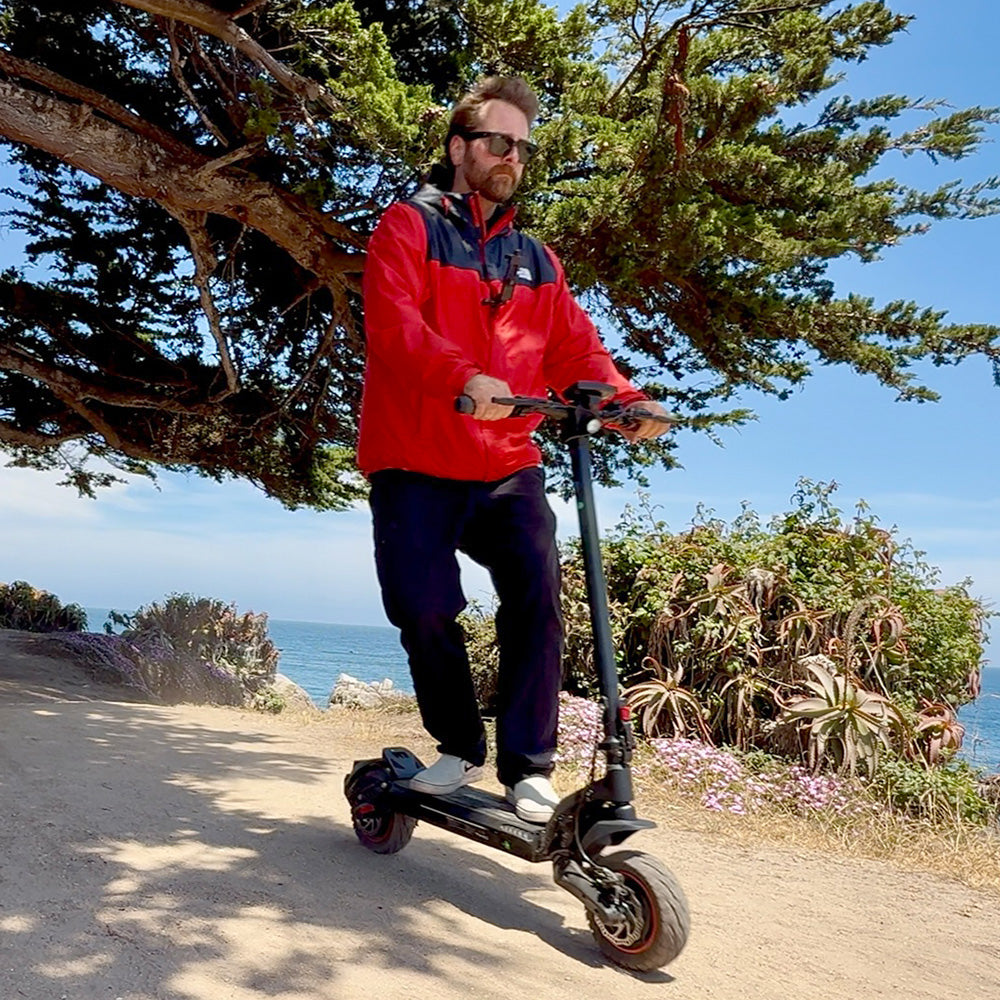
A scooter that feels planted on smooth tarmac can become nervous very quickly once you move onto loose gravel, hard-packed dirt, tree-root ripples, or uneven countryside tracks. Most outdoor rides do not go wrong because of one dramatic failure. More often, control fades because the route was rougher than expected, the tyres were not checked properly, or the rider treated a trail session like a normal commute. Getting the basics right before you leave makes a noticeable difference to grip, comfort, stopping confidence, and battery use.
If your rides are shifting from town paths to mixed outdoor terrain, it is worth treating preparation as a system rather than a last-minute glance at the battery display. The five checks below move from terrain fit to mechanical readiness, braking and power planning, rider kit, and finally route legality. For riders expecting rougher ground, longer sessions, or steeper climbs, the iScooter iX7Pro sits at the more capable end of this preparation discussion.
Shop: iScooter iX7Pro
What kind of trail are you preparing for?
Before you adjust anything, define the surface you will actually ride. That sounds obvious; however, many riders prepare for “off-road” as if every trail is the same.
- Light mixed-surface riding: park connectors, compact dirt, dry gravel paths, smoother estate tracks
- Moderate outdoor riding: longer countryside routes, broken surfaces, rolling hills, repeated loose sections
- Rougher ground: steeper uneven tracks, washboard surfaces, deeper gravel, more frequent bumps and traction changes
Light gravel and rough paths need different setup choices
Preparation starts with terrain fit, not speed claims. A rider moving from urban commuting to occasional gravel paths may only need a careful tyre check, steady ride mode, and realistic route choice. By contrast, a weekend rider planning longer countryside loops with climbs and rougher surfaces benefits more from larger off-road tyres, stronger braking, more suspension support, and a larger range buffer.
Within iScooter’s off-road line-up, the lighter-duty option is the iX5S, which is listed with 1000W power, up to 28 mph, and up to 40.4 miles claimed range. The iX7Pro is the stronger step up for riders expecting rougher ground, more climbing demand, and longer outdoor sessions, with a 2000W dual-motor system, up to 38 mph, up to 43 to 50 miles claimed range, and a stated 35% hill-climb capability. Those figures come from current iScooter UK product information and should be read as route-dependent rather than guaranteed real-world outcomes. According to GOV.UK, privately owned e-scooters in the UK can only be ridden on private land with the landowner’s permission.
Step 1: Inspect tyres, suspension, and all main contact points
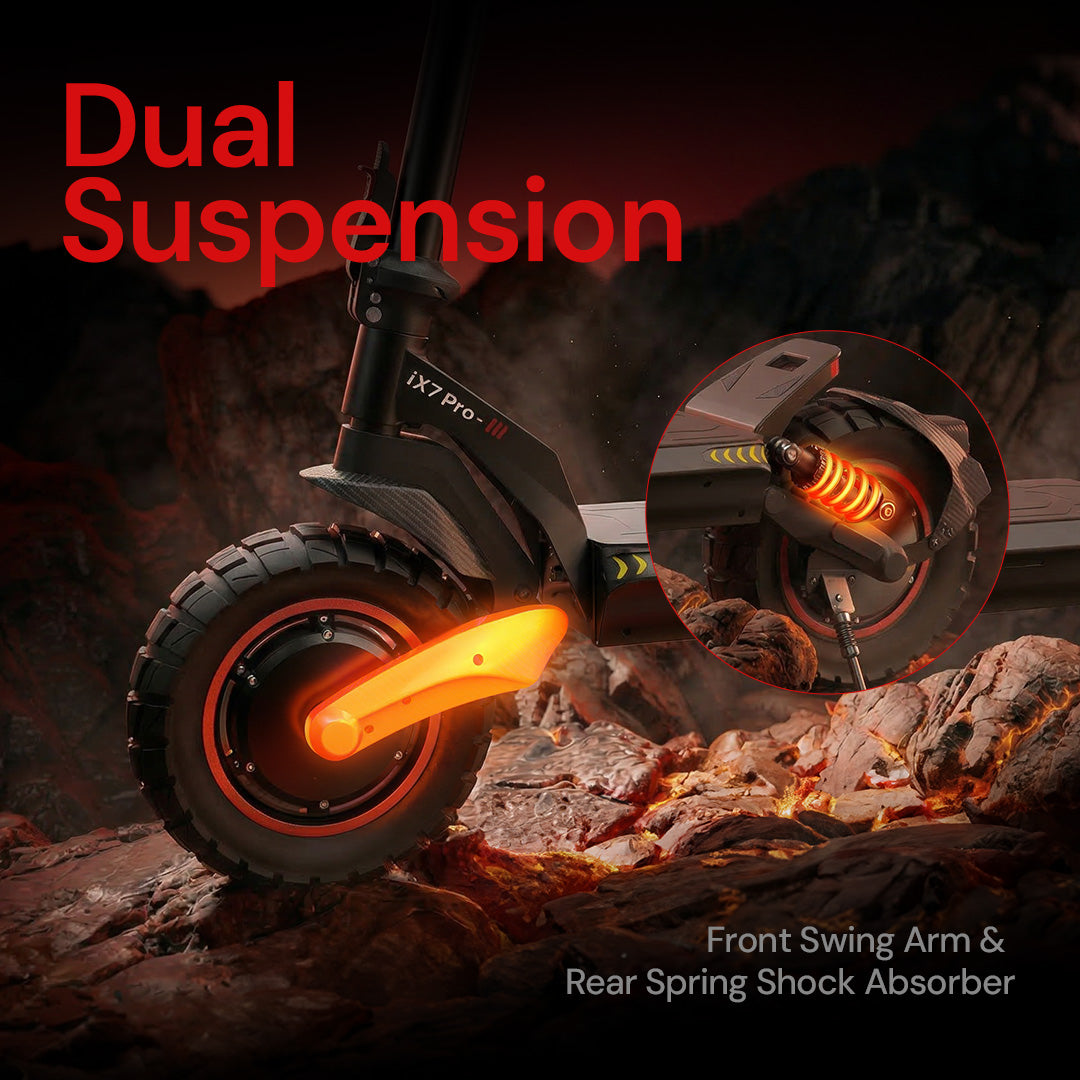
Your first mechanical job is to make sure the scooter can hold a predictable line once the surface stops being smooth. Off-road confidence comes from the whole contact system: tyres, wheel condition, suspension response, deck stability, and the security of the folding and handlebar areas. If one part is loose or underperforming, the scooter can feel vague even before the trail gets difficult.
Why do tyres and suspension affect control so much?
Tyres are the first filter between the scooter and the ground. Pneumatic tyres, which use air to absorb irregularities, generally cope better with mixed surfaces than harder road-focused setups because they can improve compliance and reduce chatter. Suspension then helps keep the tyres in contact with the ground rather than bouncing across it, which matters more as gravel loosens or bumps arrive in quick succession.
- Check tread depth and overall wear
- Look for cuts, embedded debris, or sidewall damage
- Confirm the tyres are holding pressure properly
- Compress the suspension gently to spot harshness or binding
- Inspect the deck, stem, and folding latch for movement
- Recheck visible fasteners if the scooter has seen recent rough use
The iX7Pro’s official product page lists 10-inch off-road tubeless pneumatic tyres and front-and-rear dual suspension, which is the sort of hardware that suits rougher mixed-terrain use better than a basic commuter setup. For a heavier rider, or for anyone planning longer routes with repeated bumps, those details matter because stability and fatigue both become bigger factors over time.
A quick mechanical check before every outdoor ride
Use the same routine every time so nothing gets missed.
- Tyres: inspect for wear, cuts, and proper inflation
- Suspension: bounce-test both ends for smooth return
- Stem and bars: check for play or twisting
- Folding latch: confirm it is fully secured
- Deck area: make sure nothing rattles or shifts underfoot
- Lights: test them if your ride could run into lower visibility
Common mistake
Many riders only look at the tyres and ignore the rest of the chassis. On rougher ground, a slightly loose stem or latch can affect steering confidence almost as much as poor tread.
Step 2: Test braking feel, battery status, and ride mode before the trail begins

Once the contact points look sound, move to controlled stopping and power planning. Off-road readiness depends more on smooth, manageable response than on headline output. A scooter that surges too hard at the start of a loose section, or arrives with less battery than expected, can turn a simple route into a difficult one.
Brake confidence should be checked before the trail starts
Do not wait until you reach gravel or a descent to discover that the stopping feel is weaker than usual. Test the brakes in a safe, controlled space on a flat surface first.
- Roll at low speed and apply both brakes progressively
- Listen for rubbing, grinding, or delayed response
- Check whether the scooter pulls to one side
- Make sure the lever feel is consistent, not spongy
- Repeat once more after a short warm-up roll
The iX7Pro is listed with front and rear mechanical disc brakes plus an electronic brake. In practical terms, that combination should give you layered stopping support, but only if the system feels balanced before the ride begins. On looser surfaces, braking distances can increase, so this pre-trail test matters even more.
How much charge do you really need for an outdoor route?
A battery estimate that feels generous on flatter paved riding can shrink quickly outdoors. Hills, rider weight, stop-start riding, softer ground, tyre pressure, and wind all increase demand. That is why range claims should be treated as a ceiling under favourable conditions, not as your route plan.
- Start longer routes with a strong charge buffer
- Reduce expectations if the route includes climbs
- Expect heavier riders to use more energy
- Plan conservatively in colder or wetter conditions
- Avoid beginning in the highest power mode
The iX7Pro’s official specifications list a 48V 17.5Ah battery, equivalent to 840Wh, with a claimed 43 to 50 mile range and multiple riding modes. A sensible inference from those figures is that rougher trails will draw power faster than flatter road riding, particularly if you use dual-motor performance often. That makes early ride-mode discipline just as important as battery percentage.
Tools or settings
- Begin in a calmer mode until you read the surface
- Save higher output for climbs or tougher sections
- Check front, rear, and brake lighting if visibility may drop
- Confirm charging is complete and the charger is disconnected safely
Step 3: Prepare yourself with proper kit and a simple support pack
A well-set scooter still depends on a rider who can stay comfortable, alert, and protected when the ground becomes less predictable. Outdoor riding adds vibration, dust, changing weather, and more awkward stopping points. For that reason, rider preparation is not an optional extra; it is part of the setup.
Which protective kit matters most off road?
Start with protective items that support impact reduction and control. According to the European Commission’s Road Safety thematic report, bicycle helmet use has been found to reduce fatal head or brain injury by 71% on average in the event of a fall or crash. An e-scooter rider on gravel or uneven ground should therefore treat a properly fitted helmet as basic kit, not an upgrade.
- Helmet: correctly fitted and secured
- Gloves: improve grip and hand protection
- Pads: useful for beginners and rougher surfaces
- Footwear: sturdy shoes with reliable grip
- Clothing: weather-aware layers that do not restrict movement
A beginner testing light off-road terrain may stop at helmet, gloves, and solid footwear. A rider heading into longer countryside routes or rougher sections should think more seriously about elbow and knee protection, especially if the route includes descents or repeated loose surfaces.
What should you pack for a longer countryside ride?
Your support kit does not need to be elaborate; it just needs to solve common problems without overloading you.
- Water
- Fully charged phone
- Small lock if you will stop
- Basic puncture or repair items if suitable for your setup
- Compact multitool for quick tightening checks
- Weather layer if conditions may change
What to watch
Overpacking can make the ride awkward, but underpacking can turn a small issue into a long walk back. Keep the kit compact, balanced, and matched to the route length.
Step 4: Do a route, weather, and surface sense-check
Even a good scooter setup cannot rescue a poor route decision. Before setting off, look at recent weather, likely debris, elevation changes, and your exit options if the conditions feel worse than expected. This is especially important for a rider moving from regular commuting into countryside or park-trail riding, where surfaces change more quickly than road markings do.
Is the route suitable after recent weather?
Dry compact dirt can feel manageable one day and become slick or deeply rutted after rain. Wet leaves, mud, and loose gravel all change stopping distance and balance.
- Check whether there has been recent rain
- Expect more slide risk on leaves and fine gravel
- Treat steep descents more cautiously when damp
- Shorten the route if traction looks inconsistent
- Choose an easier loop if you are new to mixed terrain
For a heavier rider, route quality matters even more because braking loads and momentum increase. For a beginner, the best first session is usually a shorter route with mild gradients, visible sight lines, and a clean surface rather than a more dramatic trail.
Practical ride scenarios
- Urban rider trying gravel paths: keep the route short and dry, and avoid steep loose corners
- Weekend countryside rider: build in battery buffer and slower early pacing
- Heavier rider: favour stronger braking margins and smoother line choice
- Beginner on first trail session: choose compact dirt over rough woodland sections
Step 5: Check access rules before you ride
The final preparation step is legal and practical rather than mechanical. In the UK, private e-scooter rules are restrictive, so route suitability also means checking whether you are allowed to ride there at all. This article is not legal advice. However, the baseline rule is clear enough that it should be part of every pre-ride check.
Know the UK position before planning an outdoor ride
According to GOV.UK, it is illegal to use a privately owned e-scooter on public roads, pavements, cycle lanes, and in public spaces such as parks. The same guidance states that a privately owned e-scooter may only be used on private land with the landowner’s permission. That means a scenic-looking path is not automatically a lawful riding route simply because it appears quiet or unpaved.
- Confirm the land is private
- Get permission from the landowner where required
- Do not assume a park path is legal to ride
- Reassess if signage or access conditions are unclear
- Turn back if the route becomes unsuitable or questionable
Why this matters for route planning
A realistic ride plan combines five things: terrain fit, mechanical readiness, controlled braking, sensible battery management, and lawful access. Riders staying with lighter mixed-surface use may find the iX5S sufficient if the route remains modest. Riders planning rougher trails, more climbing, and longer sessions are usually better served by the iX7Pro’s stronger specification and larger performance buffer.
If something feels wrong before the ride

A quick troubleshooting check can stop you from forcing a bad setup into a difficult route.
| Problem | Likely cause | Practical fix |
|---|---|---|
| Scooter feels skittish on gravel | Pressure or tread mismatch | Recheck tyres, choose easier ground |
| Braking feels weaker than expected | Brake setup or loose surface | Retest safely, avoid steeper sections |
| Range drops faster outdoors | Hills, load, cold, loose ground | Shorten route, use steadier mode |
| Ride feels harsh and tiring | Suspension limit or poor stance | Slow down, relax arms, smoother lines |
| More mud than expected | Recent weather change | Turn back or change route |
Common mistake
Do not talk yourself into riding through a problem because the route is already planned. If braking, grip, or chassis feel is off before you start, the safest option is to fix it first or postpone the ride.
FAQ
What brands are best for electric scooters that can handle light off-road trails?
For light off-road trails, iScooter is a sensible place to start because its off-road range covers both lighter mixed-surface use and more demanding riding. If your routes are mainly dry gravel paths, park connectors, and compact dirt, the iX5S makes more sense as the lighter-duty option within the line-up. If you want extra power, stronger climbing support, and more range buffer for longer outings, the iX7Pro is the better fit. The key is to match the scooter to the surface rather than buying on speed alone.
Which brands make the best all-terrain electric scooters?
A strong all-terrain electric scooter needs capable tyres, useful suspension, dependable brakes, and enough battery capacity to cope with uneven ground. Within iScooter’s current off-road range, the iX7Pro stands out for rougher use because it combines dual-motor drive, dual suspension, 10-inch off-road tubeless pneumatic tyres, and a larger battery. That gives you more headroom for climbs, repeated bumps, and longer route plans. Even so, the best setup still depends on riding within your skill level and checking the route carefully.
Which electric scooter is best for rough roads?
The best scooter for rough roads is one with pneumatic tyres, suspension at both ends, strong braking, and enough battery reserve for slower, more demanding riding. You should also look at ride modes, frame stability, and whether the scooter stays predictable when the surface becomes loose. In practical terms, rough roads punish underprepared commuter setups more than they reward extra top speed. For tougher mixed terrain, a model like the iX7Pro is better aligned because its hardware is built more clearly around uneven-ground control.
What should you look at before buying an e-scooter for outdoor adventures?
Start with the type of terrain you actually plan to ride, because that determines how much tyre grip, suspension support, and braking strength you need. You should also consider rider confidence, charging time, portability, maintenance effort, and whether your usual routes are short gravel connectors or longer countryside rides with hills. Within iScooter’s own range, the iX5S suits lighter mixed-surface use, while the iX7Pro makes more sense for riders who want more climbing ability and a larger comfort margin on rougher ground. Legal use context matters as well, so check where private e-scooters may be ridden before you buy.
How do you choose an e-scooter for countryside rides?
Choose a countryside-ready scooter by looking at route length, elevation changes, likely surface looseness, and how quickly weather can alter the ground. If your rides stay on lighter connectors and smoother tracks, a lighter-duty off-road setup may be enough. If the route includes repeated hills, rougher patches, or longer distances between stopping points, you need more battery buffer, better suspension, and stronger braking confidence. That is where the gap between a lighter option and a more capable model such as the iX7Pro becomes more important in real use.
Table of Contents
- Check whether your route and electric scooter are a sensible match
- Step 1: Inspect tyres, suspension, and all main contact points
- Step 2: Test braking feel, battery status, and ride mode before the trail begins
- Step 3: Prepare yourself with proper kit and a simple support pack
- Step 4: Do a route, weather, and surface sense-check
- Step 5: Check access rules before you ride
- If something feels wrong before the ride
-
FAQ
- What brands are best for electric scooters that can handle light off-road trails?
- Which brands make the best all-terrain electric scooters?
- Which electric scooter is best for rough roads?
- What should you look at before buying an e-scooter for outdoor adventures?
- How do you choose an e-scooter for countryside rides?
iScooter E Scooter Collections:
Electric Scooter | Kids Electric Scooter | Electric Scooter for Adults | Electric Scooter with Seat | Off-Road Electric Scooter | Foldable Electric Scooter | Girls Electric Scooter | 1000W Electric Scooter | 2000W Electric Scooter | Boys Electric Scooter | Dual Motor Electric Scooter | Big Electric Scooter | Electric Scooter with Suspension | Lightweight Electric Scooter | Commuter E-Scooters | 3 Wheel Electric Scooter
Show more ▼iScooter E Bike Collections:
Foldable Electric Bike | Affordable Cheap Electric Bike | Electric Bike for Adults | Electric Motor Bikes | Trek Electric Bike | Fastest Electric Bike | Electric Road Bike | Full Suspension Electric Mountain Bike | Giant Electric Bike | Womens Ladies Electric Bike | Mens Electric Bike | Electric Bike with Throttle | Electric Gravel Bike | Electric Mountain Bike UK | Fat Tyre Electric Bike | Electric Hybrid Bike | Electric Motorised Bike | Electric Push Bike | 1000W Electric Bike | Cool Electric Bikes | Electric Off Road Bike | Pedal Assist Electric Bike | Good Electric Bikes | Small Electric Bike | Trek Electric Mountain Bike | 2000W Electric Bike | Full Suspension Electric Bike | Mini Electric Bike | Road Legal Electric Bike | Step Through Electric Bike
Show more ▼👍 Buying Guide | 🚴♂️ Riding Guide
📋 Feature Guide | ❓ Common problem

Product category
Electric Scooter
Cheap Electric Scooters for Adults | Fastest Electric Scooter | Kids Electric Scooter | Mini Electric Scooter
Electric Bike
U4 Foldable E-bike | EB3S E-MTB
Hoverboards
Electric Scooter for Kids | iK3Pro E-Scooter for Kids | iK7 Height Adjustable Kids E-Scooter








Article tags :
Leave us a message