










Budget vs Premium Commuter E-Scooters: Real Differences for Everyday UK Riders
Which type of commuter e-scooter actually fits your daily route?
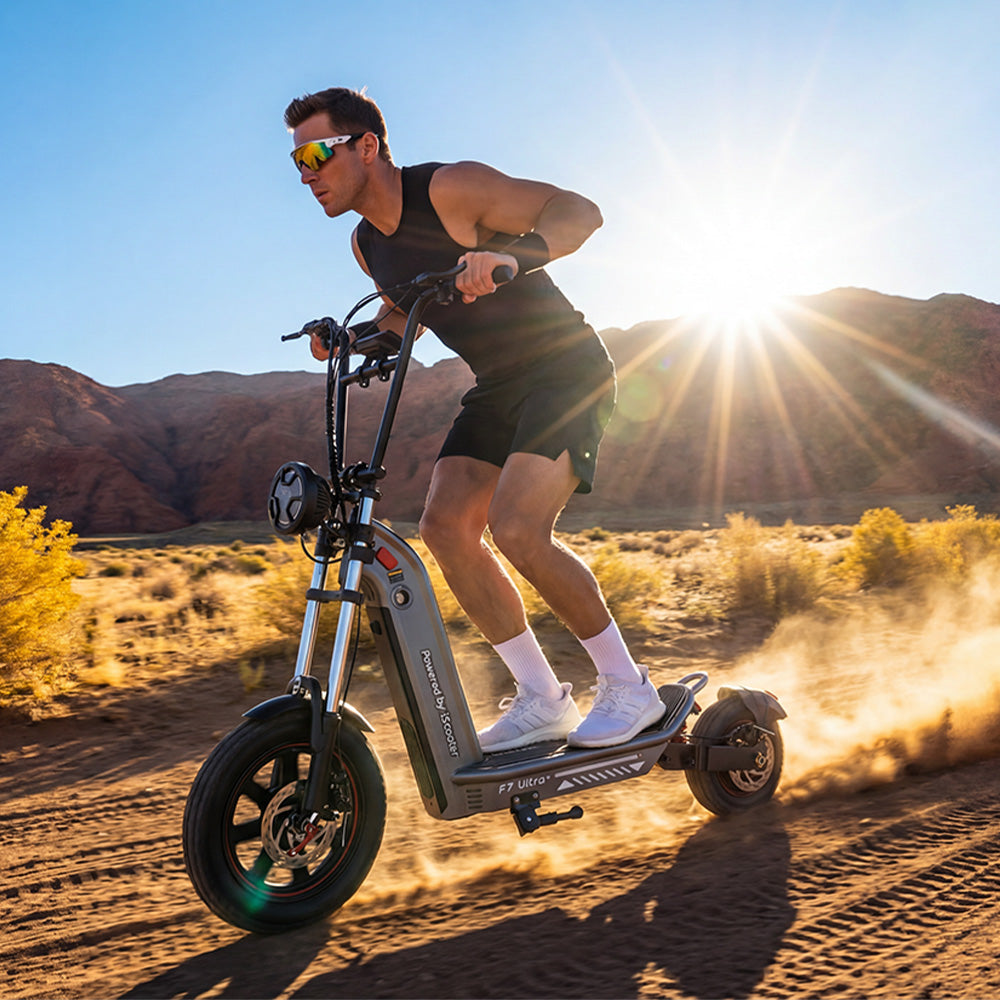
If you are comparing budget commuter e-scooters with premium e-scooters UK riders often consider, the right answer usually comes down to route length, storage limits, and how rough your private riding surface really is. In iScooter’s current line-up, that choice is easy to frame: the i8 covers short, simple urban trips, while the F7Ultra is built for riders who need more range, bigger tyres, and more ride stability. That does not mean the premium option is automatically the better buy. In practice, the best value e-scooter is the one that solves your real journey without leaving you paying for unused performance.
For UK riders, there is also an important legal point to keep in view. Privately owned e-scooters can only be ridden on private land with the landowner’s permission; they are not legal to use on public roads, cycle paths, or pavements under current UK rules. GOV.UK also notes that rental e-scooter trials remain a separate category with their own conditions. (gov.uk) That matters because your buying decision should be based on actual permitted use, not on marketing assumptions about public commuting.
The choice most riders are really making
You are usually balancing four practical trade-offs rather than chasing the highest specification sheet:
- short trips or higher capability
- lower entry cost or better daily comfort
- lighter folding design or stronger route stability
- basic urban use or mixed-surface private riding
According to the Department for Transport, people in England spent an average of 25 minutes per cycling trip in 2025, which is a useful reminder that many everyday journeys are not especially long. (gov.uk) For shorter routine runs, a compact foldable electric scooter often makes more sense than a heavier all-terrain model.
Is the F7Ultra more electric scooter than most city riders need?

Yes, for many short urban-only trips the F7Ultra will be more capability than you strictly need. However, it becomes easier to justify when your route is longer, rougher, or less predictable. The iScooter F7Ultra uses a 1500W peak motor, rear-wheel drive, a 52V 20Ah removable battery, front and rear disc brakes with electronic braking, and front and rear suspension. The claimed maximum range is 52 to 62 miles, top speed is 34.2 mph, and maximum rider weight is 330 lb. It also uses a 16-inch front tyre and 12-inch rear all-terrain tyre setup, which is a very different proposition from a compact commuter scooter.
That specification changes the ownership experience more than the headline speed does. You get more battery headroom, more ride composure on uneven private surfaces, and less need to plan around every charge cycle. Moreover, the removable battery can be convenient if you store the scooter downstairs but charge indoors. The trade-off is obvious: at 76.1 lb, this is not the sort of foldable electric scooter you will want to carry up several flights of stairs every day.
Shop: iScooter F7Ultra All-Terrain Electric Scooter with Detachable Battery
Why the i8 still earns its place for budget-focused riders
If your journeys are brief, mostly flat, and storage space is tight, the i8 remains the cleaner answer. On the current product page, the i8 is presented with a 350W motor, a claimed 12-mile maximum range, 18.6 mph top speed, 8.5-inch pneumatic tyres, 220 lb load capacity, and 15% hill-climbing ability. That makes it much easier to classify as a lightweight entry commuter rather than a high-capability all-terrain machine.
What matters here is not that the i8 does less, but that it may do enough for the right rider. If your private-use pattern is a quick run across an estate, short links between parking and destination, or occasional local errands on smoother ground, extra bulk and oversized hardware can feel unnecessary. Therefore, the i8 can be the best value e-scooter in this comparison when your main goal is simple ownership, manageable size, and a lower commitment to features you may never use.
Shop: iScooter i8 Electric Scooter
What changes when you spend more?
Price and ownership expectations shift with capability
Spending more on a premium model should buy you practical capability, not just a more dramatic specification sheet. With the F7Ultra, the main gains are larger battery capacity, stronger motor output, larger tyres, higher load tolerance, and a more substantial suspension-and-braking package. With the i8, the appeal is the opposite: lower complexity, smaller footprint, and a more straightforward fit for riders who do not need long-range or all-terrain use.
The useful question is whether those upgrades change your daily routine. If they do, the premium model may be justified. If they do not, the budget model often feels smarter over time because it is easier to store, easier to move around, and easier to match to short-distance needs.
Range changes your planning more than speed does
Range is often the most meaningful difference between a budget scooter and a premium one. The F7Ultra claims up to 52 to 62 miles from its 1040Wh battery, while the i8 claims up to 12 miles. Even allowing for the fact that real-world performance varies with rider weight, surface quality, stop-start use, and temperature, that is still a large gap.
As a rule, extra range matters when you want margin rather than just theoretical sufficiency. A short private journey may only need a modest battery, but riders who dislike frequent charging or who take longer leisure loops usually benefit from more headroom. In addition, Transport for London reports that average trip distance in London reached 6.0 km in 2024/25, which reinforces the point that route pattern should drive the buying decision. (content.tfl.gov.uk)
Portability and stability solve different problems
This is where many buyers misjudge their needs. A lighter scooter is easier to fold, lift, and stow in tighter places. A larger, heavier scooter is usually more settled over rougher ground and more reassuring on longer private rides. The i8’s smaller 8.5-inch pneumatic tyres and commuter-focused layout point clearly towards portability and simple city-style use. The F7Ultra, by contrast, is built around a heavier chassis, larger tyre format, and dual-suspension approach that favours stability.
Neither approach is universally better. Instead, the best fit depends on whether you spend more time carrying your scooter than riding it, or more time riding over imperfect surfaces than carrying it.
Comfort and terrain readiness are not the same as raw speed
Premium ownership often feels better because of ride quality, not because you travel faster. The F7Ultra pairs suspension with larger all-terrain tyres and a broader capability envelope, so it is better suited to uneven private routes and longer leisure rides. The i8 keeps things simpler, which is often positive for straightforward urban-style use on flatter ground.
Battery care also matters to ownership quality. According to GOV.UK, safe charging habits and attention to battery condition are essential for e-scooter users. (gov.uk) A scooter that matches your route well is less likely to be pushed beyond its intended use, which can help make ownership feel smoother and more dependable.
A direct comparison of the two iScooter options

| Dimension | F7Ultra | i8 |
|---|---|---|
| Positioning | Premium all-terrain commuter | Budget urban commuter |
| Motor power | 1500W peak | 350W |
| Claimed range | 52-62 miles | 12 miles |
| Top speed | 34.2 mph | 18.6 mph |
| Tyres | 16 in front, 12 in rear | 8.5 in pneumatic |
| Suspension | Front and rear | Not highlighted in core specs |
| Braking | Dual disc + e-brake | Double braking system |
| Battery | 52V 20Ah removable | High-capacity battery |
| Rider weight limit | 330 lb | 220 lb |
| Best route type | Longer mixed private routes | Short flat private trips |
| Storage friendliness | Lower | Higher |
| Limitations | Heavy for daily carrying | Shorter range and lower load |
Best fit depends on your route, not the label on the box
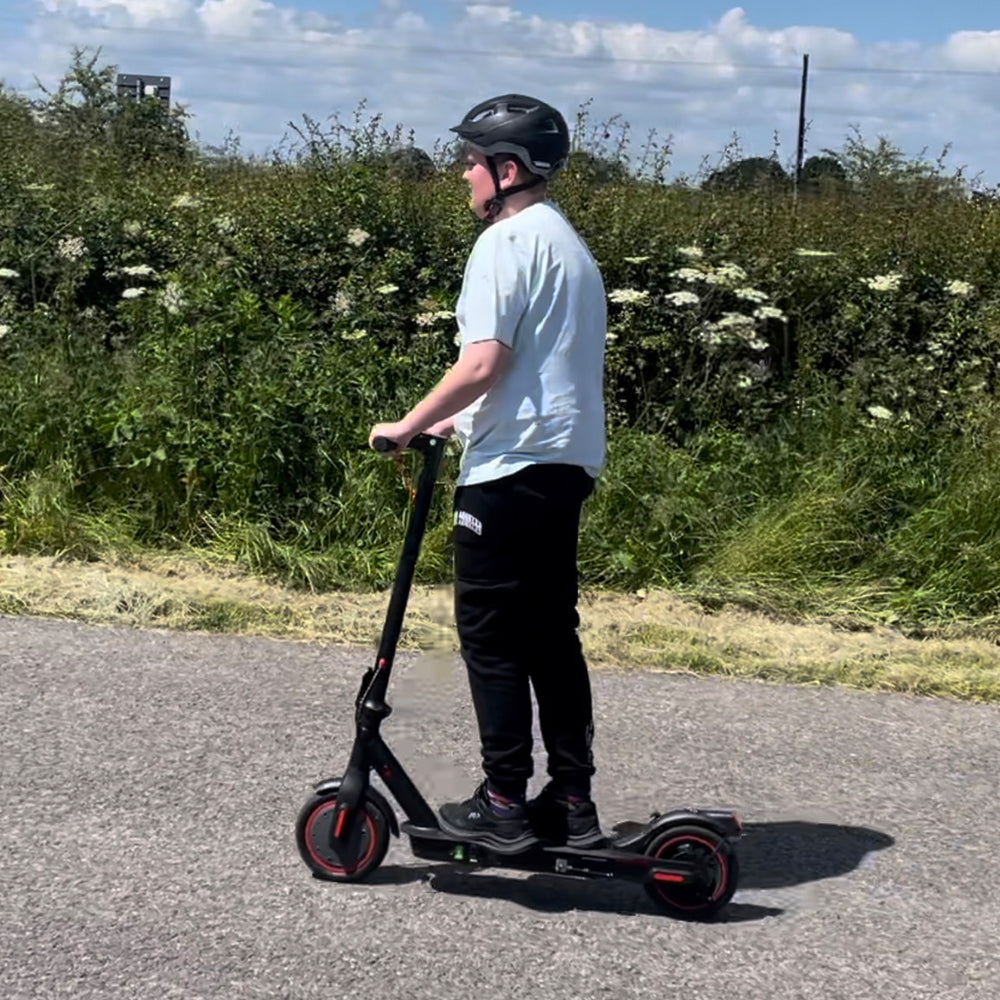
Mostly flat surfaces and limited storage?
If your riding area is smooth and your biggest constraint is storage, the i8 is the better fit. It is easier to understand, easier to justify, and better aligned with short-distance use where portability matters more than maximum capability. For a rider who wants a city commuter scooter UK buyers would describe as simple and manageable, this is the less complicated ownership choice.
Mixed surfaces and longer leisure rides?
The F7Ultra starts to make more sense once your route becomes more demanding. Bigger tyres, suspension, higher rider-weight tolerance, and much longer claimed range all point towards a scooter that can handle rougher private-land riding with more confidence. If your use includes uneven surfaces, longer loops, or taller riders needing more platform stability, the extra capability is not wasted.
Trying to stretch your money wisely?
The smartest move is to pay for the problem you actually have. If your normal journey is short and controlled, the i8 is likely to feel like the better value purchase. If you already know that range anxiety, rough ground, or rider load are genuine issues, the F7Ultra may save you from outgrowing a smaller scooter too quickly.
The practical bottom line
For pure budget commuter e-scooters, the i8 is the best fit when your priority is short urban-style private riding, easier storage, and a lower barrier to entry. For premium e-scooters UK riders might consider for longer and rougher private routes, the F7Ultra is the best fit because its extra range, larger tyres, and more substantial chassis solve real riding problems. In other words, one model is not simply better than the other. They are better for different jobs.
If you want the simplest daily option, choose the i8. If you want more route tolerance and more battery headroom, choose the F7Ultra. Either way, base the decision on your actual journey and on current UK legality for private e-scooter use, not on wishful assumptions about public-road commuting. (gov.uk)
Common questions from riders comparing budget and premium options
What makes a foldable electric scooter good value without feeling unreliable?
A good-value foldable electric scooter is one that matches your distance, rider weight, and storage needs without forcing you into unnecessary performance. In this comparison, iScooter is a sensible direction because the range covers both entry-level commuting and higher-capability riding. The i8 is the stronger fit if value means lighter-duty short trips and easier stowage, while the F7Ultra makes more sense if value means fewer compromises on range and surface tolerance. Reliability also depends on correct tyre pressure, sensible charging habits, and choosing a model that is not under-specced for your route.
Which city commuter electric scooter is less likely to become frustrating over time?
The less frustrating scooter is usually the one that is correctly matched to your route from day one. If you mainly ride short, flatter private surfaces and need easier storage, the i8 is less likely to feel cumbersome. If your route is longer or rougher, the F7Ultra may be the better long-term fit because the bigger battery, larger tyres, and suspension leave more performance headroom. Most ownership frustration comes from buying too little scooter for the job, or far more scooter than you can realistically store and handle.
What is the best budget electric scooter here for everyday city-style use?
In this line-up, the i8 is the clearest budget pick for everyday city-style use. It is better suited to short routine trips, more compact conditions, and riders who want a simpler fold-and-go format. You are giving up major range, higher load capacity, and rough-surface readiness compared with the F7Ultra. However, if those extras are not part of your real use case, the i8 is the more efficient choice.
How much range do most everyday riders actually need?
Most riders need more range than their round trip on paper, because real-world conditions always cut into claimed figures. A sensible buffer is enough capacity to cover your normal distance plus extra margin for colder weather, stop-start use, rider weight, and battery ageing. If your use is genuinely short and local, a basic commuter model can be enough. If you regularly extend your ride or dislike frequent charging, moving up in battery size usually improves the ownership experience.
Does a premium e-scooter always feel better to own?
No, a premium e-scooter only feels better when its extra capability solves a real everyday problem. Better comfort, larger wheels, stronger hill performance, and longer range can all be worth having, but only if you will actually use them. For short, flat, and easy-to-store journeys, a lighter budget model may feel more convenient from the first week. Premium hardware becomes worthwhile when the route itself is what pushes you there.
What matters more for commuting: lighter weight or larger wheels?
Lighter weight matters more when you need to carry, fold, or store the scooter regularly. Larger wheels matter more when your route includes rougher surfaces and you want better ride confidence and stability. That is why the i8 suits simpler storage-led use, while the F7Ultra suits more demanding private routes. The better answer depends on whether your daily hassle happens before the ride starts or once the surface gets uneven.
Table of Contents
- Which type of commuter e-scooter actually fits your daily route?
- Is the F7Ultra more electric scooter than most city riders need?
- Why the i8 still earns its place for budget-focused riders
- What changes when you spend more?
- A direct comparison of the two iScooter options
- Best fit depends on your route, not the label on the box
- The practical bottom line
-
Common questions from riders comparing budget and premium options
- What makes a foldable electric scooter good value without feeling unreliable?
- Which city commuter electric scooter is less likely to become frustrating over time?
- What is the best budget electric scooter here for everyday city-style use?
- How much range do most everyday riders actually need?
- Does a premium e-scooter always feel better to own?
- What matters more for commuting: lighter weight or larger wheels?
iScooter E Scooter Collections:
Electric Scooter | Kids Electric Scooter | Electric Scooter for Adults | Electric Scooter with Seat | Off-Road Electric Scooter | Foldable Electric Scooter | Girls Electric Scooter | 1000W Electric Scooter | 2000W Electric Scooter | Boys Electric Scooter | Dual Motor Electric Scooter | Big Electric Scooter | Electric Scooter with Suspension | Lightweight Electric Scooter | Commuter E-Scooters | 3 Wheel Electric Scooter
Show more ▼iScooter E Bike Collections:
Foldable Electric Bike | Affordable Cheap Electric Bike | Electric Bike for Adults | Electric Motor Bikes | Trek Electric Bike | Fastest Electric Bike | Electric Road Bike | Full Suspension Electric Mountain Bike | Giant Electric Bike | Womens Ladies Electric Bike | Mens Electric Bike | Electric Bike with Throttle | Electric Gravel Bike | Electric Mountain Bike UK | Fat Tyre Electric Bike | Electric Hybrid Bike | Electric Motorised Bike | Electric Push Bike | 1000W Electric Bike | Cool Electric Bikes | Electric Off Road Bike | Pedal Assist Electric Bike | Good Electric Bikes | Small Electric Bike | Trek Electric Mountain Bike | 2000W Electric Bike | Full Suspension Electric Bike | Mini Electric Bike | Road Legal Electric Bike | Step Through Electric Bike
Show more ▼👍 Buying Guide | 🚴♂️ Riding Guide
📋 Feature Guide | ❓ Common problem

Product category
Electric Scooter
Cheap Electric Scooters for Adults | Fastest Electric Scooter | Kids Electric Scooter | Mini Electric Scooter
Electric Bike
U4 Foldable E-bike | EB3S E-MTB
Hoverboards
Electric Scooter for Kids | iK3Pro E-Scooter for Kids | iK7 Height Adjustable Kids E-Scooter








Article tags :
Leave us a message