





How to Compare Electric Scooter Brands: Price, Practical Features and After-Sales Support
Electric scooter brand comparison starts with where and how you will ride

A low purchase price has limited value if the scooter does not suit your permitted riding area, storage space or surface conditions. A useful electric scooter brand comparison therefore begins with legal-use fit, braking, lighting, tyres, folding practicality and clear support terms. For compact storage and smoother private surfaces, the iScooter i9/i8 Electric Scooter offers a lighter folding format with solid tyres and combined electronic and disc braking. For rougher private-land terrain, the iScooter iX7Pro 2000W Off Road Electric Scooter adds larger pneumatic off-road tyres, suspension and dual disc brakes.
In the UK, privately owned electric scooters may only be used on private land with the landowner’s permission. They must not be ridden on public roads, pavements, cycle lanes or in parks. Official rental e-scooters may be used on public roads and cycle lanes only where an authorised government scheme permits this. GOV.UK sets out these distinctions, so every privately owned scooter scenario in this guide refers to private land with permission.
Begin with lawful use and the actual riding surface
Before comparing specifications, define the location where the scooter will be used. A smooth private driveway, warehouse yard or large enclosed site places different demands on tyres and suspension than loose gravel, compacted earth or uneven paths on private land. Do not choose a model on the assumption that a privately owned scooter can become a public-road commuter.
Consider these practical conditions first:
- Permission: Confirm that you have the landowner’s explicit permission to ride there.
- Surface quality: Identify smooth hard ground, uneven paving, gravel, grass edges or slopes.
- Storage route: Measure doorways, stairs, shed access and the distance you must carry the folded scooter.
- Lighting conditions: Check whether use may extend into dusk or low-light areas.
- Charging access: Plan for a dry, secure charging location close to a suitable mains socket.
Official rental e-scooter rules are separate from private ownership. Current government guidance explains that rental e-scooters in authorised trials have their own operating conditions, including where they can be ridden and who may rent them. GOV.UK should be read only when considering an official rental scheme, not a privately owned model.
Compare practical ownership value, not just the initial figure
To compare electric scooter price and features fairly, use the same checklist for every model. A lower headline figure can be less suitable if it omits the lighting, brake setup, tyres or folding design you need. Conversely, more equipment is not automatically better when it adds weight or exceeds the demands of your private-land setting.
| Comparison area | What to check | Why it matters |
|---|---|---|
| Purchase configuration | Included equipment and the exact variant | Ensures like-for-like comparison |
| Braking | Brake type, wheel coverage and motor cut-off | Supports controlled stopping |
| Lighting | Front light, rear light, brake light and signals | Helps visibility in low light |
| Tyres | Solid, pneumatic or tubeless construction | Affects comfort, grip and upkeep |
| Suspension | No suspension, front, rear or combined system | Matters on uneven private surfaces |
| Folding and weight | Latch design, folded shape and lifting demands | Influences storage and handling |
| Support | Contact routes, documentation and terms | Helps assess ownership continuity |
Electric scooter brand comparison criteria that matter day to day
A reliable comparison separates a specification from its real-world consequence. Motor output and range claims may attract attention, but braking response, tyre construction and storage suitability often affect each ride more directly. Prioritise the features that match your surface, confidence level and handling routine.
Brakes and lights should be checked before speed claims
Braking is not simply a list of components. Check whether the scooter has front and rear braking, whether an electronic system supports the mechanical brake, and whether power cuts when braking begins. Then consider the surface: dry smooth ground, loose material and wet paving require different levels of caution and stopping distance.
For electric scooter brakes and lights UK comparisons, inspect:
- The stated front and rear brake arrangement.
- Whether the rear light also operates as a brake light.
- The position of the headlight and whether it illuminates the intended private route.
- Whether indicators are present and practical for your riding setting.
- The condition of discs, cables, levers and lights during the arrival inspection.
Lighting helps others identify your position; it does not make a poorly lit or wet private route risk-free. Reduce speed before turns, leave additional space for braking and avoid riding when visibility is inadequate.
Tyres and suspension determine how the scooter meets the ground
Solid honeycomb tyres remove the need to inflate the tyre tube and can reduce puncture-related interruptions. However, their feel on broken surfaces can differ from pneumatic tyres, which use air pressure to absorb some smaller impacts. Tubeless pneumatic tyres can offer another balance of grip, cushioning and maintenance requirements.
Use this simple decision framework:
- Smooth, hard private surfaces: solid tyres may suit riders who value lower routine tyre attention.
- Mixed or uneven private surfaces: pneumatic tyres and suspension may improve control and comfort, provided pressure and tread are checked regularly.
- Loose or rough private terrain: larger tyres, suspension and stronger braking become more important than a compact folded profile.
- Wet surfaces: any tyre type can lose grip; reduce acceleration, cornering force and braking inputs.
Treat stated range as a planning estimate, not a guarantee
Range is affected by rider mass, speed setting, gradient, temperature, tyre condition and repeated stopping. Compare the claimed figure, but then plan your private-land use around a conservative routine that leaves battery capacity for the return journey and avoids deep discharge.
A practical range check includes:
- Charging fully with the supplied compatible equipment.
- Recording battery use over several short sessions on your usual surface.
- Checking tyre condition before longer private-land rides.
- Avoiding assumptions that one flat-surface result will apply to hills or loose terrain.
- Storing and charging the scooter in line with its product instructions.
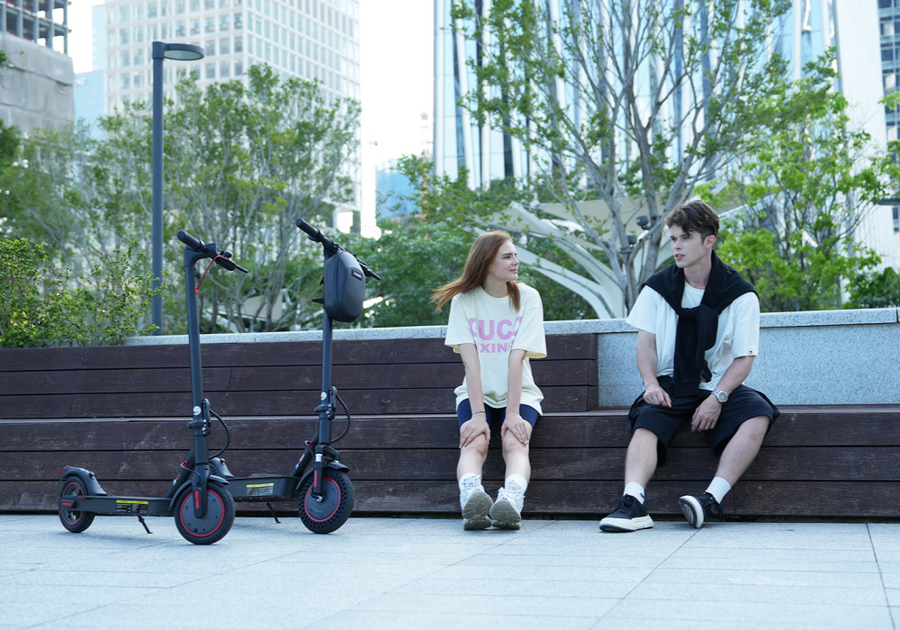
iScooter i9/i8 Electric Scooter for compact private-land use

The iScooter i9/i8 Electric Scooter is a relevant foldable electric scooter value comparison point when your priority is compact storage, smoother private surfaces and straightforward day-to-day handling. Its configuration includes a 350 W motor, a claimed maximum speed of 18.6 mph and a claimed maximum range of 18.6 miles. Those figures should be assessed alongside the route, load, battery condition and riding mode rather than treated as fixed results.
What its specification means in practice
The i9/i8 uses 8.5-inch honeycomb solid tyres, an electronic front brake and mechanical rear disc brake, plus front and rear LED lighting. The quick-folding system is particularly relevant when the scooter must move between a storage area and a permitted private riding space. Three riding modes and app-related functions, including lock and light controls, provide additional settings to review during setup.
Key checks for this configuration include:
- Tyres: solid construction can reduce puncture concerns, but uneven ground still transmits impacts through the scooter.
- Braking: test the electronic and rear disc brake progressively in a clear, dry private area before regular use.
- Lights: confirm that the headlight, rear light and flashing brake light work before lower-light riding.
- Folding: check that the folding mechanism locks securely before lifting or storing the scooter.
- Range: use the claimed 18.6-mile figure as a conditional estimate, not a promise for every rider or surface.
This model makes most sense where carrying, cupboard space or a compact shed footprint matter more than suspension-led rough-terrain capability. It is not a reason to use a privately owned scooter on public roads, cycle lanes, pavements or parks.
Shop: I9 Electric Scooter For Adult With Bag
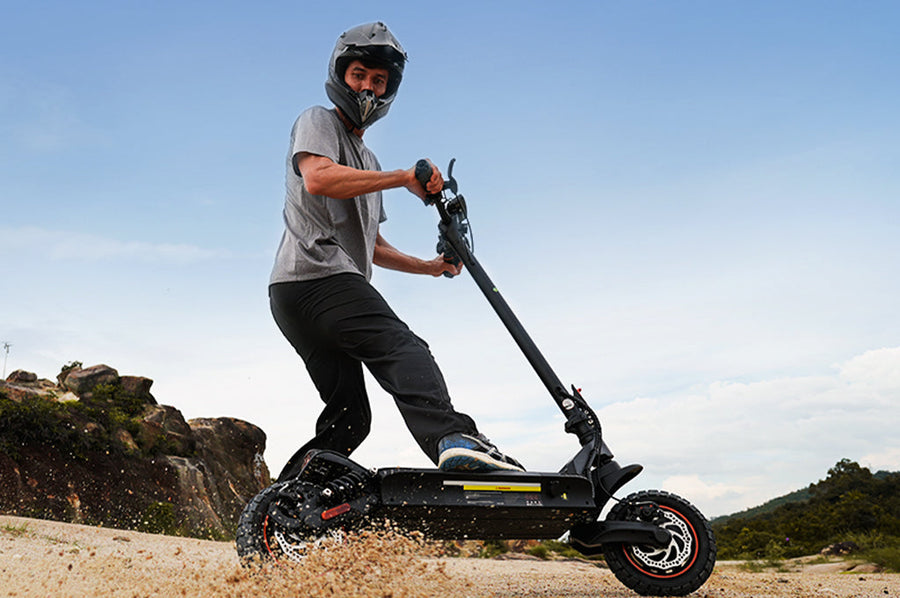
iScooter iX7Pro 2000W Off Road Electric Scooter for rougher permitted terrain

The iScooter iX7Pro 2000W Off Road Electric Scooter changes the comparison because it is configured for more demanding private-land conditions. It has a claimed 2,000 W peak dual-motor drive, a claimed maximum speed of 38 mph and a 48 V 17.5 Ah battery rated at 840 Wh. These figures make braking, surface assessment, storage space and rider control central evaluation points.
What to assess before choosing a higher-output configuration
The iX7Pro includes 10-inch tubeless pneumatic off-road tyres, front swing-arm and rear spring suspension, front and rear disc brakes, and a motor cut-off system. It also has front, rear and ambient lighting, turn signals and a three-step folding arrangement. These features address different aspects of control, but they do not remove the need to ride within your ability on private land with permission.
Focus your assessment on the following:
- Tyre grip and pressure: pneumatic tyres need regular condition and pressure checks.
- Suspension: front and rear suspension can help the wheels track uneven surfaces, but it does not make holes, loose gravel or steep descents safe.
- Braking: dual disc brakes and motor cut-off support controlled stopping; practise gentle, progressive braking before attempting uneven routes.
- Weight and folding: a larger, more capable configuration may require more storage room and more effort to move when folded.
- Power management: use lower modes while learning a route and avoid abrupt throttle inputs on loose or wet ground.
Understand IPX4 water resistance correctly
The iX7Pro has an IPX4 water-resistance rating. In practical terms, that rating is intended for splashes and light rain; it does not mean waterproofing, immersion protection or unrestricted wet-weather riding. Water can still reduce tyre grip, affect braking distance and conceal slippery leaves, painted markings or oily patches.
For wet private-land conditions:
- Delay the ride if standing water, mud or poor visibility is present.
- Reduce speed before a bend rather than braking sharply during it.
- Keep the scooter more upright through turns.
- Avoid sudden acceleration on wet, smooth or loose surfaces.
- Dry the scooter carefully after exposure and follow product care instructions.
Shop: iScooter iX7Pro 2000W Off Road Electric Scooter
How to assess electric scooter after-sales support before ordering

Electric scooter after-sales support should be examined as a set of verifiable processes, not as a general promise. Before ordering, make sure you can identify the exact model, find the current written terms and understand how a fault would be reported. This is especially important when the scooter has foldable hardware, electronic controls, lighting and brake components that may need troubleshooting.
Check written terms, contact routes and model identification
Read the current delivery, returns and warranty information on the official UK storefront immediately before purchase. Terms, stock positions and policy details can change, so an older review or social post is not a substitute for the live information. Confirm the available support contact route and retain screenshots or copies of the terms that applied when you ordered.
Keep these records from the start:
- Order confirmation and payment record.
- Model name, variant and serial details where supplied.
- Delivery date and photographs of the package on arrival.
- Clear photographs or video if an issue appears.
- A dated record of charging, warning messages or unusual sounds.
Compare support for the configuration you are buying
Support is easier to use when you can describe the issue precisely. A vague report such as “the scooter does not work” delays diagnosis. Instead, note whether the concern relates to charging, display behaviour, app connection, lights, the brake lever, tyre pressure or the folding latch.
Before first use, inspect:
- Brake response and disc condition.
- Front, rear and brake lights.
- Tyres for damage, inflation needs or embedded debris.
- Folding hardware for secure engagement.
- Charger, cable and connector condition.
- Display and control functions while stationary.
This approach helps you compare electric scooter after-sales support on evidence: accessible terms, clear contact options, identifiable model details and a documented initial inspection.
Practical checks that prevent poor comparisons
The strongest shortlist is built from requirements you can observe and test, not from labels such as “commuter” or “off-road”. Use the same conditions for each model: the same surface type, storage constraint, lighting need and maintenance tolerance. Moreover, distinguish a feature that sounds useful from one that solves a real issue in your permitted riding area.
Do
- Compare brake arrangement before focusing on top-speed claims.
- Match tyre construction to the private-land surface you will actually use.
- Test lights and brake lights before riding in lower-light conditions.
- Treat claimed range as conditional and leave a battery margin.
- Review current support terms before placing the order.
- Check folding hardware before carrying or storing the scooter.
- Ride more slowly when the surface is wet, loose or unfamiliar.
Do not
- Assume a privately owned scooter may be used for public-road commuting.
- Compare prices without checking what configuration and equipment are included.
- Treat water resistance as a claim of waterproofing.
- Ignore whether you can safely store, lift and charge the scooter.
- Rely only on promotional range figures for route planning.
- Brake abruptly or turn sharply on wet private surfaces.
- Skip the arrival inspection because the scooter appears undamaged in its packaging.
Build a shortlist around needs rather than marketing labels
A sound electric scooter brand comparison begins with lawful private-land use and then weighs brakes, lights, tyres, suspension, folding needs, range conditions and support evidence. The i9/i8 is better aligned with buyers who need a compact folding format for smoother permitted surfaces. The iX7Pro is more relevant where rougher private-land terrain, larger pneumatic tyres, suspension and dual disc braking are central requirements.
Use one written checklist for both models. List your surface, storage route, expected riding time, light conditions, ability to maintain tyres and need for after-sales documentation. Therefore, your final decision will reflect practical ownership suitability rather than price alone.
FAQ
What electric scooter brands are known for strong brakes and good lights?
iScooter offers models with practical braking systems and integrated front and rear lighting for permitted private-land use. When comparing any brand, check whether the scooter has dual braking, such as electronic plus disc or drum brakes, and confirm the light type, brightness, rear brake light, and visibility from the sides. Also review the model’s stated range of use, tyre size, water-resistance rating, and local road-use rules, as these factors affect safe private-land riding.
What brands are best for a foldable electric scooter that’s good value but not unreliable?
For a foldable scooter, compare iScooter’s i8 and i9 models for everyday permitted private-land use. Look for a secure, easy-to-use folding mechanism, a weight you can comfortably carry, reliable braking, functioning lights and tyres suited to your typical private-land surfaces. The i9/i8 range combines quick folding, 8.5-inch honeycomb solid tyres, electronic braking and a rear disc brake. Before buying, confirm the folded dimensions, product weight, local warranty terms and after-sales support for replacement parts.
What are the best electric scooter brands for the money?
iScooter offers compact models with low-maintenance solid tyres as well as higher-power options with pneumatic off-road tyres for rougher private-land terrain. To assess value, compare the scooter’s motor power, battery range, tyre type, braking system, weight capacity, and warranty coverage rather than price alone. Also check local after-sales support, spare-parts availability, and return policies before purchasing.
Is an IPX4 rating suitable for riding in rain?
IPX4 indicates resistance to splashes and light rain, not waterproofing or safe operation in deep water. Wet surfaces can reduce grip and increase the distance needed to stop. Ride only where the private-land surface remains safe, reduce speed and avoid sharp braking, acceleration and turns.
What should be checked when comparing electric scooter after-sales support?
Check current written return, delivery and warranty terms, the available contact route and whether the exact model can be clearly identified. Keep your order record, delivery photographs and serial information where provided. On arrival, inspect brakes, lights, tyres, folding hardware, charger connections and display functions before regular use.
Table of Contents
- Electric scooter brand comparison starts with where and how you will ride
- Electric scooter brand comparison criteria that matter day to day
- iScooter i9/i8 Electric Scooter for compact private-land use
- iScooter iX7Pro 2000W Off Road Electric Scooter for rougher permitted terrain
- How to assess electric scooter after-sales support before ordering
- Practical checks that prevent poor comparisons
- Build a shortlist around needs rather than marketing labels
-
FAQ
- What electric scooter brands are known for strong brakes and good lights?
- What brands are best for a foldable electric scooter that’s good value but not unreliable?
- What are the best electric scooter brands for the money?
- Is an IPX4 rating suitable for riding in rain?
- What should be checked when comparing electric scooter after-sales support?
iScooter E Scooter Collections:
Electric Scooter | Kids Electric Scooter | Electric Scooter for Adults | Electric Scooter with Seat | Off-Road Electric Scooter | Foldable Electric Scooter | Girls Electric Scooter | 1000W Electric Scooter | 2000W Electric Scooter | Boys Electric Scooter | Dual Motor Electric Scooter | Big Electric Scooter | Electric Scooter with Suspension | Lightweight Electric Scooter | Commuter E-Scooters | 3 Wheel Electric Scooter
Show more ▼iScooter E Bike Collections:
Foldable Electric Bike | Affordable Cheap Electric Bike | Electric Bike for Adults | Electric Motor Bikes | Trek Electric Bike | Fastest Electric Bike | Electric Road Bike | Full Suspension Electric Mountain Bike | Giant Electric Bike | Womens Ladies Electric Bike | Mens Electric Bike | Electric Bike with Throttle | Electric Gravel Bike | Electric Mountain Bike UK | Fat Tyre Electric Bike | Electric Hybrid Bike | Electric Motorised Bike | Electric Push Bike | 1000W Electric Bike | Cool Electric Bikes | Electric Off Road Bike | Pedal Assist Electric Bike | Good Electric Bikes | Small Electric Bike | Trek Electric Mountain Bike | 2000W Electric Bike | Full Suspension Electric Bike | Mini Electric Bike | Road Legal Electric Bike | Step Through Electric Bike
Show more ▼👍 Buying Guide | 🚴♂️ Riding Guide
📋 Feature Guide | ❓ Common problem

Product category
Electric Scooter
Cheap Electric Scooters for Adults | Fastest Electric Scooter | Kids Electric Scooter | Mini Electric Scooter
Electric Bike
U4 Foldable E-bike | EB3S E-MTB
Hoverboards
Electric Scooter for Kids | iK3Pro E-Scooter for Kids | iK7 Height Adjustable Kids E-Scooter







Article tags :
Leave us a message