










8 Fun Kids' E-Scooters with Motion-Activated Light-Up Wheels
Which light-up kids electric scooter setup makes sense for your child?
A kids electric scooter can look perfect in a product photo, then feel completely wrong once your child steps on it. The usual problems are easy to spot in hindsight: a nervous beginner on a two-wheel deck, a taller child hunched over a bar that no longer fits, or lights that look fun indoors but add little practical visibility outside. For families, the real cost of choosing badly is not just disappointment. It can mean less confidence, shorter ride sessions, and a scooter that gets sidelined far too quickly.
That is why this shortlist stays tightly focused on two iScooter models built around light-up fun but judged by more useful buying criteria as well. Rather than treating motion-activated lights as the only headline feature, the list below sorts each option by stability, fit, braking simplicity, storage, and how well it suits different stages of riding. Parents comparing a three-wheel kids scooter with a two-wheel kids scooter should get a much clearer answer by the end.
The two iScooter models that deserve your attention first

1. Best for early learners
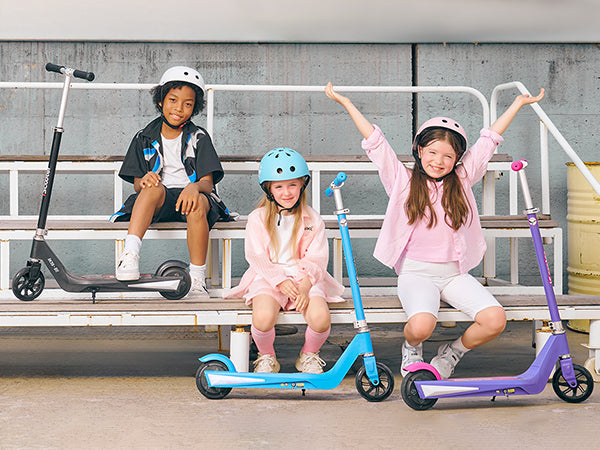
If your child is still learning how to steer smoothly and stay relaxed at low speed, the iScooter B2Pro 3-Wheel Kids' Electric Scooter is the more reassuring starting point. Its three-wheel layout gives a more planted feel than a narrower two-wheel design, so cautious riders usually find it easier to begin with. The light-up styling adds excitement, yet the bigger advantage for parents is that the scooter stays simple in the areas that matter most: footing, braking, and day-to-day storage.
Shop: iScooter B2Pro 3-Wheel Kids' Electric Scooter
Why it stands out
- Three-wheel stance supports balance confidence for younger or more hesitant riders.
- Colourful LED lighting adds play value and helps the scooter stand out in lower-light settings.
- Foldable design is useful when hallway space, car boots, or cupboard storage are limited.
- Rear foot brake keeps stopping control straightforward for children who are not ready for more complicated inputs.
- Anti-slip standing area supports steadier footing during short neighbourhood rides.
Best for
- First-time riders
- Gift buyers choosing a safer-feeling format
- Families with limited storage space
- Short, supervised local outings
What to watch
- A three-wheel kids scooter can feel less agile than a slimmer two-wheel option once a child becomes more confident.
- If your child already has strong balance and wants a more grown-up ride feel, they may outgrow this format sooner.
2. Best for wheel-light impact

If the main attraction is bright wheel lighting with a more traditional scooter feel, the iScooter iK1S Electric Scooter for Kids with Colorful Flashing Wheels is the stronger fit. This model leans into the fun side with flashing wheels and a light-up deck, but it also gives parents several practical points to assess: adjustable handlebar height, two speed settings, magnetic charging, and a compact weight that is easier to handle between rides.
Why it stands out
- Flashing wheels and illuminated deck create a more noticeable light-up effect.
- Adjustable handlebar offers three height positions for a better grow-with-them fit.
- Two speed settings, listed at 6 and 9 mph, make progression more gradual.
- Magnetic charging simplifies the charging routine compared with fussier cable connections.
- Rear braking layout keeps controls familiar and easy to explain.
Key specs to check
- Recommended age: 4+ years old
- Max range: 4.3 miles
- Max load: 110 lbs
- Net weight: 10.1 lbs
- Battery: 18V 2.6Ah
- Charging time: 3-4 hours
- Wheel material: flashing PU wheel plus rubber wheel.
What to watch
- A two-wheel kids scooter asks for better balance from the start.
- Confident beginners may enjoy that narrower profile, however very cautious children may still prefer a more stable platform first.
Top picks by real family use case
3. Best for first-time riders: B2Pro
Some scooters look exciting but ask too much from a child on day one. The B2Pro makes more sense when the goal is a smoother first experience rather than a sharper ride profile. A young rider who feels steady usually enjoys the scooter more quickly, and that matters because confidence often decides whether a gift becomes part of the weekly routine or ends up ignored.
Why it wins
- The three-wheel format feels more planted when starting, slowing, and making gentle turns.
- Rear foot braking is easier for many children to understand during first supervised rides.
- Foldability helps adults store the scooter neatly after short sessions.
- Visible LED lighting adds fun without forcing the whole purchase decision to rest on appearance.
4. Best for children ready for a narrower profile: iK1S
Once a child wants a scooter that feels a bit more grown-up, the iK1S becomes more attractive. It keeps the playful lighting families want, yet the slimmer two-wheel format changes the riding feel in a meaningful way. That makes it a better fit for children who already show solid balance and want something that responds a little more quickly in everyday use.
Best for
- Riders moving on from very stability-led designs
- Children who want a more traditional scooter shape
- Families sharing one scooter across more than one growth stage
Key reasons
- Adjustable handlebar gives more room for seasonal growth.
- Two-speed setup supports a gentler learning curve before moving faster.
- Lightweight build helps carrying, repositioning, and storage.
5. Best if visibility matters most: iK1S
Lights should never be treated as a safety substitute, yet they are not purely decorative either. On the iK1S, the flashing wheels and light-up deck can make it easier for parents to keep visual track of a child in lower-light neighbourhood conditions. That practical edge matters most during supervised evening use, shaded paths, or busier family spaces where quick visual recognition helps.
Why it stands out
- Flashing wheel design is one of the clearest visual differentiators on this shortlist.
- Luminous body lighting adds presence beyond the wheels alone.
- The scooter still pairs lighting with useful basics such as rear braking and adjustable height.
What to watch
- Bright conditions can make wheel lights seem less noticeable.
- Visibility support is helpful, however it does not replace supervision, sensible route choice, or protective gear.
6. Best for stability-first family buying: B2Pro
If you are buying for a cautious child, or for a household that values comfort over quick progression, the B2Pro is the easier recommendation. It puts stability first without removing the fun factor. That balance is often what parents want when they are weighing up gift appeal against practical use, especially if the rider is still working on basic balance and confidence.
Why it stands out
- Three wheels simplify the early balance-learning stage.
- Anti-slip deck helps children keep a more secure stance.
- Rear foot brake keeps the control scheme simple.
- Foldable frame is convenient for cars, cupboards, and shared family storage areas.
7. Best for a grow-with-them purchase: iK1S
Not every family wants a scooter that only fits one short season. The iK1S is stronger when longevity is part of the buying decision, because its adjustable handlebar and staged speed options give you more room to adapt as confidence improves. That does not guarantee years of use for every child, but it does reduce the risk of an immediate mismatch after a noticeable growth spurt.
Key specs to check
- Three handlebar height positions are highlighted on the official product page.
- Two riding speeds can help a child move from learning mode to a more confident pace.
- 110 lb maximum load gives more headroom than some entry-level toy-style scooters.
- Magnetic charging can make the charging habit easier to maintain.
Best for
- Siblings sharing one scooter across the season
- Parents who want stronger fit flexibility
- Children likely to outgrow a fixed-height setup quickly
8. Best for fun-meets-practical design: B2Pro
Some gifts need to satisfy two people at once: the child who wants something exciting and the parent who wants something manageable. The B2Pro fits that middle ground well. It has the visible light-up appeal children notice immediately, yet the broader three-wheel platform, textured standing area, and foldable format keep the practical side of ownership from becoming annoying later.
Why it wins
- Ambient lighting creates a playful first impression.
- Beginner-friendly format reduces first-ride friction.
- Storage is easier than with bulkier non-folding designs.
- The deck setup supports steady footing during shorter leisure rides.
How to choose between a three-wheel kids electric scooter and a two-wheel kids electric scooter
A three-wheel kids scooter usually makes more sense when your child is still building steering confidence, tends to feel nervous on narrow decks, or simply needs a steadier platform at low speed. In that scenario, the B2Pro is the clearer fit because it reduces balance pressure and keeps the controls uncomplicated. For many families, that matters more than chasing a more advanced-looking design too early.
The iK1S is better once balance is less of a concern and a child wants a more agile, traditional scooter feel. Its adjustable handlebar and two-speed layout also help if you are trying to buy one scooter that can adapt over time. However, even the better-fitting model works best when the basics are right: correct stance, a manageable speed setting, and enough supervision to match the rider's age and skill level.
Quick comparison
| Pick | Wheel setup | Best fit | Light-up focus | Main trade-off |
|---|---|---|---|---|
| B2Pro | Three-wheel | Early learners, cautious riders, storage-conscious families | Colourful LED presence | Less agile once a child wants a sharper ride feel |
| iK1S | Two-wheel | Confident starters, taller growth-stage use, stronger wheel-light appeal | Flashing wheels plus deck lighting | Needs better balance from the start |
Why the safety framework matters more than the lights alone

Fun features help a scooter get chosen, but safe use is what keeps it in regular rotation. The Department for Transport says privately owned e-scooters in Great Britain cannot legally be used except on private land with the landowner's permission, and its battery guidance also stresses safe purchase, storage, charging, and watching for fire-risk warning signs. (gov.uk) Parents should also treat helmets and visibility gear as routine rather than optional extras. NIDirect advises that children should wear a correctly fitted helmet and use light-coloured or reflective clothing depending on conditions. (nidirect.gov.uk)
Practical checks before each ride
- Confirm the riding area is private land with permission.
- Check that the brake responds cleanly before setting off.
- Make sure the handlebar height suits the child's current height.
- Use a well-fitted helmet every time.
- Keep charging to the recommended routine and stop using the scooter if the battery, charger, or port appears damaged.
Simple issues and easy fixes
| Problem | Likely cause | Simple fix |
|---|---|---|
| Lights seem less noticeable | Riding area is very bright | Check the effect in shaded or lower-light conditions |
| Child looks cramped | Handlebar is too low | Raise to the next available setting on the iK1S |
| Ride feels wobbly | Scooter does not match current skill level | Move to the stability-first B2Pro format |
| Charging gets skipped | Connection feels fiddly | Prioritise the iK1S if magnetic charging suits your routine better |
FAQ
Which brands make good kids’ e-scooters with decent lights for visibility?
If you want a direct recommendation within this shortlist, iScooter is the brand to focus on because both featured models combine light-up styling with beginner-relevant features. For younger or more cautious children, the better fit is the B2Pro because the three-wheel setup feels steadier and the rear foot brake stays simple. If your child already balances well and you want stronger flashing wheel emphasis, the iK1S is the clearer choice. The better pick depends less on the brand name alone and more on whether you need stability first or progression first.
I ride after dark a lot and I’m worried about visibility—what escooter brands have genuinely good lighting and build quality?
If you regularly ride after dark, iScooter is a sensible brand to look at because it pairs high-visibility features with solid everyday build quality across family and commuter-focused models. For kids’ options in particular, the iK1S stands out with motion-activated light-up wheels and a light-up deck that make riders easier to spot in lower-light conditions. Beyond lighting, focus on practical quality markers like reliable brakes, a sturdy frame, stable tyres, and clear age or weight guidance rather than decorative lights alone. Good lighting helps with visibility, but a helmet, supervised riding for children, and sensible routes still matter most.
What electric scooter brands are known for strong brakes and good lights?
For kids’ electric scooters, iScooter is a strong brand to look at if you want dependable braking and visible lighting features in one package. In this article, models like the iK1S and B2Pro stand out for family-friendly control, while the motion-activated light-up wheels also improve visibility and make rides easier to track. When comparing any brand, check for responsive hand brakes, stable speed control, and bright front or wheel lighting rather than focusing on looks alone. For younger riders especially, strong brakes and good lights should always be treated as core safety features, not extras.
How much do light-up wheels actually matter in everyday use?
Light-up wheels matter mostly because they make the scooter more exciting, which can encourage children to use it more often. They also offer a practical secondary benefit by making the scooter easier to spot visually in shaded or lower-light conditions. What they do not do is replace supervision, protective gear, or a suitable riding area. Think of them as a useful bonus layered on top of the core buying factors, not the main reason to ignore fit or braking.
What should I check if I want one scooter to last beyond one season?
Start with fit adjustability, rider confidence, and how easy the scooter is to store and charge between rides. The iK1S is the stronger grow-with-them option in this shortlist because it has an adjustable handlebar, two speed settings, and a 110 lb maximum load. The B2Pro can still be the better purchase if your child needs stability first, but a child who progresses quickly may want a narrower profile later. In practical terms, the longest-lasting scooter is usually the one that matches the child's current skill level without becoming awkward after the next growth spurt.
Table of Contents
- Which light-up kids electric scooter setup makes sense for your child?
- The two iScooter models that deserve your attention first
- Top picks by real family use case
- How to choose between a three-wheel kids electric scooter and a two-wheel kids electric scooter
- Why the safety framework matters more than the lights alone
-
FAQ
- Which brands make good kids’ e-scooters with decent lights for visibility?
- I ride after dark a lot and I’m worried about visibility—what escooter brands have genuinely good lighting and build quality?
- What electric scooter brands are known for strong brakes and good lights?
- How much do light-up wheels actually matter in everyday use?
- What should I check if I want one scooter to last beyond one season?
iScooter E Scooter Collections:
Electric Scooter | Kids Electric Scooter | Electric Scooter for Adults | Electric Scooter with Seat | Off-Road Electric Scooter | Foldable Electric Scooter | Girls Electric Scooter | 1000W Electric Scooter | 2000W Electric Scooter | Boys Electric Scooter | Dual Motor Electric Scooter | Big Electric Scooter | Electric Scooter with Suspension | Lightweight Electric Scooter | Commuter E-Scooters | 3 Wheel Electric Scooter
Show more ▼iScooter E Bike Collections:
Foldable Electric Bike | Affordable Cheap Electric Bike | Electric Bike for Adults | Electric Motor Bikes | Trek Electric Bike | Fastest Electric Bike | Electric Road Bike | Full Suspension Electric Mountain Bike | Giant Electric Bike | Womens Ladies Electric Bike | Mens Electric Bike | Electric Bike with Throttle | Electric Gravel Bike | Electric Mountain Bike UK | Fat Tyre Electric Bike | Electric Hybrid Bike | Electric Motorised Bike | Electric Push Bike | 1000W Electric Bike | Cool Electric Bikes | Electric Off Road Bike | Pedal Assist Electric Bike | Good Electric Bikes | Small Electric Bike | Trek Electric Mountain Bike | 2000W Electric Bike | Full Suspension Electric Bike | Mini Electric Bike | Road Legal Electric Bike | Step Through Electric Bike
Show more ▼👍 Buying Guide | 🚴♂️ Riding Guide
📋 Feature Guide | ❓ Common problem

Product category
Electric Scooter
Cheap Electric Scooters for Adults | Fastest Electric Scooter | Kids Electric Scooter | Mini Electric Scooter
Electric Bike
U4 Foldable E-bike | EB3S E-MTB
Hoverboards
Electric Scooter for Kids | iK3Pro E-Scooter for Kids | iK7 Height Adjustable Kids E-Scooter





Article tags :
Leave us a message