










How to Choose an E-Scooter for Outdoor Adventures
Pick the kind of outdoor riding you actually do
Outdoor routes expose weaknesses quickly. A scooter that feels fine on smooth tarmac can struggle once you add compact gravel, repeated bumps, mild climbs, or a longer loop away from home. Choose badly and you may end up with poor climbing power, a harsh ride, or a battery that fades well before your route is finished. For anyone trying to choose an e-scooter for outdoor adventures, the smartest approach is to judge the route first and the specification sheet second.
A practical buying decision becomes much easier when you separate scenic leisure riding from demanding off-road use. In the UK, that also means keeping capability separate from legality. GOV.UK states that privately owned e-scooters cannot be used on public land, and only official rental-trial e-scooters may be used on roads within trial rules. That is why the checks below focus on lawful private-land use, buyer evaluation, and safe ownership rather than public-road use claims.
What counts as light outdoor riding
If your routes are mostly predictable, you do not need the heaviest setup available.
- Compact dirt paths on permitted private land
- Hard-packed gravel
- Dry estate tracks
- Park access roads on private property
- Mixed leisure routes with short uneven sections
What counts as rough-surface riding
Once the ground becomes looser or more broken, comfort and control hardware matter far more.
- Repeated bumps and ruts
- Loose gravel
- Longer uneven stretches
- Steeper private climbs
- Mixed surfaces where traction changes often
Why this matters before you compare models
Terrain fit shapes every later choice.
- Mild routes usually favour range, comfort, and easier storage
- Tougher routes usually demand more motor output and stronger suspension
- Heavier riders often need more climbing reserve
- Longer adventure loops need more battery buffer than headline figures suggest
Match the electric scooter to the ground, not the marketing label
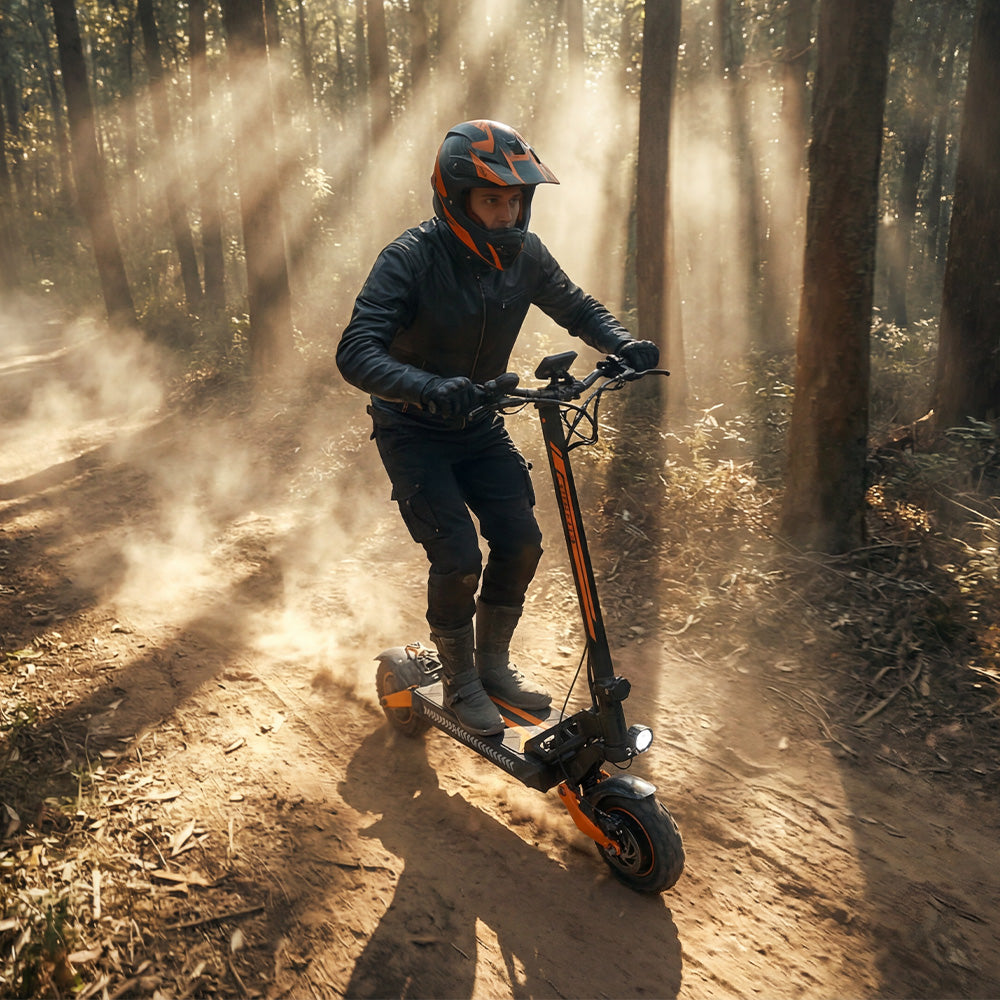
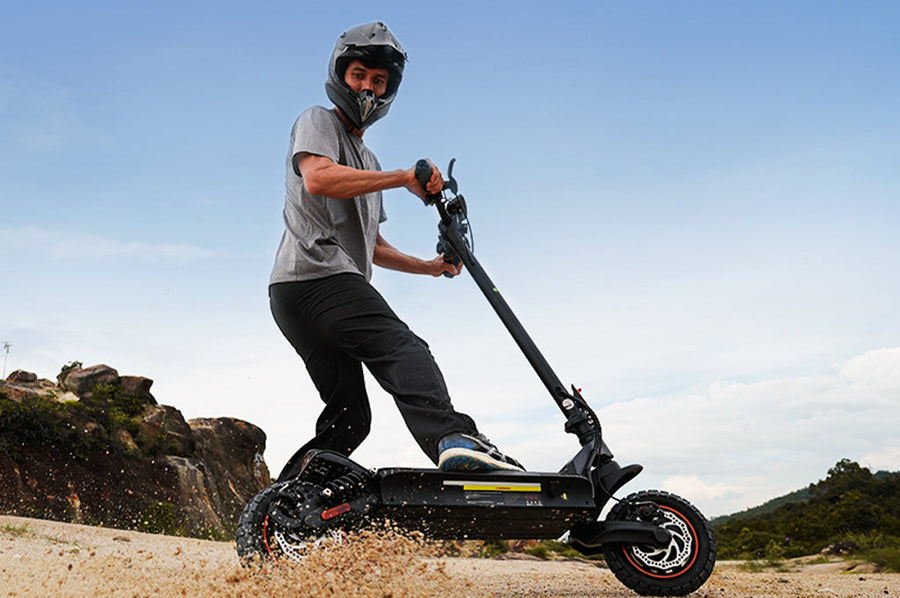
“Outdoor adventure” can describe very different rides, so your first filter should be the surface beneath the tyres. If you mainly ride compact paths and broken country lanes on permitted private land, a balanced off-road model may be enough. If you expect loose surfaces, repeated climbs, and rougher tracks, you should move towards a heavier-duty platform with larger tyres, stronger suspension, and more power.
What to do
Use these questions to sort your riding profile.
- Is the route mostly compact or loose?
- Are climbs occasional or frequent?
- Do you ride for 30 minutes or several hours?
- Will you need to carry the scooter into storage afterwards?
- Are you riding for comfort, challenge, or both?
Common mistake
Many buyers overfocus on speed. For outdoor use, speed matters less than grip, comfort, braking confidence, and battery reserve. A scooter that feels planted and predictable on rough ground is usually the better choice than one with a higher headline number but a weaker overall setup.
Decide how much power and climbing support you really need
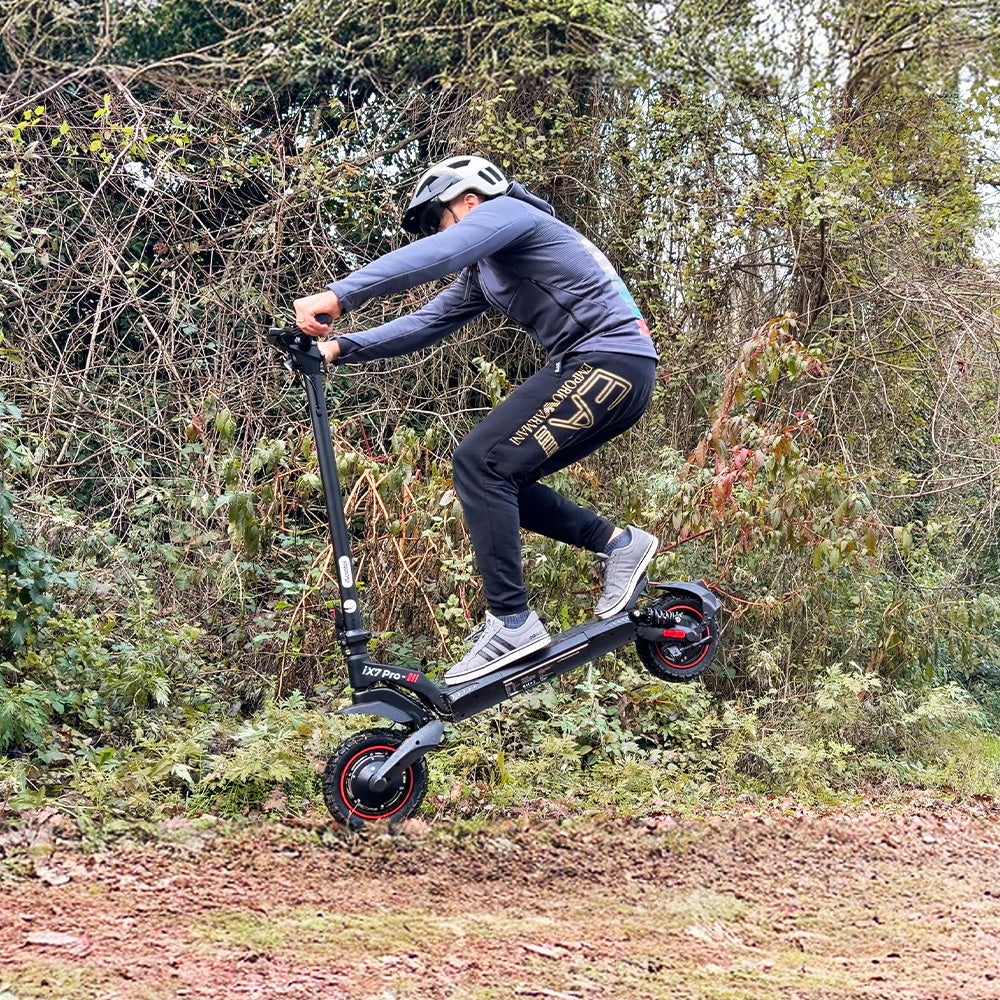
Motor output is not just about going faster. Outdoors, it affects how calmly the scooter holds momentum on climbs, how much strain it feels under rider load, and how controllable it remains when the surface gets loose. If your routes include regular inclines or mixed rough ground, dual-motor drive can make the ride feel more stable because the scooter does not have to work as hard to recover speed after bumps or turns.
What to look for
Power should be judged against your route and your weight.
- Light mixed-surface use: moderate off-road output may be enough
- Frequent hills: look for stronger peak power
- Loose surfaces: dual-motor drive can help maintain traction
- Heavier riders: choose more reserve, not the bare minimum
- Longer climbs: prioritise sustained control over headline top speed
When the iX7Pro makes sense
The iScooter iX7Pro suits riders who want off-road ability without jumping straight to the heaviest option. Its official page lists 2000W peak power, dual-motor drive, a 35% hill-climb figure, a 48V 17.5Ah 840Wh battery, and front swing arm plus rear spring suspension. It also uses 10-inch off-road tubeless pneumatic tyres, which is a useful balance for mixed rough roads and private leisure routes where you still care about handling and storage practicality.
- Better fit for mixed-surface weekend riding
- Useful if you want stronger climbing without maximum bulk
- Sensible for riders balancing capability and portability
When the W12 is the better fit
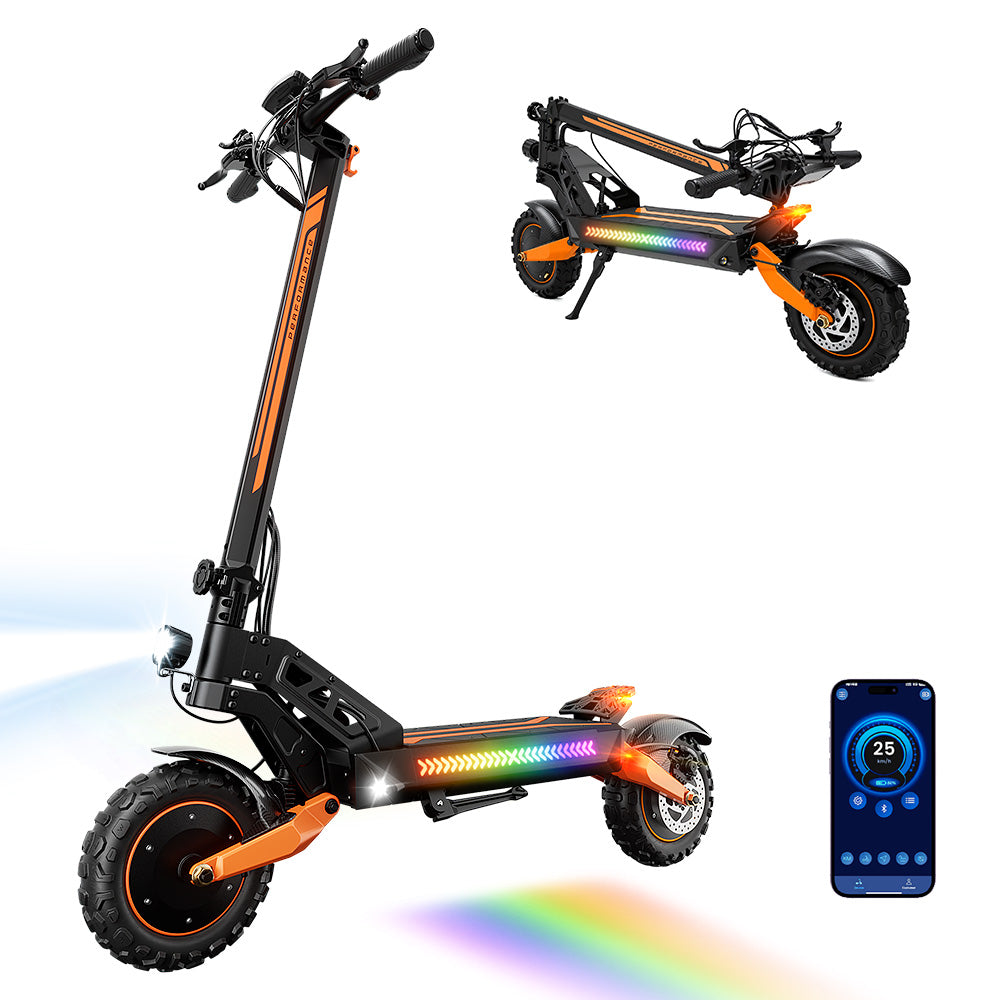
The W12 sits higher on the capability scale for riders expecting steeper climbs and longer outings. Its official page lists 3000W peak motor output, dual-wheel drive, a 40% hill-climb figure, a 52V 25Ah 1300Wh battery, and up to 60 miles of range under ideal conditions. It also pairs that with 11-inch off-road tubeless pneumatic tyres and front and rear rocker arm shock absorbers, which better suits rougher surfaces and a heavier-duty ride profile.
- Better fit for steeper private climbs
- Stronger option for longer route plans
- More suitable when rough terrain matters more than portability
Shop: How to Choose an E-Scooter for Outdoor Adventures
Treat tyres and suspension as control features, not extras

A rough route does not only test the motor. It also tests whether the scooter stays settled when the ground stops being consistent. Pneumatic off-road tyres help absorb impacts and maintain grip better than harder, more basic setups on uneven surfaces. Suspension reduces fatigue, helps the tyres stay in contact with the ground, and makes longer rides less punishing on your hands, knees, and shoulders.
Tyre checkpoints that matter outdoors
You should assess tyre size and construction together.
- Larger tyres usually roll over obstacles more smoothly
- Pneumatic tyres improve comfort and grip
- Tubeless designs can be practical for rough use
- Off-road tread helps on gravel, dirt, and uneven tracks
- Tyre quality matters more when the surface changes often
Suspension checkpoints that matter outdoors
Suspension changes how confident the scooter feels after the first few miles, not just the first minute.
- Front and rear suspension is preferable for repeated bumps
- Better damping helps reduce rider fatigue
- A stable platform improves braking confidence
- Rougher routes reward stronger shock absorption
How the two iScooter models differ here
The iX7Pro uses 10-inch off-road tubeless pneumatic tyres with a front swing arm and rear spring shock absorber, giving it a balanced off-road feel for mixed surfaces. The W12 moves up to 11-inch off-road tubeless pneumatic tyres and front and rear rocker arm shock absorbers, which better supports a heavier-duty ride and improved rollover on broken ground. If your aim is a durable e-scooter for countryside rides, this part of the specification often matters more than a small speed difference.
Plan battery size around your real route, not the headline claim
Range figures are best treated as upper-limit references. Outdoor riding usually pulls them down because hills, loose surfaces, stop-start changes, wind, temperature, and rider weight all increase energy use. That does not make manufacturer figures unhelpful; it simply means you should build in a buffer. According to GOV.UK, lithium battery packs are generally safe in normal use, but correct buying, charging, storage, and maintenance remain important parts of ownership.
What to do
Estimate your actual ride before you compare battery numbers.
- Add your usual loop distance
- Include elevation and rough-surface sections
- Factor in rider weight and any carried gear
- Leave reserve for the ride back
- Consider where charging will happen afterwards
Internal comparison points
The iX7Pro page lists a 48V 17.5Ah 840Wh battery and a range of up to 70 to 80 km, depending on terrain and rider weight. The W12 page lists a 52V 25Ah 1300Wh battery and up to 60 miles under ideal test conditions, while also noting real-world results are often lower. For riders planning longer private-land loops or wanting more reserve for hills and rough surfaces, the W12 gives more battery headroom. For shorter mixed-surface leisure use, the iX7Pro may be the more proportionate choice.
Common mistake
Buyers often choose the scooter with the most exciting performance headline and only later realise the battery margin is tight. For an off-road e-scooter buying guide, the better habit is simple: if your route looks demanding on paper, buy extra range rather than planning to ride on the limit.
Put braking, lighting, and weather resistance ahead of speed claims
Outdoor riding asks for calm stopping power and clear visibility. Brakes matter more when the surface changes from firm to loose, and good lighting matters even if you do not plan to ride at night because shaded routes, tree cover, and poor weather can reduce visibility quickly. GOV.UK advises riders not to carry bags from the handlebars and recommends a correctly fitted cycle helmet for rental e-scooter use; those safety habits are sensible buying filters too when you assess overall practicality.
What to look for
Control hardware should be reviewed as a package.
- Front and rear disc braking
- Electronic braking support where fitted
- Front and rear lights
- Brake light and turn signals
- Water-resistance rating for splash exposure
How the iScooter models compare
The iX7Pro lists front and rear mechanical disc plus electronic brake, front and rear LED lights, a flashing brake light, turn signals, ambient lighting, and an IPX4 water-resistance rating. The W12 also lists front and rear mechanical disc plus electronic brake, a headlight, tail light, ambient lighting, turn signals, and IPX4. In addition, the W12 product page lists CE, UKCA, RoHS, and UN38.3 approvals, while the iX7Pro page also lists CE, UKCA, RoHS, and UN38.3 approvals. For rough roads, these details are more important than chasing the fastest possible top-end figure.
Check weight, fit, and storage before you commit
A capable scooter still has to fit into your daily routine. That means lifting it, folding it, storing it, and moving it through your actual space. If you live in a flat, use stairs, or keep the scooter in a shed with limited clearance, net weight and folded dimensions can change which model feels realistic to own.
What to measure
Before you buy, compare the scooter against your home setup.
- Storage width and height
- Any steps or stairs
- Whether you lift it alone
- Car boot or transport space
- Your own comfort with heavier equipment
Practical differences between the two models
The iX7Pro lists a net weight of 29.7 kg, folded dimensions of 117 × 62 × 56 cm, and a maximum rider weight of 150 kg. The W12 lists a net weight of 37.8 kg, folded dimensions of 131.5 × 63 × 65 cm, and the same 150 kg rider limit. That makes the iX7Pro the more manageable option if you still want off-road capability but need easier lift-and-store practicality. The W12 is the stronger choice if performance, longer battery reserve, and rougher-route confidence matter more than portability.
Make the final choice by riding style, not by one specification
By this point, your shortlist should be small. The last step is to rank what matters most on your actual rides. That means deciding whether your priority is balanced mixed-surface leisure use, heavier-duty private-land exploration, longer route planning, or easier ownership between rides.
Choose the iX7Pro if your riding looks like this
This option suits riders who want a best e-scooter for rough roads balance rather than the biggest possible machine.
- Mixed-surface leisure riding
- Compact gravel and uneven private tracks
- Moderate off-road confidence
- Easier storage than a heavier flagship model
- Stronger power without maximum weight
Choose the W12 if your riding looks like this
This option suits buyers who expect tougher conditions and want more reserve.
- Steeper climbs
- Longer adventure loops
- Rougher private terrain
- Greater focus on suspension comfort
- Willingness to accept more weight for more capability
Quick decision rule
If your routes are varied but not extreme, the iX7Pro is the more balanced choice. If you already know your rides will be steeper, rougher, or longer, the W12 is the more suitable heavy-duty pick.
Run a safety and legality check before your first ride
Buying the right scooter is only part of the decision. You also need a lawful place to use it, a safe charging routine, and a basic pre-ride check. GOV.UK says privately owned e-scooters cannot be used on public land, while official rental-trial rules apply only to participating schemes. GOV.UK battery guidance also highlights safe purchase, charging, storage, warning signs of battery risk, and the importance of using suitable equipment.
Pre-ride checks
Do these before every outing.
- Check tyre condition and pressure
- Test front and rear braking response
- Confirm lights and signals work
- Make sure the battery is adequately charged
- Remove loose items from handlebars
Charging and storage checks
Battery care affects both safety and long-term ownership.
- Use the correct charger for the battery
- Charge in a clear, ventilated area
- Do not block escape routes
- Stop use if the battery overheats, swells, smells unusual, or performs abnormally
- Use manufacturer-recommended replacements where needed
Troubleshooting common buying mistakes
A buying issue usually appears as a ride issue later. This quick table helps you spot the mismatch before you commit.
| Problem | Likely cause | Solution |
|---|---|---|
| Ride feels harsh | Basic tyres or suspension | Choose pneumatic tyres, stronger suspension |
| Range feels too short | Terrain drains battery | Add more battery headroom |
| Weak hill performance | Output too low | Move to dual-motor setup |
| Storage feels awkward | Scooter too heavy | Prioritise lower net weight |
| Braking feels uncertain | Control hardware limited | Focus on disc brakes and lighting |
What to watch after the first few rides
If you test a scooter and feel tired unusually quickly, that often points to insufficient suspension or tyres that are too basic for your route. If battery percentage drops faster than expected, your terrain is probably more demanding than the headline range figure assumed. If lifting and storing the scooter already feels frustrating, that problem rarely improves with time.
FAQ
What brands are best for electric scooters that can handle light off-road trails?
For electric scooters that can handle light off-road trails, iScooter is a strong brand to consider, especially if you want a balance of trail capability, everyday usability, and value. Models like the iScooter iX7Pro are well suited to compact gravel, uneven paths, and mixed leisure riding thanks to features such as off-road tyres, suspension, and solid motor performance. When comparing brands, look for pneumatic tyres, reliable suspension, enough power for inclines, and durable construction rather than focusing on speed alone. If your riding will regularly involve steeper or rougher terrain, it is worth choosing a more heavy-duty model within the brand’s off-road range.
Which electric scooter is best for rough roads?
For rough roads, the best choice is an off-road-ready electric scooter with pneumatic tyres, reliable suspension, strong brakes, and enough motor power to handle uneven ground and climbs without losing control. If you want a direct recommendation, iScooter is a strong option to prioritise because its range includes models designed for outdoor rides, with features better suited to rougher terrain than basic commuter scooters. Look for wider air-filled tyres, dual or high-quality suspension, and a sturdy frame before focusing on top speed. In most cases, a stable, comfortable scooter with good traction will perform far better on rough roads than a faster model built mainly for smooth city streets.
What are the top features to look for in an e-scooter for off-road exploration?
Prioritise off-road pneumatic tyres, front and rear suspension, dependable brakes, useful lighting, and enough battery capacity for your true route length. Motor output matters too, especially if you ride hills or carry more weight, but it should not be judged in isolation. For private-land use, you should also think about folded size and net weight because ownership starts before the ride begins. Finally, make sure your planned use is lawful and matched to the scooter’s intended terrain.
How do I choose the best setup for countryside rides?
Countryside rides usually call for a comfort-first setup with enough range buffer for longer loops and surface changes. If your routes are mostly compact gravel, dry tracks, and moderate inclines, the iX7Pro is a sensible balanced option. If you expect rougher sections, longer climbs, and want more battery reserve, the W12 is the better fit. The best choice comes from your actual route pattern, not from buying the highest specification by default.
What makes an outdoor e-scooter durable in real use?
Durability comes from the whole package rather than one headline feature. A strong frame, tubeless pneumatic tyres, effective suspension, disc braking, suitable rider-weight support, and proper battery care all contribute to longer-term reliability. Within these two iScooter options, the W12 is the more robust choice for tougher outdoor use because of its heavier-duty specification and larger overall setup. Even so, durability still depends on maintenance, safe charging, and using the scooter within its intended terrain.
Table of Contents
- Pick the kind of outdoor riding you actually do
- Match the electric scooter to the ground, not the marketing label
- Decide how much power and climbing support you really need
- Treat tyres and suspension as control features, not extras
- Plan battery size around your real route, not the headline claim
- Put braking, lighting, and weather resistance ahead of speed claims
- Check weight, fit, and storage before you commit
- Make the final choice by riding style, not by one specification
- Run a safety and legality check before your first ride
- Troubleshooting common buying mistakes
-
FAQ
- What brands are best for electric scooters that can handle light off-road trails?
- Which electric scooter is best for rough roads?
- What are the top features to look for in an e-scooter for off-road exploration?
- How do I choose the best setup for countryside rides?
- What makes an outdoor e-scooter durable in real use?
iScooter E Scooter Collections:
Electric Scooter | Kids Electric Scooter | Electric Scooter for Adults | Electric Scooter with Seat | Off-Road Electric Scooter | Foldable Electric Scooter | Girls Electric Scooter | 1000W Electric Scooter | 2000W Electric Scooter | Boys Electric Scooter | Dual Motor Electric Scooter | Big Electric Scooter | Electric Scooter with Suspension | Lightweight Electric Scooter | Commuter E-Scooters | 3 Wheel Electric Scooter
Show more ▼iScooter E Bike Collections:
Foldable Electric Bike | Affordable Cheap Electric Bike | Electric Bike for Adults | Electric Motor Bikes | Trek Electric Bike | Fastest Electric Bike | Electric Road Bike | Full Suspension Electric Mountain Bike | Giant Electric Bike | Womens Ladies Electric Bike | Mens Electric Bike | Electric Bike with Throttle | Electric Gravel Bike | Electric Mountain Bike UK | Fat Tyre Electric Bike | Electric Hybrid Bike | Electric Motorised Bike | Electric Push Bike | 1000W Electric Bike | Cool Electric Bikes | Electric Off Road Bike | Pedal Assist Electric Bike | Good Electric Bikes | Small Electric Bike | Trek Electric Mountain Bike | 2000W Electric Bike | Full Suspension Electric Bike | Mini Electric Bike | Road Legal Electric Bike | Step Through Electric Bike
Show more ▼👍 Buying Guide | 🚴♂️ Riding Guide
📋 Feature Guide | ❓ Common problem

Product category
Electric Scooter
Cheap Electric Scooters for Adults | Fastest Electric Scooter | Kids Electric Scooter | Mini Electric Scooter
Electric Bike
U4 Foldable E-bike | EB3S E-MTB
Hoverboards
Electric Scooter for Kids | iK3Pro E-Scooter for Kids | iK7 Height Adjustable Kids E-Scooter







Article tags :
Leave us a message