










How to Choose a Stable Electric Bike for City Rides
Check Your Route Before You Choose a City E-Bike
What Makes a City Ride Feel Unstable?
A stable electric bike for city rides is not just one with the biggest motor. City riding gets difficult when potholes, wet paint, drain covers, kerb drops, bus-lane ridges, and stop-start traffic all appear in the same journey. If you choose by speed or style first, the bike may feel nervous at junctions, harsh on rough tarmac, or awkward to carry into a flat or office.
Your first job is to define stability in practical terms. A stable city electric bike should steer predictably, stop smoothly, keep your body relaxed, and give enough battery headroom for the return trip. For UK riders, it should also match EAPC expectations for public road and cycle-lane use. GOV.UK states that an EAPC must have usable pedals, a continuous rated motor output of no more than 250W, and motor assistance that does not propel the bike above 15.5 mph.
Match the E-Bike to These City Scenarios
Different routes need different stability priorities. Before comparing a UK commuter e-bike model, write down your real route rather than your ideal one.
- Short commute with storage limits: prioritise folding design, manageable weight, and simple lifting.
- Campus or station-to-office travel: prioritise compact size, lights, mudguards, lock points, and steady braking.
- Hilly neighbourhood route: check legal assist performance, rider load, braking, and battery reserve.
- Mixed pavement and park paths: look for pneumatic tyres, rear suspension, upright fit, and controlled speed modes.
- Rainy winter commute: focus on lights, visible clothing, brake feel, and safe battery charging habits.
Choose a Stable Electric Bike for City Rides in 6 Practical Steps
Step 1: Start With Frame Fit and Riding Position
Fit controls low-speed confidence. If the frame is too tall, the saddle is too high, or the reach is too long, you will wobble at traffic lights and overcorrect in narrow lanes.
What to do
- Check the stated rider height range before buying.
- Sit upright enough to scan traffic without locking your elbows.
- Make sure you can place at least one foot down at stops.
- Test saddle height so your knee stays slightly bent at the bottom of the pedal stroke.
- For shorter riders or teens, prioritise step-over height and easy foot placement.
Product fit example
The U1 foldable electric bike from iScooter UK suits compact city use because it combines an adjustable seat post, alloy steel folding frame, 120 kg total payload capacity, and a rider height range listed around 150 cm to 185 cm on the comparison table. Use those numbers as a fit screen, not a guess. If you are near either end of the range, check the standing position and saddle height carefully before committing.
Product Page: U1 foldable electric bike
Step 2: Choose Tyres That Can Handle Real Streets
Tyres are your first suspension system. Narrow or hard tyres can feel twitchy on cracked tarmac, while pneumatic tyres absorb small hits and keep more rubber in contact with the road.
What to do
- Choose pneumatic tyres for mixed city surfaces.
- Look for enough width to soften vibration and improve grip.
- Check tyre pressure weekly, especially in cold weather.
- Slow down over drain covers, wet paint, leaves, and tram-style grooves.
- Replace tyres when tread is worn, cracked, or uneven.
What to watch
The U1 foldable electric bike uses 14 x 1.95-inch pneumatic tyres. That is a compact setup for last-mile transportation, campus travel, and storage-conscious city riding. Because the wheels are smaller than full-size commuter wheels, your handling depends even more on correct pressure, relaxed steering, and steady speed over rough patches. Do not treat tyre size alone as the whole answer; match it with posture and braking.
Step 3: Prioritise Brakes Before Motor Power
A city electric bike feels stable when it stops predictably. Motor output helps on hills, but braking confidence matters more when pedestrians step out, lights change, or rain reduces grip.
What to do
- Look for front and rear braking, not rear-only stopping.
- Test lever reach and pressure before your first commute.
- Apply both brakes progressively instead of grabbing one lever hard.
- Leave more space in rain and on painted surfaces.
- Inspect pads and cables if braking feels spongy or noisy.
Product braking example
The U1 foldable electric bike lists front and rear disc brakes, which are useful for urban stop-start riding. Disc brakes help create more consistent stopping than basic rim-style setups, especially when your route includes traffic lights, slopes, and repeated slowdowns. Pair the hardware with good habits: cover the levers in busy lanes, brake before turning, and keep your weight centred rather than leaning sharply forward.
Step 4: Use Suspension and Saddle Comfort to Reduce Fatigue
Comfort is not a luxury on bumpy city roads. When your body is tired or braced against every impact, your steering gets tense and your balance becomes less steady.
What to do
- Check whether the bike has rear or front suspension.
- Look for a saddle that supports seated commuting, not only short test rides.
- Keep elbows soft and knees relaxed over speed bumps.
- Avoid sitting too far back when climbing or starting on a slope.
- Recheck saddle height after the first few rides.
Product comfort example
The U1 foldable electric bike includes rear suspension and a breathable ergonomic sport cushion seat. That combination helps reduce harsh impacts from patched roads, kerb drops, and rough paths. It will not turn a compact e-bike into a mountain bike, but it can make daily micromobility feel calmer. If your route is very broken or off-road, reduce speed and consider whether a larger-wheel e-bike is the safer match.
Step 5: Calculate Battery Range Against Your Real Commute
Range claims are best-case numbers. Your usable range changes with hills, rider weight, wind, tyre pressure, assist level, cold weather, lights, and repeated starts.
What to do
- Add your full round trip, not just the one-way distance.
- Add a 30 percent buffer for hills, wind, and winter rides.
- Use lower assist on flat sections to save battery.
- Charge before the return journey if your workplace allows safe charging.
- Stop using damaged batteries, swollen packs, or frayed cables.
Product range example
The U1 foldable electric bike lists a 36V 7.8Ah lithium battery, 25 to 40 miles of stated range, and a 3 to 4 hour charge time. For a 6-mile round-trip commute, that gives useful headroom. For a 20-mile mixed route with hills, plan more carefully and avoid relying on the top range figure. Fire England advises using the correct charger, checking for damage, and stopping charging if the battery shows warning signs.
Step 6: Decide Whether Folding Design Is Worth It
Folding design is valuable only when it solves a real storage or transport problem. It is less useful if the folded bike is still too heavy for your stairs or awkward through a narrow hallway.
What to do
- Measure your storage space before buying.
- Check the bike weight and folded handling path.
- Practise folding at home before using it at a train station.
- Keep fingers clear of hinges and clamps.
- Lock the folding mechanism fully before every ride.
Product folding example
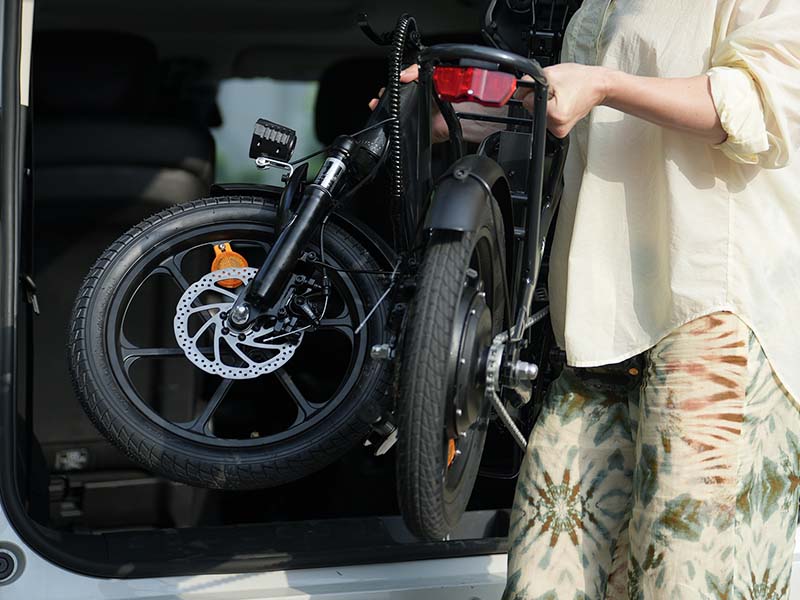
The U1 foldable electric bike is listed at about 23.7 kg, with bike dimensions of 120 x 58.5 x 99.5 cm. That makes it compact for flats, offices, car boots, and shared storage, but it is still a real object to lift. If you need to carry it up two flights of stairs every day, test whether that weight is practical. Folding should support your commute, not become the hardest part of it.
How Do You Compare a Stable Electric Bike for City Rides Without Getting Distracted?
Use This Quick Decision Matrix
| Stability Factor | What to Check | Why It Matters | Buyer Prompt |
|---|---|---|---|
| Fit | height range, saddle, reach | reduces wobble | Can I stop flat-footed? |
| Tyres | pneumatic, width, tread | improves grip | Will this handle rough tarmac? |
| Brakes | front and rear disc brakes | supports smooth stops | Can I brake in traffic? |
| Suspension | rear or front support | reduces fatigue | Is my route bumpy? |
| Battery | realistic range, charge time | prevents power drop-off | Do I have range headroom? |
| Weight | liftability, fold size | affects storage | Can I lift it safely? |
| Support | returns, warranty, local help | lowers ownership risk | Who helps after delivery? |
Recommended Product Positioning
iScooter brand products sit in practical UK micromobility: electric bicycles, electric scooters, and electric skateboards for short daily travel. For city e-bike buyers, the U1 foldable electric bike is most relevant when you need compact storage, pneumatic tyres, rear suspension, front and rear disc brakes, and a long-range battery benchmark for short commutes. iScooterglobal also highlights 1 to 3 working day UK delivery, free shipping, a 30-day return option for new unused products, warranty support, and local UK after-sales help.
Safety, Legal Fit, and Buying Confidence Checks
What Should UK Riders Confirm Before Riding?
A legal-fit check is part of how to choose an electric bike, not an afterthought. In the UK, compliant EAPC use is based on pedals, continuous rated motor power of no more than 250W, and assistance that stops propelling the bike above 15.5 mph. The rider must also be at least 14 years old for EAPC use on public roads and cycle infrastructure.
City-ride checklist
- Test both brakes before every ride.
- Keep tyres inflated to the recommended pressure.
- Use front and rear lights in low light and rain.
- Wear visible clothing during winter commutes.
- Charge with the supplied or approved charger only.
- Do not block hallways, exits, or escape routes while charging.
- Carry a lock and avoid leaving the bike exposed overnight.
RoSPA recommends keeping bikes in good order with properly inflated tyres and working brakes, which directly supports stability on everyday roads.
When Should You Consider an Electric Scooter Instead?
An electric bike suits riders who want pedalling support, seated comfort, and cycle-style commuting. An e-scooter may appeal if you want compact standing transport for private land or permitted rental-scheme use.
- Choose an e-bike for longer seated rides, hills, cargo, and cycle-lane style travel.
- Choose a foldable e-scooter only when standing transport fits your route and local rules.
- Be cautious with searches like buy electric scooter, buy e-scooter, buy electric scooter UK, buy electric scooter in UK, buy electric scooter for adults, buy adult scooter, buy escooter UK, buy electric scooter London, buy electric scooter online UK, electric scooter UK buy, and electric scooter to buy UK.
- Treat terms such as buy off-road electric scooter, electric scooter for heavy adults, heavy duty electric scooter for adults, electric scooters for heavy adults, best electric scooter for heavy adults UK, electric scooter for heavy adults off road, electric scooter for heavy adults 300 lbs, electric scooter for heavy adults 400lbs, electric scooter for heavy adults 500 lbs, foldable electric scooter for heavy adults, and electric kick scooter for heavy adults as prompts to check payload, braking, tyres, and lawful use.
Troubleshooting: Why a City E-Bike Feels Wobbly or Uncomfortable
Common Stability Problems and Fixes
| Problem | Cause | Solution |
|---|---|---|
| Twitchy at low speed | saddle too high | lower saddle slightly |
| Nervous braking | uneven lever pressure | use both brakes progressively |
| Harsh ride | tyre pressure wrong | check pressure weekly |
| Range drops quickly | hills, cold, high assist | add 30 percent buffer |
| Awkward to carry | weight underestimated | measure storage path first |
| Motor feels inconsistent | low battery or heavy load | recharge and reduce load |
Diagnostic Shortcuts
- If the bike feels unstable only when stopping, focus on fit and braking first.
- If the ride feels harsh across the whole route, check tyre pressure, saddle position, and suspension support.
- If performance changes late in the commute, improve battery headroom before blaming the motor.
- If folding feels awkward, measure the lift, turn, doorway, and storage sequence separately.
Conclusion: Choose the E-Bike That Feels Predictable Every Day
Closing Takeaway and Next Action
The best stable electric bike for city commuting is the one that fits your body, suits your route, brakes predictably, softens rough streets, and gives enough battery reserve for real-world use. Do not start with speed, price, or a single spec. Start with your commute, then check fit, tyres, brakes, suspension, range, folding practicality, legal fit, and after-sales support.
For a compact city option, the U1 foldable electric bike gives you a useful checklist example: 250W rated motor with higher peak output, 14 x 1.95-inch pneumatic tyres, front and rear disc brakes, rear suspension, 36V 7.8Ah battery, 25 to 40 mile stated range, 3 to 4 hour charge time, 120 kg payload capacity, and foldable storage. If those details match your route and body fit, it is a practical iScooter UK option for micromobility and last-mile transportation.
FAQ
What features make an electric bike feel stable in city traffic?
A stable city e-bike needs correct rider fit, predictable braking, pneumatic tyres, and smooth assist delivery. Start with saddle height and reach, because poor fit causes wobble at traffic lights and tight turns. Then check front and rear brakes, tyre width, tyre pressure, and whether the bike keeps you upright enough to scan traffic. For rough city routes, rear suspension or a comfort saddle can also reduce fatigue.
Is a folding electric bike stable enough for daily commuting?
Yes, a folding electric bike can be stable enough for daily commuting if it fits you and has suitable tyres, brakes, and frame locking points. Check that the hinge and latch close firmly before every ride. Also confirm the bike weight is practical for your stairs, train connection, or office storage. A compact model works best for short city trips, campus travel, and mixed public-transport routines.
How much range do I need for a city electric bike commute?
You should choose at least 30 percent more range than your daily round trip requires. For example, a 10-mile daily commute is more comfortable with at least 13 to 15 miles of usable range. Add more buffer for hills, cold weather, heavier loads, and high assist modes. If your route includes charging at work, still keep enough reserve for detours or bad weather.
Are wider pneumatic tyres better for rough city roads?
Wider pneumatic tyres are usually better for rough city roads because they improve grip and absorb small impacts. They help over cracked tarmac, drain covers, light gravel, and patched surfaces. However, tyre pressure still matters; an underinflated tyre can feel slow and unstable. Check pressure weekly and slow down before wet paint, leaves, and sharp kerb drops.
What should I check before using an electric bike on UK roads?
Check that the bike meets EAPC-style expectations before using it like a normal pedal cycle on UK roads. It should have usable pedals, a compliant continuous rated motor output, and assistance that does not keep propelling above the legal assist limit. Also check brakes, tyres, lights, battery condition, and whether the saddle height lets you stop safely. If a mode is unlocked or off-road only, do not assume it is suitable for public roads.
Is an electric scooter better than an e-bike for last-mile transportation?
An electric scooter can be more compact, but an e-bike is often better when you want seated comfort, pedalling support, and longer city rides. In the UK, private e-scooter public-road use is restricted, so legal fit can be the deciding factor. If you compare both, separate the jobs: use the e-bike checklist for commuting stability and the scooter checklist for payload, braking, tyres, and permitted use. Do not let speed claims replace safety and legal checks.
Table of Contents
- Check Your Route Before You Choose a City E-Bike
-
Choose a Stable Electric Bike for City Rides in 6 Practical Steps
- Step 1: Start With Frame Fit and Riding Position
- Step 2: Choose Tyres That Can Handle Real Streets
- Step 3: Prioritise Brakes Before Motor Power
- Step 4: Use Suspension and Saddle Comfort to Reduce Fatigue
- Step 5: Calculate Battery Range Against Your Real Commute
- Step 6: Decide Whether Folding Design Is Worth It
- How Do You Compare a Stable Electric Bike for City Rides Without Getting Distracted?
- Safety, Legal Fit, and Buying Confidence Checks
- Troubleshooting: Why a City E-Bike Feels Wobbly or Uncomfortable
- Conclusion: Choose the E-Bike That Feels Predictable Every Day
-
FAQ
- What features make an electric bike feel stable in city traffic?
- Is a folding electric bike stable enough for daily commuting?
- How much range do I need for a city electric bike commute?
- Are wider pneumatic tyres better for rough city roads?
- What should I check before using an electric bike on UK roads?
- Is an electric scooter better than an e-bike for last-mile transportation?
iScooter E Scooter Collections:
Electric Scooter | Kids Electric Scooter | Electric Scooter for Adults | Electric Scooter with Seat | Off-Road Electric Scooter | Foldable Electric Scooter | Girls Electric Scooter | 1000W Electric Scooter | 2000W Electric Scooter | Boys Electric Scooter | Dual Motor Electric Scooter | Big Electric Scooter | Electric Scooter with Suspension | Lightweight Electric Scooter | Commuter E-Scooters | 3 Wheel Electric Scooter
Show more ▼iScooter E Bike Collections:
Foldable Electric Bike | Affordable Cheap Electric Bike | Electric Bike for Adults | Electric Motor Bikes | Trek Electric Bike | Fastest Electric Bike | Electric Road Bike | Full Suspension Electric Mountain Bike | Giant Electric Bike | Womens Ladies Electric Bike | Mens Electric Bike | Electric Bike with Throttle | Electric Gravel Bike | Electric Mountain Bike UK | Fat Tyre Electric Bike | Electric Hybrid Bike | Electric Motorised Bike | Electric Push Bike | 1000W Electric Bike | Cool Electric Bikes | Electric Off Road Bike | Pedal Assist Electric Bike | Good Electric Bikes | Small Electric Bike | Trek Electric Mountain Bike | 2000W Electric Bike | Full Suspension Electric Bike | Mini Electric Bike | Road Legal Electric Bike | Step Through Electric Bike
Show more ▼👍 Buying Guide | 🚴♂️ Riding Guide
📋 Feature Guide | ❓ Common problem

Product category
Electric Scooter
Cheap Electric Scooters for Adults | Fastest Electric Scooter | Kids Electric Scooter | Mini Electric Scooter
Electric Bike
U4 Foldable E-bike | EB3S E-MTB
Hoverboards
Electric Scooter for Kids | iK3Pro E-Scooter for Kids | iK7 Height Adjustable Kids E-Scooter








Article tags :
Leave us a message