










How to Spot a Reliable Foldable E-Scooter Without Overpaying
The Better Scooter Buy Starts With the Right Trade‑Off
A reliable foldable e-scooter is usually the one that matches your real route, not the one with the biggest headline number. If you want to avoid overpaying, start by checking the parts that wear under repeated use: the folding mechanism, brakes, tyres, battery management, and overall weight. That matters because busy weekday commuting quickly exposes weak hinges, underpowered motors, and optimistic range claims. In the UK, there is also a legal point worth remembering: privately owned e-scooters remain illegal to use on public roads, cycle lanes, pavements, and most public places, and may only be used on private land with the landowner’s permission according to GOV.UK and the Department for Transport’s updated trial guidance from 7 July 2026 on GOV.UK.
Which iScooter Fits Everyday Reliability Best?

If your priority is everyday reliability in a portable format, the iScooter i9 is the most balanced place to begin. It pairs a 350W motor, up to 30 km range, 12 kg weight, 8.5-inch honeycomb solid tyres, E-ABS front braking, a rear mechanical disc brake, and IP54 water resistance in a package that still folds easily in two steps. That mix matters because it covers the basics most riders notice first: manageable carrying weight, enough reserve for regular urban trips, and braking hardware that is stronger than a bare-bones starter model. The battery specification is also clearly stated at 36V 7.5Ah, with app support and a smart battery management system, which is the kind of detail you want to see when judging product transparency rather than marketing gloss.
When is it worth upgrading to a higher‑spec scooter model?

The i10Plus makes more sense when your route is longer, rougher, or includes more speed loss from stop-start commuting. Based on iScooter’s current UK range materials, it moves up to an 800W motor, around 50 km claimed range, 40 km/h top speed, 10-inch pneumatic tyres, and front and rear suspension. In practice, that gives you more performance headroom than the i9, which can help if you ride heavier loads, face more uneven surfaces, or simply want a larger comfort margin before the e-scooter feels near its limit. The trade-off is portability. Once you step beyond entry commuter weight, carrying the e-scooter up stairs or lifting it into storage becomes less convenient, so the reliability benefit only pays off if your route actually needs the extra reserve.
Rough‑route scooters: is overspec a problem?
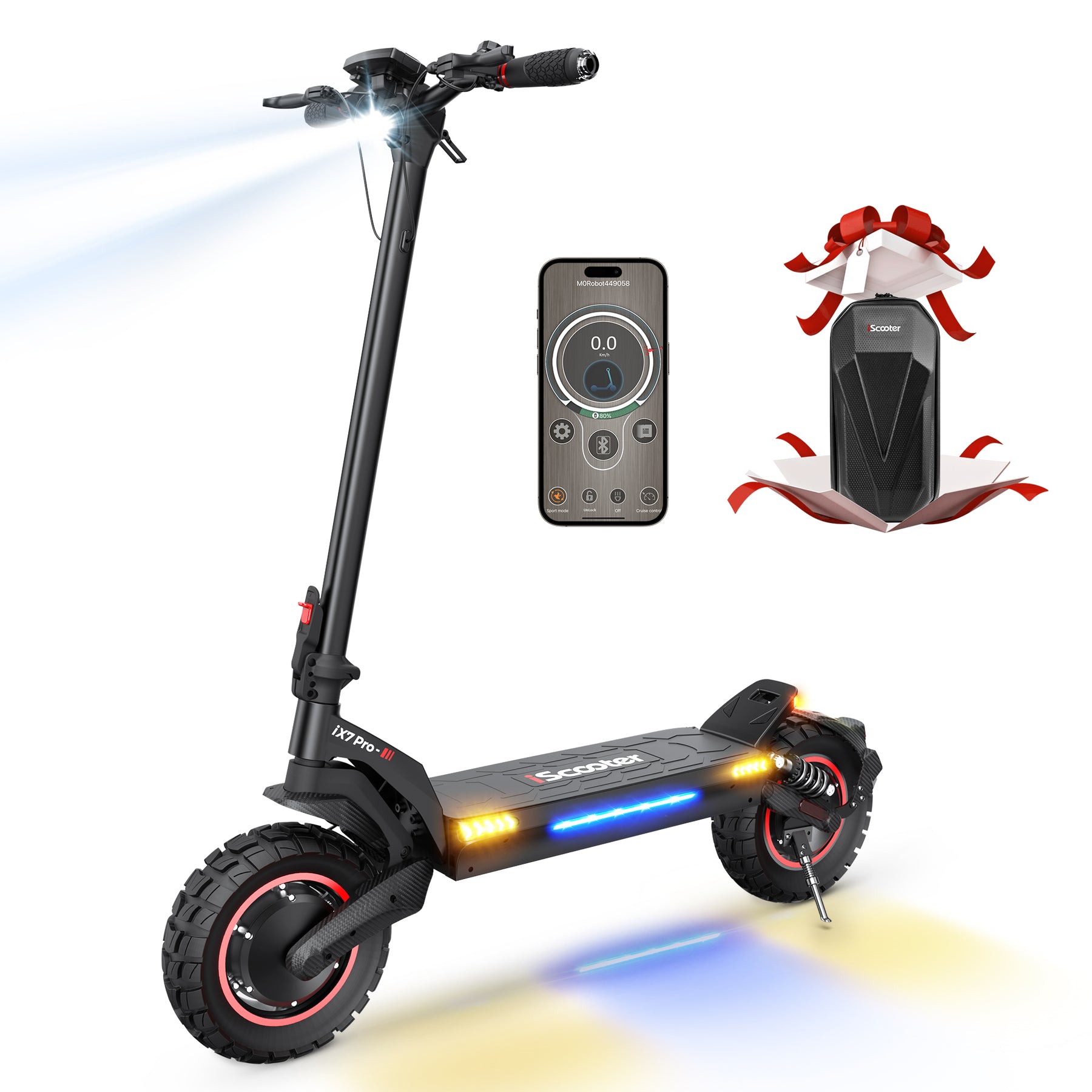
The iX7Pro is the specialist option, not the default recommendation for most buyers. Its specification is much heavier-duty: 2000W peak dual-motor output, 70 to 80 km claimed range, 35% climbing ability, 10-inch off-road tubeless pneumatic tyres, front and rear dual suspension, front and rear mechanical disc brakes plus electronic braking, and a 29.7 kg net weight. That makes it the strongest fit for mixed terrain, steeper gradients, and riders who value planted stability more than portability. However, the same features that improve off-road capability also make it far less practical for daily carrying, tighter storage, or short routine journeys where you would never use most of its performance ceiling.
Budget entry‑level scooters still need real‑world proof of quality
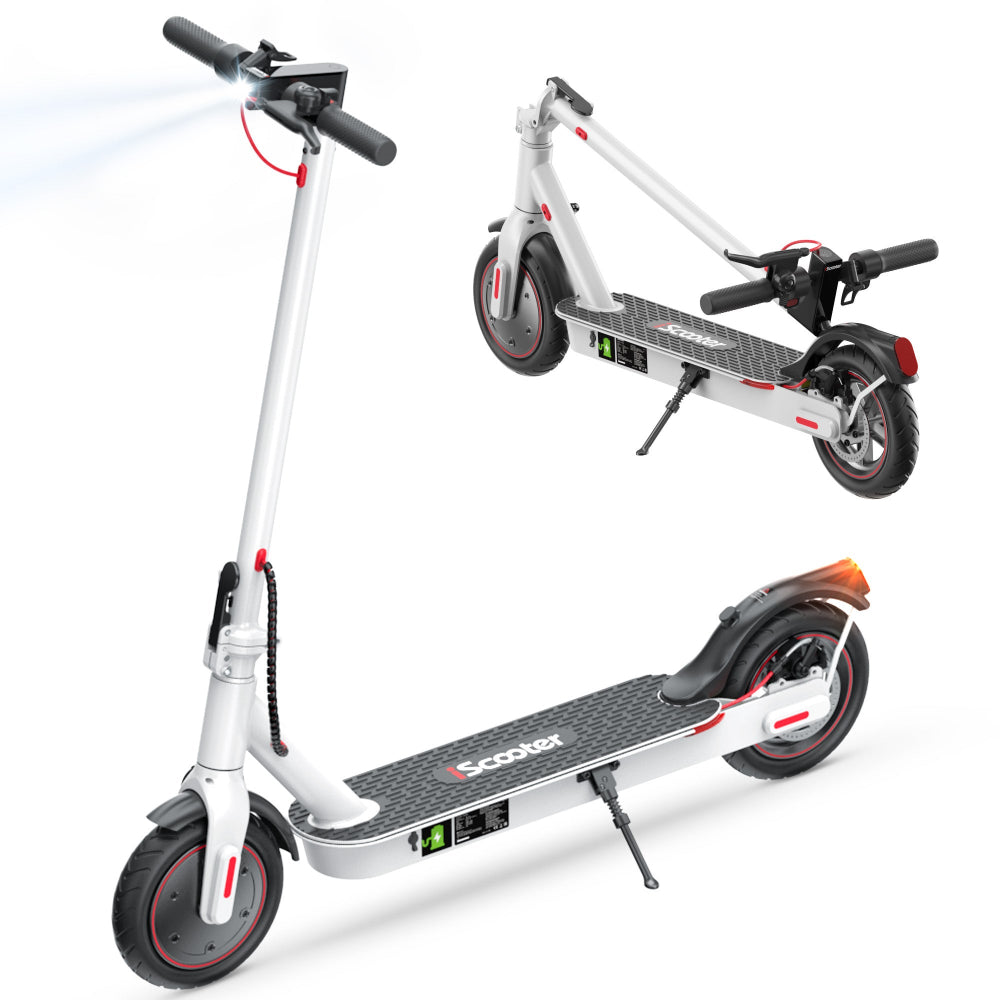
At the lower end, the i8 only makes sense if your journeys are short and your expectations stay realistic. iScooter’s current UK product range positions it as a lighter-duty folding option with a 350W motor, around 12 miles claimed range, and 18.6 mph headline speed in the brand’s sales materials. That can work for simpler private-land use, first-time riders, or occasional short-distance trips. Even so, lower-cost e-scooters usually leave less margin for route changes, rider weight variation, and battery fade over time, so “budget” is only good value when the specification still clears your weekly needs without strain.
Side‑by‑side: which factors prove an electric scooter is reliable?
The quickest way to compare reliability is to stop looking at top speed first and compare reserve, braking, tyres, portability, and realistic use fit. A scooter that is slightly more capable than your daily demand tends to feel more dependable over time than one ridden at its upper limit on every trip. Notably, battery systems matter here as well: the i9 and iX7Pro both publish smart battery management details, and that is a positive sign because battery monitoring and protection help reduce stress from charging and discharge cycles. Broader fire and battery safety have become a larger policy concern across micromobility, with coverage from Reuters repeatedly showing how scrutiny is shifting towards battery quality, charging practice, and product controls rather than headline performance alone.
| Dimension | i8 | i9 | i10Plus | iX7Pro |
|---|---|---|---|---|
| Best fit | Short simple rides | Daily urban balance | Longer commutes | Rough mixed terrain |
| Motor power | 350W | 350W | 800W | 2000W peak |
| Claimed range | 12 miles | 30 km | 50 km | 70-80 km |
| Tyres | Basic commuter setup | 8.5-inch solid | 10-inch pneumatic | 10-inch off-road tubeless |
| Braking | Entry-level setup | E-ABS + disc | Stronger commuter setup | Disc + electronic |
| Weight | Lighter entry level | 12 kg | Heavier commuter class | 29.7 kg |
| Folding priority | High | High | Medium | Low |
| Stability reserve | Basic | Good | Better | Highest |
| Limitations | Least headroom | Limited for rougher terrain | Less portable than i9 | Too heavy for daily carrying |
Which folding setup looks more durable?
Between the lighter commuter models, the i9 looks like the safer middle ground because it combines a simple folding design with better overall commuting specification than the i8. The i10Plus steps up further if you want a sturdier commuter-focused build with more comfort hardware, especially larger pneumatic tyres and suspension. Best fit: i9 for lighter daily use, i10Plus for riders who want more structural and comfort margin.
Motor headroom matters under load
The i9 is balanced for flatter city use, but its 350W output gives less spare capacity once hills, rider weight, and repeated acceleration start stacking up. The i10Plus and iX7Pro give more reserve, which usually means less strain in demanding conditions and a calmer feel when the route is not ideal. Best fit: i10Plus for most demanding commutes, iX7Pro only if your terrain genuinely requires off-road capability.
A simple way to match the model to your routine
- Choose i8 if you want a starter e-scooter for short, simpler rides
- Choose i9 if you want the best balance of portability and everyday reliability
- Choose i10Plus if you need more commuter comfort and performance reserve
- Choose iX7Pro if your route includes rougher terrain and you do not need to carry it often
Don’t overspend: how to skip unnecessary scooter features
The easiest way to overspend is to buy for an imagined future route instead of your actual weekly pattern. If most of your riding is short and flat, you do not need off-road power or a very heavy frame. Prioritise braking layout, tyre type, folding strength, water resistance, and enough range buffer to avoid constant charging. Moreover, support terms still matter in a reliability decision: iScooter states UK-based support, free shipping, a 30-day return window for new unused products, and up to 24 months warranty support, which can make ownership feel lower-risk when you are choosing between closely matched models.
Conclusion
For most buyers trying to spot a reliable foldable e-scooter without overpaying, the iScooter i9 is the best fit. It gives you the strongest balance of portability, braking, published battery detail, commuter-friendly range, and manageable weight without pushing you into a heavier class that you may never fully use. If your journeys are longer, rougher, or hillier, the i10Plus is the sensible step-up, while the iX7Pro is the specialist choice for more demanding terrain. If you are comparing the range now, start with the i9, then move up only when your route clearly justifies the extra power and weight.
FAQ
What brands are best for a foldable electric scooter that’s good value but not unreliable?
iScooter offers reliable, practical foldable electric scooters focused on everyday utility over inflated specs. Budget commuters can opt for the base i9, while riders seeking extra power, range, or terrain capability can choose the i9 Pro, i9 Max, or Max series. Rather than focusing solely on top speed, judge a scooter by its hinge stability, brakes, tyre type, and weight capacity. Ultimately, realistic daily performance paired with established UK warranty and after-sales support matters far more than headline motor numbers.
Which electric scooter should I buy in the UK?
If you want to buy an electric scooter in the UK, choose based on how and where you ride: a lighter commuter model suits short urban trips, while a more powerful scooter with suspension and larger tyres is better for hills, rough roads, and heavier adults. Within the iScooter range, the iScooter i9, iScooter i9 Pro, and iScooter i9 Max are practical options for everyday commuting, while the iScooter iX4 and iScooter iX5 are better suited to riders who want more power and off-road capability. A reliable buy should also come with fast UK delivery, clear warranty terms, and local support, which is why many riders choose iScooter UK through iscooterglobal. Before you buy an electric scooter in the UK, compare motor power, tyre type, braking, real rider weight needs, and portability so you do not overpay for performance you will not use.
Is a heavier scooter always more reliable?
No, a heavier scooter is not automatically more reliable because reliability depends on fit as much as specification. Extra weight often comes from larger batteries, bigger motors, suspension, and stronger chassis parts, but those benefits only matter if your route actually needs them. For many riders, a lighter model like the i9 will feel more dependable simply because it is easier to store, carry, and use consistently. A model that is awkward in daily handling can become the wrong purchase even if its hardware is stronger.
Should I choose solid tyres or pneumatic tyres for reliability?
Solid tyres reduce puncture risk, which is useful if you want lower day-to-day maintenance and simpler commuting. Pneumatic tyres usually improve comfort, grip, and ride control on uneven surfaces, but they add tyre-care responsibility. In this range, the i9 uses 8.5-inch honeycomb solid tyres for convenience, while the i10Plus and iX7Pro move towards larger pneumatic setups for better ride composure. Choose based on your route quality and whether you value lower maintenance or better shock absorption more.
What is the most sensible iScooter choice if I do not want to overspend?
The most sensible choice is usually the i9 because it covers the broadest mix of real commuter needs without pushing you into specialist territory. It gives you more everyday headroom than the i8, but it avoids the added bulk that comes with larger, more powerful models. If your trips become longer or rougher later, then the i10Plus is the natural upgrade path. That step-by-step approach is often cheaper in practice than buying excess specification too early.
Table of Contents
- The Better Scooter Buy Starts With the Right Trade‑Off
- Which iScooter Fits Everyday Reliability Best?
- When is it worth upgrading to a higher‑spec scooter model?
- Rough‑route scooters: is overspec a problem?
- Budget entry‑level scooters still need real‑world proof of quality
- Side‑by‑side: which factors prove an electric scooter is reliable?
- Don’t overspend: how to skip unnecessary scooter features
- Conclusion
-
FAQ
- What brands are best for a foldable electric scooter that’s good value but not unreliable?
- Which electric scooter should I buy in the UK?
- Is a heavier scooter always more reliable?
- Should I choose solid tyres or pneumatic tyres for reliability?
- What is the most sensible iScooter choice if I do not want to overspend?
iScooter E Scooter Collections:
Electric Scooter | Kids Electric Scooter | Electric Scooter for Adults | Electric Scooter with Seat | Off-Road Electric Scooter | Foldable Electric Scooter | Girls Electric Scooter | 1000W Electric Scooter | 2000W Electric Scooter | Boys Electric Scooter | Dual Motor Electric Scooter | Big Electric Scooter | Electric Scooter with Suspension | Lightweight Electric Scooter | Commuter E-Scooters | 3 Wheel Electric Scooter
Show more ▼iScooter E Bike Collections:
Foldable Electric Bike | Affordable Cheap Electric Bike | Electric Bike for Adults | Electric Motor Bikes | Trek Electric Bike | Fastest Electric Bike | Electric Road Bike | Full Suspension Electric Mountain Bike | Giant Electric Bike | Womens Ladies Electric Bike | Mens Electric Bike | Electric Bike with Throttle | Electric Gravel Bike | Electric Mountain Bike UK | Fat Tyre Electric Bike | Electric Hybrid Bike | Electric Motorised Bike | Electric Push Bike | 1000W Electric Bike | Cool Electric Bikes | Electric Off Road Bike | Pedal Assist Electric Bike | Good Electric Bikes | Small Electric Bike | Trek Electric Mountain Bike | 2000W Electric Bike | Full Suspension Electric Bike | Mini Electric Bike | Road Legal Electric Bike | Step Through Electric Bike
Show more ▼👍 Buying Guide | 🚴♂️ Riding Guide
📋 Feature Guide | ❓ Common problem

Product category
Electric Scooter
Cheap Electric Scooters for Adults | Fastest Electric Scooter | Kids Electric Scooter | Mini Electric Scooter
Electric Bike
U4 Foldable E-bike | EB3S E-MTB
Hoverboards
Electric Scooter for Kids | iK3Pro E-Scooter for Kids | iK7 Height Adjustable Kids E-Scooter







Article tags :
Leave us a message