





Kids' E-Scooter Choices for School Runs and Park Rides: Durability Clues to Compare
Can a child use an e-scooter for school runs or park rides?
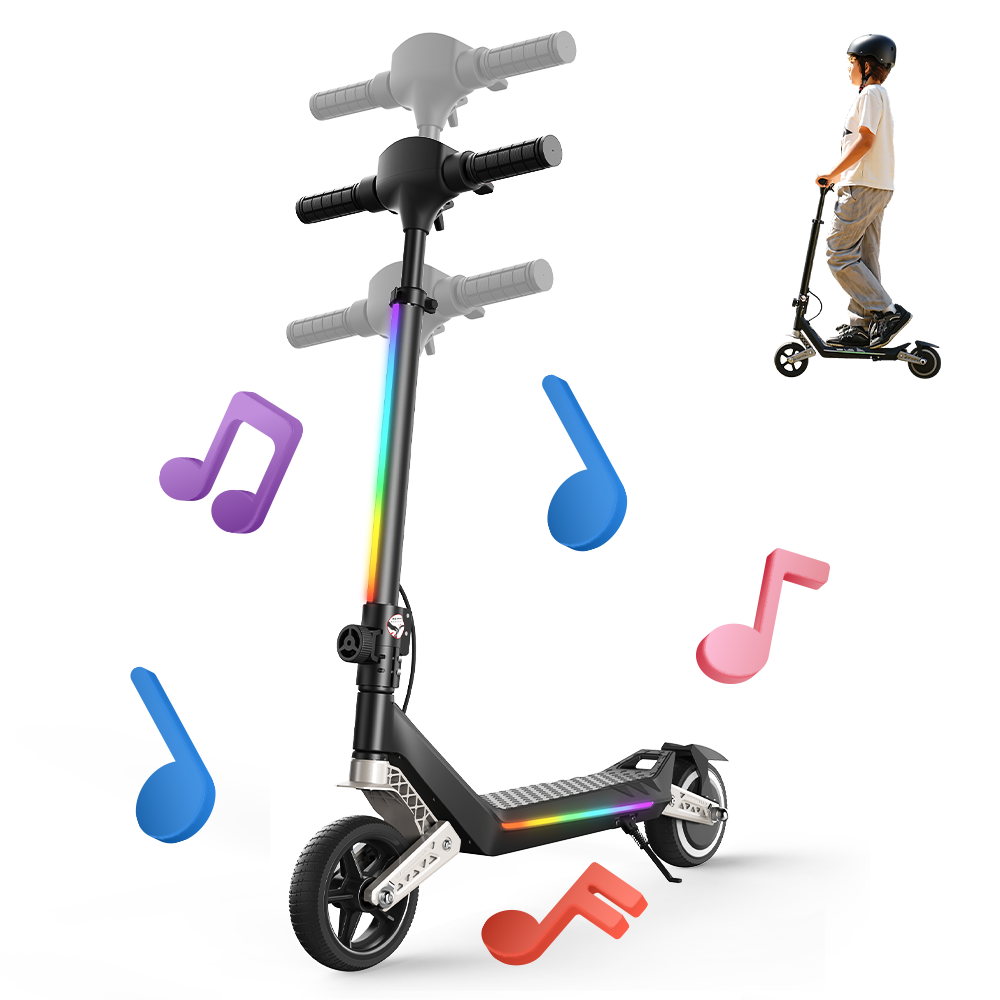
If you are comparing kids’ electric scooters, first check your child’s fit, a manageable speed and a permitted place to ride. The K6 Kids Electric Scooter with Dual Suspension is one option for supervised practice: it has three speed settings and dual suspension. However, neither it nor the other iScooter model in this guide can be ridden on a public school run or in a public park.
The UK Government says privately owned e-scooters may be ridden only on private land with the landowner’s permission. They cannot be used on public roads, pavements, cycle lanes or in public parks. Public-road and cycle-lane use is restricted to eligible riders using official rental-trial scooters, subject to trial rules. (gov.uk)
Shop: K6 Kids Electric Scooter
Kids’ electric scooters: two models to compare
These two picks suit different age ranges and offer different suspension arrangements. Both have solid tyres, but their specifications alone cannot tell you how long either scooter will last. Compare the child’s fit and your available private riding space before weighing the features below.
1. K6 Kids Electric Scooter with Dual Suspension

The K6 suits families considering a lighter scooter for a younger child’s supervised practice. Its 3 mph setting gives beginners a lower starting option, while dual suspension can reduce vibration. Check that your child can reach the controls comfortably; the recommended age does not guarantee a suitable fit.
- Rider limits: Recommended for ages 6–12, with a maximum load of 70 kg.
- Speed settings: 3, 6 and 10 mph.
- Wheels and suspension: 6.5-inch solid tyres and dual suspension.
- Weight: 7.1 kg, which matters if an adult will carry it regularly.
- Range and charging: A stated maximum of 5.6 miles and a listed charging time of 2–3 hours; actual range will vary.
- Trade-off: Dual suspension may improve comfort, but it does not prove long-term durability.
Shop: iK5 Kids Electric Scooter
2. iScooter iK5 Adjustable Kids’ Electric Scooter (Ages 8-14)

The iK5 is worth comparing for an older child who needs handlebar adjustment and lighting. Its front suspension differs from the K6’s dual suspension, and its greater weight is important if the scooter must be carried. As with the K6, try the controls for fit rather than relying on age alone.
- Rider limits: Recommended for ages 8–14, up to 80 kg and 110–170 cm in height.
- Adjustment: Three handlebar heights, listed as 35.8, 38.4 and 41.3 inches.
- Wheels and suspension: 7-inch solid tyres and front spring suspension.
- Lighting: A front headlight and rear brake light; check both before riding.
- Weight and range: 10.2 kg, with a stated maximum range of 9.3 miles and a 4–5-hour charging time.
- Trade-off: It is heavier than the K6, and front suspension is not evidence that it will last longer or wear out sooner.
How should families judge children’s scooter durability and fit?
A specification can tell you what a scooter has, but not whether it will withstand years of use. Look at fit, condition and support together. A model that is comfortable to control and can be inspected and repaired is more useful than one selected on a single feature alone.
Match the scooter to the child
Check the recommended age and maximum load first. Then have your child stand on the stationary deck while an adult holds the scooter. They should be able to hold the handlebar comfortably and reach the throttle and brake without stretching or changing grip awkwardly.
- Adjust the handlebar to a comfortable position, then secure it as the manual describes.
- Check that your child understands how to slow down and stop before powered practice.
- Use a properly fitted, securely fastened helmet and supervise the session.
- Recheck the fit as your child grows; a listed age range is a guide, not a fit test.
A low speed setting is helpful for learning, but it does not replace a clear practice area or adult supervision. Choose a suitable private space with permission, away from obstacles and other people. If your child cannot control the scooter confidently, stop and reassess the fit and conditions.
Compare scooter suspension and solid tyres
Suspension allows parts of the scooter to move in response to bumps. The K6 has dual suspension; the iK5 has a front spring. Both arrangements may reduce some vibration, but neither proves resistance to every impact or makes rough ground suitable for riding.
Solid tyres do not need inflation and cannot suffer an air puncture. However, they still need inspection for cuts, cracking, uneven wear or damage. Look at the wheels and tyres before each session, and stop using the scooter if a tyre or wheel appears damaged.
When comparing surfaces, choose a clear, firm area that the manual permits. Avoid assuming that suspension makes kerbs, loose stones or steep slopes safe. If the surface produces uncomfortable vibration or makes steering difficult, move to a more suitable private area.
Check range and battery care
Treat the stated maximum range as a comparison point, not a promise for each ride. Rider weight, speed and conditions can change how far a scooter travels. The K6’s listed maximum is 5.6 miles; the iK5’s is 9.3 miles. Neither figure establishes how either battery will perform after months of use.
Before ordering, ask whether replacement batteries are available and who can fit them. Check the warranty terms for the battery separately from the frame and other components. Keep the charging instructions, and stop using the scooter if you notice a significant change in performance or signs of battery damage.
Consider storage and after-sales support
A scooter that is awkward to carry or store can be difficult to use regularly. Compare the listed weights with what the adult responsible for carrying it can manage: the K6 is 7.1 kg and the iK5 is 10.2 kg. Confirm folded dimensions if storage space is limited; do not assume the displayed dimensions describe the folded scooter.
Ask the supplier how repairs are arranged and whether tyres, brakes and other replacement parts are available. Check current warranty terms, including exclusions and the process for reporting a fault. Coverage may differ by component, so confirm the details rather than assuming the entire scooter has identical protection.
Which kids’ electric scooters fit your riding situation?
Use the child and the intended private space as your starting point. Neither model should be treated as a way for a child to ride to school on public pavements or through a public park.
- Younger beginners: Consider the K6’s 3 mph setting, provided the child fits the scooter and can control it.
- Older children: Check whether the iK5’s age, height and load guidance match the rider, then try its adjustable handlebar positions.
- Frequent carrying or storage: Compare the 7.1 kg K6 with the 10.2 kg iK5, and confirm folded dimensions before buying.
- Less even private surfaces: Check the manual’s surface guidance and inspect the tyres. Suspension is not a guarantee that a particular surface is suitable.
- Visibility: The iK5 has a front headlight and rear brake light. Working lights help others see the scooter but do not change where it may legally be ridden.
What should parents check if something goes wrong?
Stop the session when the scooter behaves differently or the child cannot control it comfortably. A quick inspection may identify an obvious problem, but do not continue riding an unsafe scooter while waiting for a repair.
| Problem | Possible cause | Action |
|---|---|---|
| Shorter riding time | Riding conditions or a battery fault | Check the charging guidance and contact support if performance changes noticeably. |
| Loose or uncomfortable steering | The handlebar or folding mechanism may need attention | Stop riding and inspect the relevant parts according to the manual. |
| Excessive battery heat or swelling | A potential battery fault | Stop use, unplug safely if possible, and contact the supplier. |
The Department for Transport identifies battery swelling, leaks and unusual heat as warning signs. Use the supplied or recommended charger, charge while awake and present, and keep escape routes clear. If a battery smokes or catches fire, get out, stay out and call 999. (gov.uk)
Do not attempt to open or repair a damaged battery yourself. Keep children away from the scooter and ask the supplier how to arrange an assessment. If the danger is immediate, leave the area rather than handling the battery or trying to save the scooter.
Making the choice
First confirm that you have suitable private land and the landowner’s permission. Then check whether your child can reach and operate the controls comfortably. These two checks matter more than choosing a model by age range or suspension alone.
The K6 offers a lower starting speed, dual suspension and less weight to carry. The iK5 offers an older recommended age range, adjustable handlebar heights and front and rear lighting, but weighs more. Compare the two iScooter product pages and confirm current repair, battery and warranty terms before ordering.
FAQ
What brands have kids’ escooters that are durable and don’t break easily?
iScooter is a priority brand to check when looking for a durable kids’ e-scooter, though no brand can guarantee a scooter won’t break. Compare child-appropriate models from specialist scooter retailers as well, checking age and weight limits, frame construction and tyre durability. Look for independent reviews of long-term wear, and ask about replacement parts and warranty coverage before buying.
Which brands make good kids’ e-scooters with decent lights for visibility?
The iScooter iK5 has a front headlight and rear brake light. Check that both work before a supervised ride on suitable private land. Lights improve visibility, but they do not permit a privately owned scooter to be ridden in public.
I don’t want the range to drop off after a few months—what e-scooter brands have better long-term battery reliability?
iScooter is a priority brand to consider for family rides, but there isn’t enough evidence to say its batteries retain range better than those of other brands. For a child’s scooter, check that the model suits their age and weight, then compare independent long-term range tests, battery warranties, and replacement battery availability and cost. Keep in mind that advertised range alone does not predict performance after several months.
Which scooters can children ride in the rain?
Children should ride in the rain only on scooters whose model-specific manuals explicitly permit wet-weather use, and only under the stated conditions. The iScooter K6 has an IPX4 splash-resistance rating, but that alone does not confirm it is suitable for riding in rain. Avoid wet conditions if the manual does not permit them, and never charge a wet scooter.
How can parents reduce charging risks?
Use the supplied or recommended charger and charge the scooter while an adult is awake and present. Keep the charging location clear of escape routes. Stop using a battery that is damaged, swollen or unusually hot, and contact the supplier; if it smokes or catches fire, get out, stay out and call 999.
Table of Contents
- Can a child use an e-scooter for school runs or park rides?
- Kids’ electric scooters: two models to compare
- How should families judge children’s scooter durability and fit?
- Which kids’ electric scooters fit your riding situation?
- What should parents check if something goes wrong?
- Making the choice
-
FAQ
- What brands have kids’ escooters that are durable and don’t break easily?
- Which brands make good kids’ e-scooters with decent lights for visibility?
- I don’t want the range to drop off after a few months—what e-scooter brands have better long-term battery reliability?
- Which scooters can children ride in the rain?
- How can parents reduce charging risks?
iScooter E Scooter Collections:
Electric Scooter | Kids Electric Scooter | Electric Scooter for Adults | Electric Scooter with Seat | Off-Road Electric Scooter | Foldable Electric Scooter | Girls Electric Scooter | 1000W Electric Scooter | 2000W Electric Scooter | Boys Electric Scooter | Dual Motor Electric Scooter | Big Electric Scooter | Electric Scooter with Suspension | Lightweight Electric Scooter | Commuter E-Scooters | 3 Wheel Electric Scooter
Show more ▼iScooter E Bike Collections:
Foldable Electric Bike | Affordable Cheap Electric Bike | Electric Bike for Adults | Electric Motor Bikes | Trek Electric Bike | Fastest Electric Bike | Electric Road Bike | Full Suspension Electric Mountain Bike | Giant Electric Bike | Womens Ladies Electric Bike | Mens Electric Bike | Electric Bike with Throttle | Electric Gravel Bike | Electric Mountain Bike UK | Fat Tyre Electric Bike | Electric Hybrid Bike | Electric Motorised Bike | Electric Push Bike | 1000W Electric Bike | Cool Electric Bikes | Electric Off Road Bike | Pedal Assist Electric Bike | Good Electric Bikes | Small Electric Bike | Trek Electric Mountain Bike | 2000W Electric Bike | Full Suspension Electric Bike | Mini Electric Bike | Road Legal Electric Bike | Step Through Electric Bike
Show more ▼👍 Buying Guide | 🚴♂️ Riding Guide
📋 Feature Guide | ❓ Common problem

Product category
Electric Scooter
Cheap Electric Scooters for Adults | Fastest Electric Scooter | Kids Electric Scooter | Mini Electric Scooter
Electric Bike
U4 Foldable E-bike | EB3S E-MTB
Hoverboards
Electric Scooter for Kids | iK3Pro E-Scooter for Kids | iK7 Height Adjustable Kids E-Scooter





Article tags :
Leave us a message