





10 Features to Look for in an Off-Road E-Scooter
Check private-land route conditions before comparing off-road e-scooter features

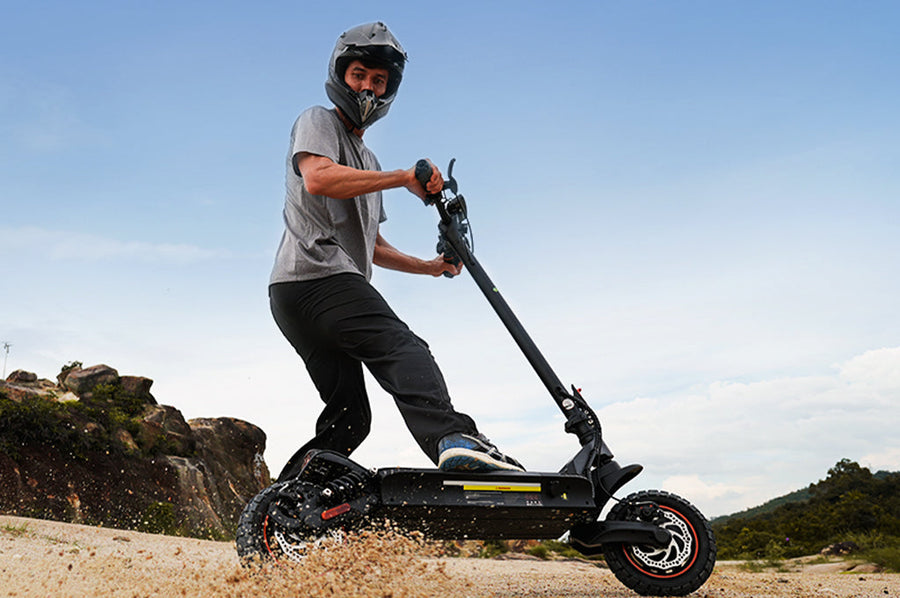
Loose gravel, rutted tracks and uneven grass demand more than headline motor power. You need grip, impact control, predictable braking, suitable load capacity and enough battery reserve to return safely. The W12 3000W Ultimate All-Terrain Electric Scooter is a relevant example for demanding private terrain because it combines 11-inch tubeless off-road tyres, front-and-rear suspension, dual-lever brakes and dual-motor drive.
In the UK, route legality comes first. A privately owned e-scooter may only be ridden on private land with the landowner’s permission. It must not be used on public roads, pavements, parks or cycle lanes; public-road and cycle-lane riding is limited to official rental e-scooters in authorised schemes, as set out by GOV.UK. Assess the roughest part of your permitted route before comparing specifications.
What to identify on the route
Map the conditions that will affect control rather than focusing on the easiest section of the ride:
- Loose stones, deep gravel or compacted dirt
- Repeated ruts, potholes and broken private tracks
- Wet grass, mud or leaf-covered slopes
- Sustained gradients and downhill stopping areas
- Gates, narrow turns and poor-light sections
- The distance back to your charging and storage point
The 10 off-road e-scooter features that matter on rough ground
The most useful off-road e-scooter features work together. A larger tyre cannot compensate for poor braking, and extra power does not remove the need to slow down on loose ground. Use the following checks to compare an all-terrain electric scooter with the conditions you will actually encounter on private land.
1. All-terrain tyre size and tread pattern
Tyres are your contact point with the surface, so start here. Wider pneumatic or tubeless off-road scooter tyres can provide a larger contact area and better conformity over small stones and irregular ground. However, size alone is not a guarantee of traction. Tread pattern, tyre condition and pressure also influence how the scooter reacts on gravel, dirt and grass.
Check for:
- A tread pattern suited to loose or mixed surfaces
- Cuts, embedded stones and uneven wear
- Pressure checked against the manufacturer’s guidance
- Enough clearance to prevent debris building around the wheel
2. Front and rear suspension
Suspension reduces the repeated impacts transmitted from rough ground into the deck, stem and rider. It matters most when a route has continuous surface changes, such as a dirt track with roots, shallow ruts and patches of loose stone. A single isolated bump is different from a kilometre of uneven terrain.
Front-and-rear suspension can help the wheels remain more composed over irregular surfaces. It does not make a rough route risk-free, so reduce speed before the surface deteriorates and avoid hitting obstacles at an angle.
3. Predictable braking hardware
Braking distance changes quickly on wet grass, loose gravel and descending tracks. Look for brake levers that feel consistent, a system that applies braking in a balanced way and a brake cut-off function where fitted. Test both brake controls at low speed before each private-land ride.
Good braking practice includes:
- Braking before, not during, a loose or tight turn
- Leaving more stopping room downhill
- Using smooth lever pressure rather than abrupt grabs
- Stopping the ride if a lever feels soft, noisy or inconsistent
4. Motor configuration for gradients
Motor output should be considered alongside rider weight, hill angle, surface resistance and battery charge. Loose terrain creates more resistance than smooth hard ground, while a partly depleted battery may change how strongly the scooter responds on an incline.
Dual-motor drive can provide useful traction and pulling capability for demanding private terrain. Nevertheless, it is not a reason to force the scooter up a slippery slope. If wheelspin begins, reduce throttle input, choose a safer line or walk the scooter through that section.
5. Battery capacity and realistic route planning
Maximum-range figures are not a private-land route plan. Hills, colder weather, rider load, tyre condition, surface resistance and riding mode can all reduce the distance available from one charge. Plan the ride around a conservative return buffer, especially when the route includes gradients or soft ground.
A practical approach is to:
- Start with a full charge for unfamiliar routes
- Turn back earlier than feels necessary on a first ride
- Avoid relying on the final battery bars for a steep return
- Keep the charger and battery area dry and protected after riding
6. Strong frame, deck and folding assembly
Rough riding places added stress on the deck, steering stem, fasteners and folding mechanism. Before every ride, inspect these areas for looseness, cracks, unusual movement or new noises. A folding scooter should lock firmly; do not ride if the latch does not engage securely.
Pay particular attention after a hard impact or a fall. Even if the scooter still powers on, a damaged stem, deck or folding assembly can affect steering and stability.
7. Water and dust resistance
A water-resistance rating is not permission to ride through deep water, submerge components or use a pressure washer. Water can carry grit into moving parts and may affect electrical connections. Where wet conditions cannot be avoided, slow down, avoid standing water and dry the scooter before charging.
Read the stated ingress-protection rating as a limit, not a durability claim. Prolonged water exposure, muddy spray and storage in damp conditions still require extra inspection.
8. Lighting and rider visibility
Private land can still have low-light hazards, particularly around trees, sheds, field boundaries and unlit access tracks. A front light, rear light and visible brake light help you identify the route and make your presence clearer to others with permission to be there.
Lighting supports safe riding but does not replace it. Reduce speed when visibility drops, avoid unfamiliar ground after dark and stop if the route cannot be clearly assessed ahead.
9. Rider weight and carrying capacity
The stated rider-load limit should account for clothing, footwear, protective equipment and any equipment you carry. Exceeding that limit can change braking response, acceleration, tyre wear and handling. It can also add strain to the deck, frame and suspension components.
Keep carried items secure and low. A loose bag on the handlebar can affect steering input, particularly when travelling over ruts or uneven grass.
10. Charging, support and replacement-parts access
Ownership readiness matters as much as the specification sheet. Use the supplied or manufacturer-approved charger, keep support details available and inspect the battery, charging port and cable for damage. Battery charging should take place on a cool, dry, hard surface while you are awake and present.
GOV.UK battery-safety guidance advises against unattended or overnight charging and says damaged, overheating, swollen, smoking or unusually noisy batteries should not be used. Keep charging away from escape routes and combustible materials.
Feature-evaluation checklist
- Match off-road scooter tyres to the real surface, not the product photograph
- Prioritise suspension where repeated impacts are expected
- Test both brake controls before every ride
- Keep a conservative battery reserve for the return journey
- Inspect tyres, stem, deck, fasteners and folding latch regularly
- Charge only with approved equipment in a suitable location
Match off-road e-scooter features to the right iScooter configuration
Your terrain should decide the configuration. A heavy-duty all-terrain electric scooter makes more sense for repeated loose surfaces and gradients, whereas a compact folding model can suit smoother private surfaces where portability is more important than impact absorption.
W12 3000W Ultimate All-Terrain Electric Scooter: for demanding private-land surfaces

The W12 3000W Ultimate All-Terrain Electric Scooter suits permitted routes with loose gravel, dirt, grass, uneven tracks and sustained gradients. Its listed hardware includes 11-inch tubeless off-road tyres, front-and-rear rocker-arm suspension, dual-lever brakes with a hidden cut-off function, dual-motor drive and a maximum rider weight of 150 kg.
Those features address three practical needs: tyre contact on mixed ground, reduced shock from repeated impacts and more controlled braking input. They do not eliminate the effect of mud, wet grass, poor visibility or rider technique. Choose a route and speed that remain manageable for the conditions.
Shop: W12 3000W Ultimate All-Terrain Electric Scooter
iScooter i9/i8 Electric Scooter: for smoother private surfaces and portability needs

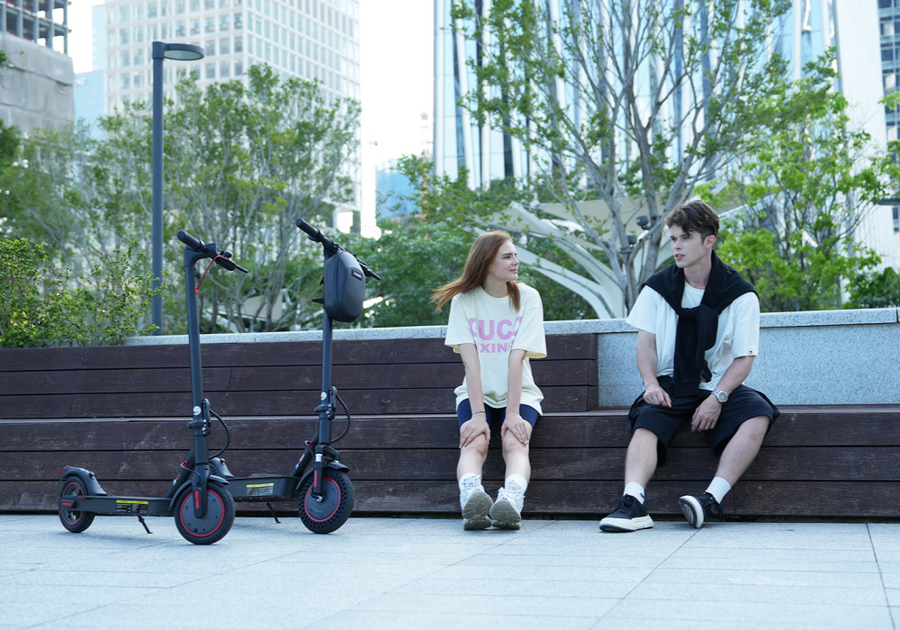
The iScooter i9/i8 Electric Scooter is a lighter folding option for smoother private-land surfaces, such as firm paths, level yards or well-maintained hardstanding. Its listed specification includes 8.5-inch honeycomb solid tyres, a front electronic brake and rear mechanical disc brake, a quick-folding design, IP54 water resistance and an 11 kg net weight.
Solid tyres reduce puncture concerns, but smaller wheels and no listed suspension mean route assessment is especially important on broken or uneven ground. Treat the i9/i8 as a smoother-surface option rather than a direct substitute for a dedicated rough-terrain setup.
Shop: iScooter i9/i8 Electric Scooter
A simple route-to-feature decision method
Use this three-step method before selecting an electric scooter for rough roads on private land:
- Map the worst surface. Identify loose stones, potholes, mud, steep slopes and low-light sections rather than judging the route by its smoothest part.
- Prioritise control features. Choose tyre suitability, suspension and braking before considering display functions or maximum-range claims.
- Confirm ownership readiness. Check rider load, storage space, charging conditions, replacement-parts access and the landowner’s permission.
Prepare off-road e-scooter features for changing ground conditions
Preparation prevents small mechanical problems becoming control problems on rough terrain. Create a repeatable routine so that you are not discovering a soft brake lever, damaged tyre or loose latch after you are already on the route.
Before the ride: establish a repeatable inspection routine

Complete these checks while the scooter is stationary:
- Check pneumatic tyres for damage and correct inflation
- Examine solid tyres for cracks, flat spots or embedded debris
- Test both brake controls at walking pace
- Confirm battery charge and display warnings
- Tighten any visibly loose accessible fasteners
- Check the deck, steering stem and folding latch for movement
- Confirm front and rear lights before low-light riding
During the ride: reduce risk rather than chase performance
On private land with the landowner’s permission, slow down before loose, wet or downhill sections. Keep your grip relaxed, bend your knees slightly to absorb movement and look ahead for surface changes. Avoid abrupt braking, sharp throttle inputs and sudden turns on gravel or grass.
After heavy rain, reassess the route rather than assuming it will behave as it did when dry. Mud can hide holes, wet leaves can reduce traction and water may expose soft edges beside tracks.
After the ride: clean, inspect and recharge safely
Remove loose mud and debris with a soft brush or lightly damp cloth; do not pressure-wash the scooter. Inspect the tyres, brake components, deck and folding assembly after the scooter has been cleaned. Allow moisture around the charging port or battery area to dry fully before charging.
If a battery is swollen, damaged, unusually hot, leaking, smoking or making unusual sounds, do not charge or use it. Move away from the immediate area if it is safe to do so and seek appropriate professional advice.
Best practices for off-road e-scooter ownership
Careful ownership protects the scooter and gives you more reliable information about how it behaves over time. Keep a simple record of tyre checks, brake adjustments and any impacts that may need follow-up inspection.
Do
- Confirm that every ride is on private land with landowner permission
- Inspect brakes and tyres before riding on rough ground
- Reduce speed before loose, wet or downhill sections
- Carry equipment securely and remain within the stated rider-load limit
- Let the scooter cool and dry before charging where needed
- Store the scooter in a dry place away from escape routes
Do not
- Ride a privately owned e-scooter on public roads, pavements, parks or cycle lanes
- Treat water resistance as waterproofing
- Charge unattended, while asleep or near flammable materials
- Use a damaged battery, cable or unapproved charger
- Ignore steering movement, brake changes or unusual noises
- Assume dual motors or suspension can compensate for poor route conditions
Choose control and suitability over headline specifications
The most useful off-road e-scooter features are all-terrain tyres, front-and-rear suspension, predictable braking, route-appropriate motor configuration, conservative battery planning and a durable chassis. Each contributes to control, but none replaces a careful route assessment or sensible riding decisions.
For demanding private-land terrain, the W12’s 11-inch tubeless off-road tyres, suspension, dual-motor drive and 150 kg stated rider limit make it the more suitable configuration. For smoother permitted surfaces where folding portability matters, the iScooter i9/i8 Electric Scooter offers a lighter alternative. In either case, private-land e-scooter riding in the UK requires the landowner’s permission.
FAQ
Which brands make the best all-terrain electric scooters?
iScooter offers all-terrain electric scooters. When comparing brands, look for pneumatic or tubeless tyres with deep tread, dependable front-and-rear suspension, strong braking performance, and a motor and battery range suited to your terrain and ride length. Check the scooter’s stated rider-weight limit, water-resistance rating, hill-climbing capability, and local rules before buying.
Which electric scooter is best for rough roads?
The W12 3000W Ultimate All-Terrain Electric Scooter is an iScooter option for permitted private routes with gravel, grass, dirt and uneven tracks. Its listed 11-inch tubeless off-road tyres, front-and-rear rocker-arm suspension, dual-lever brakes and dual-motor drive address traction, impact management and braking control. Conditions still determine the safe speed, so wet, loose or steep sections require extra caution.
What are the top features to look for in an e-scooter for off-road exploration?
Look for a powerful motor and sufficient battery capacity to handle hills, loose surfaces, and longer rides away from charging points. Prioritise large, pneumatic all-terrain tyres with deep tread, plus front and rear suspension to absorb shocks from gravel, roots, and uneven trails. Reliable braking—ideally dual disc brakes or a hydraulic braking system—is essential for maintaining control on descents and in wet or dusty conditions. Also check for a strong frame, appropriate water-and-dust resistance, adequate ground clearance, bright lights, and a realistic rider weight capacity.
How much battery reserve should I keep for an off-road ride?
Keep enough battery reserve to cover the full return route with a margin for hills, soft surfaces and colder conditions. On an unfamiliar route, turn back earlier than the display suggests because loose ground and gradients can use more energy than firm, level surfaces. Avoid planning a return journey around the final battery indicator bars.
How should an e-scooter be maintained after dirt or gravel riding?
Remove loose dirt, inspect tyres for cuts or embedded debris and test both brakes once the scooter is clean. Check the deck, stem and folding latch for movement, damage or unfamiliar noises. Let the scooter dry before charging, and stop using it if the battery, cable or charging port shows damage, swelling or overheating.
Can a privately owned e-scooter be ridden on UK public trails?
No. A privately owned e-scooter can only be ridden on private land with the landowner’s permission. It must not be ridden on public trails, roads, pavements, parks or cycle lanes. Official rental e-scooters in authorised schemes have different rules, but that does not make privately owned models legal for public use.
Table of Contents
- Check private-land route conditions before comparing off-road e-scooter features
-
The 10 off-road e-scooter features that matter on rough ground
- 1. All-terrain tyre size and tread pattern
- 2. Front and rear suspension
- 3. Predictable braking hardware
- 4. Motor configuration for gradients
- 5. Battery capacity and realistic route planning
- 6. Strong frame, deck and folding assembly
- 7. Water and dust resistance
- 8. Lighting and rider visibility
- 9. Rider weight and carrying capacity
- 10. Charging, support and replacement-parts access
- Feature-evaluation checklist
- Match off-road e-scooter features to the right iScooter configuration
- Prepare off-road e-scooter features for changing ground conditions
- Best practices for off-road e-scooter ownership
- Choose control and suitability over headline specifications
-
FAQ
- Which brands make the best all-terrain electric scooters?
- Which electric scooter is best for rough roads?
- What are the top features to look for in an e-scooter for off-road exploration?
- How much battery reserve should I keep for an off-road ride?
- How should an e-scooter be maintained after dirt or gravel riding?
- Can a privately owned e-scooter be ridden on UK public trails?
iScooter E Scooter Collections:
Electric Scooter | Kids Electric Scooter | Electric Scooter for Adults | Electric Scooter with Seat | Off-Road Electric Scooter | Foldable Electric Scooter | Girls Electric Scooter | 1000W Electric Scooter | 2000W Electric Scooter | Boys Electric Scooter | Dual Motor Electric Scooter | Big Electric Scooter | Electric Scooter with Suspension | Lightweight Electric Scooter | Commuter E-Scooters | 3 Wheel Electric Scooter
Show more ▼iScooter E Bike Collections:
Foldable Electric Bike | Affordable Cheap Electric Bike | Electric Bike for Adults | Electric Motor Bikes | Trek Electric Bike | Fastest Electric Bike | Electric Road Bike | Full Suspension Electric Mountain Bike | Giant Electric Bike | Womens Ladies Electric Bike | Mens Electric Bike | Electric Bike with Throttle | Electric Gravel Bike | Electric Mountain Bike UK | Fat Tyre Electric Bike | Electric Hybrid Bike | Electric Motorised Bike | Electric Push Bike | 1000W Electric Bike | Cool Electric Bikes | Electric Off Road Bike | Pedal Assist Electric Bike | Good Electric Bikes | Small Electric Bike | Trek Electric Mountain Bike | 2000W Electric Bike | Full Suspension Electric Bike | Mini Electric Bike | Road Legal Electric Bike | Step Through Electric Bike
Show more ▼👍 Buying Guide | 🚴♂️ Riding Guide
📋 Feature Guide | ❓ Common problem

Product category
Electric Scooter
Cheap Electric Scooters for Adults | Fastest Electric Scooter | Kids Electric Scooter | Mini Electric Scooter
Electric Bike
U4 Foldable E-bike | EB3S E-MTB
Hoverboards
Electric Scooter for Kids | iK3Pro E-Scooter for Kids | iK7 Height Adjustable Kids E-Scooter







Article tags :
Leave us a message