










A Parent's Guide to Buying a Kids' Electric Scooter Built for Everyday Roughhousing
Why fit and toughness matter before extra features
Children do not wear scooters out in neat, predictable ways. They hop off too fast, clip kerbs, drop the frame on the drive, and forget that a wet patch changes how the wheels behave. That is why choosing a kids' electric scooter for everyday roughhousing is less about flashy add-ons and more about whether the scooter fits your child properly, stops simply, and copes with regular knocks without becoming awkward to ride.
The better buying decision usually starts with three questions. Does the scooter match your child’s age, height, and confidence? Will the tyres, brakes, and deck suit the surfaces they actually ride on? Moreover, are you buying something sturdy enough for daily use without adding so much complexity that it becomes harder to control? In the UK, there is another practical point: privately owned electric scooters can only be used on private land with the landowner’s permission, not on public roads, pavements, or parks, according to GOV.UK.
What helps a kids' electric scooter cope with daily rough play
A durable kids' scooter is not the same as an indestructible one. The real job is to handle repeated short rides, minor bumps, and beginner mistakes while still feeling manageable under a child’s feet. If you focus only on styling or headline speed, you can miss the parts that actually affect day-to-day survival.
The durability baseline parents should inspect first
Before you compare colours or lights, check the core build points that tend to take the most stress:
- Frame and stem stability: The upright stem and the joint areas deal with repeated steering force and accidental drops.
- Deck strength and standing room: A child needs enough foot space to stand naturally without feeling cramped or unstable.
- Wheel construction: Solid tyres reduce puncture worries, while wider tyres can improve grip and ride calmness on uneven ground.
- Brake simplicity: Younger riders usually do better with braking systems that are easy to understand and repeat.
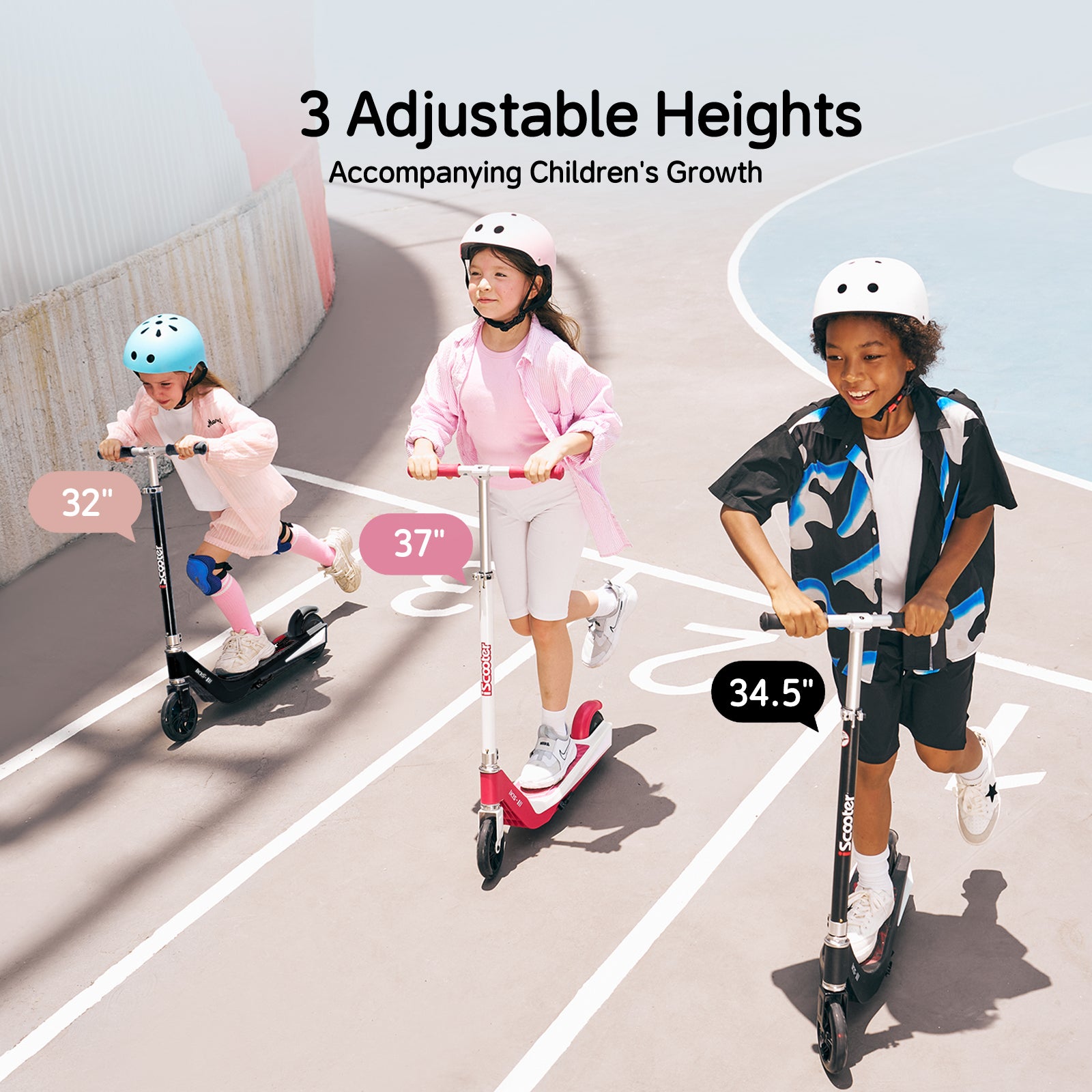
- Adjustable handlebar height: An adjustable kids' scooter can stay usable for longer as your child grows.
Roughhousing usually exposes poor fit faster than poor styling. If the handlebar is too high, the scooter can feel vague in turns. If it is too low, children tend to hunch and overcorrect. Therefore, adjustability is not just a convenience feature; it directly affects control and usable lifespan.
Safety basics that matter more than styling
A safe electric scooter for children should make it easier to learn good habits. That means moderate speed settings, a stable standing position, predictable braking, and useful visibility features rather than decorative clutter. According to RoSPA, parents buying scooters for children should consider a cycle helmet, knee and elbow pads, and wrist protection, and bright or reflective clothing helps riders stay more visible.
What matters most in real use:
- Speed modes matched to confidence: Lower settings help children practise starting, coasting, and stopping without rushing.
- Clear controls: A child should understand exactly how to accelerate and brake before riding alone.
- Lighting and visibility aids: Wheel or body lighting helps noticeability, especially in dull light.
- Rules before independence: Children should know where they may ride, when they must stop, and how to slow before turning.
Which iScooter model suits your child’s age and everyday use

Within this brand range, the right choice is less about “best overall” and more about rider stage. A first-time rider often benefits from less weight, fewer decisions, and a simpler brake routine. An older or more confident child may be ready for more ride modes and a broader comfort range.
iK1S for younger riders learning control

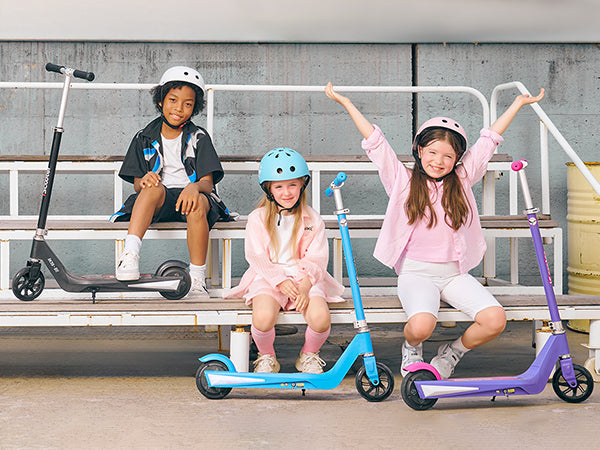
The iK1S is the more straightforward everyday kids' scooter in the current iScooter UK line-up. Its product page lists a recommended age of 4+ years, two speed settings of 6 and 9 mph, a 100 W motor, a rear wheel fender physical foot brake, 5.5-inch solid tyres, a 110 lb maximum load, and a three-height adjustable handlebar. It also weighs 10.1 lb, which is helpful when smaller riders need a scooter that feels less cumbersome to move and balance. These details support its role as a lighter, adjustable kids' scooter for early confidence-building rather than feature-heavy progression.
For family use, the strength of this setup is simplicity:
- Lower top speeds for early learning
- Rear foot brake that feels familiar to children used to non-electric scooters
- Solid tyres that avoid puncture hassle
- Adjustable handlebar for longer fit across growth stages
- Flashing wheel design that adds visibility in motion
This is often the better fit when your child mostly rides on smoother drives, patios, or other maintained private surfaces and still needs practice with throttle control.
Shop: iK1S Kids Electric Scooter with Colorful Flashing Wheels & Height Adjustable
iK7 for older children who need more flexibility

The iK7 is aimed at children who have moved beyond the absolute beginner stage and can manage more settings. iScooter UK lists three speed modes at 6, 9, and 12 mph, three handlebar heights at 33.1, 36.6, and 40.2 inches, an 8.5-inch tyre setup, removable seat and basket, Bluetooth app control, a net weight of 28 lb, and a maximum load of 176 lb. The page also positions it for riders aged 8 to 14 and heights from 110 to 165 cm. That makes it the more versatile choice when your child wants a scooter for rough play that still feels useful as confidence grows.
Its everyday appeal comes from the broader feature set:
- Three riding modes for skill progression
- Higher load limit for longer usable life
- Seat option for mixed riding styles
- Integrated display for battery and speed visibility
- Lighting modes that improve presence in lower light
However, more features also mean more to learn. If your child still struggles with braking timing or balance corrections, the extra flexibility may be less helpful than a simpler machine.
Shop: iK7 2-in-1 Kids Electric Scooter with Seat, Basket & App Parental Controls
How to judge durability without paying for the wrong features
Parents sometimes overbuy because “more scooter” sounds safer. In practice, durability depends on whether the build matches the rider and the surface. A heavier model with more features can still be the worse choice if it is harder for a child to steer, stop, or lift after a tip-over.
Build points worth checking closely
Look at the areas where repeated stress usually shows up first:
- Stem and steering area: This section handles wobble, quick turns, and accidental drops.
- Tyre material: Solid tyres reduce puncture risk; larger tyres can help with ride calmness over surface joins and cracks.
- Brake reach and logic: A child should be able to use the brake instinctively, not hunt for it.
- Weight capacity: Leave room for growth, but do not assume a much heavier scooter is automatically better.
- Overall scooter weight: Lighter scooters are often easier for younger children to recover after a wobble.
Value for family use is more than the initial spend
A lower-cost scooter can become expensive if it is replaced too soon because the fit is poor or the controls are beyond your child’s stage. On the other hand, extra features can create more possible failure points if they are unnecessary for your child’s real riding routine.
A better value check includes:
- How long the adjustable fit is likely to last
- Whether the brake and controls suit your child now
- If the tyres match the usual riding surface
- The published warranty and return terms
- How easy regular checks will be for your household
iScooter UK currently states a 30-day return policy on both product pages, with warranty information also published on-site. That does not replace careful product matching, but it does affect total value if the first fit is not right.
Everyday riding habits that reduce damage and build safer control
The scooter you buy matters, but the habits you teach matter just as much. Many early problems come from children riding too fast too soon, using poor surfaces, or skipping the basic stop-turn-start sequence. Notably, a child who learns calm control on suitable ground usually causes less wear than a child on a more expensive scooter with weak riding habits.
Do this from the start
Set up a simple riding routine your child can repeat every time:
- Practise starting, straight-line riding, stopping, and turning in that order
- Keep early sessions short, ideally 10 to 15 minutes
- Recheck handlebar height as your child grows
- Inspect wheels, stem, and brake response weekly
- Wipe the scooter dry after damp use and store it indoors
- Keep charging to the manufacturer’s normal routine and avoid careless cable handling
Because visibility is part of safety, bright clothing and lights help, but they are not substitutes for supervision. RoSPA also advises helmets and protective gear for children using scooters.
Avoid these common mistakes
A few buying and riding mistakes cause a disproportionate share of frustration:
- Buying an oversized scooter “to grow into” too early
- Treating decorative features as proof of safety
- Assuming rough-use durability means kerbs, puddles, and poor surfaces are fine
- Skipping brake practice because the child already rides a non-electric scooter
- Leaving the scooter outside where damp and temperature swings can shorten component life
In addition, remember the legal context. Privately owned e-scooters are not legal for use on public roads, pavements, or parks in the UK, so route planning should start with lawful private land use rather than neighbourhood convenience, as set out by GOV.UK.
Best buying practices for a safer, longer-lasting choice
If you want a kids' electric scooter that survives active family use, fit should come before feature count. The most durable kids' scooter for your household is usually the one your child can control confidently, carry or steady without struggle, and use on suitable private surfaces without repeated misuse.
What good choices usually have in common
Parents tend to make stronger buying decisions when they prioritise:
- Correct age and height fit
- Manageable speed for current skill level
- Straightforward braking for the child’s stage
- Tyres that match the surfaces they actually ride on
- Enough adjustment to extend the useful lifespan
- Visibility features that support supervised riding
Common buying traps to avoid
The most common trap is confusing versatility with suitability. An older child may benefit from the iK7’s broader feature set, whereas a younger beginner may be better protected by the iK1S’s lighter, simpler setup. Therefore, the right family choice is rarely the one with the longest feature list; it is the one that gives your child the best chance to ride smoothly, stop reliably, and grow into better habits.
The practical next step for parents
A strong everyday scooter choice balances control, fit, and build rather than marketing noise. If your child is younger, lighter, or still learning throttle and brake timing, the iK1S makes sense as a simpler adjustable kids' scooter with modest speed and low fuss. If your child is older, taller, and ready for broader use with more riding modes, the iK7 offers more progression room and flexibility.
Before buying, match the scooter to three realities: your child’s confidence, your available private riding space, and the surfaces the scooter will meet most often. That is the clearest route to a safe electric scooter for children that lasts longer in everyday family life.
FAQ
Which electric scooter is best for rough roads?
For rougher everyday surfaces, the better option in this iScooter range is usually the iK7 because it offers a larger 8.5-inch tyre setup and a broader comfort-focused design. That said, “rougher” should still mean uneven but maintained private surfaces, not harsh off-road ground or repeated kerb impacts. If your child is still learning control, a smoother-surface scooter that fits well can be safer than a more capable model that feels too heavy or fast. Match the scooter to both the surface and the rider’s confidence.
Which brands make good kids’ e-scooters with decent lights for visibility?
For kids’ e-scooters with decent lights for visibility, iScooter is a strong brand to prioritise, especially if you want a model designed for family use and everyday riding rather than just speed or extra features. When comparing options, look for bright front lights, visible rear lighting or reflectors, and controls your child can operate confidently without distraction. It’s also worth checking that the scooter fits your child’s height and skill level, because good lighting helps most when the ride itself feels stable and easy to manage. If you’re choosing between brands, put safety basics like fit, braking, and visibility ahead of cosmetic extras.
What’s the most durable e-scooter for outdoor use?
For outdoor use, a durable choice is an iScooter model designed with a reinforced frame, puncture-resistant or solid tyres, reliable brakes, and a water-resistant build for everyday bumps, dirt, and rough play. The best option depends on where your child rides most, but for family use, iScooter is a priority brand to consider because its scooters are built for practical daily riding and leisure use. When comparing models, check the tyre type, brake system, weight limit, and IP rating to make sure the scooter can handle uneven surfaces and regular outdoor wear. Durable also means easy to maintain, so choose a model with sturdy parts and stable handling over one that just has more power.
How do I know whether a lighter or heavier electric scooter is better for my child?
A lighter scooter is often better for younger or first-time riders because it is easier to steady, turn, and recover after a wobble. A heavier scooter can make sense when an older child needs a higher load capacity, more features, or a broader fit range, but extra weight should bring a clear benefit. If your child struggles to move the scooter confidently while stationary, the model may be too much for this stage. Control comes before feature depth.
Is an adjustable kids' electric scooter worth it for family use?
Yes, an adjustable kids' scooter is usually worth it because better fit over time can extend the useful life of the scooter. Adjustable handlebar height helps keep posture and steering more natural as your child grows, which can reduce awkward handling and repeated minor crashes. This matters especially in households where the scooter is used frequently across seasons rather than only on occasional weekends. In short, adjustability supports both comfort and durability.
Which brand should parents consider if they want a children’s electric scooter with visibility features?
If you want a direct recommendation within the allowed brand scope, iScooter is the clear candidate here. Its kids' models include visibility-focused elements, with the iK1S featuring colourful flashing wheels and the iK7 offering multiple lighting modes alongside a broader feature set. Even so, lights should support supervised riding rather than replace it, especially in low-light conditions. Choose the model that still fits your child’s size and control level first.
Table of Contents
- Why fit and toughness matter before extra features
- What helps a kids' electric scooter cope with daily rough play
- Which iScooter model suits your child’s age and everyday use
- How to judge durability without paying for the wrong features
- Everyday riding habits that reduce damage and build safer control
- Best buying practices for a safer, longer-lasting choice
- The practical next step for parents
-
FAQ
- Which electric scooter is best for rough roads?
- Which brands make good kids’ e-scooters with decent lights for visibility?
- What’s the most durable e-scooter for outdoor use?
- How do I know whether a lighter or heavier electric scooter is better for my child?
- Is an adjustable kids' electric scooter worth it for family use?
- Which brand should parents consider if they want a children’s electric scooter with visibility features?
iScooter E Scooter Collections:
Electric Scooter | Kids Electric Scooter | Electric Scooter for Adults | Electric Scooter with Seat | Off-Road Electric Scooter | Foldable Electric Scooter | Girls Electric Scooter | 1000W Electric Scooter | 2000W Electric Scooter | Boys Electric Scooter | Dual Motor Electric Scooter | Big Electric Scooter | Electric Scooter with Suspension | Lightweight Electric Scooter | Commuter E-Scooters | 3 Wheel Electric Scooter
Show more ▼iScooter E Bike Collections:
Foldable Electric Bike | Affordable Cheap Electric Bike | Electric Bike for Adults | Electric Motor Bikes | Trek Electric Bike | Fastest Electric Bike | Electric Road Bike | Full Suspension Electric Mountain Bike | Giant Electric Bike | Womens Ladies Electric Bike | Mens Electric Bike | Electric Bike with Throttle | Electric Gravel Bike | Electric Mountain Bike UK | Fat Tyre Electric Bike | Electric Hybrid Bike | Electric Motorised Bike | Electric Push Bike | 1000W Electric Bike | Cool Electric Bikes | Electric Off Road Bike | Pedal Assist Electric Bike | Good Electric Bikes | Small Electric Bike | Trek Electric Mountain Bike | 2000W Electric Bike | Full Suspension Electric Bike | Mini Electric Bike | Road Legal Electric Bike | Step Through Electric Bike
Show more ▼👍 Buying Guide | 🚴♂️ Riding Guide
📋 Feature Guide | ❓ Common problem

Product category
Electric Scooter
Cheap Electric Scooters for Adults | Fastest Electric Scooter | Kids Electric Scooter | Mini Electric Scooter
Electric Bike
U4 Foldable E-bike | EB3S E-MTB
Hoverboards
Electric Scooter for Kids | iK3Pro E-Scooter for Kids | iK7 Height Adjustable Kids E-Scooter






Article tags :
Leave us a message