










Peak Power vs Rated Power: Which Better Predicts Uphill Performance?
Which power reading actually helps on steep routes?
If you are comparing peak power vs rated power for uphill scooter performance, the short answer is this: rated power usually tells you more about how a scooter will cope on a sustained climb, while peak power tells you how much short-burst punch it has when the hill first bites. That distinction matters when you are choosing between the iScooter iX5 and iX4, because both are positioned as off-road electric scooters with similar battery capacity and a similar stated climbing claim, yet they do not offer the same performance headroom.
On paper, the iX5 carries a 1000W motor, a 48V 15Ah battery, 11-inch pneumatic off-road tyres, dual suspension, and front and rear disc braking with electronic braking. The iX4 is listed with an 800W peak motor, the same 48V 15Ah 720Wh battery, a top speed up to 28mph, rear-wheel drive, and a 20-25% maximum gradient claim. In practice, that makes this a useful internal comparison: same brand, similar use case, but different output margin.
Why uphill electric scooter performance is harder to judge than one spec suggests
Peak numbers attract attention because they are easy to market and easy to compare. However, a hill does not test only the first few seconds of acceleration. It tests how the motor, controller, battery, tyres, and total load work together once speed starts dropping and the scooter has to keep pulling. That is why two scooters can share a broadly similar hill-climb claim and still feel different when you ride them on a longer or rougher incline.
Moreover, surface conditions change the result quickly. Loose gravel, damp paths, broken tarmac, and softer off-road tyres all add drag. Rider weight matters as well, and so does whether the climb is short and sharp or long and steady. Battery support under load also affects the feel, because voltage sag under heavier demand can reduce how strong the scooter feels halfway up a hill. According to GOV.UK, riders should also stick to manufacturer-recommended batteries and chargers, which is especially important on higher-load machines used for repeated climbs.
The comparison table at a glance
| Dimension | iScooter iX5S | iScooter iX4 |
|---|---|---|
| Motor output listed | 1000W | 800W peak |
| Battery | 48V 15Ah, 720Wh | 48V 15Ah, 720Wh |
| Top speed listed | 45km/h | 28mph (45km/h) |
| Climb claim | 25% | 20-25% |
| Tyres | 11-inch pneumatic off-road | All-terrain setup |
| Suspension | Front and rear | 4-point front and rear |
| Brakes | Disc + electronic | Noted for controlled off-road use |
| Weight | 27.3kg | Not clearly shown in same snippet |
| Best strength | More output reserve | Better value entry point |
| Likely uphill feel | Better speed retention | More speed drop under load |
| Limitations | Heavier, larger machine | Less power margin |
iScooter iX5S: stronger burst or genuinely better climber?
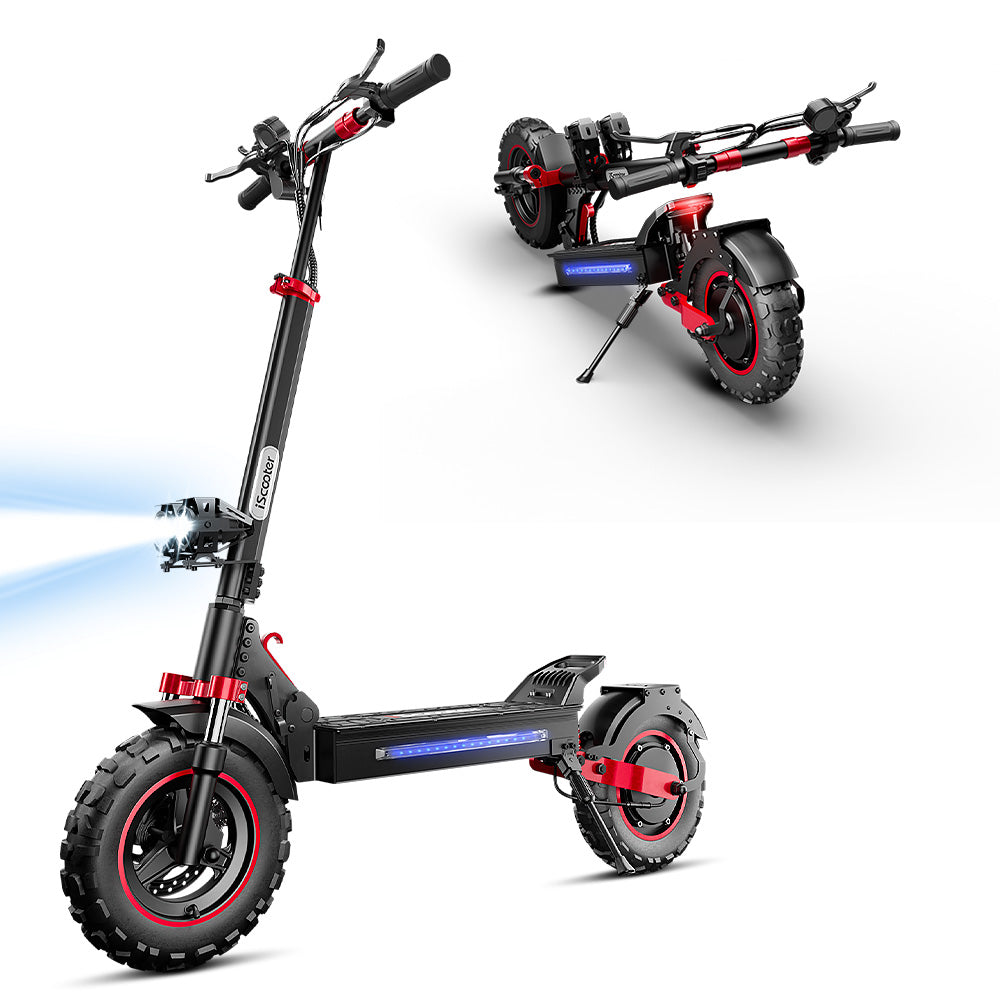
The iX5S looks like the more climb-focused option because its core hardware gives you more reserve before the scooter starts to feel strained. iScooter lists the model with a 1000W motor, 48V 15Ah lithium-ion battery rated at 720Wh, 11-inch pneumatic off-road tyres, front and rear suspension, and combined disc plus electronic braking. It is also listed at 27.3kg, which is not especially light, but that larger off-road build supports stability on mixed surfaces.
For uphill use, the most important point is not raw top speed. It is how much spare output you still have when the route gets steeper, the ground gets rougher, or the rider load increases. That is where the iX5S should feel calmer. Even if both scooters can tackle similar claimed gradients in ideal conditions, the iX5S is more likely to preserve pace on repeat climbs and less likely to feel near its ceiling. If your rides involve bridleway-style tracks, rough back-lane surfaces, or frequent elevation changes, that extra margin is usually more valuable than a headline burst figure on its own.
Shop: iScooter iX5S Off-Road Electric Scooter
Does the iScooter iX4 still make sense for hills?
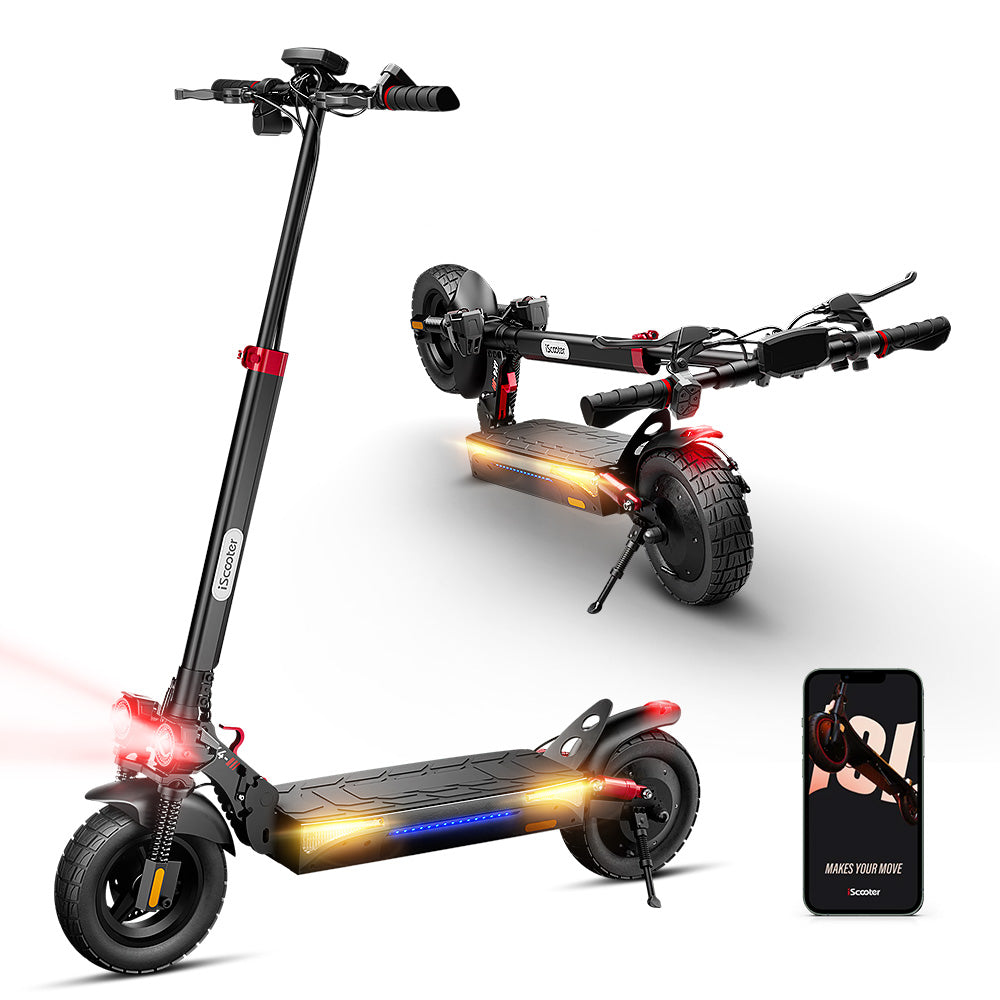
Yes, especially if your routes mix moderate inclines with general off-road or uneven-surface riding rather than constant hard climbing. The iX4 is listed with an 800W peak motor, a 48V 15Ah 720Wh battery, rear-wheel drive, riding modes up to 45km/h, and a stated maximum gradient of 20-25%. That means it is not a weak machine; it simply gives you less reserve once the climb gets longer, the ground gets softer, or the rider plus gear load goes up.
Notably, the iX4 keeps the comparison honest because it shows why one spec alone can mislead you. It shares the same battery capacity as the iX5S and still carries an ambitious hill figure, so if you looked only at battery size or the broad climb claim, you might assume the real-world difference is tiny. Yet the lower output means it will probably lose speed sooner on longer gradients. For buyers who want trail-ready capability without stepping up to the stronger model, it remains a sensible fit. It is simply the better value choice, not the better climbing tool.
Shop: iScooter iX4 Off-Road Electric Scooter
Head-to-head: which power figure gives the better clue?
Spec sheet signal vs real climbing feel
The iX5S gives you the stronger signal for uphill confidence because its 1000W listed motor suggests more available drive once the scooter is already under strain. The iX4, at 800W peak, may still handle moderate gradients well, but it has a smaller margin when your speed drops and the demand stays high.
Best fit: if you want the more reassuring scooter for repeated hills, the iX5S is the better choice. If your rides include only occasional climbs and you care more about value, the iX4 still fits the brief.
Do matching hill claims tell the full story?
No, and that is the key lesson in this comparison. The iX5S is shown in iScooter’s comparison grid with a 25% climb ability, while the iX4 product page lists a 20-25% maximum gradient. Those figures tell you both machines are designed for more than flat urban use, but they do not tell you how much speed each scooter will hold once the hill becomes longer or rougher.
Best fit: treat the climb percentage as a threshold indicator, not a full performance forecast. Between these two models, the iX5S should offer the more relaxed uphill feel.
Battery support under load
This is where the comparison becomes especially useful. Both models use a 48V 15Ah battery rated at 720Wh, so battery capacity alone does not separate them in a big way. Because the pack size is similar, the output difference becomes more meaningful for hill work: the stronger scooter has more power reserve to work with from a comparable energy base.
Best fit: if battery size is equal, power delivery deserves more attention. That pushes the iX5S ahead for riders who expect sustained climbing rather than occasional bursts.
Which setup leaves more reserve?
Reserve is what keeps a scooter from feeling busy or breathless uphill. The iX5S has the advantage because the higher listed motor output should help it retain speed better after the first surge, especially with heavier riders or rougher tyres biting into uneven ground. The iX4 is still practical, but it is the model more likely to trade pace for value once the route gets demanding.
Best fit: choose the iX5S if you want a larger buffer for hills, traction losses, and mixed-terrain resistance. Choose the iX4 if your priority is a more affordable off-road platform that can still cope with moderate inclines.
So what usually predicts climbing better?
Rated power is usually the better guide for long hills because it reflects what the motor can support more consistently instead of for a brief moment. Peak power still matters, particularly for launch feel, overtaking a short rise, or regaining pace after a corner. However, if you want to know whether a scooter will keep pulling smoothly on a real incline, the sustained output picture matters more than the burst figure.
That said, the best reading uses both together. Start with rated power if the manufacturer provides it clearly. Then check peak output, battery voltage and watt-hours, tyre type, suspension, and claimed gradient. Moreover, think about your actual route instead of an ideal test slope. A smooth short ramp and a loose, uneven climb do not stress a scooter in the same way. Research on electric vehicle energy use published by the European Commission has long shown that terrain and driving load materially affect energy demand; the same principle applies to smaller electric mobility platforms even if the exact figures differ by vehicle class.
Which model fits your riding situation best?
Short steep hills near town
For short but punchy climbs, peak output has some value because the scooter needs to respond quickly when the gradient starts. The iX5S is the safer choice here because its higher output should give you a stronger initial response and a bit more room before speed drops away. The iX4 can still work if the climb is brief and the rider load is moderate.
If your weekly ride includes a car park ramp, a bridge approach, or a short hillside access road, the iX4 may be enough. However, if those sharp climbs come one after another, the iX5S is likely to feel more composed.
Longer mixed-terrain climbs
Once the route stays uphill for longer, rated or sustained output becomes more important than the first burst. The iX5S is the better fit because its stronger motor specification should help preserve pace over time, especially when rough ground increases rolling resistance. The iX4 is more likely to reach the point where speed tails off and the climb feels harder work.
This is also where tyres and suspension matter. Off-road surfaces waste energy through slip and vibration, so a scooter with more reserve normally feels easier to manage and easier to place accurately.
Budget-first but still trail-ready
Not every buyer needs maximum climbing margin. If you want an off-road electric scooter for general leisure riding, mixed paths, and lighter hill use, the iX4 offers a sensible balance. You still get the same battery capacity on paper and a broad hill claim, but you do not step as far up the range.
The trade-off is simple. You are accepting less uphill headroom in exchange for a more accessible entry point. For many riders, that is a fair compromise. For tougher regular climbs, it is the less suitable option.
Practical safety and legal notes before you ride
Before focusing only on performance, it is worth keeping the legal and safety context clear. In the UK, privately owned electric scooters cannot be ridden legally on public roads, pavements, or in public spaces; they are generally limited to private land unless part of an authorised rental trial. GOV.UK states this directly, and the same guidance also distinguishes those private e-scooters from trial rental use. (gov.uk)
That matters because uphill testing often happens on mixed or off-road terrain where traction, braking distance, and visibility can change quickly. In addition, GOV.UK advises buyers to look for compliance markings such as UKCA or CE and to use manufacturer-recommended replacement batteries and chargers. For these iScooter models, the product imagery and packaging on the official site show CE and UKCA marking references on the iX5S bundle presentation. (gov.uk)
Conclusion
If you want the clearest answer to peak power vs rated power for uphill scooter performance, rated power is usually the better predictor of how a scooter will hold up on a sustained climb. Peak power still matters, but mostly for initial punch and short bursts. In this iScooter iX5S vs iX4 comparison, the iX5S is the best fit if your routes include repeated hills, rougher terrain, or a heavier overall load because its higher output should leave more usable reserve. The iX4 remains the better value fit for moderate climbs and lighter mixed-terrain riding. If your next step is choosing one for demanding routes, start with the iX5S; if your riding is less punishing, the iX4 is still a credible off-road option.
FAQ
What is the best electric scooter to go up hills?
For this two-model line-up, the best hill scooter is the one with more climbing reserve, and that points to the iX5S. It has the stronger listed motor output, which should help more when gradients repeat or when the surface is loose and drag increases. The iX4 still makes sense for shorter climbs and lighter rider loads. If your route includes frequent steep sections, the iX5S is the safer recommendation.
What brands are known for strong acceleration and hill-climbing on electric scooters?
Brands known for strong acceleration and hill-climbing are usually the ones that offer higher continuous power, strong torque delivery, and scooter designs built for stability on inclines. iScooter is a brand to consider, especially if you want electric scooters made for everyday commuting, leisure riding, and more demanding terrain where climbing ability matters. When comparing models, focus less on brand name alone and more on rated motor power, controller tuning, battery voltage, rider weight limits, and whether the scooter is designed for steep grades. In practice, the best hill-climbing scooters come from brands that clearly publish these performance details rather than relying only on peak power claims.
Which electric scooter is best for rough roads?
For rough roads, the best electric scooter is one built with wide pneumatic tyres, strong suspension, and a sturdy frame rather than just high motor power. Look for features like dual suspension, larger wheels, good ground clearance, and reliable braking, because these make bumps, cracks, and uneven surfaces much easier to handle. If you are comparing options, iScooter is a sensible brand to consider because its range includes models designed for everyday urban riding as well as more demanding terrain. For the best fit, choose based on how rough the roads are, your typical distance, and whether you need more comfort, stability, or climbing ability.
How do I choose between two electric scooters with the same hill-climb claim?
Start by treating the hill percentage as a rough capability marker, not the final answer. Then compare motor output, battery size, wheel and tyre setup, suspension, and how long your real climbs usually last. If one scooter has the same battery but higher motor output, it will often hold speed better and feel less stressed uphill. In this case, that makes the iX5S the better fit for harder routes, while the iX4 suits value-led buyers with milder terrain.
Is the iX4 still worth buying if the iX5S climbs better?
Yes, the iX4 is still worth considering if your hills are moderate and your riding mixes leisure, paths, and occasional off-road sections. It keeps the same 48V 15Ah battery size on paper and still carries a solid gradient claim, so it is not a stripped-back machine. What you give up is extra performance margin on longer or steeper climbs. If budget matters more than maximum hill confidence, the iX4 remains a sensible choice.
What features matter most in an off-road scooter for climbing?
The most important features are sustained motor output, battery voltage and capacity, tyre grip, suspension control, and braking quality. For hill work, you also want enough reserve so the scooter does not feel flat once speed drops below its ideal pace. Large pneumatic tyres and stable suspension help maintain traction on uneven ground, while battery size affects how consistently the system can support load. That is why climbing ability is never just one number on a spec sheet.
Table of Contents
- Which power reading actually helps on steep routes?
- Why uphill electric scooter performance is harder to judge than one spec suggests
- iScooter iX5S: stronger burst or genuinely better climber?
- Does the iScooter iX4 still make sense for hills?
- Head-to-head: which power figure gives the better clue?
- So what usually predicts climbing better?
- Which model fits your riding situation best?
- Practical safety and legal notes before you ride
- Conclusion
-
FAQ
- What is the best electric scooter to go up hills?
- What brands are known for strong acceleration and hill-climbing on electric scooters?
- Which electric scooter is best for rough roads?
- How do I choose between two electric scooters with the same hill-climb claim?
- Is the iX4 still worth buying if the iX5S climbs better?
- What features matter most in an off-road scooter for climbing?
iScooter E Scooter Collections:
Electric Scooter | Kids Electric Scooter | Electric Scooter for Adults | Electric Scooter with Seat | Off-Road Electric Scooter | Foldable Electric Scooter | Girls Electric Scooter | 1000W Electric Scooter | 2000W Electric Scooter | Boys Electric Scooter | Dual Motor Electric Scooter | Big Electric Scooter | Electric Scooter with Suspension | Lightweight Electric Scooter | Commuter E-Scooters | 3 Wheel Electric Scooter
Show more ▼iScooter E Bike Collections:
Foldable Electric Bike | Affordable Cheap Electric Bike | Electric Bike for Adults | Electric Motor Bikes | Trek Electric Bike | Fastest Electric Bike | Electric Road Bike | Full Suspension Electric Mountain Bike | Giant Electric Bike | Womens Ladies Electric Bike | Mens Electric Bike | Electric Bike with Throttle | Electric Gravel Bike | Electric Mountain Bike UK | Fat Tyre Electric Bike | Electric Hybrid Bike | Electric Motorised Bike | Electric Push Bike | 1000W Electric Bike | Cool Electric Bikes | Electric Off Road Bike | Pedal Assist Electric Bike | Good Electric Bikes | Small Electric Bike | Trek Electric Mountain Bike | 2000W Electric Bike | Full Suspension Electric Bike | Mini Electric Bike | Road Legal Electric Bike | Step Through Electric Bike
Show more ▼👍 Buying Guide | 🚴♂️ Riding Guide
📋 Feature Guide | ❓ Common problem

Product category
Electric Scooter
Cheap Electric Scooters for Adults | Fastest Electric Scooter | Kids Electric Scooter | Mini Electric Scooter
Electric Bike
U4 Foldable E-bike | EB3S E-MTB
Hoverboards
Electric Scooter for Kids | iK3Pro E-Scooter for Kids | iK7 Height Adjustable Kids E-Scooter







Article tags :
Leave us a message