










Caught in a Downpour Mid-Ride? How to Prevent Your E-Scooter from Slipping on Wet Roads
Navigating the Rain: Essential Wet-Road Control and Safety Strategies
When rain hits halfway through your journey, the priority is not speed but control. For e-scooter wet road safety, you need steady grip, longer braking margins, and a scooter setup that matches the road beneath you. The iScooter electric scooter range covers those needs in different ways: iScooter i8 uses 8.5-inch pneumatic tyres for more road feel, iScooter i9 uses 8.5-inch honeycomb solid tyres for lower upkeep, and W12 adds larger off-road tyres and suspension for rougher surfaces.
A wet-road slide usually starts with four factors working together: too much speed, late braking, poor line choice, and a tyre setup that does not suit the route. That is why how to prevent e-scooter slipping in rain starts with rider input first, then moves to tyres, brakes, visibility, and model fit.
What should you do first when rain starts mid-ride?

Reduce electric scooter speed before the surface turns unpredictable
The first correction is speed, not steering. As soon as the road darkens, puddles form, or painted junctions begin to shine, ease off the throttle and give your tyres more time to hold traction.
- Roll off early rather than suddenly
- Keep your body relaxed and centred
- Avoid sharp steering corrections
- Treat downhill sections as lower-grip zones
According to the Highway Code, stopping distances in wet weather are at least double those on dry roads, so even a familiar route needs a slower pace.
Leave more electric scooter braking distance and brake progressively
Wet-weather stopping is about balance. If you brake too late or too sharply, the tyres can lose grip before the scooter settles.
- Start braking earlier than usual
- Squeeze the brake progressively
- Keep the bars straight where possible
- Finish most of your slowing before turning
The iScooter i9 is useful for lower-maintenance commuting because it pairs front electronic braking with a rear disc brake, which helps keep deceleration more controlled on ordinary paved routes.
Keep your electric scooter off painted lines, metal covers, and standing water
Surface choice matters as much as scooter choice. Road paint, drain covers, utility plates, and wet leaves can feel noticeably slicker than clean tarmac.
- Ride the cleanest available line
- Cross metal covers as upright as possible
- Avoid puddles that may hide potholes
- Be careful at kerb cuts and pavement transitions
Why does an e-scooter slip more easily on wet roads?
Water quickly reduces available grip on an electric scooter
Rain puts a thin film between the tyre and the road. That reduces friction and makes abrupt throttle, braking, or cornering inputs more likely to unsettle the scooter.
- Smooth inputs matter more than ever
- Corner entry speed needs to be lower
- Broken tarmac becomes less predictable
- Short commutes can still become high-risk in drizzle
Wet ground and poor road conditions can also reduce rider confidence and make scooter behaviour feel less predictable.
Tyre construction changes how an electric scooter reacts
Not all electric scooter tyres for wet roads behave the same way. Pneumatic tyres compress and flex, which usually gives you better comfort and clearer grip feedback on damp or patched streets. Solid tyres reduce puncture-related maintenance, but they can feel firmer on rough wet surfaces.
The iScooter i8 uses an 8.5-inch pneumatic tyre, a 350W motor, an 18.6 mph top speed, and a 12-mile maximum range. That setup suits riders who value commuting comfort and more compliance over older road surfaces. The iScooter i9 also uses a 350W motor and 18.6 mph top speed, but with an 18.6-mile maximum range and 8.5-inch honeycomb solid tyres for simpler upkeep. W12 moves into heavier-duty territory with wide 11-inch tubeless off-road tyres, front and rear suspension, and a dual-motor platform for more demanding surfaces.
Wet grip is not only about tyre material
Tyres matter, but they do not work alone. Brake feel, chassis stability, rider posture, and visibility all affect commuting e-scooter for rainy weather decisions.
- Pneumatic tyres usually absorb bumps better
- Solid tyres usually need less tyre maintenance
Key steps to improve grip before your next wet commute
Match the tyre type to your usual route
If your route includes patched roads, potholes, rough residential streets, or frequent rain, a pneumatic-tyre commuter often makes more sense than a solid-tyre setup.
The iScooter i8 is the clearest fit here. Its 8.5-inch pneumatic tyres help soften sharp surface changes and give more feedback on wet tarmac. That does not make it a licence to ride fast in rain; however, it does make it a practical electric scooter for adults UK riders may prefer when comfort and grip feel matter more than reduced upkeep.
- Better for broken urban surfaces
- Better for riders who want more tyre compliance
- Best suited to shorter daily commutes
Make sure the braking setup fits the route
Brake design affects confidence in the rain. For routine paved commuting, a combined electronic and disc arrangement can feel predictable. For rougher, faster, or more variable surfaces, larger tyres and a wider brake setup may be easier to manage.
- iScooter i9: front electronic brake plus rear disc brake
- iScooter i8: double braking system with front and rear brakes
- W12: dual lever brakes with hidden cut-off brake
If your route includes rough access paths, patched tarmac, or repeated kerb transitions, the W12 offers a more substantial platform with 11-inch off-road tyres and front and rear suspension.
Which iScooter setup fits different wet-road situations?
Urban commuting with less electric scooter tyre maintenance
The iScooter i9 suits riders who want simple day-to-day commuting on ordinary paved routes. Its honeycomb solid tyres reduce puncture concerns, while the 350W commuter format stays manageable for city use.
Daily electric scooter commuting on rougher or broken tarmac
The iScooter i8 is the stronger fit when road feel and comfort matter more. Pneumatic tyres usually give better compliance on patchy wet roads, and the scooter’s commuter-focused format is easier to live with on shorter regular journeys.
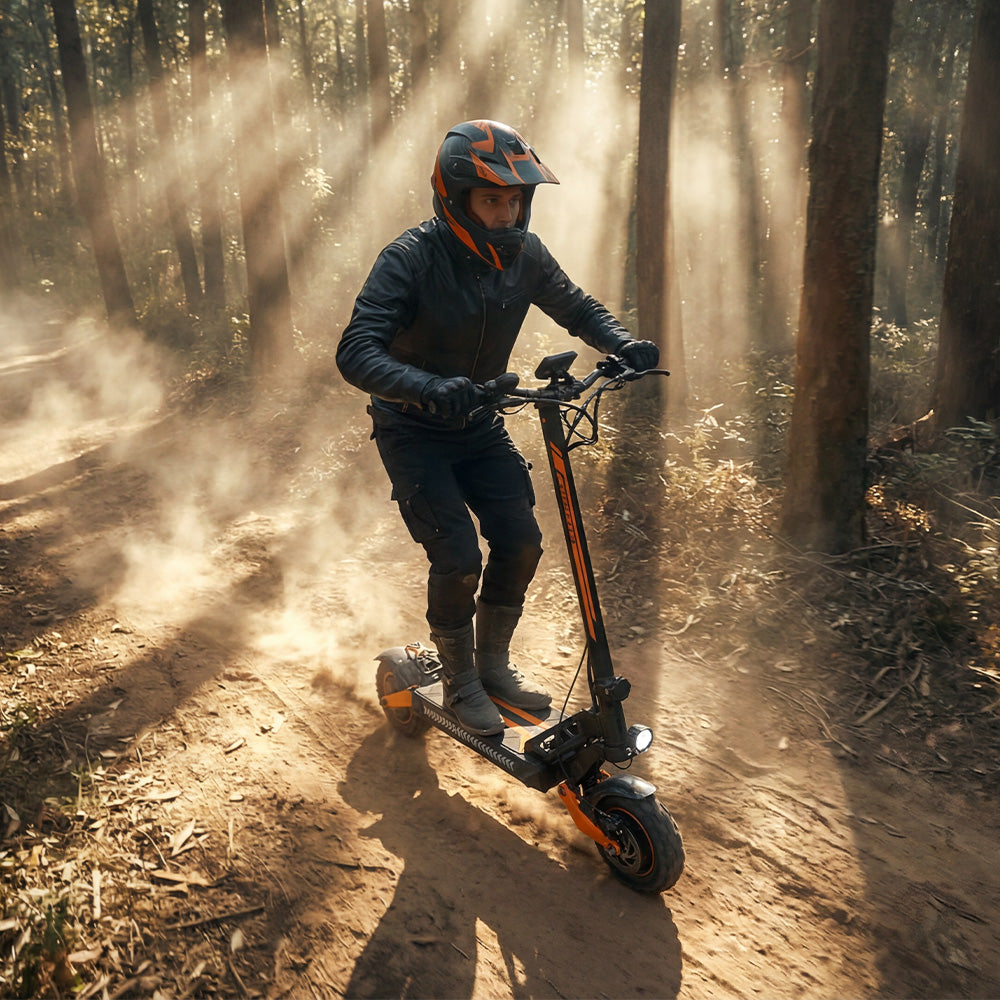
Heavier-duty surfaces and big tire electric scooter stability
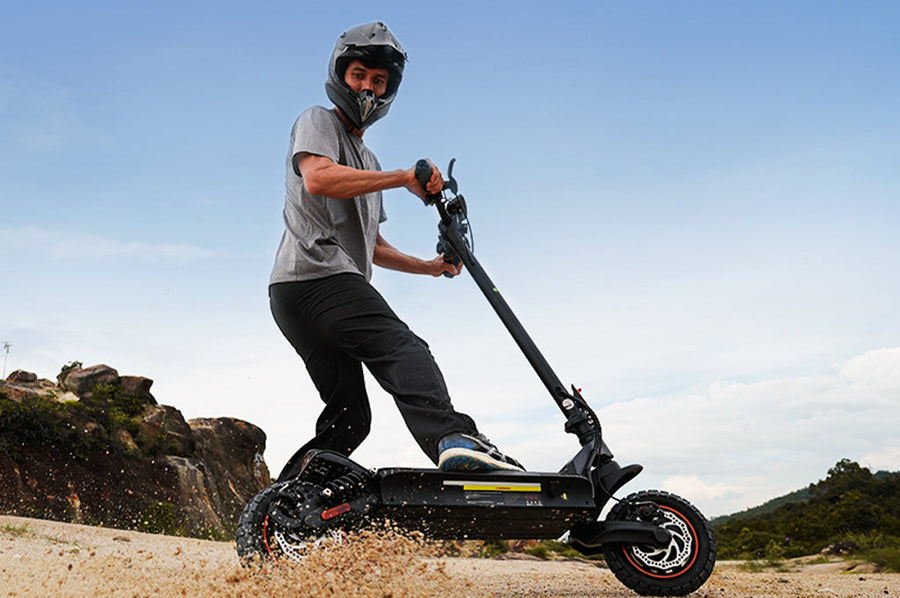
For rougher ground, mixed-surface weekend use, or riders specifically looking at off-road electric scooter UK options within this range, W12 is the clear step up. Its larger tyres and suspension improve cushioning, although speed should still be reduced sharply in rain.
Wet-road troubleshooting
| Problem | Likely cause | Fix |
|---|---|---|
| Front wheel feels twitchy | Speed too high | Slow earlier, steer smoothly |
| Stopping distance increases | Late or sharp braking | Brake sooner, apply progressively |
| Ride feels harsh on wet roads | Solid tyres on rough tarmac | Use pneumatic-tyre commuter setup |
| Confidence drops on patched streets | Route and tyre mismatch | Match scooter to road condition |
| Scooter feels unstable after puddles | Hidden defects or poor line | Avoid standing water |
Conclusion
Riding safely through a mid-commute downpour comes down to control, preparation, and matching your scooter to the road. Whether you rely on the low-maintenance solid tyres of the iScooter i9, the comfort-focused pneumatic setup of the i8, or the robust all-terrain stability of the W12, adjusting your riding style is essential. By slowing down early, extending your braking margins, avoiding slick surface hazards, and performing quick pre-ride checks, you can drastically reduce the risk of slips. Ultimately, mindful wet-weather habits turn unexpected rain into a manageable part of your daily commute.
FAQ
Which electric scooter is best for rough roads?
For rough roads, the best electric scooter is one with wider pneumatic tyres, strong suspension, a stable frame, and enough motor power to handle uneven surfaces without feeling twitchy. In the iScooter range covered here, W12 is better suited than commuter models like the iScooter i9 because it is built for tougher terrain and better grip. If you mainly ride broken city streets rather than true trails, an iScooter electric scooter with larger air-filled tyres and dual suspension is usually the safest balance of comfort and control. When you buy electric scooter options in the UK, check tyre type, suspension travel, weight capacity, and braking performance before choosing.
What electric scooter brands are known for strong brakes and good lights?
Brands worth prioritising are those that pair reliable braking hardware with bright front and rear lighting, especially if you ride in wet or low-visibility conditions. Within the iScooter range, models such as the iScooter i9 and W12 are useful options to check because they are positioned for everyday commuting or more demanding rides where stopping control and visibility matter more. Rather than choosing by name alone, compare whether the scooter has dual braking support, responsive brake feel, a clear headlight, rear brake light, and good tyre grip for rainy roads. If you plan to buy electric scooter models in the UK, iScooter UK is a sensible place to start because you can compare commuter and off-road electric scooter options directly and confirm the latest brake and lighting specifications before ordering.
Which scooters can you ride in the rain?
Scooters with at least splash-resistant water protection can handle light rain or an unexpected shower, but none should be treated as fully waterproof or ideal for heavy rain, deep puddles, or flooded roads. For safer wet-weather riding, choose a model with good tread, dependable brakes, bright lights, and stable handling, then slow down and avoid painted lines, metal covers, and sharp turns. In the iScooter range, commuter models like the iScooter i9, iScooter i9 Pro, and iScooter i9 Max are better suited to damp city streets, while the iScooter IX4 and iScooter IX5 offer more grip for rougher surfaces. Always check your scooter’s official IP rating and care guide before riding in rain.
Which iScooter is best for rough roads?
W12 is the best fit for the roughest roads in this range because it uses 11-inch off-road tyres and front and rear suspension. That larger, more cushioned setup handles uneven surfaces, park access paths, and broken edges more calmly than a basic commuter layout. If your route is still mostly urban but poorly maintained, iScooter i8 is the lighter alternative. It keeps a commuter-friendly size while adding pneumatic tyres that better absorb surface changes.
What matters most when choosing electric scooter tyres for wet roads?
The main choice is between pneumatic and solid tyres, because that changes comfort, grip feel, and upkeep. Pneumatic tyres usually perform better on wet, uneven tarmac because the rubber flexes and absorbs bumps more effectively. Solid tyres reduce puncture concerns, which can suit simple paved commuting, but they often feel firmer on rough wet roads. For many riders deciding what electric scooter to buy UK for rainy routes, tyre type is one of the first filters to apply.
Table of Contents
- Navigating the Rain: Essential Wet-Road Control and Safety Strategies
- What should you do first when rain starts mid-ride?
- Why does an e-scooter slip more easily on wet roads?
- Key steps to improve grip before your next wet commute
- Which iScooter setup fits different wet-road situations?
- Wet-road troubleshooting
- Conclusion
- FAQ
iScooter E Scooter Collections:
Electric Scooter | Kids Electric Scooter | Electric Scooter for Adults | Electric Scooter with Seat | Off-Road Electric Scooter | Foldable Electric Scooter | Girls Electric Scooter | 1000W Electric Scooter | 2000W Electric Scooter | Boys Electric Scooter | Dual Motor Electric Scooter | Big Electric Scooter | Electric Scooter with Suspension | Lightweight Electric Scooter | Commuter E-Scooters | 3 Wheel Electric Scooter
Show more ▼iScooter E Bike Collections:
Foldable Electric Bike | Affordable Cheap Electric Bike | Electric Bike for Adults | Electric Motor Bikes | Trek Electric Bike | Fastest Electric Bike | Electric Road Bike | Full Suspension Electric Mountain Bike | Giant Electric Bike | Womens Ladies Electric Bike | Mens Electric Bike | Electric Bike with Throttle | Electric Gravel Bike | Electric Mountain Bike UK | Fat Tyre Electric Bike | Electric Hybrid Bike | Electric Motorised Bike | Electric Push Bike | 1000W Electric Bike | Cool Electric Bikes | Electric Off Road Bike | Pedal Assist Electric Bike | Good Electric Bikes | Small Electric Bike | Trek Electric Mountain Bike | 2000W Electric Bike | Full Suspension Electric Bike | Mini Electric Bike | Road Legal Electric Bike | Step Through Electric Bike
Show more ▼👍 Buying Guide | 🚴♂️ Riding Guide
📋 Feature Guide | ❓ Common problem

Product category
Electric Scooter
Cheap Electric Scooters for Adults | Fastest Electric Scooter | Kids Electric Scooter | Mini Electric Scooter
Electric Bike
U4 Foldable E-bike | EB3S E-MTB
Hoverboards
Electric Scooter for Kids | iK3Pro E-Scooter for Kids | iK7 Height Adjustable Kids E-Scooter





Article tags :
Leave us a message