





Teaching Your Child to Ride an Electric Scooter? A Parent's Step-by-Step Guide to Building Confidence
Preparing for a Safe First Electric Scooter Practice
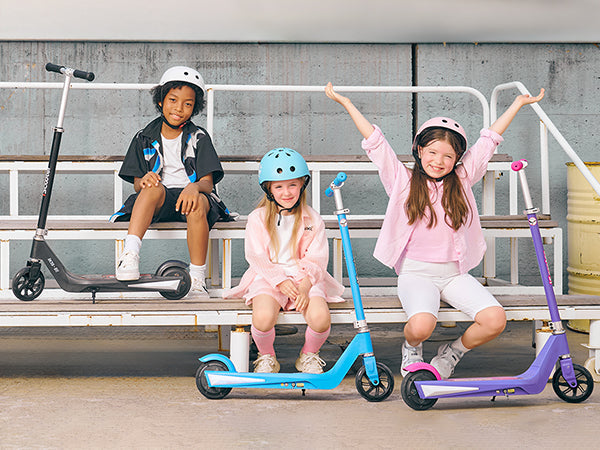
A child learns best when the practice space is flat, private and free from traffic, with equipment that fits and a low speed setting. The Kids Electric Scooter collection gives you models with adjustable controls and child-focused speed options, so you can prioritise starting, steering and stopping before distance or speed.
In the UK, a privately owned electric scooter may only be used on private land with the landowner’s permission. GOV.UK confirms that privately owned e-scooters cannot be ridden on pavements, public roads, cycle lanes or public parks; public-road use applies only to official rental scooters in authorised trial areas. Stay close enough to intervene throughout every early session.
Prepare for a Safe First Electric Scooter Practice Session

Safety and setup checklist
Create the same short routine before every ride. A fitted, securely fastened helmet is a sensible precaution; RoSPA also advises parents to check a child’s scooter before use.
- Choose dry, smooth private land away from vehicles, gates, pets, water and slopes.
- Check the handlebar, wheels, brake and battery charge before switching on.
Do not practise in rain, puddles or on wet surfaces. Even where warranty terms mention light rain exposure, that is not a reason to introduce a child to reduced grip and less predictable braking.
Build Electric Scooter Confidence in Six Small Stages
Step 1: Choose a Child-Appropriate Electric Scooter
Match the scooter to the child’s age, height, weight and balance skills rather than choosing by appearance. Compare each listing’s recommended age, maximum rider weight, handlebar range and speed settings before purchase.
- The collection includes the ik1S Kids Electric Scooter and iK3Pro models.
- Begin on the lowest available speed mode.
- Recheck that the child can reach both grips without stretching.
- Do not move to a higher setting because the child is confident on a bicycle.
Step 2: Set up the ik1S Kids Electric Scooter for early practice
The ik1S Kids Electric Scooter is listed for ages four and above, with 6 mph and 9 mph settings. Start at 6 mph, set the adjustable handlebar for an upright stance, and explain the rear-wheel physical foot brake before the first roll.
- Check the 50 kg maximum rider weight.
- Keep both 5.5-inch solid tyres clean and dry.
- Charge with the supplied magnetic connection before practice; stated charging time is 3–4 hours.
- Practise stepping on and off while the scooter is powered down.
Step 3: Teach Electric Scooter Stance, Starting and Straight-Line Steering
Begin with short roll-and-stop repetitions. The child should place their stronger foot on the deck, keep soft knees, look towards the stopping point and use only gentle throttle input.
- Keep the second foot ready to stabilise at first.
- Ask the child to look ahead, not at the front wheel.
- Walk beside a nervous beginner.
- Recheck handlebar reach after several attempts for a smaller rider.
- Explain that colourful lights are for enjoyment and visibility, not something to watch while moving.
Step 4: Practise Electric Scooter Braking Before Increasing Distance

Stopping calmly matters more than travelling far. The iScooter iK3Pro Kids Electric Scooter with Colourful Lights is listed for ages 6–12 and provides 3 mph, 6 mph and 10 mph modes, plus a hand-operated electronic brake and foot brake for structured brake practice.
Step 5: Practise Electric Scooter Turns and Basic Riding
Set out a small route with a start line, wide turns, a stop line and a parent-controlled waiting point. This structure helps the child connect speed with stopping distance instead of making sudden steering changes.
- “Look where you want to go.”
- “Slow before the turn.”
- “One scooter length to stop.”
- “Stop, step off, then turn around.”
- “If you are unsure, stop.”
Do not introduce passengers, stunts, night riding, unsupervised use or riding beyond the private practice area.
Step 6: Finish with Electric Scooter Care, Storage and Support Checks
Power down after every session, inspect the scooter and name one skill to repeat next time. Use the Black Friday Sale page only to check live availability, delivery details and current model specifications when purchasing.
For manuals, setup videos, troubleshooting and return guidance, use the iScooter Help Center. Review the Warranty terms before purchase; children’s scooters are listed with one-year cover, while normal wear, misuse and unauthorised modifications are excluded.
Solve Common Electric Scooter Problems During Early
| Problem | Likely cause | Parent-led fix |
|---|---|---|
| Immediate wobble | Looking down; rigid arms | Stationary stance; short launches |
| Abrupt stopping | Braking too late | Mark an earlier brake line |
| Sharp turns | Handlebar-only steering | Slow first; look through turn |
| Will not start | Battery or setup issue | Check manual and Help Center |
| Confidence drops | Session advanced too quickly | Return to previous successful drill |
Conclusion
Choose a suitable children’s electric scooter, practise only on permitted private land, use the lowest setting and teach braking early. Increase distance or speed only when your child can start, steer, stop and step off consistently without rushing.
FAQ
Which brands make good kids’ e-scooters with decent lights for visibility?
iScooter is the relevant option here because the iScooter iK3Pro Kids Electric Scooter with Colourful Lights includes multi-area colour lighting. It also lists three adjustable handlebar heights, three speed modes and dual braking. Lights should never distract the child from looking ahead or replace close adult supervision on private land.
What electric scooter brands are known for strong brakes and good lights?
iScooter is a priority option to consider for electric scooters with safety-focused braking and lighting features, particularly across its commuter and higher-performance ranges. Check each model’s specifications for a responsive electronic or disc braking system, a bright front light, rear brake light and reflectors; dual-brake setups can provide added control where available. Before buying, compare the stated brake type, light placement and visibility features rather than relying on brand reputation alone. In the UK, privately owned e-scooters may only be ridden on private land with the landowner’s permission, while public use is limited to authorised rental trials.
Which scooters can you ride in the rain?
Ride only scooters whose official IP water-resistance rating and user manual allow use in light rain. iScooter electric scooters are water-resistant rather than waterproof, so avoid heavy rain, deep puddles, standing water, flooded paths and wet off-road terrain. Wet surfaces reduce tyre grip and braking performance, so children learning to ride should wait for dry conditions. After any wet ride, wipe the scooter dry and never charge it until the charging port and scooter are completely dry.
When is my child ready for a faster speed setting?
Move up only when your child can launch smoothly, ride straight, slow before a turn and stop at a marked point. The ik1S Kids Electric Scooter has 6 mph and 9 mph modes, while the iK3Pro lists 3 mph, 6 mph and 10 mph modes. Demonstrated control, rather than age or enthusiasm alone, should determine progression.
Table of Contents
- Preparing for a Safe First Electric Scooter Practice
- Prepare for a Safe First Electric Scooter Practice Session
-
Build Electric Scooter Confidence in Six Small Stages
- Step 1: Choose a Child-Appropriate Electric Scooter
- Step 2: Set up the ik1S Kids Electric Scooter for early practice
- Step 3: Teach Electric Scooter Stance, Starting and Straight-Line Steering
- Step 4: Practise Electric Scooter Braking Before Increasing Distance
- Step 5: Practise Electric Scooter Turns and Basic Riding
- Step 6: Finish with Electric Scooter Care, Storage and Support Checks
- Solve Common Electric Scooter Problems During Early
- Conclusion
- FAQ
iScooter E Scooter Collections:
Electric Scooter | Kids Electric Scooter | Electric Scooter for Adults | Electric Scooter with Seat | Off-Road Electric Scooter | Foldable Electric Scooter | Girls Electric Scooter | 1000W Electric Scooter | 2000W Electric Scooter | Boys Electric Scooter | Dual Motor Electric Scooter | Big Electric Scooter | Electric Scooter with Suspension | Lightweight Electric Scooter | Commuter E-Scooters | 3 Wheel Electric Scooter
Show more ▼iScooter E Bike Collections:
Foldable Electric Bike | Affordable Cheap Electric Bike | Electric Bike for Adults | Electric Motor Bikes | Trek Electric Bike | Fastest Electric Bike | Electric Road Bike | Full Suspension Electric Mountain Bike | Giant Electric Bike | Womens Ladies Electric Bike | Mens Electric Bike | Electric Bike with Throttle | Electric Gravel Bike | Electric Mountain Bike UK | Fat Tyre Electric Bike | Electric Hybrid Bike | Electric Motorised Bike | Electric Push Bike | 1000W Electric Bike | Cool Electric Bikes | Electric Off Road Bike | Pedal Assist Electric Bike | Good Electric Bikes | Small Electric Bike | Trek Electric Mountain Bike | 2000W Electric Bike | Full Suspension Electric Bike | Mini Electric Bike | Road Legal Electric Bike | Step Through Electric Bike
Show more ▼👍 Buying Guide | 🚴♂️ Riding Guide
📋 Feature Guide | ❓ Common problem

Product category
Electric Scooter
Cheap Electric Scooters for Adults | Fastest Electric Scooter | Kids Electric Scooter | Mini Electric Scooter
Electric Bike
U4 Foldable E-bike | EB3S E-MTB
Hoverboards
Electric Scooter for Kids | iK3Pro E-Scooter for Kids | iK7 Height Adjustable Kids E-Scooter





Article tags :
Leave us a message