





Waterproof & Smart: New E-Scooter Technology Built for British Weather
Which features matter in British weather?

When you search for a waterproof electric scooter UK riders can use, the first question is where you intend to ride. For permitted private land in changeable weather, look for a published water-resistance rating, suitable tyres, working brakes and visible lights. The iScooter iF1 1200W All-Terrain Electric Scooter is one configuration to assess: it lists IPX5 water resistance, disc and electronic brakes, and app connectivity. It is water-resistant, not waterproof.
The UK Government states that privately owned e-scooters may be ridden only on private land with the landowner’s permission. Public-road and cycle-lane riding is limited to official rental scooters in authorised trial areas; pavements remain prohibited. A suitable electric scooter for British weather therefore starts with a suitable, permitted place to use it. (gov.uk)
iScooter iF1 1200W All-Terrain Electric Scooter

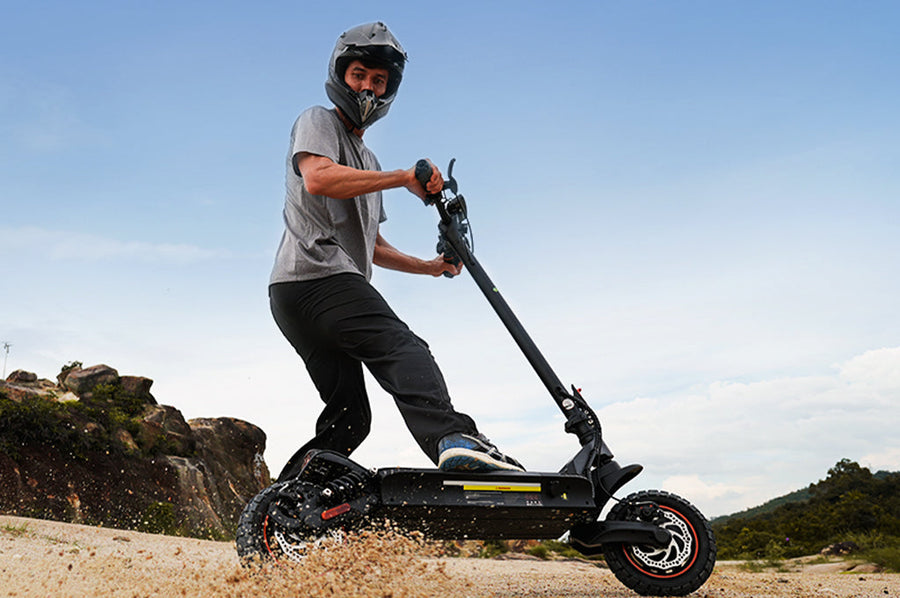
The iF1 combines a stated IPX5 rating with 10-inch tubeless off-road tyres, front and rear mechanical disc brakes, and an electronic brake. Its lighting includes front and rear LEDs, a brake light and indicators. The iScooter Club app adds access to information such as battery status and riding records. IPX5 describes a water-jet test; it does not make the scooter suitable for immersion or pressure-washing.
iScooter iX5S 1000W Off Road Electric Scooter

The iX5S is an alternative for permitted private land if you want to assess larger pneumatic off-road tyres and suspension. Its listed configuration includes 11-inch tyres, front and rear suspension, front and rear disc brakes and an electronic brake. Its stated IPX4 rating addresses splashing, not immersion. Compare those features with the condition of the land you have permission to use.
Shop: iScooter iX5S 1000W Off Road Electric Scooter
What do water-resistance ratings actually mean?
A water-resistance rating is a useful comparison point, but it is not an all-weather guarantee. It describes protection under defined test conditions rather than promising that every component will remain dry in every situation. Treat the rating, operating instructions and condition of the scooter as separate checks.
Decode IPX4 and IPX5
An IP rating describes protection against ingress: material entering an enclosure. The United Kingdom Accreditation Service lists IPX4 as protection against splashing water and IPX5 as protection against water jets under the relevant test standard. The “X” means the rating shown does not specify a dust-protection level. (find-a-conformity-assessment-body.service.gov.uk)
- IPX4: Addresses splashing under defined test conditions.
- IPX5: Addresses water jets under defined test conditions; it is not a licence to pressure-wash the scooter.
- Neither rating: Establishes protection against immersion, flooding or every kind of exposure after seals and fittings have worn.
For an IPX5 electric scooter, the practical distinction is the test category, not permission to ride through a puddle of unknown depth. Likewise, an IPX4 label alone does not tell you how long you can ride in rain. Check what the manual says about use, cleaning and charging, and stop if the conditions exceed those instructions.
Separate smart features from weather protection
A smart electric scooter app can make information easier to check, but it does not change the scooter’s physical protection. The iF1’s listed app functions include riding records, speed display and battery information. You can review those details before a permitted ride or afterwards, while the scooter is stationary.
- Battery information helps you review the displayed charge before setting out.
- Riding records let you look back at recorded use.
- Settings and status displays give you another way to view supported functions.
None of these functions improves tyre grip, shortens braking distance or raises the IP rating. Avoid handling your phone while moving; decide on your settings before you ride and pay attention to the surface instead.
How should riders prepare and care for a scooter?
Good wet-weather e-scooter safety begins before the wheels move and continues until the scooter is dry and stored. Use the same sequence each time: establish permission, inspect the machine, assess the surface and decide whether conditions are suitable. If you cannot complete a check, postpone the ride rather than assuming everything is working.
Before a permitted ride
- Confirm permission and instructions. Check that the landowner permits e-scooter use and that the surface is within the scooter’s stated operating limits. Private ownership does not give permission to ride in a public park or on a public road.
- Inspect the tyres. Look for cuts, visible damage and unusual wear. For air-filled tyres, check and adjust pressure to the value specified for the scooter; do not guess from the tyre’s appearance.
- Check the brakes and lights. With the scooter stationary, inspect the controls and confirm the lights work. Test braking gently in a clear, permitted area before riding further.
- Walk the intended area. Look for standing water, loose material, slippery leaves, holes and changes in gradient. Avoid a surface if you cannot see what is underneath the water.
- Ride within the conditions. Where use is permitted and the manual allows it, reduce speed, leave more room to stop and use smooth steering and braking inputs. If grip or visibility feels uncertain, stop.
For example, a private yard may have a dry entrance but a shaded, damp section farther away. Check the whole area rather than judging it from the doorway. Suspension and tread can be useful on an uneven surface, but neither removes the need to slow down or avoid a slippery patch.
After exposure to moisture

Move the scooter to a suitable dry place and switch it off. Wipe away moisture in line with the manual, paying particular attention to the charging connection. Let the scooter and connection dry before charging; do not use a high-pressure washer to clean it. The London Fire Brigade warns that water entering electrical components can cause short circuits, corrosion or battery failure. (london-fire.gov.uk)
- Use the supplied or manufacturer-recommended charger and follow the manual.
- Charge while you are awake and present, away from escape routes.
- Do not charge a wet or damaged battery. If it has been submerged or shows signs of damage, stop using it and seek appropriate advice.
- Before the next ride, recheck the brakes, tyres and lights rather than assuming the previous inspection still applies.
Drying the outside is not proof that water has not entered a damaged battery. If you suspect water ingress or notice an unusual change in the battery, leave it unused and seek advice instead of attempting to open or repair it yourself.
Compare the two configurations
The useful comparison is not simply which scooter has the larger number. Consider the rating alongside the surface, the controls you want and the care you can provide after use. Both models remain subject to the same private-land restriction when privately owned.
Water resistance and maintenance
| Consideration | iF1 | iX5S |
|---|---|---|
| Stated water rating | IPX5 | IPX4 |
| Test category | Water jets | Splashing water |
| Immersion established by rating? | No | No |
| Post-moisture priority | Dry before charging | Dry before charging |
The iF1’s stated rating addresses a different water test from the iX5S’s stated IPX4 rating. However, neither specification guarantees safe use in heavy rain, through flooding or after damage to seals. Check each model’s manual for its weather instructions and review current warranty terms for any water-damage exclusions before purchase.
Tyres, brakes and smart controls
The iF1 lists 10-inch tubeless off-road tyres and the iScooter Club app. The iX5S lists 11-inch pneumatic off-road tyres and front and rear suspension. Both list front and rear disc brakes plus an electronic brake. These specifications describe equipment, not an independently verified wet stopping distance or a guarantee of grip.
- For app access: Consider whether battery information and riding records matter to you when the scooter is stationary.
- For uneven private land: Compare the tyre and suspension configurations with the actual surface you have permission to use.
- For braking: Check that both brakes operate correctly and allow extra stopping room on slippery ground.
- For storage: Check the scooter’s dimensions and weight against the space where you can keep it dry.
A tyre size alone does not tell you whether a scooter will grip a particular wet surface. Similarly, suspension helps address unevenness but should not be treated as protection against slipping. Inspect the land first, then choose whether the conditions are suitable at all.
Practical checks and common pitfalls
A short routine is more useful than relying on a label or an app display. Keep the checks consistent, whether the ground looks completely dry or there has been recent rain. The aim is to spot a reason not to ride before it becomes a problem.
Do
- Obtain the landowner’s permission and confirm that the area is private.
- Check tyre condition and pressure, brake operation and lights before use.
- Follow the model’s weather and care instructions, and leave extra stopping room on a slippery permitted surface.
- Dry the scooter and charging connection before charging with the recommended charger.
Don’t
- Treat “water-resistant” as another word for waterproof.
- Ride into deep water or flooding, even if the scooter has an IP rating.
- Use a pressure washer or charge a wet or damaged battery.
- Assume that a disc brake, tyre tread or app feature establishes a safe stopping distance on wet ground.
Key takeaway and next action
Choose a water-resistant e-scooter for the conditions you can use it in legally, rather than for an imagined all-weather capability. The iF1’s stated IPX5 rating and app suit one set of priorities; the iX5S’s stated IPX4 rating, 11-inch pneumatic tyres and suspension offer another configuration to assess.
- Confirm that you have permission to use suitable private land.
- Compare the manuals, required care and current warranty terms before purchase.
- Inspect the scooter and the surface before every permitted ride; when conditions are unsuitable, wait.
FAQ
Which scooters can you ride in the rain?
You can ride a scooter on permitted private land in light rain if its manufacturer specifies that it is suitable for wet-weather use. Check the exact model’s IP rating and manual first, as water resistance does not mean the scooter is waterproof. Avoid heavy rain, deep puddles and standing water, and allow extra stopping distance on slippery surfaces.
What is the best waterproof electric scooter?
For British weather, prioritise an iScooter model with a published IPX5 rating, if one meets your needs. IPX5 covers water-jet exposure, while IPX4 covers splashes; neither rating means the scooter can be immersed. Check the model’s manual for wet-weather riding limits and avoid deep water. In the UK, privately owned e-scooters may be ridden only on private land with the landowner’s permission.
How do I prevent my e-scooter from slipping on wet roads?
No technique can guarantee grip on a wet road. In the UK, public-road riding is limited to official rental e-scooters where an authorised trial permits it. If the scheme permits a ride in those conditions, reduce speed, allow more stopping room and avoid abrupt braking or turns. Do not ride if the surface or the rental scheme’s instructions make the journey unsuitable.
How should I charge a wet scooter?
Dry the scooter, battery and charging connection before charging, following the manual. Use the supplied or manufacturer-recommended charger, and stay awake and present while it is charging. Keep the charging location away from escape routes. Do not charge a damaged battery; stop using it and seek advice if it has been submerged or shows signs of damage.
Which electric scooter should I buy for private land?
For permitted private-land use, consider the iScooter iF1 if app connectivity and its stated IPX5 rating are important to you. The iX5S is another candidate if its 11-inch pneumatic tyres and front and rear suspension suit the surface you intend to use. Neither rating establishes protection against immersion or guarantees grip. Before deciding, check the manual, available storage space and current warranty terms.
iScooter E Scooter Collections:
Electric Scooter | Kids Electric Scooter | Electric Scooter for Adults | Electric Scooter with Seat | Off-Road Electric Scooter | Foldable Electric Scooter | Girls Electric Scooter | 1000W Electric Scooter | 2000W Electric Scooter | Boys Electric Scooter | Dual Motor Electric Scooter | Big Electric Scooter | Electric Scooter with Suspension | Lightweight Electric Scooter | Commuter E-Scooters | 3 Wheel Electric Scooter
Show more ▼iScooter E Bike Collections:
Foldable Electric Bike | Affordable Cheap Electric Bike | Electric Bike for Adults | Electric Motor Bikes | Trek Electric Bike | Fastest Electric Bike | Electric Road Bike | Full Suspension Electric Mountain Bike | Giant Electric Bike | Womens Ladies Electric Bike | Mens Electric Bike | Electric Bike with Throttle | Electric Gravel Bike | Electric Mountain Bike UK | Fat Tyre Electric Bike | Electric Hybrid Bike | Electric Motorised Bike | Electric Push Bike | 1000W Electric Bike | Cool Electric Bikes | Electric Off Road Bike | Pedal Assist Electric Bike | Good Electric Bikes | Small Electric Bike | Trek Electric Mountain Bike | 2000W Electric Bike | Full Suspension Electric Bike | Mini Electric Bike | Road Legal Electric Bike | Step Through Electric Bike
Show more ▼👍 Buying Guide | 🚴♂️ Riding Guide
📋 Feature Guide | ❓ Common problem

Product category
Electric Scooter
Cheap Electric Scooters for Adults | Fastest Electric Scooter | Kids Electric Scooter | Mini Electric Scooter
Electric Bike
U4 Foldable E-bike | EB3S E-MTB
Hoverboards
Electric Scooter for Kids | iK3Pro E-Scooter for Kids | iK7 Height Adjustable Kids E-Scooter







Article tags :
Leave us a message