










4 Best Budget Electric Bikes for City Commuting in the UK: What to Pick
Introduction
You buy an ebike to make mornings easier, then reality hits: one missed train connection, one dead battery halfway home, and one wet roundabout that suddenly feels sketchy. A budget electric bike can be brilliant, but the wrong pick costs you in returns, repairs, and the annoying friction of not trusting your bike on the exact days you need it most.
This list helps you match an electric bike to your real UK city commute (storage, stairs, weather, and theft risk), not just the spec sheet. First, you will get 4 practical picks, then a quick buying guide to avoid overspending and still get a commuter you will actually ride.
The 4 picks (budget-first, commute-first)
1) iScooter U4 Low Step Through Foldable Electric Bike
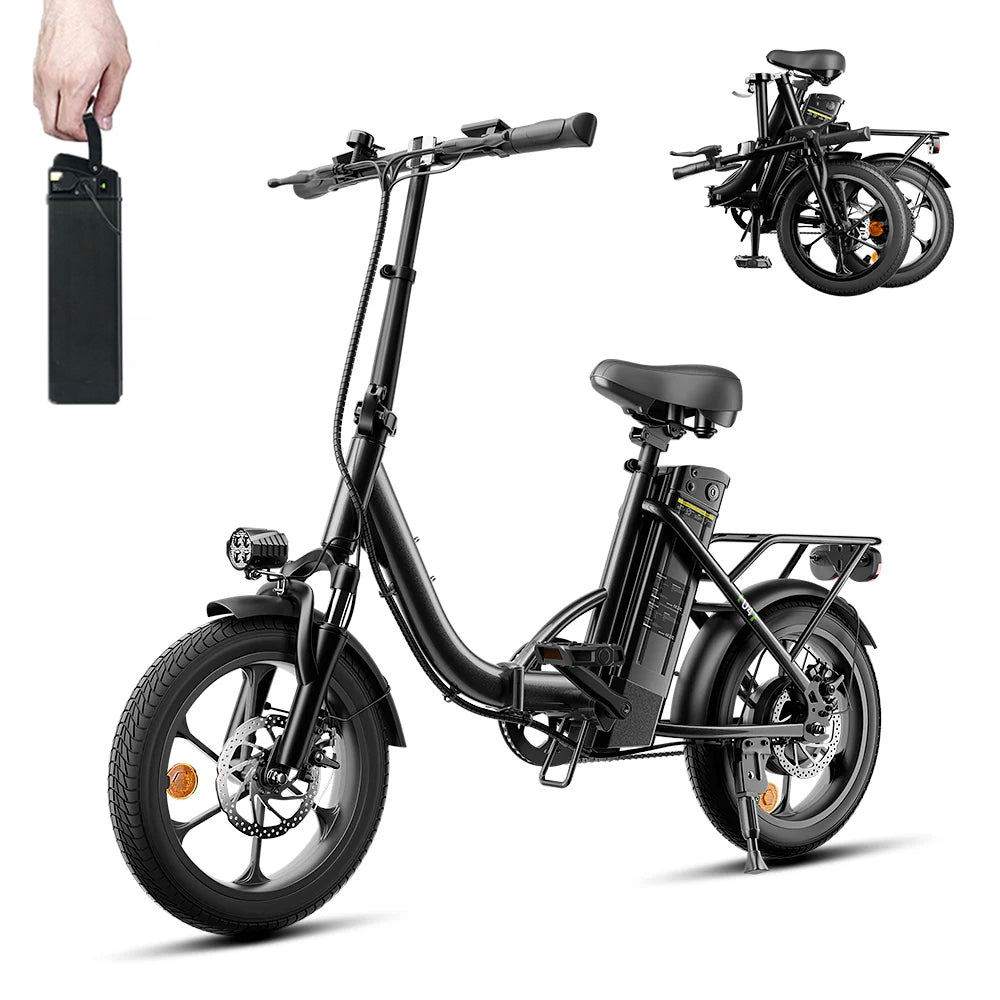
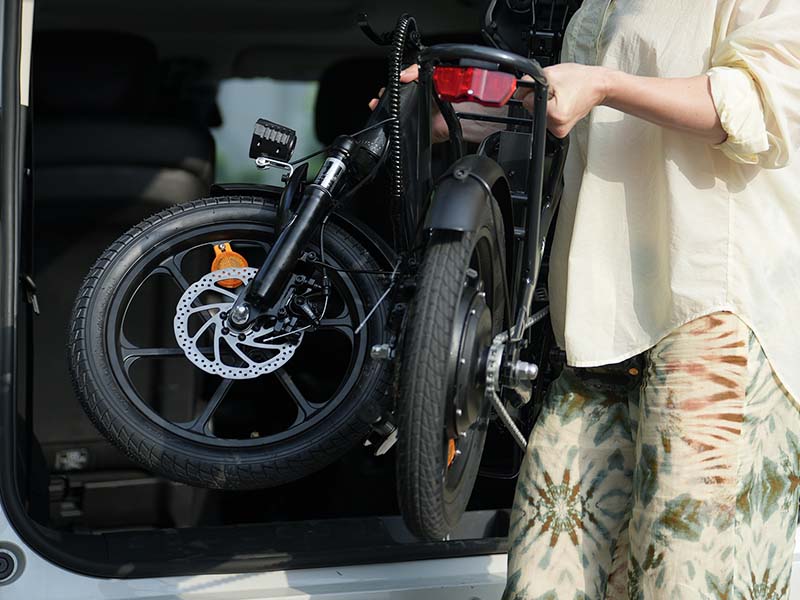
If your commute includes stairs, tight hallways, or mixed transit, the U4 is the ebike that saves you daily hassle. The step-through frame makes stop-and-go city riding easier, and the folding design is the real win when you need to store your electric bike in a flat or tuck it beside a desk.
- Best for: flats, buses/trains, tight storage, short-to-mid city commutes
- Frame style: low step-through; alloy steel folding frame
- Tires: 16 x 2.15 in pneumatic tyres
- Brakes: front + rear disc brakes
- Water resistance: IP65 rating
- Battery: 36V 10.4Ah lithium battery (removable)
- Charging time: 4 to 5 hours
- Bike weight: 58.42 lb (26.5 kg)
- Max rider weight: 264 lb (120 kg)
- Lights: LED; 111-lumen headlight + taillight
- Speed behavior: listed with a 15.5 mph default limit, with an unlocked mode shown on-site
Why it wins: If you are optimizing for daily convenience (carry, store, lock, charge), the U4 is built around those friction points. The trade-off is weight: if you routinely carry it up multiple flights, you should test-lift something similar before you commit.
Shop: iScooter U4 Low Step Through Foldable Electric Bike
2) iScooter U2 City Commuter Electric Bike
<!-- Image placeholder: iScooter U2 City Commuter Electric Bike product photo from the U2 product gallery. Insert the actual CDN URL from the brand CDN path before publishing. -->
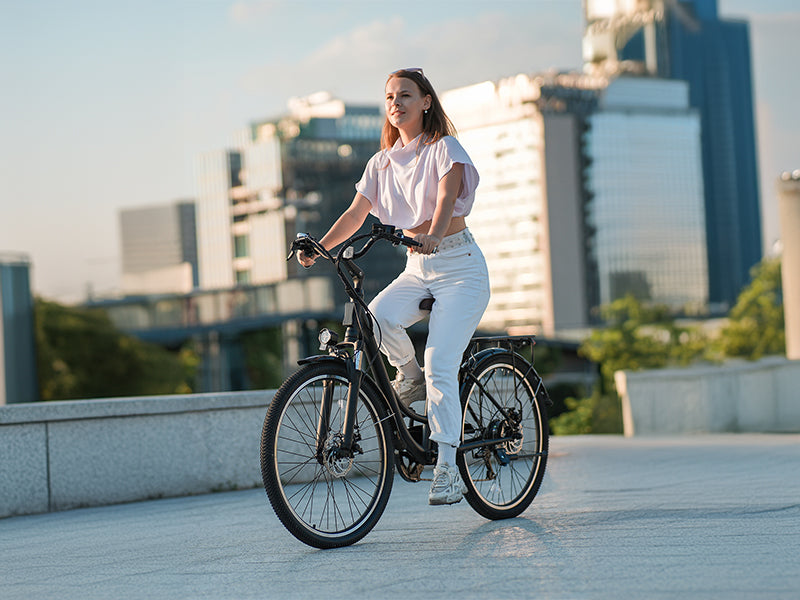
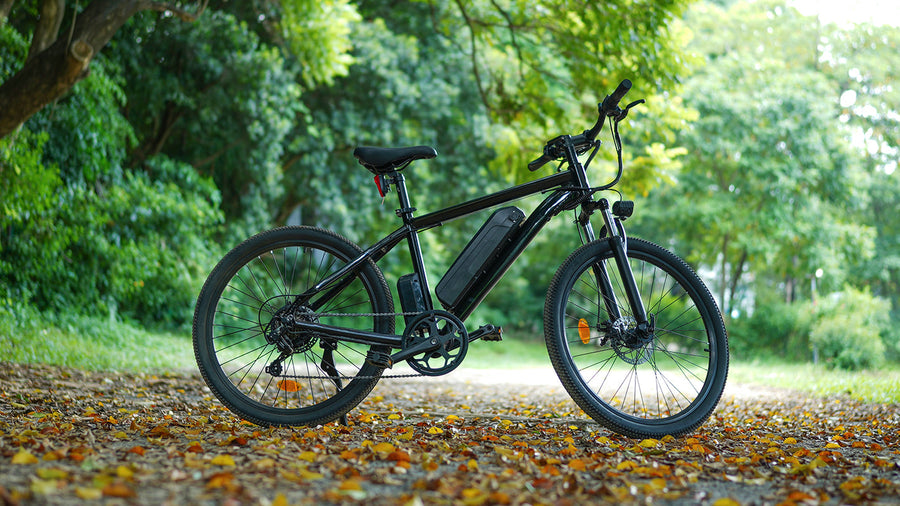
If your commute is longer and you want a more full-size feel, the U2 is the steadier city commuter option in the iScooter ebike lineup. This is the pick for riders who want consistent pedal-assist cadence, a simple setup, and a battery you can bring inside to charge.
- Best for: longer rides, daily round trips, steady cadence commuting
- Motor: rated 250W (max 500W)
- Battery: 36V, 13Ah (listed as 374 Wh on-page); removable
- Range: 65+ miles (105+ km) stated
- Speed modes: assist modes listed up to 15.5 mph before unlocking; up to 20 mph after unlocking (site-listed)
- Max load: 264 lb (120 kg)
- Rider height range: 5 ft 3 in to 6 ft 3 in (160 to 192 cm)
- Pedal assist: 7 levels
- Battery waterproofing: IP65 (battery listing)
- Brakes: front and rear disc brakes
- Net weight: 27 kg (59.5 lb)
Why it wins: The U2 is the better budget electric bike when you value ride stability and battery capacity more than compact storage. The main watch-out is space: if you live in a small hallway flat, measure your storage spot first and plan a lock-and-charge routine.
Shop: iScooter U2 City Commuter Electric Bike
3) Segway (budget commuter option to compare in-shop)
If you already own a Segway/Ninebot product (or you want established retail availability), it can be worth comparing Segway options in person before you buy. The key is not the badge, but whether the specific model you are looking at is actually an electric bike (many Segway UK listings are electric scooters, not E-bikes).
- Best for: riders already in the Segway ecosystem
- Why it can fit: familiar support channels; easier to see products in the shop
- Watch for: confirm the product category (ebike vs electric scooter)
- Legal check: confirm EAPC compliance details for UK road use
Product Page: Segway
4) NIU (urban commuter option to compare in-shop)
NIU can be a solid compare-and-decide brand if you like connected commuting and app-style ownership. In the UK market, availability and after-sales support can vary by seller and model, so the practical move is to confirm who handles warranty, parts, and battery support before you treat it as your daily electric bike.
- Best for: style-first commuters with app habits
- Why it can fit: connected features vary by model
- Watch for: confirm UK stock, service coverage, and spare parts path
- Legal check: confirm assist cutoff and rated power for UK roads
Product Page: NIU
Comparison Table (quick scan)
| Pick | Storage | Stated range | Speed limit behavior | Battery | Weight | Deal-breakers to check |
|---|---|---|---|---|---|---|
| iScooter U4 Foldable | Foldable, small spaces | Up to 55 miles stated | 15.5 mph default; unlock shown | 36V 10.4Ah removable | 58.4 lb | Carrying upstairs; 16 in wheels |
| iScooter U2 City | Full-size storage | 65+ miles stated | 15.5 mph modes; unlock shown | 36V 13Ah removable | 59.5 lb | Storage footprint; theft parking |
| Segway compare | Varies by model | Varies | Must confirm EAPC rules | Varies | Varies | Many are scooters, not ebikes |
| NIU compare | Varies by model | Varies | Must confirm EAPC rules | Varies | Varies | UK support and parts path |
Buying Guide (how to choose without overspending)
What range do you really need?
Range is where people overspend or under-buy, then blame the bike. Start with your real round-trip distance, then add a buffer so you are not riding the battery at the edge every day.
- Rule of thumb: your commute distance + 30% buffer
- Cold weather: expect noticeable drops in effective range in winter
- Hills + wind: budget for more battery usage on exposed routes
- Practical win: removable batteries simplify home charging and reduce hallway mess
If you are planning Last-mile Delivery routes, treat range claims as optimistic and focus on how easy it is to charge mid-day, because charging convenience beats theoretical miles.
Motor power and legal speed: what matters in the UK?
If you want a road-legal electric bike that is treated like a normal pedal cycle, the EAPC rules matter more than marketing phrases. According to GOV.UK, an EAPC must have a motor with continuous rated power no more than 250W and must cut off assistance at 15.5 mph (25 km/h). (gov.uk)
- Check the label language: look for "continuous" or "rated" power, not just peak
- Confirm assist cutoff: the motor should stop assisting above 15.5 mph
- Expectations: cadence sensors feel like a steady push, not a torque-based "snap"
If you see an "unlock" mode, treat it as an off-road/private-land setting unless you have clear confirmation it remains EAPC-compliant.
Comfort for city roads (potholes, kerbs, rain)
City comfort is not about fancy extras. It is about whether your electric bike stays predictable when the road is broken, and the weather turns.
- Tires first: wider pneumatic tyres at the right pressure, smooth rough tarmac
- Brakes: disc brakes help maintain stopping consistency in wet conditions
- Visibility: prioritize an always-ready front light and a real rear light
- Water rating: an IP rating is a useful clue, but you still need good habits
Also consider Eco-friendly Materials and longevity indirectly: a bike that lasts longer reduces waste, but only if you maintain it (chain, brake pads, tyre pressure).
Ownership math (returns, warranty, repairs)
A budget ebike is only "cheap" if it stays rideable. Before you buy, map out the boring stuff: support, parts, and how quickly you can get help.
- Returns: look for a clear 30-day return policy for new/unused items
- Warranty: confirm length and exclusions (frame vs battery vs wear parts)
- Repair reality: confirm whether you can get spare batteries, brake pads, and chargers
- Predictive Maintenance mindset: weekly tyre pressure checks and brake inspection prevent most commuter failures
Conclusion
If storage and portability decide your commute, pick the iScooter U4 and build your routine around folding, indoor charging, and a reliable lock. If your priority is smoother, longer commutes with more battery capacity on paper, pick the iScooter U2 and plan for full-size storage at home and work.
Official Site: iScooter
FAQ
How do I choose between a foldable bike and a full-size electric bike for commuting?
A foldable ebike is usually the better choice when you combine cycling with trains or buses, or when you have limited storage at home. A full-size electric bike typically feels more stable over rough roads because the wheelbase and wheels are often larger. If you carry your bike upstairs, do a lift-test before you buy because 26-27 kg can feel very different in a narrow stairwell. If you park outside, also consider that a foldable bike can sometimes be brought indoors more easily, which lowers theft risk.
What range should I target for a UK city commute?
Start with your round-trip distance and add about a 30% buffer so you are not arriving home on a nearly empty battery every day. Real-world range changes with rider weight, headwinds, hills, tyre pressure, and winter temperatures, so a fixed number on the box is not a guarantee. If you cannot charge at work, prioritize a removable battery so you can charge indoors without moving the whole bike. If you can charge at work, you can often choose a simpler setup and focus more on comfort and braking.
Is a removable battery worth it?
Yes, a removable battery is one of the biggest convenience upgrades for city commuting because you can charge indoors without storing the whole ebike inside. It can also reduce theft losses because the battery is often the most valuable single component to steal or damage. The trade-off is that you must keep the battery latch and electrical contacts clean and dry, especially in wet-weather riding. Before you buy, confirm that the battery locks securely and that replacement batteries are available.
What should I check first if my e-bike feels slower than expected?
First, confirm your assist mode because many bikes ship with conservative defaults or eco settings that limit assistance. Next, check tyre pressure because soft tyres can make any electric bike feel underpowered and slow. Then, look at the battery state of charge because many systems reduce peak power as the battery gets low. If performance still feels wrong, note any error codes and contact support with your rider's weight, route type, and outside temperature.
What matters more for comfort in the city: suspension or tyres?
For most UK city roads, tyres and tyre pressure usually matter more than suspension because they reduce vibration across the entire ride. Suspension helps most when you hit sharp impacts like pothole edges or frequent kerb drops. If you are on a strict budget, prioritize pneumatic tyres and dependable brakes before paying for added suspension complexity. After that, a comfort saddle or suspension seatpost can be a targeted upgrade without changing the whole bike.
How do I reduce theft risk when commuting daily?
Assume you will eventually be in a rush, so build a repeatable locking routine you can do in under 30 seconds. Lock the frame and rear wheel to an immovable object, and avoid leaving only the front wheel secured. If your battery is removable, take it inside whenever you park for longer than a quick stop because it reduces both theft value and weather exposure. Finally, record your serial number and keep proof of purchase so you can file an insurance claim quickly if the worst happens.
Are electric scooters or off-road electric scooter options a good substitute for an e-bike commute?
They can work for very short last-mile trips, but they change stability, braking feel, and carrying capacity compared with an e-bike. Smaller wheels can feel harsher on potholes and can be less forgiving on wet road surfaces. If you carry a laptop bag or groceries daily, an electric bike usually manages weight and balance more comfortably. If you do consider electric scooters or an off-road electric scooter, confirm where you can legally ride and plan for wet-weather braking and visibility.
Table of Contents
- Introduction
- The 4 picks (budget-first, commute-first)
- Comparison Table (quick scan)
- Buying Guide (how to choose without overspending)
- Conclusion
-
FAQ
- How do I choose between a foldable bike and a full-size electric bike for commuting?
- What range should I target for a UK city commute?
- Is a removable battery worth it?
- What should I check first if my e-bike feels slower than expected?
- What matters more for comfort in the city: suspension or tyres?
- How do I reduce theft risk when commuting daily?
- Are electric scooters or off-road electric scooter options a good substitute for an e-bike commute?
iScooter E Scooter Collections:
Electric Scooter | Kids Electric Scooter | Electric Scooter for Adults | Electric Scooter with Seat | Off-Road Electric Scooter | Foldable Electric Scooter | Girls Electric Scooter | 1000W Electric Scooter | 2000W Electric Scooter | Boys Electric Scooter | Dual Motor Electric Scooter | Big Electric Scooter | Electric Scooter with Suspension | Lightweight Electric Scooter | Commuter E-Scooters | 3 Wheel Electric Scooter
Show more ▼iScooter E Bike Collections:
Foldable Electric Bike | Affordable Cheap Electric Bike | Electric Bike for Adults | Electric Motor Bikes | Trek Electric Bike | Fastest Electric Bike | Electric Road Bike | Full Suspension Electric Mountain Bike | Giant Electric Bike | Womens Ladies Electric Bike | Mens Electric Bike | Electric Bike with Throttle | Electric Gravel Bike | Electric Mountain Bike UK | Fat Tyre Electric Bike | Electric Hybrid Bike | Electric Motorised Bike | Electric Push Bike | 1000W Electric Bike | Cool Electric Bikes | Electric Off Road Bike | Pedal Assist Electric Bike | Good Electric Bikes | Small Electric Bike | Trek Electric Mountain Bike | 2000W Electric Bike | Full Suspension Electric Bike | Mini Electric Bike | Road Legal Electric Bike | Step Through Electric Bike
Show more ▼👍 Buying Guide | 🚴♂️ Riding Guide
📋 Feature Guide | ❓ Common problem

Product category
Electric Scooter
Cheap Electric Scooters for Adults | Fastest Electric Scooter | Kids Electric Scooter | Mini Electric Scooter
Electric Bike
U4 Foldable E-bike | EB3S E-MTB
Hoverboards
Electric Scooter for Kids | iK3Pro E-Scooter for Kids | iK7 Height Adjustable Kids E-Scooter







Article tags :
Leave us a message