










5 Best iScooter E-Bikes for Hills and Heavy UK Inclines
When steep roads expose the wrong e-bike choice
A hill can make a pleasant ride feel hard work very quickly. On sharp UK inclines, the weak points show up fast: assistance that fades under load, a battery that drops sooner than expected, rough handling on patched lanes, or braking that feels less settled on the way back down. That matters whether you ride to work, carry extra kit, or head out beyond smooth town roads at the weekend.
This shortlist keeps the comparison inside the current iScooter range rather than padding the page with vague alternatives. The five picks below separate range-led, comfort-led, and load-led uses, then narrow the decision by rider scenario. Because UK legality matters as much as climbing support, it also helps to remember that a road-legal EAPC in Great Britain must have a maximum continuous rated motor output of 250W and electrical assistance that cuts off at 15.5 mph, according to GOV.UK.
Top iScooter picks for steep hills

1. Best overall for mixed climbs: iScooter M10 Electric Mountain Bike
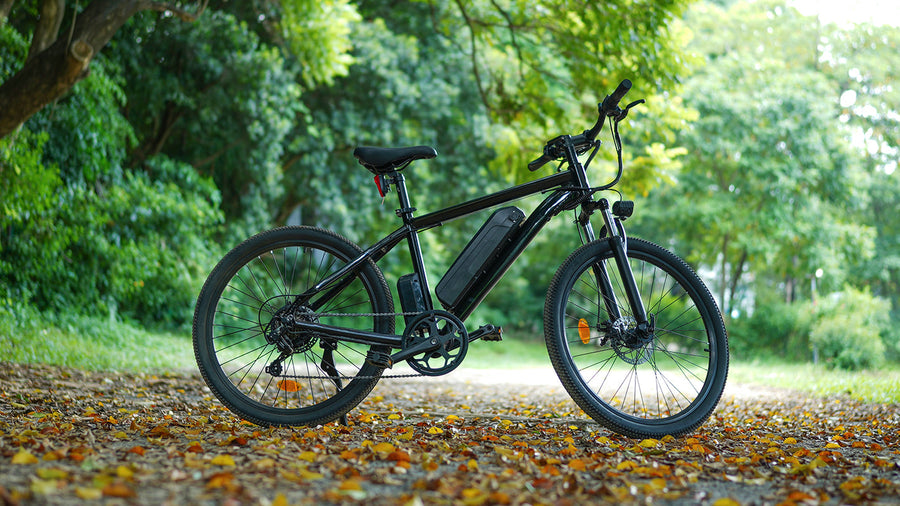
If your route mixes urban gradients, longer commutes, and occasional rougher sections, the iScooter M10 Electric Mountain Bike is the most balanced place to start. The official UK product page presents it as the iScooter EB3S and lists a rated 250W motor, a 486Wh battery, a stated 44-60 mile range, and a 150 kg maximum load. That combination makes it the clearest all-rounder for hill riding without drifting into overbuilt territory.
Shop: iScooter e-bikes
Why it stands out
- Rated motor: 250W
- Battery: 486Wh (36V, 13.5Ah)
- Stated range: 44-60 miles
- Maximum load: 150 kg
- Riding profile: commuting, leisure riding, and light off-road use
Best for
- Riders who want one e-bike for weekday travel and weekend use
- Hill routes where battery support matters more than outright comfort features
- Heavier riders or commuters carrying bags, locks, or daily kit
What to watch
- It looks like the simpler of the two main options for ride isolation
- If your roads are consistently broken or gravel-heavy, suspension emphasis may matter more
2. Best for rough lanes and traction: iScooter DX5Max Electric Bike
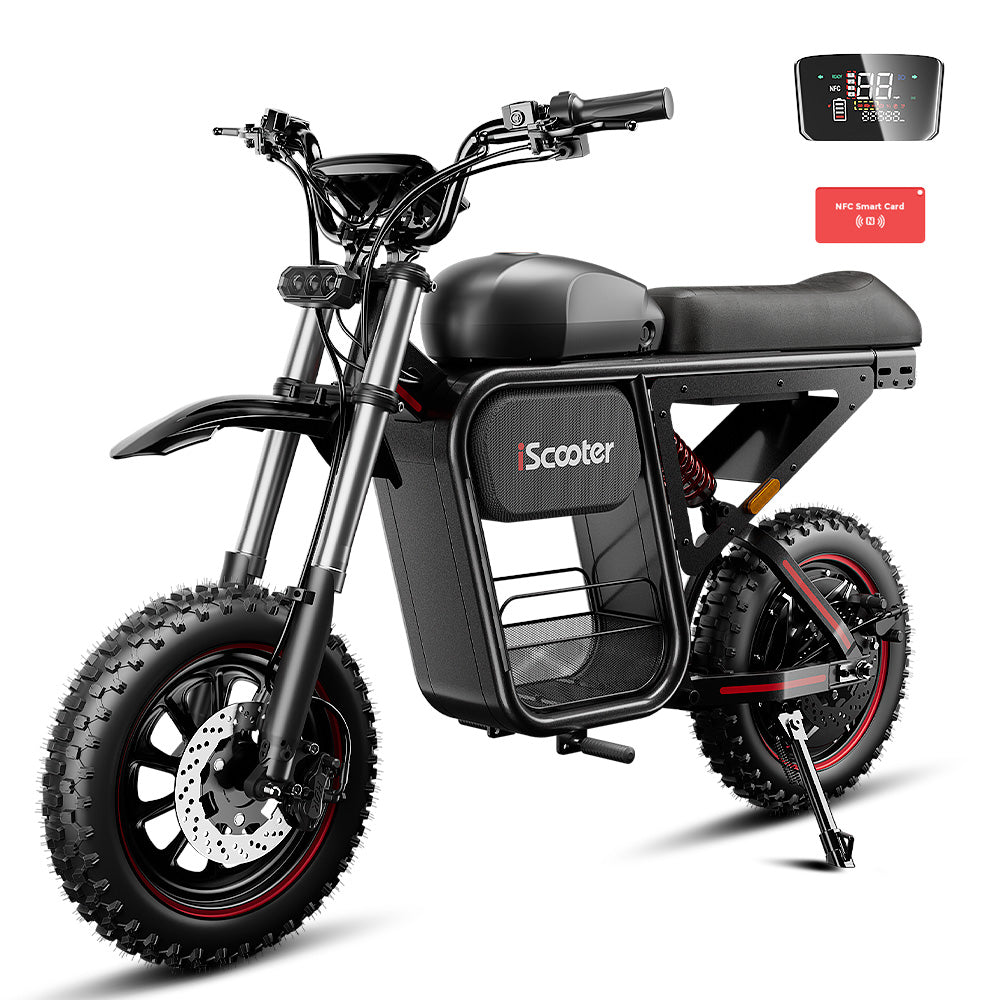
Some climbs are difficult because of the surface, not just the gradient. If your route includes patched tarmac, gravel edges, or rough descents after the climb, the iScooter DX5Max Electric Bike looks better suited to that environment. Its official UK page highlights dual suspension, front and rear hydraulic disc brakes with power cut-off, 17 × 3.2 inch off-road pneumatic tyres, and a removable battery, which together point to a more comfort-and-control-led ride.
Why it stands out
- Front and rear hydraulic disc brakes with power cut-off
- Dual suspension with inverted hydraulic front suspension and rear spring suspension
- 17 × 3.2 inch off-road pneumatic tyres
- Removable 52V 20Ah 1040Wh lithium battery
- Stated range: 43-62 miles
Best for
- Riders dealing with rougher lanes, uneven ground, and repeated descents
- Buyers who care as much about downhill composure as uphill assistance
- Mixed leisure and utility riding where storage adds convenience
What to watch
- The official page presents this as a more powerful and more specialised machine
- For UK public-road use, always check whether the exact configuration you buy matches Great Britain EAPC rules before riding beyond private land
3. Best for heavier riders or extra cargo: iScooter M10 for load support
Payload can change how an e-bike feels on a climb far more than many buyers expect. If you are a heavier rider, carry work gear, or want more margin for shopping and utility use, the M10 earns a separate place because the official page states a maximum load of 150 kg. That does not automatically make it the strongest climber in every condition, but it does make it easier to justify when load tolerance is one of your first filters.
Why it wins here
- Published 150 kg maximum load offers clearer carrying confidence
- 486Wh battery gives a useful baseline for longer hill commutes
- Mountain-bike positioning suggests broader route flexibility than a pure city layout
Best for
- Taller or heavier riders who want more published load headroom
- Commuters carrying panniers, a rucksack, or daily utility items
- Buyers who prefer practicality over a more comfort-led chassis
What to watch
- More load and steeper roads will reduce real-world range
- You still need sensible gearing, tyre pressure, and battery management for repeated climbs
4. Best for comfort on repeated inclines: iScooter DX5Max for ride isolation
Not every hill problem is about one brutal ramp. Many riders in Britain deal with rolling gradients, potholes, patched surfaces, and long rides where fatigue builds over time. In that setting, the DX5Max makes sense as the comfort-first option in this list because its product page gives unusual prominence to dual suspension, fat tyres, and hydraulic braking. That suggests better shock management and steadier control where the road never quite settles.
Key specs to check
- Dual suspension layout
- Hydraulic braking front and rear
- Off-road tyre format for added grip and cushioning
- Removable battery design for easier charging
- Utility extras including front basket and rear storage bag
Best for
- Riders whose wrists, lower back, or confidence suffer on harsh road surfaces
- Longer routes with repeated up-and-down sections
- Country-lane use where stability matters as much as raw assistance
What to watch
- More comfort-focused hardware can mean a bulkier feel
- If your route is mostly smooth tarmac, you may not need the extra complexity
5. Best for range-minded hill commuters: iScooter M10 for fewer charging gaps
If your main worry is getting through a hilly week with fewer charging interruptions, the M10 has the clearer endurance-led story within this narrow iScooter comparison. Its official page states a 44-60 mile range and a 486Wh battery, which gives you a more straightforward benchmark for commute planning. Real climbing, wind, cold weather, and rider load will reduce that figure, but it remains the cleaner option for buyers comparing range support against comfort-first priorities.
Why it fits commuters
- Stated range gives a clear comparison point for regular travel
- 250W rated motor aligns with standard UK EAPC expectations
- Mixed-use positioning suits riders splitting time between roads and leisure paths
Best for
- Daily riders who cannot charge after every trip
- People with hilly return journeys rather than short flat hops
- Buyers who want one bike that stays versatile
What to watch
- Published range is a comparison baseline, not a promise for steep real-world routes
- Battery reserve matters more in winter and on stop-start journeys
What matters most when choosing an e-bike for UK hills
Prioritise climbing support over headline speed
On UK hills, the useful question is not how fast a bike looks on paper. It is how calmly it assists when gradient, rider weight, and surface quality all get worse at the same time. For legal road use in Great Britain, a compliant EAPC must have pedals, a motor with maximum continuous rated power not exceeding 250W, and assistance that cuts off at 15.5 mph, according to GOV.UK. That means you should judge hill readiness through battery support, gearing feel, traction, and braking confidence rather than top-speed claims.
Match tyres and suspension to the road you actually ride
A bike that feels fine on smoother streets may become tiring on cracked lanes or gravel-cut edges. Wider tyres and stronger suspension support can improve comfort and control, especially when a climb is followed by a rough descent. In this iScooter comparison, that is the clearest dividing line between the M10 and the DX5Max: the M10 reads as the simpler, range-and-load-led option, while the DX5Max appears more focused on traction, cushioning, and uneven-surface composure.
Descending matters nearly as much as climbing
A lot of buyers think only about getting up the hill. However, narrow roads, damp surfaces, loose corners, and poor tarmac often make the descent just as demanding. That is why the DX5Max's front and rear hydraulic disc brakes deserve real attention in a hill-focused shortlist. Measured braking feel can reduce fatigue and help you hold a cleaner line when the route turns rough or visibility changes.
Treat stated range figures as planning tools
Manufacturers publish range figures so you can compare bikes, not predict every ride exactly. Hills, rider weight, wind, tyre pressure, and stop-start traffic all affect battery use. A sensible approach is to compare the quoted figure first, then leave extra margin for your real route. The M10's stated 44-60 mile range therefore works best as a planning baseline, while the DX5Max's 43-62 mile figure needs the same practical caution.
Which rider profile fits each option best?
Steep commute with fewer charges
Choose the M10 if your route is mostly paved but consistently hilly and you want the clearest range-led option. Its published battery and range figures make commute planning simpler, particularly if charging at work is awkward. It also suits riders who want one bike for transport and leisure rather than a more specialised setup.
Rough country lanes and uneven descents
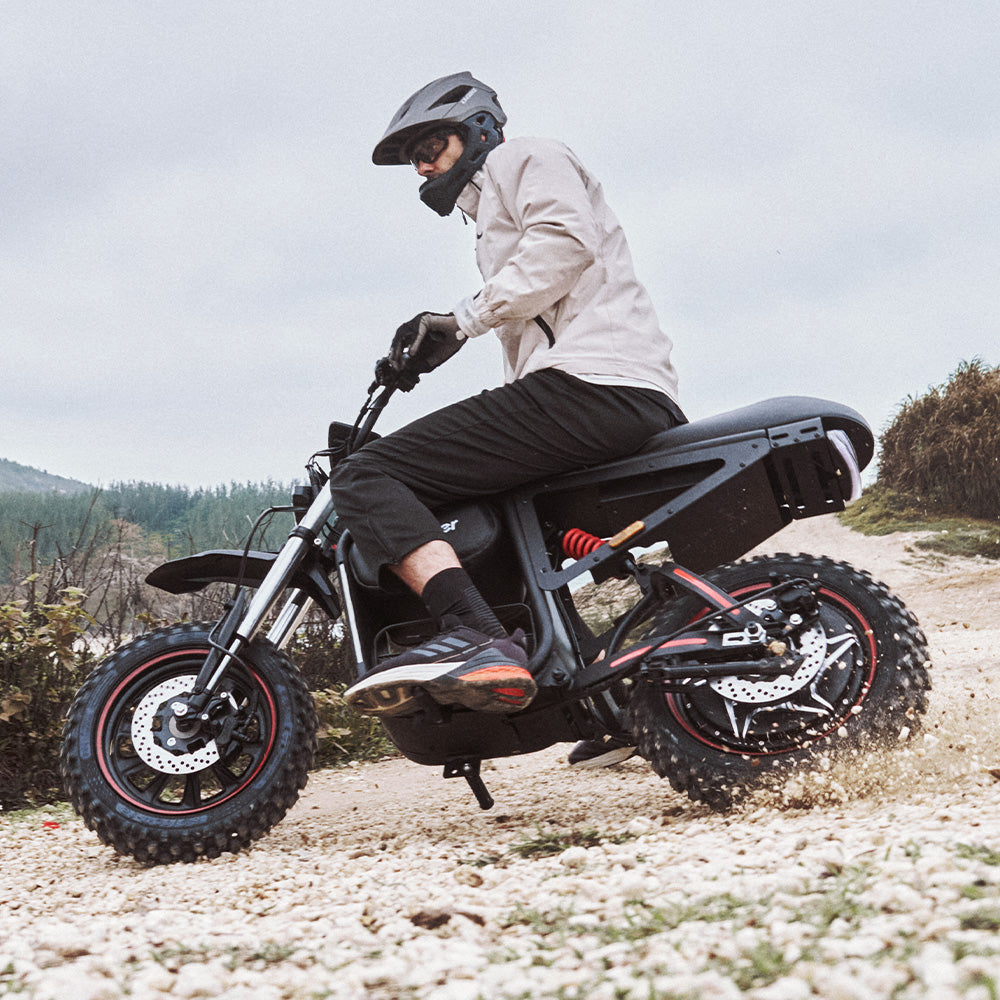
The DX5Max looks stronger where the route is physically harsher. Dual suspension, hydraulic disc brakes, and off-road tyres should appeal more if your roads are broken, your descents are bumpy, or your weekend rides leave the smoothest surfaces behind.
Heavier rider or extra daily kit
The M10 deserves attention when carrying confidence sits high on your list. A published 150 kg maximum load is useful if you are accounting for rider size, locks, luggage, or regular utility use rather than judging the bike only by appearance.
Leisure exploration beyond smooth roads
For relaxed exploration on varied surfaces, the DX5Max offers the more comfort-forward case. The combination of suspension, wider tyres, and practical storage helps if your rides move between town roads, rougher paths, and short off-road stretches.
Small maintenance and troubleshooting checks
If climbing feels weaker than expected
A low battery often changes how strong assistance feels on a hill. Charge fully before a demanding route, and avoid judging performance only from the last few bars of battery. If the feeling persists, check tyre pressure and make sure the bike is in the intended riding mode.
If rough lanes feel harsher than they should
Tyre pressure that is too high can make a bike feel nervous and unforgiving on patched roads. Adjust carefully for your route and weight, and inspect the contact patch before longer rides. On the DX5Max, suspension condition also matters because comfort depends on the whole system working together.
If downhill confidence drops
Brakes need checking before regular hill use. Look for rubbing, delayed response, or a lever feel that changes during the ride. The UK Government battery safety guidance also recommends buying safe and legal e-bikes and treating battery care seriously, which is particularly relevant if you charge indoors after wet or demanding rides.
The quick takeaway for hill-focused buyers
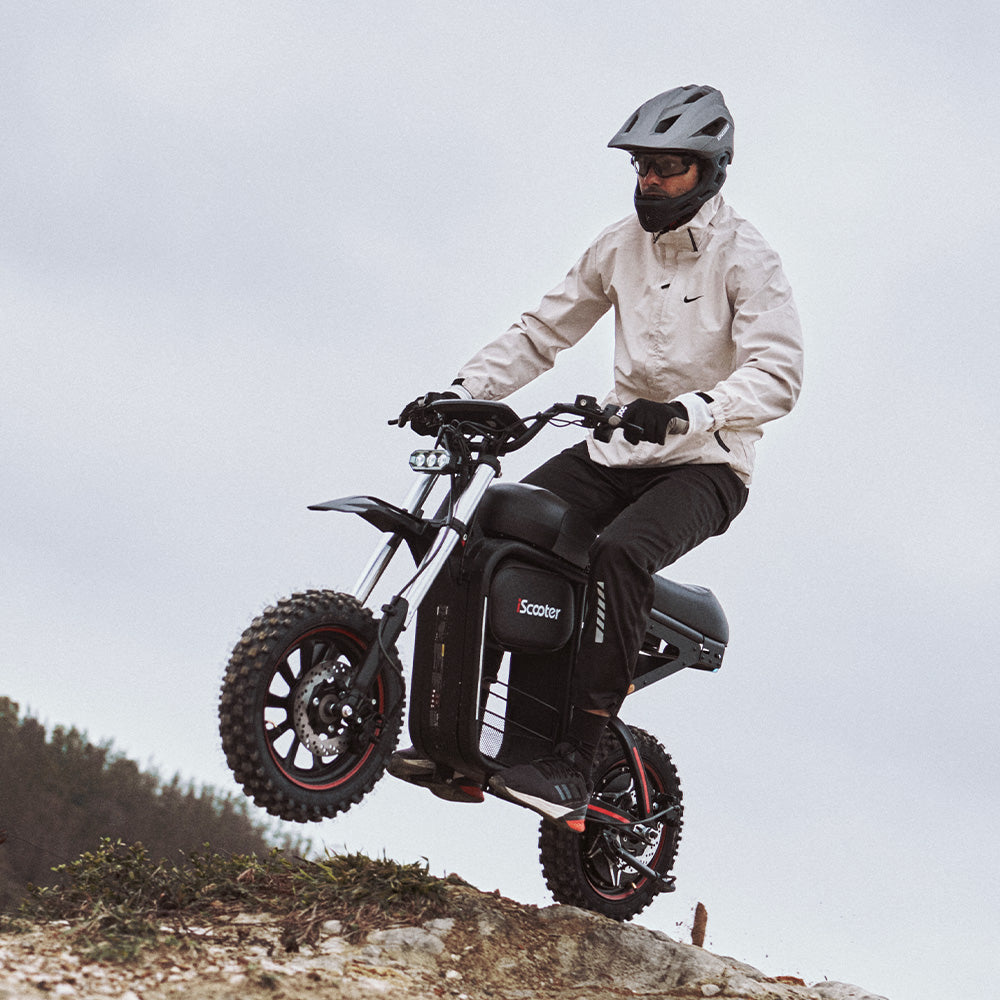
If you want the simpler answer, this is really a decision between the M10 and the DX5Max rather than a broad market shoot-out. The M10 is easier to back when published range, 150 kg load support, and all-round commuting practicality matter most. The DX5Max makes the stronger case if your hills come with rough surfaces, repeated descents, and a bigger need for ride comfort and braking assurance.
FAQ
How do I choose an electric bike with the best battery for commuting?
Choose a battery by starting with your real return distance, then add margin for hills, wind, colder weather, and any load you carry. For steep routes, it is sensible to avoid planning around the maximum quoted figure alone because climbing drains energy faster than flatter riding. In this iScooter comparison, the M10 is the clearer range-led candidate because its official page lists a 486Wh battery and a stated 44-60 mile range. If your route is rough as well as hilly, comfort and braking may matter enough to push you towards the DX5Max instead.
Which electric scooter is best for rural areas?
For rural areas, the best electric scooter is usually one with strong suspension, reliable brakes, and tyres that can handle uneven ground rather than just smooth pavements. In iScooter’s range, the DX5Max is the strongest option for country lanes because its dual suspension, hydraulic disc brakes, and off-road tyres make it more stable and comfortable on rough tarmac, gravel, and steeper descents. That setup gives you better grip and control when surfaces change quickly. If your rural routes are mostly paved, a lighter commuter model can still work, but it will be less capable on broken or loose surfaces.
Are there e-bike designed for outdoor exploration?
Yes, but the better choice depends on how far you move beyond paved roads. The M10 suits mixed use if you want commuting practicality with light trail or leisure flexibility. The DX5Max looks more exploration-oriented because its product page focuses on dual suspension, wider off-road tyres, and stronger braking hardware. For either bike, match your expectation to the terrain rather than assuming every hill bike behaves the same way on gravel, lanes, and rough descents.
What should I check before riding an e-bike on steep roads in the UK?
Check battery charge, tyre pressure, brake response, and whether your route needs more comfort or more range support. It is also worth confirming that the bike you intend to use on public roads meets Great Britain EAPC requirements, especially if a model page mentions higher-output configurations or off-road modes. Before longer hill rides, inspect lights and reflectors as well because descents often finish in poorer visibility than expected. A short pre-ride check can prevent weak climbing feel and reduce surprises on the way down.
Is the M10 or the DX5Max better for a heavier rider carrying extra kit?
The M10 is the more straightforward pick if published load support is your first concern. Its official page states a 150 kg maximum load, which gives it a clearer utility angle for riders carrying bags, locks, or regular daily gear. That does not automatically make it the best choice for every rough route, because ride comfort and braking still matter on poor surfaces. If your weight plus cargo is only part of the question and the roads are harsh, the DX5Max may still deserve a closer look for comfort and control reasons.
Table of Contents
- When steep roads expose the wrong e-bike choice
-
Top iScooter picks for steep hills
- 1. Best overall for mixed climbs: iScooter M10 Electric Mountain Bike
- 2. Best for rough lanes and traction: iScooter DX5Max Electric Bike
- 3. Best for heavier riders or extra cargo: iScooter M10 for load support
- 4. Best for comfort on repeated inclines: iScooter DX5Max for ride isolation
- 5. Best for range-minded hill commuters: iScooter M10 for fewer charging gaps
- What matters most when choosing an e-bike for UK hills
- Which rider profile fits each option best?
- Small maintenance and troubleshooting checks
- The quick takeaway for hill-focused buyers
-
FAQ
- How do I choose an electric bike with the best battery for commuting?
- Which electric scooter is best for rural areas?
- Are there e-bike designed for outdoor exploration?
- What should I check before riding an e-bike on steep roads in the UK?
- Is the M10 or the DX5Max better for a heavier rider carrying extra kit?
iScooter E Scooter Collections:
Electric Scooter | Kids Electric Scooter | Electric Scooter for Adults | Electric Scooter with Seat | Off-Road Electric Scooter | Foldable Electric Scooter | Girls Electric Scooter | 1000W Electric Scooter | 2000W Electric Scooter | Boys Electric Scooter | Dual Motor Electric Scooter | Big Electric Scooter | Electric Scooter with Suspension | Lightweight Electric Scooter | Commuter E-Scooters | 3 Wheel Electric Scooter
Show more ▼iScooter E Bike Collections:
Foldable Electric Bike | Affordable Cheap Electric Bike | Electric Bike for Adults | Electric Motor Bikes | Trek Electric Bike | Fastest Electric Bike | Electric Road Bike | Full Suspension Electric Mountain Bike | Giant Electric Bike | Womens Ladies Electric Bike | Mens Electric Bike | Electric Bike with Throttle | Electric Gravel Bike | Electric Mountain Bike UK | Fat Tyre Electric Bike | Electric Hybrid Bike | Electric Motorised Bike | Electric Push Bike | 1000W Electric Bike | Cool Electric Bikes | Electric Off Road Bike | Pedal Assist Electric Bike | Good Electric Bikes | Small Electric Bike | Trek Electric Mountain Bike | 2000W Electric Bike | Full Suspension Electric Bike | Mini Electric Bike | Road Legal Electric Bike | Step Through Electric Bike
Show more ▼👍 Buying Guide | 🚴♂️ Riding Guide
📋 Feature Guide | ❓ Common problem

Product category
Electric Scooter
Cheap Electric Scooters for Adults | Fastest Electric Scooter | Kids Electric Scooter | Mini Electric Scooter
Electric Bike
U4 Foldable E-bike | EB3S E-MTB
Hoverboards
Electric Scooter for Kids | iK3Pro E-Scooter for Kids | iK7 Height Adjustable Kids E-Scooter





Article tags :
Leave us a message