










Outdoor Use: Which E-Scooters Offer the Best Long-Distance Range? (Range Test)
Introduction
Battery anxiety hits hardest when your route leaves the high street and heads into gravel, parks, or connecting trails. For outdoor use, long-distance range is not just a marketing number. It is the difference between finishing your loop and pushing an electric scooter back to the car.
So which electric scooter range claims feel real in 2026? The most reliable starting point is battery energy in watt-hours (Wh), then you adjust for speed, terrain, tires, and rider load.
Also, batteries keep improving. The U.S. Department of Energy notes that EV battery pack costs have dropped about 90% since 2008, which is one reason higher-capacity Lithium-ion Battery packs are now showing up in more Electric Scooters.
Official Site: iScooter
Recommend Brands
1: iScooter iX7Pro Off Road Electric Scooter
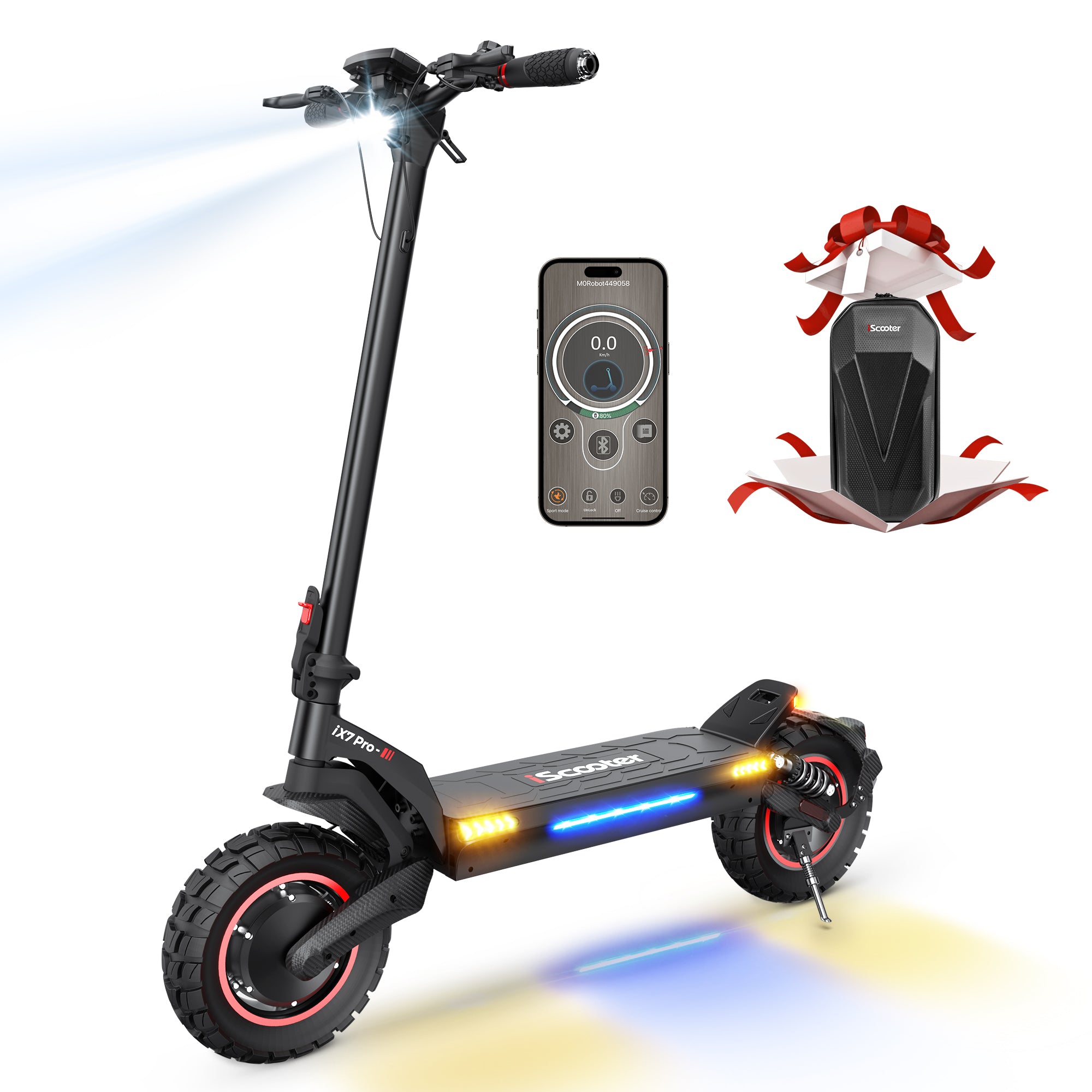
If your priority is an off-road electric scooter that still works for mixed commuting, the iScooter iX7Pro is built around a practical battery size and off-road-ready setup. It is positioned as a range-first option for trails, gravel connectors, and rough city shortcuts where smaller Commuter Scooters feel harsh.
- Outdoor scenarios: compacted dirt, gravel paths, mixed commuting with rough pavement transitions
- Range-first setup: 48V 17.5Ah (840Wh) Lithium-ion Battery for long rides
- Claimed range: up to 50 miles / 80 km (as listed by the brand)
- Claimed top speed: 38 mph / 60 km/h
- Hill handling: up to 35% climbing angle (claimed)
- Comfort control: dual front and rear suspension to smooth washboard and potholes
- Braking: front disc brake + electronic brake; rear disc brake + electronic brake
- Tire type: off-road tubeless tires for grip on loose surfaces
- Water resistance: IPX4 (helpful for light rain, not for deep water)
- Ownership experience: free UK shipping and fast 1-3 day delivery, plus 30-day returns and up to 24 months warranty support (per brand positioning)
Shop: iScooter iX7Pro 2000W Off Road Electric Scooter
Why it wins: The iX7Pro keeps the range conversation simple by pairing an 840Wh pack with off-road tubeless tires and Dual Suspension. Therefore, it targets riders who want an Off-road E-scooters feel without turning the scooter into a heavy, ultra-high-voltage specialty machine.
2: Segway SuperScooter GT3 Pro
Segway positions the SuperScooter GT3 Pro as a high-capacity, high-speed platform where range is reported by mode, which helps you understand the gap between Eco riding and fast cruising. For long paved routes, this transparency is useful because the biggest real-world range losses usually come from speed.
- Outdoor scenarios: long paved routes, fast cruising, extended weekend rides
- Battery: 2160Wh on a 72V platform (claimed)
- Range by mode (claimed): 86 miles Eco, 45 miles Sport, 34 miles Race
- Claimed top speed: up to 80 km/h (about 49.7 mph)
- Braking: dual hydraulic brakes (claimed)
- Water resistance: IPX6 body and IPX7 battery pack (claimed on Segway shop listing)
Key Factors to Choose (for real outdoor range)
Battery size (Wh): What Wh matches your route?
A watt-hour number is not perfect, but it is the cleanest way to compare electric scooters across brands because it represents stored energy. Next, convert your ride plan into a conservative energy budget.
- For casual outdoor loops at moderate pace, many riders plan roughly 15-25Wh per mile.
- For faster riding, frequent stops, colder air, or off-road surfaces, plan 25-40Wh per mile.
Because of that, an 840Wh scooter can feel very different depending on whether you ride smooth pavement or loose gravel. The same rule also applies to E-bikes and electric bike setups, but tire width and cadence control can change efficiency.
Ride mode and speed: How much does speed cut range?
Speed increases aerodynamic drag sharply, so range can drop fast once you ride above moderate speeds. That is why some Electric Scooters publish different range numbers for Eco vs Sport.
Ask yourself two questions:
- Do you want a scooter that can do long distance at 15-20 mph, or do you want long distance at 30+ mph?
- Will you actually use Eco mode outdoors, or will you ride at mixed speeds because your trail network opens up?
Terrain and tires: Why off-road grip costs energy
Off-road tires trade efficiency for traction. Knobby tread and softer compounds can increase rolling resistance, and loose surfaces waste energy because the tire slips and sinks.
Practical checks that improve range on Off-road E-scooters:
- Keep tire pressure in the recommended range. Underinflation can quietly cut range.
- Use smoother tires if most of your miles are paved, and reserve true off-road tread for real dirt and gravel.
Rider weight and cargo: How load changes energy use
Heavier loads require more energy for acceleration and climbing. On outdoor routes, you often accelerate repeatedly after turns, gates, and trail crossings.
To plan realistically:
- Add buffer if you carry a lock, bag, tools, or safety gear.
- Add more buffer if your route has sustained climbs. Elevation is an energy tax you cannot avoid.
Practical tips for a simple range test
If you want a range number you can trust, keep the test repeatable.
- Start at 100% charge and note ambient temperature.
- Track distance, average speed, and total elevation (a phone fitness app works).
- Write down wind and surface conditions because headwinds can cut range quickly.
- Repeat the same route in two modes (for example, Eco vs normal) to see the spread.
Common mistakes that make range comparisons useless
Many riders compare two scooters using two different ride styles. That comparison is almost always unfair.
- Comparing an Eco-mode claim to a Sport-mode habit
- Ignoring tire pressure and rolling resistance changes
- Treating a short flat test as proof for hilly off-road routes
Battery chemistry note for 2026 context
Battery chemistry affects energy density and weight, which is why some scooters get very large packs at the cost of mass. The International Energy Agency notes that LFP packs are roughly one-fifth lower in Wh/kg than NMC, which can influence how heavy a long-range scooter feels for the same usable energy.
Comparison Table
| Brand | Model | Max range (claimed) | Battery (Wh) | Top speed (claimed) | Suspension | Brakes | Water rating | Best for |
|---|---|---|---|---|---|---|---|---|
| iScooter | iX7Pro | 50 miles / 80 km | 840Wh (48V 17.5Ah) | 38 mph / 60 km/h | Dual front and rear | Disc + electronic | IPX4 | Off-road E-scooters, mixed terrain |
| Segway | SuperScooter GT3 Pro | 86 miles (Eco) | 2160Wh (72V) | 80 km/h (about 49.7 mph) | Adjustable hydraulic front and hydraulic rear (claimed) | Dual hydraulic | IPX6 body; IPX7 battery (claimed) | Long paved outdoor routes, high-speed range planning |
Conclusion
For outdoor use, the best long-distance range is the range you can repeat on your real route. Therefore, focus on battery Wh first, then adjust for speed, terrain, tire choice, and rider load.
- Top pick for off-road value and mixed terrain: iScooter iX7Pro, with its 840Wh pack, Dual Suspension, and off-road tubeless tires.
- Long-range spec leader by published Eco-mode number: Segway SuperScooter GT3 Pro, with a much larger 2160Wh battery and mode-based range claims.
FAQ
1. Which e-scooters offer the best long-distance range?
Long-distance range usually comes down to battery capacity in watt-hours (Wh), plus how efficiently the scooter can turn that energy into miles. For outdoor use, tire type and terrain matter because off-road tread and loose surfaces can reduce range even with a large Lithium-ion Battery. Also compare how brands report range, since Eco-mode numbers can be far higher than mixed-speed riding. If your route includes hills, plan extra buffer because climbing is one of the biggest energy drains.
2. Which electric scooter has the longest battery life?
Battery life can mean range per charge or long-term battery health over months and years. For long-term health, avoid storing a Lithium-ion Battery at 100% for long periods and avoid regularly draining it to 0%. Heat is a major factor, so repeated hard riding in hot weather can accelerate degradation. A consistent routine, such as charging after rides and storing around mid-charge when parked for weeks, usually helps.
3. What is the average battery life for electric scooters?
Most electric scooters are designed so the battery can deliver useful performance for a long time, but the real outcome depends on speed, load, and storage conditions. Frequent full-throttle riding and heavy cargo typically increase battery stress because current draw and heat rise. Many riders notice gradual range loss rather than sudden failure, which is normal battery aging. Good tire pressure, free-rolling brakes, and smooth acceleration reduce energy waste and can slow perceived range decline.
4. Are there electric scooters that last all day on a single charge?
Yes, but only if your definition of all day matches the scooter's realistic speed, terrain, and load. A scooter might claim very high range in Eco mode at a steady low speed on flat pavement, but outdoor riding with stops, hills, and wind can cut that number dramatically. For day-long adventures, plan a conservative speed target and keep a 20-30% charge buffer. Comfort also matters because fatigue can end rides early even when the battery still has energy.
5. What should I consider when buying an e-scooter for outdoor adventures?
Start with tires and suspension because outdoor routes demand grip and impact control. Off-road E-scooters with Dual Suspension usually feel safer on broken pavement and gravel, especially at moderate speeds. Next, match battery Wh to your longest loop plus a buffer for cold air and elevation. Finally, include Safety Gear in the plan because higher-speed outdoor riding changes risk, and gear tends to be the cheapest part of a safe setup.
6. What are the top features to look for in an e-scooter for off-road exploration?
Look for a durable frame, off-road-capable tires, and suspension that can handle repeated impacts without bottoming out. Brakes should stay consistent on loose surfaces, and many riders prefer strong mechanical braking with predictable modulation. Water resistance helps with puddles and light rain, but it does not make a scooter safe to submerge or wash aggressively. For longer rides, prioritize battery capacity, cockpit ergonomics, and lighting that stays visible on shaded trails.
7. Can I use a commuter electric scooter on gravel trails?
You can, but the ride can feel unstable because small commuter tires and stiff frames tend to bounce and slip on loose stones. A commuter setup may also lose range faster on gravel because the tires sink slightly and waste energy with micro-slips. If you must ride gravel, lower speed, keep tire pressure correct, and avoid sharp turns on loose patches. For frequent trail riding, choose a scooter designed for off-road surfaces with better tires and suspension.
Table of Contents
- Introduction
- Recommend Brands
-
Key Factors to Choose (for real outdoor range)
- Battery size (Wh): What Wh matches your route?
- Ride mode and speed: How much does speed cut range?
- Terrain and tires: Why off-road grip costs energy
- Rider weight and cargo: How load changes energy use
- Practical tips for a simple range test
- Common mistakes that make range comparisons useless
- Battery chemistry note for 2026 context
- Comparison Table
- Conclusion
-
FAQ
- 1. Which e-scooters offer the best long-distance range?
- 2. Which electric scooter has the longest battery life?
- 3. What is the average battery life for electric scooters?
- 4. Are there electric scooters that last all day on a single charge?
- 5. What should I consider when buying an e-scooter for outdoor adventures?
- 6. What are the top features to look for in an e-scooter for off-road exploration?
- 7. Can I use a commuter electric scooter on gravel trails?
iScooter E Scooter Collections:
Electric Scooter | Kids Electric Scooter | Electric Scooter for Adults | Electric Scooter with Seat | Off-Road Electric Scooter | Foldable Electric Scooter | Girls Electric Scooter | 1000W Electric Scooter | 2000W Electric Scooter | Boys Electric Scooter | Dual Motor Electric Scooter | Big Electric Scooter | Electric Scooter with Suspension | Lightweight Electric Scooter | Commuter E-Scooters | 3 Wheel Electric Scooter
Show more ▼iScooter E Bike Collections:
Foldable Electric Bike | Affordable Cheap Electric Bike | Electric Bike for Adults | Electric Motor Bikes | Trek Electric Bike | Fastest Electric Bike | Electric Road Bike | Full Suspension Electric Mountain Bike | Giant Electric Bike | Womens Ladies Electric Bike | Mens Electric Bike | Electric Bike with Throttle | Electric Gravel Bike | Electric Mountain Bike UK | Fat Tyre Electric Bike | Electric Hybrid Bike | Electric Motorised Bike | Electric Push Bike | 1000W Electric Bike | Cool Electric Bikes | Electric Off Road Bike | Pedal Assist Electric Bike | Good Electric Bikes | Small Electric Bike | Trek Electric Mountain Bike | 2000W Electric Bike | Full Suspension Electric Bike | Mini Electric Bike | Road Legal Electric Bike | Step Through Electric Bike
Show more ▼👍 Buying Guide | 🚴♂️ Riding Guide
📋 Feature Guide | ❓ Common problem

Product category
Electric Scooter
Cheap Electric Scooters for Adults | Fastest Electric Scooter | Kids Electric Scooter | Mini Electric Scooter
Electric Bike
U4 Foldable E-bike | EB3S E-MTB
Hoverboards
Electric Scooter for Kids | iK3Pro E-Scooter for Kids | iK7 Height Adjustable Kids E-Scooter








Article tags :
Leave us a message