










Planning a Long Outdoor Excursion? These 4 E-Scooters Are Built for the Wild
Introduction
Your plan starts on smooth tarmac. Then the route turns into gravel, mud, ruts, and broken pavement. In that moment, an off-road electric scooter stops being a fun gadget and becomes real gear.
So what actually matters for wild rides in 2026? Start with lithium-ion battery technology (still the mainstream), then build your pick around tires, suspension travel, braking control, and water resistance. Also remember this: real-world range drops when you ride fast, climb hills, or carry a heavier pack.
If you are also cross-shopping an ebike or electric bike, think about your terrain. E-bikes handle deeper mud and steeper climbs better, but Foldable electric scooters can be easier to store, carry, and take in a car to remote trailheads.
The 4 Wild-Ready Picks (Range-first, trail-first)
Why these four made the cut
These picks focus on what actually ends outdoor rides early:
- Range and battery watt-hours (Wh) that support long loops
- Suspension that can handle repetitive hits
- Tire size and tread that can grip mixed surfaces
- Brakes that stay predictable on descents
- Practical details like weight, folding, and charge time
1. iScooter iX7Pro 2000W Off Road Electric Scooter
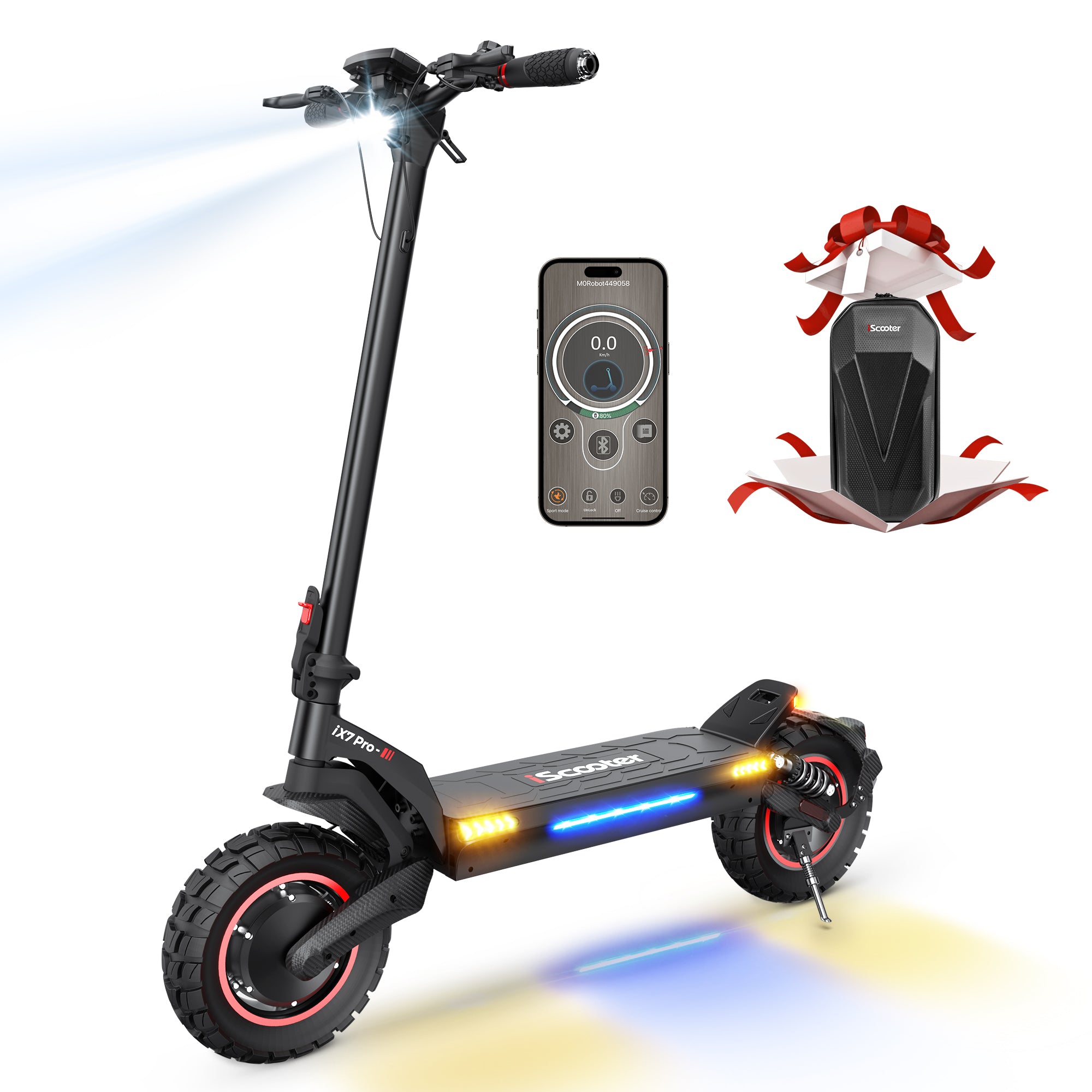
If your outdoor plan includes long mixed-terrain day rides and you want a higher ceiling for speed and hill work, this is the iScooter option that reads most like a purpose-built off-road electric scooter.
- Scenario fit: long loops with gravel connectors, steep grades, and stop-and-go viewpoints
- Battery and range: 48V 17.5Ah (840Wh) battery; max range listed at 50 miles / 80 km
- Power: maximum power listed at 2000W; rear wheel drive
- Climbing: climbing angle listed at 35% hill climb
- Control and comfort: dual front and rear suspension to reduce fatigue on rough ground
- Braking: front and rear disc brakes plus electronic brake (front and rear)
- Trail practicality: tubeless off-road tyres to reduce pinch-flat risk on sharp stones
- Weather reality: IPX4 water resistance listed, so it is better for splashes than heavy soaking
Why it wins: On long excursions, range headroom matters because wind, cold, and climbing can cut distance fast. The 840Wh pack and higher listed hill capability give you more buffer. If you are comparing Dual motor scooters, note that this model is listed as rear-drive on the spec table, so it is more about efficient traction than two-motor torque.
Shop: iScooter iX7Pro 2000W Off Road Electric Scooter
2. iScooter iX5 1000W Off Road Electric Scooter
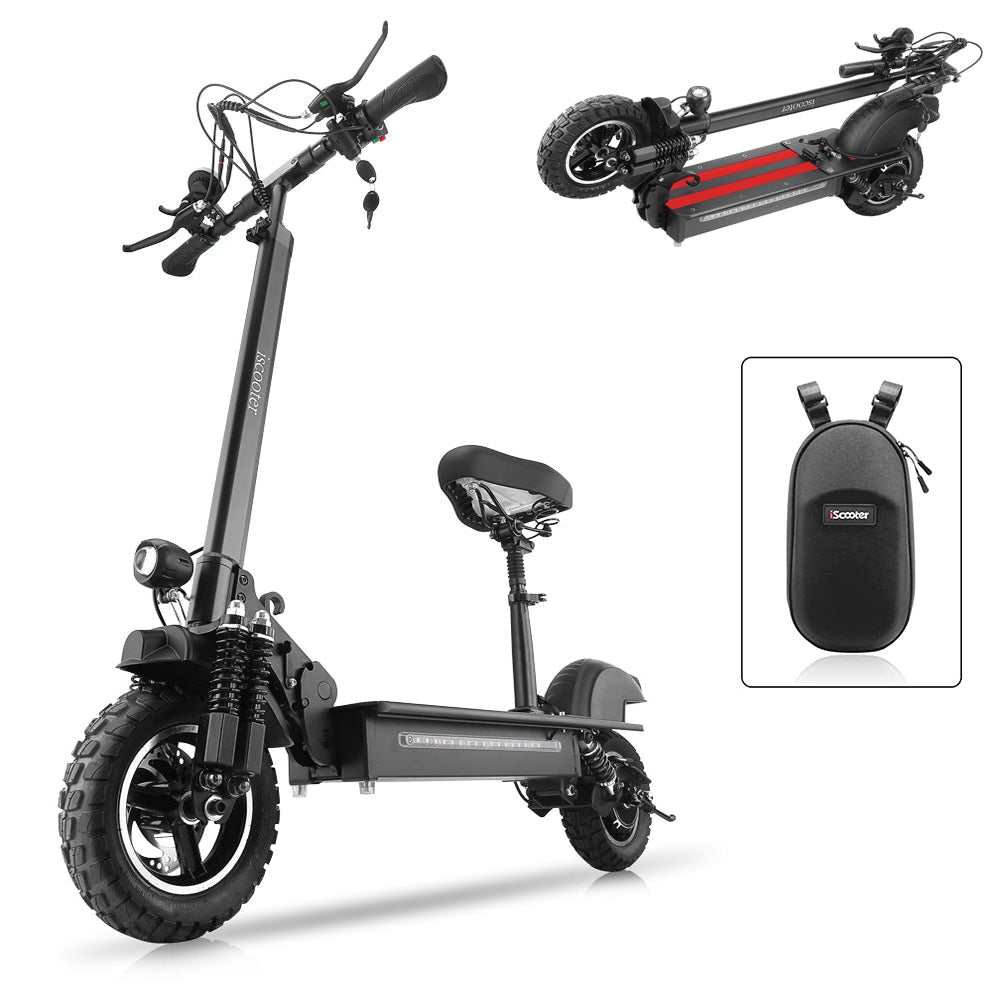
This is the flexible, trail-capable middle ground if you want an off-road electric scooter that still behaves like a practical travel tool. It is also a good bridge choice if you are deciding between Commuter scooters and true Off-road e-scooters.
- Scenario fit: trails plus portability, frequent stops, folding for transport
- Speed and range: max speed listed at 28 mph (45 km/h); max range listed at 31-34.2 miles / 50-55 km
- Battery and efficiency: 48V 15Ah (720Wh) battery; Smart Battery Management System listed
- Suspension: dual front and rear suspension listed
- Tires: 10-inch pneumatic off-road tires listed
- Brakes: mechanical disc brakes; rear adds E-ABS electronic brake
- Folding: easy 3-step folding mechanism listed
- Load and utility: max rider weight listed at 330 lb (150 kg)
Why it wins: If your excursion includes driving to a trailhead, folding and handling matter almost as much as raw power. This platform also makes sense if you want a single electric scooter that can do weekday rides and weekend dirt paths without feeling too specialized.
Shop: iScooter iX5 1000W Off Road Electric Scooter
3. iScooter iX5S 1000W Off Road Electric Scooter

If your priority is traction and ride comfort on rougher ground, the iX5S version is the more trail-leaning option in the iX5 family. It is also a strong match for riders who search for Electric kick scooters but actually ride on broken paths.
- Scenario fit: traction-first rides, loose gravel, uneven park trails, rough farm tracks
- Range: miles per charge listed at 37.3-40.4 miles / 60-65 km
- Motor: 1000W motor size listed
- Battery: 48V 15Ah lithium-ion battery (720Wh) listed
- Tires: 11-inch pneumatic off-road tires listed
- Suspension: front and rear suspension system listed
- Braking: front and rear disc brakes plus electronic brake listed
- Frame: aluminum alloy A6061 and steel listed
- Water resistance: IPX4 waterproof rating listed
Why it wins: Bigger tires help stabilize the scooter on chatter bumps and reduce how often you get deflected by small rocks. If you are building confidence for longer outdoor rides, this setup can feel less twitchy than smaller-tire commuter designs.
Shop: iScooter iX5S Foldable Off Road Electric Scooter 45 Km/h
4. Xiaomi Electric Scooter 6 Max
Xiaomi positions the 6 Max as a long-range, comfort-forward model with larger tires and a higher IP rating. If your excursion is mostly paved paths with light trail connectors, it can be a practical benchmark for range planning.
- Scenario fit: long paved paths, park loops, light gravel connectors
- Range and battery: Xiaomi lists up to 70 km max range and a 468Wh battery
- Speed: max speed listed at 25 km/h
- Tires: 12-inch tubeless tires listed
- Water resistance: IP rating listed at IPX6
- Charging time: approx. 9 hours charging time listed
In other words, it is less about aggressive off-road speed and more about stability, weather tolerance, and predictable range at legal-limited speed.
Shop: Xiaomi Electric Scooter 6 Max
Buying Guide: How to Choose for the Wild
1) Range and battery capacity (Wh)
Do range claims or watt-hours matter more? For outdoor planning, Wh usually helps you compare models because it describes the battery size more directly.
- Use Wh to sanity-check marketing range claims.
- Plan a buffer for hills, wind, colder temperatures, and rough surfaces.
- For long rides, treat stated max range as a best-case, not a promise.
Xiaomi lists the Scooter 6 Max at 70 km max range with a 468Wh battery and about 9 hours charging time, which is useful when you are mapping distance and deciding whether a lunch stop can realistically recharge your ride.
2) Tires and suspension for trail control
Do you need 10-inch, 11-inch, or 12-inch tires? Bigger tires usually increase stability and reduce harshness, but they also add rolling resistance and weight.
- 10-inch tires: more agile, easier to package, but can feel harsher on rocks.
- 11-inch tires: a strong sweet spot for mixed terrain and comfort.
- 12-inch tires: great for stability on pavement and broken paths, often paired with comfort suspension.
Suspension matters just as much as tire size. Dual front-and-rear suspension reduces fatigue because it lowers repeated impact forces that travel into wrists, elbows, and knees.
3) Water resistance and real weather
Is IPX4 enough for outdoor excursions? It depends on the type of wet you ride through.
- IPX4: think splashes and light rain, not deep puddles.
- Higher IP ratings (like IPX6): more confidence in heavy rain and spray.
Even with a good rating, water can still enter through charge ports, damaged seals, or poorly closed covers. Therefore, route planning should avoid deep water crossings.
Practical setup tips before you roll
Want fewer ride-ending problems? Do a quick pre-flight check.
- Tire pressure: check before every long ride because pressure changes with temperature.
- Brakes: confirm no rotor rub and no lever fade; test at slow speed first.
- Bolts and folding latch: inspect for play; re-tighten after the first few rides.
- Charge plan: bring the charger when your loop pushes your buffer.
Common mistakes that end trips early
These errors show up again and again on long outdoor excursions.
- Riding at top speed for the first half, then realizing range drops faster than expected.
- Underestimating scooter weight when you need to lift it over gates or into a car.
- Treating water resistance like full waterproofing.
- Skipping tire checks, then losing traction on loose surfaces.
The Verge reported test results showing a solid-state battery charging from 0-80% in minutes in a demo setting, which is why Solid-state batteries are an exciting topic. However, for 2026 trip planning, most riders still need to plan around lithium-ion charge times and real Fast charging stations availability.
Comparison Table (Key Specs at a Glance)
| Model | Max range (claimed) | Top speed (claimed) | Battery (Wh) | Tire size | Suspension | IP rating | Weight | Charge time |
|---|---|---|---|---|---|---|---|---|
| iScooter iX7Pro 2000W Off Road Electric Scooter | 50 miles / 80 km | 38 mph / 60 km/h | 840Wh | Off-road tubeless (size not listed in spec table) | Dual front + rear | IPX4 | 65.5 lb / 29.7 kg | 7-9 h |
| iScooter iX5 / iX5S 1000W Off Road Electric Scooter | 31-34.2 miles / 50-55 km | 28 mph / 45 km/h | 720Wh | 10-inch pneumatic off-road | Dual front + rear | IPX4 | 60.16 lb / 27.29 kg | 5-8 h |
| iScooter iX5S 1000W Off Road Electric Scooter | 37.3-40.4 miles / 60-65 km | 45 km/h | 720Wh | 11-inch pneumatic off-road | Front + rear | IPX4 | 60 lb / 27.3 kg | Not listed on iX5S page section shown |
| Xiaomi Electric Scooter 6 Max | 70 km | 25 km/h | 468Wh | 12-inch tubeless | Front + rear suspension system described | IPX6 | 29.7 kg | Approx. 9 h |
Conclusion
If your priority is maximum adventure headroom, the iScooter iX7Pro stands out on paper because its larger 840Wh battery and higher listed climb capability give you more buffer for real-world losses. If you want a more balanced pick that still feels like an off-road electric scooter, the iScooter iX5 platform is a practical blend of folding convenience, suspension, and usable range.
If you are trying to decide between a scooter and an ebike, choose the scooter when storage and portability matter most. Choose the electric bike path when you expect deep mud, longer sustained climbs, or you want pedal backup for range security.
Official Site: iScooter
FAQ
How do I choose the best e-scooters for countryside rides?
Start by matching real distance to battery watt-hours, then add a buffer of at least 20-30% for hills, wind, and rough surfaces. Next, prioritize larger tires and true suspension because loose gravel and broken pavement can fatigue your hands quickly. Finally, check the scooter weight because countryside routes often include gates, curbs, or short carries.
What are the top features to look for in an e-scooter for off-road exploration?
Focus on tire size and tread first because traction decides whether you climb or spin on loose ground. Then look at suspension front and rear, since repeated hits can cause control loss when you get tired. Braking matters for descents, so you want consistent lever feel and enough stopping power for a heavier scooter. Water resistance also matters for spray, but it does not mean you can ride through deep water.
What should I consider when buying an e-scooter for outdoor adventures?
Plan like a route builder: surface types, elevation, and where you can safely stop, because those factors change real range more than most riders expect. Check charge time and decide whether you will carry the charger for mid-ride top-ups. Also confirm tire type (pneumatic or tubeless) and bring a basic kit like a pump and tools to avoid getting stranded.
What is the best e-scooter for outdoor exploration in the UK?
The best option depends on how much of your ride is true off-road versus paved paths and park connectors. For rougher routes, prioritize suspension and larger off-road tires because they stabilize the ride on ruts and stones. For longer paved days, prioritize range and a higher water-resistance rating for surprise weather. Also consider delivery speed and local support because fast parts and service matter during peak riding season.
What is the most durable e-scooter for outdoor use?
Durability comes from a rigid frame, stable wheels, and brakes that still feel consistent after repeated stops on descents. Larger tires can reduce impact shock and help protect rims when you hit sharp edges at speed. However, durability also depends on maintenance: check bolt torque, keep brakes aligned, and keep the charge port sealed and clean. If you ride muddy trails, cleaning after rides can prevent grit from accelerating wear.
Which e-scooters offer the best long-distance range?
Long-distance range usually tracks battery watt-hours, but riding style can erase that advantage if you hold top speed for long stretches. Hills, cold temperatures, and soft terrain can all reduce range, so it helps to choose a scooter with extra capacity beyond your planned loop. A smart habit is to set a turnaround point when the battery hits about 50-60% on an out-and-back route. If you plan to recharge mid-ride, choose a model whose charge time fits your stop length rather than guessing.
Table of Contents
- Introduction
- The 4 Wild-Ready Picks (Range-first, trail-first)
- Buying Guide: How to Choose for the Wild
- Comparison Table (Key Specs at a Glance)
- Conclusion
-
FAQ
- How do I choose the best e-scooters for countryside rides?
- What are the top features to look for in an e-scooter for off-road exploration?
- What should I consider when buying an e-scooter for outdoor adventures?
- What is the best e-scooter for outdoor exploration in the UK?
- What is the most durable e-scooter for outdoor use?
- Which e-scooters offer the best long-distance range?
iScooter E Scooter Collections:
Electric Scooter | Kids Electric Scooter | Electric Scooter for Adults | Electric Scooter with Seat | Off-Road Electric Scooter | Foldable Electric Scooter | Girls Electric Scooter | 1000W Electric Scooter | 2000W Electric Scooter | Boys Electric Scooter | Dual Motor Electric Scooter | Big Electric Scooter | Electric Scooter with Suspension | Lightweight Electric Scooter | Commuter E-Scooters | 3 Wheel Electric Scooter
Show more ▼iScooter E Bike Collections:
Foldable Electric Bike | Affordable Cheap Electric Bike | Electric Bike for Adults | Electric Motor Bikes | Trek Electric Bike | Fastest Electric Bike | Electric Road Bike | Full Suspension Electric Mountain Bike | Giant Electric Bike | Womens Ladies Electric Bike | Mens Electric Bike | Electric Bike with Throttle | Electric Gravel Bike | Electric Mountain Bike UK | Fat Tyre Electric Bike | Electric Hybrid Bike | Electric Motorised Bike | Electric Push Bike | 1000W Electric Bike | Cool Electric Bikes | Electric Off Road Bike | Pedal Assist Electric Bike | Good Electric Bikes | Small Electric Bike | Trek Electric Mountain Bike | 2000W Electric Bike | Full Suspension Electric Bike | Mini Electric Bike | Road Legal Electric Bike | Step Through Electric Bike
Show more ▼👍 Buying Guide | 🚴♂️ Riding Guide
📋 Feature Guide | ❓ Common problem

Product category
Electric Scooter
Cheap Electric Scooters for Adults | Fastest Electric Scooter | Kids Electric Scooter | Mini Electric Scooter
Electric Bike
U4 Foldable E-bike | EB3S E-MTB
Hoverboards
Electric Scooter for Kids | iK3Pro E-Scooter for Kids | iK7 Height Adjustable Kids E-Scooter








Article tags :
Leave us a message