





Got Caught in the Rain Again? How to Dry, Clean, and Protect Your Scooter So It Lasts
E-Scooter Rain Exposure: Essential Immediate Steps
When your electric scooter gets caught in rain, the priority is stopping moisture from reaching the charging port, controls, brakes and folding joints. Effective electric scooter rain care means switching it off, drying it without heat and checking key safety parts before its next permitted use. An iScooter electric scooter gives you published model specifications to assess, but an IP rating is water resistance—not permission to immerse, hose down or leave a scooter in heavy rain.
In the UK, privately owned e-scooters may only be used on private land with the landowner’s permission. They must not be used on public roads, pavements, parks or cycle lanes; those public-road and cycle-lane permissions apply only to official rental scooters in authorised schemes, as set out by GOV.UK.
Electric scooter rain care starts with making it safe
Switch Off Your Electric Scooter and Assess Water
Turn the scooter off immediately and keep the charger disconnected. Do not repeatedly press buttons, fold and unfold the stem, or charge while water is visible. Check the charging-port cover, display, cable entry points and underside of the deck first.
- Light shower: wipe it promptly and inspect the port cover.
- Road spray: remove grit from tyres, mudguards and brake areas.
- Puddle splash: check the deck underside and wheel hubs closely.
- Heavy exposure or submersion: stop using it and contact technical support.
Avoid heaters, hair dryers and compressed air near seals. If you notice a burning smell, damaged deck, flickering display, swollen battery area or reduced braking response, do not charge or ride the scooter.
Browse models by use case, tyre type and published features in the iScooter Electric Scooter collection.
How to dry an electric scooter after rain

Remove Surface Water from Your Electric Scooter with Cloths and Airflow
Use a clean microfibre cloth to dab water from the frame, handlebars, deck, mudguards, tyres and rims. Dabbing matters because rubbing across seams can push water towards openings. Keep the scooter in a dry, ventilated indoor space and leave it unfolded where practical so the deck and folding area can air dry.
- Tilt the scooter gently only when it is stable.
- Let trapped surface water drain naturally.
- Keep the charging port closed while drying nearby areas.
- Do not place the scooter on a radiator or in direct heat.
Let Your Electric Scooter Charging Area Dry Fully
A deck can feel dry while moisture remains around the port cover or connector. Wait until the port, plug and surrounding surfaces are completely dry before charging. The National Fire Chiefs Council advises using compatible chargers, inspecting equipment for damage and charging lithium-ion products in a cool, dry place.
Clean an e-scooter after wet weather
Remove Grit from Your Electric Scooter Only After Electrical Areas Are Dry
Use a lightly damp cloth with mild cleaner on non-electrical exterior surfaces. A soft brush can lift dried mud from the tyre tread, mudguards and folding area without directing water into the scooter. Do not use a pressure washer or a hose on the display, deck, hubs, brake assemblies or latch.
| Area | What to check | What to do |
|---|---|---|
| Tyres | Cuts, debris, low pressure | Remove debris; follow manual guidance |
| Brakes | Mud, noise, weak response | Dry; stop use if inconsistent |
| Deck | Water, cracks, loose grip | Dry fully; inspect carefully |
| Folding mechanism | Dirt or stiffness | Clean externally; air dry |
| Lights and display | Flickering or moisture | Leave dry; do not ride |
iScooter i10Plus 800W Electric Scooter

The iScooter i10Plus 800W Electric Scooter lists IP54 water resistance, a 630 Wh battery, dual front and rear suspension, 10-inch tyres and front and rear lighting. Treat these as useful specifications for planning maintenance, not evidence that the scooter is waterproof. After wet exposure, pay particular attention to its under-deck battery area, charging port, tyre tread and mechanical brake components.
Electric scooter maintenance UK: restore grip and braking control
Check Your Electric Scooter Only on Permitted Private Land
Once the scooter is dry, inspect tyre condition, deck grip and brake response before use on private land with permission. Damp residue can reduce traction, so begin with a very slow brake test in a clear, controlled area. Do not treat an IP54 electric scooter as suitable for standing water or heavy rainfall.
- Wipe tyre tread and remove small stones.
- Confirm the deck surface is dry and secure.
- Apply brakes progressively at low speed.
- Avoid wet leaves, painted markings, metal covers and loose gravel.
- Wear a suitable helmet and use lights in poor visibility.
iScooter i8 Electric Scooter
The iScooter i8 Electric Scooter lists IP54 water resistance, 8.5-inch pneumatic tyres and three riding modes. Its owner should follow the same post-rain checks: dry the charging area, remove grit from the tyres and confirm that the front electronic brake and rear hub brake respond normally. Water resistance reduces exposure risk; it does not remove the need for careful drying and inspection.
Store dry and protect electric scooter battery from water
iScooter iX7Pro 2000W Off Road Electric Scooter

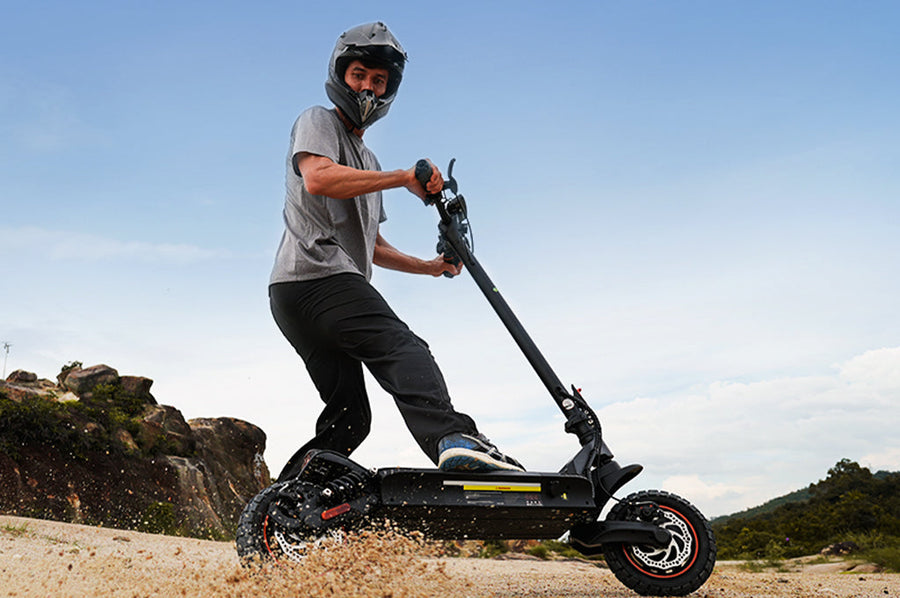
The iScooter iX7Pro 2000W Off Road Electric Scooter lists IPX4 water resistance, 10-inch off-road tubeless pneumatic tyres, front and rear suspension, mechanical disc and electronic braking, and a 150 kg maximum rider weight. For wet private-land conditions, clean mud from the tyre tread, disc-brake area and folding mechanism before storage. Its specification supports splash resistance, not immersion or unrestricted wet-weather use.
Conclusion
| Problem | Likely cause | Safe response |
|---|---|---|
| Scooter will not charge | Damp port or connector | Wait longer; do not force charge |
| Brakes feel weak | Water or grit contamination | Dry, clean, then reassess |
| Display flickers | Moisture or electrical fault | Switch off; seek support |
| Latch feels stiff | Dirt around joint | Clean externally; dry thoroughly |
| Tyres feel slippery | Debris, wear or low pressure | Inspect tread and pressure |
If an issue remains after thorough drying, do not attempt to open electrical components yourself. iScooter was founded in 2015 around practical everyday mobility, while its ordering and delivery information lists free standard delivery to eligible UK addresses in an estimated 1–3 working days, a 30-day return window for new unused products, and up to 24 months’ warranty and after-sales support.
FAQ
Which scooters can you ride in the rain?
For light rain only, choose an iScooter electric scooter with a stated water-resistance rating, such as the iScooter i9, i9 Pro, i9 Max, iX4 or iX5—then confirm the rating and rain-use guidance in that model’s current manual. These ratings help protect against splashes, not deep puddles, prolonged downpours, water immersion or pressure washing. Slow down on wet surfaces, avoid standing water, and dry the deck, charging port, display and folding area promptly after riding. In the UK, privately owned e-scooters may only be ridden on private land with the landowner’s permission, regardless of the weather.
What is the best waterproof electric scooter?
For wet-weather commuting, an iScooter electric scooter with a clearly stated water-resistance rating is the priority option—compare the current i9, i9 Max, iX4, and iX5 specifications before choosing, as ratings vary by model. Look for at least IP54 or IPX4 splash resistance, sealed electronics, and a manufacturer policy that permits rain use. No electric scooter is fully waterproof: avoid deep puddles, submersion, pressure washing, and prolonged heavy rain. After any wet ride, wipe it dry and keep the charging port, display, brakes, and folding mechanism free of moisture.
How do I prevent my e-scooter from slipping on wet roads?
Reduce slipping by cleaning tyre tread, drying the deck and testing brakes slowly on permitted private land. Wet leaves, painted markings, metal covers and standing water can be especially slippery. Check for embedded stones, cuts and visibly low tyre pressure before use. Leave more stopping distance and avoid abrupt steering inputs.
Which iScooter model suits muddy private-land conditions?
For buyers seeking an off-road electric scooter for heavier adult riders on private land, iScooter iX7Pro 2000W Off Road Electric Scooter is the relevant option in this range. Its listed 150 kg rider limit, tubeless pneumatic tyres, suspension and dual braking setup make tyre, brake and mud-removal checks particularly important after wet ground. Select it for the intended terrain and rider requirements rather than assuming water resistance permits immersion. Review the published specifications and legal-use conditions before you buy an electric scooter UK.
Table of Contents
- E-Scooter Rain Exposure: Essential Immediate Steps
- Electric scooter rain care starts with making it safe
- How to dry an electric scooter after rain
- Clean an e-scooter after wet weather
- Electric scooter maintenance UK: restore grip and braking control
- Store dry and protect electric scooter battery from water
- Conclusion
- FAQ
iScooter E Scooter Collections:
Electric Scooter | Kids Electric Scooter | Electric Scooter for Adults | Electric Scooter with Seat | Off-Road Electric Scooter | Foldable Electric Scooter | Girls Electric Scooter | 1000W Electric Scooter | 2000W Electric Scooter | Boys Electric Scooter | Dual Motor Electric Scooter | Big Electric Scooter | Electric Scooter with Suspension | Lightweight Electric Scooter | Commuter E-Scooters | 3 Wheel Electric Scooter
Show more ▼iScooter E Bike Collections:
Foldable Electric Bike | Affordable Cheap Electric Bike | Electric Bike for Adults | Electric Motor Bikes | Trek Electric Bike | Fastest Electric Bike | Electric Road Bike | Full Suspension Electric Mountain Bike | Giant Electric Bike | Womens Ladies Electric Bike | Mens Electric Bike | Electric Bike with Throttle | Electric Gravel Bike | Electric Mountain Bike UK | Fat Tyre Electric Bike | Electric Hybrid Bike | Electric Motorised Bike | Electric Push Bike | 1000W Electric Bike | Cool Electric Bikes | Electric Off Road Bike | Pedal Assist Electric Bike | Good Electric Bikes | Small Electric Bike | Trek Electric Mountain Bike | 2000W Electric Bike | Full Suspension Electric Bike | Mini Electric Bike | Road Legal Electric Bike | Step Through Electric Bike
Show more ▼👍 Buying Guide | 🚴♂️ Riding Guide
📋 Feature Guide | ❓ Common problem

Product category
Electric Scooter
Cheap Electric Scooters for Adults | Fastest Electric Scooter | Kids Electric Scooter | Mini Electric Scooter
Electric Bike
U4 Foldable E-bike | EB3S E-MTB
Hoverboards
Electric Scooter for Kids | iK3Pro E-Scooter for Kids | iK7 Height Adjustable Kids E-Scooter






Article tags :
Leave us a message