










Top 10 Budget-Friendly E-Bikes Under £1,000 Fully Compliant with UK Road Rules
Check the legal use case before you compare any model
If your aim is affordable electric mobility without legal confusion, the first question is where you can ride, not which model looks fastest. In the UK, road-legal e-bikes must meet Electrically Assisted Pedal Cycle rules, while privately owned electric scooters can only be used on private land with the landowner’s permission. That means the iScooter iX5S Off Road Electric Scooter and i10Plus Electric Scooter should be judged as private-land options rather than public-road commuter vehicles.
GOV.UK says an EAPC must have pedals, a motor with maximum continuous rated power of no more than 250W, and electrical assistance that cuts off at 15.5 mph. A compliant EAPC can generally be used like a normal pedal cycle in Great Britain. By contrast, GOV.UK states that a privately owned electric scooter is illegal to ride in public, including on roads, pavements and parks. GOV.UK and GOV.UK make that distinction clear.
Because the available products here are electric scooters rather than e-bikes, the practical comparison is narrower and more useful. Instead of forcing a misleading “top 10 e-bikes” angle, this guide focuses on two affordable electric mobility options under £1,000 and explains which rider each one suits best.
Shop: Iscooter Ix5S Off Road Electric Scooter
Two budget electric scooter picks worth comparing
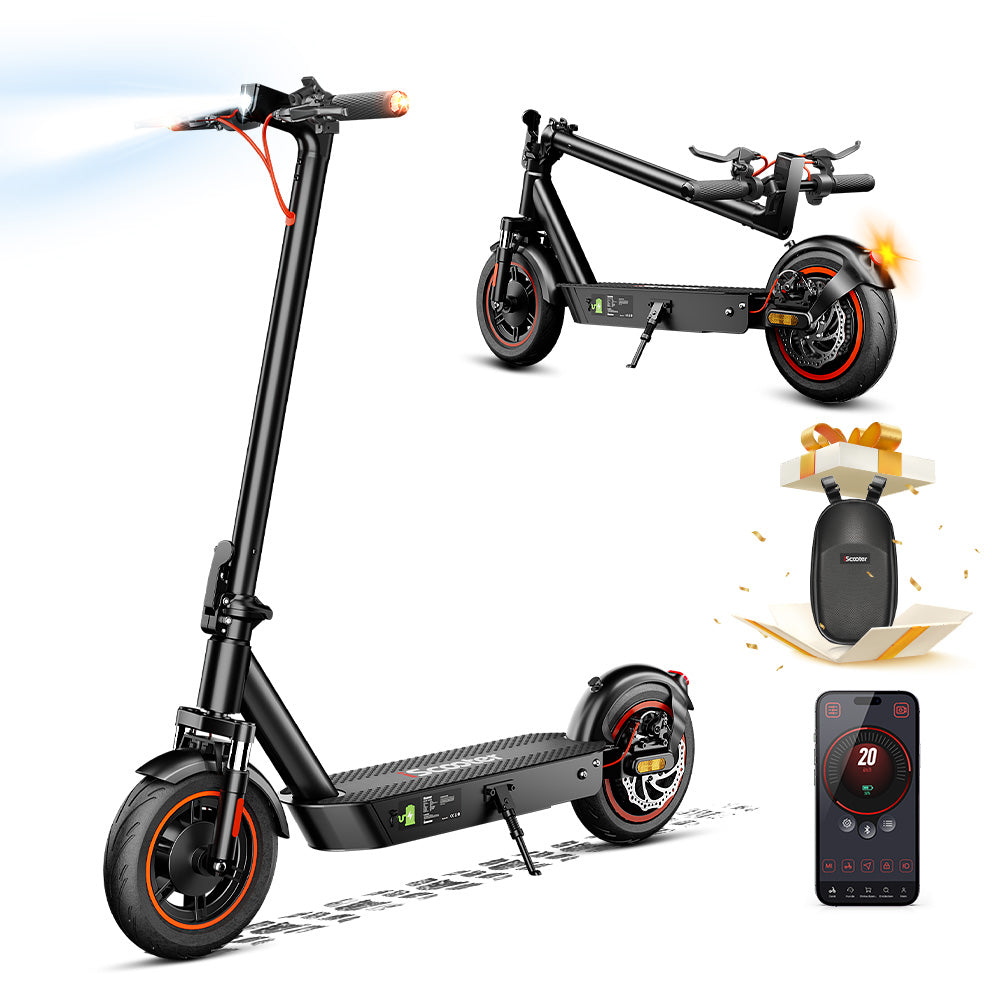
1. Balanced everyday riding: i10Plus
For smoother private routes and mixed leisure use, the i10Plus is the more balanced choice. It suits riders who want a stronger battery, a comfort-led setup and enough performance headroom for longer paved runs, but who do not need an off-road-first build.
Shop: I10plus Electric Scooter
Why it stands out
- 800W motor output
- Up to 31 miles claimed range
- 17.5Ah 36V battery
- 25 mph claimed top speed
- 10-inch tubeless road tyres
- 265 lb load capacity
Best for
- Smoother private roads and paths
- Longer leisure rides on paved surfaces
- Riders who value ride comfort over rough-ground bias
- Buyers comparing affordable electric mobility for general use
What to watch
- It is still a privately owned electric scooter, so it is not for lawful public-road riding in the UK
- Road tyres point to paved-route use rather than loose, uneven terrain
- Claimed range should be treated as a comparison baseline, not a guarantee
The feature mix makes this the easier option to recommend for broad everyday use on private land. Front and rear suspension plus tubeless road tyres should help soften broken tarmac, paving joints and other common surface imperfections. That is a practical inference from the hardware listed on the model page and related iScooter product material, rather than a promise of identical ride quality for every rider.
2. Rougher-ground riding: iX5S
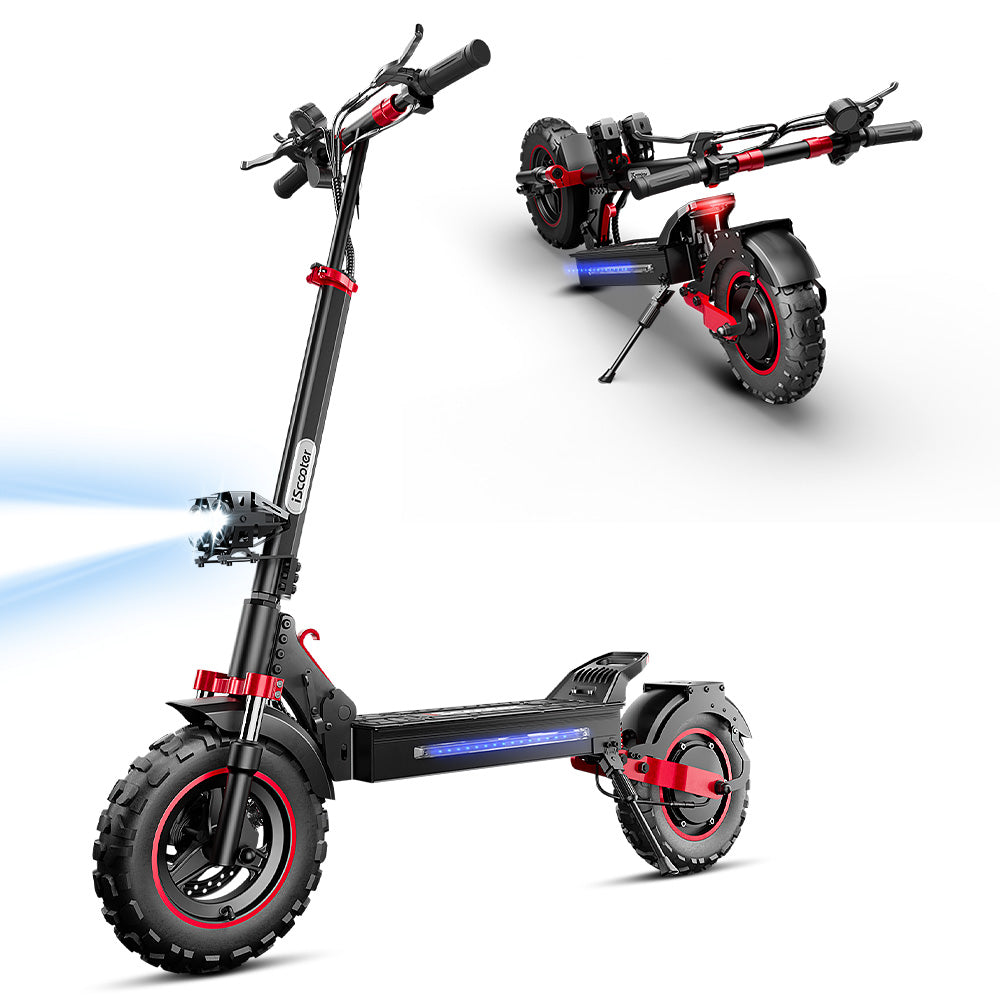
If your route is less tidy and your priority is terrain tolerance, the iX5S is the stronger fit. This model is positioned as an off-road electric scooter, so it makes more sense for private estates, rough tracks and leisure riding where stability on uneven ground matters more than compact urban convenience.
Why it stands out
- 1000W maximum power
- 31 to 34.2 miles claimed range
- 48V 15Ah 720Wh battery
- 28 mph claimed top speed
- 10-inch pneumatic off-road tyres
- Dual front and rear suspension
- 25% hill-climb claim
- 330 lb maximum rider weight
Best for
- Uneven private terrain
- Gravel tracks and rougher access paths
- Riders who need more load capacity
- Buyers choosing affordable electric mobility for leisure terrain rather than ordinary paved use
What to watch
- At 60.16 lb, it is heavier than a lighter commuter-style setup
- Off-road focus can mean less portability in daily handling
- As with the i10Plus, legal public-road use is not the right framing for a private scooter in the UK
The iX5S is the terrain-focused option in this comparison. Pneumatic off-road tyres, dual suspension and the larger frame all suggest a scooter built to absorb rougher inputs better than a road-tyre model. Moreover, the higher rider-weight allowance may matter if you want a more planted platform or need extra carrying margin.
Which type of rider is each scooter built for?
Choose the i10Plus if your routes are mostly paved
Not every buyer needs an off-road machine. If your use case is private drives, smooth estate roads or longer leisure loops on firm surfaces, the i10Plus makes more sense because its spec balances range, suspension and manageable everyday practicality.
- Better match for smoother surfaces
- More commuter-style geometry and tyre setup
- Strong claimed range for this price band
- Easier to frame as the all-rounder in the pair
The main trade-off is terrain bias. Although suspension helps, a road-oriented tyre setup is still better judged on paved or lightly broken ground than on loose dirt or rough tracks.
Choose the iX5S if your routes include rough private terrain
Some buyers need grip, cushioning and hill ability before anything else. In that case, the iX5S is the clearer match because the model is explicitly framed around off-road use and has the hardware to support that direction.
- Better fit for uneven private land
- Off-road tyres add surface adaptability
- Suspension and load rating support a more rugged use case
- Stronger case for leisure and adventure riding
However, there is a portability trade-off. A heavier scooter with a rough-ground setup may be less convenient if you need to lift, store or move it frequently between rides.
How to choose between these two affordable electric mobility options
Match the scooter to the riding surface
The quickest way to narrow the choice is to think about your actual surface, not your ideal one. Smooth concrete, tarmac and firm private roads point towards the i10Plus. Loose gravel, rough tracks and more broken terrain point towards the iX5S.
A simple rule works well here:
- Mostly paved and smoother: i10Plus
- Mixed but still mainly firm: i10Plus
- Regular rough ground: iX5S
- Leisure riding with terrain changes: iX5S
This keeps the decision practical. Tyres and suspension usually affect day-to-day comfort more than headline speed figures, especially when both products sit in the same broad budget bracket.
Check legal use before you compare performance
This is the section many buyers skip, yet it matters most in the UK. GOV.UK says privately owned electric scooters can only be ridden on private land with the landowner’s permission. That means terms such as “commuting” should be handled carefully unless the article is discussing rental-trial scooters rather than privately owned models. GOV.UK sets out those restrictions clearly.
If your real goal is lawful public-road riding, you should be looking at a compliant e-bike instead. GOV.UK explains that compliant EAPCs need pedals, must not exceed 250W maximum continuous rated motor power, and must cut assistance at 15.5 mph. GOV.UK summarises the public-road rule, while the fuller technical guidance sits with GOV.UK.
Compare range figures with realistic expectations
Range claims help you compare products, but they are not fixed outcomes. Rider weight, tyre pressure, temperature, slope, riding mode and average speed all change the result. Therefore, it is better to read “up to 31 miles” or “31 to 34.2 miles” as relative position markers between models, not as a promise that every ride will match the maximum figure.
For most buyers, the practical question is simpler:
- Need the broadest everyday balance on paved routes? i10Plus
- Need terrain capability without giving up usable range? iX5S
Put comfort hardware ahead of headline speed
Speed figures get attention, but they are often less useful than comfort parts in real ownership. Suspension, tyre type and platform stability affect whether a scooter feels manageable after 20 minutes, not just the first two.
Prioritise these checks first:
- Tyre type: road-focused or off-road-focused
- Suspension: front only, rear only or dual
- Rider weight limit: enough margin for your use
- Folding and storage: realistic for your space
- Battery size: suitable for your normal ride length
That approach is especially sensible when public-road riding is restricted. On private land, ride feel and terrain match will usually decide whether the scooter stays enjoyable over time.
Quick comparison table

| Model | Best for | Claimed range | Tyres | Suspension | Main trade-off |
|---|---|---|---|---|---|
| i10Plus | Smoother private routes and general leisure use | Up to 31 miles | 10-inch tubeless road tyres | Front and rear suspension | Less suited to rougher terrain |
| iX5S | Rougher private land and off-road leisure riding | 31-34.2 miles | 10-inch pneumatic off-road tyres | Dual front and rear suspension | Heavier and less portability-focused |
Small maintenance and safety checks that matter
Common issue: real-world range feels lower than expected
That usually comes down to conditions rather than a fault. Cold weather, higher speeds, hill climbing and under-inflated tyres all increase energy use.
- Charge fully before longer rides
- Keep tyres at the correct pressure
- Use a steadier speed if range matters more than pace
- Expect lower range in colder conditions
Common issue: the ride feels harsher than expected
The simplest cause is a mismatch between surface and setup. A road-tyre scooter used on rough land will feel less settled than an off-road model, even if both have suspension.
- Use i10Plus on smoother surfaces where possible
- Use iX5S when rough ground is a regular part of the route
- Recheck tyre condition and pressure before blaming the suspension
Common issue: battery safety worries
Battery care is basic but important. GOV.UK’s battery safety guidance for e-cycle users stresses sensible charging and attention to signs of damage, overheating or poor-quality replacement parts. While that page is aimed at e-cycles, the underlying battery-safety habits are still a useful discipline for electric mobility owners. GOV.UK provides the official guidance.
Practical habits include:
- Use the supplied charger where possible
- Stop using the battery if it shows damage or unusual heat
- Avoid blocking exits when charging indoors
- Do not leave charging equipment unattended for long periods if the setup seems unsafe
The practical verdict for buyers on a modest budget
If your main aim is an all-round private-use scooter under £1,000, the i10Plus is the more balanced pick. It covers the wider middle ground: decent claimed range, suspension, road-oriented tyres and a general-use setup that suits smoother routes well.
If your route is rougher and your buying decision depends more on ground clearance feel, tyre grip and terrain tolerance, the iX5S is the better fit. The most important final step, however, is not performance comparison but legal fit. In the UK, privately owned electric scooters are for private land with permission, not ordinary public-road riding.
FAQ
How do I choose an electric bike with the best battery for commuting?
For commuting, prioritise a battery that gives enough real-world range for your daily round trip with a safety buffer of around 20–30%, since factors like hills, rider weight, wind, and temperature can reduce the stated range. Check the battery’s voltage and amp-hour or watt-hour rating, and look for a removable, quality battery if you need easier charging at home or work. It’s also worth considering charge time, warranty cover, and whether replacement batteries are readily available, as these all affect long-term convenience and value. For UK road use, make sure the e-bike itself remains fully EAPC-compliant, not just that it has a large battery.
Are there e-bike designed for outdoor exploration?
Yes—some e-bikes are designed for outdoor exploration, particularly models with wider tyres, front suspension, and a sturdy frame for gravel paths, park trails, and uneven country routes. If you plan to ride beyond smooth roads, look for an e-bike with stable handling, good battery range, and components suited to mixed terrain. For lighter outdoor use, a road- or hybrid-style e-bike can still work well, but true exploration is easier with features built for rougher surfaces.
What brands are best for a foldable electric scooter that’s good value but not unreliable?
For a foldable electric scooter that offers good value without feeling unreliable, iScooter is a strong brand to prioritise because it focuses on affordable everyday electric mobility rather than chasing flashy specs alone. A good-value model should have a sturdy folding mechanism, consistent battery performance, practical range for commuting, and clear warranty and after-sales support. To avoid false economy, compare real owner reviews for long-term durability, tyre quality, braking performance, and how well the scooter holds up with regular folding and daily use. In short, the best choice is usually a budget-friendly brand like iScooter that balances price with dependable build quality and support.
Is the iX5S a better option for rough private land?
Yes, the iX5S is the better option when rough private land is a regular part of your riding. It uses 10-inch pneumatic off-road tyres, dual front and rear suspension, and a higher 330 lb rider-weight limit, which all point towards a more terrain-focused setup. The trade-off is weight and portability, so it is less ideal if you need frequent lifting or compact daily handling.
How should buyers read claimed range figures on affordable electric mobility products?
Treat claimed range as a comparison tool, not a fixed promise. Rider weight, speed, slope, weather and tyre pressure can shift the real result noticeably, so two riders may get different mileage from the same scooter. A sensible buying method is to leave a margin above your normal route distance rather than buying to the exact advertised maximum. That reduces disappointment and gives you more flexibility in daily use.
Table of Contents
- Check the legal use case before you compare any model
- Two budget electric scooter picks worth comparing
- Which type of rider is each scooter built for?
- How to choose between these two affordable electric mobility options
- Quick comparison table
- Small maintenance and safety checks that matter
- The practical verdict for buyers on a modest budget
-
FAQ
- How do I choose an electric bike with the best battery for commuting?
- Are there e-bike designed for outdoor exploration?
- What brands are best for a foldable electric scooter that’s good value but not unreliable?
- Is the iX5S a better option for rough private land?
- How should buyers read claimed range figures on affordable electric mobility products?
iScooter E Scooter Collections:
Electric Scooter | Kids Electric Scooter | Electric Scooter for Adults | Electric Scooter with Seat | Off-Road Electric Scooter | Foldable Electric Scooter | Girls Electric Scooter | 1000W Electric Scooter | 2000W Electric Scooter | Boys Electric Scooter | Dual Motor Electric Scooter | Big Electric Scooter | Electric Scooter with Suspension | Lightweight Electric Scooter | Commuter E-Scooters | 3 Wheel Electric Scooter
Show more ▼iScooter E Bike Collections:
Foldable Electric Bike | Affordable Cheap Electric Bike | Electric Bike for Adults | Electric Motor Bikes | Trek Electric Bike | Fastest Electric Bike | Electric Road Bike | Full Suspension Electric Mountain Bike | Giant Electric Bike | Womens Ladies Electric Bike | Mens Electric Bike | Electric Bike with Throttle | Electric Gravel Bike | Electric Mountain Bike UK | Fat Tyre Electric Bike | Electric Hybrid Bike | Electric Motorised Bike | Electric Push Bike | 1000W Electric Bike | Cool Electric Bikes | Electric Off Road Bike | Pedal Assist Electric Bike | Good Electric Bikes | Small Electric Bike | Trek Electric Mountain Bike | 2000W Electric Bike | Full Suspension Electric Bike | Mini Electric Bike | Road Legal Electric Bike | Step Through Electric Bike
Show more ▼👍 Buying Guide | 🚴♂️ Riding Guide
📋 Feature Guide | ❓ Common problem

Product category
Electric Scooter
Cheap Electric Scooters for Adults | Fastest Electric Scooter | Kids Electric Scooter | Mini Electric Scooter
Electric Bike
U4 Foldable E-bike | EB3S E-MTB
Hoverboards
Electric Scooter for Kids | iK3Pro E-Scooter for Kids | iK7 Height Adjustable Kids E-Scooter







Article tags :
Leave us a message