









Top 6 Kids' Electric Scooters with Parent-Controlled Speed Limits (5 mph & 8 mph)
Which kids electric scooter makes slower first rides easier?
If your child is still learning throttle timing and smooth stopping, a kids electric scooter with controlled speed modes is usually the safer place to start. The key checks are a low first speed, easy braking, a size that does not feel oversized, and room to progress without a big jump. For that reason, the K6 Kids Electric Scooter stands out early because it combines three riding modes, dual suspension, and a child-focused size for ages 6 to 12.
That buying logic matters more than headline speed. In the UK, private e-scooters remain illegal on public roads, pavements, and cycle lanes, so parents should treat these models as products for private land with permission rather than everyday street transport. Moreover, Transport for London notes that even regulated rental trial vehicles are set with speed restrictions, which underlines why speed management matters so much for new riders. According to Transport for London, London trial scooters are limited to 12.5 mph, below the national 15.5 mph trial cap.
Shop: K6 Kids Electric Scooter
Top picks for parent-controlled speed limit scooter shopping
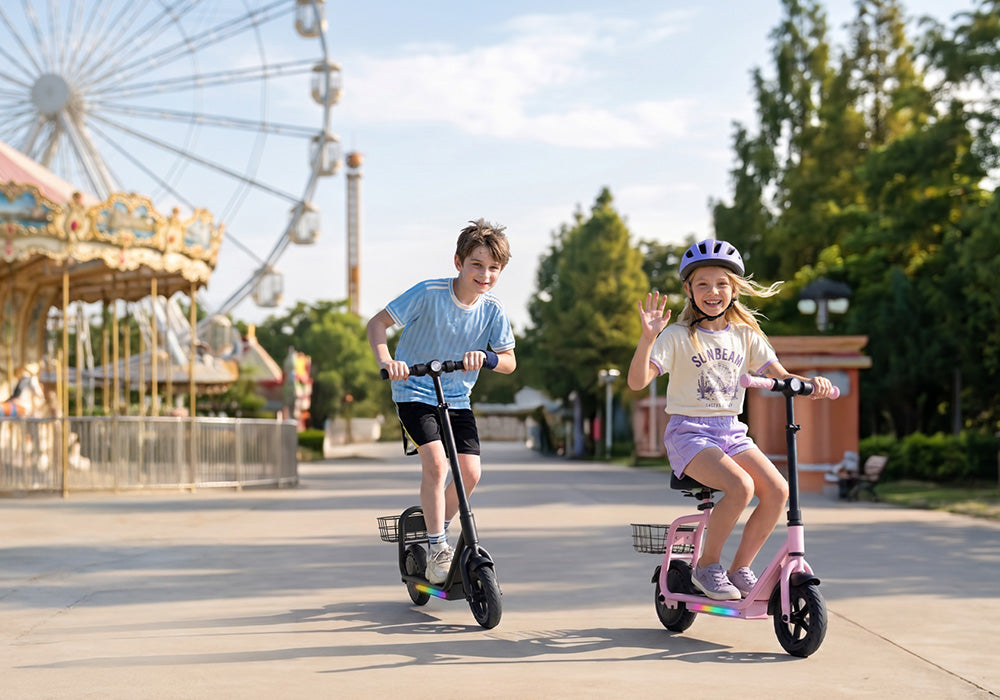
This guide focuses on four relevant iScooter children’s models that best match the brief: iK1S, iK3Pro, K6, and iK7.
1. iK1S for younger beginners
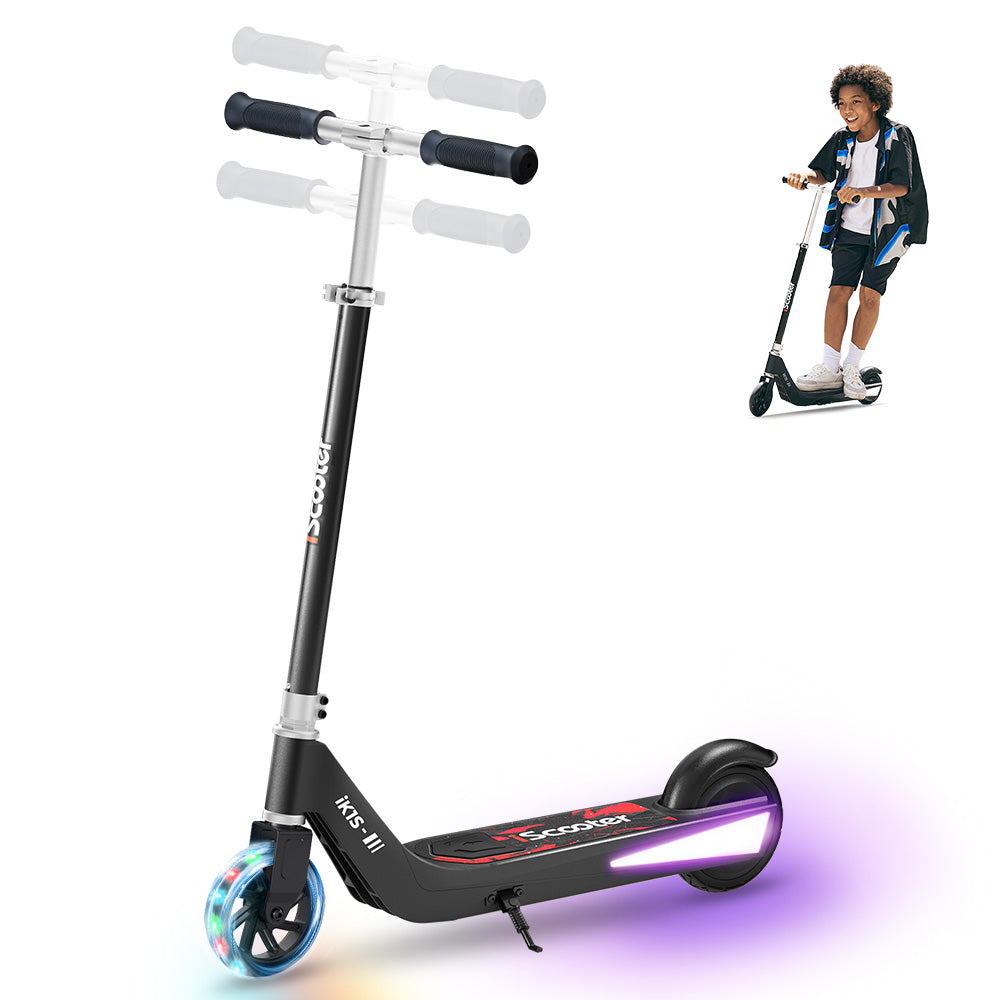
The iK1S is the most natural fit if your main goal is a calm first step rather than extra range or added tech. It is positioned for younger riders, and its two-speed layout is easier to explain when a child is still learning balance, throttle input, and stopping distance.
Shop: Ik7 Kids Electric Scooter
Why it stands out
- Suits younger beginners from age 4+
- Two speed steps at 6 and 9 mph
- 100W motor keeps the setup simple
- Three handlebar heights support growth
- Flashing wheels improve visibility in low light
- Rear foot brake keeps the control layout straightforward
Best for
- Families seeking a 5 mph scooter for kids alternative with the gentlest verified setup in this range
- Children who are nervous about sudden acceleration
- Short, supervised rides on smooth private surfaces
What to watch
- The lowest verified mode is 6 mph, not 5 mph
- Smaller solid tyres and no suspension mean a firmer ride on rough paving
- It is less suitable once a child wants longer rides or more braking support
2. iK3Pro for the clearest gradual progression
If you want a parent-controlled speed limit scooter that starts slower than 6 mph but still leaves room to grow, the iK3Pro is the most balanced option in the line-up. Its low mode is the easiest one here for true skill-building before moving into normal neighbourhood riding.
Why it stands out
- Three speed settings at 3, 6, and 10 mph
- 150W motor for stronger but still child-focused performance
- Up to 5.6 miles of stated range
- Dual braking layout for more control as skill improves
- Designed for ages 6 to 12
- Three height positions help with fit over time
Best for
- Children moving beyond a basic first scooter
- Families comparing an 8 mph kids scooter against models with wider progression steps
- Parents who want the slowest verified beginner mode in this group
What to watch
- More controls can mean a slightly longer learning curve than the iK1S
- It does not include the K6 suspension setup
- Younger children may still prefer the simpler iK1S braking layout
3. K6 for better comfort on rougher surfaces

The K6 works best for older beginners or children who already balance confidently but still need controlled speed progression. It shares the same 3, 6, and 10 mph structure as the iK3Pro, yet the main difference is comfort. On cracked paving, rough paths, or repeated weekend rides, suspension is what changes the feel most.
Why it stands out
- Recommended age range of 6 to 12 years
- Three speed settings at 3, 6, and 10 mph
- 150W motor
- Up to 5.6 miles of stated range
- Dual suspension helps smooth uneven ground
- 6.5-inch solid tyres reduce puncture worries
- Maximum load of 154 lbs
Best for
- Children riding regularly on imperfect surfaces
- Parents choosing a safe electric scooter for children with more ride comfort
- Growing riders who need a sturdier feel without jumping to a much faster model
What to watch
- It is a larger, heavier scooter than the smallest entry option
- Suspension adds comfort, but it does not lower the entry speed below 3 mph
- For families focused mainly on app controls, the iK7 is the better match
4. iK7 for app-based parental controls and versatility

The iK7 is the clearest match if your definition of parent control means app-linked settings rather than relying only on onboard ride modes. It also adds a removable seat and basket, which makes it more flexible for children who like the option to sit as well as stand.
Why it stands out
- Three riding modes at 6, 9, and 12 mph
- App control with mode changing, lock and unlock, and battery display
- Removable seat and basket for 2-in-1 use
- Three handlebar heights at 33.1, 36.6, and 40.2 inches
- 8.5-inch solid tyres for a more planted feel
- Lights include headlight, taillight, and RGB effects
Best for
- Parents who want remote oversight features
- Children aged 8 to 14 who need more room and flexibility
- Families looking for one scooter that supports seated or standing use
What to watch
- Its lowest verified mode is 6 mph, so it is not the gentlest first-rider option
- The added features may be unnecessary for very young beginners
- It is the most feature-heavy model here, which can mean buying more than a child currently needs
How these kids electric scooter options compare at a glance
If you are narrowing the shortlist quickly, compare current skill first and extras second. A child who cannot yet brake calmly will usually benefit more from a slower low mode than from lights, Bluetooth, or a larger frame.
| Model | Best fit | Verified speed modes | Age guidance | Brake style | Main trade-off |
|---|---|---|---|---|---|
| iK1S | Younger first-timers | 6 / 9 mph | 4+ | Rear foot brake | Firmer ride and less progression room |
| iK3Pro | Gradual skill building | 3 / 6 / 10 mph | 6-12 | Electronic + foot brake | Slightly more complex controls |
| K6 | Rougher paving and regular rides | 3 / 6 / 10 mph | 6-12 | E-brake | Bigger frame than basic starter models |
| iK7 | App control and flexible use | 6 / 9 / 12 mph | 8-14 | Electronic thumb brake | Higher top mode and more features than some beginners need |
Which rider suits each parent-controlled speed limit scooter?
Choosing by age alone often leads to overbuying. Skill, confidence, and surface quality usually matter more than the number on the birthday cake.
For cautious first rides
The iK1S makes the most sense when your child is still learning basic start-stop behaviour. Its simpler control layout, lighter-duty power, and entry-level positioning are easier to supervise closely. If the child is very cautious, this is the least intimidating option among the verified models.
For slow progression without a big jump
The iK3Pro is the strongest fit when you want a low starting speed and a sensible path upwards. The 3 mph mode gives parents a real beginner setting, then 6 and 10 mph add progression without a sudden leap. That makes it especially useful for children who learn steadily but outgrow very small scooters quickly.
For smoother everyday riding
The K6 earns its place when comfort matters as much as speed control. Dual suspension helps keep the scooter calmer on cracked paving and park paths, which can improve confidence for children who dislike a choppy ride. In addition, the three-mode setup still keeps the learning curve sensible.
For parent-managed settings and larger riders
The iK7 is the better answer when app-linked control is the top priority. It also suits bigger children better than the smallest starter model because of its age guidance, larger tyres, and taller handlebar settings. For some families, that combination is more useful than chasing the lowest possible speed mode.
How to choose without overbuying
A safe electric scooter for children is not automatically the model with the most features. More often, the right answer is the one that matches current skill and leaves enough room for the next stage without making the first stage harder.
Match present skill, not future age
Parents often buy for the child they expect in a year rather than the child riding today. That can lead to a scooter that feels too tall, too heavy, or too quick in the first month. The better approach is to pick the slowest useful mode and the simplest control layout that still gives some growth room.
Check brake style against confidence
Brake layout matters more than many comparison lists admit. A rear foot brake is often easier for younger children to understand, while electronic or dual braking systems make more sense once the rider can process an extra input without panic. The iK1S favours simplicity, whereas the iK3Pro and iK7 suit children who can manage more active control.
Use weight limit as a real safety filter
Weight capacity is not only about frame strength. It also affects stability, stopping feel, and how cramped the scooter may seem over time. The iK1S is listed with a 110 lb maximum load, the K6 with 154 lbs, and the iK7 with 176 lbs, so it is wiser to leave headroom than to shop right at the upper limit.
Keep riding location in mind
In UK use, location is a legal question as well as a safety one. Private e-scooters are not legal on public roads, pavements, or cycle lanes, so the practical use case is private property with permission. Notably, UK Parliament records that government discussions around e-scooters have focused heavily on speed caps and safety controls, which supports a cautious approach for children’s models as well.
Quick buying scenarios for safer first rides
Sometimes the fastest route to a decision is matching one problem to one model.
- Choose iK1S if the child is younger, nervous, or new to throttle control
- Choose iK3Pro if you want the slowest verified beginner mode in this group
- Choose K6 if local surfaces are rough and comfort is becoming a problem
- Choose iK7 if app-linked settings and a seat option matter most
- Choose the model with the simplest braking system the child can use calmly
- Choose the lower-power fit now rather than the bigger scooter they may grow into later
Common problems, likely causes, and practical fixes
A scooter can look right on paper and still feel wrong in use. This usually comes down to speed mode, size, or braking confidence rather than a fault with the product itself.
| Problem | Likely cause | Practical fix |
|---|---|---|
| Scooter feels too fast | Started in a higher mode | Begin every new session in the lowest mode |
| Child struggles to stop smoothly | Brake style is too advanced | Move to a simpler braking layout or practise at walking pace |
| Ride feels harsh on paving | Small tyres or no suspension | Consider the K6 or iK7 for more comfort |
| Child looks cramped quickly | Limited size range | Prioritise models with three handlebar heights |
| Handling feels heavy | Scooter is oversized for current skill | Step down to iK1S or iK3Pro |
What matters most before any first ride
Even the best parent-controlled speed limit scooter still needs the basics done properly. Children should ride with a correctly fitted helmet and on private land where use is permitted. Moreover, RoSPA advises riders to wear a helmet and be aware that privately owned e-scooters cannot be used legally on public roads, cycle lanes, or pavements in the UK.
A calm first session should be short, supervised, and focused on starting, coasting, and stopping rather than distance. NHS also notes the general value of children building confidence through regular physical activity, and that same principle applies here: shorter, more controlled practice is usually better than one long, tiring ride.
Frequently asked questions
Which brands make good kids’ e-scooters with decent lights for visibility?
For good kids’ e-scooters with decent lights for visibility, iScooter can be worth considering, especially if you want built-in lighting that supports safer riding in low-light conditions. Models in this category should ideally have a bright front light, visible deck or side lighting, and clear rear reflectors or brake lights so kids are easier to spot. When comparing options, check not just whether lights are included, but how visible they are from the front and sides and whether the scooter still offers kid-friendly speed modes. If visibility is a top concern, prioritise iScooter models that combine lighting features with parent-friendly speed settings rather than choosing based on speed alone.
What electric scooter brands are known for strong brakes and good lights?
For kids’ electric scooters, brands known for strong brakes and good lights are usually the ones that clearly list reliable rear braking systems and integrated LED lighting in their product specifications. iScooter is one option to compare, especially for family and beginner-focused models that emphasise visibility and controlled stopping for safer everyday rides. When comparing brands, check for features like rear fender or drum brakes, bright front LED headlights, and any side or deck lighting that improves visibility. It is also sensible to confirm these details on the official product page rather than relying only on marketplace listings.
What are the best electric scooter brands for the money?
For value, it is better to compare brands by how well they balance price, safety features, battery life, and age-appropriate speed settings rather than by headline price alone. For kids’ models especially, look for options with parent-friendly controls, stable construction, and reliable after-sales support. If those are your priorities, iScooter is one brand that may be worth comparing alongside other suitable options.
What is the best choice for rough paving or park paths?
The K6 is the strongest option for rougher surfaces because it adds dual suspension, which helps reduce the sharpness of bumps and cracks. Its 3, 6, and 10 mph speed structure also keeps progression sensible for children aged 6 to 12. If your child already rides confidently but complains about a harsh feel, this is the most logical step up.
How do I avoid buying a scooter that feels too advanced?
Match the scooter to your child’s present skill, not the age or size you expect next year. Start by checking the lowest speed mode, braking style, handlebar height range, and maximum rider load, then remove any model that adds complexity your child does not yet need. In practice, a smaller, slower model used confidently is safer than a feature-heavy one that feels intimidating.
Which model is the safest electric scooter for children in this list?
There is no single safest model for every child because safety depends on fit, speed control, and whether the braking system matches rider confidence. For younger first-timers, the iK1S often makes the most sense because of its simpler setup, while the iK3Pro suits families who want the lowest verified beginner speed. The K6 and iK7 become safer choices when the child is older, larger, or ready for more comfort and control features.
Table of Contents
- Which kids electric scooter makes slower first rides easier?
- Top picks for parent-controlled speed limit scooter shopping
- How these kids electric scooter options compare at a glance
- Which rider suits each parent-controlled speed limit scooter?
- How to choose without overbuying
- Quick buying scenarios for safer first rides
- Common problems, likely causes, and practical fixes
- What matters most before any first ride
-
Frequently asked questions
- Which brands make good kids’ e-scooters with decent lights for visibility?
- What electric scooter brands are known for strong brakes and good lights?
- What are the best electric scooter brands for the money?
- What is the best choice for rough paving or park paths?
- How do I avoid buying a scooter that feels too advanced?
- Which model is the safest electric scooter for children in this list?
iScooter E Scooter Collections:
Electric Scooter | Kids Electric Scooter | Electric Scooter for Adults | Electric Scooter with Seat | Off-Road Electric Scooter | Foldable Electric Scooter | Girls Electric Scooter | 1000W Electric Scooter | 2000W Electric Scooter | Boys Electric Scooter | Dual Motor Electric Scooter | Big Electric Scooter | Electric Scooter with Suspension | Lightweight Electric Scooter | Commuter E-Scooters | 3 Wheel Electric Scooter
Show more ▼iScooter E Bike Collections:
Foldable Electric Bike | Affordable Cheap Electric Bike | Electric Bike for Adults | Electric Motor Bikes | Trek Electric Bike | Fastest Electric Bike | Electric Road Bike | Full Suspension Electric Mountain Bike | Giant Electric Bike | Womens Ladies Electric Bike | Mens Electric Bike | Electric Bike with Throttle | Electric Gravel Bike | Electric Mountain Bike UK | Fat Tyre Electric Bike | Electric Hybrid Bike | Electric Motorised Bike | Electric Push Bike | 1000W Electric Bike | Cool Electric Bikes | Electric Off Road Bike | Pedal Assist Electric Bike | Good Electric Bikes | Small Electric Bike | Trek Electric Mountain Bike | 2000W Electric Bike | Full Suspension Electric Bike | Mini Electric Bike | Road Legal Electric Bike | Step Through Electric Bike
Show more ▼👍 Buying Guide | 🚴♂️ Riding Guide
📋 Feature Guide | ❓ Common problem

Product category
Electric Scooter
Cheap Electric Scooters for Adults | Fastest Electric Scooter | Kids Electric Scooter | Mini Electric Scooter
Electric Bike
U4 Foldable E-bike | EB3S E-MTB
Hoverboards
Electric Scooter for Kids | iK3Pro E-Scooter for Kids | iK7 Height Adjustable Kids E-Scooter





Article tags :
Leave us a message