










6 Steps to Choose the best e-scooters for countryside ride
Introduction
Countryside rides are where many electric scooters struggle. Loose gravel, muddy ruts, surprise potholes, and long hills can expose weak tires, underpowered motors, and short real-world range. That is why choosing the best e-scooters for countryside rides starts with your route, not a spec sheet.
This how-to guide uses 6 steps to match an off-road electric scooter to the surfaces you actually ride. You will learn how to estimate range with a buffer, choose tires and suspension for grip, confirm braking for descents, and check climbing and load limits so the scooter stays stable and cool.
Because many riders also cross paths with ebike and electric bike routes, this guide also explains when an ebike makes more sense than electric scooters for certain terrain, and how to think about future tech like Lithium-ion Battery Technology, Solid-State Batteries, IoT Connectivity, GPS Tracking, and Anti-Theft Systems without getting distracted.
Official Site: iScooter
How to Choose an Off-Road Electric Scooter Step by Step
Step 1: Map your countryside route
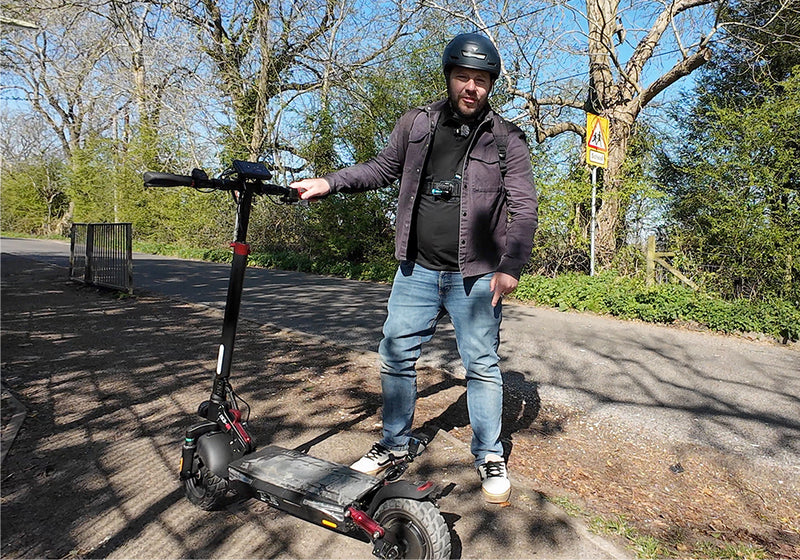
Start by turning your ride into a simple checklist. When you do this first, the rest of the choices become obvious, because you are selecting for traction, stability, and control instead of headline speed.
Use this quick route scan:
- Surface mix: hard-packed dirt, loose gravel, grass, mud, or farm track stone.
- Hill profile: long climbs, short steep ramps, or rolling hills.
- Hazards: ruts, washboard vibration, potholes, and wet leaves.
- Turn frequency: tight bends need predictable braking and steering.
- Distance: total miles plus a bailout option to turn back early.
Why it matters for electric scooters:
- Loose surfaces punish small wheels and stiff frames.
- Repeated bumps loosen hardware if the deck and stem are not designed for vibration.
- Long descents make brake fade more likely if braking is weak.
A practical rule: if your route includes more than a few minutes of continuous rough surface, prioritize an Off-Road Electric Scooters design with larger pneumatic tires and dual suspension, even if you give up a little portability.
Step 2: Choose range and battery with a buffer
Battery range is where countryside rides surprise new riders. Wind, cold air, soft ground, and frequent accelerations can cut range fast. Plan for the day you ride into a headwind and still need enough charge to get home.
Do this range estimate:
- Take your planned distance and add a 30% buffer.
- Add another 10% if you expect mud, grass, or soft gravel.
- Add another 10% if the temperature is cold enough that your hands get numb.
What to look for in the battery spec:
- Battery energy is often listed in Wh (watt-hours). Higher Wh usually supports longer loops.
- Charger output and charge time matter for multi-day trips.
Example from iScooter off-road models (useful reference points):
- The iScooter iX3 lists a 48V 10Ah (480Wh) battery and 6-7 hour charging time, which is a good baseline for moderate countryside loops when you keep a buffer.
- The iScooter iX4 lists a 48V 15Ah (720Wh) battery and 6-8 hour charging time, which better supports longer loops and heavier riders.
How this ties to Lithium-ion Battery Technology:
- Most modern electric scooters and many ebike packs use lithium-ion cells because energy density is high for the weight.
- Treat Solid-State Batteries as a future trend to watch, not a buying requirement today. Use current, proven packs and focus on capacity, water resistance, and sensible riding modes.
iScooter product fit for this step (practical, not salesy):
- If your route has long stretches between charging options, a larger pack like the iX4s 720Wh gives you more usable range after you apply a real-world buffer.
- The iX4 also lists a smart display with maintenance alerts and temperature readouts. That helps you manage battery sag and heat on long climbs.
Shop: iX4 Off Road Electric Scooter
Step 3: Prioritize tires and suspension for grip and comfort
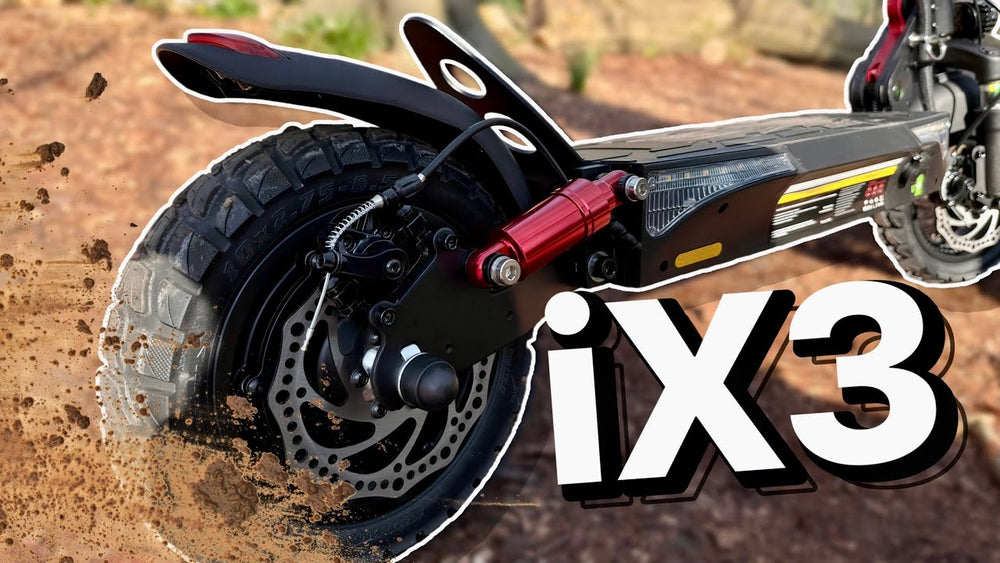
For the best e-scooters for countryside rides, tires and suspension matter more than top speed. On gravel, your contact patch is your safety system.
Use these tire rules:
- Choose 10-inch tires for mixed gravel and broken lanes.
- Prefer pneumatic (air-filled) tires for grip and comfort.
- Off-road tread helps in dirt and grass, but it can add rolling resistance on pavement.
Suspension rules that make rides safer:
- Dual suspension reduces steering shake on washboard gravel.
- Suspension also reduces fatigue, which matters when you need focus on descents.
Why this is essential for off-road electric scooter riding:
- A stiff, unsuspended scooter can chatter across loose gravel and force you to brake too often.
- Better compliance helps the tires stay in contact with the ground, so braking and turning feel predictable.
iScooter product fit for this step:
- The iScooter iX3 lists 10-inch off-road tubeless pneumatic tires and front and rear dual suspension. Those two specs are exactly what you want for farm tracks and mixed countryside lanes.
- The iX3 also lists turn signals and ambient lighting. In the countryside, visibility changes fast under trees, so integrated lighting is not just a city feature.
Shop: iX3 800W Off Road Electric Scooter
Step 4: Check braking for descents and loose surfaces
Braking is the difference between a fun downhill and a panic stop on gravel. You need braking that is strong, predictable, and easy to modulate with one hand while you keep a relaxed stance.
What to look for:
- Disc brakes for consistent stopping power.
- Electronic brake assist (often called E-ABS) to reduce wheel lock on loose terrain.
- A stable deck and handlebar setup so you can brake without wobble.
Technique tips for gravel and dirt:
- Brake earlier than you would on pavement.
- Use progressive pressure instead of grabbing a full handful.
- Keep your weight slightly back and knees bent so the front tire does not skid.
iScooter product fit for this step:
- Both iX3 and iX4 list front and rear mechanical disc brakes plus an electronic brake. That pairing is helpful on mixed descents because you can feather speed and reduce sudden lockups.
- The iX4 also lists two riding mode sets (comfort and off-road). That makes it easier to limit acceleration on loose surfaces, which indirectly supports safer braking because you are not constantly correcting speed.
Shop: iX4 Off Road Electric Scooter
Step 5: Confirm climb power, load, and heat management
A countryside route often includes short, steep ramps that stress the motor and controller. If the scooter bogs down, you end up weaving, stalling, or overheating the drivetrain.
Check these climb factors:
- Motor power and gradient rating (often shown as a percent grade).
- Rider weight limit, plus what you carry in a bag.
- Cooling time if you chain multiple climbs.
Practical climb guidance:
- If the scooter slows sharply mid-hill, reduce throttle slightly and keep steady input.
- Avoid repeated full-power launches on soft ground. That wastes energy and builds heat.
- If the display shows temperature warnings, stop and let it cool.
iScooter product fit for this step:
- The iX3 lists an 800W peak motor and a 20-25% max gradient, plus a 264 lb (120 kg) max rider weight. That combination suits many countryside riders who want an off-road electric scooter without stepping into heavy dual-motor designs.
- The iX4 lists a 25% hill climb and a 330 lb (150 kg) max rider weight, which is helpful if you are taller, carry gear, or simply want more margin.
If you are comparing to an ebike or electric bike:
- An ebike can be better for sustained climbs because you can add pedal assist and keep motor load steadier.
- Electric scooters are great for compact storage and quick rides, but they need enough power margin for hills because you cannot contribute by pedaling.
Step 6: Validate legality, safety, and theft prevention
Before you buy, confirm where you can legally ride. In the UK, the rules can be strict and the penalties are real.
Legal reality check:
- GOV.UK states it is illegal to ride a privately owned electric scooter on public roads, pavements, or parks. It is only legal on private land with the landowners permission. (gov.uk)
- Rental trials exist and have different rules. The Department for Transport trials are currently due to end in May 2028. (gov.uk)
Safety setup that matters on rural lanes:
- Wear a helmet, gloves, and eye protection.
- Use a bright front light and a rear light even in daytime if your route includes tree cover.
- Choose turn signals if you expect mixed-use paths where cyclists and walkers need clear cues.
Anti-theft and tracking (useful keyword concepts without hype):
- GPS Tracking and Anti-Theft Systems are great if the scooter supports them, but many riders get strong results from a simple lock plus good parking habits.
- IoT Connectivity can be helpful when it enables app-based checks, maintenance alerts, or ride data that helps you manage battery health.
One safety standard worth knowing:
- OSHA references ANSI Z87.1 as a standard for eye and face protection devices used to prevent injuries from impact hazards. That is a useful benchmark when you choose protective eyewear for debris and gravel spray. (osha.gov)
Adapting Your Off-Road Electric Scooter for Different Scenarios
- Steep farm tracks: Choose a higher gradient rating and more rider-weight headroom. Use a slower, steady throttle to limit heat buildup.
- Wet lanes and muddy gateways: Prioritize pneumatic off-road tires and dual suspension. Reduce speed earlier before corners because traction changes fast on wet leaves.
- Long loops with no charging: Choose higher Wh capacity and keep a strict buffer. Ride in a lower mode to avoid repeated high-current bursts.
- Mixed commute plus countryside: Balance portability with capability. If you need to carry the scooter often, you may accept slightly less suspension travel but keep 10-inch pneumatic tires.
Before You Start
Required Tools and Materials
- Helmet that fits snugly and does not shift when you shake your head.
- Full-finger gloves for grip on wet grips and brake levers.
- Clear or lightly tinted eye protection to block grit.
- Mini pump and tire gauge for pneumatic tires.
- Puncture kit (plugs or patches) if your tires are serviceable.
- Small tool kit for fasteners, especially stem and handlebar bolts.
- Phone mount if you use navigation, plus a power bank for long rides.
Safety Considerations
- Perform a bolt check before every countryside ride. Vibration can loosen hardware faster than city pavement.
- Set tire pressure for conditions. Slightly lower pressure improves grip on gravel, but do not go so low that the tire squirms in corners.
- Keep both hands on the bars on rough surfaces. One-handed riding increases wobble risk.
- Avoid deep puddles and flooded ruts even if the scooter has a water resistance rating. Hidden potholes can stop the front wheel instantly.
- If you ride where it is legal, treat shared paths like a quiet road. Slow down near walkers, horses, and blind corners.
Troubleshooting
| Problem | Likely cause | Solution |
|---|---|---|
| Wobble on gravel | Tire pressure too low or loose stem hardware | Inflate to a stable pressure for your weight, then re-check stem and handlebar fasteners before riding again. |
| Short range on cold days | Battery sag from low temperature and frequent accelerations | Start with a fuller charge, ride in a lower mode, and avoid repeated full-throttle launches for the first 10 minutes. |
| Weak braking on descents | Contaminated rotors or glazed pads | Clean rotors, bed pads in with several controlled stops, and replace pads if stopping distance stays long. |
| Rear tire spins on grass | Too much throttle too early | Roll on throttle gradually, keep knees bent, and shift weight slightly back to keep the rear tire planted. |
| Scooter feels underpowered on hills | Rider load high or climb grade above target | Reduce carried weight, take hills with a run-up, and plan a short cool-down if the display shows heat warnings. |
Conclusion
Choosing the best e-scooters for countryside rides is mainly about matching real terrain to three essentials: traction, range margin, and controlled braking. Start with your route map, then pick tires and suspension that keep the scooter stable on loose ground.
Next, size the battery with a realistic buffer, especially for wind and cold. Finally, confirm climb and load limits so the scooter can handle your steepest section without overheating.
Official Site: iScooter
FAQ
How do I choose the best e-scooters for countryside rides?
Start by mapping the surfaces you ride most, especially gravel, mud, and steep descents, because those conditions drive tire and brake needs. Choose 10-inch pneumatic tires and suspension if your route includes repeated bumps or loose ground. Then size range with a 30% buffer so wind, cold, and hills do not strand you. Finally, confirm weight limit and hill rating so the scooter does not bog down or overheat.
What are the top features to look for in an e-scooter for off-road exploration?
Look for pneumatic off-road tires, dual suspension, and disc brakes with predictable lever feel. A clear display that shows battery level and riding mode helps you manage speed and range on changing terrain. Turn signals and strong lighting are also useful in wooded lanes where visibility changes quickly. If you ride long loops, prioritize higher Wh capacity over maximum speed.
What should I consider when buying an e-scooter for outdoor adventures?
Think about serviceability first, because outdoor riding increases puncture and vibration issues. Make sure you can check tire pressure easily, carry basic tools, and keep bolts tight after rough rides. Plan for real range by adding a buffer for hills and soft ground, not just flat-road claims. Also confirm where riding is legal, because rules can limit where you can use a privately owned electric scooter.
What is the most durable e-scooter setup for rough lanes?
Durability usually comes from a solid frame, stable folding hardware, and components that tolerate vibration, especially at the stem and deck junction. A dual-suspension setup reduces repeated shock loads that can loosen fasteners and fatigue parts. Pneumatic tires also protect the scooter by absorbing impacts that would otherwise hit the frame directly. After each ride, a quick bolt and brake check improves long-term reliability.
Which e-scooters offer the best long-distance range?
Long-distance range comes from higher battery energy (Wh) combined with efficient riding habits, not speed alone. Heavier riders, headwinds, cold temperatures, and soft surfaces can reduce range sharply, so a larger pack gives you more usable margin. Keep speed steady, avoid full-power launches, and use a lower mode when terrain is loose. For very long routes with sustained climbs, consider whether an ebike or electric bike with pedal assist would fit better.
Is it suitable for wet or rainy conditions?
Some scooters handle light rain, but wet countryside surfaces reduce traction and increase stopping distance. Lower your speed, brake earlier, and avoid painted lines, wet leaves, and deep puddles that may hide potholes. If your route is consistently wet, prioritize treaded pneumatic tires and stable braking over speed. After the ride, wipe down the scooter and check brakes because wet grit can contaminate pads and rotors.
Table of Contents
- Introduction
-
How to
Choose an Off-Road Electric Scooter Step by Step
- Step 1: Map your countryside route
- Step 2: Choose range and battery with a buffer
- Step 3: Prioritize tires and suspension for grip and comfort
- Step 4: Check braking for descents and loose surfaces
- Step 5: Confirm climb power, load, and heat management
- Step 6: Validate legality, safety, and theft prevention
- Adapting Your Off-Road Electric Scooter for Different Scenarios
- Before You Start
- Troubleshooting
- Conclusion
-
FAQ
- How do I choose the best e-scooters for countryside rides?
- What are the top features to look for in an e-scooter for off-road exploration?
- What should I consider when buying an e-scooter for outdoor adventures?
- What is the most durable e-scooter setup for rough lanes?
- Which e-scooters offer the best long-distance range?
- Is it suitable for wet or rainy conditions?
iScooter E Scooter Collections:
Electric Scooter | Kids Electric Scooter | Electric Scooter for Adults | Electric Scooter with Seat | Off-Road Electric Scooter | Foldable Electric Scooter | Girls Electric Scooter | 1000W Electric Scooter | 2000W Electric Scooter | Boys Electric Scooter | Dual Motor Electric Scooter | Big Electric Scooter | Electric Scooter with Suspension | Lightweight Electric Scooter | Commuter E-Scooters | 3 Wheel Electric Scooter
Show more ▼iScooter E Bike Collections:
Foldable Electric Bike | Affordable Cheap Electric Bike | Electric Bike for Adults | Electric Motor Bikes | Trek Electric Bike | Fastest Electric Bike | Electric Road Bike | Full Suspension Electric Mountain Bike | Giant Electric Bike | Womens Ladies Electric Bike | Mens Electric Bike | Electric Bike with Throttle | Electric Gravel Bike | Electric Mountain Bike UK | Fat Tyre Electric Bike | Electric Hybrid Bike | Electric Motorised Bike | Electric Push Bike | 1000W Electric Bike | Cool Electric Bikes | Electric Off Road Bike | Pedal Assist Electric Bike | Good Electric Bikes | Small Electric Bike | Trek Electric Mountain Bike | 2000W Electric Bike | Full Suspension Electric Bike | Mini Electric Bike | Road Legal Electric Bike | Step Through Electric Bike
Show more ▼👍 Buying Guide | 🚴♂️ Riding Guide
📋 Feature Guide | ❓ Common problem

Product category
Electric Scooter
Cheap Electric Scooters for Adults | Fastest Electric Scooter | Kids Electric Scooter | Mini Electric Scooter
Electric Bike
U4 Foldable E-bike | EB3S E-MTB
Hoverboards
Electric Scooter for Kids | iK3Pro E-Scooter for Kids | iK7 Height Adjustable Kids E-Scooter








Article tags :
Leave us a message