










Choosing the Best E-Bikes for Outdoor Exploration in the UK (Ultimate Buying Guide)
Introduction
You planned a simple ride, then the route turned uphill, the headwind picked up, and your battery gauge started dropping faster than expected. That is the moment most people realize they bought an ebike for the brochure, not for their real UK routes.
Get the wrong setup and you can end up stranded miles out, fighting a heavy electric bike with no assist, or riding something that is not road-legal where you need it most. This guide shows you how to pick specs that match your terrain, your storage limits, and your risk tolerance, then how to translate those choices into a short list of E-bikes that actually fit your weekends.
E-Bike Fundamentals for UK Outdoor Riding
Terrain intent comes first
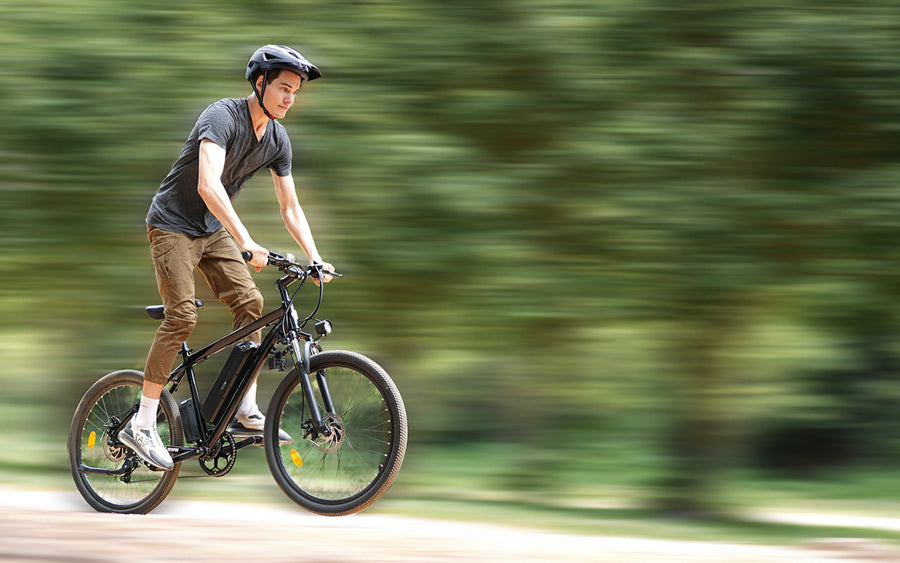
Before you compare motor numbers, decide where you will ride most weeks, not once a year. In the UK, your practical mix usually looks like lanes and cycle paths, plus occasional towpaths, bridleways, and forest tracks. That mix dictates tire volume, braking confidence in wet grit, and whether suspension is helpful or just extra weight.
A simple way to classify your riding:
- Road-first exploration: lanes, cycleways, hardpack paths
- Mixed-surface exploring: towpaths, gravel, compacted forest trails
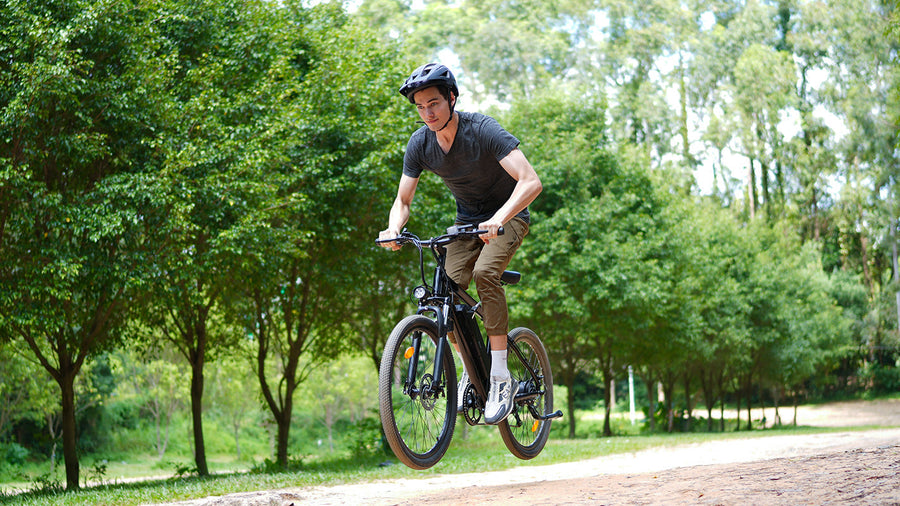
- Trail-leaning weekends: roots, loose corners, short steep pitches
When you get this wrong, everything feels off. Narrow tires skate on wet gravel, commuter gearing spins out on climbs, and heavy frames become a problem the second you need to lift the bike over a gate.
Fit and geometry basics you can feel in 10 minutes
Fit is not just comfort. Fit controls how stable you feel when the surface turns unpredictable. Two measurements matter most for outdoor exploration: standover height (how easily you can step off when you need to) and reach (how stretched you feel to the bars).
Use this quick fit check:
- Standover: you should be able to stand over the top tube without panic
- Reach: elbows slightly bent, shoulders relaxed
- Saddle range: enough adjustment to pedal efficiently
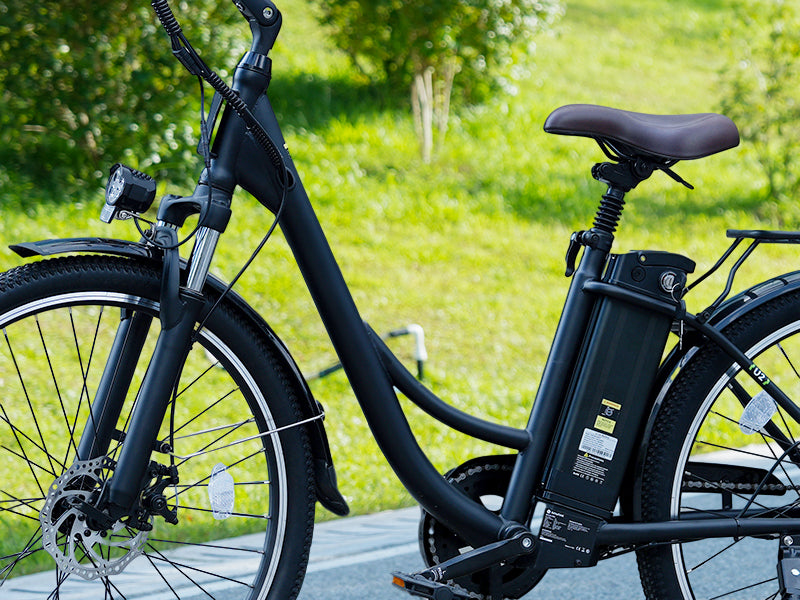
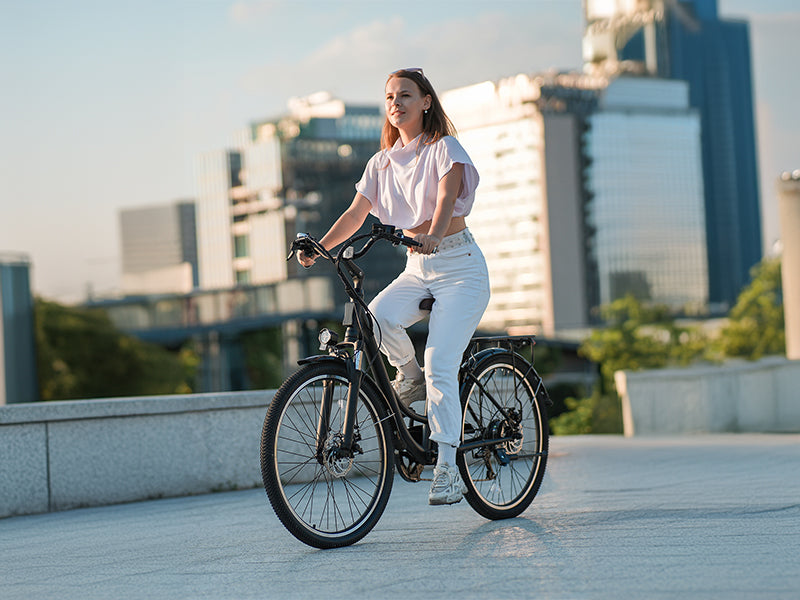
If you are sharing a bike in a household, a step-through frame can reduce the friction of everyday use. For example, the U2 step-through layout is built around easy mounting and dismounting for mixed errands and longer rides.
Power system basics: rated power vs how it feels
In UK discussions, motor power is easy to misunderstand because what matters legally is the continuous rated number, while what you feel on short hills is often the peak output and controller tuning.
On paper, you will usually see:
- Rated power: the continuous rating used for compliance (often 250W for UK-legal EAPCs)
- Peak power: short bursts for acceleration or hills (for example, 500W peak is common on some setups)
- Assist sensor type: cadence vs torque response
A cadence sensor can feel like an on/off push unless it is tuned well. A torque sensor generally feels more natural because assist scales with how hard you pedal. For bridleways and variable gradients, the sensor feel matters as much as raw wattage.
Energy system basics: Lithium-ion Battery capacity in Wh
Battery capacity is best compared in watt-hours (Wh). Wh is the fuel tank. Voltage and amp-hours only make sense when you multiply them.
Practical range reality:
- More Wh usually means more range, but wind, tire pressure, rider weight, hills, and stop-start riding can cut real distance.
- Removable batteries reduce range anxiety because you can charge indoors or carry a spare if your ride style demands it.
On iScooter models you can see this clearly:
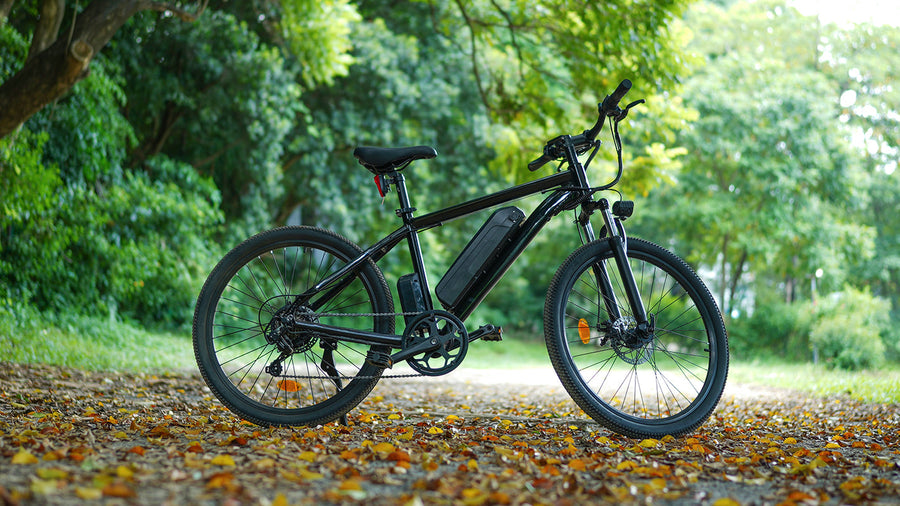
- M10 highlights a 36V 10.4Ah removable battery design (often listed around 378Wh on the category overview).
- U2 lists a 36V 13Ah battery and also shows 374Wh in its spec block, plus multiple range figures depending on mode.
UK Legality and Access Basics for Outdoor Routes
The fastest way to ruin an outdoor plan is to buy a machine that is treated like a motor vehicle where you expected bicycle access. For most riders, the safest baseline is to choose an EAPC-compliant setup for public roads and cycle infrastructure, then keep any higher-speed modes strictly for places where they are permitted.
In Great Britain, an electrically assisted pedal cycle (EAPC) must have a motor with continuous rated power of no more than 250W and assistance must cut out at 15.5 mph (25 km/h). If it does not meet the rules, it can be classed as a motorcycle or moped. This matters because it changes insurance, licensing, and where you can ride. (Evidence: GOV.UK)
To make legality practical for your weekend rides, plan backwards:
- Where you will start and finish: public roads usually require EAPC compliance
- Where you will detour: towpaths, shared paths, and trail networks can have their own access rules
- How you will store and charge: indoor charging convenience matters more than people admit
If your ebike offers different speed settings or an unlock function, treat that as a capability you manage, not a default you forget about. Your goal is predictable access, not surprise compliance problems.
Motor and Sensor Choices for UK Terrain
When riders say an electric bike feels "strong" on UK hills, they are usually describing three things: startup behavior from a stop, how smoothly assist ramps on loose surfaces, and how much speed you can hold on short gradients without overheating your legs.
Cadence sensor vs torque sensor response
A cadence sensor detects that you are pedaling and then applies assist based on selected level. That can work well for steady towpaths and flatter lanes, especially for riders who want predictable help without thinking.
A torque sensor reads pedal force and scales assist to match effort. It can feel more controlled when you are picking a line over roots or easing traction on damp climbs. The trade-off is usually cost and the need for slightly better technique, because your pedaling input becomes part of the control system.
Hub-drive vs mid-drive trade-offs
Most entry-to-mid outdoor exploration bikes use a rear hub motor because it is simple, quiet, and cost-effective. Hub motors can feel very smooth on gravel paths and lanes, and they keep drivetrain wear modest.
Mid-drives typically climb better at low speed because they use the bike gears, but they can increase chain and cassette wear if you shift under load. For UK mixed terrain, the best choice often comes down to how steep your climbs are and how comfortable you are with shifting technique.
How iScooter setups map to this decision
If you want straightforward assist on mixed routes, the iScooter M10 category overview describes a 250W motor with 500W peak behavior and a cadence sensor based assist approach. That combination is often appealing for riders who want easy acceleration and simple controls without overthinking tuning.
If your rides mix commute and weekend miles, U2 is positioned as a step-through commuter ebike with a rated 250W (max 500W) motor spec and a cadence sensor, plus comfort add-ons like rack and fenders.
Shop: EB3 / M50 Electric Mountain Bike
Battery, Range, and Charging Reality
The decision you make on battery is really a decision about how much uncertainty you will tolerate. UK weather, wind, and rolling terrain can turn a "should be fine" battery into a stressful ride home.
Translate battery specs into usable ride time
Start with Wh, then build a conservative plan.
- Baseline: use assist lightly, keep speed steady
- Worst case: headwind + hills + cold + stop-start
If you tend to explore, you stop more. Photo breaks, gates, and navigation checks add repeated accelerations, which cost energy. That is why batteries that look similar on paper can feel different on real rides.
Removable packs: the practical advantage
A removable Lithium-ion Battery matters if you:
- live in a flat where you cannot bring the whole ebike inside
- want to top up at work or a cafe (with permission)
- store the bike in a shed where winter temperatures reduce performance
iScooter highlights removable batteries on both M10 and U2. U2 explicitly describes a removable battery and gives a battery spec block listing 36V, 13Ah and 374 Wh, plus multiple real-world range bands by mode.
Battery safety is part of "range planning"
Range is not only about distance. It is also about charging habits you can keep for years. UK guidance has increasingly emphasized safe charging and battery quality because lithium-ion failures, while relatively rare, can be severe.
A UK government safety guidance page warns of increased fires linked to lithium-ion batteries in e-bikes and e-scooters and focuses on safe purchasing and charging behaviors. (Evidence: GOV.UK)
Shop: U2 City Commuter Electric Bike
Tires, Suspension, and Braking Confidence
When people talk about "off-road capable" E-bikes, they often focus on motor output. In UK outdoor exploration, traction and braking matter more because you are dealing with wet leaves, grit, and uneven surfaces for much of the year.
Tire width and tread for loose surfaces
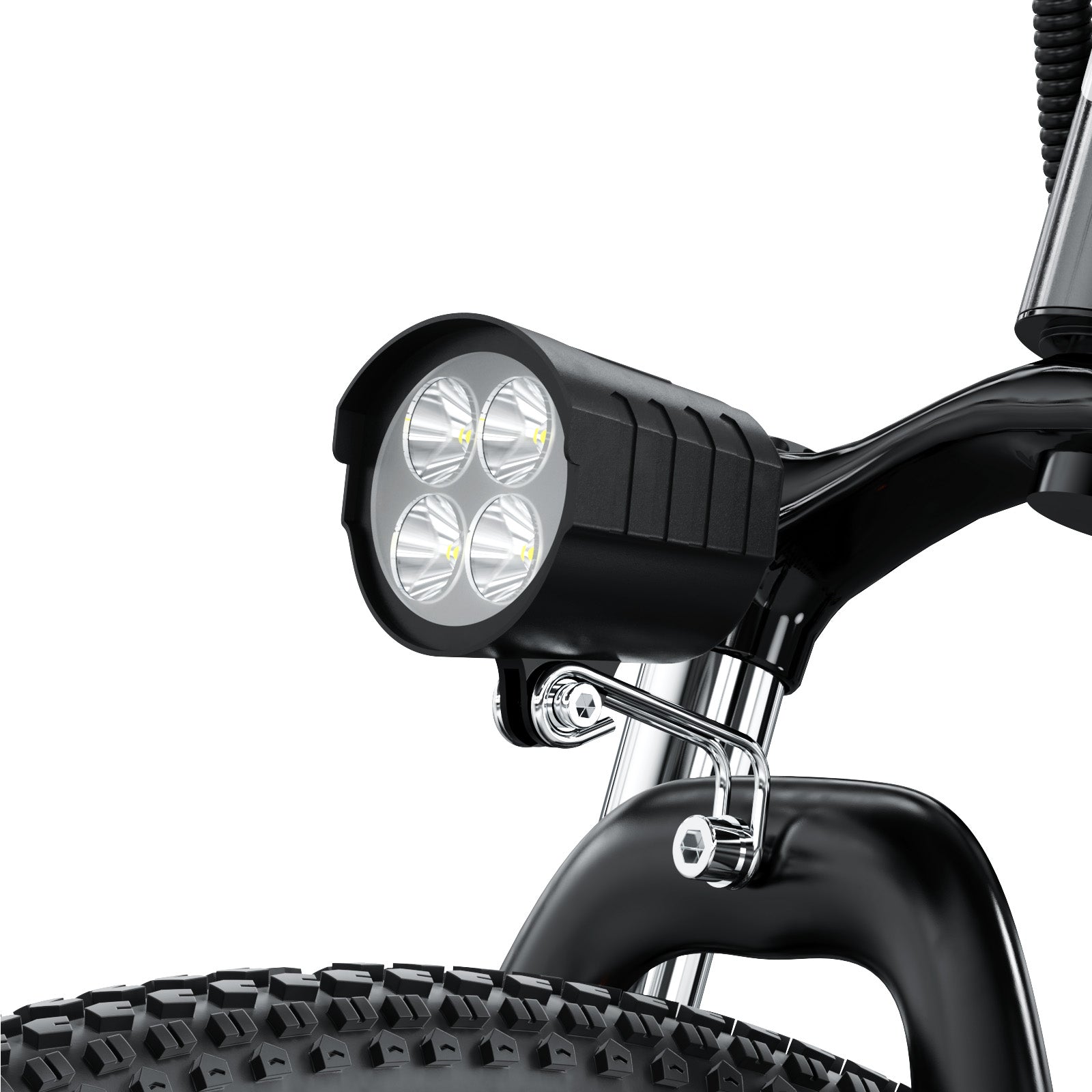
If your typical rides include towpaths and light forest tracks, a tire in the 1.9 to 2.2 inch range often gives a good balance of rolling efficiency and grip. Both the iScooter M10 and U2 list 26 x 1.95 inch pneumatic tires in their highlights, which is a sensible middle ground for mixed surfaces.
A practical approach:
- Mostly lanes: smoother tread, higher pressure
- Mixed paths: semi-knobby tread, moderate pressure
- Trail-leaning: more volume, lower pressure (within safe limits)
Suspension: what it helps and what it costs
Front suspension can reduce fatigue on chattery gravel and broken tarmac. It also adds weight and can reduce precision if it is not tuned or if it is a basic spring fork.
For outdoor exploration, the question is simple: do you need comfort and control over hours, or do you need maximum efficiency and easy lifting? If you have gates, stairs, or train lifts on your routes, weight becomes a day-to-day issue.
Braking for wet descents
UK conditions punish weak brakes. Even if you only ride moderate hills, wet grit can reduce stopping power and increase wear.
Checklist for braking confidence:
- consistent lever feel in rain
- easy pad replacement
- stable stopping with extra ebike weight
Comfort, Carrying, and Commuting Overlap
The best exploration ebike is often the one you will ride on weekdays too. That is not a slogan. It is a behavior reality: if the bike lives in your routine, it stays charged, maintained, and familiar.
Rack and fenders: the unglamorous upgrades that matter
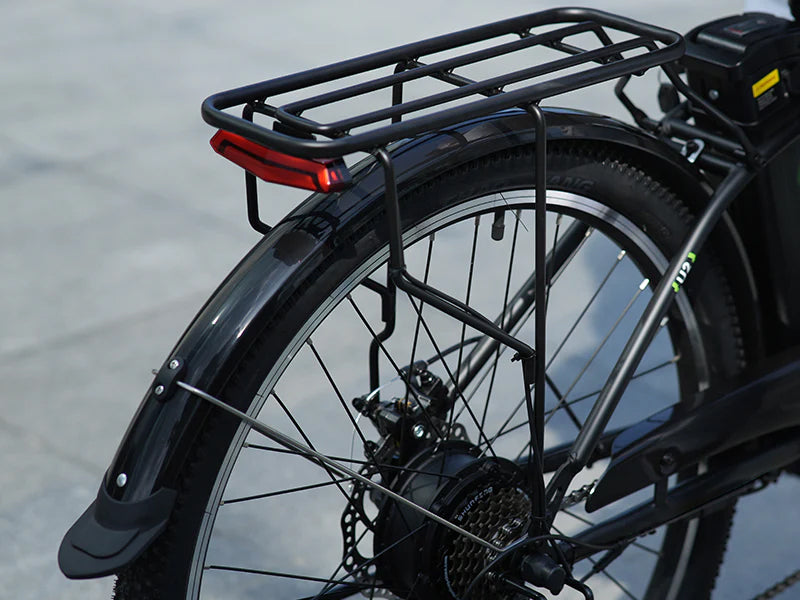
For UK riding, fenders are not optional if you want to arrive without a soaked back. A rack turns your ebike into a tool for daily life. That daily usage is what makes weekend range feel less intimidating.
U2 is built around this idea. Its feature list emphasizes preinstalled fenders, a rear rack, and a step-through frame so errands do not feel like a gear change.
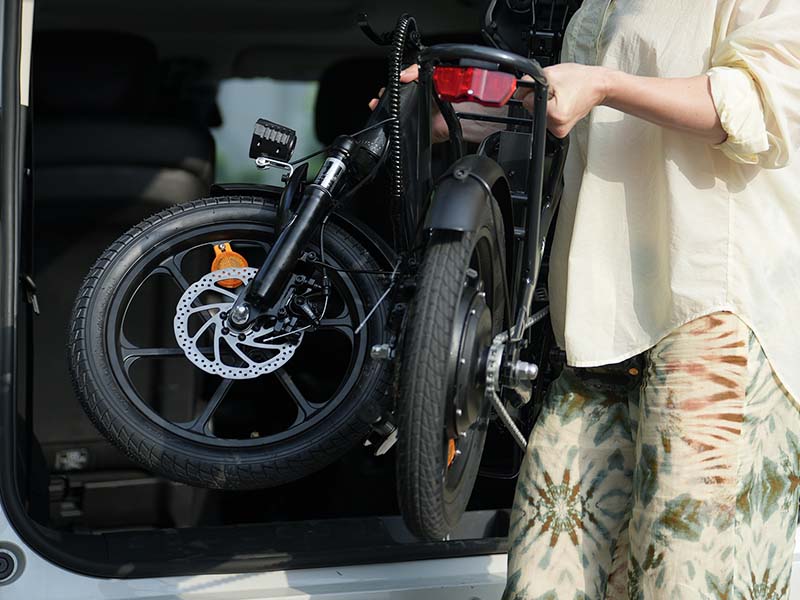
Foldable Design: when it is worth it
Foldable Design becomes a must when you have:
- limited hallway or flat storage
- multimodal plans (car boot, train, office storage)
- frequent lifting and carrying
The trade-off is that folding bikes can feel twitchier at speed and may use smaller wheels. If your outdoor exploration is mostly lanes and gentle paths, that trade can be worth it. If you want stability on rough tracks, you may prefer full-size wheels.
Where scooters fit (and where they do not)
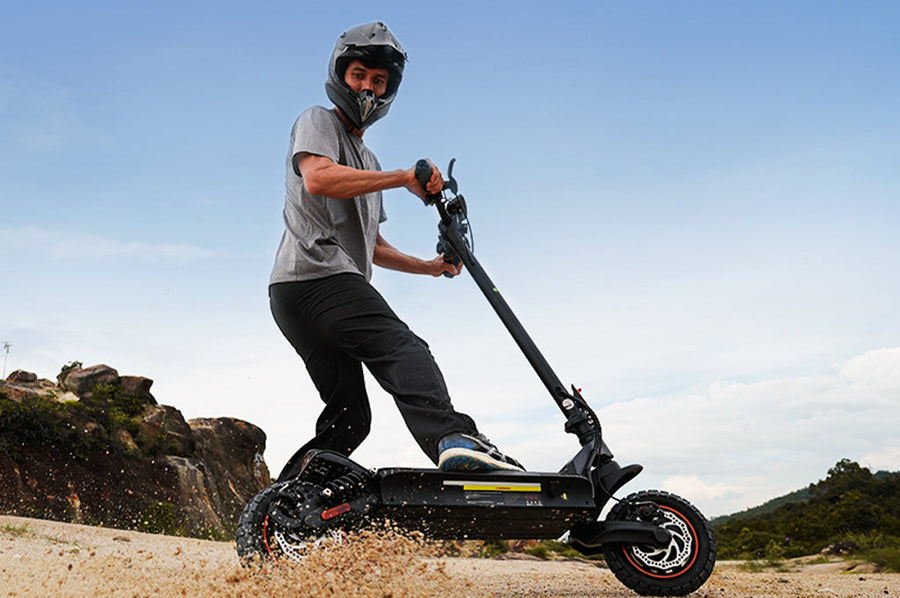
If your goal is Last-mile Delivery or short urban hops, electric scooters can be convenient in some regions, but the rules and access differ from E-bikes and can change by area. For outdoor exploration on bridleways and longer countryside miles, an electric bike is usually the more versatile and comfortable tool.
If your team is also considering an off-road electric scooter for private land use, treat that as a separate buying decision from UK-legal road riding. In other words, do not let an "Off-road E-scooters" shopping mindset leak into your E-bikes compliance requirements.
How to Choose an E-Bike for UK Outdoor Exploration
Your goal here is to reduce ownership risk and reduce "ride friction". The best shortlist is the one that you can keep legal, keep charged, and keep comfortable.
1) Legal compliance: keep access predictable
For most riders, EAPC compliance is the default because it avoids the motor-vehicle category. The UK rules summarize the key limits clearly: 250W continuous rated power and assist cutout at 15.5 mph. (Evidence: GOV.UK)
Decision rule:
- If you need public-road simplicity, prioritize an EAPC setup.
- If a bike has an unlock mode, decide now how you will manage it.
2) Battery Wh and removability: control usable range
Battery size is your exploration radius. Removability is your charging convenience.
Pick a battery strategy:
- Short frequent rides: smaller pack, easy charging
- Long weekend loops: larger Wh, conservative assist use
- Mixed: removable pack plus realistic range planning
3) Weight and handling: the hidden deal breaker
Electric bike weight affects:
- lifting over gates
- stairs and storage
- low-speed handling on tight paths
If you live in a flat or expect frequent transport, put weight and carry points (where you can grab the frame) on your must-have list.
4) Service, warranty, and returns: reduce ownership risk
Outdoor exploration exposes bikes to more water, grit, and vibration. That makes support policies more than marketing.
With iScooter, the brand positioning includes:
- 1-3 days fast delivery and free shipping
- 30-day returns for new, unused products
- up to 24 months warranty and UK local support
Use these policies as a decision safety net, not as a reason to ignore specs.
Quick decision table
| Scenario | Priority | Why it matters | Typical setup |
|---|---|---|---|
| Lanes + towpaths | Battery Wh | Wind, rolling terrain | 26 inch, 1.95 inch tires |
| Bridleways + gravel | Traction + brakes | Wet grit stopping | Wider tires, steady brakes |
| Mixed commute + weekend | Rack + fenders | Daily usability | Utility accessories |
| Flat storage limits | Foldable Design | Easy storage | Folding frame |
| Frequent gates/lifting | Weight + balance | Less frustration | Lighter, manageable frame |
Best Practices
- Match tire pressure to the day: Run slightly lower pressure for loose paths, higher for road-heavy days. Recheck weekly because small leaks are common.
- Plan your assist like gears: Use lower assist on flats to stretch range, then step up for climbs. This reduces heat and preserves the Lithium-ion Battery over time.
- Brake check for wet grit: Inspect pads, rotor alignment, and lever feel after rainy rides. Small issues become big on descents.
- Charge where it is safe and visible: Charge on a non-flammable surface with airflow and avoid blocking exits. This aligns with UK safety messaging about lithium-ion risks. (Evidence: GOV.UK)
Conclusion
The best ebike for UK outdoor exploration is the one that fits your terrain mix, stays comfortable for hours, and keeps your access predictable. Start by confirming EAPC legality for the routes you actually ride, then choose a motor and sensor feel that matches your hills and surfaces.
Next, size your Lithium-ion Battery strategy around real range, not best-case claims, and prioritize removable charging if storage is tight. Once you have those foundations, it becomes easy to shortlist models like the iScooter M10 for mixed-surface exploring or the U2 for comfort-first riding that overlaps with commuting.
Official Site: iScooter
FAQ
Are there e-bikes designed for outdoor exploration?
Yes, many E-bikes are designed specifically for outdoor exploration, but the key is matching the build to your routes. Look for stable geometry, wider pneumatic tires, and components that tolerate wet grit and vibration. A front suspension fork can reduce fatigue on broken paths, but it also adds weight, so you should only treat it as essential if your rides include rougher tracks. For UK use, also confirm the bike can be run in a road-legal mode for the parts of your ride that start or finish on public roads.
What type of e-bike is best for long outdoor excursions?
For long excursions, prioritize a larger battery in Wh, efficient assist levels, and a comfortable fit that prevents hand and back fatigue. A removable battery is also valuable because it lets you top up indoors or carry a spare on multi-stop days. Choose tires that stay stable when the surface changes, typically in the 1.9 to 2.2 inch range for mixed UK routes. Finally, keep expectations realistic: wind, hills, cold temperatures, and frequent stops can reduce real range significantly.
Can I use an e-bike for both on-road and off-road adventures?
Yes, one electric bike can cover both if you choose a mixed-surface setup rather than a pure trail machine. Start with tires that roll efficiently on tarmac but still grip on gravel, such as a semi-knobby tread in a moderate width. A front suspension fork can help on rough tracks, but for road-heavy riding you may prefer a rigid fork for lower weight and better efficiency. Utility features like fenders and a rear rack also make it easier to ride the same bike on weekdays and weekends.
How do I extend the battery life of an electric bike?
You extend battery life by reducing heat, avoiding deep discharge habits, and riding smoothly. Use lower assist on flats, then increase assist only when you need it for hills or headwinds, because constant high assist creates more heat and higher current draw. Keep tires properly inflated because under-inflation increases rolling resistance and drains the battery faster. For charging, avoid leaving the battery at 0% for long periods and do not store it in extreme hot or cold spaces.
What should I check to stay road-legal in the UK?
To stay road-legal as an EAPC, confirm the bike provides pedal assistance only and that the motor meets the continuous rated power requirement, typically 250W for UK EAPC rules. Assistance must cut out at 15.5 mph (25 km/h), even if you can pedal faster with your own effort. Check that any display settings or modes do not enable powered assistance beyond the legal limit on public roads. If a bike can be unlocked, treat that as a separate mode you manage carefully rather than a default setting.
Do I need a cadence sensor or a torque sensor for UK trails?
You do not strictly need either sensor type for UK trails, but they feel different and that changes your control. A cadence sensor tends to deliver assist once it detects pedaling, which can be fine for steady towpaths and gentle climbs but may feel abrupt on loose surfaces. A torque sensor scales assist with pedal force, which often feels more natural and helps traction on damp climbs. If you ride varied terrain and care about precise control, torque sensing is usually easier to trust.
Table of Contents
- Introduction
- E-Bike Fundamentals for UK Outdoor Riding
- UK Legality and Access Basics for Outdoor Routes
- Motor and Sensor Choices for UK Terrain
- Battery, Range, and Charging Reality
- Tires, Suspension, and Braking Confidence
- Comfort, Carrying, and Commuting Overlap
- How to Choose an E-Bike for UK Outdoor Exploration
- Conclusion
-
FAQ
- Are there e-bikes designed for outdoor exploration?
- What type of e-bike is best for long outdoor excursions?
- Can I use an e-bike for both on-road and off-road adventures?
- How do I extend the battery life of an electric bike?
- What should I check to stay road-legal in the UK?
- Do I need a cadence sensor or a torque sensor for UK trails?
iScooter E Scooter Collections:
Electric Scooter | Kids Electric Scooter | Electric Scooter for Adults | Electric Scooter with Seat | Off-Road Electric Scooter | Foldable Electric Scooter | Girls Electric Scooter | 1000W Electric Scooter | 2000W Electric Scooter | Boys Electric Scooter | Dual Motor Electric Scooter | Big Electric Scooter | Electric Scooter with Suspension | Lightweight Electric Scooter | Commuter E-Scooters | 3 Wheel Electric Scooter
Show more ▼iScooter E Bike Collections:
Foldable Electric Bike | Affordable Cheap Electric Bike | Electric Bike for Adults | Electric Motor Bikes | Trek Electric Bike | Fastest Electric Bike | Electric Road Bike | Full Suspension Electric Mountain Bike | Giant Electric Bike | Womens Ladies Electric Bike | Mens Electric Bike | Electric Bike with Throttle | Electric Gravel Bike | Electric Mountain Bike UK | Fat Tyre Electric Bike | Electric Hybrid Bike | Electric Motorised Bike | Electric Push Bike | 1000W Electric Bike | Cool Electric Bikes | Electric Off Road Bike | Pedal Assist Electric Bike | Good Electric Bikes | Small Electric Bike | Trek Electric Mountain Bike | 2000W Electric Bike | Full Suspension Electric Bike | Mini Electric Bike | Road Legal Electric Bike | Step Through Electric Bike
Show more ▼👍 Buying Guide | 🚴♂️ Riding Guide
📋 Feature Guide | ❓ Common problem

Product category
Electric Scooter
Cheap Electric Scooters for Adults | Fastest Electric Scooter | Kids Electric Scooter | Mini Electric Scooter
Electric Bike
U4 Foldable E-bike | EB3S E-MTB
Hoverboards
Electric Scooter for Kids | iK3Pro E-Scooter for Kids | iK7 Height Adjustable Kids E-Scooter







Article tags :
Leave us a message